
Spatial Multiplexing VLC vs Powerline Communication: Efficacy Analysis
MAR 23, 20269 MIN READ
Generate Your Research Report Instantly with AI Agent
Patsnap Eureka helps you evaluate technical feasibility & market potential.
Spatial Multiplexing VLC vs PLC Background and Objectives
The evolution of communication technologies has witnessed remarkable transformations over the past decades, with both optical and electrical transmission methods playing pivotal roles in addressing diverse connectivity requirements. Visible Light Communication (VLC) emerged as a revolutionary approach that leverages the dual functionality of LED lighting systems, enabling simultaneous illumination and data transmission through modulated light signals. This technology has gained significant traction due to its inherent advantages including electromagnetic interference immunity, enhanced security through confined light propagation, and the ubiquitous availability of lighting infrastructure.
Powerline Communication (PLC) represents another established paradigm that utilizes existing electrical power distribution networks as communication channels. This technology has demonstrated its value by eliminating the need for dedicated communication infrastructure, making it particularly attractive for applications where new cable installation is impractical or cost-prohibitive. PLC systems have evolved from simple control applications to sophisticated broadband communication solutions capable of supporting various data-intensive services.
The integration of spatial multiplexing techniques has emerged as a critical advancement in both VLC and PLC domains. Spatial multiplexing exploits multiple transmission paths or spatial dimensions to enhance data throughput and system capacity without requiring additional spectrum resources. In VLC systems, this involves utilizing multiple LED transmitters and photodetector receivers to create parallel communication channels, while in PLC applications, it leverages multiple conductor pairs and advanced signal processing techniques to achieve similar multiplexing gains.
The primary objective of this comparative analysis centers on establishing a comprehensive understanding of the relative efficacy between spatial multiplexing-enabled VLC and PLC systems. This evaluation encompasses multiple performance dimensions including data transmission rates, system reliability, implementation complexity, and operational cost considerations. The analysis aims to identify the optimal application scenarios for each technology while highlighting their respective strengths and limitations.
Furthermore, this investigation seeks to provide strategic insights for technology selection decisions in various deployment contexts, ranging from indoor residential environments to industrial automation systems. The comparative framework will establish quantitative metrics for performance evaluation and develop predictive models for future technology evolution trajectories.
Powerline Communication (PLC) represents another established paradigm that utilizes existing electrical power distribution networks as communication channels. This technology has demonstrated its value by eliminating the need for dedicated communication infrastructure, making it particularly attractive for applications where new cable installation is impractical or cost-prohibitive. PLC systems have evolved from simple control applications to sophisticated broadband communication solutions capable of supporting various data-intensive services.
The integration of spatial multiplexing techniques has emerged as a critical advancement in both VLC and PLC domains. Spatial multiplexing exploits multiple transmission paths or spatial dimensions to enhance data throughput and system capacity without requiring additional spectrum resources. In VLC systems, this involves utilizing multiple LED transmitters and photodetector receivers to create parallel communication channels, while in PLC applications, it leverages multiple conductor pairs and advanced signal processing techniques to achieve similar multiplexing gains.
The primary objective of this comparative analysis centers on establishing a comprehensive understanding of the relative efficacy between spatial multiplexing-enabled VLC and PLC systems. This evaluation encompasses multiple performance dimensions including data transmission rates, system reliability, implementation complexity, and operational cost considerations. The analysis aims to identify the optimal application scenarios for each technology while highlighting their respective strengths and limitations.
Furthermore, this investigation seeks to provide strategic insights for technology selection decisions in various deployment contexts, ranging from indoor residential environments to industrial automation systems. The comparative framework will establish quantitative metrics for performance evaluation and develop predictive models for future technology evolution trajectories.
Market Demand Analysis for Advanced Communication Technologies
The global communication infrastructure market is experiencing unprecedented transformation driven by the exponential growth in data consumption and the proliferation of Internet of Things devices. Traditional communication systems face mounting pressure to deliver higher bandwidth, lower latency, and more reliable connectivity across diverse environments. This surge in demand has catalyzed interest in alternative communication technologies that can complement or enhance existing infrastructure.
Spatial multiplexing visible light communication represents a compelling solution for indoor high-speed data transmission applications. The technology leverages existing LED lighting infrastructure to create multiple parallel data channels, addressing the growing need for ubiquitous connectivity in smart buildings, industrial facilities, and residential environments. Market drivers include the global push toward energy-efficient lighting systems and the increasing deployment of Li-Fi networks in environments where radio frequency communication faces limitations.
The enterprise sector demonstrates particularly strong demand for spatial multiplexing VLC solutions, especially in electromagnetic interference-sensitive environments such as hospitals, manufacturing facilities, and aviation systems. Financial institutions and government agencies also show growing interest due to the inherent security advantages of light-based communication, which cannot penetrate walls and offers natural physical layer security.
Powerline communication technology addresses different market segments, primarily focusing on smart grid applications, home automation systems, and broadband access in underserved areas. The smart grid modernization initiatives across developed nations create substantial demand for reliable, cost-effective communication solutions that can leverage existing electrical infrastructure. Utility companies increasingly require robust communication networks for real-time monitoring, demand response programs, and grid optimization.
The residential broadband market presents significant opportunities for powerline communication, particularly in regions where fiber optic deployment remains economically challenging. Rural and semi-urban areas with established electrical grids but limited telecommunications infrastructure represent key target markets. Additionally, the growing smart home ecosystem drives demand for reliable in-home networking solutions that can support multiple connected devices without requiring extensive rewiring.
Industrial automation and smart manufacturing sectors show increasing adoption of both technologies, with spatial multiplexing VLC finding applications in precision manufacturing environments and powerline communication supporting factory-wide connectivity. The convergence of Industry 4.0 initiatives and digital transformation strategies creates sustained demand for diverse communication solutions that can operate reliably in challenging industrial environments.
Spatial multiplexing visible light communication represents a compelling solution for indoor high-speed data transmission applications. The technology leverages existing LED lighting infrastructure to create multiple parallel data channels, addressing the growing need for ubiquitous connectivity in smart buildings, industrial facilities, and residential environments. Market drivers include the global push toward energy-efficient lighting systems and the increasing deployment of Li-Fi networks in environments where radio frequency communication faces limitations.
The enterprise sector demonstrates particularly strong demand for spatial multiplexing VLC solutions, especially in electromagnetic interference-sensitive environments such as hospitals, manufacturing facilities, and aviation systems. Financial institutions and government agencies also show growing interest due to the inherent security advantages of light-based communication, which cannot penetrate walls and offers natural physical layer security.
Powerline communication technology addresses different market segments, primarily focusing on smart grid applications, home automation systems, and broadband access in underserved areas. The smart grid modernization initiatives across developed nations create substantial demand for reliable, cost-effective communication solutions that can leverage existing electrical infrastructure. Utility companies increasingly require robust communication networks for real-time monitoring, demand response programs, and grid optimization.
The residential broadband market presents significant opportunities for powerline communication, particularly in regions where fiber optic deployment remains economically challenging. Rural and semi-urban areas with established electrical grids but limited telecommunications infrastructure represent key target markets. Additionally, the growing smart home ecosystem drives demand for reliable in-home networking solutions that can support multiple connected devices without requiring extensive rewiring.
Industrial automation and smart manufacturing sectors show increasing adoption of both technologies, with spatial multiplexing VLC finding applications in precision manufacturing environments and powerline communication supporting factory-wide connectivity. The convergence of Industry 4.0 initiatives and digital transformation strategies creates sustained demand for diverse communication solutions that can operate reliably in challenging industrial environments.
Current State and Challenges in VLC and PLC Systems
Visible Light Communication (VLC) systems have achieved significant technological maturity in recent years, with commercial implementations demonstrating data rates exceeding 10 Gbps in laboratory conditions. Current VLC deployments primarily utilize LED-based transmitters and photodiode receivers, supporting applications ranging from indoor positioning to high-speed data transmission. The integration of spatial multiplexing techniques has enabled multiple parallel data streams through MIMO configurations, substantially increasing throughput capacity. However, VLC systems face persistent challenges including limited coverage range, susceptibility to ambient light interference, and line-of-sight requirements that restrict mobility and deployment flexibility.
Powerline Communication (PLC) technology has evolved from basic narrowband applications to sophisticated broadband systems capable of delivering hundreds of Mbps over existing electrical infrastructure. Modern PLC implementations leverage advanced modulation schemes such as OFDM and sophisticated error correction algorithms to overcome the inherently noisy and time-varying characteristics of power line channels. The technology benefits from ubiquitous electrical grid infrastructure, eliminating the need for dedicated communication cabling. Nevertheless, PLC systems encounter significant technical obstacles including severe channel attenuation, electromagnetic interference from connected appliances, and regulatory constraints that limit transmission power and frequency allocation.
Both technologies struggle with standardization fragmentation, where multiple competing protocols hinder interoperability and market adoption. VLC faces additional challenges in achieving consistent performance across diverse lighting conditions and maintaining communication links during LED dimming operations. The technology also requires careful consideration of human safety factors related to optical radiation exposure and potential photobiological hazards.
PLC systems confront the complexity of highly variable channel characteristics that change dynamically based on connected loads and network topology. The shared medium nature of power lines introduces security vulnerabilities and requires sophisticated access control mechanisms. Additionally, the coexistence of multiple PLC systems on the same electrical network creates interference issues that degrade overall system performance.
The current technological landscape reveals that while both VLC and PLC have demonstrated technical feasibility, their practical deployment faces distinct engineering challenges that significantly impact their comparative efficacy in spatial multiplexing applications.
Powerline Communication (PLC) technology has evolved from basic narrowband applications to sophisticated broadband systems capable of delivering hundreds of Mbps over existing electrical infrastructure. Modern PLC implementations leverage advanced modulation schemes such as OFDM and sophisticated error correction algorithms to overcome the inherently noisy and time-varying characteristics of power line channels. The technology benefits from ubiquitous electrical grid infrastructure, eliminating the need for dedicated communication cabling. Nevertheless, PLC systems encounter significant technical obstacles including severe channel attenuation, electromagnetic interference from connected appliances, and regulatory constraints that limit transmission power and frequency allocation.
Both technologies struggle with standardization fragmentation, where multiple competing protocols hinder interoperability and market adoption. VLC faces additional challenges in achieving consistent performance across diverse lighting conditions and maintaining communication links during LED dimming operations. The technology also requires careful consideration of human safety factors related to optical radiation exposure and potential photobiological hazards.
PLC systems confront the complexity of highly variable channel characteristics that change dynamically based on connected loads and network topology. The shared medium nature of power lines introduces security vulnerabilities and requires sophisticated access control mechanisms. Additionally, the coexistence of multiple PLC systems on the same electrical network creates interference issues that degrade overall system performance.
The current technological landscape reveals that while both VLC and PLC have demonstrated technical feasibility, their practical deployment faces distinct engineering challenges that significantly impact their comparative efficacy in spatial multiplexing applications.
Current Technical Solutions for Spatial Multiplexing
01 MIMO and spatial multiplexing techniques for VLC systems
Spatial multiplexing techniques enable multiple data streams to be transmitted simultaneously through different spatial channels in visible light communication systems. By utilizing multiple light sources and photodetectors, the system can achieve higher data rates and improved spectral efficiency. This approach leverages the spatial dimension to increase communication capacity without requiring additional bandwidth, making it particularly effective for indoor VLC applications where multiple LED sources are available.- MIMO and spatial multiplexing techniques for VLC systems: Spatial multiplexing techniques enable multiple data streams to be transmitted simultaneously through different spatial channels in visible light communication systems. By utilizing multiple light sources and photodetectors, the system can achieve higher data rates and improved spectral efficiency. This approach leverages the spatial dimension to increase communication capacity without requiring additional bandwidth, making it particularly effective for indoor VLC applications where multiple LED transmitters can be deployed.
- Hybrid VLC and powerline communication systems: Integration of visible light communication with powerline communication creates a hybrid system that leverages the advantages of both technologies. The powerline infrastructure can be used for uplink communication or as a backup channel, while VLC provides high-speed downlink transmission. This combination enhances overall system reliability and coverage, particularly in scenarios where one communication medium may be limited or unavailable. The hybrid approach also enables seamless handover between different communication modes.
- Modulation and coding schemes for enhanced VLC performance: Advanced modulation techniques and error correction coding schemes are employed to improve the efficacy of visible light communication systems. These methods optimize the signal-to-noise ratio and reduce bit error rates in VLC channels. Adaptive modulation schemes can dynamically adjust transmission parameters based on channel conditions, while sophisticated coding techniques provide robustness against interference and signal degradation. These approaches are essential for maintaining reliable communication in varying environmental conditions.
- Channel estimation and equalization for spatial multiplexing: Accurate channel estimation and equalization techniques are critical for effective spatial multiplexing in communication systems. These methods characterize the transmission channel properties and compensate for signal distortions caused by multipath propagation and interference. Advanced algorithms process received signals to separate multiplexed data streams and recover the original information. Adaptive equalization continuously adjusts to changing channel conditions, ensuring consistent performance in dynamic environments.
- Power management and resource allocation in hybrid communication networks: Efficient power management and resource allocation strategies optimize the performance of hybrid communication systems combining multiple transmission technologies. These techniques dynamically distribute communication resources between different channels based on traffic demands, channel quality, and energy efficiency considerations. Intelligent scheduling algorithms coordinate transmissions across VLC and powerline channels to maximize throughput while minimizing power consumption. This approach ensures optimal utilization of available communication infrastructure and extends system operational lifetime.
02 Hybrid VLC and powerline communication systems
Integration of visible light communication with powerline communication creates a hybrid system that leverages the advantages of both technologies. The powerline infrastructure can be used for uplink communication or as a backup channel, while VLC provides high-speed downlink transmission. This combination enhances overall system reliability and coverage, particularly in scenarios where one communication medium may be impaired. The hybrid approach allows for seamless switching between communication modes based on channel conditions.Expand Specific Solutions03 Modulation and coding schemes for enhanced VLC performance
Advanced modulation techniques and error correction coding schemes are employed to improve the efficacy of visible light communication systems. These methods optimize the trade-off between data rate and reliability under varying channel conditions. Adaptive modulation allows the system to dynamically adjust transmission parameters based on channel quality, while sophisticated coding schemes provide robustness against interference and noise. These techniques are essential for maintaining high-quality communication in practical deployment scenarios.Expand Specific Solutions04 Channel estimation and equalization for VLC systems
Accurate channel estimation and equalization techniques are critical for mitigating the effects of multipath propagation and inter-symbol interference in visible light communication. These methods analyze the channel characteristics and apply appropriate compensation to improve signal quality. Advanced algorithms can track time-varying channel conditions and adapt the equalization parameters accordingly. Effective channel estimation enables the system to achieve near-optimal performance even in challenging indoor environments with multiple reflective surfaces.Expand Specific Solutions05 Power allocation and resource management in multiplexed communication
Optimal power allocation strategies across multiple spatial channels or communication media are essential for maximizing system throughput and energy efficiency. Resource management algorithms dynamically distribute available power and bandwidth resources based on channel conditions, quality of service requirements, and fairness considerations. These techniques ensure that the system operates efficiently while meeting the diverse needs of multiple users or data streams. Intelligent resource allocation is particularly important in hybrid systems where multiple communication technologies coexist.Expand Specific Solutions
Major Players in VLC and PLC Technology Landscape
The spatial multiplexing VLC versus powerline communication technology landscape represents an emerging sector in the early development stage, with significant growth potential driven by increasing demand for high-speed, reliable data transmission solutions. The market is experiencing moderate expansion as organizations seek alternatives to traditional wireless and wired communication methods. Technology maturity varies considerably across key players, with established telecommunications giants like Samsung Electronics, Qualcomm, Huawei Technologies, and Intel leading advanced research and development initiatives. These companies leverage their extensive R&D capabilities and market presence to drive innovation. Meanwhile, specialized firms such as Signify (formerly Philips Lighting) focus on VLC applications, while traditional electronics manufacturers like LG Electronics, Sony, and Toshiba contribute through component development. Academic institutions including Tsinghua University and Beijing University of Posts & Telecommunications provide foundational research support, indicating strong theoretical backing for practical applications.
Samsung Electronics Co., Ltd.
Technical Solution: Samsung has developed comprehensive spatial multiplexing VLC systems for smart home applications, employing multiple LED transmitters with advanced spatial coding techniques. Their technology utilizes orthogonal frequency division multiplexing (OFDM) combined with spatial multiplexing to achieve parallel data streams through different optical paths. Performance analysis indicates their VLC systems deliver superior bandwidth efficiency compared to powerline communication, with data rates reaching 5 Gbps under optimal conditions. The efficacy comparison reveals VLC excels in bandwidth-intensive applications and provides better security isolation, while powerline communication offers more consistent performance across varying environmental conditions and doesn't require direct optical alignment between transmitter and receiver.
Strengths: High bandwidth efficiency, excellent security isolation, integration with smart lighting systems. Weaknesses: Performance degradation in bright ambient light, requires precise optical alignment.
QUALCOMM, Inc.
Technical Solution: Qualcomm has pioneered spatial multiplexing VLC technology for mobile communication applications, developing advanced chipsets that support multiple optical channels through spatial diversity techniques. Their solution implements sophisticated beamforming algorithms and adaptive channel allocation to maximize throughput in multi-user environments. Efficacy analysis demonstrates that their VLC systems outperform powerline communication in terms of latency (sub-millisecond vs 10-50ms) and bandwidth scalability. The spatial multiplexing approach enables concurrent data streams to multiple devices, achieving aggregate throughput of up to 8 Gbps, while powerline systems are constrained by shared medium access and electrical grid limitations. However, powerline communication maintains advantages in mobility scenarios and consistent connectivity regardless of lighting conditions.
Strengths: Ultra-low latency, high aggregate throughput, advanced beamforming capabilities. Weaknesses: Dependent on lighting infrastructure, limited mobility support compared to RF solutions.
Core Patent Analysis in VLC-PLC Comparative Studies
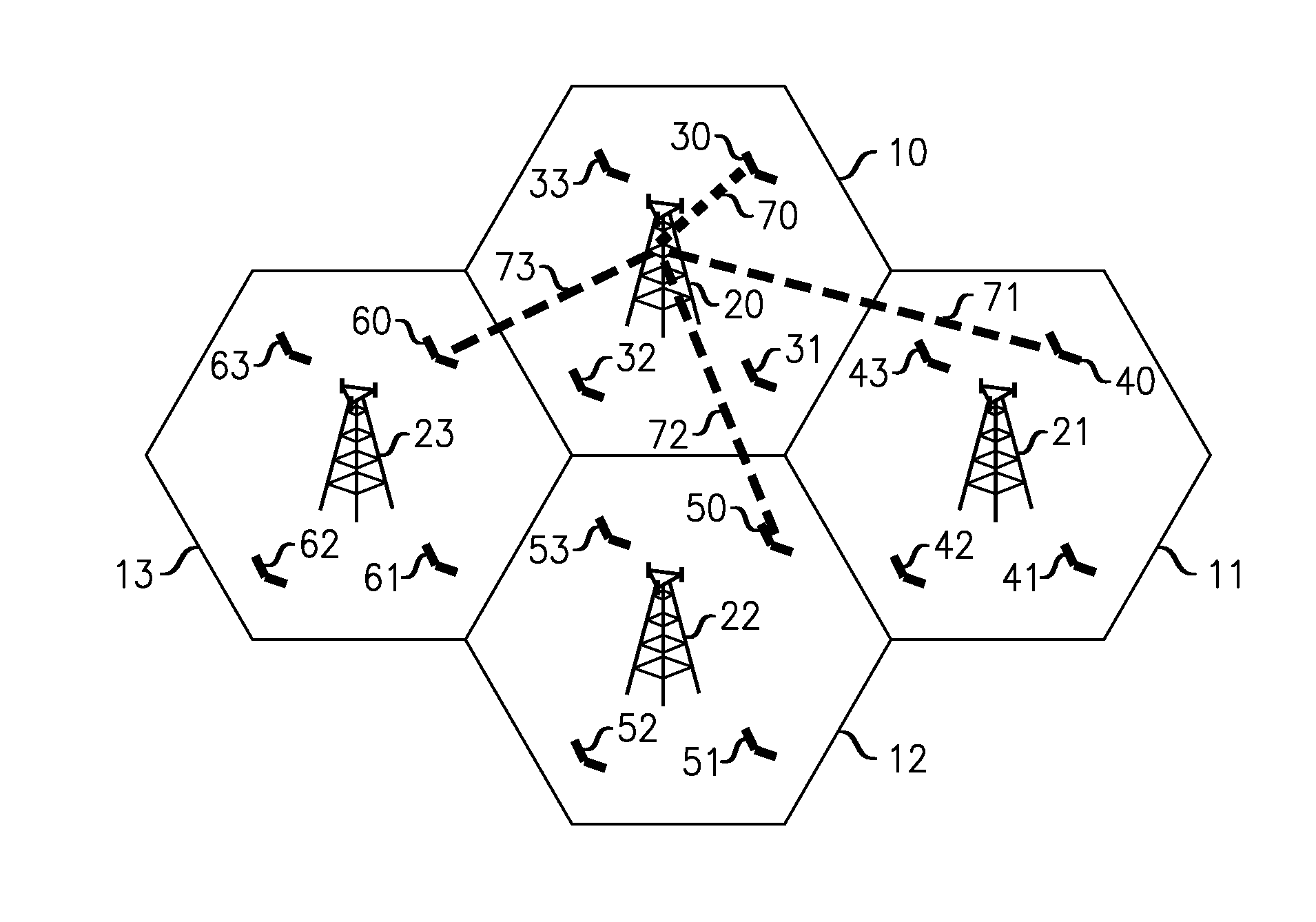
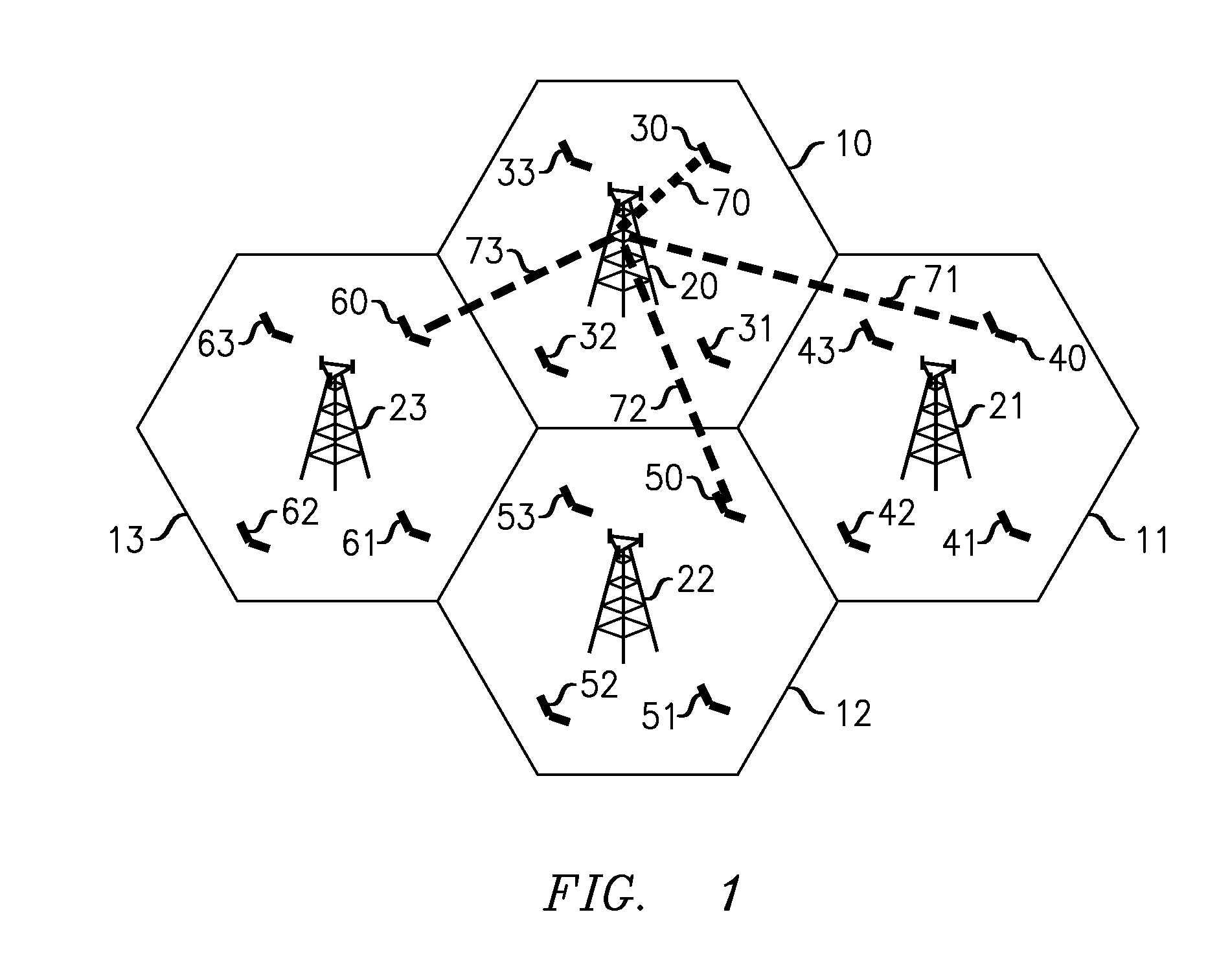
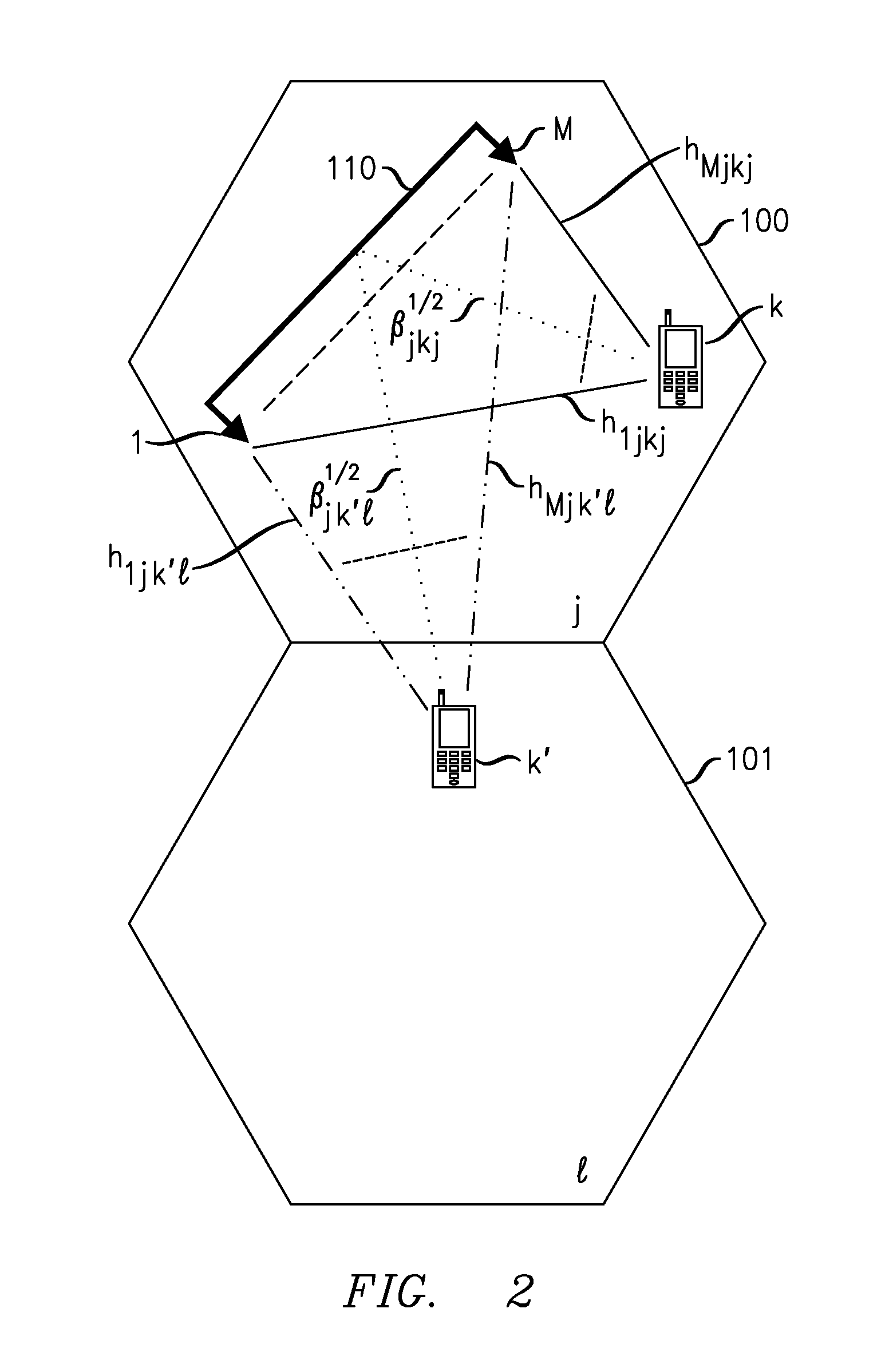
Wireless Communication with Suppression of Inter-Cell Interference in Large-Scale Antenna Systems
PatentInactiveUS20150381327A1
Innovation
- The approach involves generating pilot contamination postcoding matrices that take into account terminal transmit power levels, using alternative techniques such as maximum ratio combining and zero forcing, to mitigate interference effectively in uplink and downlink communications.

Apparatus, methods, and computer program products providing improved spatial multiplexing for MIMO communication
PatentWO2009098532A1
Innovation
- The method involves mapping data to multiple transmission branches, with each branch corresponding to at least one antenna, and transmitting spatially multiplexed streams across different subchannels, utilizing paired antenna schemes similar to rank 1 open loop transmit diversity, which reduces complexity and maintains high throughput without requiring linear combinations or precoding.


Spectrum Regulation and Standards for VLC-PLC Systems
The regulatory landscape for VLC-PLC hybrid systems presents a complex framework that spans multiple jurisdictions and technical domains. Current spectrum regulations for visible light communication operate within the unregulated optical spectrum, typically utilizing wavelengths between 380-780 nanometers. This regulatory freedom contrasts sharply with powerline communication systems, which must comply with stringent electromagnetic compatibility standards and power line carrier regulations across different frequency bands.
International standards organizations have established foundational frameworks for both technologies independently. The IEEE 802.15.7 standard governs VLC implementations, defining physical layer specifications and medium access control protocols. Meanwhile, powerline communication systems adhere to standards such as IEEE 1901 and ITU-T G.hn, which regulate data transmission over electrical power lines. The convergence of these technologies in spatial multiplexing applications creates regulatory gaps that require careful navigation.
Electromagnetic interference regulations pose significant challenges for integrated VLC-PLC systems. National regulatory bodies, including the FCC in the United States and ETSI in Europe, maintain strict emission limits for powerline communication devices to prevent interference with radio services. These regulations become particularly complex when spatial multiplexing techniques are employed, as the increased data throughput may inadvertently elevate electromagnetic emissions beyond acceptable thresholds.
Safety standards represent another critical regulatory dimension for hybrid systems. VLC components must comply with photobiological safety standards such as IEC 62471, ensuring that optical power levels remain within safe limits for human exposure. Simultaneously, powerline communication elements must adhere to electrical safety standards including IEC 61000 series for electromagnetic compatibility and safety requirements.
The absence of unified standards for VLC-PLC integration creates implementation challenges for manufacturers and system integrators. Current regulatory frameworks lack specific provisions for hybrid systems that simultaneously utilize optical and electrical transmission media. This regulatory vacuum necessitates compliance with multiple, sometimes conflicting, standards across different technological domains.
Emerging regulatory initiatives are beginning to address these integration challenges. Several standards development organizations are exploring frameworks for converged communication systems that encompass both VLC and PLC technologies. These efforts focus on establishing harmonized testing procedures, interference mitigation requirements, and safety protocols specifically tailored for spatial multiplexing applications in hybrid environments.
International standards organizations have established foundational frameworks for both technologies independently. The IEEE 802.15.7 standard governs VLC implementations, defining physical layer specifications and medium access control protocols. Meanwhile, powerline communication systems adhere to standards such as IEEE 1901 and ITU-T G.hn, which regulate data transmission over electrical power lines. The convergence of these technologies in spatial multiplexing applications creates regulatory gaps that require careful navigation.
Electromagnetic interference regulations pose significant challenges for integrated VLC-PLC systems. National regulatory bodies, including the FCC in the United States and ETSI in Europe, maintain strict emission limits for powerline communication devices to prevent interference with radio services. These regulations become particularly complex when spatial multiplexing techniques are employed, as the increased data throughput may inadvertently elevate electromagnetic emissions beyond acceptable thresholds.
Safety standards represent another critical regulatory dimension for hybrid systems. VLC components must comply with photobiological safety standards such as IEC 62471, ensuring that optical power levels remain within safe limits for human exposure. Simultaneously, powerline communication elements must adhere to electrical safety standards including IEC 61000 series for electromagnetic compatibility and safety requirements.
The absence of unified standards for VLC-PLC integration creates implementation challenges for manufacturers and system integrators. Current regulatory frameworks lack specific provisions for hybrid systems that simultaneously utilize optical and electrical transmission media. This regulatory vacuum necessitates compliance with multiple, sometimes conflicting, standards across different technological domains.
Emerging regulatory initiatives are beginning to address these integration challenges. Several standards development organizations are exploring frameworks for converged communication systems that encompass both VLC and PLC technologies. These efforts focus on establishing harmonized testing procedures, interference mitigation requirements, and safety protocols specifically tailored for spatial multiplexing applications in hybrid environments.
Energy Efficiency Considerations in Communication Design
Energy efficiency represents a critical design parameter when comparing Spatial Multiplexing Visible Light Communication (SM-VLC) and Powerline Communication (PLC) systems. The power consumption characteristics of these technologies differ fundamentally due to their distinct operational principles and hardware requirements.
SM-VLC systems demonstrate inherently high energy efficiency through their dual-purpose functionality, where LED arrays serve both illumination and data transmission purposes simultaneously. This convergence eliminates the need for separate lighting infrastructure, resulting in significant overall energy savings. The optical transmitters in SM-VLC typically operate at lower power levels compared to traditional RF systems, with power consumption ranging from 10-50 watts per access point depending on coverage requirements and data rates.
PLC systems exhibit variable energy efficiency profiles depending on the implementation approach. Narrowband PLC solutions generally consume less power, typically 5-15 watts per node, making them suitable for low-data-rate applications such as smart grid communications. However, broadband PLC systems require higher power levels, often exceeding 20-40 watts per node, to overcome channel attenuation and interference challenges inherent in power line environments.
The modulation and signal processing complexity significantly impacts energy consumption in both technologies. SM-VLC systems require sophisticated MIMO processing algorithms and optical beam forming techniques, which increase computational overhead and associated power consumption. Advanced spatial multiplexing schemes may require dedicated digital signal processors consuming additional 5-10 watts per channel.
PLC systems face unique energy challenges related to signal coupling and impedance matching across diverse electrical network topologies. The adaptive equalization and noise mitigation algorithms necessary for reliable PLC operation contribute to baseline power consumption, particularly in harsh electromagnetic environments where robust error correction becomes essential.
Network scalability considerations reveal distinct energy efficiency patterns. SM-VLC systems demonstrate favorable scaling characteristics as additional spatial channels can be implemented through optical beam steering without proportional increases in power consumption. Conversely, PLC systems may experience diminishing energy efficiency as network density increases due to cumulative interference effects requiring higher transmission power levels.
The sleep mode capabilities and dynamic power management features differ substantially between these technologies. SM-VLC systems can leverage intelligent dimming controls and adaptive spatial channel allocation to optimize energy consumption based on real-time communication demands while maintaining illumination requirements. PLC systems benefit from sophisticated power line monitoring capabilities that enable selective activation of communication modules based on network traffic patterns and grid operational states.
SM-VLC systems demonstrate inherently high energy efficiency through their dual-purpose functionality, where LED arrays serve both illumination and data transmission purposes simultaneously. This convergence eliminates the need for separate lighting infrastructure, resulting in significant overall energy savings. The optical transmitters in SM-VLC typically operate at lower power levels compared to traditional RF systems, with power consumption ranging from 10-50 watts per access point depending on coverage requirements and data rates.
PLC systems exhibit variable energy efficiency profiles depending on the implementation approach. Narrowband PLC solutions generally consume less power, typically 5-15 watts per node, making them suitable for low-data-rate applications such as smart grid communications. However, broadband PLC systems require higher power levels, often exceeding 20-40 watts per node, to overcome channel attenuation and interference challenges inherent in power line environments.
The modulation and signal processing complexity significantly impacts energy consumption in both technologies. SM-VLC systems require sophisticated MIMO processing algorithms and optical beam forming techniques, which increase computational overhead and associated power consumption. Advanced spatial multiplexing schemes may require dedicated digital signal processors consuming additional 5-10 watts per channel.
PLC systems face unique energy challenges related to signal coupling and impedance matching across diverse electrical network topologies. The adaptive equalization and noise mitigation algorithms necessary for reliable PLC operation contribute to baseline power consumption, particularly in harsh electromagnetic environments where robust error correction becomes essential.
Network scalability considerations reveal distinct energy efficiency patterns. SM-VLC systems demonstrate favorable scaling characteristics as additional spatial channels can be implemented through optical beam steering without proportional increases in power consumption. Conversely, PLC systems may experience diminishing energy efficiency as network density increases due to cumulative interference effects requiring higher transmission power levels.
The sleep mode capabilities and dynamic power management features differ substantially between these technologies. SM-VLC systems can leverage intelligent dimming controls and adaptive spatial channel allocation to optimize energy consumption based on real-time communication demands while maintaining illumination requirements. PLC systems benefit from sophisticated power line monitoring capabilities that enable selective activation of communication modules based on network traffic patterns and grid operational states.
Unlock deeper insights with Patsnap Eureka Quick Research — get a full tech report to explore trends and direct your research. Try now!
Generate Your Research Report Instantly with AI Agent
Supercharge your innovation with Patsnap Eureka AI Agent Platform!