

Stack Pressure Challenges in High-Altitude Fluid Systems
MAY 15, 20269 MIN READ
Generate Your Research Report Instantly with AI Agent
PatSnap Eureka helps you evaluate technical feasibility & market potential.
High-Altitude Fluid System Stack Pressure Background and Objectives
High-altitude fluid systems have emerged as critical components in aerospace, aviation, and atmospheric research applications, where extreme environmental conditions pose unprecedented challenges to conventional fluid management technologies. The fundamental physics governing fluid behavior at high altitudes differs significantly from sea-level operations, primarily due to dramatic variations in atmospheric pressure, temperature gradients, and reduced air density that can reach levels as low as 1% of ground-level conditions.
The evolution of high-altitude fluid systems traces back to early aviation pioneers in the 1920s, when aircraft began reaching altitudes exceeding 10,000 feet and encountered fuel delivery issues. Subsequent decades witnessed progressive technological advancement through military aviation programs, space exploration initiatives, and commercial aviation development. The introduction of pressurized cabin systems in the 1940s marked a pivotal milestone, followed by the development of sophisticated fuel management systems for high-performance military aircraft during the Cold War era.
Modern high-altitude operations encompass diverse applications including stratospheric research platforms, high-altitude pseudo-satellites, commercial aviation systems operating at cruising altitudes above 35,000 feet, and space launch vehicle propulsion systems. Each application domain presents unique stack pressure challenges that demand specialized engineering solutions to maintain system reliability and performance under extreme conditions.
Contemporary technological trends indicate a shift toward more sophisticated pressure management systems incorporating advanced materials, smart sensing technologies, and adaptive control mechanisms. The integration of computational fluid dynamics modeling with real-time monitoring systems has enabled more precise prediction and management of stack pressure variations. Additionally, the development of lightweight composite materials and micro-electromechanical systems has facilitated the creation of more efficient and responsive pressure regulation components.
The primary technical objectives driving current research and development efforts focus on achieving consistent fluid delivery performance across extreme altitude ranges, minimizing system weight while maintaining reliability, and developing fail-safe mechanisms that ensure operational safety under emergency conditions. These objectives align with broader industry goals of improving fuel efficiency, reducing maintenance requirements, and enabling extended operational capabilities for next-generation high-altitude platforms.
Emerging applications in atmospheric research, climate monitoring, and telecommunications infrastructure are expanding the scope of high-altitude fluid system requirements, necessitating innovative approaches to stack pressure management that can accommodate increasingly demanding operational parameters while maintaining cost-effectiveness and environmental sustainability.
The evolution of high-altitude fluid systems traces back to early aviation pioneers in the 1920s, when aircraft began reaching altitudes exceeding 10,000 feet and encountered fuel delivery issues. Subsequent decades witnessed progressive technological advancement through military aviation programs, space exploration initiatives, and commercial aviation development. The introduction of pressurized cabin systems in the 1940s marked a pivotal milestone, followed by the development of sophisticated fuel management systems for high-performance military aircraft during the Cold War era.
Modern high-altitude operations encompass diverse applications including stratospheric research platforms, high-altitude pseudo-satellites, commercial aviation systems operating at cruising altitudes above 35,000 feet, and space launch vehicle propulsion systems. Each application domain presents unique stack pressure challenges that demand specialized engineering solutions to maintain system reliability and performance under extreme conditions.
Contemporary technological trends indicate a shift toward more sophisticated pressure management systems incorporating advanced materials, smart sensing technologies, and adaptive control mechanisms. The integration of computational fluid dynamics modeling with real-time monitoring systems has enabled more precise prediction and management of stack pressure variations. Additionally, the development of lightweight composite materials and micro-electromechanical systems has facilitated the creation of more efficient and responsive pressure regulation components.
The primary technical objectives driving current research and development efforts focus on achieving consistent fluid delivery performance across extreme altitude ranges, minimizing system weight while maintaining reliability, and developing fail-safe mechanisms that ensure operational safety under emergency conditions. These objectives align with broader industry goals of improving fuel efficiency, reducing maintenance requirements, and enabling extended operational capabilities for next-generation high-altitude platforms.
Emerging applications in atmospheric research, climate monitoring, and telecommunications infrastructure are expanding the scope of high-altitude fluid system requirements, necessitating innovative approaches to stack pressure management that can accommodate increasingly demanding operational parameters while maintaining cost-effectiveness and environmental sustainability.
Market Demand for High-Altitude Fluid System Solutions
The aerospace industry represents the primary driver for high-altitude fluid system solutions, with commercial aviation experiencing unprecedented growth in emerging markets. Airlines worldwide are expanding their fleets and route networks, particularly in regions with challenging high-altitude airports such as those found in the Andes, Himalayas, and Rocky Mountains. This expansion creates substantial demand for reliable fluid systems capable of maintaining consistent performance under extreme altitude conditions.
Military and defense applications constitute another significant market segment, where high-altitude operations are increasingly critical for modern warfare and surveillance missions. Advanced fighter jets, reconnaissance aircraft, and unmanned aerial vehicles require sophisticated fluid systems that can withstand rapid altitude changes and maintain operational integrity in stratospheric conditions. The growing emphasis on air superiority and long-range mission capabilities drives continuous investment in enhanced fluid system technologies.
The space exploration sector presents emerging opportunities as commercial space ventures proliferate. Private aerospace companies developing reusable launch vehicles and space tourism platforms require fluid systems that can transition seamlessly from ground level to space environments. These applications demand exceptional reliability and performance consistency across extreme pressure differentials, creating niche but high-value market opportunities.
Industrial applications in high-altitude regions are expanding rapidly, particularly in mining operations, telecommunications infrastructure, and renewable energy installations. Mountain-based wind farms, high-altitude mining facilities, and communication towers require hydraulic and pneumatic systems capable of reliable operation in low-pressure environments. The global push toward renewable energy development in mountainous regions amplifies this demand.
Research and scientific applications represent a specialized but growing market segment. High-altitude research stations, atmospheric monitoring equipment, and climate research facilities require precision fluid systems for instrumentation and life support applications. The increasing focus on climate change research and atmospheric studies drives demand for robust, high-performance fluid system solutions.
Market growth is further accelerated by regulatory requirements mandating improved safety standards and environmental performance in aviation and industrial applications. These regulations create replacement demand for legacy systems while establishing higher performance benchmarks for new installations.
Military and defense applications constitute another significant market segment, where high-altitude operations are increasingly critical for modern warfare and surveillance missions. Advanced fighter jets, reconnaissance aircraft, and unmanned aerial vehicles require sophisticated fluid systems that can withstand rapid altitude changes and maintain operational integrity in stratospheric conditions. The growing emphasis on air superiority and long-range mission capabilities drives continuous investment in enhanced fluid system technologies.
The space exploration sector presents emerging opportunities as commercial space ventures proliferate. Private aerospace companies developing reusable launch vehicles and space tourism platforms require fluid systems that can transition seamlessly from ground level to space environments. These applications demand exceptional reliability and performance consistency across extreme pressure differentials, creating niche but high-value market opportunities.
Industrial applications in high-altitude regions are expanding rapidly, particularly in mining operations, telecommunications infrastructure, and renewable energy installations. Mountain-based wind farms, high-altitude mining facilities, and communication towers require hydraulic and pneumatic systems capable of reliable operation in low-pressure environments. The global push toward renewable energy development in mountainous regions amplifies this demand.
Research and scientific applications represent a specialized but growing market segment. High-altitude research stations, atmospheric monitoring equipment, and climate research facilities require precision fluid systems for instrumentation and life support applications. The increasing focus on climate change research and atmospheric studies drives demand for robust, high-performance fluid system solutions.
Market growth is further accelerated by regulatory requirements mandating improved safety standards and environmental performance in aviation and industrial applications. These regulations create replacement demand for legacy systems while establishing higher performance benchmarks for new installations.
Current Challenges in Stack Pressure Management at Altitude
High-altitude fluid systems face unprecedented challenges in maintaining optimal stack pressure due to the dramatic reduction in atmospheric pressure with elevation. At sea level, atmospheric pressure measures approximately 14.7 psi, but this decreases exponentially with altitude, dropping to roughly 10.1 psi at 10,000 feet and further declining to 7.3 psi at 20,000 feet. This fundamental environmental change creates cascading effects throughout fluid system operations, particularly in stack pressure management where precise control is critical for system performance.
The primary challenge stems from the altered pressure differential between internal system pressure and external atmospheric conditions. Traditional stack pressure management systems are calibrated for sea-level operations, leading to significant performance degradation at altitude. Pressure regulators experience difficulty maintaining consistent output pressures, while flow control mechanisms struggle with altered fluid dynamics caused by reduced ambient pressure. These conditions result in unpredictable pressure fluctuations that can compromise system reliability and operational safety.
Thermal management presents another critical challenge in high-altitude environments. The combination of reduced atmospheric pressure and lower ambient temperatures creates complex thermodynamic conditions that affect fluid behavior within stack systems. Vapor pressure relationships change significantly, leading to potential cavitation issues in pumps and flow irregularities in pressure-sensitive components. The reduced heat dissipation capacity at altitude further complicates thermal regulation, potentially causing overheating in pressure management equipment.
Material compatibility issues emerge as altitude-induced pressure differentials stress system components beyond their design parameters. Seals, gaskets, and flexible connections experience increased stress due to greater pressure differentials, leading to accelerated wear and potential failure points. The expansion and contraction of materials under varying pressure conditions can compromise seal integrity, resulting in system leaks that further destabilize stack pressure control.
Control system accuracy deteriorates significantly in high-altitude operations due to sensor calibration issues and altered fluid properties. Pressure sensors calibrated for sea-level conditions provide inaccurate readings at altitude, while flow sensors struggle with changed fluid density characteristics. These measurement inaccuracies propagate through control algorithms, resulting in improper system responses and unstable pressure regulation. The lag time in control system responses also increases due to the altered fluid dynamics, making real-time pressure management increasingly difficult.
The primary challenge stems from the altered pressure differential between internal system pressure and external atmospheric conditions. Traditional stack pressure management systems are calibrated for sea-level operations, leading to significant performance degradation at altitude. Pressure regulators experience difficulty maintaining consistent output pressures, while flow control mechanisms struggle with altered fluid dynamics caused by reduced ambient pressure. These conditions result in unpredictable pressure fluctuations that can compromise system reliability and operational safety.
Thermal management presents another critical challenge in high-altitude environments. The combination of reduced atmospheric pressure and lower ambient temperatures creates complex thermodynamic conditions that affect fluid behavior within stack systems. Vapor pressure relationships change significantly, leading to potential cavitation issues in pumps and flow irregularities in pressure-sensitive components. The reduced heat dissipation capacity at altitude further complicates thermal regulation, potentially causing overheating in pressure management equipment.
Material compatibility issues emerge as altitude-induced pressure differentials stress system components beyond their design parameters. Seals, gaskets, and flexible connections experience increased stress due to greater pressure differentials, leading to accelerated wear and potential failure points. The expansion and contraction of materials under varying pressure conditions can compromise seal integrity, resulting in system leaks that further destabilize stack pressure control.
Control system accuracy deteriorates significantly in high-altitude operations due to sensor calibration issues and altered fluid properties. Pressure sensors calibrated for sea-level conditions provide inaccurate readings at altitude, while flow sensors struggle with changed fluid density characteristics. These measurement inaccuracies propagate through control algorithms, resulting in improper system responses and unstable pressure regulation. The lag time in control system responses also increases due to the altered fluid dynamics, making real-time pressure management increasingly difficult.
Current Stack Pressure Compensation Solutions
01 Pressure measurement and monitoring systems in fluid stacks
Systems and methods for measuring and monitoring pressure within fluid stack configurations to ensure optimal performance and safety. These systems typically include sensors, gauges, and monitoring devices that can detect pressure variations and provide real-time feedback for system control and maintenance purposes.- Pressure measurement and monitoring systems in fluid stacks: Systems and methods for measuring and monitoring pressure within fluid system stacks to ensure optimal performance and safety. These systems typically include pressure sensors, gauges, and monitoring equipment that can detect pressure variations and provide real-time feedback for system control and maintenance purposes.
- Pressure regulation and control mechanisms: Devices and methods for regulating and controlling pressure in fluid system stacks through various mechanical and automated control systems. These mechanisms include pressure regulators, control valves, and feedback systems that maintain desired pressure levels and prevent over-pressurization or under-pressurization conditions.
- Stack design and structural considerations for pressure management: Engineering approaches and structural designs that optimize fluid system stacks for effective pressure distribution and management. These designs focus on stack geometry, material selection, and component arrangement to ensure uniform pressure distribution and minimize pressure losses throughout the system.
- Pressure relief and safety systems: Safety mechanisms and relief systems designed to protect fluid system stacks from excessive pressure conditions. These systems include pressure relief valves, burst discs, and emergency venting systems that activate when pressure exceeds safe operating limits to prevent equipment damage and ensure personnel safety.
- Fluid flow optimization and pressure drop minimization: Techniques and configurations for optimizing fluid flow within stack systems to minimize pressure drops and improve overall system efficiency. These approaches involve flow path design, component sizing, and fluid dynamics optimization to reduce energy losses and maintain consistent pressure throughout the stack system.
02 Pressure regulation and control mechanisms
Devices and methods for regulating and controlling pressure in fluid systems through various mechanical and automated control mechanisms. These solutions include pressure relief valves, regulators, and control systems that maintain desired pressure levels and prevent system overpressure conditions.Expand Specific Solutions03 Stack configuration and design for pressure optimization
Structural designs and configurations of fluid system stacks that optimize pressure distribution and flow characteristics. These designs focus on the physical arrangement of components, piping systems, and flow paths to achieve efficient pressure management and minimize pressure losses.Expand Specific Solutions04 Pressure compensation and balancing techniques
Methods and apparatus for compensating pressure variations and balancing pressure across different sections of fluid systems. These techniques involve the use of compensation chambers, balancing valves, and equalization systems to maintain uniform pressure distribution throughout the stack.Expand Specific Solutions05 Safety and protection systems for pressure management
Safety mechanisms and protection systems designed to prevent pressure-related failures and hazards in fluid stack systems. These include emergency shutdown systems, pressure relief mechanisms, and fail-safe devices that activate during abnormal pressure conditions to protect equipment and personnel.Expand Specific Solutions
Key Players in Aerospace and High-Altitude Fluid Systems
The stack pressure challenges in high-altitude fluid systems represent an emerging technical domain within the broader aerospace and industrial fluid management sector. The industry is currently in its growth phase, driven by increasing high-altitude applications in aerospace, renewable energy, and industrial processes. Market size remains relatively niche but expanding, particularly with companies like Robert Bosch GmbH advancing automotive high-altitude systems, Mitsubishi Electric Corp. developing industrial solutions, and Honda Motor Co., Ltd. pursuing aerospace applications. Technology maturity varies significantly across applications, with established players like thyssenkrupp Uhde GmbH and Vallourec Oil & Gas France SAS bringing mature pressure system expertise, while research institutions including Sichuan University, Beijing Jiaotong University, and Tianjin University contribute fundamental research. The competitive landscape shows convergence between traditional pressure system manufacturers and emerging high-altitude specialists, creating opportunities for innovative solutions addressing altitude-specific fluid dynamics challenges.
Robert Bosch GmbH
Technical Solution: Bosch has developed advanced pressure management systems for high-altitude fluid applications, incorporating intelligent sensor networks and adaptive control algorithms. Their technology features multi-stage pressure regulation with real-time monitoring capabilities, designed to maintain optimal fluid flow rates even under extreme altitude conditions. The system utilizes proprietary materials and coatings that resist pressure-induced degradation, while integrated IoT connectivity enables remote monitoring and predictive maintenance. Bosch's solution includes automated pressure compensation mechanisms that adjust to atmospheric pressure variations, ensuring consistent performance across different altitude ranges from sea level to over 4,000 meters elevation.
Strengths: Comprehensive sensor integration and proven automotive industry expertise in harsh environments. Weaknesses: Higher cost due to complex electronic systems and potential reliability concerns in extreme conditions.
Chevron U.S.A., Inc.
Technical Solution: Chevron has developed comprehensive fluid management systems for high-altitude oil and gas operations, addressing stack pressure challenges through innovative wellhead design and pressure control technologies. Their approach combines advanced materials science with sophisticated pressure monitoring systems, featuring real-time data analytics to predict and mitigate pressure-related issues. The technology includes specialized pumping systems designed to operate efficiently in low atmospheric pressure environments, with adaptive control systems that compensate for altitude-induced performance variations. Chevron's solution incorporates multi-phase flow management capabilities and pressure vessel designs optimized for high-altitude installations, ensuring safe and efficient operations in mountainous regions and elevated drilling platforms.
Strengths: Extensive field experience in challenging environments and strong financial resources for technology development. Weaknesses: Focus primarily on oil and gas applications may limit broader industrial applicability.
Core Innovations in Altitude-Adaptive Pressure Systems
Method for Providing Back-Pressure for a Fuel Cell Stack
PatentInactiveUS20070231629A1
Innovation
- A discrete two-position valve is used at the cathode exhaust to control back-pressure, switching between fully open and fully closed positions based on operating temperature, with a fixed restriction valve providing additional pressure when needed, and optionally incorporating leak paths for gas flow, to maintain desired humidity levels without the need for high-resolution control valves.


Water electrolysis system (SOEC) or fuel cell (SOFC) operating under pressure in a tight enclosure with improved regulation
PatentActiveUS20190093242A1
Innovation
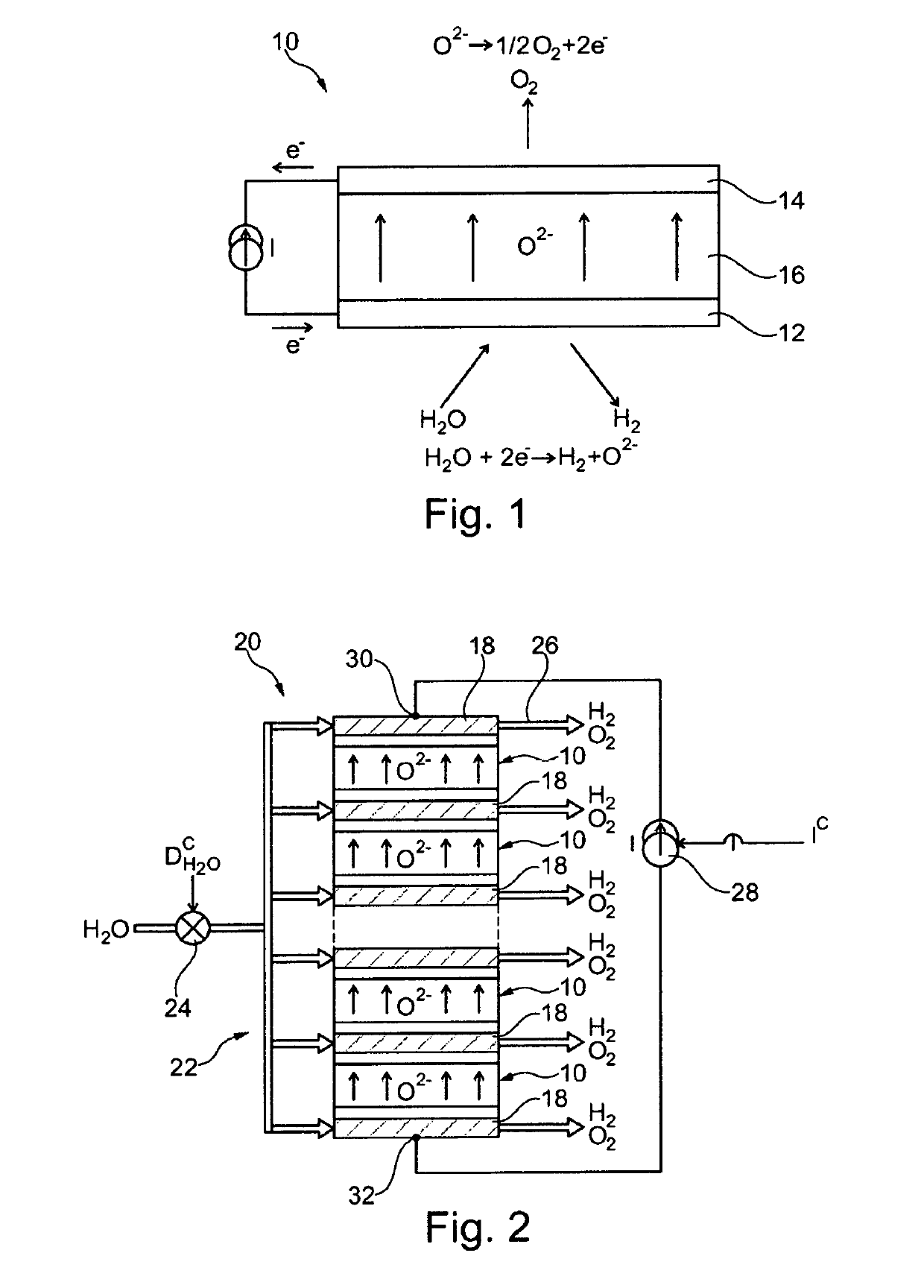
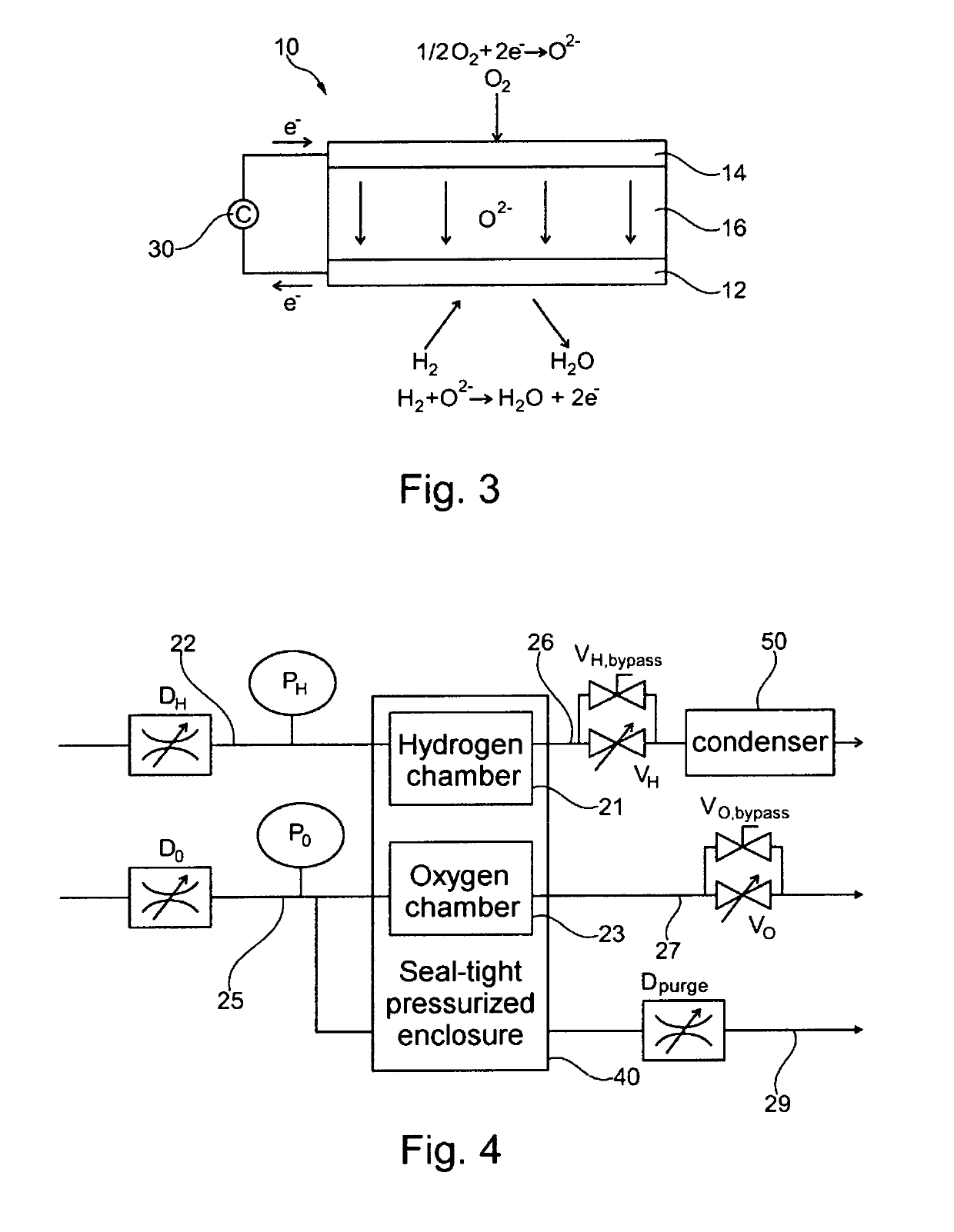
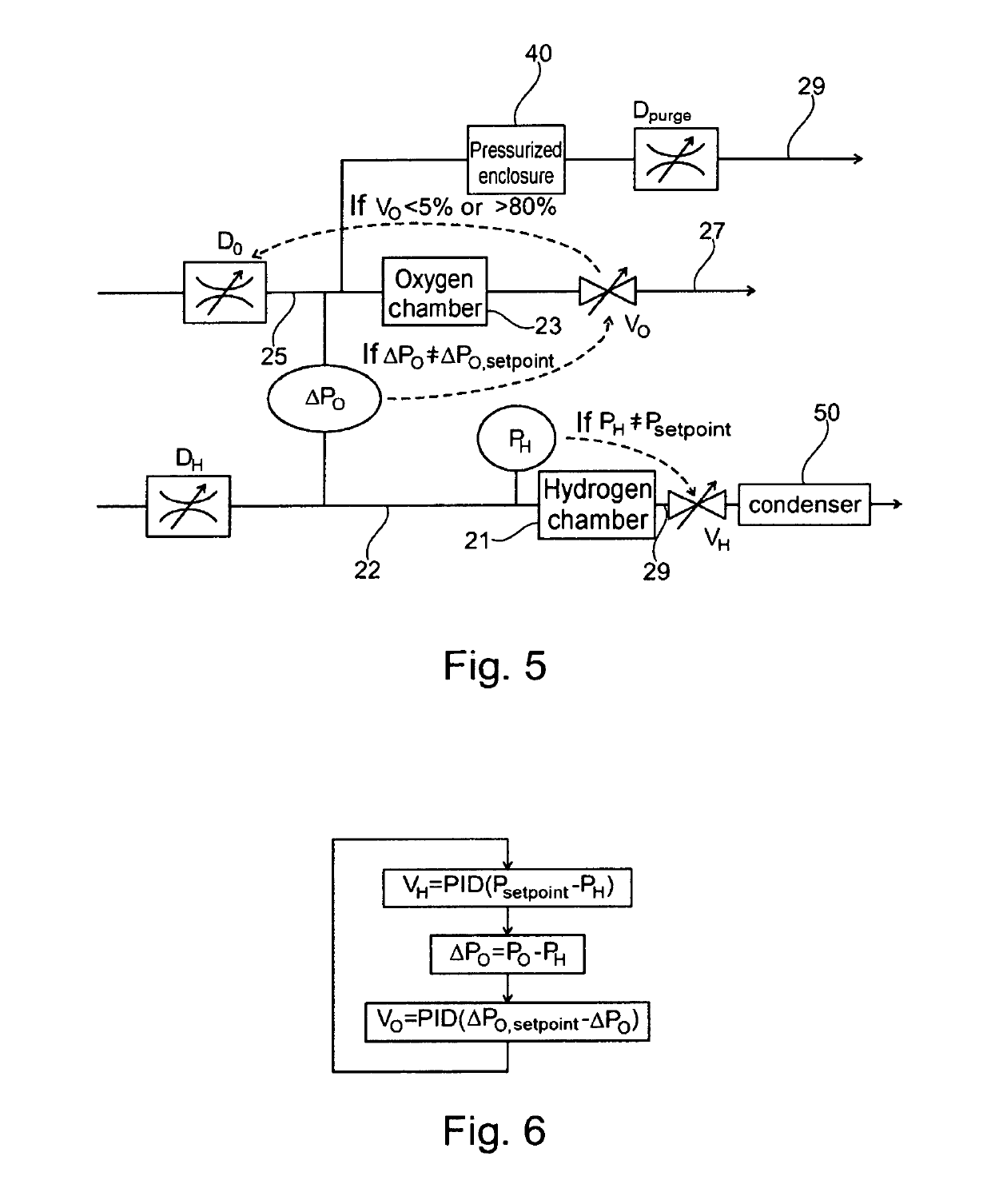
- A system with flow-rate regulators, pressure sensors, and automatically controlled valves that manage the flow of gases within and around the stack to maintain minimal pressure differences across chambers, ensuring seal-tightness and efficient operation from atmospheric pressure to several bars, using a seal-tight enclosure and maintaining gas lines above condensation temperatures to prevent steam condensation.

Aviation Safety Regulations for High-Altitude Systems
Aviation safety regulations for high-altitude fluid systems represent a critical framework governing the operation of aircraft systems operating above 40,000 feet, where stack pressure challenges become particularly pronounced. The Federal Aviation Administration (FAA) and International Civil Aviation Organization (ICAO) have established comprehensive regulatory standards that specifically address fluid system performance under extreme altitude conditions. These regulations mandate rigorous testing protocols for fuel delivery systems, hydraulic circuits, and environmental control systems to ensure operational integrity when atmospheric pressure drops to less than 20% of sea-level values.
Current regulatory frameworks require aircraft manufacturers to demonstrate compliance through extensive altitude chamber testing and computational fluid dynamics validation. The FAA's Part 25 certification standards specifically outline requirements for fuel system functionality at maximum operating altitudes, including provisions for vapor lock prevention and pressure differential management. European Aviation Safety Agency (EASA) regulations parallel these requirements while adding specific mandates for real-time pressure monitoring systems in commercial aircraft fluid networks.
Regulatory compliance testing protocols demand demonstration of system performance across rapid altitude changes, simulating emergency ascent and descent scenarios where stack pressure differentials can exceed design parameters within minutes. These standards require backup pressure regulation systems and automatic failover mechanisms to maintain fluid flow continuity during extreme pressure variations. Additionally, regulations mandate periodic inspection intervals for pressure-sensitive components, with shortened maintenance cycles for aircraft regularly operating at maximum service ceilings.
Recent regulatory updates have introduced enhanced requirements for predictive monitoring systems that can detect early signs of pressure-related system degradation. These amendments reflect growing industry recognition that traditional reactive maintenance approaches are insufficient for managing the complex interactions between altitude-induced pressure changes and fluid system reliability. Compliance with these evolving standards necessitates integration of advanced sensor networks and real-time data analytics capabilities into aircraft fluid management systems.
The regulatory landscape continues evolving as next-generation aircraft push operational envelopes higher, requiring updated certification standards that address unprecedented stack pressure challenges in commercial aviation applications.
Current regulatory frameworks require aircraft manufacturers to demonstrate compliance through extensive altitude chamber testing and computational fluid dynamics validation. The FAA's Part 25 certification standards specifically outline requirements for fuel system functionality at maximum operating altitudes, including provisions for vapor lock prevention and pressure differential management. European Aviation Safety Agency (EASA) regulations parallel these requirements while adding specific mandates for real-time pressure monitoring systems in commercial aircraft fluid networks.
Regulatory compliance testing protocols demand demonstration of system performance across rapid altitude changes, simulating emergency ascent and descent scenarios where stack pressure differentials can exceed design parameters within minutes. These standards require backup pressure regulation systems and automatic failover mechanisms to maintain fluid flow continuity during extreme pressure variations. Additionally, regulations mandate periodic inspection intervals for pressure-sensitive components, with shortened maintenance cycles for aircraft regularly operating at maximum service ceilings.
Recent regulatory updates have introduced enhanced requirements for predictive monitoring systems that can detect early signs of pressure-related system degradation. These amendments reflect growing industry recognition that traditional reactive maintenance approaches are insufficient for managing the complex interactions between altitude-induced pressure changes and fluid system reliability. Compliance with these evolving standards necessitates integration of advanced sensor networks and real-time data analytics capabilities into aircraft fluid management systems.
The regulatory landscape continues evolving as next-generation aircraft push operational envelopes higher, requiring updated certification standards that address unprecedented stack pressure challenges in commercial aviation applications.
Environmental Impact of High-Altitude Fluid Operations
High-altitude fluid operations present significant environmental challenges that extend beyond immediate operational concerns. The reduced atmospheric pressure and altered environmental conditions at elevated altitudes create unique ecological impacts that require careful consideration in system design and implementation.
Atmospheric emissions from high-altitude fluid systems exhibit different dispersion patterns compared to ground-level operations. The lower air density and modified wind patterns at altitude can lead to extended pollutant residence times in the atmosphere. Volatile organic compounds and other emissions may travel greater distances before settling, potentially affecting broader geographical areas than traditional low-altitude operations.
Water resource management becomes critically important in high-altitude environments where natural water sources are often limited and ecologically sensitive. Fluid system operations must account for potential contamination of alpine watersheds, which serve as crucial water sources for downstream communities. The slower natural remediation processes at high altitudes mean that any environmental contamination can persist for extended periods.
Soil and vegetation impacts are particularly pronounced in high-altitude environments due to the fragile nature of alpine ecosystems. The combination of stack pressure variations and environmental stressors can lead to soil compaction and erosion issues. Native vegetation, already stressed by harsh altitude conditions, faces additional challenges from operational activities and potential fluid leaks or spills.
Climate considerations play a crucial role in environmental impact assessment. High-altitude operations often occur in regions sensitive to climate change, where even minor environmental disruptions can have cascading effects on local ecosystems. Temperature fluctuations and seasonal variations affect both system performance and environmental vulnerability.
Waste heat generation from fluid systems can create localized environmental effects, including snow melt patterns and microclimate alterations. These thermal impacts may disrupt natural freeze-thaw cycles that are essential for high-altitude ecosystem functioning.
Regulatory compliance becomes more complex in high-altitude environments, as traditional environmental standards may not adequately address the unique conditions and sensitivities present at elevation. Operators must often develop enhanced environmental monitoring protocols and implement more stringent protective measures to ensure minimal ecological impact while maintaining operational effectiveness.
Atmospheric emissions from high-altitude fluid systems exhibit different dispersion patterns compared to ground-level operations. The lower air density and modified wind patterns at altitude can lead to extended pollutant residence times in the atmosphere. Volatile organic compounds and other emissions may travel greater distances before settling, potentially affecting broader geographical areas than traditional low-altitude operations.
Water resource management becomes critically important in high-altitude environments where natural water sources are often limited and ecologically sensitive. Fluid system operations must account for potential contamination of alpine watersheds, which serve as crucial water sources for downstream communities. The slower natural remediation processes at high altitudes mean that any environmental contamination can persist for extended periods.
Soil and vegetation impacts are particularly pronounced in high-altitude environments due to the fragile nature of alpine ecosystems. The combination of stack pressure variations and environmental stressors can lead to soil compaction and erosion issues. Native vegetation, already stressed by harsh altitude conditions, faces additional challenges from operational activities and potential fluid leaks or spills.
Climate considerations play a crucial role in environmental impact assessment. High-altitude operations often occur in regions sensitive to climate change, where even minor environmental disruptions can have cascading effects on local ecosystems. Temperature fluctuations and seasonal variations affect both system performance and environmental vulnerability.
Waste heat generation from fluid systems can create localized environmental effects, including snow melt patterns and microclimate alterations. These thermal impacts may disrupt natural freeze-thaw cycles that are essential for high-altitude ecosystem functioning.
Regulatory compliance becomes more complex in high-altitude environments, as traditional environmental standards may not adequately address the unique conditions and sensitivities present at elevation. Operators must often develop enhanced environmental monitoring protocols and implement more stringent protective measures to ensure minimal ecological impact while maintaining operational effectiveness.
Unlock deeper insights with PatSnap Eureka Quick Research — get a full tech report to explore trends and direct your research. Try now!
Generate Your Research Report Instantly with AI Agent
Supercharge your innovation with PatSnap Eureka AI Agent Platform!