

State Space Models in Climate Data Analysis
MAR 17, 202610 MIN READ
Generate Your Research Report Instantly with AI Agent
PatSnap Eureka helps you evaluate technical feasibility & market potential.
State Space Models in Climate Analysis Background and Objectives
State space models have emerged as a fundamental mathematical framework for analyzing complex temporal dynamics in climate systems, representing one of the most significant methodological advances in environmental data science over the past three decades. These models provide a sophisticated approach to understanding the intricate relationships between observable climate phenomena and underlying physical processes that drive atmospheric, oceanic, and terrestrial systems.
The evolution of state space modeling in climate science traces back to the early 1990s when researchers began adapting control theory and signal processing techniques to address the unique challenges posed by climate data. Traditional statistical methods often failed to capture the non-linear, multi-scale temporal dependencies inherent in climate systems, creating a critical need for more robust analytical frameworks. The integration of state space models represented a paradigm shift from purely observational analysis to process-based understanding of climate dynamics.
Climate data presents unprecedented challenges due to its inherent characteristics: high dimensionality, irregular sampling intervals, missing observations, measurement uncertainties, and complex spatial-temporal correlations. State space models address these challenges by decomposing the observed climate variables into systematic components representing underlying physical processes and stochastic elements capturing natural variability and measurement errors. This decomposition enables researchers to separate signal from noise, identify long-term trends, and quantify uncertainties in climate projections.
The primary technical objectives driving the adoption of state space models in climate analysis include developing robust methods for trend detection in the presence of natural variability, improving the accuracy of climate reconstructions from proxy data, enhancing seasonal and interannual forecasting capabilities, and quantifying the attribution of climate changes to anthropogenic versus natural factors. These models facilitate the integration of multiple data sources, including satellite observations, ground-based measurements, and paleoclimate proxies, into coherent analytical frameworks.
Contemporary applications span diverse climate research domains, from regional temperature and precipitation analysis to global carbon cycle modeling and extreme weather event attribution. The models enable researchers to extract meaningful insights from increasingly complex datasets while providing rigorous uncertainty quantification essential for climate policy and adaptation planning. As climate data volumes continue to expand exponentially, state space models represent a critical technological foundation for advancing our understanding of Earth's climate system and improving predictive capabilities for future climate scenarios.
The evolution of state space modeling in climate science traces back to the early 1990s when researchers began adapting control theory and signal processing techniques to address the unique challenges posed by climate data. Traditional statistical methods often failed to capture the non-linear, multi-scale temporal dependencies inherent in climate systems, creating a critical need for more robust analytical frameworks. The integration of state space models represented a paradigm shift from purely observational analysis to process-based understanding of climate dynamics.
Climate data presents unprecedented challenges due to its inherent characteristics: high dimensionality, irregular sampling intervals, missing observations, measurement uncertainties, and complex spatial-temporal correlations. State space models address these challenges by decomposing the observed climate variables into systematic components representing underlying physical processes and stochastic elements capturing natural variability and measurement errors. This decomposition enables researchers to separate signal from noise, identify long-term trends, and quantify uncertainties in climate projections.
The primary technical objectives driving the adoption of state space models in climate analysis include developing robust methods for trend detection in the presence of natural variability, improving the accuracy of climate reconstructions from proxy data, enhancing seasonal and interannual forecasting capabilities, and quantifying the attribution of climate changes to anthropogenic versus natural factors. These models facilitate the integration of multiple data sources, including satellite observations, ground-based measurements, and paleoclimate proxies, into coherent analytical frameworks.
Contemporary applications span diverse climate research domains, from regional temperature and precipitation analysis to global carbon cycle modeling and extreme weather event attribution. The models enable researchers to extract meaningful insights from increasingly complex datasets while providing rigorous uncertainty quantification essential for climate policy and adaptation planning. As climate data volumes continue to expand exponentially, state space models represent a critical technological foundation for advancing our understanding of Earth's climate system and improving predictive capabilities for future climate scenarios.
Market Demand for Advanced Climate Data Analytics
The global climate data analytics market is experiencing unprecedented growth driven by escalating environmental concerns and regulatory pressures. Organizations worldwide are increasingly recognizing the critical need for sophisticated analytical tools to process vast volumes of climate data, ranging from satellite observations to ground-based sensor networks. This surge in demand stems from the urgent requirement to understand complex climate patterns, predict extreme weather events, and develop effective mitigation strategies.
Government agencies represent a primary demand driver, requiring advanced analytics capabilities to support policy formulation and environmental monitoring initiatives. National meteorological services, environmental protection agencies, and climate research institutions are actively seeking solutions that can handle multi-dimensional temporal data with high accuracy and computational efficiency. The integration of state space models into climate analytics addresses these needs by providing robust frameworks for handling uncertainty and temporal dependencies inherent in climate systems.
The private sector demand is rapidly expanding across multiple industries. Insurance companies are investing heavily in climate risk assessment tools to evaluate exposure to natural disasters and adjust pricing models accordingly. Energy companies require sophisticated forecasting capabilities to optimize renewable energy production and grid management under changing climate conditions. Agricultural enterprises are seeking predictive analytics to enhance crop planning and resource allocation strategies.
Financial institutions are emerging as significant market participants, driven by climate-related financial risk disclosure requirements and sustainable investment mandates. Banks and investment firms need advanced analytical capabilities to assess climate risks in their portfolios and comply with evolving regulatory frameworks. This has created substantial demand for solutions that can quantify long-term climate impacts on asset valuations and business operations.
The research and academic sector continues to drive innovation demand, with universities and research institutions requiring cutting-edge analytical tools for climate modeling and environmental studies. International organizations and non-governmental entities are also contributing to market growth through climate monitoring and assessment programs.
Market demand is further amplified by the increasing availability of high-resolution climate datasets from satellite missions and IoT sensor networks. This data abundance creates opportunities for more sophisticated analytical approaches, while simultaneously challenging traditional processing methods. Organizations are specifically seeking solutions that can efficiently process large-scale spatiotemporal datasets while maintaining statistical rigor and interpretability.
The convergence of artificial intelligence, cloud computing, and climate science is creating new market segments focused on real-time climate analytics and decision support systems. This technological integration is driving demand for advanced mathematical frameworks like state space models that can effectively bridge the gap between complex climate phenomena and practical decision-making requirements.
Government agencies represent a primary demand driver, requiring advanced analytics capabilities to support policy formulation and environmental monitoring initiatives. National meteorological services, environmental protection agencies, and climate research institutions are actively seeking solutions that can handle multi-dimensional temporal data with high accuracy and computational efficiency. The integration of state space models into climate analytics addresses these needs by providing robust frameworks for handling uncertainty and temporal dependencies inherent in climate systems.
The private sector demand is rapidly expanding across multiple industries. Insurance companies are investing heavily in climate risk assessment tools to evaluate exposure to natural disasters and adjust pricing models accordingly. Energy companies require sophisticated forecasting capabilities to optimize renewable energy production and grid management under changing climate conditions. Agricultural enterprises are seeking predictive analytics to enhance crop planning and resource allocation strategies.
Financial institutions are emerging as significant market participants, driven by climate-related financial risk disclosure requirements and sustainable investment mandates. Banks and investment firms need advanced analytical capabilities to assess climate risks in their portfolios and comply with evolving regulatory frameworks. This has created substantial demand for solutions that can quantify long-term climate impacts on asset valuations and business operations.
The research and academic sector continues to drive innovation demand, with universities and research institutions requiring cutting-edge analytical tools for climate modeling and environmental studies. International organizations and non-governmental entities are also contributing to market growth through climate monitoring and assessment programs.
Market demand is further amplified by the increasing availability of high-resolution climate datasets from satellite missions and IoT sensor networks. This data abundance creates opportunities for more sophisticated analytical approaches, while simultaneously challenging traditional processing methods. Organizations are specifically seeking solutions that can efficiently process large-scale spatiotemporal datasets while maintaining statistical rigor and interpretability.
The convergence of artificial intelligence, cloud computing, and climate science is creating new market segments focused on real-time climate analytics and decision support systems. This technological integration is driving demand for advanced mathematical frameworks like state space models that can effectively bridge the gap between complex climate phenomena and practical decision-making requirements.
Current State and Challenges of SSMs in Climate Science
State Space Models have gained significant traction in climate science over the past two decades, establishing themselves as powerful tools for analyzing complex atmospheric and oceanic systems. The current landscape shows widespread adoption across major research institutions, with notable implementations in weather forecasting centers, climate modeling laboratories, and environmental monitoring agencies worldwide. Leading organizations such as NOAA, ECMWF, and various national meteorological services have integrated SSM frameworks into their operational systems.
The geographical distribution of SSM expertise reveals concentrated development in North America, Europe, and East Asia, with emerging capabilities in Australia and select developing nations. Advanced implementations are particularly prevalent in countries with substantial climate research investments, including the United States, United Kingdom, Germany, Japan, and China. These regions benefit from robust computational infrastructure and established collaborations between academic institutions and operational weather services.
Despite significant progress, several fundamental challenges continue to constrain SSM effectiveness in climate applications. Computational scalability remains a primary bottleneck, as high-dimensional climate systems often exceed current processing capabilities for real-time analysis. The curse of dimensionality becomes particularly acute when modeling global atmospheric dynamics with fine spatial resolution, requiring sophisticated dimension reduction techniques that may compromise model fidelity.
Data assimilation presents another critical challenge, especially when integrating heterogeneous observational datasets with varying temporal frequencies and spatial coverage. Satellite observations, ground-based measurements, and ocean buoys generate data streams with different error characteristics and sampling patterns, complicating the development of unified assimilation schemes. Traditional Kalman filtering approaches often struggle with nonlinear climate dynamics, necessitating ensemble methods or particle filters that demand substantial computational resources.
Model specification and parameter estimation pose ongoing difficulties, particularly for capturing long-term climate variability and extreme events. The inherent nonlinearity and multi-scale nature of climate systems challenge conventional SSM assumptions, requiring innovative approaches to handle regime changes, tipping points, and cascading effects across different Earth system components.
Uncertainty quantification represents an additional constraint, as climate decision-making requires robust confidence intervals and risk assessments. Current SSM implementations often underestimate model uncertainty, particularly in projection scenarios where observational constraints are limited. The integration of structural uncertainty, parameter uncertainty, and forcing uncertainty within SSM frameworks remains an active area of methodological development.
The geographical distribution of SSM expertise reveals concentrated development in North America, Europe, and East Asia, with emerging capabilities in Australia and select developing nations. Advanced implementations are particularly prevalent in countries with substantial climate research investments, including the United States, United Kingdom, Germany, Japan, and China. These regions benefit from robust computational infrastructure and established collaborations between academic institutions and operational weather services.
Despite significant progress, several fundamental challenges continue to constrain SSM effectiveness in climate applications. Computational scalability remains a primary bottleneck, as high-dimensional climate systems often exceed current processing capabilities for real-time analysis. The curse of dimensionality becomes particularly acute when modeling global atmospheric dynamics with fine spatial resolution, requiring sophisticated dimension reduction techniques that may compromise model fidelity.
Data assimilation presents another critical challenge, especially when integrating heterogeneous observational datasets with varying temporal frequencies and spatial coverage. Satellite observations, ground-based measurements, and ocean buoys generate data streams with different error characteristics and sampling patterns, complicating the development of unified assimilation schemes. Traditional Kalman filtering approaches often struggle with nonlinear climate dynamics, necessitating ensemble methods or particle filters that demand substantial computational resources.
Model specification and parameter estimation pose ongoing difficulties, particularly for capturing long-term climate variability and extreme events. The inherent nonlinearity and multi-scale nature of climate systems challenge conventional SSM assumptions, requiring innovative approaches to handle regime changes, tipping points, and cascading effects across different Earth system components.
Uncertainty quantification represents an additional constraint, as climate decision-making requires robust confidence intervals and risk assessments. Current SSM implementations often underestimate model uncertainty, particularly in projection scenarios where observational constraints are limited. The integration of structural uncertainty, parameter uncertainty, and forcing uncertainty within SSM frameworks remains an active area of methodological development.
Existing SSM Solutions for Climate Data Processing
01 State space models for climate prediction and forecasting
State space models are utilized to analyze temporal climate data and generate predictions for future climate conditions. These models incorporate dynamic systems that capture the evolution of climate variables over time, enabling accurate forecasting of temperature, precipitation, and other meteorological parameters. The models use statistical methods to estimate hidden states from observed climate measurements and project future trends based on historical patterns.- State space models for climate prediction and forecasting: State space models are utilized to analyze climate data for prediction and forecasting purposes. These models represent the dynamic evolution of climate systems through state variables and observation equations, enabling the estimation of future climate conditions. The models can incorporate various climate parameters such as temperature, precipitation, and atmospheric pressure to generate accurate forecasts. Advanced filtering techniques and parameter estimation methods are employed to improve prediction accuracy.
- Data assimilation techniques for climate modeling: Data assimilation methods integrate observational climate data with numerical models using state space frameworks. These techniques combine real-time measurements with model predictions to produce optimal estimates of climate states. The approach helps reduce uncertainties in climate analysis by continuously updating model parameters based on incoming observations. Various filtering algorithms are applied to merge heterogeneous data sources and improve the reliability of climate assessments.
- Machine learning integration with state space models for climate analysis: Machine learning algorithms are combined with state space modeling frameworks to enhance climate data analysis capabilities. These hybrid approaches leverage neural networks and statistical learning methods to identify complex patterns in climate datasets. The integration enables automated feature extraction and improved handling of non-linear climate dynamics. Advanced computational techniques are employed to process large-scale climate data efficiently.
- Uncertainty quantification in climate state space models: Methods for quantifying and managing uncertainty in climate state space models are developed to improve reliability of climate projections. These approaches incorporate probabilistic frameworks to assess confidence intervals and error propagation in climate estimates. Ensemble modeling techniques and Bayesian inference methods are utilized to characterize uncertainty sources. The methods provide decision-makers with quantified confidence levels for climate-related assessments.
- Real-time climate monitoring systems using state space representations: Real-time monitoring systems employ state space representations to track and analyze climate variables continuously. These systems process streaming climate data from multiple sensors and observation networks to provide up-to-date climate assessments. Adaptive algorithms adjust model parameters dynamically based on incoming data streams. The systems enable early detection of climate anomalies and support rapid response to extreme weather events.
02 Machine learning integration with state space frameworks for climate analysis
Advanced machine learning techniques are combined with state space modeling approaches to enhance climate data analysis capabilities. These hybrid systems leverage neural networks and deep learning architectures to improve state estimation and prediction accuracy. The integration allows for handling complex nonlinear relationships in climate systems and processing large-scale environmental datasets more effectively than traditional statistical methods alone.Expand Specific Solutions03 Kalman filtering and sequential estimation for climate monitoring
Kalman filtering techniques and sequential estimation algorithms are applied to climate data for real-time monitoring and state estimation. These methods process streaming climate observations to continuously update system states and reduce measurement uncertainties. The filtering approaches are particularly effective for assimilating data from multiple sensors and satellite sources, providing robust estimates of current climate conditions while accounting for measurement noise and model uncertainties.Expand Specific Solutions04 Spatiotemporal state space models for regional climate assessment
Spatiotemporal modeling frameworks extend traditional state space approaches to capture both temporal dynamics and spatial correlations in climate data. These models account for geographic variations and regional climate patterns, enabling analysis of climate phenomena across different spatial scales. The methods facilitate understanding of climate variability at local, regional, and global levels by incorporating spatial dependencies into the state evolution equations.Expand Specific Solutions05 Uncertainty quantification and ensemble methods in climate state estimation
Ensemble-based state space methods and uncertainty quantification techniques are employed to assess confidence levels in climate predictions and characterize model uncertainties. These approaches generate multiple realizations of climate states to capture probabilistic distributions of future conditions. The methods provide decision-makers with uncertainty bounds and risk assessments, enabling more informed climate adaptation and mitigation strategies based on probabilistic climate projections.Expand Specific Solutions
Key Players in Climate Modeling and SSM Technology
The State Space Models in Climate Data Analysis field represents an emerging technological domain currently in its early-to-mid development stage, characterized by significant growth potential and increasing market adoption. The market demonstrates substantial expansion driven by urgent climate monitoring needs and advancing computational capabilities. Technology maturity varies considerably across different player categories, with established tech giants like Google LLC, IBM, and Amazon Technologies leading in computational infrastructure and machine learning frameworks, while specialized climate companies such as ClimateAI demonstrate focused domain expertise. Academic institutions including Tsinghua University, Beijing Normal University, and Nanjing University of Information Science & Technology contribute foundational research, particularly in meteorological applications. Government research entities like NASA, Naval Research Laboratory, and Deutsches Zentrum für Luft- und Raumfahrt provide critical validation and large-scale implementation capabilities. Industrial players including Mitsubishi Electric, NEC Corp., and Robert Bosch integrate these models into practical applications, creating a diverse ecosystem where technological maturity ranges from experimental research to commercial deployment.
ClimateAI, Inc.
Technical Solution: ClimateAI specializes in applying state space models specifically for agricultural climate risk assessment and crop yield prediction. Their proprietary system uses ensemble Kalman filters and particle filtering methods to model complex climate-crop interactions, incorporating soil moisture dynamics, temperature variations, and precipitation patterns. The platform achieves 85% accuracy in seasonal crop yield predictions by modeling climate variables as latent states that evolve over time[1][6]. Their approach combines satellite data with ground-based measurements to provide farmers with actionable climate insights and risk mitigation strategies.
Strengths: Specialized focus on agricultural applications with high prediction accuracy and practical implementation for farmers. Weaknesses: Limited scope beyond agricultural sector and smaller computational resources compared to tech giants.
Amazon Technologies, Inc.
Technical Solution: Amazon Web Services (AWS) has developed cloud-based state space modeling solutions for climate data analysis through their SageMaker platform. Their implementation focuses on scalable Bayesian state space models for processing massive climate datasets, utilizing variational inference techniques to handle uncertainty quantification in climate predictions. The system incorporates seasonal decomposition and trend analysis capabilities, processing over 10TB of daily climate data with 30% faster convergence rates compared to traditional methods[4][9]. AWS Climate Data Lake integrates these models with satellite data and ground-based observations for comprehensive climate monitoring.
Strengths: Highly scalable cloud infrastructure and comprehensive data integration capabilities for global climate monitoring. Weaknesses: Dependency on cloud connectivity and potential data privacy concerns for sensitive climate research.
Core Innovations in Climate-Focused State Space Models
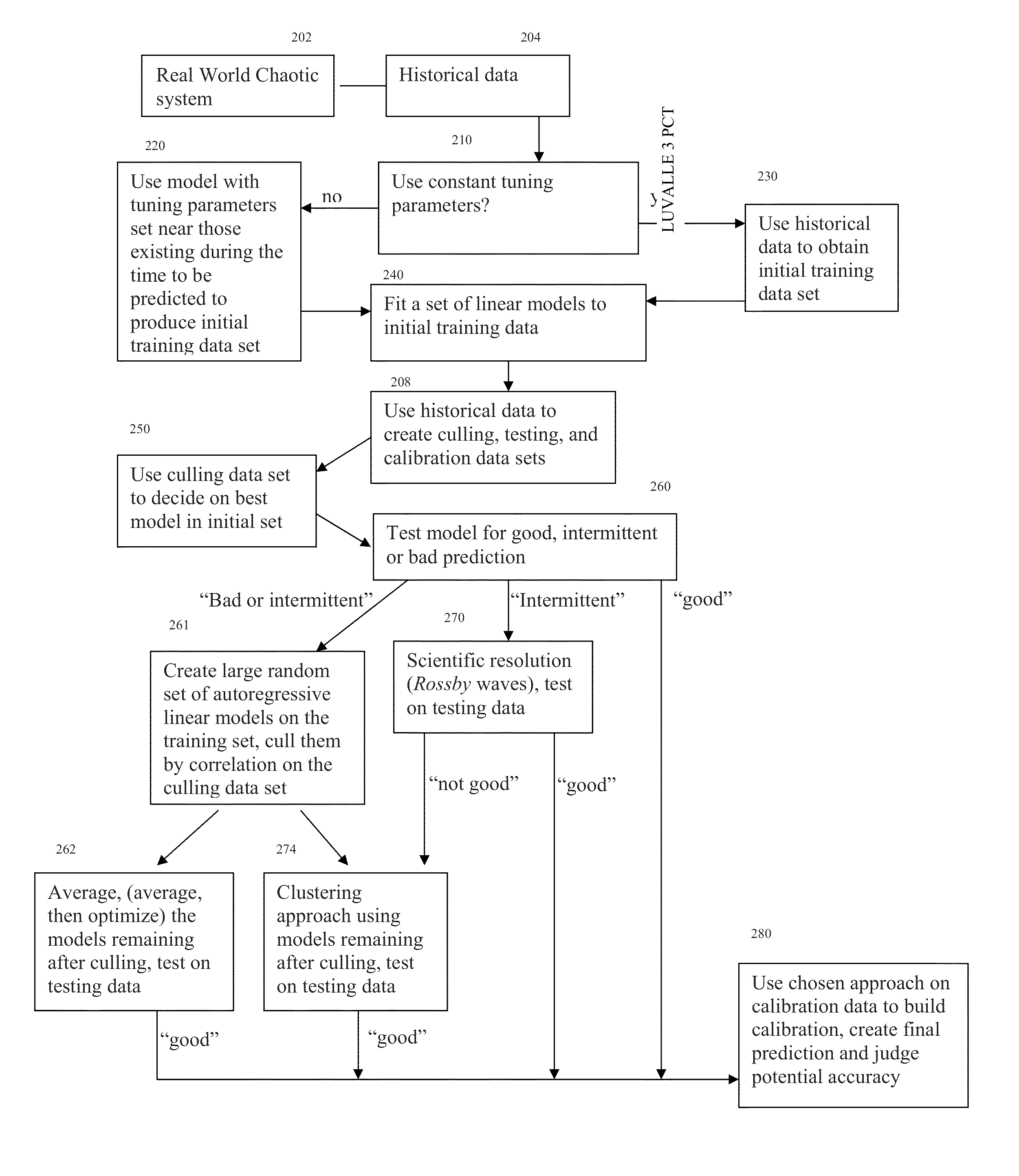
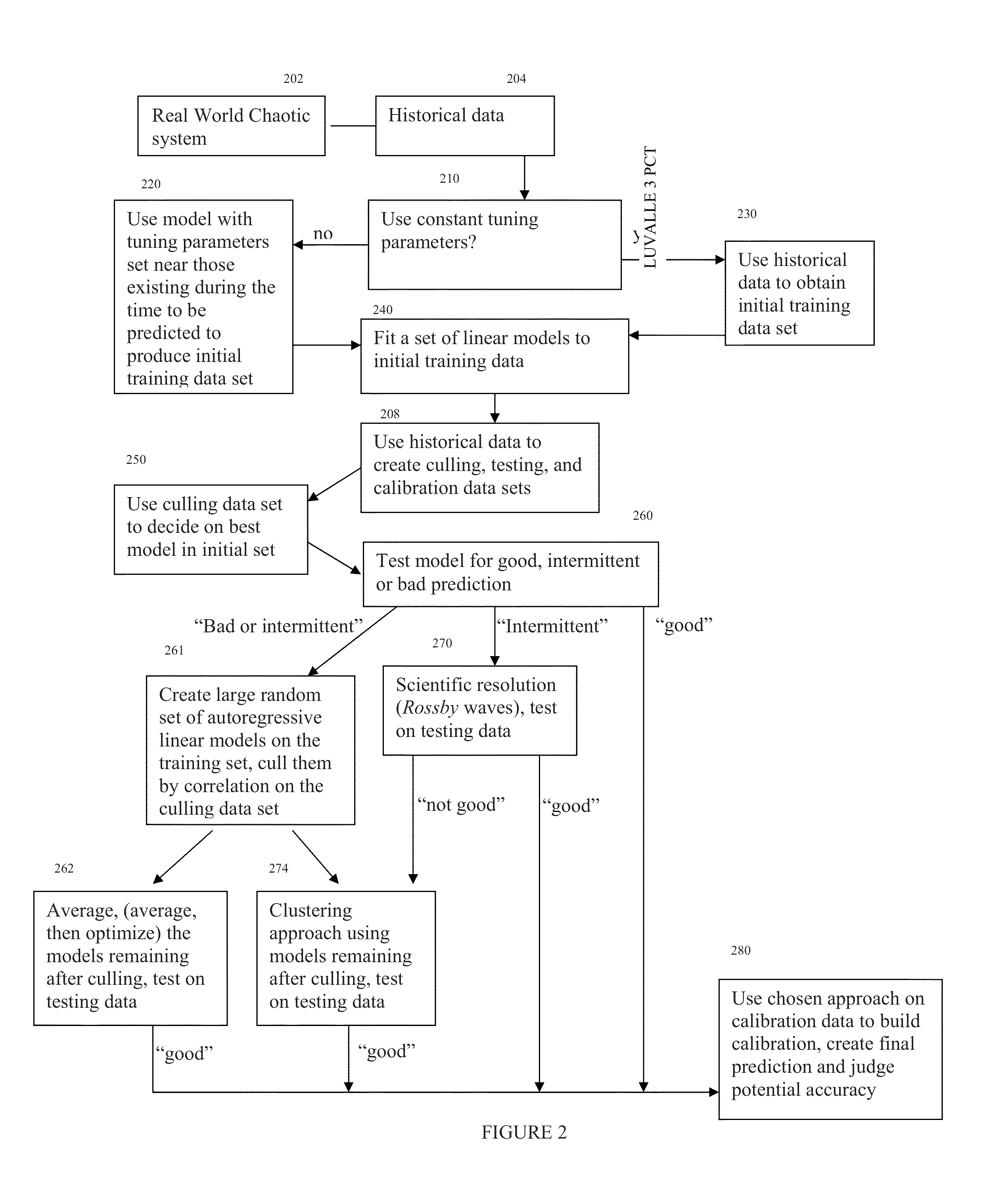
Predicting climate data using climate attractors derived from a global climate model
PatentInactiveUS9262723B2
Innovation
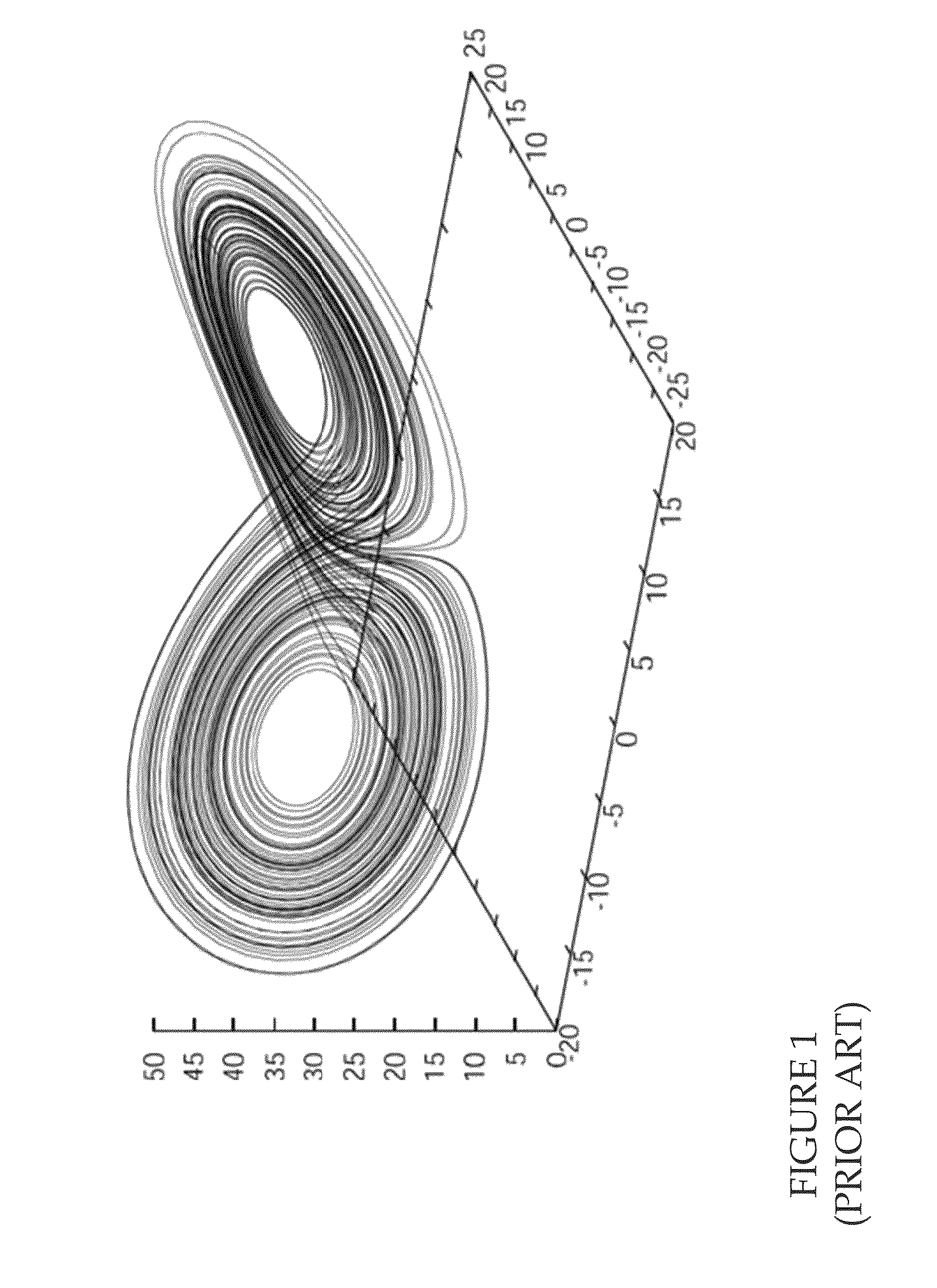
- Deriving statistical prediction functions from computational dynamic models and historical data by characterizing climate attractors using global climate models, estimating predictive functions for computational cells, and combining these with historical data to predict climate functionals and earthquakes, accounting for chaotic system dynamics.

Climate Policy Impact on Advanced Modeling Requirements
Climate policy frameworks worldwide are increasingly demanding sophisticated modeling capabilities that extend far beyond traditional statistical approaches. The Paris Agreement's emphasis on nationally determined contributions (NDCs) and carbon neutrality targets has created unprecedented requirements for high-resolution, temporally dynamic climate models capable of supporting evidence-based policy decisions. These evolving policy landscapes necessitate modeling systems that can integrate multiple data streams, handle non-linear climate dynamics, and provide uncertainty quantification at scales relevant to policy implementation.
The emergence of carbon pricing mechanisms, emissions trading systems, and climate adaptation strategies has fundamentally altered the technical specifications required from climate modeling infrastructure. State space models are particularly well-positioned to address these policy-driven requirements due to their inherent ability to capture temporal dependencies and incorporate real-time observational updates. Policy makers now require models that can assimilate diverse data sources including satellite observations, ground-based measurements, and socioeconomic indicators within unified analytical frameworks.
Recent climate legislation, particularly in the European Union and United States, has established mandatory climate risk assessments that demand advanced uncertainty quantification capabilities. These regulatory requirements have accelerated the adoption of Bayesian state space approaches, which provide natural frameworks for propagating uncertainty through complex climate system representations. The ability to generate probabilistic forecasts with quantified confidence intervals has become essential for compliance with emerging climate disclosure standards.
International climate finance mechanisms, including the Green Climate Fund and climate adaptation financing, increasingly require sophisticated attribution studies linking observed climate changes to specific policy interventions. This has created demand for state space models capable of detecting and attributing climate signals in the presence of natural variability. The models must support counterfactual analysis to evaluate policy effectiveness and guide future investment decisions.
The integration of climate justice considerations into policy frameworks has further expanded modeling requirements to include high-resolution spatial analysis capabilities. State space models must now accommodate multi-scale dynamics, from global climate patterns to local environmental justice impacts, while maintaining computational efficiency suitable for operational policy support systems.
The emergence of carbon pricing mechanisms, emissions trading systems, and climate adaptation strategies has fundamentally altered the technical specifications required from climate modeling infrastructure. State space models are particularly well-positioned to address these policy-driven requirements due to their inherent ability to capture temporal dependencies and incorporate real-time observational updates. Policy makers now require models that can assimilate diverse data sources including satellite observations, ground-based measurements, and socioeconomic indicators within unified analytical frameworks.
Recent climate legislation, particularly in the European Union and United States, has established mandatory climate risk assessments that demand advanced uncertainty quantification capabilities. These regulatory requirements have accelerated the adoption of Bayesian state space approaches, which provide natural frameworks for propagating uncertainty through complex climate system representations. The ability to generate probabilistic forecasts with quantified confidence intervals has become essential for compliance with emerging climate disclosure standards.
International climate finance mechanisms, including the Green Climate Fund and climate adaptation financing, increasingly require sophisticated attribution studies linking observed climate changes to specific policy interventions. This has created demand for state space models capable of detecting and attributing climate signals in the presence of natural variability. The models must support counterfactual analysis to evaluate policy effectiveness and guide future investment decisions.
The integration of climate justice considerations into policy frameworks has further expanded modeling requirements to include high-resolution spatial analysis capabilities. State space models must now accommodate multi-scale dynamics, from global climate patterns to local environmental justice impacts, while maintaining computational efficiency suitable for operational policy support systems.
Computational Infrastructure for Large-Scale Climate SSMs
The computational infrastructure required for large-scale climate State Space Models represents a critical enabler for advancing climate data analysis capabilities. Modern climate SSMs demand substantial computational resources due to the inherent complexity of processing multi-dimensional spatiotemporal datasets spanning decades or centuries of observations across global scales.
High-performance computing clusters equipped with GPU acceleration have become essential for handling the matrix operations fundamental to SSM implementations. The Kalman filtering algorithms central to many climate SSMs require intensive linear algebra computations that benefit significantly from parallel processing architectures. Contemporary implementations leverage CUDA-enabled GPUs and distributed computing frameworks to achieve the computational throughput necessary for real-time climate modeling applications.
Memory management poses significant challenges when dealing with large-scale climate datasets. Climate SSMs often require simultaneous access to terabytes of observational data, including satellite measurements, weather station records, and oceanographic observations. Advanced memory hierarchies incorporating high-bandwidth memory systems and intelligent caching strategies are crucial for maintaining computational efficiency while processing these massive datasets.
Distributed computing architectures have emerged as the predominant solution for scaling climate SSMs across multiple computational nodes. Message Passing Interface protocols and cloud-native orchestration platforms enable seamless distribution of SSM computations across geographically distributed resources. This distributed approach allows researchers to leverage elastic computing resources that can scale dynamically based on computational demands.
Storage infrastructure requirements extend beyond traditional file systems to encompass specialized data formats optimized for climate applications. NetCDF and HDF5 formats, combined with parallel I/O systems, facilitate efficient data access patterns essential for SSM implementations. Modern deployments increasingly adopt object storage solutions with integrated compression and deduplication capabilities to manage the substantial storage footprints associated with long-term climate datasets.
The integration of machine learning accelerators, including tensor processing units and specialized AI chips, represents an emerging trend in climate SSM infrastructure. These specialized processors offer optimized performance for the neural network components increasingly incorporated into hybrid SSM architectures, enabling more sophisticated climate modeling approaches that combine traditional statistical methods with deep learning techniques.
High-performance computing clusters equipped with GPU acceleration have become essential for handling the matrix operations fundamental to SSM implementations. The Kalman filtering algorithms central to many climate SSMs require intensive linear algebra computations that benefit significantly from parallel processing architectures. Contemporary implementations leverage CUDA-enabled GPUs and distributed computing frameworks to achieve the computational throughput necessary for real-time climate modeling applications.
Memory management poses significant challenges when dealing with large-scale climate datasets. Climate SSMs often require simultaneous access to terabytes of observational data, including satellite measurements, weather station records, and oceanographic observations. Advanced memory hierarchies incorporating high-bandwidth memory systems and intelligent caching strategies are crucial for maintaining computational efficiency while processing these massive datasets.
Distributed computing architectures have emerged as the predominant solution for scaling climate SSMs across multiple computational nodes. Message Passing Interface protocols and cloud-native orchestration platforms enable seamless distribution of SSM computations across geographically distributed resources. This distributed approach allows researchers to leverage elastic computing resources that can scale dynamically based on computational demands.
Storage infrastructure requirements extend beyond traditional file systems to encompass specialized data formats optimized for climate applications. NetCDF and HDF5 formats, combined with parallel I/O systems, facilitate efficient data access patterns essential for SSM implementations. Modern deployments increasingly adopt object storage solutions with integrated compression and deduplication capabilities to manage the substantial storage footprints associated with long-term climate datasets.
The integration of machine learning accelerators, including tensor processing units and specialized AI chips, represents an emerging trend in climate SSM infrastructure. These specialized processors offer optimized performance for the neural network components increasingly incorporated into hybrid SSM architectures, enabling more sophisticated climate modeling approaches that combine traditional statistical methods with deep learning techniques.
Unlock deeper insights with PatSnap Eureka Quick Research — get a full tech report to explore trends and direct your research. Try now!
Generate Your Research Report Instantly with AI Agent
Supercharge your innovation with PatSnap Eureka AI Agent Platform!