

State Space Models in Predictive Maintenance Systems
MAR 17, 20269 MIN READ
Generate Your Research Report Instantly with AI Agent
PatSnap Eureka helps you evaluate technical feasibility & market potential.
State Space Models in Predictive Maintenance Background and Objectives
State space models have emerged as a cornerstone technology in modern predictive maintenance systems, representing a sophisticated mathematical framework that enables organizations to transition from reactive to proactive maintenance strategies. These models provide a systematic approach to capturing the dynamic behavior of complex industrial systems by representing their internal states through mathematical equations that evolve over time.
The historical development of state space models in predictive maintenance can be traced back to the 1960s when control theory principles were first adapted for industrial monitoring applications. Initially developed for aerospace and defense applications, these models gained prominence in manufacturing and process industries during the 1980s and 1990s as computational capabilities advanced. The integration of sensor technologies, data acquisition systems, and machine learning algorithms has significantly accelerated their adoption across various industrial sectors.
The evolution of predictive maintenance has progressed through distinct phases, beginning with time-based maintenance schedules, advancing to condition-based monitoring, and ultimately reaching the current era of predictive analytics. State space models represent the technological foundation that enables this progression by providing a mathematical structure capable of modeling complex system dynamics, incorporating uncertainty, and predicting future system behavior based on current observations.
The primary technical objective of implementing state space models in predictive maintenance systems is to establish a robust mathematical representation of equipment health that can accurately predict failure modes before they occur. This involves developing models that can effectively capture the underlying physical processes governing equipment degradation, while simultaneously accounting for measurement noise, environmental variations, and operational uncertainties.
Key objectives include achieving high prediction accuracy for remaining useful life estimation, minimizing false positive and false negative failure predictions, and enabling real-time monitoring capabilities that can adapt to changing operational conditions. The models must demonstrate scalability across different equipment types and operational environments while maintaining computational efficiency suitable for industrial deployment.
Furthermore, these systems aim to optimize maintenance scheduling by providing probabilistic estimates of failure likelihood, thereby reducing unplanned downtime, minimizing maintenance costs, and extending equipment lifespan. The integration of state space models with existing enterprise asset management systems represents another critical objective, ensuring seamless data flow and decision-making processes within organizational frameworks.
The ultimate goal encompasses developing autonomous maintenance systems that can self-diagnose equipment conditions, predict optimal maintenance windows, and recommend specific maintenance actions based on comprehensive system state analysis and historical performance data.
The historical development of state space models in predictive maintenance can be traced back to the 1960s when control theory principles were first adapted for industrial monitoring applications. Initially developed for aerospace and defense applications, these models gained prominence in manufacturing and process industries during the 1980s and 1990s as computational capabilities advanced. The integration of sensor technologies, data acquisition systems, and machine learning algorithms has significantly accelerated their adoption across various industrial sectors.
The evolution of predictive maintenance has progressed through distinct phases, beginning with time-based maintenance schedules, advancing to condition-based monitoring, and ultimately reaching the current era of predictive analytics. State space models represent the technological foundation that enables this progression by providing a mathematical structure capable of modeling complex system dynamics, incorporating uncertainty, and predicting future system behavior based on current observations.
The primary technical objective of implementing state space models in predictive maintenance systems is to establish a robust mathematical representation of equipment health that can accurately predict failure modes before they occur. This involves developing models that can effectively capture the underlying physical processes governing equipment degradation, while simultaneously accounting for measurement noise, environmental variations, and operational uncertainties.
Key objectives include achieving high prediction accuracy for remaining useful life estimation, minimizing false positive and false negative failure predictions, and enabling real-time monitoring capabilities that can adapt to changing operational conditions. The models must demonstrate scalability across different equipment types and operational environments while maintaining computational efficiency suitable for industrial deployment.
Furthermore, these systems aim to optimize maintenance scheduling by providing probabilistic estimates of failure likelihood, thereby reducing unplanned downtime, minimizing maintenance costs, and extending equipment lifespan. The integration of state space models with existing enterprise asset management systems represents another critical objective, ensuring seamless data flow and decision-making processes within organizational frameworks.
The ultimate goal encompasses developing autonomous maintenance systems that can self-diagnose equipment conditions, predict optimal maintenance windows, and recommend specific maintenance actions based on comprehensive system state analysis and historical performance data.
Market Demand for Advanced Predictive Maintenance Solutions
The global predictive maintenance market has experienced substantial growth driven by increasing industrial digitization and the rising costs of unplanned equipment failures. Manufacturing sectors, particularly automotive, aerospace, and heavy machinery industries, are actively seeking advanced solutions to minimize downtime and optimize operational efficiency. Traditional time-based maintenance approaches are proving inadequate for modern complex systems, creating significant demand for intelligent predictive technologies.
State space models represent a sophisticated mathematical framework that addresses critical limitations in current predictive maintenance solutions. Unlike conventional statistical methods, these models can capture dynamic system behaviors and handle multi-dimensional equipment states simultaneously. The demand for such advanced modeling capabilities stems from the increasing complexity of industrial equipment and the need for more accurate failure prediction across diverse operational conditions.
Industrial sectors are particularly interested in solutions that can process real-time sensor data while maintaining computational efficiency. State space models offer unique advantages in handling noisy sensor measurements and incomplete data scenarios, which are common challenges in industrial environments. The ability to incorporate uncertainty quantification and provide probabilistic failure predictions has become increasingly valuable for maintenance decision-making processes.
The market demand is further amplified by regulatory requirements in safety-critical industries such as aviation, nuclear power, and oil and gas. These sectors require predictive maintenance systems that can demonstrate mathematical rigor and provide traceable decision-making processes. State space models offer the theoretical foundation and interpretability that regulatory bodies increasingly expect from advanced maintenance systems.
Economic factors also drive market demand, as organizations seek to balance maintenance costs with operational reliability. Advanced predictive maintenance solutions using state space models can optimize maintenance scheduling by providing more accurate remaining useful life estimates. This capability enables organizations to extend equipment lifecycles while maintaining safety standards, resulting in significant cost savings and improved asset utilization rates.
The integration requirements with existing enterprise systems and IoT infrastructures create additional market opportunities. State space models can be effectively integrated with modern data analytics platforms and cloud computing environments, making them attractive for organizations undergoing digital transformation initiatives in their maintenance operations.
State space models represent a sophisticated mathematical framework that addresses critical limitations in current predictive maintenance solutions. Unlike conventional statistical methods, these models can capture dynamic system behaviors and handle multi-dimensional equipment states simultaneously. The demand for such advanced modeling capabilities stems from the increasing complexity of industrial equipment and the need for more accurate failure prediction across diverse operational conditions.
Industrial sectors are particularly interested in solutions that can process real-time sensor data while maintaining computational efficiency. State space models offer unique advantages in handling noisy sensor measurements and incomplete data scenarios, which are common challenges in industrial environments. The ability to incorporate uncertainty quantification and provide probabilistic failure predictions has become increasingly valuable for maintenance decision-making processes.
The market demand is further amplified by regulatory requirements in safety-critical industries such as aviation, nuclear power, and oil and gas. These sectors require predictive maintenance systems that can demonstrate mathematical rigor and provide traceable decision-making processes. State space models offer the theoretical foundation and interpretability that regulatory bodies increasingly expect from advanced maintenance systems.
Economic factors also drive market demand, as organizations seek to balance maintenance costs with operational reliability. Advanced predictive maintenance solutions using state space models can optimize maintenance scheduling by providing more accurate remaining useful life estimates. This capability enables organizations to extend equipment lifecycles while maintaining safety standards, resulting in significant cost savings and improved asset utilization rates.
The integration requirements with existing enterprise systems and IoT infrastructures create additional market opportunities. State space models can be effectively integrated with modern data analytics platforms and cloud computing environments, making them attractive for organizations undergoing digital transformation initiatives in their maintenance operations.
Current State and Challenges of SSM in Industrial Applications
State Space Models have gained significant traction in industrial predictive maintenance applications over the past decade, establishing themselves as a powerful framework for modeling complex dynamic systems. Current implementations span across various industrial sectors including manufacturing, aerospace, energy, and transportation, where SSMs are employed to monitor equipment health, predict failures, and optimize maintenance schedules.
The contemporary landscape of SSM applications in industry demonstrates considerable maturity in certain domains while revealing substantial gaps in others. Manufacturing environments have successfully deployed SSMs for rotating machinery monitoring, where vibration signals and temperature data are processed through state-space frameworks to detect bearing failures and motor degradation. Similarly, the aerospace industry has integrated SSMs into engine health monitoring systems, leveraging their ability to handle multivariate time series data from multiple sensors simultaneously.
However, significant challenges persist in the widespread adoption of SSMs across industrial applications. Computational complexity remains a primary constraint, particularly for real-time implementations in resource-limited industrial environments. Traditional Kalman filtering approaches, while mathematically elegant, often struggle with the high-dimensional state spaces characteristic of modern industrial systems equipped with hundreds of sensors.
Data quality and availability present another critical challenge. Industrial environments frequently suffer from incomplete sensor data, irregular sampling rates, and varying signal-to-noise ratios. SSMs require consistent, high-quality time series data for effective parameter estimation and state inference, conditions that are often difficult to maintain in harsh industrial settings.
Model interpretability poses additional obstacles for industrial adoption. While SSMs excel at capturing system dynamics, their black-box nature makes it challenging for maintenance engineers to understand and trust the underlying decision-making processes. This lack of transparency creates resistance to adoption in safety-critical applications where explainable predictions are essential.
Scalability issues emerge when deploying SSMs across large industrial facilities with diverse equipment types. Each system requires customized model architectures and parameter tuning, making standardization and maintenance of multiple SSM implementations operationally complex and resource-intensive.
Integration with existing industrial infrastructure represents another significant hurdle. Legacy systems often lack the computational resources and data connectivity required for sophisticated SSM implementations, necessitating substantial infrastructure investments that many organizations are reluctant to undertake.
The contemporary landscape of SSM applications in industry demonstrates considerable maturity in certain domains while revealing substantial gaps in others. Manufacturing environments have successfully deployed SSMs for rotating machinery monitoring, where vibration signals and temperature data are processed through state-space frameworks to detect bearing failures and motor degradation. Similarly, the aerospace industry has integrated SSMs into engine health monitoring systems, leveraging their ability to handle multivariate time series data from multiple sensors simultaneously.
However, significant challenges persist in the widespread adoption of SSMs across industrial applications. Computational complexity remains a primary constraint, particularly for real-time implementations in resource-limited industrial environments. Traditional Kalman filtering approaches, while mathematically elegant, often struggle with the high-dimensional state spaces characteristic of modern industrial systems equipped with hundreds of sensors.
Data quality and availability present another critical challenge. Industrial environments frequently suffer from incomplete sensor data, irregular sampling rates, and varying signal-to-noise ratios. SSMs require consistent, high-quality time series data for effective parameter estimation and state inference, conditions that are often difficult to maintain in harsh industrial settings.
Model interpretability poses additional obstacles for industrial adoption. While SSMs excel at capturing system dynamics, their black-box nature makes it challenging for maintenance engineers to understand and trust the underlying decision-making processes. This lack of transparency creates resistance to adoption in safety-critical applications where explainable predictions are essential.
Scalability issues emerge when deploying SSMs across large industrial facilities with diverse equipment types. Each system requires customized model architectures and parameter tuning, making standardization and maintenance of multiple SSM implementations operationally complex and resource-intensive.
Integration with existing industrial infrastructure represents another significant hurdle. Legacy systems often lack the computational resources and data connectivity required for sophisticated SSM implementations, necessitating substantial infrastructure investments that many organizations are reluctant to undertake.
Existing State Space Model Solutions for Asset Health
01 State space models for control systems and dynamic system modeling
State space models are mathematical representations used to describe dynamic systems through state variables, inputs, and outputs. These models enable the analysis and design of control systems by representing system dynamics in matrix form. They are particularly useful for multi-input multi-output systems and allow for the application of modern control theory techniques including optimal control and state estimation.- State space models for control systems and signal processing: State space models are mathematical representations used to describe dynamic systems through state variables and their relationships. These models enable the analysis and design of control systems by representing system behavior using differential or difference equations. They are particularly useful for modeling complex systems with multiple inputs and outputs, allowing for systematic controller design and system optimization.
- State space models for estimation and filtering applications: State space representations are employed in estimation and filtering techniques to predict and update system states based on noisy measurements. These models form the foundation for algorithms that process sensor data and extract meaningful information from uncertain observations. The framework allows for recursive estimation methods that can handle time-varying systems and provide optimal state estimates under various noise conditions.
- Machine learning and neural network implementations using state space models: State space models are integrated with machine learning architectures to create efficient sequence modeling systems. These implementations leverage the mathematical structure of state space representations to build neural networks that can process sequential data with improved computational efficiency. The approach enables the development of models that can capture long-range dependencies while maintaining linear computational complexity during inference.
- State space models for time series prediction and forecasting: State space frameworks provide powerful tools for analyzing and predicting time series data across various domains. These models capture temporal dependencies and underlying dynamics in sequential data, enabling accurate forecasting of future values. The methodology supports both linear and nonlinear system representations, making it applicable to diverse prediction tasks including financial forecasting, demand prediction, and trend analysis.
- State space models for optimization and adaptive systems: State space representations facilitate the design of optimization algorithms and adaptive systems that can adjust their behavior based on changing conditions. These models enable the formulation of optimal control problems and the development of adaptive filtering techniques. The framework supports real-time parameter estimation and system identification, allowing systems to learn and adapt to new operating conditions while maintaining stability and performance.
02 State space models for signal processing and filtering applications
State space representations are employed in signal processing to implement digital filters and perform signal estimation. These models provide a framework for recursive algorithms such as Kalman filtering, which estimates system states from noisy measurements. The approach is widely used in applications requiring real-time processing and adaptive filtering capabilities.Expand Specific Solutions03 Machine learning and neural network implementations using state space models
State space models are integrated with machine learning architectures to capture temporal dependencies and sequential patterns in data. These models serve as alternatives or complements to recurrent neural networks and transformers, offering efficient computation for long sequences. They enable improved performance in tasks such as time series prediction, natural language processing, and sequence modeling.Expand Specific Solutions04 State space models for system identification and parameter estimation
These models provide methodologies for identifying unknown system parameters and structures from observed input-output data. The techniques involve optimization algorithms and statistical methods to estimate state space matrices that best represent the underlying system dynamics. Applications include modeling physical systems, economic processes, and biological systems where direct measurement of internal states is not feasible.Expand Specific Solutions05 State space models for prediction and forecasting systems
State space frameworks are utilized to develop predictive models that forecast future system behavior based on historical data and current states. These models incorporate uncertainty quantification and can handle missing data through state estimation techniques. They are applied in diverse domains including financial forecasting, weather prediction, and predictive maintenance systems.Expand Specific Solutions
Key Players in Predictive Maintenance and SSM Technology
The State Space Models in Predictive Maintenance Systems market represents a rapidly evolving sector within the broader industrial IoT and Industry 4.0 landscape, currently in its growth phase with significant expansion potential driven by increasing digitalization across manufacturing and infrastructure sectors. The market encompasses diverse applications from power generation to manufacturing equipment monitoring, with established industrial giants like Siemens Corp., ABB Ltd., Robert Bosch GmbH, and Hitachi Ltd. leading traditional approaches, while specialized firms such as Beijing Tianze Zhiyun Technology and VGEN Co., Ltd. are advancing AI-driven predictive analytics. Technology maturity varies significantly across the competitive landscape, with companies like Google LLC and Amazon Technologies leveraging cloud-based machine learning platforms, whereas traditional manufacturers like Cummins Inc. and Komatsu Industries Corp. are integrating state space modeling into existing maintenance frameworks. The sector demonstrates strong growth momentum as organizations seek to minimize downtime and optimize asset performance through advanced mathematical modeling techniques.
Robert Bosch GmbH
Technical Solution: Bosch has developed comprehensive state space model frameworks for predictive maintenance in automotive and industrial applications. Their approach integrates multi-sensor data fusion with Kalman filtering techniques to model system dynamics and predict component failures. The company's solution employs adaptive state estimation algorithms that continuously update system parameters based on real-time sensor feedback from engines, transmissions, and manufacturing equipment. Their state space models incorporate both linear and non-linear system representations, enabling accurate prediction of wear patterns, vibration anomalies, and thermal degradation across diverse industrial assets.
Strengths: Extensive automotive domain expertise and robust multi-sensor integration capabilities. Weaknesses: High computational complexity may limit real-time applications in resource-constrained environments.
Google LLC
Technical Solution: Google has developed sophisticated state space models for predictive maintenance applications through their Cloud AI and TensorFlow frameworks. Their approach leverages deep state space models that combine traditional Kalman filtering with neural network architectures for enhanced prediction accuracy. The system utilizes variational inference techniques to handle uncertainty in system parameters and incorporates attention mechanisms to focus on critical system states. Google's solution supports scalable deployment across cloud infrastructure, enabling real-time processing of large-scale sensor data from industrial equipment, data centers, and infrastructure systems with automated anomaly detection and failure prediction capabilities.
Strengths: Advanced machine learning capabilities and scalable cloud infrastructure for large-scale deployments. Weaknesses: Limited domain-specific industrial expertise compared to traditional industrial automation companies.
Core Innovations in SSM Algorithms for Fault Prediction
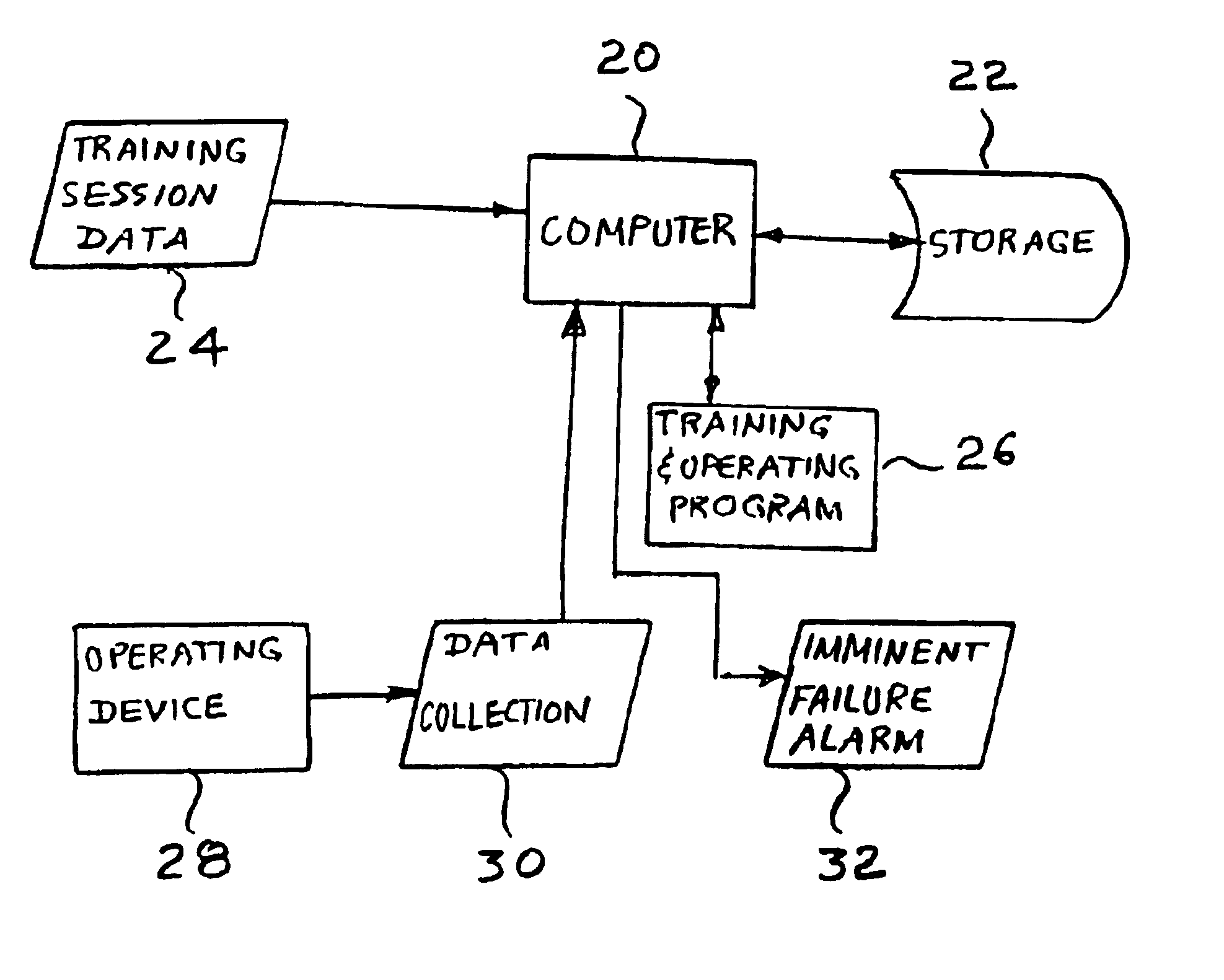
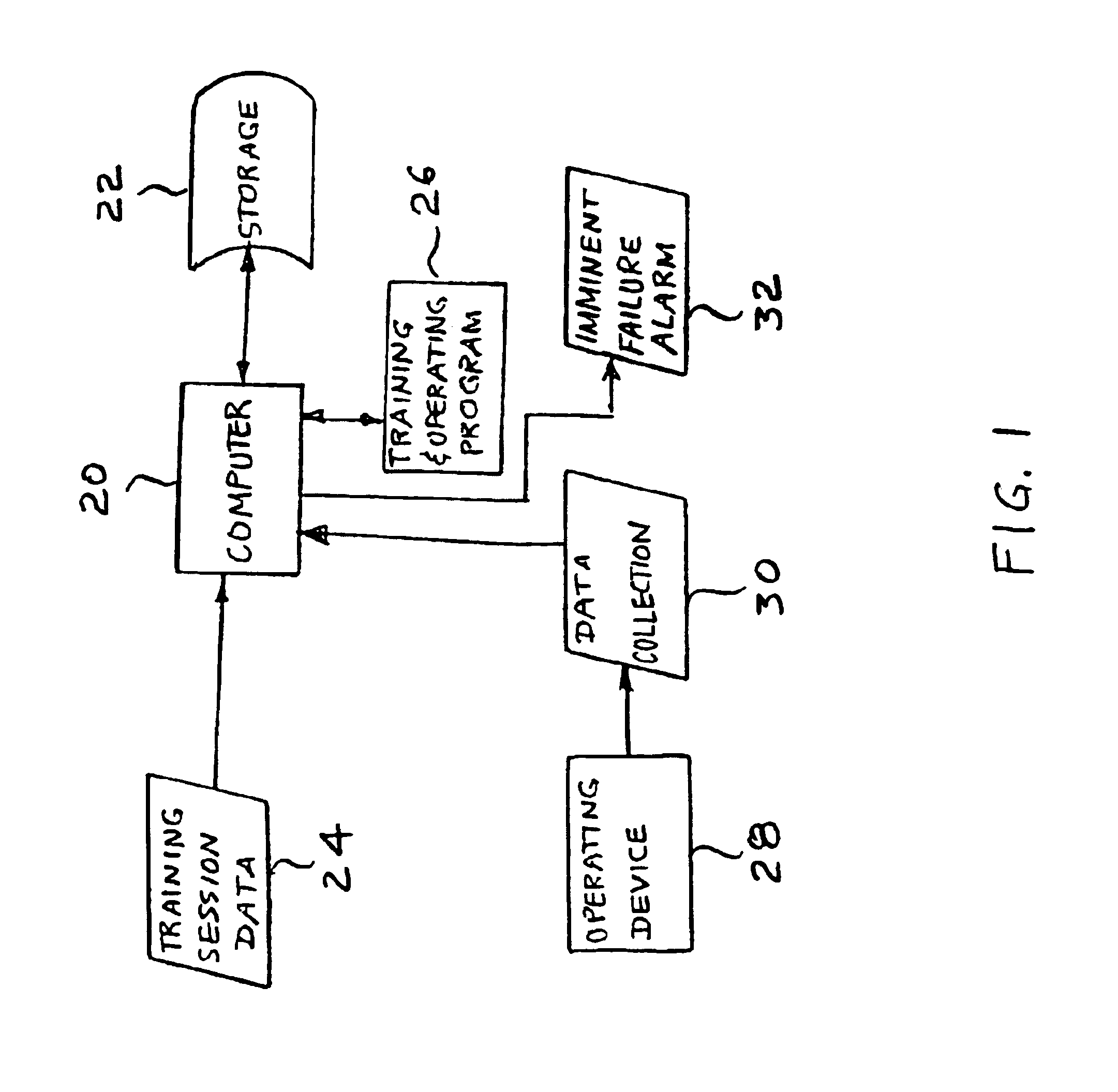
Method and apparatus for providing predictive maintenance of a device by using markov transition probabilities
PatentInactiveUS6847918B2
Innovation
- A method using two-state first-order Markov processes to model discretely sampled signals, computing transition probabilities, and deriving a pattern classifier to predict device failures by distinguishing between reversible and irreversible malfunctions through supervised training and feature vector analysis.


Machine-Learned State Space Model for Joint Forecasting
PatentActiveUS20210065066A1
Innovation
- A machine-learned state space model capable of jointly predicting physiological states and intervention suggestions, which infers latent state variables and generative parameters to forecast future observations and interventions, while estimating loss and updating parameters based on the forecast, thereby providing a holistic view of patient conditions and mortality risk.


Industrial IoT Integration Standards for SSM Systems
The integration of State Space Models (SSM) into predictive maintenance systems requires adherence to established Industrial Internet of Things (IoT) standards to ensure seamless interoperability and scalable deployment across manufacturing environments. Current integration frameworks primarily rely on OPC UA (Open Platform Communications Unified Architecture) as the foundational communication protocol, providing standardized data exchange mechanisms between SSM processing units and industrial control systems.
The IEEE 802.11 wireless standards, particularly Wi-Fi 6 and emerging Wi-Fi 7 specifications, serve as critical enablers for real-time data transmission from distributed sensor networks to centralized SSM processing nodes. These standards support the high-frequency data sampling requirements essential for accurate state estimation in rotating machinery and complex industrial equipment. Additionally, the implementation of Time-Sensitive Networking (TSN) protocols ensures deterministic data delivery, which is crucial for maintaining the temporal accuracy required by SSM algorithms.
Industrial Ethernet standards, including PROFINET and EtherNet/IP, facilitate the integration of SSM systems with existing factory automation infrastructure. These protocols enable SSM-based predictive maintenance solutions to leverage established fieldbus networks while maintaining compatibility with legacy industrial equipment. The adoption of these standards significantly reduces implementation complexity and deployment costs.
Edge computing integration follows the Industrial Internet Consortium (IIC) reference architecture, positioning SSM processing capabilities closer to data sources. This approach minimizes latency and reduces bandwidth requirements while ensuring compliance with industrial cybersecurity frameworks such as IEC 62443. The distributed processing model enables real-time state estimation and anomaly detection without overwhelming central computing resources.
Data formatting and semantic interoperability are addressed through the Asset Administration Shell (AAS) standard, which provides a standardized digital representation of industrial assets. This framework enables SSM systems to access comprehensive asset information, including historical maintenance records, operational parameters, and component specifications, thereby enhancing model accuracy and predictive capabilities.
Cloud connectivity standards, particularly those defined by the Industrial Data Space Association, govern secure data exchange between on-premises SSM systems and cloud-based analytics platforms. These standards ensure data sovereignty while enabling advanced machine learning capabilities and cross-facility performance benchmarking for predictive maintenance optimization.
The IEEE 802.11 wireless standards, particularly Wi-Fi 6 and emerging Wi-Fi 7 specifications, serve as critical enablers for real-time data transmission from distributed sensor networks to centralized SSM processing nodes. These standards support the high-frequency data sampling requirements essential for accurate state estimation in rotating machinery and complex industrial equipment. Additionally, the implementation of Time-Sensitive Networking (TSN) protocols ensures deterministic data delivery, which is crucial for maintaining the temporal accuracy required by SSM algorithms.
Industrial Ethernet standards, including PROFINET and EtherNet/IP, facilitate the integration of SSM systems with existing factory automation infrastructure. These protocols enable SSM-based predictive maintenance solutions to leverage established fieldbus networks while maintaining compatibility with legacy industrial equipment. The adoption of these standards significantly reduces implementation complexity and deployment costs.
Edge computing integration follows the Industrial Internet Consortium (IIC) reference architecture, positioning SSM processing capabilities closer to data sources. This approach minimizes latency and reduces bandwidth requirements while ensuring compliance with industrial cybersecurity frameworks such as IEC 62443. The distributed processing model enables real-time state estimation and anomaly detection without overwhelming central computing resources.
Data formatting and semantic interoperability are addressed through the Asset Administration Shell (AAS) standard, which provides a standardized digital representation of industrial assets. This framework enables SSM systems to access comprehensive asset information, including historical maintenance records, operational parameters, and component specifications, thereby enhancing model accuracy and predictive capabilities.
Cloud connectivity standards, particularly those defined by the Industrial Data Space Association, govern secure data exchange between on-premises SSM systems and cloud-based analytics platforms. These standards ensure data sovereignty while enabling advanced machine learning capabilities and cross-facility performance benchmarking for predictive maintenance optimization.
Cost-Benefit Analysis of SSM-based Maintenance Strategies
The economic evaluation of State Space Model-based predictive maintenance strategies reveals significant financial advantages over traditional maintenance approaches. Initial implementation costs typically range from $50,000 to $500,000 depending on system complexity and organizational scale, encompassing software licensing, sensor infrastructure, data integration platforms, and personnel training. However, these upfront investments are generally recovered within 18-24 months through operational savings.
Direct cost benefits manifest through substantial reductions in unplanned downtime, which can cost manufacturing facilities between $22,000 to $50,000 per hour. SSM-based systems demonstrate 35-45% reduction in unexpected equipment failures by accurately predicting component degradation patterns and optimal maintenance windows. This translates to annual savings of $200,000 to $2 million for medium to large-scale operations.
Maintenance cost optimization represents another critical benefit area. Traditional time-based maintenance strategies often result in premature component replacement and excessive labor allocation. SSM implementations enable condition-based maintenance scheduling, reducing unnecessary maintenance activities by 25-30% while extending equipment lifespan by 15-20%. Spare parts inventory costs decrease by approximately 20% due to improved demand forecasting accuracy.
Indirect benefits include enhanced operational efficiency and improved safety compliance. Production throughput increases by 8-12% through optimized equipment availability, while safety incident rates decline by 40-50% due to proactive hazard identification. Quality improvements resulting from consistent equipment performance contribute additional value through reduced waste and rework costs.
Return on investment calculations consistently demonstrate positive outcomes, with typical ROI ranging from 300% to 800% over five-year periods. The scalability of SSM solutions across multiple asset classes further amplifies cost benefits, creating economies of scale that improve the overall business case for implementation.
Direct cost benefits manifest through substantial reductions in unplanned downtime, which can cost manufacturing facilities between $22,000 to $50,000 per hour. SSM-based systems demonstrate 35-45% reduction in unexpected equipment failures by accurately predicting component degradation patterns and optimal maintenance windows. This translates to annual savings of $200,000 to $2 million for medium to large-scale operations.
Maintenance cost optimization represents another critical benefit area. Traditional time-based maintenance strategies often result in premature component replacement and excessive labor allocation. SSM implementations enable condition-based maintenance scheduling, reducing unnecessary maintenance activities by 25-30% while extending equipment lifespan by 15-20%. Spare parts inventory costs decrease by approximately 20% due to improved demand forecasting accuracy.
Indirect benefits include enhanced operational efficiency and improved safety compliance. Production throughput increases by 8-12% through optimized equipment availability, while safety incident rates decline by 40-50% due to proactive hazard identification. Quality improvements resulting from consistent equipment performance contribute additional value through reduced waste and rework costs.
Return on investment calculations consistently demonstrate positive outcomes, with typical ROI ranging from 300% to 800% over five-year periods. The scalability of SSM solutions across multiple asset classes further amplifies cost benefits, creating economies of scale that improve the overall business case for implementation.
Unlock deeper insights with PatSnap Eureka Quick Research — get a full tech report to explore trends and direct your research. Try now!
Generate Your Research Report Instantly with AI Agent
Supercharge your innovation with PatSnap Eureka AI Agent Platform!