Synthesis Techniques for Enhancing Hexagonal Boron Nitride's UV Blocking
MAR 8, 20269 MIN READ
Generate Your Research Report Instantly with AI Agent
PatSnap Eureka helps you evaluate technical feasibility & market potential.
hBN UV Blocking Enhancement Background and Objectives
Hexagonal boron nitride (hBN) has emerged as a critical material in ultraviolet protection applications due to its unique two-dimensional layered structure and exceptional optical properties. This wide-bandgap semiconductor exhibits remarkable stability under extreme conditions and demonstrates inherent UV absorption capabilities, making it an attractive candidate for next-generation UV blocking materials. The growing demand for effective UV protection across industries ranging from electronics to cosmetics has intensified research efforts focused on enhancing hBN's natural UV blocking performance through advanced synthesis techniques.
The historical development of hBN synthesis can be traced back to early chemical vapor deposition methods in the 1960s, which primarily focused on bulk material production. However, the advent of nanotechnology and two-dimensional material research has revolutionized synthesis approaches, enabling precise control over layer thickness, crystallinity, and defect density. Recent decades have witnessed significant breakthroughs in understanding the correlation between synthesis parameters and UV blocking efficiency, leading to the development of tailored synthesis strategies.
Current technological evolution trends indicate a shift toward scalable, environmentally sustainable synthesis methods that can produce high-quality hBN with enhanced UV absorption properties. Advanced techniques such as plasma-enhanced chemical vapor deposition, molecular beam epitaxy, and solution-based synthesis approaches have demonstrated promising results in achieving superior UV blocking performance while maintaining material integrity and processability.
The primary objective of enhancing hBN's UV blocking capabilities through synthesis optimization centers on achieving maximum UV absorption across the broad spectrum range of 280-400 nm while maintaining transparency in the visible light region. This requires precise engineering of electronic band structure, surface morphology, and interlayer interactions through controlled synthesis conditions. Key performance targets include achieving UV blocking efficiency exceeding 95% while preserving mechanical flexibility and thermal stability.
Secondary objectives encompass developing cost-effective, scalable synthesis methodologies that can be readily integrated into industrial manufacturing processes. This includes optimizing precursor utilization efficiency, reducing synthesis temperatures and processing times, and minimizing environmental impact through green chemistry approaches. The ultimate goal is establishing a comprehensive synthesis framework that enables predictable control over hBN's UV blocking properties for diverse application requirements.
The historical development of hBN synthesis can be traced back to early chemical vapor deposition methods in the 1960s, which primarily focused on bulk material production. However, the advent of nanotechnology and two-dimensional material research has revolutionized synthesis approaches, enabling precise control over layer thickness, crystallinity, and defect density. Recent decades have witnessed significant breakthroughs in understanding the correlation between synthesis parameters and UV blocking efficiency, leading to the development of tailored synthesis strategies.
Current technological evolution trends indicate a shift toward scalable, environmentally sustainable synthesis methods that can produce high-quality hBN with enhanced UV absorption properties. Advanced techniques such as plasma-enhanced chemical vapor deposition, molecular beam epitaxy, and solution-based synthesis approaches have demonstrated promising results in achieving superior UV blocking performance while maintaining material integrity and processability.
The primary objective of enhancing hBN's UV blocking capabilities through synthesis optimization centers on achieving maximum UV absorption across the broad spectrum range of 280-400 nm while maintaining transparency in the visible light region. This requires precise engineering of electronic band structure, surface morphology, and interlayer interactions through controlled synthesis conditions. Key performance targets include achieving UV blocking efficiency exceeding 95% while preserving mechanical flexibility and thermal stability.
Secondary objectives encompass developing cost-effective, scalable synthesis methodologies that can be readily integrated into industrial manufacturing processes. This includes optimizing precursor utilization efficiency, reducing synthesis temperatures and processing times, and minimizing environmental impact through green chemistry approaches. The ultimate goal is establishing a comprehensive synthesis framework that enables predictable control over hBN's UV blocking properties for diverse application requirements.
Market Demand for Advanced UV Protection Materials
The global UV protection materials market is experiencing unprecedented growth driven by increasing awareness of ultraviolet radiation's harmful effects on human health and material degradation. Rising incidences of skin cancer, premature aging, and UV-induced material failures across industries have created substantial demand for advanced protective solutions. Traditional UV blocking materials, while effective to some degree, face limitations in terms of transparency, thermal stability, and long-term durability, creating opportunities for next-generation materials like enhanced hexagonal boron nitride.
Consumer electronics represents one of the most significant market segments driving demand for advanced UV protection materials. Smartphones, tablets, displays, and wearable devices require transparent UV blocking coatings that maintain optical clarity while providing robust protection. The automotive industry similarly demands high-performance UV protection for interior components, dashboard materials, and advanced driver assistance systems. These applications require materials that can withstand extreme temperature variations while maintaining consistent UV blocking performance.
The aerospace and defense sectors present particularly demanding requirements for UV protection materials. Satellite components, aircraft surfaces, and military equipment operating in high-altitude environments face intense UV exposure that can degrade conventional materials rapidly. Enhanced hexagonal boron nitride's exceptional thermal conductivity and chemical stability make it an attractive candidate for these critical applications where material failure is not acceptable.
Architectural and construction markets are increasingly incorporating advanced UV protection materials into building facades, windows, and roofing systems. Energy-efficient buildings require materials that block harmful UV radiation while allowing visible light transmission, contributing to reduced cooling costs and improved occupant comfort. The growing emphasis on sustainable construction practices has accelerated adoption of high-performance UV blocking materials.
Personal care and textile industries represent emerging application areas where enhanced hexagonal boron nitride could address current market gaps. Sunscreen formulations and UV-protective clothing require materials that provide broad-spectrum protection without compromising comfort or aesthetics. Current solutions often involve trade-offs between protection level and user experience, creating opportunities for innovative materials with superior performance characteristics.
Market growth is further accelerated by stringent regulatory requirements regarding UV protection in various industries. Safety standards for outdoor workers, automotive UV transmission limits, and building energy codes are driving adoption of advanced materials. The increasing focus on occupational health and safety regulations worldwide continues to expand the addressable market for high-performance UV protection solutions.
Consumer electronics represents one of the most significant market segments driving demand for advanced UV protection materials. Smartphones, tablets, displays, and wearable devices require transparent UV blocking coatings that maintain optical clarity while providing robust protection. The automotive industry similarly demands high-performance UV protection for interior components, dashboard materials, and advanced driver assistance systems. These applications require materials that can withstand extreme temperature variations while maintaining consistent UV blocking performance.
The aerospace and defense sectors present particularly demanding requirements for UV protection materials. Satellite components, aircraft surfaces, and military equipment operating in high-altitude environments face intense UV exposure that can degrade conventional materials rapidly. Enhanced hexagonal boron nitride's exceptional thermal conductivity and chemical stability make it an attractive candidate for these critical applications where material failure is not acceptable.
Architectural and construction markets are increasingly incorporating advanced UV protection materials into building facades, windows, and roofing systems. Energy-efficient buildings require materials that block harmful UV radiation while allowing visible light transmission, contributing to reduced cooling costs and improved occupant comfort. The growing emphasis on sustainable construction practices has accelerated adoption of high-performance UV blocking materials.
Personal care and textile industries represent emerging application areas where enhanced hexagonal boron nitride could address current market gaps. Sunscreen formulations and UV-protective clothing require materials that provide broad-spectrum protection without compromising comfort or aesthetics. Current solutions often involve trade-offs between protection level and user experience, creating opportunities for innovative materials with superior performance characteristics.
Market growth is further accelerated by stringent regulatory requirements regarding UV protection in various industries. Safety standards for outdoor workers, automotive UV transmission limits, and building energy codes are driving adoption of advanced materials. The increasing focus on occupational health and safety regulations worldwide continues to expand the addressable market for high-performance UV protection solutions.
Current hBN Synthesis Limitations and UV Performance Gaps
Current hexagonal boron nitride synthesis methods face significant limitations that directly impact their UV blocking performance capabilities. Traditional chemical vapor deposition techniques, while producing high-quality crystalline structures, often result in materials with insufficient thickness control and non-uniform layer distribution. These inconsistencies create optical transparency variations that compromise the material's ability to provide consistent UV protection across different wavelengths.
The scalability challenges inherent in existing synthesis approaches represent a major bottleneck for commercial UV blocking applications. Most laboratory-scale synthesis methods, including mechanical exfoliation and liquid-phase exfoliation, cannot achieve the production volumes required for large-area UV protective coatings. Additionally, these methods frequently produce hBN flakes with irregular sizes and shapes, leading to gaps in coverage when applied as protective films.
Temperature control during synthesis remains a critical limitation affecting UV performance. High-temperature synthesis processes, typically exceeding 1000°C, often introduce structural defects and grain boundaries that scatter UV radiation rather than effectively absorbing or reflecting it. These defects create localized weak points in the material's optical properties, reducing overall UV blocking efficiency and creating potential failure points in protective applications.
Chemical purity issues during synthesis significantly impact the UV blocking characteristics of hBN materials. Contamination from catalyst residues, particularly transition metals used in growth processes, introduces unwanted absorption bands that interfere with the material's natural UV response. These impurities can shift the optical bandgap and create additional electronic states that compromise the material's selective UV blocking properties.
The lack of precise control over layer orientation and stacking order in current synthesis methods creates substantial performance gaps in UV applications. Random stacking arrangements result in inconsistent optical anisotropy, leading to directional variations in UV blocking effectiveness. This limitation is particularly problematic for applications requiring omnidirectional UV protection.
Current synthesis techniques also struggle with achieving optimal surface functionalization for enhanced UV performance. The inability to systematically introduce controlled defects or dopants during the growth process limits opportunities to tune the material's optical properties for specific UV wavelength ranges. This constraint prevents the development of application-specific hBN materials with enhanced blocking characteristics for targeted UV protection scenarios.
The scalability challenges inherent in existing synthesis approaches represent a major bottleneck for commercial UV blocking applications. Most laboratory-scale synthesis methods, including mechanical exfoliation and liquid-phase exfoliation, cannot achieve the production volumes required for large-area UV protective coatings. Additionally, these methods frequently produce hBN flakes with irregular sizes and shapes, leading to gaps in coverage when applied as protective films.
Temperature control during synthesis remains a critical limitation affecting UV performance. High-temperature synthesis processes, typically exceeding 1000°C, often introduce structural defects and grain boundaries that scatter UV radiation rather than effectively absorbing or reflecting it. These defects create localized weak points in the material's optical properties, reducing overall UV blocking efficiency and creating potential failure points in protective applications.
Chemical purity issues during synthesis significantly impact the UV blocking characteristics of hBN materials. Contamination from catalyst residues, particularly transition metals used in growth processes, introduces unwanted absorption bands that interfere with the material's natural UV response. These impurities can shift the optical bandgap and create additional electronic states that compromise the material's selective UV blocking properties.
The lack of precise control over layer orientation and stacking order in current synthesis methods creates substantial performance gaps in UV applications. Random stacking arrangements result in inconsistent optical anisotropy, leading to directional variations in UV blocking effectiveness. This limitation is particularly problematic for applications requiring omnidirectional UV protection.
Current synthesis techniques also struggle with achieving optimal surface functionalization for enhanced UV performance. The inability to systematically introduce controlled defects or dopants during the growth process limits opportunities to tune the material's optical properties for specific UV wavelength ranges. This constraint prevents the development of application-specific hBN materials with enhanced blocking characteristics for targeted UV protection scenarios.
Existing hBN Synthesis Approaches for UV Applications
01 Hexagonal boron nitride as UV blocking agent in cosmetic formulations
Hexagonal boron nitride (h-BN) can be incorporated into cosmetic and personal care products as an effective UV blocking agent. The material exhibits excellent UV absorption and scattering properties due to its unique layered structure and optical characteristics. It can be formulated into sunscreens, foundations, and other topical products to provide broad-spectrum protection against both UVA and UVB radiation while offering additional benefits such as oil absorption and smooth texture.- Hexagonal boron nitride as UV blocking agent in cosmetic formulations: Hexagonal boron nitride (h-BN) can be incorporated into cosmetic and personal care products as an effective UV blocking agent. The material exhibits excellent UV absorption and reflection properties due to its unique layered structure. It can be formulated into sunscreens, foundations, and other topical products to provide broad-spectrum protection against both UVA and UVB radiation. The platelet-like morphology of h-BN particles enables uniform distribution and enhanced coverage on skin surfaces.
- Surface modification and functionalization of hexagonal boron nitride for enhanced UV protection: Surface treatment and functionalization techniques can be applied to hexagonal boron nitride to improve its UV blocking performance and compatibility with various formulation matrices. Chemical modifications, coating processes, and surface grafting methods enhance the dispersion stability, photostability, and synergistic effects with other UV filters. These modifications can also improve the adhesion of h-BN particles to substrates and increase the overall sun protection factor of the final product.
- Hexagonal boron nitride composite materials for UV shielding applications: Composite materials incorporating hexagonal boron nitride with other functional components can provide enhanced UV blocking capabilities. These composites may combine h-BN with polymers, inorganic particles, or other nanomaterials to create synergistic UV protection systems. The composite approach allows for optimization of mechanical properties, transparency, and UV absorption characteristics while maintaining the inherent benefits of h-BN such as thermal stability and chemical inertness.
- Hexagonal boron nitride in coating and film applications for UV protection: Hexagonal boron nitride can be formulated into coatings, films, and protective layers that provide UV blocking functionality for various substrates. These applications include transparent or semi-transparent coatings for plastics, textiles, packaging materials, and optical components. The h-BN-based coatings offer durable UV protection while maintaining desirable properties such as flexibility, adhesion, and optical clarity. The layered structure of h-BN contributes to effective UV reflection and absorption in thin film configurations.
- Particle size and morphology optimization of hexagonal boron nitride for UV blocking efficiency: The UV blocking performance of hexagonal boron nitride is significantly influenced by particle size, morphology, and aspect ratio. Optimization of these physical parameters through controlled synthesis and processing methods can enhance the UV absorption and scattering properties. Nanoscale h-BN particles with specific platelet dimensions and thickness provide improved transparency while maintaining effective UV protection. The particle characteristics also affect the rheological properties and application performance of h-BN-containing formulations.
02 Hexagonal boron nitride nanoparticles for enhanced UV protection
Nano-sized hexagonal boron nitride particles demonstrate superior UV blocking capabilities compared to conventional particle sizes. The nanoscale dimensions provide increased surface area and improved dispersion in formulations, leading to enhanced UV protection efficiency. These nanoparticles can be surface-modified or functionalized to improve compatibility with various carrier systems and to optimize their UV blocking performance across different wavelength ranges.Expand Specific Solutions03 Composite materials combining hexagonal boron nitride with other UV blockers
Hexagonal boron nitride can be combined with other UV blocking materials such as metal oxides, organic UV filters, or other inorganic compounds to create synergistic composite systems. These hybrid materials leverage the complementary properties of different components to achieve enhanced UV protection, improved photostability, and broader spectrum coverage. The composites can be designed to optimize both physical and chemical UV blocking mechanisms.Expand Specific Solutions04 Surface modification and functionalization of hexagonal boron nitride for UV applications
The surface properties of hexagonal boron nitride can be modified through various chemical and physical treatments to enhance its UV blocking performance and compatibility with different formulation matrices. Surface functionalization techniques include coating with organic or inorganic materials, grafting with functional groups, or creating hybrid structures. These modifications can improve dispersion stability, enhance UV absorption characteristics, and provide additional functional properties such as water resistance or antioxidant activity.Expand Specific Solutions05 Manufacturing and processing methods for hexagonal boron nitride UV blocking products
Various manufacturing techniques can be employed to produce hexagonal boron nitride-based UV blocking products with optimized properties. These methods include exfoliation processes to obtain thin layers, synthesis approaches to control particle size and morphology, and formulation techniques to ensure uniform dispersion in final products. Processing parameters such as temperature, pressure, and mixing conditions can be adjusted to achieve desired UV blocking performance, stability, and application-specific characteristics.Expand Specific Solutions
Key Players in hBN Manufacturing and UV Materials Industry
The hexagonal boron nitride UV blocking synthesis technology market is in an emerging growth phase, driven by increasing demand for advanced UV protection materials across electronics, aerospace, and consumer applications. The market demonstrates significant potential with expanding applications in semiconductor devices, protective coatings, and optical components. Technology maturity varies considerably across key players, with established Japanese companies like Nichia Corp., Shin-Etsu Chemical, and Tokuyama Corp. leading in advanced synthesis techniques and commercial production capabilities. Research institutions including MIT, Fudan University, and National Institute for Materials Science are pioneering novel synthesis methods, while technology giants Samsung Electronics and industrial players like NGK Insulators are developing specialized applications. The competitive landscape shows a mix of mature commercial producers and innovative research entities, indicating a technology transition from laboratory development to industrial scalability, with synthesis optimization remaining the critical differentiator for market positioning.
Samsung Electronics Co., Ltd.
Technical Solution: Samsung has developed advanced chemical vapor deposition (CVD) synthesis techniques for producing high-quality hexagonal boron nitride (h-BN) films with enhanced UV blocking properties. Their approach involves precise control of precursor gas ratios and substrate temperature optimization to achieve uniform crystalline structure. The company has integrated plasma-enhanced CVD methods to improve the optical bandgap properties of h-BN, resulting in superior UV absorption characteristics in the 200-280nm range. Samsung's synthesis process incorporates multi-step annealing procedures that enhance the material's structural integrity while maintaining excellent transparency in visible light spectrum, making it suitable for protective coating applications in electronic displays and optical devices.
Strengths: Advanced manufacturing capabilities, strong R&D infrastructure, excellent scalability for mass production. Weaknesses: High production costs, complex process control requirements, limited customization for specific UV wavelength ranges.
Massachusetts Institute of Technology
Technical Solution: MIT has pioneered novel synthesis approaches for h-BN using atomic layer deposition (ALD) and molecular beam epitaxy (MBE) techniques specifically designed to enhance UV blocking capabilities. Their research focuses on controlling the layer thickness and defect density to optimize the electronic band structure for maximum UV absorption. The institute has developed innovative precursor chemistry using borazine derivatives and ammonia borane compounds that enable low-temperature synthesis while maintaining high crystalline quality. MIT's approach includes post-synthesis treatments involving controlled oxidation and nitrogen plasma exposure to introduce specific defect states that enhance UV photon absorption without compromising the material's thermal stability and mechanical properties.
Strengths: Cutting-edge research capabilities, innovative synthesis methods, strong fundamental understanding of material properties. Weaknesses: Limited industrial scalability, high research costs, primarily focused on laboratory-scale production.
Core Patents in Enhanced hBN UV Blocking Synthesis
Method for Synthesis of Uniform Bi-Layer and Few-Layer Hexagonal Boron Nitride Dielectric Films
PatentInactiveUS20150167148A1
Innovation
- The method involves reactive radio frequency magnetron sputtering of boron in N2/Ar gas mixtures at elevated temperatures, with adjustable parameters like temperature, time, and pressure, to form high-quality bi-layer and few-layer hexagonal boron-nitride films on substrates such as ruthenium-coated Al2O3, ensuring uniform thickness and crystallinity.


Method of forming high-quality hexagonal boron nitride nanosheet using multi component eutectic point system
PatentActiveUS9150416B2
Innovation
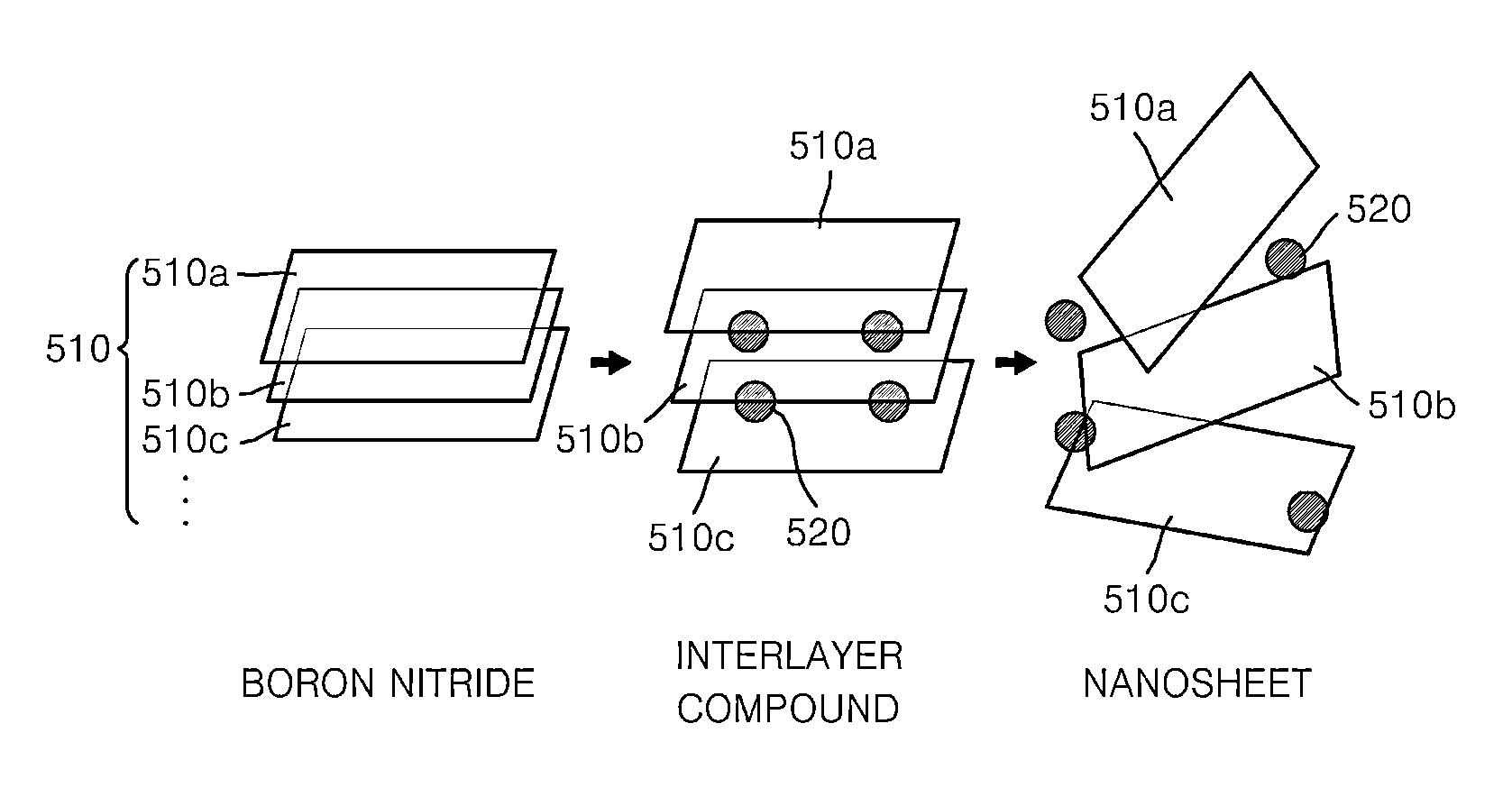
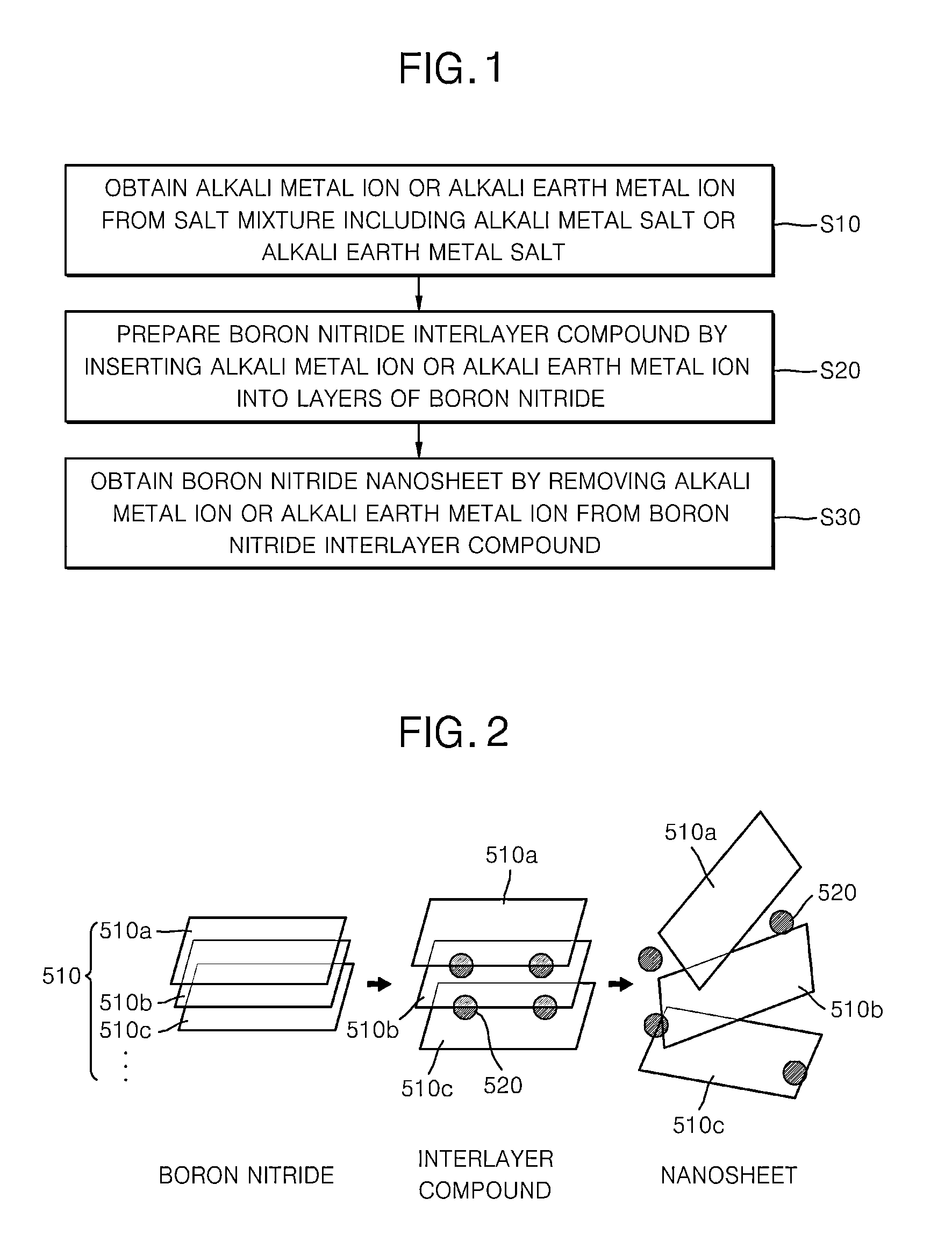
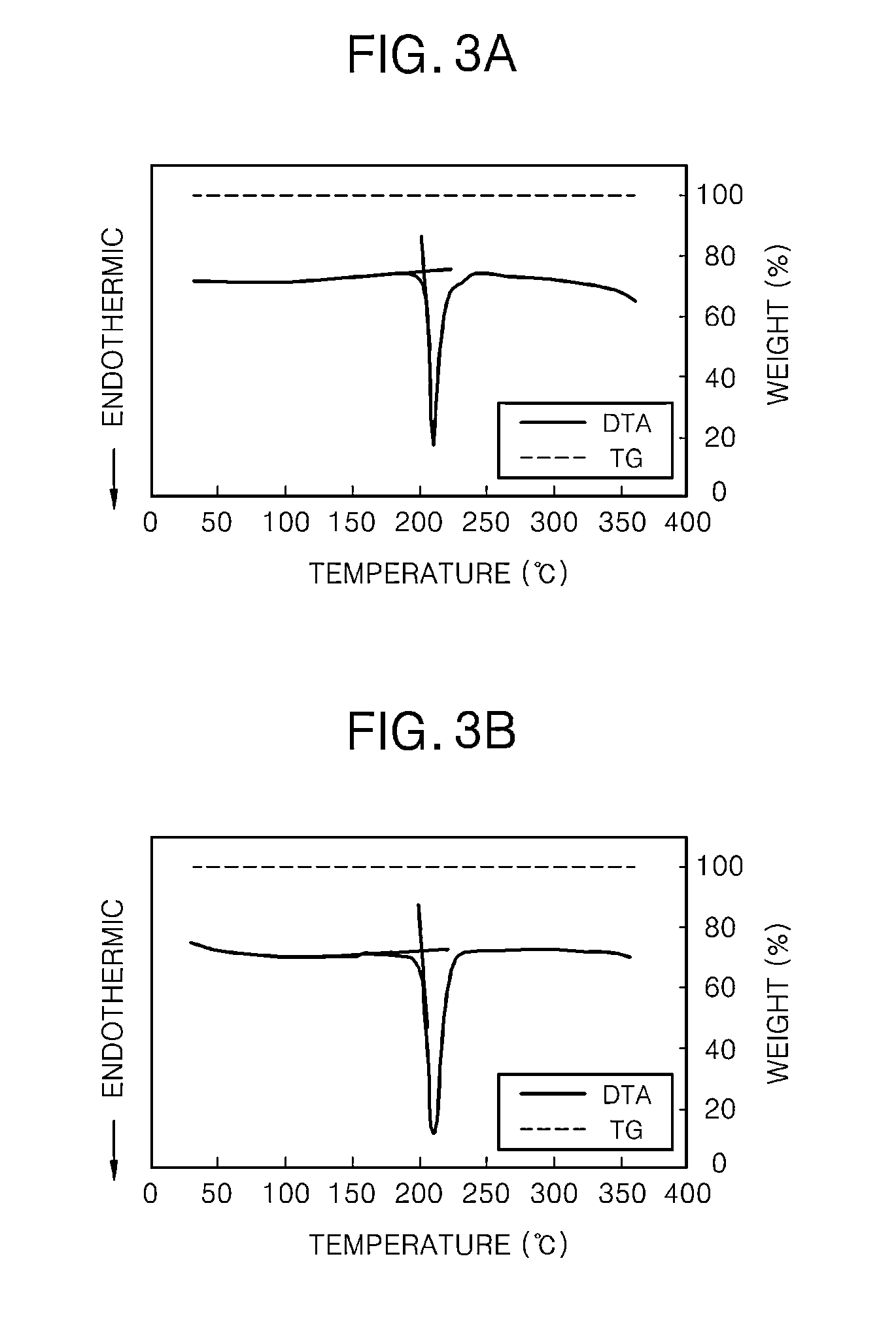
- A method involving the use of a salt mixture with a low eutectic point to insert alkali metal or alkali earth metal ions between hexagonal boron nitride layers, allowing for the production of hexagonal boron nitride nanosheets at low temperatures through a safe and inexpensive process.

Environmental Safety Standards for hBN UV Materials
Environmental safety standards for hexagonal boron nitride (hBN) UV blocking materials encompass a comprehensive framework of regulatory requirements, testing protocols, and compliance measures designed to ensure safe deployment in consumer and industrial applications. Current regulatory landscapes across major markets including the United States, European Union, and Asia-Pacific regions have established specific guidelines for nanomaterial safety assessment, with hBN materials falling under enhanced scrutiny due to their engineered nanostructure properties.
The primary safety evaluation criteria focus on cytotoxicity assessment, dermal penetration studies, and respiratory exposure limits. Standard testing protocols such as ISO 10993 series for biological evaluation of medical devices and OECD guidelines for nanomaterial testing provide the foundational framework for hBN UV material assessment. These standards require comprehensive evaluation of particle size distribution, surface chemistry characterization, and potential for bioaccumulation in environmental systems.
Occupational exposure limits have been established by various regulatory bodies, with the National Institute for Occupational Safety and Health (NIOSH) recommending exposure thresholds below 5 mg/m³ for respirable boron nitride particles during manufacturing processes. European Chemical Agency (ECHA) registration requirements under REACH regulation mandate detailed safety data sheets and risk assessment documentation for hBN materials intended for UV protection applications.
Environmental impact assessment standards address aquatic toxicity, soil contamination potential, and biodegradation pathways. Current research indicates hBN materials demonstrate relatively low environmental persistence compared to other engineered nanomaterials, with studies showing minimal bioaccumulation in aquatic organisms. However, long-term environmental fate studies remain ongoing to establish comprehensive safety profiles.
Product certification requirements vary significantly across application domains, with cosmetic applications requiring FDA approval in the United States and CE marking compliance in Europe. Industrial UV protection applications must meet specific performance standards while maintaining environmental safety compliance, creating complex regulatory pathways for manufacturers seeking global market access.
The primary safety evaluation criteria focus on cytotoxicity assessment, dermal penetration studies, and respiratory exposure limits. Standard testing protocols such as ISO 10993 series for biological evaluation of medical devices and OECD guidelines for nanomaterial testing provide the foundational framework for hBN UV material assessment. These standards require comprehensive evaluation of particle size distribution, surface chemistry characterization, and potential for bioaccumulation in environmental systems.
Occupational exposure limits have been established by various regulatory bodies, with the National Institute for Occupational Safety and Health (NIOSH) recommending exposure thresholds below 5 mg/m³ for respirable boron nitride particles during manufacturing processes. European Chemical Agency (ECHA) registration requirements under REACH regulation mandate detailed safety data sheets and risk assessment documentation for hBN materials intended for UV protection applications.
Environmental impact assessment standards address aquatic toxicity, soil contamination potential, and biodegradation pathways. Current research indicates hBN materials demonstrate relatively low environmental persistence compared to other engineered nanomaterials, with studies showing minimal bioaccumulation in aquatic organisms. However, long-term environmental fate studies remain ongoing to establish comprehensive safety profiles.
Product certification requirements vary significantly across application domains, with cosmetic applications requiring FDA approval in the United States and CE marking compliance in Europe. Industrial UV protection applications must meet specific performance standards while maintaining environmental safety compliance, creating complex regulatory pathways for manufacturers seeking global market access.
Cost-Performance Analysis of Enhanced hBN Synthesis
The economic viability of enhanced hexagonal boron nitride synthesis methods presents a complex landscape where traditional cost metrics must be balanced against performance improvements in UV blocking applications. Current market analysis indicates that conventional hBN production costs range from $50-200 per kilogram for standard grades, while enhanced synthesis techniques targeting superior UV blocking properties can increase production costs by 150-300% depending on the methodology employed.
Chemical vapor deposition (CVD) methods, while producing high-quality hBN with excellent UV blocking characteristics, require substantial capital investment in specialized equipment and high-purity precursors. The cost per unit area of CVD-synthesized hBN films typically ranges from $15-40 per square meter, with energy consumption representing 35-45% of total production costs. However, the superior crystalline quality and uniform thickness achieved through CVD processes result in UV blocking efficiency improvements of 25-40% compared to conventional powder-based approaches.
Liquid-phase exfoliation techniques offer a more cost-effective alternative, with production costs approximately 60-70% lower than CVD methods. These approaches utilize sonication and chemical intercalation to produce few-layer hBN sheets with enhanced surface area and improved UV absorption properties. Despite lower absolute performance metrics, the cost-per-unit-performance ratio often favors liquid-phase methods for large-scale applications.
Plasma-enhanced synthesis represents an emerging middle-ground approach, offering 15-20% better UV blocking performance than conventional methods while maintaining production costs within 80-120% of traditional synthesis routes. The technology demonstrates particular promise for industrial-scale production, with recent pilot studies indicating potential for 30-40% cost reduction through process optimization and economies of scale.
Performance evaluation metrics reveal that enhanced synthesis techniques consistently deliver superior UV blocking coefficients, typically achieving 95-99% UV-A and UV-B absorption compared to 85-92% for standard hBN materials. The extended operational lifetime and reduced material thickness requirements of enhanced hBN often justify the higher initial synthesis costs through improved long-term value propositions in demanding applications.
Chemical vapor deposition (CVD) methods, while producing high-quality hBN with excellent UV blocking characteristics, require substantial capital investment in specialized equipment and high-purity precursors. The cost per unit area of CVD-synthesized hBN films typically ranges from $15-40 per square meter, with energy consumption representing 35-45% of total production costs. However, the superior crystalline quality and uniform thickness achieved through CVD processes result in UV blocking efficiency improvements of 25-40% compared to conventional powder-based approaches.
Liquid-phase exfoliation techniques offer a more cost-effective alternative, with production costs approximately 60-70% lower than CVD methods. These approaches utilize sonication and chemical intercalation to produce few-layer hBN sheets with enhanced surface area and improved UV absorption properties. Despite lower absolute performance metrics, the cost-per-unit-performance ratio often favors liquid-phase methods for large-scale applications.
Plasma-enhanced synthesis represents an emerging middle-ground approach, offering 15-20% better UV blocking performance than conventional methods while maintaining production costs within 80-120% of traditional synthesis routes. The technology demonstrates particular promise for industrial-scale production, with recent pilot studies indicating potential for 30-40% cost reduction through process optimization and economies of scale.
Performance evaluation metrics reveal that enhanced synthesis techniques consistently deliver superior UV blocking coefficients, typically achieving 95-99% UV-A and UV-B absorption compared to 85-92% for standard hBN materials. The extended operational lifetime and reduced material thickness requirements of enhanced hBN often justify the higher initial synthesis costs through improved long-term value propositions in demanding applications.
Unlock deeper insights with PatSnap Eureka Quick Research — get a full tech report to explore trends and direct your research. Try now!
Generate Your Research Report Instantly with AI Agent
Supercharge your innovation with PatSnap Eureka AI Agent Platform!