
Thrust Bearing Design for Extreme Temperature Variations
MAR 16, 20269 MIN READ
Generate Your Research Report Instantly with AI Agent
Patsnap Eureka helps you evaluate technical feasibility & market potential.
Thrust Bearing Extreme Temperature Background and Objectives
Thrust bearings represent a critical mechanical component designed to support axial loads in rotating machinery, with applications spanning from aerospace turbines to industrial compressors. The fundamental challenge of thrust bearing design intensifies dramatically when these components must operate across extreme temperature variations, where conventional materials and lubrication systems often fail to maintain adequate performance and reliability.
The aerospace industry exemplifies the severity of this challenge, where aircraft engines experience temperature swings from sub-zero conditions at high altitudes to extreme heat during combustion cycles. Similarly, geothermal energy systems, space exploration equipment, and high-performance automotive applications demand thrust bearings capable of maintaining structural integrity and operational efficiency across temperature ranges that can exceed 500°C differentials.
Traditional thrust bearing designs rely heavily on temperature-stable material properties and consistent lubrication viscosity. However, extreme temperature variations introduce thermal expansion mismatches, lubricant degradation, material property fluctuations, and thermal stress concentrations that compromise bearing performance. These challenges manifest as increased friction, accelerated wear, reduced load capacity, and ultimately, catastrophic failure.
The evolution of thrust bearing technology has progressed from simple metal-on-metal interfaces to sophisticated engineered systems incorporating advanced materials, specialized coatings, and innovative lubrication strategies. Early developments focused primarily on material selection, while contemporary approaches emphasize integrated thermal management and adaptive design principles.
Current technological objectives center on developing thrust bearing solutions that maintain consistent performance parameters across extreme temperature ranges while ensuring extended operational life. Primary goals include achieving thermal stability through advanced material combinations, implementing effective thermal expansion compensation mechanisms, and establishing reliable lubrication systems that function across wide temperature spectrums.
The strategic importance of this technology extends beyond individual component performance, influencing entire system reliability and operational efficiency. Success in extreme temperature thrust bearing design enables breakthrough applications in emerging fields such as hypersonic flight, deep space exploration, and next-generation energy systems, positioning this technology as a cornerstone for future industrial advancement.
The aerospace industry exemplifies the severity of this challenge, where aircraft engines experience temperature swings from sub-zero conditions at high altitudes to extreme heat during combustion cycles. Similarly, geothermal energy systems, space exploration equipment, and high-performance automotive applications demand thrust bearings capable of maintaining structural integrity and operational efficiency across temperature ranges that can exceed 500°C differentials.
Traditional thrust bearing designs rely heavily on temperature-stable material properties and consistent lubrication viscosity. However, extreme temperature variations introduce thermal expansion mismatches, lubricant degradation, material property fluctuations, and thermal stress concentrations that compromise bearing performance. These challenges manifest as increased friction, accelerated wear, reduced load capacity, and ultimately, catastrophic failure.
The evolution of thrust bearing technology has progressed from simple metal-on-metal interfaces to sophisticated engineered systems incorporating advanced materials, specialized coatings, and innovative lubrication strategies. Early developments focused primarily on material selection, while contemporary approaches emphasize integrated thermal management and adaptive design principles.
Current technological objectives center on developing thrust bearing solutions that maintain consistent performance parameters across extreme temperature ranges while ensuring extended operational life. Primary goals include achieving thermal stability through advanced material combinations, implementing effective thermal expansion compensation mechanisms, and establishing reliable lubrication systems that function across wide temperature spectrums.
The strategic importance of this technology extends beyond individual component performance, influencing entire system reliability and operational efficiency. Success in extreme temperature thrust bearing design enables breakthrough applications in emerging fields such as hypersonic flight, deep space exploration, and next-generation energy systems, positioning this technology as a cornerstone for future industrial advancement.
Market Demand for High-Temperature Thrust Bearing Solutions
The global market for high-temperature thrust bearing solutions is experiencing unprecedented growth driven by the expanding aerospace, energy, and industrial manufacturing sectors. Aerospace applications represent the most demanding segment, where thrust bearings must withstand extreme temperature fluctuations ranging from cryogenic conditions during high-altitude flight to intense heat generated by jet engines and rocket propulsion systems. The commercial aviation industry's recovery and the surge in space exploration activities have significantly amplified demand for bearings capable of operating reliably across temperature ranges exceeding 1000°C.
Energy sector applications constitute another critical market driver, particularly in gas turbines, nuclear power plants, and geothermal energy systems. Modern gas turbines operate at increasingly higher temperatures to improve efficiency, necessitating thrust bearings that maintain structural integrity and performance under severe thermal stress. The global transition toward renewable energy has also created new opportunities in concentrated solar power systems and advanced geothermal installations, where extreme temperature variations are inherent operational challenges.
Industrial manufacturing processes involving high-temperature operations, such as steel production, chemical processing, and glass manufacturing, represent substantial market segments requiring specialized thrust bearing solutions. These applications demand bearings that can withstand not only extreme temperatures but also rapid thermal cycling, which poses unique challenges for material selection and bearing design optimization.
The automotive industry's shift toward electric vehicles and hybrid powertrains has introduced new thermal management challenges, creating emerging demand for thrust bearings capable of handling temperature variations in electric motor applications and battery thermal management systems. Advanced manufacturing techniques and the development of new high-temperature materials have expanded the addressable market by enabling applications previously considered technically unfeasible.
Market growth is further accelerated by stringent performance requirements in defense applications, including hypersonic vehicles and advanced propulsion systems, where thrust bearings must operate under extreme thermal conditions while maintaining precision and reliability. The increasing complexity of modern machinery and the push for higher operational efficiency across industries continue to drive demand for innovative high-temperature thrust bearing solutions.
Energy sector applications constitute another critical market driver, particularly in gas turbines, nuclear power plants, and geothermal energy systems. Modern gas turbines operate at increasingly higher temperatures to improve efficiency, necessitating thrust bearings that maintain structural integrity and performance under severe thermal stress. The global transition toward renewable energy has also created new opportunities in concentrated solar power systems and advanced geothermal installations, where extreme temperature variations are inherent operational challenges.
Industrial manufacturing processes involving high-temperature operations, such as steel production, chemical processing, and glass manufacturing, represent substantial market segments requiring specialized thrust bearing solutions. These applications demand bearings that can withstand not only extreme temperatures but also rapid thermal cycling, which poses unique challenges for material selection and bearing design optimization.
The automotive industry's shift toward electric vehicles and hybrid powertrains has introduced new thermal management challenges, creating emerging demand for thrust bearings capable of handling temperature variations in electric motor applications and battery thermal management systems. Advanced manufacturing techniques and the development of new high-temperature materials have expanded the addressable market by enabling applications previously considered technically unfeasible.
Market growth is further accelerated by stringent performance requirements in defense applications, including hypersonic vehicles and advanced propulsion systems, where thrust bearings must operate under extreme thermal conditions while maintaining precision and reliability. The increasing complexity of modern machinery and the push for higher operational efficiency across industries continue to drive demand for innovative high-temperature thrust bearing solutions.
Current Challenges in Extreme Temperature Thrust Bearing Design
Thrust bearing systems operating under extreme temperature variations face unprecedented challenges that significantly impact their performance, reliability, and service life. These challenges stem from the fundamental physics of materials behavior under thermal stress and the complex interactions between bearing components during temperature cycling.
Material degradation represents one of the most critical challenges in extreme temperature thrust bearing applications. Traditional bearing materials experience significant changes in their mechanical properties when subjected to wide temperature ranges. Steel components may undergo phase transformations, leading to dimensional instability and altered hardness characteristics. At elevated temperatures, materials suffer from thermal softening, reduced yield strength, and accelerated creep deformation. Conversely, at cryogenic temperatures, materials become brittle, increasing the risk of catastrophic failure under shock loads.
Thermal expansion mismatch between different bearing components creates substantial operational difficulties. The differential expansion rates of races, rolling elements, and cage materials result in altered internal clearances and contact stress distributions. This phenomenon can lead to preloading at high temperatures or excessive clearances at low temperatures, both conditions severely compromising bearing performance and potentially causing premature failure.
Lubrication systems face extraordinary challenges in extreme temperature environments. Conventional lubricants experience dramatic viscosity changes across wide temperature ranges, becoming too thick at low temperatures to provide adequate film formation or too thin at high temperatures to maintain proper load-carrying capacity. Lubricant degradation accelerates at elevated temperatures, leading to oxidation, polymerization, and the formation of harmful deposits that can damage bearing surfaces.
Thermal cycling introduces fatigue mechanisms that are not present in steady-state temperature conditions. Repeated expansion and contraction cycles create cyclic stresses in bearing components, potentially leading to thermal fatigue cracking. The accumulation of thermal stress cycles can significantly reduce bearing life, even when individual temperature excursions remain within acceptable limits.
Sealing effectiveness becomes increasingly problematic under extreme temperature variations. Seal materials must maintain flexibility and sealing integrity across the entire temperature range while accommodating thermal expansion of mating components. Traditional elastomeric seals often fail to meet these demanding requirements, leading to contamination ingress or lubricant leakage.
Manufacturing tolerances and assembly procedures require special consideration for extreme temperature applications. Components must be designed and manufactured to accommodate thermal growth while maintaining proper fit and function throughout the operating temperature range. This necessitates sophisticated thermal modeling and precision manufacturing techniques that significantly increase production complexity and costs.
Material degradation represents one of the most critical challenges in extreme temperature thrust bearing applications. Traditional bearing materials experience significant changes in their mechanical properties when subjected to wide temperature ranges. Steel components may undergo phase transformations, leading to dimensional instability and altered hardness characteristics. At elevated temperatures, materials suffer from thermal softening, reduced yield strength, and accelerated creep deformation. Conversely, at cryogenic temperatures, materials become brittle, increasing the risk of catastrophic failure under shock loads.
Thermal expansion mismatch between different bearing components creates substantial operational difficulties. The differential expansion rates of races, rolling elements, and cage materials result in altered internal clearances and contact stress distributions. This phenomenon can lead to preloading at high temperatures or excessive clearances at low temperatures, both conditions severely compromising bearing performance and potentially causing premature failure.
Lubrication systems face extraordinary challenges in extreme temperature environments. Conventional lubricants experience dramatic viscosity changes across wide temperature ranges, becoming too thick at low temperatures to provide adequate film formation or too thin at high temperatures to maintain proper load-carrying capacity. Lubricant degradation accelerates at elevated temperatures, leading to oxidation, polymerization, and the formation of harmful deposits that can damage bearing surfaces.
Thermal cycling introduces fatigue mechanisms that are not present in steady-state temperature conditions. Repeated expansion and contraction cycles create cyclic stresses in bearing components, potentially leading to thermal fatigue cracking. The accumulation of thermal stress cycles can significantly reduce bearing life, even when individual temperature excursions remain within acceptable limits.
Sealing effectiveness becomes increasingly problematic under extreme temperature variations. Seal materials must maintain flexibility and sealing integrity across the entire temperature range while accommodating thermal expansion of mating components. Traditional elastomeric seals often fail to meet these demanding requirements, leading to contamination ingress or lubricant leakage.
Manufacturing tolerances and assembly procedures require special consideration for extreme temperature applications. Components must be designed and manufactured to accommodate thermal growth while maintaining proper fit and function throughout the operating temperature range. This necessitates sophisticated thermal modeling and precision manufacturing techniques that significantly increase production complexity and costs.
Existing High-Temperature Thrust Bearing Design Solutions
01 Temperature monitoring and control systems for thrust bearings
Advanced monitoring systems are employed to continuously track temperature variations in thrust bearings. These systems utilize temperature sensors strategically positioned to detect thermal changes and provide real-time data. Control mechanisms can automatically adjust operating parameters or trigger cooling systems when temperature thresholds are exceeded, preventing bearing damage and ensuring optimal performance.- Temperature monitoring and control systems for thrust bearings: Advanced monitoring systems can be implemented to continuously track thrust bearing temperatures and provide real-time feedback. These systems utilize temperature sensors strategically positioned to detect temperature variations and trigger control mechanisms when thresholds are exceeded. The monitoring data can be used to adjust operating parameters, activate cooling systems, or alert operators to potential issues before bearing failure occurs.
- Cooling and lubrication systems to manage bearing temperature: Effective cooling and lubrication mechanisms are essential for managing thrust bearing temperature variations. These systems can include oil circulation systems, forced air cooling, or liquid cooling channels integrated into the bearing housing. Proper lubrication not only reduces friction but also serves as a heat transfer medium to dissipate thermal energy. Advanced designs may incorporate variable flow rates that adjust based on operating conditions and temperature readings.
- Material selection and bearing design for thermal stability: The choice of bearing materials and structural design significantly impacts thermal performance and temperature stability. Materials with high thermal conductivity, low thermal expansion coefficients, and superior heat resistance can minimize temperature variations. Design features such as optimized geometry, surface treatments, and composite materials can enhance heat dissipation and maintain more uniform temperature distribution across the bearing surface.
- Predictive maintenance based on temperature pattern analysis: Temperature variation patterns can be analyzed to predict bearing wear and potential failures. By collecting historical temperature data and applying analytical algorithms, abnormal temperature trends can be identified early. This predictive approach enables scheduled maintenance before critical failures occur, reducing downtime and extending bearing service life. Machine learning techniques can be employed to recognize subtle temperature anomalies that indicate developing problems.
- Thermal compensation mechanisms and structural modifications: Mechanical and structural solutions can be implemented to compensate for temperature-induced dimensional changes in thrust bearings. These include expansion compensation devices, preload adjustment mechanisms, and flexible mounting arrangements that accommodate thermal expansion. Such designs maintain proper bearing clearances and load distribution despite temperature fluctuations, ensuring consistent performance across varying thermal conditions.
02 Cooling and lubrication systems to manage bearing temperature
Specialized cooling and lubrication systems are integrated to manage temperature variations in thrust bearings. These systems include oil circulation mechanisms, heat exchangers, and cooling channels that dissipate heat generated during operation. Enhanced lubrication formulations with improved thermal properties help maintain stable operating temperatures and reduce friction-induced heating.Expand Specific Solutions03 Material selection and bearing design for thermal stability
The selection of bearing materials with superior thermal conductivity and resistance to temperature variations is crucial. Design modifications include the use of composite materials, ceramic elements, or special alloys that maintain structural integrity under varying thermal conditions. Geometric configurations are optimized to facilitate heat distribution and minimize thermal stress concentrations.Expand Specific Solutions04 Diagnostic methods for detecting temperature anomalies
Diagnostic techniques are implemented to identify abnormal temperature patterns in thrust bearings. These methods involve thermal imaging, vibration analysis correlated with temperature data, and predictive algorithms that detect early signs of bearing degradation. Such diagnostic approaches enable preventive maintenance and reduce the risk of catastrophic failures due to thermal issues.Expand Specific Solutions05 Adaptive bearing systems responding to temperature changes
Adaptive bearing systems are designed to automatically respond to temperature variations through self-adjusting mechanisms. These systems may include variable clearance designs, thermally responsive materials that alter properties with temperature, or active control systems that modify bearing configuration based on thermal feedback. Such innovations enhance bearing reliability across diverse operating conditions.Expand Specific Solutions
Major Players in Extreme Temperature Bearing Industry
The thrust bearing design for extreme temperature variations market represents a mature yet evolving technological landscape driven by demanding applications in aerospace, automotive, and industrial sectors. The industry is experiencing steady growth with an estimated multi-billion dollar market size, fueled by increasing requirements for high-performance components in extreme environments. Technology maturity varies significantly across players, with established leaders like NTN Corp., SKF (Svenska Kullagerfabriken AB), and Hitachi Ltd. demonstrating advanced capabilities in precision engineering and materials science. Japanese manufacturers including Minebea Mitsumi, JTEKT Corp., and specialized firms like Oiles Corp. showcase sophisticated oilless bearing technologies. European giants Siemens AG and Danfoss A/S contribute advanced industrial solutions, while emerging Chinese players like Luoyang Bearing Research Institution and Xiangyang Automobile Bearing are rapidly developing competitive technologies. The competitive landscape reflects a consolidation of traditional bearing expertise with innovative materials and design approaches to address thermal expansion, lubrication challenges, and mechanical stress under extreme temperature conditions.
NTN Corp. (Osaka)
Technical Solution: NTN has developed thrust bearing designs featuring advanced ceramic ball technology and specialized cage materials that maintain dimensional stability across extreme temperature ranges from -50°C to +180°C. Their solution incorporates multi-layer coating systems and temperature-resistant lubricants specifically formulated for aerospace and industrial applications. The company's thrust bearings utilize hybrid construction combining steel races with ceramic rolling elements to minimize thermal expansion mismatch and reduce friction under varying temperature conditions.
Strengths: Strong expertise in ceramic bearing technology and aerospace applications with excellent thermal performance. Weaknesses: Limited availability of large-size thrust bearings and higher manufacturing complexity.
Svenska Kullagerfabriken AB
Technical Solution: SKF has developed advanced thrust bearing solutions specifically engineered for extreme temperature variations, incorporating specialized steel grades and heat treatment processes that maintain structural integrity from -40°C to +200°C. Their thrust bearings utilize proprietary grease formulations and cage materials designed to withstand thermal cycling without compromising load capacity. The company's NoWear coating technology provides enhanced surface protection during temperature fluctuations, while their advanced sealing systems prevent contamination ingress during thermal expansion and contraction cycles.
Strengths: Global market leader with extensive R&D capabilities and proven thermal management solutions. Weaknesses: Higher cost compared to standard bearings and longer lead times for specialized applications.
Core Innovations in Temperature-Adaptive Bearing Materials
Dynamic bearing device
PatentInactiveUS20070104400A1
Innovation
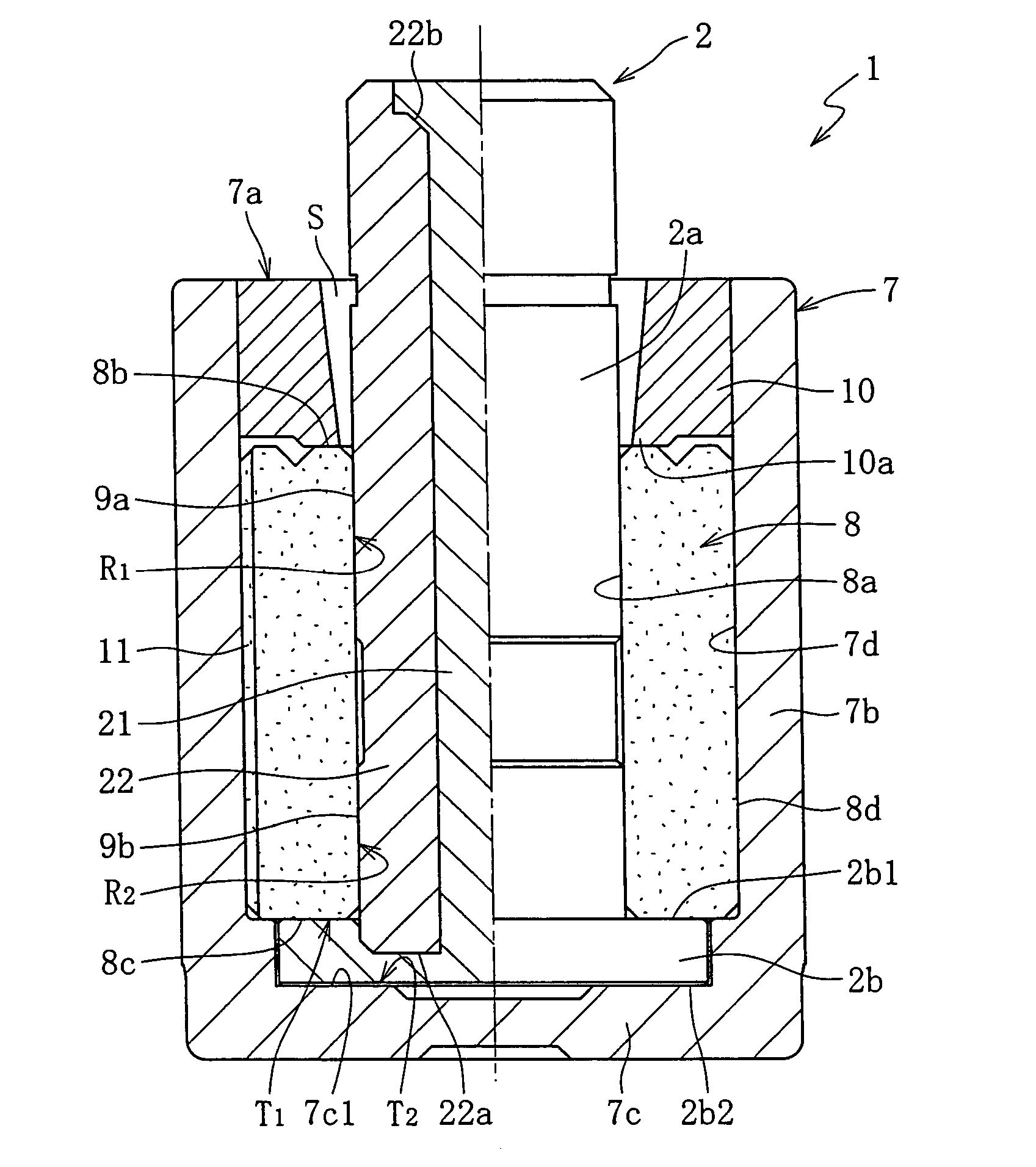
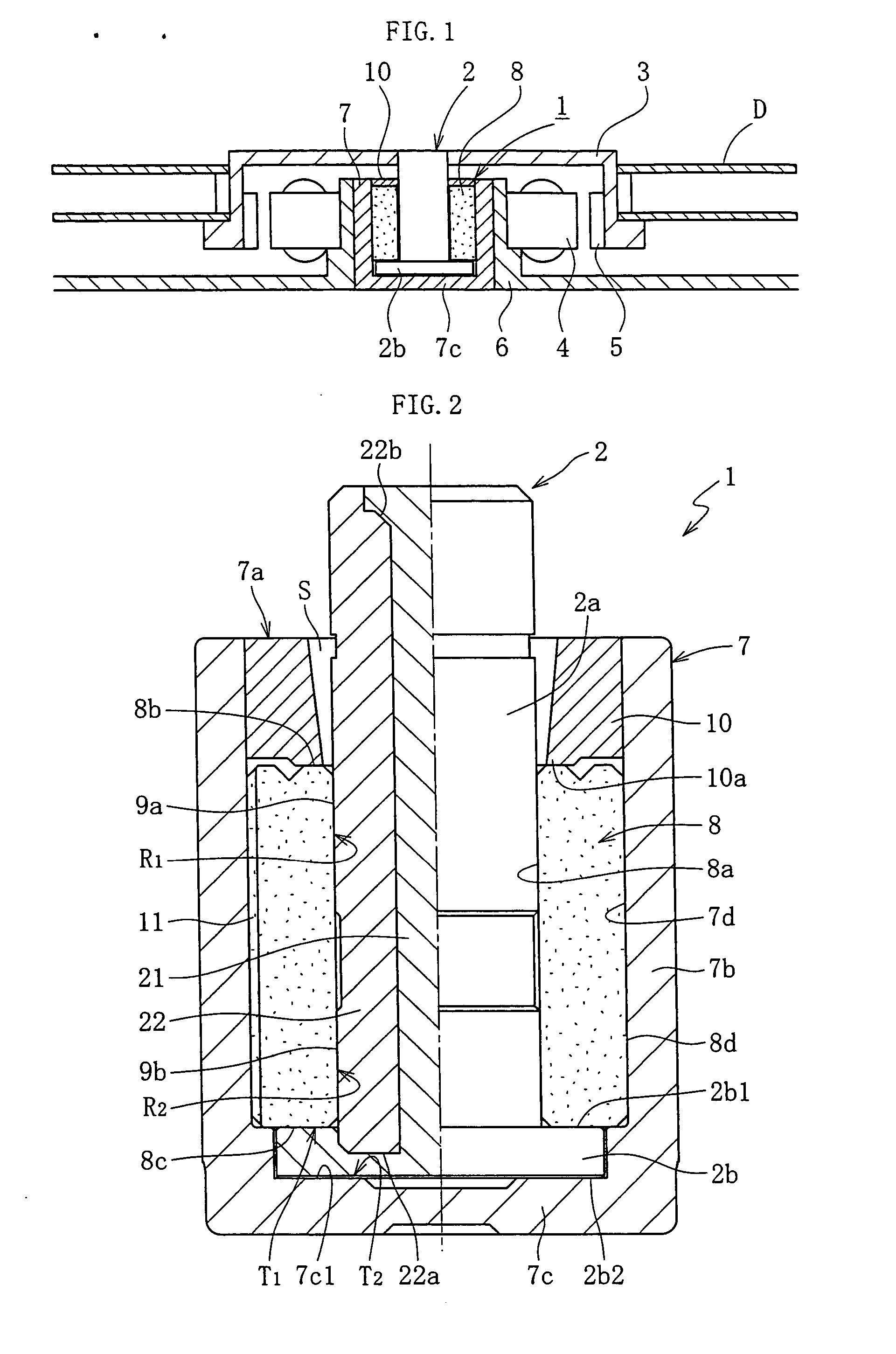
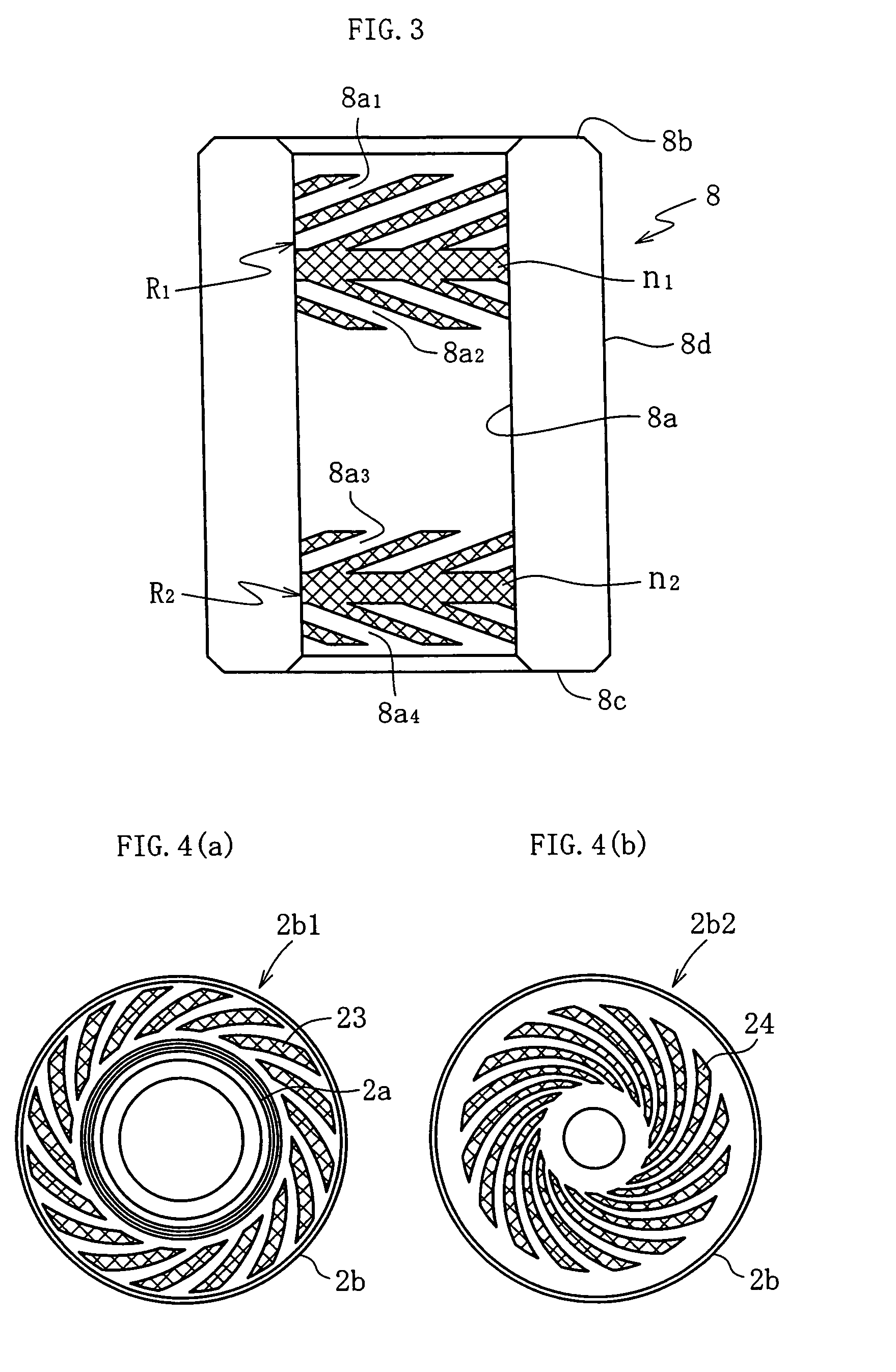
- The dynamic bearing device features a flange part made of resin with a linear expansion coefficient equal to or larger than the housing, which maintains a consistent thrust bearing gap at high temperatures and allows for increased gap at low temperatures, thereby maintaining bearing rigidity and reducing motor torque. This is achieved by varying the filler content in the resin to match the expansion coefficient of the housing material, ensuring conductivity and reducing friction.

Bearing for a rotatable shaft subject to thermal expansion
PatentInactiveUS7056027B2
Innovation
- A unique temperature-compensating bearing design with a tubular member having opposed ends, an axial passageway, and external ribs, allowing for elastic expansion to support the boring bar during temperature changes.


Material Standards for Extreme Temperature Applications
Material standards for extreme temperature applications in thrust bearing design represent a critical foundation for ensuring reliable performance across diverse operational environments. These standards establish comprehensive guidelines for material selection, testing protocols, and performance criteria that enable bearings to function effectively in temperature ranges from cryogenic conditions below -200°C to high-temperature environments exceeding 800°C.
The aerospace industry has driven the development of stringent material standards, with organizations such as ASTM International, ISO, and SAE establishing specific requirements for bearing materials. ASTM D7791 provides guidelines for polymer bearing materials under extreme conditions, while ISO 281 addresses bearing life calculations considering temperature effects. These standards define essential properties including thermal expansion coefficients, thermal conductivity, creep resistance, and dimensional stability across temperature ranges.
Ceramic materials have emerged as preferred solutions for extreme temperature applications, with silicon nitride (Si3N4) and silicon carbide (SiC) meeting rigorous standards for high-temperature performance. These materials demonstrate exceptional thermal shock resistance and maintain structural integrity at temperatures where traditional steel bearings fail. Standards specify minimum fracture toughness values of 6-8 MPa·m^0.5 and thermal expansion coefficients below 4×10^-6/°C for ceramic bearing components.
Advanced steel alloys continue to play crucial roles in moderate extreme temperature applications. M50 steel and its variants meet aerospace standards for temperatures up to 350°C, while newer powder metallurgy steels extend operational ranges to 450°C. Material standards mandate specific heat treatment protocols and microstructural requirements to achieve necessary hardness retention and dimensional stability.
Coating technologies have become integral to material standards for extreme temperature thrust bearings. Diamond-like carbon (DLC) coatings and ceramic thermal barrier coatings must meet specific adhesion strength requirements exceeding 50 MPa and demonstrate thermal cycling resistance through standardized testing protocols. These coatings enable conventional bearing materials to operate in previously inaccessible temperature ranges while maintaining acceptable wear rates.
Quality assurance protocols within material standards require comprehensive testing including thermal cycling, creep testing, and accelerated aging studies. Standards mandate minimum test durations and specific temperature profiles to validate material performance predictions and ensure long-term reliability in extreme temperature applications.
The aerospace industry has driven the development of stringent material standards, with organizations such as ASTM International, ISO, and SAE establishing specific requirements for bearing materials. ASTM D7791 provides guidelines for polymer bearing materials under extreme conditions, while ISO 281 addresses bearing life calculations considering temperature effects. These standards define essential properties including thermal expansion coefficients, thermal conductivity, creep resistance, and dimensional stability across temperature ranges.
Ceramic materials have emerged as preferred solutions for extreme temperature applications, with silicon nitride (Si3N4) and silicon carbide (SiC) meeting rigorous standards for high-temperature performance. These materials demonstrate exceptional thermal shock resistance and maintain structural integrity at temperatures where traditional steel bearings fail. Standards specify minimum fracture toughness values of 6-8 MPa·m^0.5 and thermal expansion coefficients below 4×10^-6/°C for ceramic bearing components.
Advanced steel alloys continue to play crucial roles in moderate extreme temperature applications. M50 steel and its variants meet aerospace standards for temperatures up to 350°C, while newer powder metallurgy steels extend operational ranges to 450°C. Material standards mandate specific heat treatment protocols and microstructural requirements to achieve necessary hardness retention and dimensional stability.
Coating technologies have become integral to material standards for extreme temperature thrust bearings. Diamond-like carbon (DLC) coatings and ceramic thermal barrier coatings must meet specific adhesion strength requirements exceeding 50 MPa and demonstrate thermal cycling resistance through standardized testing protocols. These coatings enable conventional bearing materials to operate in previously inaccessible temperature ranges while maintaining acceptable wear rates.
Quality assurance protocols within material standards require comprehensive testing including thermal cycling, creep testing, and accelerated aging studies. Standards mandate minimum test durations and specific temperature profiles to validate material performance predictions and ensure long-term reliability in extreme temperature applications.
Thermal Management Systems Integration for Thrust Bearings
Thermal management systems integration represents a critical engineering discipline for thrust bearings operating under extreme temperature variations. The integration approach encompasses the seamless coordination of active and passive thermal control mechanisms with bearing structural components to maintain optimal operating temperatures across diverse environmental conditions. This integration extends beyond simple heat dissipation, requiring sophisticated thermal pathways that can dynamically respond to temperature fluctuations while preserving bearing performance and longevity.
Modern thermal management integration strategies employ multi-layered approaches combining conductive, convective, and radiative heat transfer mechanisms. Advanced systems incorporate embedded thermal sensors within bearing assemblies, enabling real-time temperature monitoring and adaptive thermal response. These integrated sensors communicate with centralized thermal management controllers that orchestrate cooling fluid circulation, heat sink activation, and thermal barrier adjustments based on instantaneous temperature readings and predictive algorithms.
The integration of phase change materials (PCMs) within thrust bearing housings has emerged as a particularly effective thermal buffering solution. These materials absorb excess heat during temperature spikes and release stored thermal energy during cooling phases, creating thermal stability zones around critical bearing components. The strategic placement of PCM reservoirs within bearing assemblies requires careful consideration of thermal conductivity pathways and material compatibility with lubricants and bearing surfaces.
Microfluidic cooling channels integrated directly into bearing races represent another significant advancement in thermal management integration. These microscale channels enable precise thermal control through targeted coolant delivery to high-stress bearing zones. The integration process involves sophisticated manufacturing techniques including laser drilling, electrochemical machining, and additive manufacturing to create complex internal cooling geometries without compromising bearing structural integrity.
Advanced thermal management systems also incorporate predictive thermal modeling capabilities that anticipate temperature variations based on operational parameters and environmental conditions. These systems utilize machine learning algorithms to optimize thermal response strategies, reducing energy consumption while maintaining optimal bearing temperatures. The integration of such intelligent thermal management requires robust communication protocols between thermal sensors, control systems, and actuating mechanisms to ensure coordinated thermal response across all bearing components.
Modern thermal management integration strategies employ multi-layered approaches combining conductive, convective, and radiative heat transfer mechanisms. Advanced systems incorporate embedded thermal sensors within bearing assemblies, enabling real-time temperature monitoring and adaptive thermal response. These integrated sensors communicate with centralized thermal management controllers that orchestrate cooling fluid circulation, heat sink activation, and thermal barrier adjustments based on instantaneous temperature readings and predictive algorithms.
The integration of phase change materials (PCMs) within thrust bearing housings has emerged as a particularly effective thermal buffering solution. These materials absorb excess heat during temperature spikes and release stored thermal energy during cooling phases, creating thermal stability zones around critical bearing components. The strategic placement of PCM reservoirs within bearing assemblies requires careful consideration of thermal conductivity pathways and material compatibility with lubricants and bearing surfaces.
Microfluidic cooling channels integrated directly into bearing races represent another significant advancement in thermal management integration. These microscale channels enable precise thermal control through targeted coolant delivery to high-stress bearing zones. The integration process involves sophisticated manufacturing techniques including laser drilling, electrochemical machining, and additive manufacturing to create complex internal cooling geometries without compromising bearing structural integrity.
Advanced thermal management systems also incorporate predictive thermal modeling capabilities that anticipate temperature variations based on operational parameters and environmental conditions. These systems utilize machine learning algorithms to optimize thermal response strategies, reducing energy consumption while maintaining optimal bearing temperatures. The integration of such intelligent thermal management requires robust communication protocols between thermal sensors, control systems, and actuating mechanisms to ensure coordinated thermal response across all bearing components.
Unlock deeper insights with Patsnap Eureka Quick Research — get a full tech report to explore trends and direct your research. Try now!
Generate Your Research Report Instantly with AI Agent
Supercharge your innovation with Patsnap Eureka AI Agent Platform!