

Thrust Bearing Impact on Hydraulic System Efficiency
MAR 16, 20269 MIN READ
Generate Your Research Report Instantly with AI Agent
Patsnap Eureka helps you evaluate technical feasibility & market potential.
Thrust Bearing Technology Background and Hydraulic Efficiency Goals
Thrust bearings have evolved significantly since their inception in the early industrial era, transitioning from simple mechanical components to sophisticated engineered solutions critical for modern hydraulic systems. The fundamental principle of thrust bearings involves managing axial loads while minimizing friction, a concept that has remained constant despite technological advances in materials, manufacturing processes, and design methodologies.
The development trajectory of thrust bearing technology has been closely intertwined with hydraulic system evolution. Early hydraulic applications relied on basic ball and roller thrust bearings, which provided adequate load capacity but often compromised system efficiency due to inherent friction losses. The introduction of fluid film thrust bearings marked a pivotal advancement, enabling higher rotational speeds and reduced friction coefficients essential for hydraulic pump and motor applications.
Contemporary thrust bearing technology encompasses multiple design philosophies, including hydrodynamic, hydrostatic, and hybrid configurations. Each approach addresses specific operational requirements within hydraulic systems, where bearing performance directly influences volumetric and mechanical efficiency. The integration of advanced materials such as engineered polymers, ceramic composites, and specialized coatings has expanded operational parameters while reducing maintenance requirements.
Current technological trends emphasize the optimization of bearing geometry, surface treatments, and lubrication systems to achieve maximum hydraulic efficiency. The emergence of computational fluid dynamics modeling has enabled precise prediction of bearing behavior under varying load and speed conditions, facilitating design optimization for specific hydraulic applications.
The primary technical objectives driving thrust bearing development in hydraulic systems center on achieving maximum energy conversion efficiency while maintaining operational reliability. Efficiency targets typically focus on minimizing power losses through reduced friction coefficients, optimized load distribution, and enhanced thermal management. Modern hydraulic systems demand thrust bearings capable of operating at efficiency levels exceeding 95% while withstanding extreme pressure differentials and temperature variations.
Reliability objectives encompass extended service life, reduced maintenance intervals, and consistent performance across diverse operating conditions. These goals necessitate advanced bearing designs that accommodate misalignment, contamination, and varying load profiles typical in hydraulic applications. The integration of condition monitoring capabilities represents an emerging objective, enabling predictive maintenance strategies that optimize system uptime and performance consistency.
The development trajectory of thrust bearing technology has been closely intertwined with hydraulic system evolution. Early hydraulic applications relied on basic ball and roller thrust bearings, which provided adequate load capacity but often compromised system efficiency due to inherent friction losses. The introduction of fluid film thrust bearings marked a pivotal advancement, enabling higher rotational speeds and reduced friction coefficients essential for hydraulic pump and motor applications.
Contemporary thrust bearing technology encompasses multiple design philosophies, including hydrodynamic, hydrostatic, and hybrid configurations. Each approach addresses specific operational requirements within hydraulic systems, where bearing performance directly influences volumetric and mechanical efficiency. The integration of advanced materials such as engineered polymers, ceramic composites, and specialized coatings has expanded operational parameters while reducing maintenance requirements.
Current technological trends emphasize the optimization of bearing geometry, surface treatments, and lubrication systems to achieve maximum hydraulic efficiency. The emergence of computational fluid dynamics modeling has enabled precise prediction of bearing behavior under varying load and speed conditions, facilitating design optimization for specific hydraulic applications.
The primary technical objectives driving thrust bearing development in hydraulic systems center on achieving maximum energy conversion efficiency while maintaining operational reliability. Efficiency targets typically focus on minimizing power losses through reduced friction coefficients, optimized load distribution, and enhanced thermal management. Modern hydraulic systems demand thrust bearings capable of operating at efficiency levels exceeding 95% while withstanding extreme pressure differentials and temperature variations.
Reliability objectives encompass extended service life, reduced maintenance intervals, and consistent performance across diverse operating conditions. These goals necessitate advanced bearing designs that accommodate misalignment, contamination, and varying load profiles typical in hydraulic applications. The integration of condition monitoring capabilities represents an emerging objective, enabling predictive maintenance strategies that optimize system uptime and performance consistency.
Market Demand for High-Efficiency Hydraulic Systems
The global hydraulic systems market is experiencing unprecedented growth driven by increasing demands for energy efficiency and operational cost reduction across multiple industrial sectors. Manufacturing industries, particularly automotive, aerospace, and heavy machinery, are actively seeking hydraulic solutions that can deliver superior performance while minimizing energy consumption and maintenance requirements.
Construction and mining equipment manufacturers face mounting pressure to develop machinery that meets stringent environmental regulations while maintaining high productivity levels. These sectors require hydraulic systems capable of operating under extreme conditions with minimal efficiency losses, making thrust bearing optimization a critical factor in system design and performance enhancement.
The renewable energy sector, especially wind power generation, presents substantial opportunities for high-efficiency hydraulic systems. Wind turbine pitch control systems and hydraulic braking mechanisms demand precise, reliable operation with minimal energy waste, creating significant market demand for advanced bearing technologies that reduce friction losses and improve overall system efficiency.
Industrial automation and robotics applications are driving demand for compact, high-precision hydraulic systems where every component's efficiency contribution becomes magnified. These applications require thrust bearings that can maintain consistent performance across varying load conditions while contributing to overall system energy optimization.
Marine and offshore industries represent another growing market segment where hydraulic system efficiency directly impacts fuel consumption and operational costs. Ship steering systems, deck machinery, and offshore drilling equipment require robust hydraulic solutions with optimized thrust bearing configurations to ensure reliable operation in harsh marine environments.
The agricultural machinery sector is increasingly focused on precision farming technologies that rely on efficient hydraulic systems for implement control, steering assistance, and power transmission. Modern agricultural equipment demands hydraulic components that can operate efficiently across extended duty cycles while minimizing maintenance requirements and energy consumption.
Market research indicates that end-users are willing to invest in premium hydraulic components that demonstrate measurable efficiency improvements and reduced total cost of ownership. This trend creates substantial opportunities for thrust bearing innovations that can quantifiably enhance hydraulic system performance and reliability.
Construction and mining equipment manufacturers face mounting pressure to develop machinery that meets stringent environmental regulations while maintaining high productivity levels. These sectors require hydraulic systems capable of operating under extreme conditions with minimal efficiency losses, making thrust bearing optimization a critical factor in system design and performance enhancement.
The renewable energy sector, especially wind power generation, presents substantial opportunities for high-efficiency hydraulic systems. Wind turbine pitch control systems and hydraulic braking mechanisms demand precise, reliable operation with minimal energy waste, creating significant market demand for advanced bearing technologies that reduce friction losses and improve overall system efficiency.
Industrial automation and robotics applications are driving demand for compact, high-precision hydraulic systems where every component's efficiency contribution becomes magnified. These applications require thrust bearings that can maintain consistent performance across varying load conditions while contributing to overall system energy optimization.
Marine and offshore industries represent another growing market segment where hydraulic system efficiency directly impacts fuel consumption and operational costs. Ship steering systems, deck machinery, and offshore drilling equipment require robust hydraulic solutions with optimized thrust bearing configurations to ensure reliable operation in harsh marine environments.
The agricultural machinery sector is increasingly focused on precision farming technologies that rely on efficient hydraulic systems for implement control, steering assistance, and power transmission. Modern agricultural equipment demands hydraulic components that can operate efficiently across extended duty cycles while minimizing maintenance requirements and energy consumption.
Market research indicates that end-users are willing to invest in premium hydraulic components that demonstrate measurable efficiency improvements and reduced total cost of ownership. This trend creates substantial opportunities for thrust bearing innovations that can quantifiably enhance hydraulic system performance and reliability.
Current Thrust Bearing Limitations in Hydraulic Applications
Traditional thrust bearings in hydraulic applications face significant operational constraints that directly impact system efficiency and reliability. Conventional ball and roller thrust bearings exhibit limited load-carrying capacity under high axial forces, particularly in heavy-duty hydraulic pumps and motors where thrust loads can exceed 50,000 pounds. These bearings frequently experience premature failure due to inadequate lubrication distribution and heat dissipation, leading to increased friction coefficients that can reduce overall system efficiency by 8-15%.
Fluid contamination presents another critical limitation affecting thrust bearing performance in hydraulic environments. Standard bearing sealing mechanisms prove insufficient against hydraulic fluid ingress, causing accelerated wear and corrosion. Metal particles and water contamination in hydraulic fluids create abrasive conditions that deteriorate bearing surfaces, resulting in increased clearances and reduced precision. This contamination-induced degradation typically manifests within 2,000-3,000 operating hours under normal industrial conditions.
Temperature management remains a persistent challenge for thrust bearings in hydraulic applications. High-pressure hydraulic systems generate substantial heat, with operating temperatures often exceeding 80°C. Conventional bearing materials and lubricants experience thermal degradation at these elevated temperatures, leading to reduced viscosity and compromised load distribution. The thermal expansion differential between bearing components and housing materials creates additional stress concentrations that accelerate fatigue failure.
Speed limitations of traditional thrust bearings significantly constrain hydraulic system design flexibility. Most conventional thrust bearings cannot reliably operate above 3,000 RPM while maintaining adequate load capacity, restricting the power-to-weight ratio achievable in modern hydraulic systems. This speed constraint becomes particularly problematic in aerospace and mobile hydraulic applications where compact, high-performance systems are essential.
Maintenance accessibility and replacement complexity represent additional operational limitations. Thrust bearings in hydraulic systems typically require complete system disassembly for inspection or replacement, resulting in extended downtime and increased maintenance costs. The precision alignment requirements during reinstallation often necessitate specialized tooling and expertise, further complicating field maintenance operations and reducing system availability in critical applications.
Fluid contamination presents another critical limitation affecting thrust bearing performance in hydraulic environments. Standard bearing sealing mechanisms prove insufficient against hydraulic fluid ingress, causing accelerated wear and corrosion. Metal particles and water contamination in hydraulic fluids create abrasive conditions that deteriorate bearing surfaces, resulting in increased clearances and reduced precision. This contamination-induced degradation typically manifests within 2,000-3,000 operating hours under normal industrial conditions.
Temperature management remains a persistent challenge for thrust bearings in hydraulic applications. High-pressure hydraulic systems generate substantial heat, with operating temperatures often exceeding 80°C. Conventional bearing materials and lubricants experience thermal degradation at these elevated temperatures, leading to reduced viscosity and compromised load distribution. The thermal expansion differential between bearing components and housing materials creates additional stress concentrations that accelerate fatigue failure.
Speed limitations of traditional thrust bearings significantly constrain hydraulic system design flexibility. Most conventional thrust bearings cannot reliably operate above 3,000 RPM while maintaining adequate load capacity, restricting the power-to-weight ratio achievable in modern hydraulic systems. This speed constraint becomes particularly problematic in aerospace and mobile hydraulic applications where compact, high-performance systems are essential.
Maintenance accessibility and replacement complexity represent additional operational limitations. Thrust bearings in hydraulic systems typically require complete system disassembly for inspection or replacement, resulting in extended downtime and increased maintenance costs. The precision alignment requirements during reinstallation often necessitate specialized tooling and expertise, further complicating field maintenance operations and reducing system availability in critical applications.
Existing Thrust Bearing Solutions for Hydraulic Efficiency
01 Advanced bearing surface materials and coatings
Improving thrust bearing efficiency through the use of specialized materials and surface coatings that reduce friction and wear. These materials may include advanced alloys, ceramic composites, or specialized surface treatments that enhance load-bearing capacity while minimizing energy losses. The application of low-friction coatings or treatments can significantly improve the operational efficiency of thrust bearings by reducing contact resistance and extending service life.- Advanced bearing surface materials and coatings: Improving thrust bearing efficiency through the use of specialized materials and surface coatings that reduce friction and wear. These materials may include advanced alloys, ceramic composites, or specialized surface treatments that enhance load-bearing capacity while minimizing energy losses. The application of low-friction coatings or treatments can significantly improve the operational efficiency of thrust bearings by reducing contact resistance and extending service life.
- Hydrodynamic and hydrostatic bearing designs: Enhancement of thrust bearing efficiency through optimized fluid film bearing designs that utilize hydrodynamic or hydrostatic principles. These designs incorporate specific groove patterns, pocket configurations, or pressurized fluid systems to create stable lubricating films that separate bearing surfaces. The optimization of fluid dynamics within the bearing assembly reduces direct contact, minimizes friction losses, and improves overall efficiency under various operating conditions.
- Bearing geometry and structural optimization: Improving efficiency through optimized bearing geometry, including thrust pad configurations, surface profiles, and structural arrangements. This involves the design of specific bearing shapes, dimensions, and arrangements that optimize load distribution and minimize energy losses. Advanced geometric designs may include tilting pad configurations, tapered surfaces, or specialized contours that enhance performance under different load and speed conditions.
- Lubrication systems and oil supply methods: Enhancement of thrust bearing efficiency through advanced lubrication systems and optimized oil supply methods. This includes the design of oil distribution channels, cooling systems, and lubrication delivery mechanisms that ensure adequate lubricant supply while minimizing churning losses. Efficient lubrication systems maintain proper film thickness, remove heat effectively, and reduce parasitic power losses associated with excessive oil flow or inadequate cooling.
- Active control and monitoring systems: Improving thrust bearing efficiency through active control systems and real-time monitoring technologies. These systems may include sensors, actuators, and control algorithms that adjust bearing parameters dynamically based on operating conditions. Active systems can optimize clearances, adjust lubrication flow, or modify bearing configurations in response to load changes, temperature variations, or speed fluctuations, thereby maintaining optimal efficiency across a wide range of operating conditions.
02 Hydrodynamic and hydrostatic bearing designs
Enhancement of thrust bearing efficiency through optimized fluid film bearing designs that utilize hydrodynamic or hydrostatic principles. These designs incorporate specific groove patterns, pocket configurations, or pressurized fluid systems to create stable lubricating films that separate bearing surfaces. The optimization of fluid flow characteristics and pressure distribution can substantially reduce friction losses and improve load capacity.Expand Specific Solutions03 Bearing geometry and structural optimization
Improving efficiency through optimized bearing geometry, including thrust collar design, pad configuration, and dimensional relationships. This involves careful consideration of bearing surface area, thickness ratios, clearance specifications, and load distribution patterns. Structural modifications may include segmented designs, tilting pad arrangements, or specialized contours that enhance performance under various operating conditions.Expand Specific Solutions04 Lubrication systems and oil supply methods
Enhancement of thrust bearing efficiency through advanced lubrication delivery systems and oil management techniques. This includes optimized oil supply configurations, circulation systems, cooling arrangements, and filtration methods that ensure consistent lubricant film formation. Proper lubrication system design can minimize churning losses, maintain optimal operating temperatures, and ensure adequate film thickness under varying load conditions.Expand Specific Solutions05 Active control and monitoring systems
Implementation of active control mechanisms and monitoring systems to optimize thrust bearing performance in real-time. These systems may include sensors for temperature, pressure, and vibration monitoring, along with adaptive control mechanisms that adjust operating parameters based on measured conditions. Advanced monitoring enables predictive maintenance and operational adjustments that maximize efficiency and prevent failures.Expand Specific Solutions
Key Players in Thrust Bearing and Hydraulic System Industry
The thrust bearing impact on hydraulic system efficiency represents a mature yet evolving market segment within the broader hydraulic systems industry. The sector demonstrates steady growth driven by increasing automation across industrial applications and renewable energy infrastructure development. Market leaders like General Electric, Siemens AG, and Mitsubishi Heavy Industries leverage decades of engineering expertise to dominate large-scale applications, while specialized firms such as HYDAC International and NTN Corp focus on precision bearing technologies. The competitive landscape shows high technical maturity, with established players like Robert Bosch GmbH and BorgWarner investing heavily in advanced materials and smart monitoring systems. Asian manufacturers including DAIKIN Industries and Minebea Mitsumi are gaining market share through cost-effective solutions and innovative designs. The industry is transitioning toward digitalization and predictive maintenance capabilities, with companies like Continental Teves and Voith Turbo integrating IoT sensors and data analytics to optimize bearing performance and system efficiency.
General Electric Company
Technical Solution: GE implements high-performance thrust bearing assemblies in their hydraulic turbine systems, featuring advanced materials including carbon fiber reinforced composites and specialized metal alloys that withstand extreme pressure differentials up to 500 bar. Their thrust bearing design incorporates active magnetic bearing technology for critical applications, eliminating mechanical contact and reducing friction losses by up to 95%. GE's hydraulic systems utilize predictive maintenance algorithms that monitor thrust bearing performance in real-time, detecting wear patterns and optimizing lubrication cycles to maintain peak efficiency. The company's thrust bearings feature modular designs that allow for rapid replacement and adjustment, with integrated sensors providing continuous feedback on bearing temperature, vibration, and load distribution to optimize hydraulic system performance.
Strengths: Cutting-edge magnetic bearing technology and comprehensive industrial experience. Weaknesses: High complexity and significant power requirements for magnetic bearing systems.
Robert Bosch GmbH
Technical Solution: Bosch develops advanced thrust bearing solutions integrated with hydraulic pump systems, utilizing precision-engineered ceramic and steel hybrid bearings that reduce friction coefficients by up to 30% compared to conventional designs. Their thrust bearing technology incorporates optimized surface treatments and specialized lubricant channels that maintain consistent oil film thickness under varying pressure conditions. The company's hydraulic systems feature adaptive bearing preload mechanisms that automatically adjust to operational demands, ensuring optimal load distribution and minimizing energy losses. Bosch's thrust bearings are designed with enhanced sealing systems that prevent contamination while maintaining proper lubrication flow, contributing to overall hydraulic system efficiency improvements of 8-12% in industrial applications.
Strengths: Industry-leading precision manufacturing and extensive automotive hydraulic experience. Weaknesses: Higher initial costs and complex maintenance requirements for advanced bearing systems.
Core Innovations in Advanced Thrust Bearing Design
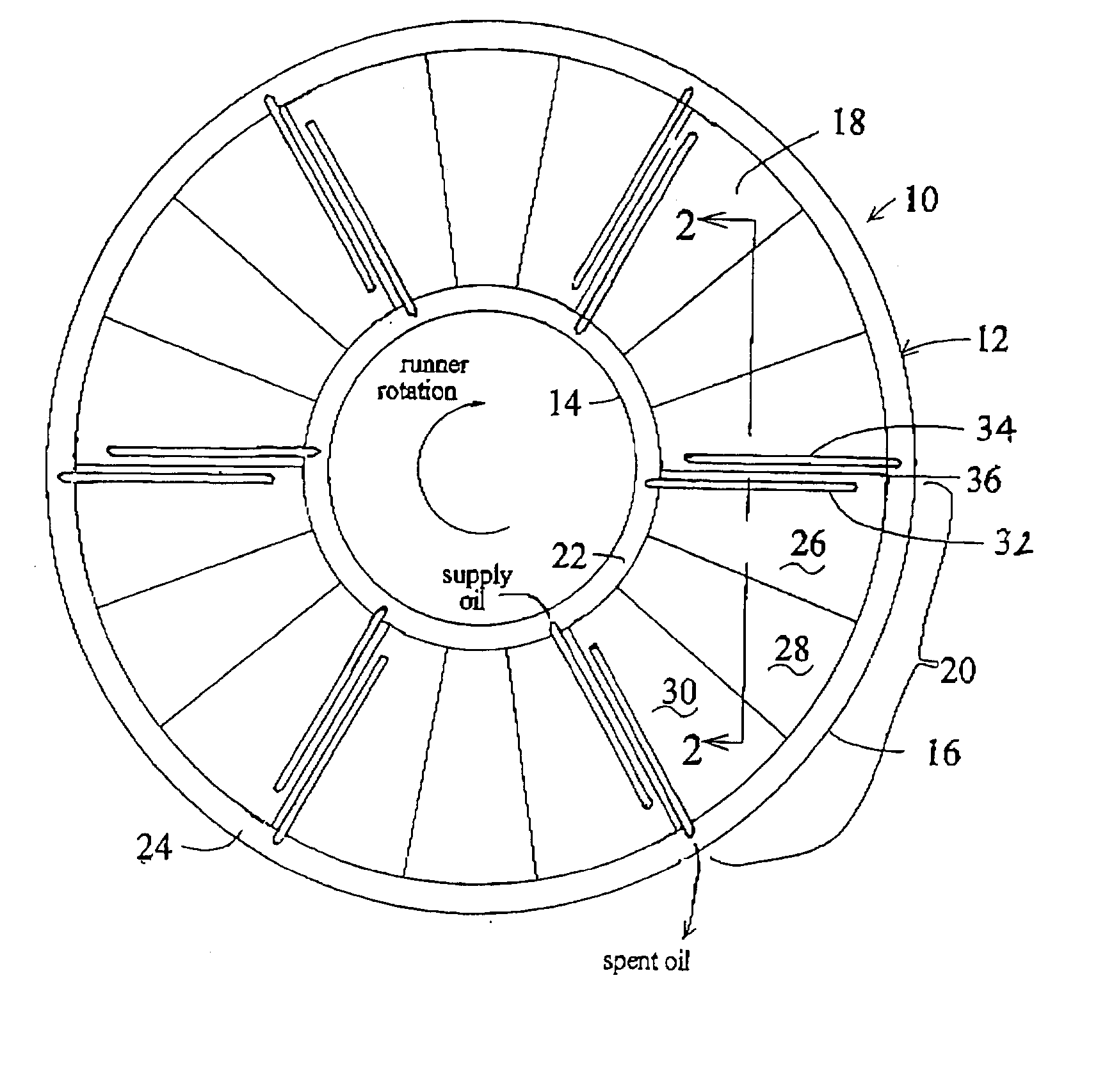
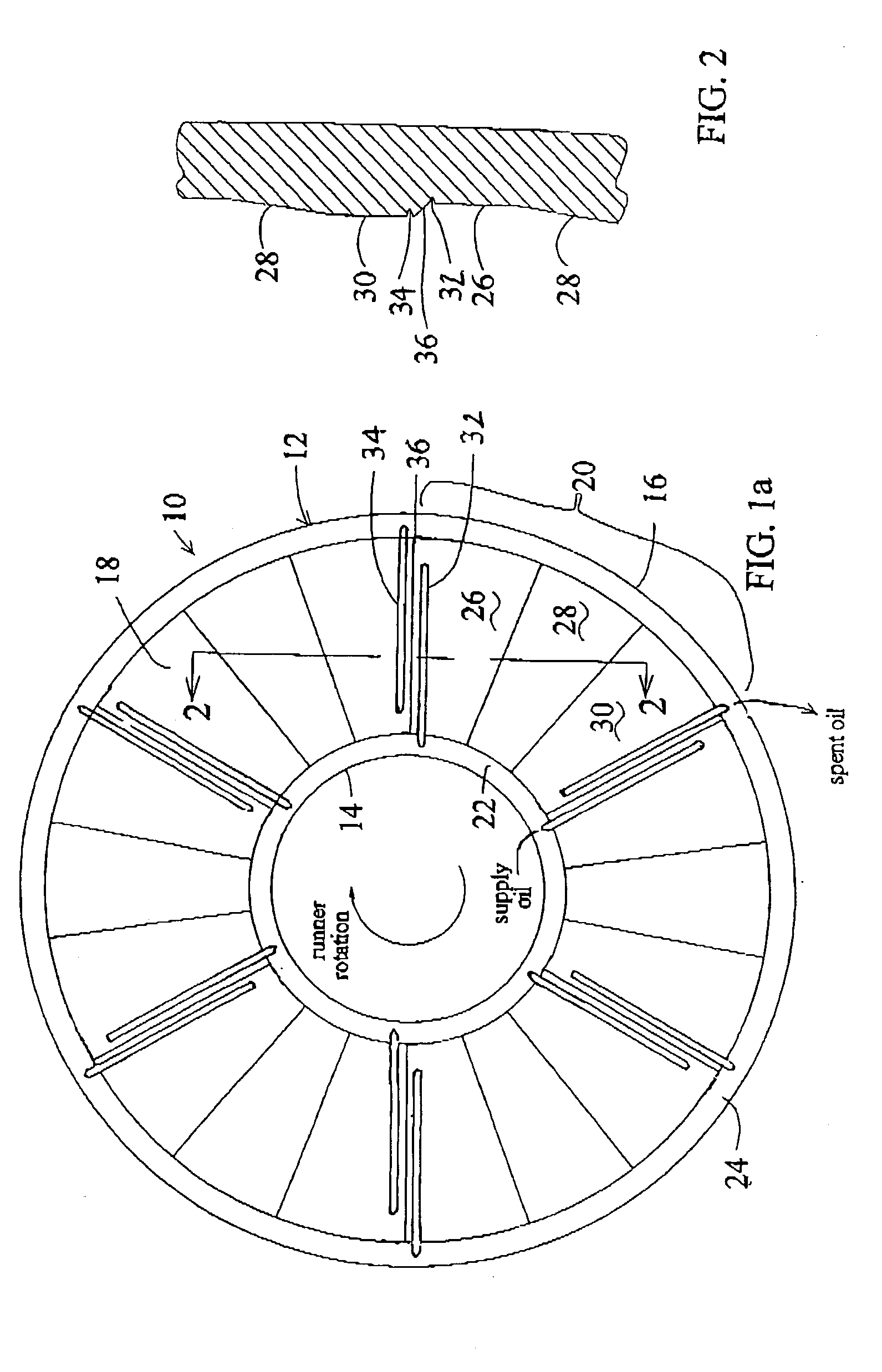
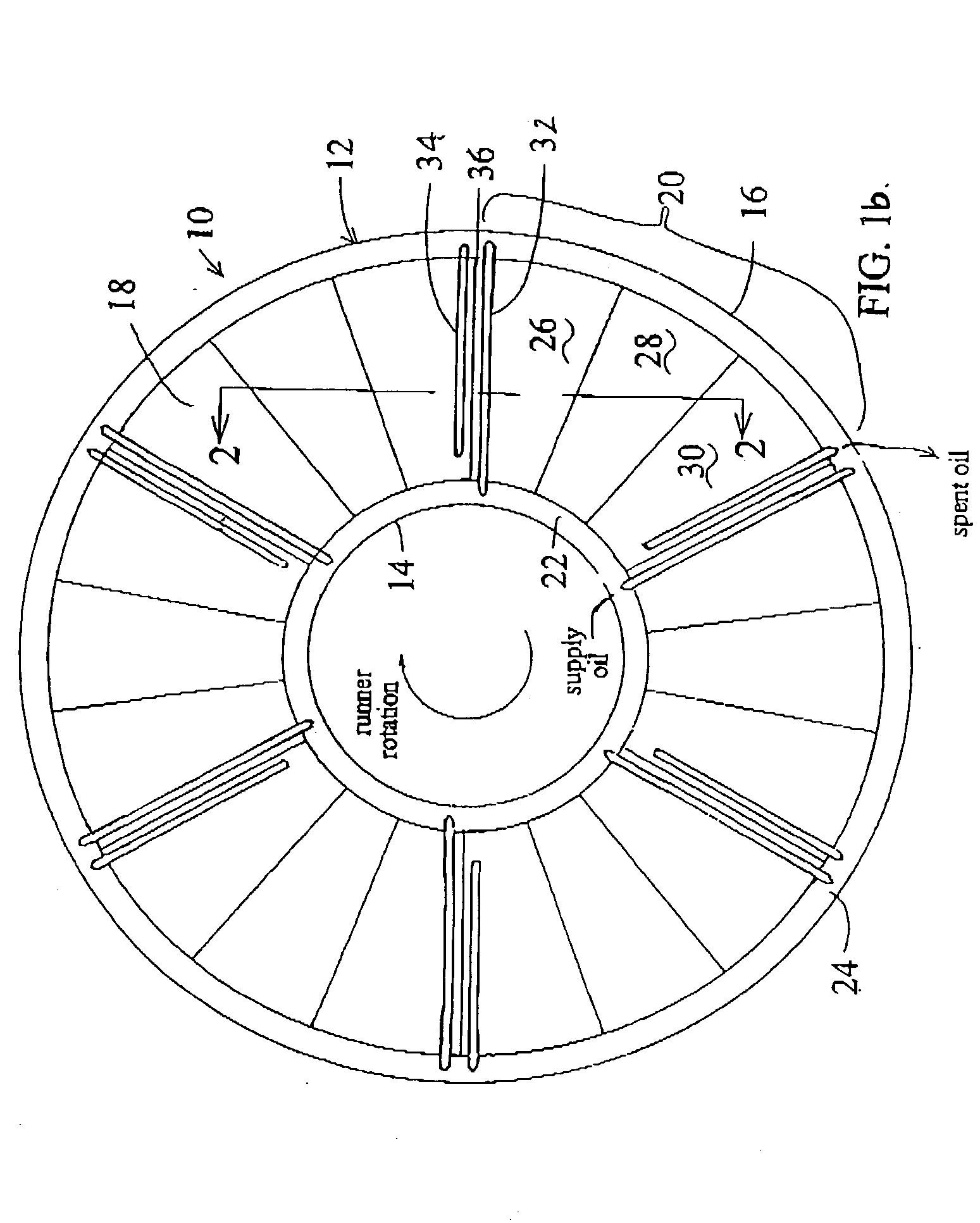
Diverted flow thrust bearing
PatentInactiveUS20030039417A1
Innovation
- The design incorporates separate oil supply and return channels along the axial surface of the thrust bearing, with distinct grooves for each, preventing the mixing of fresh and heated oil, thereby minimizing oil film temperature and enhancing thrust load capacity.
Tapered-land thrust bearing for turbochargers
PatentActiveUS20150086144A1
Innovation
- An oil-lubricated, tapered-land thrust bearing assembly with a flinger sleeve, thrust washer, and complementary bearing housing cover, featuring a base and compliant inserts that adjust the oil film behavior based on applied force, allowing for variable geometry and improved load distribution across different operating conditions.


Environmental Impact of Hydraulic System Efficiency
The environmental implications of hydraulic system efficiency, particularly as influenced by thrust bearing performance, represent a critical intersection of mechanical engineering and sustainability concerns. Modern industrial operations face increasing pressure to minimize their ecological footprint while maintaining operational effectiveness, making the optimization of hydraulic systems a priority for environmental stewardship.
Energy consumption constitutes the primary environmental concern in hydraulic systems. Inefficient thrust bearings contribute to increased power requirements through elevated friction losses and heat generation. This inefficiency translates directly to higher electricity consumption, which in turn increases carbon emissions from power generation facilities. Studies indicate that even marginal improvements in bearing efficiency can result in substantial energy savings across large-scale industrial applications.
Fluid contamination and degradation present another significant environmental challenge. Poor thrust bearing performance often leads to accelerated hydraulic fluid breakdown, requiring more frequent fluid changes and generating hazardous waste streams. Contaminated hydraulic fluids contain heavy metals and synthetic compounds that pose risks to soil and groundwater systems if improperly disposed.
Heat generation from inefficient thrust bearings necessitates enhanced cooling systems, creating additional environmental burdens. Increased cooling requirements consume more energy and may require larger heat exchangers or cooling towers, potentially affecting local water resources and thermal pollution in industrial discharge streams.
The lifecycle environmental impact extends beyond operational considerations. Premature bearing failure due to efficiency-related issues increases material consumption and waste generation. Frequent replacement cycles demand additional manufacturing resources and create disposal challenges for worn components, many of which contain materials requiring specialized recycling processes.
Noise pollution represents an often-overlooked environmental factor. Inefficient thrust bearings typically generate higher acoustic emissions, contributing to industrial noise pollution that affects both workplace environments and surrounding communities. This acoustic impact becomes particularly significant in urban industrial settings where noise regulations are stringent.
Emerging environmental regulations increasingly focus on industrial energy efficiency standards, making thrust bearing optimization not merely an operational consideration but a compliance requirement. Organizations must balance immediate performance needs with long-term environmental responsibilities, driving innovation in bearing design and hydraulic system integration to achieve sustainable operational excellence.
Energy consumption constitutes the primary environmental concern in hydraulic systems. Inefficient thrust bearings contribute to increased power requirements through elevated friction losses and heat generation. This inefficiency translates directly to higher electricity consumption, which in turn increases carbon emissions from power generation facilities. Studies indicate that even marginal improvements in bearing efficiency can result in substantial energy savings across large-scale industrial applications.
Fluid contamination and degradation present another significant environmental challenge. Poor thrust bearing performance often leads to accelerated hydraulic fluid breakdown, requiring more frequent fluid changes and generating hazardous waste streams. Contaminated hydraulic fluids contain heavy metals and synthetic compounds that pose risks to soil and groundwater systems if improperly disposed.
Heat generation from inefficient thrust bearings necessitates enhanced cooling systems, creating additional environmental burdens. Increased cooling requirements consume more energy and may require larger heat exchangers or cooling towers, potentially affecting local water resources and thermal pollution in industrial discharge streams.
The lifecycle environmental impact extends beyond operational considerations. Premature bearing failure due to efficiency-related issues increases material consumption and waste generation. Frequent replacement cycles demand additional manufacturing resources and create disposal challenges for worn components, many of which contain materials requiring specialized recycling processes.
Noise pollution represents an often-overlooked environmental factor. Inefficient thrust bearings typically generate higher acoustic emissions, contributing to industrial noise pollution that affects both workplace environments and surrounding communities. This acoustic impact becomes particularly significant in urban industrial settings where noise regulations are stringent.
Emerging environmental regulations increasingly focus on industrial energy efficiency standards, making thrust bearing optimization not merely an operational consideration but a compliance requirement. Organizations must balance immediate performance needs with long-term environmental responsibilities, driving innovation in bearing design and hydraulic system integration to achieve sustainable operational excellence.
Cost-Benefit Analysis of Advanced Thrust Bearing Solutions
The economic evaluation of advanced thrust bearing solutions in hydraulic systems requires a comprehensive assessment of initial investment costs versus long-term operational benefits. Traditional thrust bearings typically involve lower upfront costs, ranging from $500 to $2,000 per unit for standard industrial applications. However, advanced solutions such as magnetic bearings, ceramic hybrid bearings, and active lubrication systems command significantly higher initial investments, often 3-5 times the cost of conventional alternatives.
The operational cost savings from advanced thrust bearing implementations primarily stem from reduced energy consumption and extended maintenance intervals. Energy efficiency improvements of 8-15% are commonly observed in hydraulic systems utilizing advanced bearing technologies, translating to annual energy cost reductions of $10,000 to $50,000 for medium-scale industrial operations. These savings result from decreased friction coefficients, improved load distribution, and enhanced fluid dynamics within the hydraulic circuit.
Maintenance cost reductions represent another substantial benefit category. Advanced thrust bearings demonstrate extended service life, with some ceramic and magnetic bearing solutions offering 2-3 times longer operational periods between replacements. This extension reduces both direct maintenance costs and indirect costs associated with system downtime. For critical hydraulic applications, downtime costs can exceed $1,000 per hour, making reliability improvements particularly valuable.
The payback period for advanced thrust bearing investments typically ranges from 18 to 36 months, depending on system utilization rates and energy costs. High-duty cycle applications in manufacturing, aerospace, and marine industries often achieve faster payback periods due to continuous operation and higher energy consumption patterns. Additionally, regulatory compliance benefits and environmental impact reductions provide intangible value propositions that strengthen the business case for advanced bearing adoption.
Risk mitigation factors further enhance the cost-benefit equation. Advanced thrust bearings reduce the probability of catastrophic system failures, which can result in repair costs exceeding $100,000 and extended operational disruptions. The improved predictability and condition monitoring capabilities of modern bearing systems enable proactive maintenance strategies, optimizing total cost of ownership across the equipment lifecycle.
The operational cost savings from advanced thrust bearing implementations primarily stem from reduced energy consumption and extended maintenance intervals. Energy efficiency improvements of 8-15% are commonly observed in hydraulic systems utilizing advanced bearing technologies, translating to annual energy cost reductions of $10,000 to $50,000 for medium-scale industrial operations. These savings result from decreased friction coefficients, improved load distribution, and enhanced fluid dynamics within the hydraulic circuit.
Maintenance cost reductions represent another substantial benefit category. Advanced thrust bearings demonstrate extended service life, with some ceramic and magnetic bearing solutions offering 2-3 times longer operational periods between replacements. This extension reduces both direct maintenance costs and indirect costs associated with system downtime. For critical hydraulic applications, downtime costs can exceed $1,000 per hour, making reliability improvements particularly valuable.
The payback period for advanced thrust bearing investments typically ranges from 18 to 36 months, depending on system utilization rates and energy costs. High-duty cycle applications in manufacturing, aerospace, and marine industries often achieve faster payback periods due to continuous operation and higher energy consumption patterns. Additionally, regulatory compliance benefits and environmental impact reductions provide intangible value propositions that strengthen the business case for advanced bearing adoption.
Risk mitigation factors further enhance the cost-benefit equation. Advanced thrust bearings reduce the probability of catastrophic system failures, which can result in repair costs exceeding $100,000 and extended operational disruptions. The improved predictability and condition monitoring capabilities of modern bearing systems enable proactive maintenance strategies, optimizing total cost of ownership across the equipment lifecycle.
Unlock deeper insights with Patsnap Eureka Quick Research — get a full tech report to explore trends and direct your research. Try now!
Generate Your Research Report Instantly with AI Agent
Supercharge your innovation with Patsnap Eureka AI Agent Platform!