Lithium Battery Packaging Vs Performance: Trade-Off Analysis
FEB 12, 20269 MIN READ
Generate Your Research Report Instantly with AI Agent
Patsnap Eureka helps you evaluate technical feasibility & market potential.
Lithium Battery Packaging Evolution and Performance Objectives
Lithium battery packaging has undergone significant transformation since the commercialization of lithium-ion technology in the early 1990s. Initially, cylindrical cells dominated the market due to their mechanical robustness and manufacturing maturity inherited from traditional battery formats. The 18650 cylindrical format became the industry standard, offering reliable containment of active materials and electrolytes while maintaining acceptable energy density for early portable electronics applications.
The evolution accelerated in the early 2000s with the introduction of prismatic and pouch cell formats, driven by the demand for thinner consumer electronics and higher volumetric efficiency. Prismatic cells in rigid aluminum or steel casings provided improved space utilization compared to cylindrical designs, while pouch cells utilizing flexible aluminum-laminated films achieved the highest packaging efficiency by eliminating redundant structural components. This diversification reflected the industry's recognition that packaging architecture fundamentally influences both performance metrics and application suitability.
The electric vehicle revolution beginning in the 2010s introduced new packaging paradigms, with large-format prismatic cells and pouch cells gaining prominence alongside continued cylindrical cell development. Tesla's adoption of small cylindrical cells in modular configurations demonstrated that packaging strategy extends beyond individual cell design to system-level architecture. Meanwhile, blade batteries and cell-to-pack integration concepts emerged, challenging traditional assumptions about the necessary trade-offs between packaging efficiency, thermal management, and structural integrity.
Current technological objectives center on achieving multidimensional optimization across energy density, power capability, safety, manufacturing scalability, and lifecycle cost. The target of 300-350 Wh/kg at the cell level and 200-250 Wh/kg at the pack level for automotive applications drives continuous refinement of packaging materials and geometries. Simultaneously, fast-charging requirements demand packaging solutions that facilitate efficient heat dissipation without compromising energy density. Safety considerations, particularly regarding thermal runaway propagation, have elevated packaging from a passive containment function to an active safety system component, incorporating pressure relief mechanisms, thermal barriers, and structural reinforcement features that must be balanced against weight and volume constraints.
The evolution accelerated in the early 2000s with the introduction of prismatic and pouch cell formats, driven by the demand for thinner consumer electronics and higher volumetric efficiency. Prismatic cells in rigid aluminum or steel casings provided improved space utilization compared to cylindrical designs, while pouch cells utilizing flexible aluminum-laminated films achieved the highest packaging efficiency by eliminating redundant structural components. This diversification reflected the industry's recognition that packaging architecture fundamentally influences both performance metrics and application suitability.
The electric vehicle revolution beginning in the 2010s introduced new packaging paradigms, with large-format prismatic cells and pouch cells gaining prominence alongside continued cylindrical cell development. Tesla's adoption of small cylindrical cells in modular configurations demonstrated that packaging strategy extends beyond individual cell design to system-level architecture. Meanwhile, blade batteries and cell-to-pack integration concepts emerged, challenging traditional assumptions about the necessary trade-offs between packaging efficiency, thermal management, and structural integrity.
Current technological objectives center on achieving multidimensional optimization across energy density, power capability, safety, manufacturing scalability, and lifecycle cost. The target of 300-350 Wh/kg at the cell level and 200-250 Wh/kg at the pack level for automotive applications drives continuous refinement of packaging materials and geometries. Simultaneously, fast-charging requirements demand packaging solutions that facilitate efficient heat dissipation without compromising energy density. Safety considerations, particularly regarding thermal runaway propagation, have elevated packaging from a passive containment function to an active safety system component, incorporating pressure relief mechanisms, thermal barriers, and structural reinforcement features that must be balanced against weight and volume constraints.
Market Demand for Advanced Battery Packaging Solutions
The global shift toward electrification across transportation, consumer electronics, and energy storage sectors has intensified demand for advanced battery packaging solutions that can effectively balance performance optimization with practical manufacturing constraints. Electric vehicle manufacturers face mounting pressure to extend driving range while maintaining vehicle safety standards and cost competitiveness, creating urgent requirements for packaging innovations that minimize weight and volume without compromising thermal management or structural integrity. Consumer electronics brands similarly seek thinner, lighter devices with longer battery life, driving demand for packaging technologies that maximize energy density within increasingly compact form factors.
Grid-scale energy storage deployments represent another significant demand driver, as renewable energy integration requires large-format battery systems with robust packaging capable of withstanding extended operational cycles under variable environmental conditions. The proliferation of stationary storage installations has highlighted critical needs for packaging solutions that enhance thermal stability, prevent thermal runaway propagation, and facilitate efficient heat dissipation across densely packed cell arrays. Industrial applications including power tools, medical devices, and aerospace systems further diversify market requirements, each imposing distinct performance specifications regarding vibration resistance, temperature tolerance, and reliability standards.
Regulatory frameworks worldwide are simultaneously tightening safety requirements for lithium battery systems, particularly following high-profile incidents involving battery failures. These evolving standards compel manufacturers to adopt more sophisticated packaging approaches incorporating advanced materials, enhanced sealing technologies, and integrated safety mechanisms. The regulatory landscape particularly influences automotive and aviation sectors, where certification processes demand comprehensive validation of packaging performance under extreme conditions.
Market dynamics also reflect growing environmental consciousness, with increasing emphasis on sustainable packaging materials and designs facilitating end-of-life recycling. Circular economy principles are reshaping procurement criteria, as major manufacturers establish commitments to reduce packaging material usage and improve recyclability rates. This sustainability imperative intersects with performance requirements, creating demand for innovative solutions that achieve environmental objectives without sacrificing energy density, cycle life, or safety characteristics.
The convergence of these factors has established a substantial and expanding market for advanced battery packaging technologies capable of addressing multifaceted trade-offs between competing performance parameters, manufacturing feasibility, and lifecycle considerations.
Grid-scale energy storage deployments represent another significant demand driver, as renewable energy integration requires large-format battery systems with robust packaging capable of withstanding extended operational cycles under variable environmental conditions. The proliferation of stationary storage installations has highlighted critical needs for packaging solutions that enhance thermal stability, prevent thermal runaway propagation, and facilitate efficient heat dissipation across densely packed cell arrays. Industrial applications including power tools, medical devices, and aerospace systems further diversify market requirements, each imposing distinct performance specifications regarding vibration resistance, temperature tolerance, and reliability standards.
Regulatory frameworks worldwide are simultaneously tightening safety requirements for lithium battery systems, particularly following high-profile incidents involving battery failures. These evolving standards compel manufacturers to adopt more sophisticated packaging approaches incorporating advanced materials, enhanced sealing technologies, and integrated safety mechanisms. The regulatory landscape particularly influences automotive and aviation sectors, where certification processes demand comprehensive validation of packaging performance under extreme conditions.
Market dynamics also reflect growing environmental consciousness, with increasing emphasis on sustainable packaging materials and designs facilitating end-of-life recycling. Circular economy principles are reshaping procurement criteria, as major manufacturers establish commitments to reduce packaging material usage and improve recyclability rates. This sustainability imperative intersects with performance requirements, creating demand for innovative solutions that achieve environmental objectives without sacrificing energy density, cycle life, or safety characteristics.
The convergence of these factors has established a substantial and expanding market for advanced battery packaging technologies capable of addressing multifaceted trade-offs between competing performance parameters, manufacturing feasibility, and lifecycle considerations.
Current Packaging Technologies and Performance Trade-offs
Lithium battery packaging technologies represent a critical nexus where manufacturing feasibility, safety requirements, and electrochemical performance converge. The three dominant packaging formats—cylindrical, prismatic, and pouch cells—each embody distinct engineering compromises that fundamentally shape their application domains and performance characteristics.
Cylindrical cells, exemplified by the 18650 and 21700 formats, leverage mature winding processes and inherent structural rigidity. Their metal casing provides excellent mechanical protection and heat dissipation pathways, enabling high-rate discharge applications. However, the cylindrical geometry inherently creates void spaces when packed into battery modules, reducing volumetric energy density by approximately 15-25% compared to optimized prismatic arrangements. The standardized form factor facilitates automated assembly but constrains design flexibility for space-constrained applications.
Prismatic cells address volumetric efficiency through rectangular geometries that enable dense packing configurations. The rigid aluminum or steel housing maintains dimensional stability under thermal expansion and provides robust protection against external impacts. This format achieves superior space utilization in automotive applications, where module-level energy density reaches 450-550 Wh/L. The trade-off manifests in increased manufacturing complexity, particularly in electrode stacking processes, and challenges in thermal management due to larger surface areas and potential hotspot formation at cell centers.
Pouch cells maximize gravimetric and volumetric energy density by eliminating heavy metal casings, utilizing lightweight aluminum-laminated polymer films. This approach reduces packaging mass by 10-20% compared to rigid formats, directly translating to higher specific energy. The flexible format enables customized geometries for diverse applications, from consumer electronics to electric vehicles. However, the absence of rigid structures necessitates external mechanical support and introduces vulnerability to swelling from gas generation during cycling. Thermal management becomes more challenging due to limited heat conduction pathways through the polymer laminate.
The performance trade-offs extend beyond physical characteristics to manufacturing scalability and safety considerations. Cylindrical cells benefit from decades of process optimization and automated production lines, achieving the lowest per-unit manufacturing costs. Prismatic formats require more sophisticated assembly equipment but offer advantages in module-level integration. Pouch cells demand stringent sealing processes to prevent moisture ingress, with seal integrity directly impacting cycle life and safety performance.
Cylindrical cells, exemplified by the 18650 and 21700 formats, leverage mature winding processes and inherent structural rigidity. Their metal casing provides excellent mechanical protection and heat dissipation pathways, enabling high-rate discharge applications. However, the cylindrical geometry inherently creates void spaces when packed into battery modules, reducing volumetric energy density by approximately 15-25% compared to optimized prismatic arrangements. The standardized form factor facilitates automated assembly but constrains design flexibility for space-constrained applications.
Prismatic cells address volumetric efficiency through rectangular geometries that enable dense packing configurations. The rigid aluminum or steel housing maintains dimensional stability under thermal expansion and provides robust protection against external impacts. This format achieves superior space utilization in automotive applications, where module-level energy density reaches 450-550 Wh/L. The trade-off manifests in increased manufacturing complexity, particularly in electrode stacking processes, and challenges in thermal management due to larger surface areas and potential hotspot formation at cell centers.
Pouch cells maximize gravimetric and volumetric energy density by eliminating heavy metal casings, utilizing lightweight aluminum-laminated polymer films. This approach reduces packaging mass by 10-20% compared to rigid formats, directly translating to higher specific energy. The flexible format enables customized geometries for diverse applications, from consumer electronics to electric vehicles. However, the absence of rigid structures necessitates external mechanical support and introduces vulnerability to swelling from gas generation during cycling. Thermal management becomes more challenging due to limited heat conduction pathways through the polymer laminate.
The performance trade-offs extend beyond physical characteristics to manufacturing scalability and safety considerations. Cylindrical cells benefit from decades of process optimization and automated production lines, achieving the lowest per-unit manufacturing costs. Prismatic formats require more sophisticated assembly equipment but offer advantages in module-level integration. Pouch cells demand stringent sealing processes to prevent moisture ingress, with seal integrity directly impacting cycle life and safety performance.
Mainstream Packaging-Performance Balance Solutions
01 Advanced packaging materials for enhanced battery protection
Lithium battery packaging utilizes specialized materials such as aluminum-plastic composite films, laminated structures, and multi-layer barrier films to provide superior protection against moisture, oxygen, and mechanical damage. These materials are designed to maintain structural integrity while offering flexibility and durability. The packaging materials often incorporate heat-sealable layers and puncture-resistant components to ensure long-term battery safety and performance stability.- Advanced packaging materials for enhanced battery protection: Lithium battery packaging utilizes specialized materials such as aluminum-plastic composite films, laminated structures, and multi-layer barrier films to provide superior protection against moisture, oxygen, and mechanical damage. These materials are designed to maintain structural integrity under various environmental conditions while ensuring optimal sealing performance. The packaging materials may incorporate heat-resistant polymers and adhesive layers that enhance the overall durability and safety of the battery system.
- Thermal management and heat dissipation structures: Battery packaging designs incorporate thermal management features including heat dissipation channels, cooling plates, and thermally conductive materials to regulate battery temperature during operation. These structures help prevent overheating and thermal runaway by efficiently transferring heat away from battery cells. The packaging may include phase change materials, heat sinks, or ventilation systems that maintain optimal operating temperatures and extend battery lifespan.
- Sealing and encapsulation technologies for safety enhancement: Advanced sealing techniques are employed in lithium battery packaging to prevent electrolyte leakage and protect internal components from external contaminants. These technologies include laser welding, ultrasonic bonding, and adhesive sealing methods that create hermetic enclosures. The packaging designs incorporate pressure relief mechanisms, safety vents, and explosion-proof structures to manage internal pressure buildup and enhance overall battery safety during abnormal conditions.
- Lightweight and compact packaging designs for improved energy density: Modern battery packaging focuses on reducing weight and volume while maintaining structural strength to improve overall energy density. This involves using thin-walled containers, optimized geometric configurations, and high-strength lightweight materials. The packaging designs maximize internal space utilization through efficient cell arrangement and minimize dead space, resulting in higher volumetric and gravimetric energy density for various applications including electric vehicles and portable electronics.
- Smart packaging with integrated monitoring and protection systems: Intelligent battery packaging incorporates embedded sensors, monitoring circuits, and protection systems that track battery performance parameters such as temperature, voltage, and pressure in real-time. These systems enable early detection of abnormal conditions and provide data for battery management systems. The packaging may include communication modules, diagnostic interfaces, and safety disconnect mechanisms that enhance battery reliability and enable predictive maintenance capabilities.
02 Sealing and encapsulation technologies for battery cells
Various sealing methods are employed to ensure hermetic encapsulation of lithium battery cells, including laser welding, ultrasonic welding, and adhesive bonding techniques. These technologies focus on creating leak-proof seals that prevent electrolyte leakage and maintain internal pressure. The sealing processes are optimized to minimize thermal stress on battery components while ensuring consistent seal quality across manufacturing batches.Expand Specific Solutions03 Thermal management integration in battery packaging
Battery packaging designs incorporate thermal management features such as heat dissipation layers, thermal interface materials, and cooling channels to regulate operating temperatures. These solutions help maintain optimal performance by preventing overheating during charging and discharging cycles. The packaging structures are engineered to facilitate efficient heat transfer while maintaining compact form factors suitable for various applications.Expand Specific Solutions04 Structural design for mechanical strength and safety
Packaging structures are designed with reinforced frames, impact-resistant housings, and shock-absorbing elements to protect battery cells from mechanical stress and external impacts. These designs incorporate features such as corner protectors, internal support structures, and cushioning materials. The packaging configurations are optimized to prevent cell deformation, short circuits, and other safety hazards while maintaining lightweight characteristics.Expand Specific Solutions05 Performance optimization through packaging innovation
Innovative packaging approaches focus on improving battery performance metrics including energy density, cycle life, and power output. These solutions involve optimized internal layouts, reduced packaging weight, and enhanced electrical connectivity. The packaging designs also address swelling accommodation, gas venting mechanisms, and modular configurations that facilitate battery management system integration and overall system efficiency.Expand Specific Solutions
Major Players in Lithium Battery Packaging Industry
The lithium battery packaging and performance trade-off landscape represents a mature yet rapidly evolving sector, characterized by intense competition among established manufacturers and emerging technology players. The market demonstrates significant scale, driven by electric vehicle adoption and consumer electronics demand, with major players like Contemporary Amperex Technology, BYD, LG Chem, and Samsung SDI dominating production capacity. Technology maturity varies across segments, with companies like Ningde Amperex Technology, EVE Energy, and Panasonic advancing pouch cell and prismatic designs, while automotive leaders including Toyota, Nissan, and Mercedes-Benz drive integration innovations. Research institutions like CEA, Carnegie Mellon University, and Tsinghua University contribute fundamental breakthroughs in materials science and packaging optimization. The competitive dynamics reflect a transition from cost-focused manufacturing toward performance-differentiated solutions, balancing energy density, safety, thermal management, and form factor flexibility across diverse applications.
Contemporary Amperex Technology Co., Ltd.
Technical Solution: CATL has developed advanced cell-to-pack (CTP) technology that eliminates traditional module structures, directly integrating cells into the battery pack[1][3]. This innovative packaging approach increases volumetric energy density by 15-20% while reducing the number of components by 40%[3][5]. The company employs multi-layer composite aluminum-plastic films and laser welding techniques for pouch cell packaging, achieving optimal balance between thermal management and structural integrity[7]. Their Qilin Battery platform further optimizes space utilization, reaching 72% integration efficiency compared to industry average of 50%[3][8]. CATL also implements advanced thermal interface materials and liquid cooling channels integrated within the packaging structure to manage heat dissipation effectively[5][7].
Strengths: Industry-leading integration efficiency and energy density; proven scalability in mass production; excellent thermal management capabilities[3][5]. Weaknesses: Higher initial manufacturing costs; complex assembly processes requiring specialized equipment; potential reliability concerns in extreme conditions[7][8].
Panasonic Intellectual Property Management Co. Ltd.
Technical Solution: Panasonic specializes in cylindrical cell packaging, particularly the 18650 and 21700 formats, with extensive application in electric vehicles and energy storage systems[2][7]. The company has developed advanced steel and aluminum alloy casings with optimized wall thickness that balance mechanical strength, weight, and thermal conductivity[7][14]. Their packaging design incorporates precision-engineered safety mechanisms including positive temperature coefficient (PTC) devices, current interrupt devices (CID), and pressure relief vents[7][14]. Panasonic's collaboration with Tesla on the 21700 cell format achieves 35% more energy capacity than 18650 cells while improving cost-effectiveness by 10%[2][14]. The cylindrical packaging enables efficient thermal management through optimized cell spacing and cooling channel design in battery modules, supporting high-power applications[2][7][14].
Strengths: Mature manufacturing technology with high reliability; excellent thermal management capabilities; proven performance in demanding applications; cost-effective mass production[2][7][14]. Weaknesses: Lower volumetric efficiency due to cylindrical geometry; more complex module assembly requiring numerous cells; limited form factor adaptability[7][14].
Critical Patents in Packaging-Performance Optimization
Composite packaging material for lithium battery
PatentInactiveUS20210098752A1
Innovation
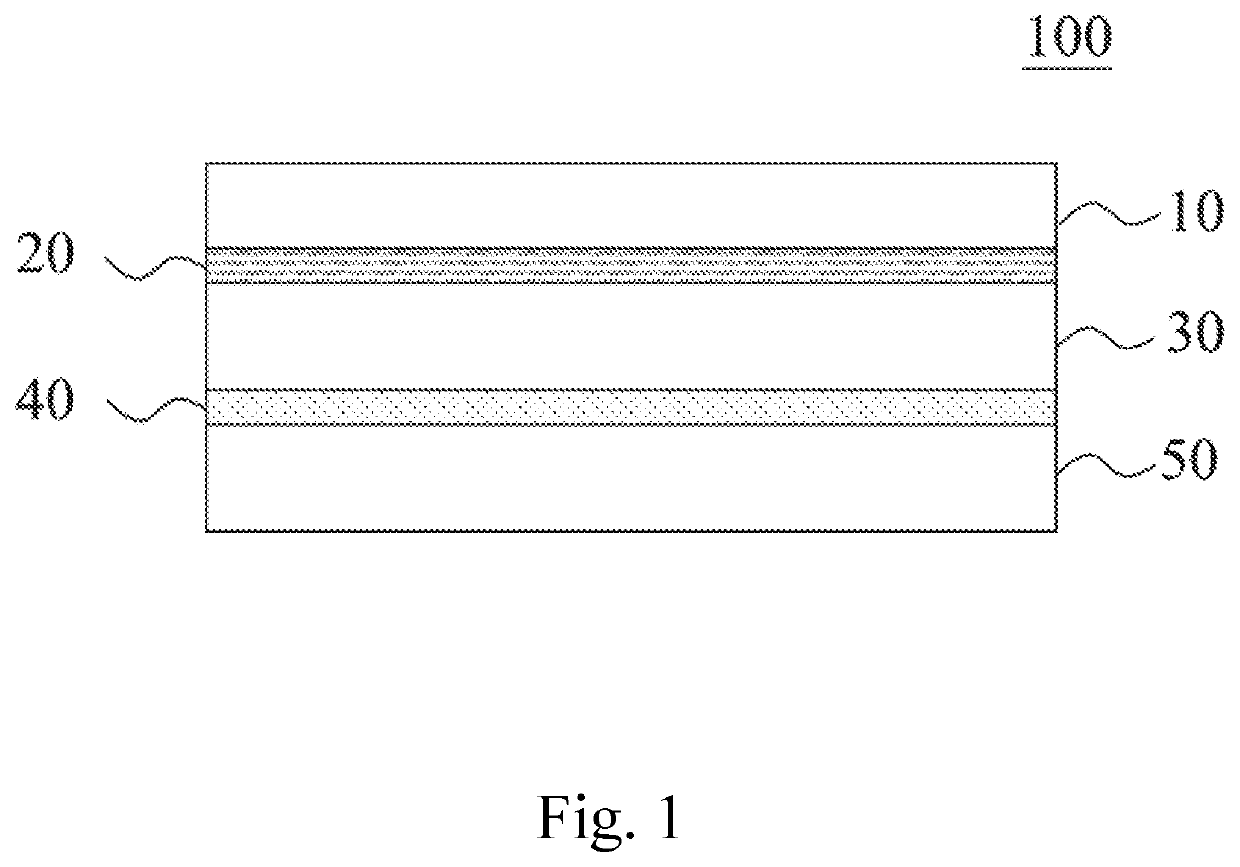
- A composite packaging material comprising a protective layer, a polyurethane adhesive layer with a damping factor between 0.45 and 0.6, an aluminum foil layer, and a heat seal layer, where the polyurethane adhesive layer includes a multifunctional hindered phenol to enhance interlayer adhesion and stress dissipation during deep drawing.
Battery packaging material, method for producing the same, and battery
PatentPendingUS20230387519A1
Innovation
- A battery packaging material comprising a laminate structure with a base material layer, a barrier layer, an adhesive layer, and a heat-sealable resin layer, where the adhesive layer has a logarithmic decrement of 2.0 or less at 120°C, and the heat-sealable resin layer has a specific tensile elastic modulus and contains a lubricant, ensuring effective prevention of adhesive layer crushing and maintaining sealing strength in high-temperature conditions.


Safety Standards and Regulatory Requirements
The regulatory landscape governing lithium battery packaging represents a critical framework that directly influences design decisions and performance optimization strategies. International standards such as UN38.3 for transportation safety, IEC 62133 for cell and battery safety requirements, and UL 1642 for lithium batteries establish baseline safety criteria that manufacturers must satisfy. These regulations mandate rigorous testing protocols including altitude simulation, thermal cycling, vibration, shock, and external short circuit tests, which fundamentally shape packaging material selection and structural design approaches. Compliance with these standards often necessitates additional protective layers, reinforced enclosures, and enhanced thermal management systems that inherently add weight and volume to battery assemblies.
Regional regulatory variations further complicate the packaging-performance equation. The European Union's Battery Directive and emerging Battery Regulation impose stringent requirements on recyclability, carbon footprint disclosure, and material composition, compelling manufacturers to adopt packaging solutions that facilitate end-of-life disassembly while maintaining structural integrity. Similarly, China's GB 31241 standard emphasizes specific mechanical strength and flame retardancy requirements that may differ from Western counterparts, necessitating region-specific packaging adaptations that can fragment global design strategies and increase development costs.
Emerging safety regulations increasingly focus on thermal runaway propagation prevention, particularly following high-profile battery fire incidents in electric vehicles and energy storage systems. Standards such as UL 9540A for energy storage systems now require cell-to-cell and module-to-module fire propagation testing, driving the integration of fire-resistant barriers, thermal insulation materials, and pressure relief mechanisms within packaging designs. These safety-oriented additions directly impact energy density metrics and thermal dissipation efficiency, creating inherent trade-offs between regulatory compliance and performance optimization.
The certification process itself introduces temporal and financial constraints that influence packaging innovation cycles. Achieving compliance across multiple jurisdictions requires extensive testing documentation, which can extend product development timelines by six to twelve months and incur substantial costs. This regulatory burden often incentivizes conservative packaging approaches that prioritize certification success over aggressive performance optimization, potentially limiting the adoption of novel materials or unconventional structural designs that could offer superior performance characteristics but carry higher regulatory uncertainty.
Regional regulatory variations further complicate the packaging-performance equation. The European Union's Battery Directive and emerging Battery Regulation impose stringent requirements on recyclability, carbon footprint disclosure, and material composition, compelling manufacturers to adopt packaging solutions that facilitate end-of-life disassembly while maintaining structural integrity. Similarly, China's GB 31241 standard emphasizes specific mechanical strength and flame retardancy requirements that may differ from Western counterparts, necessitating region-specific packaging adaptations that can fragment global design strategies and increase development costs.
Emerging safety regulations increasingly focus on thermal runaway propagation prevention, particularly following high-profile battery fire incidents in electric vehicles and energy storage systems. Standards such as UL 9540A for energy storage systems now require cell-to-cell and module-to-module fire propagation testing, driving the integration of fire-resistant barriers, thermal insulation materials, and pressure relief mechanisms within packaging designs. These safety-oriented additions directly impact energy density metrics and thermal dissipation efficiency, creating inherent trade-offs between regulatory compliance and performance optimization.
The certification process itself introduces temporal and financial constraints that influence packaging innovation cycles. Achieving compliance across multiple jurisdictions requires extensive testing documentation, which can extend product development timelines by six to twelve months and incur substantial costs. This regulatory burden often incentivizes conservative packaging approaches that prioritize certification success over aggressive performance optimization, potentially limiting the adoption of novel materials or unconventional structural designs that could offer superior performance characteristics but carry higher regulatory uncertainty.
Cost-Performance Economics in Packaging Selection
The economic dimension of lithium battery packaging selection represents a critical decision framework where manufacturers must balance initial capital expenditure against long-term performance returns. Packaging formats—cylindrical, prismatic, and pouch—each present distinct cost structures that extend beyond mere material expenses to encompass manufacturing complexity, production scalability, and lifecycle value propositions. Understanding these economic trade-offs requires systematic analysis of both direct manufacturing costs and performance-derived value creation.
Cylindrical cells demonstrate the most mature cost structure, benefiting from decades of standardization and automated production infrastructure originally developed for consumer electronics. The rigid steel or aluminum casing adds 15-20% to material costs compared to pouch cells, yet this investment yields superior mechanical robustry and thermal management capabilities. High-volume production lines achieve economies of scale that reduce per-unit costs to $0.08-0.12 per Wh, making cylindrical formats economically attractive for applications prioritizing reliability over energy density maximization.
Prismatic cells occupy the middle ground in cost-performance economics, with manufacturing costs typically 10-15% higher than cylindrical equivalents due to more complex casing geometries and welding requirements. However, their superior space utilization translates to 20-30% better volumetric efficiency at the pack level, reducing auxiliary component costs and enabling more compact system designs. This packaging efficiency often justifies the premium in applications where spatial constraints directly impact product competitiveness, such as electric vehicles and portable electronics.
Pouch cells present the most favorable material cost profile, eliminating heavy metal casings in favor of lightweight laminated films that reduce packaging weight by 60-70%. Manufacturing costs range from $0.06-0.09 per Wh, offering significant economic advantages in weight-sensitive applications. However, this cost advantage must be weighed against additional system-level expenses for external mechanical support structures, thermal management solutions, and protective enclosures that can add 25-40% to total pack costs.
The economic calculus extends beyond initial production costs to encompass total cost of ownership considerations. Higher energy density packaging that reduces system weight directly impacts operational costs in transportation applications through improved efficiency and extended range. Similarly, packaging choices affecting thermal performance influence battery longevity and warranty costs, creating long-term economic implications that may outweigh initial cost differentials by factors of two to three over product lifecycles.
Cylindrical cells demonstrate the most mature cost structure, benefiting from decades of standardization and automated production infrastructure originally developed for consumer electronics. The rigid steel or aluminum casing adds 15-20% to material costs compared to pouch cells, yet this investment yields superior mechanical robustry and thermal management capabilities. High-volume production lines achieve economies of scale that reduce per-unit costs to $0.08-0.12 per Wh, making cylindrical formats economically attractive for applications prioritizing reliability over energy density maximization.
Prismatic cells occupy the middle ground in cost-performance economics, with manufacturing costs typically 10-15% higher than cylindrical equivalents due to more complex casing geometries and welding requirements. However, their superior space utilization translates to 20-30% better volumetric efficiency at the pack level, reducing auxiliary component costs and enabling more compact system designs. This packaging efficiency often justifies the premium in applications where spatial constraints directly impact product competitiveness, such as electric vehicles and portable electronics.
Pouch cells present the most favorable material cost profile, eliminating heavy metal casings in favor of lightweight laminated films that reduce packaging weight by 60-70%. Manufacturing costs range from $0.06-0.09 per Wh, offering significant economic advantages in weight-sensitive applications. However, this cost advantage must be weighed against additional system-level expenses for external mechanical support structures, thermal management solutions, and protective enclosures that can add 25-40% to total pack costs.
The economic calculus extends beyond initial production costs to encompass total cost of ownership considerations. Higher energy density packaging that reduces system weight directly impacts operational costs in transportation applications through improved efficiency and extended range. Similarly, packaging choices affecting thermal performance influence battery longevity and warranty costs, creating long-term economic implications that may outweigh initial cost differentials by factors of two to three over product lifecycles.
Unlock deeper insights with Patsnap Eureka Quick Research — get a full tech report to explore trends and direct your research. Try now!
Generate Your Research Report Instantly with AI Agent
Supercharge your innovation with Patsnap Eureka AI Agent Platform!