Turbofan Efficiency vs Altitude: Achieving Peak Performance
MAR 16, 20269 MIN READ
Generate Your Research Report Instantly with AI Agent
PatSnap Eureka helps you evaluate technical feasibility & market potential.
Turbofan Technology Background and Altitude Performance Goals
Turbofan engines represent one of the most significant achievements in aerospace propulsion technology, fundamentally transforming commercial and military aviation since their introduction in the 1960s. These engines operate on the principle of generating thrust through a combination of core jet exhaust and bypass air flow, with the bypass ratio serving as a critical design parameter that directly influences efficiency characteristics across different operating altitudes.
The evolution of turbofan technology has been driven by the persistent challenge of optimizing performance across varying atmospheric conditions. At sea level, engines operate in dense air with high oxygen content, while at cruising altitudes of 35,000 to 42,000 feet, they must maintain efficiency in significantly thinner atmosphere with reduced air density and lower temperatures. This altitude-dependent performance variation has shaped decades of engineering innovation.
Modern turbofan engines face the complex challenge of balancing multiple performance parameters that change dramatically with altitude. Thrust-specific fuel consumption, thermal efficiency, and propulsive efficiency all exhibit distinct altitude-dependent behaviors. The core engine components, including the compressor, combustor, and turbine sections, must operate effectively across pressure ratios that can vary by factors of four or more between takeoff and cruise conditions.
The primary technical goal driving current turbofan development is achieving optimal efficiency at cruise altitude while maintaining adequate performance across the entire flight envelope. This involves sophisticated design compromises in blade geometry, bypass ratio optimization, and advanced materials selection. Engine manufacturers target peak efficiency at typical cruise altitudes where aircraft spend the majority of their operational time, typically between 35,000 and 41,000 feet.
Contemporary research focuses on variable geometry systems, adaptive cycle technologies, and advanced computational fluid dynamics modeling to predict and optimize altitude performance. The integration of digital engine controls enables real-time optimization of engine parameters based on altitude-specific conditions, representing a paradigm shift from fixed-geometry designs toward adaptive systems that can maintain peak efficiency across broader altitude ranges.
The ultimate objective encompasses not merely achieving high efficiency at a single operating point, but developing engines capable of maintaining consistently high performance throughout the climb, cruise, and descent phases of flight while meeting increasingly stringent environmental regulations and fuel economy requirements.
The evolution of turbofan technology has been driven by the persistent challenge of optimizing performance across varying atmospheric conditions. At sea level, engines operate in dense air with high oxygen content, while at cruising altitudes of 35,000 to 42,000 feet, they must maintain efficiency in significantly thinner atmosphere with reduced air density and lower temperatures. This altitude-dependent performance variation has shaped decades of engineering innovation.
Modern turbofan engines face the complex challenge of balancing multiple performance parameters that change dramatically with altitude. Thrust-specific fuel consumption, thermal efficiency, and propulsive efficiency all exhibit distinct altitude-dependent behaviors. The core engine components, including the compressor, combustor, and turbine sections, must operate effectively across pressure ratios that can vary by factors of four or more between takeoff and cruise conditions.
The primary technical goal driving current turbofan development is achieving optimal efficiency at cruise altitude while maintaining adequate performance across the entire flight envelope. This involves sophisticated design compromises in blade geometry, bypass ratio optimization, and advanced materials selection. Engine manufacturers target peak efficiency at typical cruise altitudes where aircraft spend the majority of their operational time, typically between 35,000 and 41,000 feet.
Contemporary research focuses on variable geometry systems, adaptive cycle technologies, and advanced computational fluid dynamics modeling to predict and optimize altitude performance. The integration of digital engine controls enables real-time optimization of engine parameters based on altitude-specific conditions, representing a paradigm shift from fixed-geometry designs toward adaptive systems that can maintain peak efficiency across broader altitude ranges.
The ultimate objective encompasses not merely achieving high efficiency at a single operating point, but developing engines capable of maintaining consistently high performance throughout the climb, cruise, and descent phases of flight while meeting increasingly stringent environmental regulations and fuel economy requirements.
Market Demand for High-Altitude Efficient Turbofan Engines
The aviation industry is experiencing unprecedented growth in high-altitude flight operations, driving substantial demand for turbofan engines optimized for superior performance at elevated altitudes. Commercial aviation has witnessed a significant shift toward long-haul international routes, where aircraft routinely operate at cruising altitudes exceeding 35,000 feet. This operational pattern necessitates engines that maintain peak efficiency in the thin atmospheric conditions characteristic of high-altitude environments.
Military and defense applications represent another critical market segment demanding high-altitude efficient turbofan technology. Modern military aircraft require engines capable of sustained high-altitude operations for reconnaissance, surveillance, and strategic missions. The growing emphasis on unmanned aerial vehicles operating at extreme altitudes further amplifies this demand, as these platforms must maintain extended flight durations while operating efficiently in low-density atmospheric conditions.
The emerging space tourism and suborbital flight market presents a rapidly expanding opportunity for high-altitude turbofan applications. Companies developing air-launched space vehicles and high-altitude research platforms require engines that can efficiently operate at the boundary between atmospheric and space environments. This niche but growing market demands specialized turbofan designs optimized for extreme altitude performance.
Business aviation continues to drive demand for high-altitude efficient engines as corporate aircraft increasingly operate transcontinental routes at maximum service ceilings to optimize fuel efficiency and reduce flight times. The preference for higher operating altitudes in business aviation stems from reduced air traffic congestion and improved weather avoidance capabilities at these elevations.
Environmental regulations and fuel efficiency mandates are reshaping market demand patterns, with operators seeking engines that maintain optimal performance across all altitude ranges while minimizing emissions. The aviation industry's commitment to carbon neutrality by 2050 intensifies the focus on engines that deliver peak efficiency at high altitudes where most fuel consumption occurs during cruise phases.
Cargo and freight operations represent a substantial market segment requiring high-altitude efficient turbofans, particularly as e-commerce growth drives increased demand for air freight services operating on long-haul routes at optimal cruise altitudes.
Military and defense applications represent another critical market segment demanding high-altitude efficient turbofan technology. Modern military aircraft require engines capable of sustained high-altitude operations for reconnaissance, surveillance, and strategic missions. The growing emphasis on unmanned aerial vehicles operating at extreme altitudes further amplifies this demand, as these platforms must maintain extended flight durations while operating efficiently in low-density atmospheric conditions.
The emerging space tourism and suborbital flight market presents a rapidly expanding opportunity for high-altitude turbofan applications. Companies developing air-launched space vehicles and high-altitude research platforms require engines that can efficiently operate at the boundary between atmospheric and space environments. This niche but growing market demands specialized turbofan designs optimized for extreme altitude performance.
Business aviation continues to drive demand for high-altitude efficient engines as corporate aircraft increasingly operate transcontinental routes at maximum service ceilings to optimize fuel efficiency and reduce flight times. The preference for higher operating altitudes in business aviation stems from reduced air traffic congestion and improved weather avoidance capabilities at these elevations.
Environmental regulations and fuel efficiency mandates are reshaping market demand patterns, with operators seeking engines that maintain optimal performance across all altitude ranges while minimizing emissions. The aviation industry's commitment to carbon neutrality by 2050 intensifies the focus on engines that deliver peak efficiency at high altitudes where most fuel consumption occurs during cruise phases.
Cargo and freight operations represent a substantial market segment requiring high-altitude efficient turbofans, particularly as e-commerce growth drives increased demand for air freight services operating on long-haul routes at optimal cruise altitudes.
Current Turbofan Altitude Performance Limitations and Challenges
Modern turbofan engines face significant performance degradation as operating altitude increases, primarily due to the fundamental relationship between air density and engine efficiency. At higher altitudes, the reduced atmospheric density directly impacts the mass flow rate through the engine, leading to decreased thrust generation and altered combustion characteristics that compromise overall performance.
The most critical limitation stems from compressor efficiency degradation at altitude. As air density decreases, compressor stages must work harder to achieve the same pressure ratios, often operating outside their optimal design envelope. This results in increased susceptibility to surge and stall conditions, particularly during transient operations such as acceleration or maneuvering at high altitudes.
Combustion stability presents another major challenge in high-altitude operations. The reduced air density and lower ambient temperatures create conditions where fuel-air mixing becomes less efficient, leading to incomplete combustion, increased emissions, and potential flame-out scenarios. Traditional combustor designs struggle to maintain stable flame propagation under these rarefied atmospheric conditions.
Thermal management constraints become increasingly problematic at altitude due to the reduced heat sink capacity of the thinner atmosphere. The decreased convective heat transfer capability limits the engine's ability to dissipate waste heat effectively, potentially leading to component overheating and reduced operational margins, particularly in the turbine sections where material temperature limits are critical.
Control system limitations further compound altitude performance issues. Conventional engine control algorithms often struggle to maintain optimal performance across the wide range of operating conditions encountered at varying altitudes. The nonlinear relationship between altitude, air density, and engine response characteristics creates challenges in maintaining precise fuel scheduling and variable geometry positioning.
Aerodynamic matching between engine components becomes increasingly difficult at altitude due to the changing Reynolds number effects and altered flow characteristics. The fan, compressor, and turbine components may no longer operate at their design point efficiency, leading to suboptimal overall engine performance and reduced fuel economy.
Material constraints also impose limitations on high-altitude performance optimization. Current turbine materials and cooling technologies limit the maximum operating temperatures achievable, preventing engines from fully compensating for altitude-induced performance losses through increased turbine inlet temperatures.
The most critical limitation stems from compressor efficiency degradation at altitude. As air density decreases, compressor stages must work harder to achieve the same pressure ratios, often operating outside their optimal design envelope. This results in increased susceptibility to surge and stall conditions, particularly during transient operations such as acceleration or maneuvering at high altitudes.
Combustion stability presents another major challenge in high-altitude operations. The reduced air density and lower ambient temperatures create conditions where fuel-air mixing becomes less efficient, leading to incomplete combustion, increased emissions, and potential flame-out scenarios. Traditional combustor designs struggle to maintain stable flame propagation under these rarefied atmospheric conditions.
Thermal management constraints become increasingly problematic at altitude due to the reduced heat sink capacity of the thinner atmosphere. The decreased convective heat transfer capability limits the engine's ability to dissipate waste heat effectively, potentially leading to component overheating and reduced operational margins, particularly in the turbine sections where material temperature limits are critical.
Control system limitations further compound altitude performance issues. Conventional engine control algorithms often struggle to maintain optimal performance across the wide range of operating conditions encountered at varying altitudes. The nonlinear relationship between altitude, air density, and engine response characteristics creates challenges in maintaining precise fuel scheduling and variable geometry positioning.
Aerodynamic matching between engine components becomes increasingly difficult at altitude due to the changing Reynolds number effects and altered flow characteristics. The fan, compressor, and turbine components may no longer operate at their design point efficiency, leading to suboptimal overall engine performance and reduced fuel economy.
Material constraints also impose limitations on high-altitude performance optimization. Current turbine materials and cooling technologies limit the maximum operating temperatures achievable, preventing engines from fully compensating for altitude-induced performance losses through increased turbine inlet temperatures.
Existing Solutions for Optimizing Turbofan Altitude Performance
01 Advanced fan blade design and aerodynamic optimization
Improvements in turbofan efficiency can be achieved through optimized fan blade geometry, including swept blade designs, variable pitch configurations, and advanced airfoil profiles. These designs reduce aerodynamic losses, minimize noise, and improve overall propulsive efficiency by better managing airflow through the fan stage. Computational fluid dynamics and advanced materials enable more efficient blade shapes that operate effectively across various flight conditions.- Advanced fan blade design and aerodynamic optimization: Turbofan efficiency can be significantly improved through optimized fan blade geometry, including swept blade designs, variable camber configurations, and advanced airfoil profiles. These designs reduce aerodynamic losses, minimize tip vortex formation, and improve overall pressure ratio across the fan stage. Computational fluid dynamics and advanced materials enable the creation of lighter, more efficient blade structures that maintain structural integrity while maximizing aerodynamic performance.
- Bypass ratio optimization and flow path management: Increasing the bypass ratio and optimizing the flow path between the core and bypass streams enhances propulsive efficiency. This involves careful design of the fan duct, splitter geometry, and nozzle configurations to minimize flow separation and pressure losses. Advanced flow management techniques ensure optimal distribution of airflow between the core engine and bypass duct, maximizing thrust while reducing specific fuel consumption.
- Variable geometry components and adaptive systems: Implementation of variable geometry features such as adjustable inlet guide vanes, variable pitch fan blades, and adaptive nozzle systems allows the turbofan to operate efficiently across different flight conditions. These systems automatically adjust to optimize performance during takeoff, cruise, and landing phases, maintaining high efficiency throughout the flight envelope. Active control systems monitor operating conditions and make real-time adjustments to maximize performance.
- Advanced materials and thermal management: Utilization of lightweight composite materials, ceramic matrix composites, and advanced alloys reduces engine weight while withstanding higher operating temperatures. Improved thermal management systems, including advanced cooling techniques and thermal barrier coatings, allow for higher turbine inlet temperatures and improved thermodynamic efficiency. These materials enable higher pressure ratios and operating temperatures without compromising structural integrity or durability.
- Noise reduction and acoustic optimization: Integration of noise reduction technologies such as acoustic liners, chevron nozzles, and optimized blade spacing improves turbofan efficiency by reducing energy losses associated with noise generation. Advanced acoustic treatments in the nacelle and fan case minimize sound propagation while maintaining aerodynamic efficiency. These features also contribute to meeting increasingly stringent environmental regulations while preserving or enhancing overall engine performance.
02 Bypass ratio optimization and flow path management
Increasing the bypass ratio and optimizing the flow path between core and bypass streams significantly enhances turbofan efficiency. Higher bypass ratios allow more air to bypass the core engine, reducing specific fuel consumption and noise while increasing thrust efficiency. Flow path designs that minimize losses through careful ducting, splitter configurations, and transition sections contribute to improved overall engine performance.Expand Specific Solutions03 Turbine and compressor stage efficiency improvements
Enhanced turbofan efficiency results from optimized turbine and compressor designs, including advanced cooling techniques, improved blade materials, and optimized stage configurations. These improvements reduce parasitic losses, increase pressure ratios, and enable higher operating temperatures. Multi-stage compression with intercooling and advanced turbine blade cooling systems allow for better thermal efficiency and reduced fuel consumption.Expand Specific Solutions04 Nacelle and inlet design optimization
Turbofan efficiency gains can be achieved through optimized nacelle configurations and inlet designs that reduce drag and improve airflow quality entering the engine. Advanced nacelle shapes with integrated chevrons, variable geometry inlets, and boundary layer management systems minimize installation losses and improve propulsive efficiency. These designs also contribute to noise reduction and better integration with aircraft structures.Expand Specific Solutions05 Active flow control and variable geometry systems
Implementation of active flow control technologies and variable geometry components enhances turbofan efficiency across different operating conditions. These systems include variable area nozzles, adaptive fan blade angles, and active clearance control mechanisms that optimize performance during takeoff, cruise, and landing phases. Real-time adjustments based on flight conditions enable sustained high efficiency throughout the flight envelope.Expand Specific Solutions
Key Players in Turbofan Engine and Aerospace Propulsion Industry
The turbofan efficiency optimization market represents a mature yet rapidly evolving sector driven by stringent environmental regulations and fuel cost pressures. The industry is experiencing significant consolidation among established aerospace giants including General Electric, Safran Aircraft Engines, Rolls-Royce, and RTX Corp (Pratt & Whitney), who dominate commercial engine development through strategic partnerships and joint ventures. Technology maturity varies significantly across subsystems, with companies like MTU Aero Engines and GE Avio advancing next-generation materials and additive manufacturing, while emerging players such as Sonic Blue Aerospace explore hybrid propulsion architectures. The competitive landscape shows clear geographic clustering, with Western manufacturers leading high-bypass ratio engines and Chinese entities like AECC Commercial Aircraft Engine and AVIC Shenyang Engine Research Institute rapidly developing indigenous capabilities, supported by academic institutions like Beihang University, creating an increasingly multipolar competitive environment.
Safran Aircraft Engines SAS
Technical Solution: Safran, through its partnership with GE in CFM International, has developed the LEAP engine family with advanced aerodynamic designs optimized for altitude performance variations. Their technology focuses on 3D-printed fuel nozzles and advanced combustor designs that maintain efficient combustion across the wide range of air densities encountered from takeoff to cruise altitude. The company has implemented ceramic matrix composite materials in turbine sections to withstand higher temperatures while maintaining structural integrity at varying atmospheric pressures. Safran's engines feature sophisticated control algorithms that adjust fuel flow, air-fuel ratios, and turbine cooling based on real-time altitude and atmospheric condition data.
Strengths: Strong partnership with GE, advanced manufacturing capabilities including 3D printing, proven LEAP engine success. Weaknesses: Dependence on joint venture partnerships, limited independent engine programs.
General Electric Company
Technical Solution: GE has developed advanced turbofan engines with variable geometry systems and adaptive cycle technology to optimize performance across different altitudes. Their LEAP engines incorporate ceramic matrix composites (CMCs) in hot section components, enabling higher operating temperatures and improved fuel efficiency at cruise altitudes. The company utilizes sophisticated engine control systems that automatically adjust fan speed, bypass ratio, and combustor parameters based on altitude conditions. GE's adaptive engine technology allows real-time optimization of thermodynamic cycles, maintaining peak efficiency from sea level to 40,000+ feet through variable area nozzles and adaptive fan systems.
Strengths: Industry-leading adaptive cycle technology, extensive flight test data, advanced materials expertise. Weaknesses: High development costs, complex maintenance requirements for variable geometry systems.
Core Innovations in Variable Geometry and Adaptive Cycle Technologies
All-Supersonic ducted fan for propelling aircraft at high subsonic speeds
PatentActiveUS20150098834A1
Innovation
- A supersonic fan design featuring a hub with radially extending blades, a duct, and a unique sweep angle configuration that confines inboard flow regimes, combined with a composite hub formed using spirally wound continuous filaments and a binder, allowing for a lightweight, one-piece rotor with improved propulsion efficiency and simplified manufacturing.


Variable valve actuation control for operation at altitude
PatentInactiveUS6912458B2
Innovation
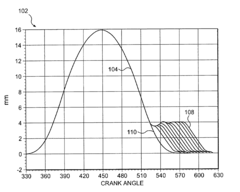
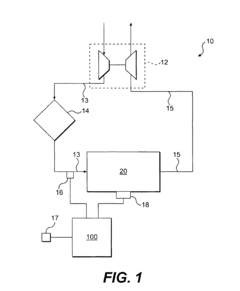
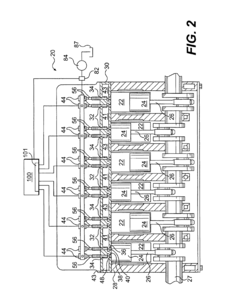
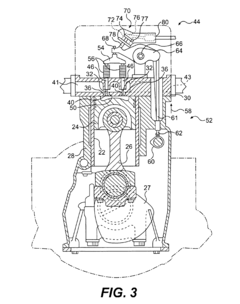
- A variable valve actuation system that adjusts the intake valve actuation period based on sensed altitude, using lookup maps to determine optimal air-fuel ratios and extending the intake valve opening to maintain efficient combustion at varying altitudes.
Aviation Safety and Certification Requirements for Turbofan Engines
Aviation safety and certification requirements for turbofan engines represent one of the most stringent regulatory frameworks in modern engineering, directly impacting how manufacturers approach altitude-dependent efficiency optimization. The Federal Aviation Administration (FAA) and European Union Aviation Safety Agency (EASA) mandate comprehensive testing protocols that engines must pass across their entire operational envelope, from sea level to maximum certified altitude.
Certification standards such as FAR Part 33 require turbofan engines to demonstrate consistent performance and safety margins throughout their altitude range. These regulations establish minimum thrust requirements, maximum fuel consumption limits, and mandatory safety factors that directly influence efficiency optimization strategies. Engine manufacturers must prove their designs can maintain adequate performance even under worst-case scenarios, including single-point failures at critical flight phases.
The certification process involves extensive altitude testing in specialized facilities, including high-altitude test cells that simulate conditions up to 65,000 feet. These tests evaluate not only peak efficiency parameters but also engine behavior during transient conditions, such as rapid altitude changes and emergency power settings. The data collected during certification testing often reveals the practical limits of efficiency optimization, as safety margins cannot be compromised for marginal performance gains.
Airworthiness directives and service bulletins continuously update operational parameters based on in-service experience, sometimes requiring efficiency trade-offs to maintain safety standards. For instance, temperature limits may be reduced following fleet-wide monitoring data, directly affecting optimal operating altitudes for maximum efficiency.
Modern certification approaches increasingly incorporate probabilistic risk assessment methods, allowing for more nuanced evaluation of efficiency-safety trade-offs. This evolution enables manufacturers to pursue more aggressive efficiency optimization while maintaining the ultra-high safety standards required for commercial aviation, ultimately supporting the development of next-generation turbofan technologies that can achieve peak performance across broader altitude ranges.
Certification standards such as FAR Part 33 require turbofan engines to demonstrate consistent performance and safety margins throughout their altitude range. These regulations establish minimum thrust requirements, maximum fuel consumption limits, and mandatory safety factors that directly influence efficiency optimization strategies. Engine manufacturers must prove their designs can maintain adequate performance even under worst-case scenarios, including single-point failures at critical flight phases.
The certification process involves extensive altitude testing in specialized facilities, including high-altitude test cells that simulate conditions up to 65,000 feet. These tests evaluate not only peak efficiency parameters but also engine behavior during transient conditions, such as rapid altitude changes and emergency power settings. The data collected during certification testing often reveals the practical limits of efficiency optimization, as safety margins cannot be compromised for marginal performance gains.
Airworthiness directives and service bulletins continuously update operational parameters based on in-service experience, sometimes requiring efficiency trade-offs to maintain safety standards. For instance, temperature limits may be reduced following fleet-wide monitoring data, directly affecting optimal operating altitudes for maximum efficiency.
Modern certification approaches increasingly incorporate probabilistic risk assessment methods, allowing for more nuanced evaluation of efficiency-safety trade-offs. This evolution enables manufacturers to pursue more aggressive efficiency optimization while maintaining the ultra-high safety standards required for commercial aviation, ultimately supporting the development of next-generation turbofan technologies that can achieve peak performance across broader altitude ranges.
Environmental Impact and Fuel Efficiency Standards for Aviation
The aviation industry faces unprecedented pressure to reduce its environmental footprint while maintaining operational efficiency. Current international regulations, primarily established by the International Civil Aviation Organization (ICAO), mandate significant reductions in carbon emissions through the Carbon Offsetting and Reduction Scheme for International Aviation (CORSIA). These standards require airlines to achieve carbon-neutral growth from 2020 onwards, with more stringent targets approaching rapidly.
Fuel efficiency standards have evolved dramatically over the past decade, with regulatory bodies implementing increasingly strict requirements for new aircraft designs. The European Union Aviation Safety Agency (EASA) and Federal Aviation Administration (FAA) have established comprehensive certification processes that evaluate turbofan engine performance across various altitude ranges. These standards specifically address the relationship between altitude optimization and fuel consumption, recognizing that peak turbofan efficiency varies significantly with atmospheric conditions.
Environmental impact assessments now incorporate lifecycle analysis methodologies that examine emissions from ground level operations through cruise altitude performance. Nitrogen oxide (NOx) emissions standards have become particularly stringent at high altitudes, where turbofan engines traditionally operate most efficiently. This creates a complex optimization challenge, as achieving peak fuel efficiency may conflict with minimizing environmental impact across different flight phases.
Recent regulatory developments emphasize the importance of altitude-specific performance metrics. The ICAO's Committee on Aviation Environmental Protection has introduced new testing protocols that evaluate engine efficiency across representative altitude profiles rather than single-point measurements. These standards recognize that modern turbofan engines must demonstrate consistent environmental performance throughout their operational envelope.
Compliance frameworks increasingly require real-time monitoring and reporting of fuel consumption and emissions data across different altitude bands. Advanced telemetry systems now track turbofan performance parameters continuously, enabling regulatory authorities to verify adherence to environmental standards during actual flight operations. This shift toward operational verification represents a fundamental change from traditional certification-based approaches.
Future regulatory trends indicate even more stringent requirements, with proposed standards targeting 50% emission reductions by 2050. These ambitious targets necessitate revolutionary advances in turbofan technology, particularly in optimizing efficiency across varying altitude conditions while simultaneously meeting increasingly strict environmental criteria.
Fuel efficiency standards have evolved dramatically over the past decade, with regulatory bodies implementing increasingly strict requirements for new aircraft designs. The European Union Aviation Safety Agency (EASA) and Federal Aviation Administration (FAA) have established comprehensive certification processes that evaluate turbofan engine performance across various altitude ranges. These standards specifically address the relationship between altitude optimization and fuel consumption, recognizing that peak turbofan efficiency varies significantly with atmospheric conditions.
Environmental impact assessments now incorporate lifecycle analysis methodologies that examine emissions from ground level operations through cruise altitude performance. Nitrogen oxide (NOx) emissions standards have become particularly stringent at high altitudes, where turbofan engines traditionally operate most efficiently. This creates a complex optimization challenge, as achieving peak fuel efficiency may conflict with minimizing environmental impact across different flight phases.
Recent regulatory developments emphasize the importance of altitude-specific performance metrics. The ICAO's Committee on Aviation Environmental Protection has introduced new testing protocols that evaluate engine efficiency across representative altitude profiles rather than single-point measurements. These standards recognize that modern turbofan engines must demonstrate consistent environmental performance throughout their operational envelope.
Compliance frameworks increasingly require real-time monitoring and reporting of fuel consumption and emissions data across different altitude bands. Advanced telemetry systems now track turbofan performance parameters continuously, enabling regulatory authorities to verify adherence to environmental standards during actual flight operations. This shift toward operational verification represents a fundamental change from traditional certification-based approaches.
Future regulatory trends indicate even more stringent requirements, with proposed standards targeting 50% emission reductions by 2050. These ambitious targets necessitate revolutionary advances in turbofan technology, particularly in optimizing efficiency across varying altitude conditions while simultaneously meeting increasingly strict environmental criteria.
Unlock deeper insights with PatSnap Eureka Quick Research — get a full tech report to explore trends and direct your research. Try now!
Generate Your Research Report Instantly with AI Agent
Supercharge your innovation with PatSnap Eureka AI Agent Platform!