Understanding Abscisic Acid's Role in Plant Root Architecture
JUL 14, 20259 MIN READ
Generate Your Research Report Instantly with AI Agent
Patsnap Eureka helps you evaluate technical feasibility & market potential.
ABA and Root Dev Goals
The primary goal of understanding Abscisic Acid's (ABA) role in plant root architecture is to elucidate the complex mechanisms by which this phytohormone influences root development and adaptation to environmental stresses. This research aims to uncover the molecular pathways and genetic regulators involved in ABA-mediated root responses, with the ultimate objective of enhancing crop resilience and productivity in challenging agricultural conditions.
A key focus is to decipher how ABA modulates root system architecture, including primary root growth, lateral root formation, and root hair development. Researchers seek to identify the specific ABA receptors, signaling components, and downstream effectors that orchestrate these morphological changes. Understanding the crosstalk between ABA and other hormones, such as auxin and cytokinin, in root development is another crucial aspect of this investigation.
The study of ABA's role in root plasticity under various abiotic stresses, particularly drought and salinity, is a primary objective. Scientists aim to elucidate how ABA signaling integrates environmental cues to trigger adaptive root responses, such as hydrotropism and halotropism. This knowledge is essential for developing crops with improved water and nutrient acquisition capabilities in stress-prone environments.
Another important goal is to unravel the genetic basis of ABA-mediated root traits. This involves identifying key genes and quantitative trait loci (QTLs) associated with root architecture and stress responses. Such insights can guide breeding programs and biotechnological approaches to engineer plants with optimized root systems for specific agricultural contexts.
Researchers also aim to develop advanced imaging and phenotyping technologies to non-invasively monitor root development and ABA-induced changes in real-time. These tools are crucial for capturing the dynamic nature of root growth and responses to ABA under various environmental conditions.
Furthermore, understanding the role of ABA in root-microbiome interactions is an emerging area of interest. The goal is to explore how ABA influences the recruitment and establishment of beneficial root-associated microorganisms, which can significantly impact plant health and productivity.
Ultimately, this research seeks to translate fundamental knowledge of ABA's role in root architecture into practical applications. This includes developing ABA-based agrochemicals, breeding strategies, and genetic engineering approaches to enhance crop performance in water-limited and nutrient-poor soils, contributing to sustainable agriculture and food security in the face of climate change.
A key focus is to decipher how ABA modulates root system architecture, including primary root growth, lateral root formation, and root hair development. Researchers seek to identify the specific ABA receptors, signaling components, and downstream effectors that orchestrate these morphological changes. Understanding the crosstalk between ABA and other hormones, such as auxin and cytokinin, in root development is another crucial aspect of this investigation.
The study of ABA's role in root plasticity under various abiotic stresses, particularly drought and salinity, is a primary objective. Scientists aim to elucidate how ABA signaling integrates environmental cues to trigger adaptive root responses, such as hydrotropism and halotropism. This knowledge is essential for developing crops with improved water and nutrient acquisition capabilities in stress-prone environments.
Another important goal is to unravel the genetic basis of ABA-mediated root traits. This involves identifying key genes and quantitative trait loci (QTLs) associated with root architecture and stress responses. Such insights can guide breeding programs and biotechnological approaches to engineer plants with optimized root systems for specific agricultural contexts.
Researchers also aim to develop advanced imaging and phenotyping technologies to non-invasively monitor root development and ABA-induced changes in real-time. These tools are crucial for capturing the dynamic nature of root growth and responses to ABA under various environmental conditions.
Furthermore, understanding the role of ABA in root-microbiome interactions is an emerging area of interest. The goal is to explore how ABA influences the recruitment and establishment of beneficial root-associated microorganisms, which can significantly impact plant health and productivity.
Ultimately, this research seeks to translate fundamental knowledge of ABA's role in root architecture into practical applications. This includes developing ABA-based agrochemicals, breeding strategies, and genetic engineering approaches to enhance crop performance in water-limited and nutrient-poor soils, contributing to sustainable agriculture and food security in the face of climate change.
AgriBiotech Market Needs
The agricultural biotechnology market is experiencing a significant surge in demand for innovative solutions to enhance crop productivity and resilience. Understanding Abscisic Acid's (ABA) role in plant root architecture has emerged as a crucial area of interest for agribiotech companies and researchers. This focus is driven by the pressing need to develop crops that can withstand increasingly challenging environmental conditions, particularly drought stress and soil salinity.
Farmers and agricultural producers are seeking advanced seed technologies and crop protection products that can improve plant root systems, leading to better water and nutrient uptake. This demand is particularly acute in regions facing water scarcity and degraded soil conditions. The ability to manipulate ABA signaling pathways to optimize root architecture could result in crops with enhanced drought tolerance and improved resource utilization efficiency.
The global seed market, valued at over $60 billion, is projected to grow substantially in the coming years, with a significant portion of this growth attributed to genetically modified and biotechnology-enhanced seeds. Crops with optimized root systems, developed through a better understanding of ABA's role, are expected to command a premium in this market.
Additionally, there is a growing demand for sustainable agricultural practices that reduce water usage and minimize environmental impact. Technologies that can improve plant water use efficiency through enhanced root systems align perfectly with this trend. This creates opportunities for agribiotech companies to develop and market products that not only improve crop yields but also contribute to sustainable farming practices.
The biostimulants market, which includes products that can influence plant hormone signaling, is another area poised for growth. Products that can modulate ABA responses to optimize root architecture could find significant traction in this sector, which is expected to reach $4 billion by 2025.
Furthermore, the increasing frequency of extreme weather events and climate change impacts has heightened the urgency for developing climate-resilient crops. This has led to increased investment in research and development focused on understanding and manipulating plant stress responses, including those mediated by ABA.
In conclusion, the agribiotech market demonstrates a clear and growing need for technologies that can leverage the understanding of ABA's role in plant root architecture. This demand spans across various segments, including seed technology, crop protection, biostimulants, and climate-resilient crop development, presenting significant opportunities for innovation and market growth in the agricultural biotechnology sector.
Farmers and agricultural producers are seeking advanced seed technologies and crop protection products that can improve plant root systems, leading to better water and nutrient uptake. This demand is particularly acute in regions facing water scarcity and degraded soil conditions. The ability to manipulate ABA signaling pathways to optimize root architecture could result in crops with enhanced drought tolerance and improved resource utilization efficiency.
The global seed market, valued at over $60 billion, is projected to grow substantially in the coming years, with a significant portion of this growth attributed to genetically modified and biotechnology-enhanced seeds. Crops with optimized root systems, developed through a better understanding of ABA's role, are expected to command a premium in this market.
Additionally, there is a growing demand for sustainable agricultural practices that reduce water usage and minimize environmental impact. Technologies that can improve plant water use efficiency through enhanced root systems align perfectly with this trend. This creates opportunities for agribiotech companies to develop and market products that not only improve crop yields but also contribute to sustainable farming practices.
The biostimulants market, which includes products that can influence plant hormone signaling, is another area poised for growth. Products that can modulate ABA responses to optimize root architecture could find significant traction in this sector, which is expected to reach $4 billion by 2025.
Furthermore, the increasing frequency of extreme weather events and climate change impacts has heightened the urgency for developing climate-resilient crops. This has led to increased investment in research and development focused on understanding and manipulating plant stress responses, including those mediated by ABA.
In conclusion, the agribiotech market demonstrates a clear and growing need for technologies that can leverage the understanding of ABA's role in plant root architecture. This demand spans across various segments, including seed technology, crop protection, biostimulants, and climate-resilient crop development, presenting significant opportunities for innovation and market growth in the agricultural biotechnology sector.
ABA Signaling Challenges
Despite the significant progress made in understanding abscisic acid (ABA) signaling in plant root architecture, several challenges persist in this field of research. One of the primary obstacles is the complexity of ABA signaling networks, which involve numerous components and intricate feedback mechanisms. This complexity makes it difficult to isolate and study individual signaling elements without disrupting the entire system.
Another challenge lies in the spatial and temporal dynamics of ABA signaling. ABA concentrations and responses can vary significantly across different root tissues and developmental stages, requiring sophisticated techniques to accurately measure and interpret these variations. The development of more precise and non-invasive methods for real-time monitoring of ABA levels and signaling events in living root systems remains a critical need.
The crosstalk between ABA and other plant hormones presents an additional layer of complexity. ABA interacts with various hormones, such as auxin, cytokinin, and ethylene, in regulating root development. Deciphering these intricate hormone interactions and their combined effects on root architecture is a formidable task that requires integrative approaches and advanced experimental designs.
Genetic redundancy within ABA signaling components poses another significant challenge. Many genes involved in ABA perception and signal transduction belong to multigene families, making it difficult to elucidate the specific roles of individual genes through traditional knockout studies. This redundancy often necessitates the creation of higher-order mutants or the use of more sophisticated genetic tools to reveal gene functions.
The environmental sensitivity of ABA signaling adds another dimension of complexity to research efforts. ABA responses in roots can be significantly influenced by various environmental factors, including soil moisture, nutrient availability, and temperature. Developing experimental setups that can accurately mimic and control these environmental variables while studying ABA signaling is a considerable challenge.
Lastly, translating findings from model plant species to crops presents its own set of difficulties. While much of our understanding of ABA signaling comes from studies in Arabidopsis thaliana, applying this knowledge to improve root traits in agriculturally important plants requires overcoming species-specific differences in signaling mechanisms and root system architectures. This translation gap highlights the need for more extensive studies in crop species and the development of tailored approaches for manipulating ABA signaling in diverse plant systems.
Another challenge lies in the spatial and temporal dynamics of ABA signaling. ABA concentrations and responses can vary significantly across different root tissues and developmental stages, requiring sophisticated techniques to accurately measure and interpret these variations. The development of more precise and non-invasive methods for real-time monitoring of ABA levels and signaling events in living root systems remains a critical need.
The crosstalk between ABA and other plant hormones presents an additional layer of complexity. ABA interacts with various hormones, such as auxin, cytokinin, and ethylene, in regulating root development. Deciphering these intricate hormone interactions and their combined effects on root architecture is a formidable task that requires integrative approaches and advanced experimental designs.
Genetic redundancy within ABA signaling components poses another significant challenge. Many genes involved in ABA perception and signal transduction belong to multigene families, making it difficult to elucidate the specific roles of individual genes through traditional knockout studies. This redundancy often necessitates the creation of higher-order mutants or the use of more sophisticated genetic tools to reveal gene functions.
The environmental sensitivity of ABA signaling adds another dimension of complexity to research efforts. ABA responses in roots can be significantly influenced by various environmental factors, including soil moisture, nutrient availability, and temperature. Developing experimental setups that can accurately mimic and control these environmental variables while studying ABA signaling is a considerable challenge.
Lastly, translating findings from model plant species to crops presents its own set of difficulties. While much of our understanding of ABA signaling comes from studies in Arabidopsis thaliana, applying this knowledge to improve root traits in agriculturally important plants requires overcoming species-specific differences in signaling mechanisms and root system architectures. This translation gap highlights the need for more extensive studies in crop species and the development of tailored approaches for manipulating ABA signaling in diverse plant systems.
Current ABA Tech Solutions
01 Influence of abscisic acid on root architecture
Abscisic acid plays a crucial role in modulating root architecture, affecting root growth, branching, and overall structure. It regulates root development in response to environmental stresses, such as drought or nutrient deficiency, by influencing the formation of lateral roots and root hair development.- Abscisic acid's influence on root architecture: Abscisic acid plays a crucial role in modulating root architecture, affecting root growth, branching, and overall development. It regulates root responses to environmental stresses and influences root system plasticity, which is essential for plant adaptation to various soil conditions.
- Genetic manipulation of abscisic acid pathways: Genetic engineering techniques are used to modify abscisic acid biosynthesis, signaling, or response pathways to alter root architecture. This approach can lead to improved drought tolerance, nutrient uptake efficiency, and overall plant performance in challenging environments.
- Abscisic acid analogs and synthetic compounds: Development and application of abscisic acid analogs or synthetic compounds that mimic its effects on root architecture. These substances can be used to manipulate root development in a controlled manner, potentially leading to enhanced crop performance and stress resistance.
- Interaction of abscisic acid with other plant hormones: Investigation of the complex interplay between abscisic acid and other plant hormones, such as auxins and cytokinins, in regulating root architecture. Understanding these interactions is crucial for developing comprehensive strategies to optimize root system development and function.
- Environmental factors affecting abscisic acid-mediated root responses: Study of how environmental factors such as drought, salinity, and nutrient availability influence abscisic acid-mediated root responses. This research aims to develop strategies for improving plant performance under various stress conditions by modulating root architecture through abscisic acid-related mechanisms.
02 Genetic manipulation of abscisic acid pathways
Genetic engineering techniques are used to modify abscisic acid biosynthesis, signaling, or response pathways in plants. This manipulation aims to enhance root architecture, improve stress tolerance, and optimize nutrient uptake efficiency in crops.Expand Specific Solutions03 Abscisic acid-mediated stress response in roots
Abscisic acid acts as a key mediator in plant stress responses, particularly in roots. It regulates various physiological processes, including stomatal closure, gene expression, and metabolic changes, to help plants adapt to adverse environmental conditions such as drought, salinity, and temperature extremes.Expand Specific Solutions04 Interaction of abscisic acid with other plant hormones
Abscisic acid interacts with other plant hormones, such as auxins, cytokinins, and ethylene, to regulate root development and architecture. These hormone interactions create a complex signaling network that fine-tunes root growth and branching patterns in response to environmental cues.Expand Specific Solutions05 Application of abscisic acid in agriculture
Exogenous application of abscisic acid or its synthetic analogs is explored as a potential strategy to improve crop performance, particularly in terms of root architecture and stress tolerance. This approach aims to enhance water and nutrient uptake efficiency, leading to improved crop yields under challenging environmental conditions.Expand Specific Solutions
Key ABA Research Players
The field of understanding abscisic acid's role in plant root architecture is in a growth phase, with increasing market potential due to its implications for crop improvement and stress tolerance. The global market for plant growth regulators, including abscisic acid-related products, is expanding, driven by the need for sustainable agriculture. Technologically, the field is advancing rapidly, with key players like Valent BioSciences Corp., Syngenta, and Pioneer Hi-Bred International leading commercial applications. Academic institutions such as China Agricultural University, University of California, and Ghent University are at the forefront of research, contributing to the growing body of knowledge and potential applications in this domain.
The Regents of the University of California
Technical Solution: The University of California has developed a comprehensive approach to understanding abscisic acid's (ABA) role in plant root architecture. Their research focuses on the molecular mechanisms by which ABA regulates root growth and development. They have identified key transcription factors and signaling pathways involved in ABA-mediated root responses [1]. Using advanced imaging techniques and genetic tools, they have mapped the spatial and temporal distribution of ABA in root tissues during various developmental stages and stress conditions [3]. Their studies have revealed that ABA plays a crucial role in modulating root system architecture by influencing lateral root formation, primary root elongation, and root hair development [5]. The university has also developed novel ABA analogs and biosensors to further elucidate ABA's functions in root development [7].
Strengths: Comprehensive molecular and genetic approach, advanced imaging techniques, development of novel tools. Weaknesses: May be more focused on fundamental research rather than immediate agricultural applications.
Syngenta Participations AG
Technical Solution: Syngenta has developed a multi-faceted approach to leverage ABA's role in plant root architecture for crop improvement. Their research combines traditional breeding techniques with advanced biotechnology to enhance crop resilience and yield. They have identified and characterized several ABA-responsive genes that influence root development and stress tolerance [2]. Syngenta has also developed ABA-mimicking compounds that can be applied exogenously to modulate root architecture and improve drought resistance [4]. Their proprietary ABA-responsive genetic markers are used in marker-assisted breeding programs to select for improved root traits [6]. Additionally, Syngenta has explored the use of ABA in seed priming technologies to enhance seedling establishment and early root development [8].
Strengths: Integration of multiple approaches (breeding, biotechnology, agrochemicals), focus on practical agricultural applications. Weaknesses: Potential regulatory challenges for genetically modified crops or novel agrochemicals.
ABA-Root Breakthroughs
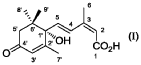
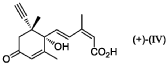
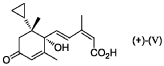
Efficient scalable syntheses of abscisic acid, 8'-acetylene abscisic acid and 8'-cyclopropyl abscisic acid
PatentWO2018157225A1
Innovation
- A novel two-step process for synthesizing ABA and its analogues, including the oxidation of 2,6-dimethylphenol using potassium peroxymonosulfate and iodobenzene, followed by optimized ketalization, reduces the number of steps and reagents, and incorporates enantioselective conjugate addition to produce enantiopure 8'-acetylene ABA, enhancing stability and efficacy.

Stable s-(+)-abscisic acid liquid and soluble granule formulations
PatentWO2008094558A2
Innovation
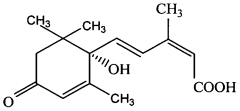
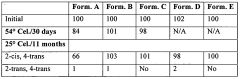
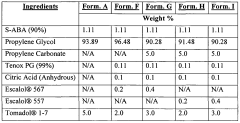
- The development of stable S-(+)-abscisic acid liquid and soluble granule formulations is achieved by incorporating effective amounts of antioxidants and ultraviolet absorbers, along with surfactants and low VOC solvents, to enhance storage and photochemical stability, and using a low-pressure extrusion process for granule production.

ABA Crop Enhancement
Abscisic acid (ABA) has emerged as a crucial phytohormone in enhancing crop resilience and productivity, particularly in the face of environmental stresses. The potential for ABA-based crop enhancement strategies has garnered significant attention in agricultural research and biotechnology sectors. By manipulating ABA signaling pathways, researchers aim to develop crops with improved drought tolerance, water use efficiency, and overall yield performance.
One of the primary areas of focus in ABA crop enhancement is the development of drought-resistant varieties. By upregulating ABA-responsive genes, plants can better regulate stomatal closure, reducing water loss through transpiration during periods of water scarcity. This adaptation allows crops to maintain productivity even under suboptimal water conditions, a critical trait in the context of climate change and increasing water stress in many agricultural regions.
ABA's role in root architecture modulation presents another avenue for crop enhancement. By fine-tuning ABA signaling, it is possible to promote deeper root growth, enabling plants to access water and nutrients from lower soil layers. This characteristic is particularly beneficial in rain-fed agricultural systems, where crops must rely on stored soil moisture during dry periods.
Furthermore, ABA-mediated improvements in nutrient uptake efficiency have shown promise in enhancing crop performance. By optimizing root system architecture and function, plants can more effectively absorb essential nutrients, reducing the need for excessive fertilizer application and mitigating associated environmental impacts.
Recent advancements in genetic engineering and precision breeding techniques have facilitated the development of crops with enhanced ABA sensitivity or altered ABA biosynthesis pathways. These approaches have yielded promising results in various crop species, including cereals, legumes, and horticultural crops. For instance, transgenic rice plants overexpressing ABA-responsive transcription factors have demonstrated improved drought tolerance and yield stability under water-limited conditions.
The application of exogenous ABA or ABA analogs as agrochemicals represents another strategy for crop enhancement. These compounds can be applied at critical growth stages to induce stress tolerance or regulate specific developmental processes. However, the practical implementation of this approach faces challenges related to cost-effectiveness, timing of application, and potential off-target effects.
As research in this field progresses, the integration of ABA-based strategies with other crop improvement techniques, such as CRISPR-Cas9 gene editing and marker-assisted selection, holds great potential for developing resilient and high-yielding crop varieties. These advancements are crucial in addressing global food security challenges and adapting agriculture to changing climatic conditions.
One of the primary areas of focus in ABA crop enhancement is the development of drought-resistant varieties. By upregulating ABA-responsive genes, plants can better regulate stomatal closure, reducing water loss through transpiration during periods of water scarcity. This adaptation allows crops to maintain productivity even under suboptimal water conditions, a critical trait in the context of climate change and increasing water stress in many agricultural regions.
ABA's role in root architecture modulation presents another avenue for crop enhancement. By fine-tuning ABA signaling, it is possible to promote deeper root growth, enabling plants to access water and nutrients from lower soil layers. This characteristic is particularly beneficial in rain-fed agricultural systems, where crops must rely on stored soil moisture during dry periods.
Furthermore, ABA-mediated improvements in nutrient uptake efficiency have shown promise in enhancing crop performance. By optimizing root system architecture and function, plants can more effectively absorb essential nutrients, reducing the need for excessive fertilizer application and mitigating associated environmental impacts.
Recent advancements in genetic engineering and precision breeding techniques have facilitated the development of crops with enhanced ABA sensitivity or altered ABA biosynthesis pathways. These approaches have yielded promising results in various crop species, including cereals, legumes, and horticultural crops. For instance, transgenic rice plants overexpressing ABA-responsive transcription factors have demonstrated improved drought tolerance and yield stability under water-limited conditions.
The application of exogenous ABA or ABA analogs as agrochemicals represents another strategy for crop enhancement. These compounds can be applied at critical growth stages to induce stress tolerance or regulate specific developmental processes. However, the practical implementation of this approach faces challenges related to cost-effectiveness, timing of application, and potential off-target effects.
As research in this field progresses, the integration of ABA-based strategies with other crop improvement techniques, such as CRISPR-Cas9 gene editing and marker-assisted selection, holds great potential for developing resilient and high-yielding crop varieties. These advancements are crucial in addressing global food security challenges and adapting agriculture to changing climatic conditions.
ABA Environmental Impact
Abscisic acid (ABA) plays a crucial role in shaping plant root architecture, and its environmental impact extends far beyond the individual plant level. As a key phytohormone, ABA mediates plant responses to various environmental stresses, particularly drought and salinity, which are becoming increasingly prevalent due to climate change.
In the context of drought stress, ABA triggers a cascade of physiological responses that alter root growth patterns. It promotes the development of deeper, more extensive root systems, enabling plants to access water from lower soil layers. This adaptation enhances plant survival and productivity in water-limited environments, potentially mitigating the effects of drought on agricultural yields and ecosystem stability.
ABA's influence on root architecture also has significant implications for soil structure and health. The increased root biomass and depth stimulated by ABA can improve soil organic matter content, enhance soil aggregation, and increase water retention capacity. These changes contribute to better soil quality, reduced erosion, and increased carbon sequestration, which are critical factors in combating desertification and mitigating climate change.
Furthermore, ABA-mediated root responses affect plant-microbe interactions in the rhizosphere. The altered root exudation patterns and root architecture can modify the composition and activity of soil microbial communities. This, in turn, influences nutrient cycling, organic matter decomposition, and the overall health of the soil ecosystem.
In saline environments, ABA's role in regulating root growth and ion transport mechanisms helps plants maintain osmotic balance and exclude excess salt from their tissues. This adaptation allows for the colonization of salt-affected soils, potentially expanding agricultural frontiers and contributing to the reclamation of degraded lands.
The environmental impact of ABA extends to plant community dynamics and ecosystem resilience. By modulating root growth and water use efficiency, ABA influences plant competitive interactions and community composition under changing environmental conditions. This can lead to shifts in vegetation patterns and ecosystem functioning at larger scales.
Understanding the environmental impact of ABA's role in root architecture is crucial for developing sustainable agricultural practices and ecosystem management strategies. It provides insights into plant adaptation mechanisms that can be harnessed for crop improvement, particularly in breeding programs aimed at developing drought-resistant and salt-tolerant varieties. Such applications have the potential to enhance food security and agricultural sustainability in the face of global environmental challenges.
In the context of drought stress, ABA triggers a cascade of physiological responses that alter root growth patterns. It promotes the development of deeper, more extensive root systems, enabling plants to access water from lower soil layers. This adaptation enhances plant survival and productivity in water-limited environments, potentially mitigating the effects of drought on agricultural yields and ecosystem stability.
ABA's influence on root architecture also has significant implications for soil structure and health. The increased root biomass and depth stimulated by ABA can improve soil organic matter content, enhance soil aggregation, and increase water retention capacity. These changes contribute to better soil quality, reduced erosion, and increased carbon sequestration, which are critical factors in combating desertification and mitigating climate change.
Furthermore, ABA-mediated root responses affect plant-microbe interactions in the rhizosphere. The altered root exudation patterns and root architecture can modify the composition and activity of soil microbial communities. This, in turn, influences nutrient cycling, organic matter decomposition, and the overall health of the soil ecosystem.
In saline environments, ABA's role in regulating root growth and ion transport mechanisms helps plants maintain osmotic balance and exclude excess salt from their tissues. This adaptation allows for the colonization of salt-affected soils, potentially expanding agricultural frontiers and contributing to the reclamation of degraded lands.
The environmental impact of ABA extends to plant community dynamics and ecosystem resilience. By modulating root growth and water use efficiency, ABA influences plant competitive interactions and community composition under changing environmental conditions. This can lead to shifts in vegetation patterns and ecosystem functioning at larger scales.
Understanding the environmental impact of ABA's role in root architecture is crucial for developing sustainable agricultural practices and ecosystem management strategies. It provides insights into plant adaptation mechanisms that can be harnessed for crop improvement, particularly in breeding programs aimed at developing drought-resistant and salt-tolerant varieties. Such applications have the potential to enhance food security and agricultural sustainability in the face of global environmental challenges.
Unlock deeper insights with Patsnap Eureka Quick Research — get a full tech report to explore trends and direct your research. Try now!
Generate Your Research Report Instantly with AI Agent
Supercharge your innovation with Patsnap Eureka AI Agent Platform!