

Using AI To Optimize Cell-to-Chassis Configuration Dynamics
APR 11, 20269 MIN READ
Generate Your Research Report Instantly with AI Agent
PatSnap Eureka helps you evaluate technical feasibility & market potential.
AI-Driven Cell-to-Chassis Optimization Background and Objectives
The automotive industry is undergoing a fundamental transformation driven by the electrification revolution, where battery electric vehicles (BEVs) are rapidly becoming the dominant force in sustainable transportation. At the heart of this transformation lies the critical challenge of optimizing the integration between battery cells and vehicle chassis systems, a complex engineering problem that directly impacts vehicle performance, safety, and manufacturing efficiency.
Traditional cell-to-chassis configuration approaches rely heavily on static design methodologies and empirical testing, which often result in suboptimal solutions due to the multitude of variables involved. These variables include thermal management requirements, structural integrity constraints, weight distribution considerations, crash safety parameters, and manufacturing feasibility factors. The conventional design process typically involves iterative physical prototyping and extensive testing cycles, leading to prolonged development timelines and increased costs.
The emergence of artificial intelligence technologies presents unprecedented opportunities to revolutionize this design paradigm. Machine learning algorithms, particularly deep learning networks and optimization algorithms, can process vast amounts of multidimensional data to identify optimal configuration patterns that would be impossible to discover through traditional methods. AI systems can simultaneously consider multiple conflicting objectives, such as maximizing energy density while minimizing thermal hotspots and ensuring structural robustness.
The primary objective of implementing AI-driven cell-to-chassis optimization is to establish an intelligent design framework that can automatically generate optimal battery pack configurations based on specific vehicle requirements and constraints. This framework aims to reduce development time by up to 60% while improving overall system performance metrics including energy efficiency, thermal management effectiveness, and structural integrity.
Secondary objectives include developing predictive models for battery degradation patterns under various chassis integration scenarios, enabling proactive design decisions that enhance long-term vehicle reliability. Additionally, the AI system should facilitate real-time optimization capabilities during the manufacturing process, allowing for adaptive configuration adjustments based on component variations and quality parameters.
The ultimate goal is to create a comprehensive AI ecosystem that not only optimizes initial design configurations but also enables continuous learning from real-world performance data, establishing a feedback loop that continuously improves future design iterations and accelerates the overall innovation cycle in electric vehicle development.
Traditional cell-to-chassis configuration approaches rely heavily on static design methodologies and empirical testing, which often result in suboptimal solutions due to the multitude of variables involved. These variables include thermal management requirements, structural integrity constraints, weight distribution considerations, crash safety parameters, and manufacturing feasibility factors. The conventional design process typically involves iterative physical prototyping and extensive testing cycles, leading to prolonged development timelines and increased costs.
The emergence of artificial intelligence technologies presents unprecedented opportunities to revolutionize this design paradigm. Machine learning algorithms, particularly deep learning networks and optimization algorithms, can process vast amounts of multidimensional data to identify optimal configuration patterns that would be impossible to discover through traditional methods. AI systems can simultaneously consider multiple conflicting objectives, such as maximizing energy density while minimizing thermal hotspots and ensuring structural robustness.
The primary objective of implementing AI-driven cell-to-chassis optimization is to establish an intelligent design framework that can automatically generate optimal battery pack configurations based on specific vehicle requirements and constraints. This framework aims to reduce development time by up to 60% while improving overall system performance metrics including energy efficiency, thermal management effectiveness, and structural integrity.
Secondary objectives include developing predictive models for battery degradation patterns under various chassis integration scenarios, enabling proactive design decisions that enhance long-term vehicle reliability. Additionally, the AI system should facilitate real-time optimization capabilities during the manufacturing process, allowing for adaptive configuration adjustments based on component variations and quality parameters.
The ultimate goal is to create a comprehensive AI ecosystem that not only optimizes initial design configurations but also enables continuous learning from real-world performance data, establishing a feedback loop that continuously improves future design iterations and accelerates the overall innovation cycle in electric vehicle development.
Market Demand for Intelligent Battery Pack Configuration Systems
The global electric vehicle market expansion has created unprecedented demand for intelligent battery pack configuration systems that can dynamically optimize cell-to-chassis arrangements. Traditional static battery configurations are increasingly inadequate for meeting diverse performance requirements across different vehicle applications, driving the need for AI-powered adaptive solutions that can respond to real-time operational conditions.
Automotive manufacturers are experiencing mounting pressure to deliver vehicles with extended range, improved safety, and enhanced performance characteristics while maintaining cost competitiveness. This challenge has intensified the search for intelligent battery management systems capable of optimizing cell configuration dynamics based on driving patterns, environmental conditions, and vehicle usage profiles. The demand spans across passenger vehicles, commercial fleets, and specialized applications including autonomous vehicles and electric aircraft.
The market requirement extends beyond simple battery management to encompass comprehensive integration between battery cells and chassis systems. Fleet operators particularly seek solutions that can maximize asset utilization through intelligent configuration adjustments that optimize energy density, thermal management, and structural integrity based on specific mission requirements. This demand is further amplified by regulatory pressures for improved vehicle efficiency and safety standards.
Industrial applications present another significant demand driver, with material handling equipment, construction machinery, and marine vessels requiring battery systems that can adapt to varying load conditions and operational environments. These sectors demand intelligent configuration systems capable of real-time optimization to maximize operational efficiency and equipment lifespan.
The emergence of vehicle-as-a-service models and shared mobility platforms has created demand for battery systems that can adapt to multiple usage scenarios within a single vehicle lifecycle. This requires sophisticated AI algorithms capable of learning from usage patterns and automatically reconfiguring cell-to-chassis dynamics to optimize performance for different operational modes.
Research institutions and technology developers are increasingly focusing on modular battery architectures that support dynamic reconfiguration capabilities. This trend reflects growing market recognition that future electric vehicles will require adaptive battery systems capable of optimizing performance across diverse operational scenarios rather than fixed configurations designed for average use cases.
Automotive manufacturers are experiencing mounting pressure to deliver vehicles with extended range, improved safety, and enhanced performance characteristics while maintaining cost competitiveness. This challenge has intensified the search for intelligent battery management systems capable of optimizing cell configuration dynamics based on driving patterns, environmental conditions, and vehicle usage profiles. The demand spans across passenger vehicles, commercial fleets, and specialized applications including autonomous vehicles and electric aircraft.
The market requirement extends beyond simple battery management to encompass comprehensive integration between battery cells and chassis systems. Fleet operators particularly seek solutions that can maximize asset utilization through intelligent configuration adjustments that optimize energy density, thermal management, and structural integrity based on specific mission requirements. This demand is further amplified by regulatory pressures for improved vehicle efficiency and safety standards.
Industrial applications present another significant demand driver, with material handling equipment, construction machinery, and marine vessels requiring battery systems that can adapt to varying load conditions and operational environments. These sectors demand intelligent configuration systems capable of real-time optimization to maximize operational efficiency and equipment lifespan.
The emergence of vehicle-as-a-service models and shared mobility platforms has created demand for battery systems that can adapt to multiple usage scenarios within a single vehicle lifecycle. This requires sophisticated AI algorithms capable of learning from usage patterns and automatically reconfiguring cell-to-chassis dynamics to optimize performance for different operational modes.
Research institutions and technology developers are increasingly focusing on modular battery architectures that support dynamic reconfiguration capabilities. This trend reflects growing market recognition that future electric vehicles will require adaptive battery systems capable of optimizing performance across diverse operational scenarios rather than fixed configurations designed for average use cases.
Current State and Challenges in Cell-to-Chassis Integration
The current landscape of cell-to-chassis integration in electric vehicles presents a complex array of technological achievements alongside persistent challenges. Traditional battery pack designs rely on modular approaches where individual cells are grouped into modules, which are then assembled into complete battery packs before integration with the vehicle chassis. This conventional architecture introduces multiple structural layers, increasing weight, complexity, and manufacturing costs while potentially compromising energy density and thermal management efficiency.
Contemporary cell-to-chassis (CTC) integration represents a paradigm shift toward direct mounting of battery cells within the vehicle's structural framework. Leading automotive manufacturers have begun implementing various CTC configurations, ranging from structural battery packs that serve as load-bearing components to fully integrated systems where cells become integral chassis elements. These implementations demonstrate significant improvements in space utilization and weight reduction, with some configurations achieving up to 15% increase in energy density compared to traditional modular designs.
However, several critical challenges continue to impede widespread CTC adoption. Thermal management remains a primary concern, as direct chassis integration complicates heat dissipation pathways and creates potential thermal gradients that can affect cell performance and longevity. The proximity of cells to structural elements also introduces mechanical stress considerations, particularly during vehicle operation over varied terrain and impact scenarios.
Manufacturing complexity presents another significant hurdle. Current CTC integration processes require precise alignment and positioning of individual cells within chassis structures, demanding high-precision assembly equipment and stringent quality control measures. This complexity translates to increased production time and costs, limiting scalability for mass production scenarios.
Safety considerations add additional layers of complexity to CTC implementations. Direct integration makes individual cell replacement challenging, potentially requiring extensive disassembly procedures for maintenance or repair operations. Furthermore, crash safety requirements necessitate sophisticated protection mechanisms to prevent cell damage during collision events while maintaining structural integrity.
The geographical distribution of CTC technology development shows concentration in regions with established automotive and battery manufacturing capabilities. European manufacturers lead in structural integration approaches, while Asian companies focus on modular CTC solutions that balance integration benefits with manufacturing feasibility.
Current technological limitations also include insufficient standardization across cell formats and chassis designs, creating compatibility challenges that hinder industry-wide adoption. Additionally, the lack of comprehensive simulation tools capable of accurately modeling the complex interactions between electrical, thermal, and mechanical systems in CTC configurations represents a significant gap in current development capabilities.
Contemporary cell-to-chassis (CTC) integration represents a paradigm shift toward direct mounting of battery cells within the vehicle's structural framework. Leading automotive manufacturers have begun implementing various CTC configurations, ranging from structural battery packs that serve as load-bearing components to fully integrated systems where cells become integral chassis elements. These implementations demonstrate significant improvements in space utilization and weight reduction, with some configurations achieving up to 15% increase in energy density compared to traditional modular designs.
However, several critical challenges continue to impede widespread CTC adoption. Thermal management remains a primary concern, as direct chassis integration complicates heat dissipation pathways and creates potential thermal gradients that can affect cell performance and longevity. The proximity of cells to structural elements also introduces mechanical stress considerations, particularly during vehicle operation over varied terrain and impact scenarios.
Manufacturing complexity presents another significant hurdle. Current CTC integration processes require precise alignment and positioning of individual cells within chassis structures, demanding high-precision assembly equipment and stringent quality control measures. This complexity translates to increased production time and costs, limiting scalability for mass production scenarios.
Safety considerations add additional layers of complexity to CTC implementations. Direct integration makes individual cell replacement challenging, potentially requiring extensive disassembly procedures for maintenance or repair operations. Furthermore, crash safety requirements necessitate sophisticated protection mechanisms to prevent cell damage during collision events while maintaining structural integrity.
The geographical distribution of CTC technology development shows concentration in regions with established automotive and battery manufacturing capabilities. European manufacturers lead in structural integration approaches, while Asian companies focus on modular CTC solutions that balance integration benefits with manufacturing feasibility.
Current technological limitations also include insufficient standardization across cell formats and chassis designs, creating compatibility challenges that hinder industry-wide adoption. Additionally, the lack of comprehensive simulation tools capable of accurately modeling the complex interactions between electrical, thermal, and mechanical systems in CTC configurations represents a significant gap in current development capabilities.
Existing AI Solutions for Cell Configuration Dynamics
01 Machine learning-based dynamic configuration optimization
AI optimization algorithms can be applied to dynamically adjust system configurations based on machine learning models. These algorithms analyze historical data and real-time performance metrics to automatically tune parameters and optimize system behavior. The approach enables adaptive configuration management that responds to changing operational conditions and workload patterns.- Machine learning-based dynamic configuration optimization: AI optimization algorithms can be applied to dynamically adjust system configurations based on machine learning models. These algorithms analyze historical data and real-time performance metrics to automatically tune parameters and optimize system behavior. The approach enables adaptive configuration management that responds to changing operational conditions and workload patterns.
- Neural network architecture for configuration parameter tuning: Neural network architectures can be employed to optimize configuration parameters in complex systems. These networks learn optimal parameter settings through training on diverse operational scenarios. The neural network approach enables intelligent decision-making for configuration adjustments, improving system efficiency and performance across various deployment environments.
- Evolutionary algorithms for multi-objective configuration optimization: Evolutionary algorithms provide a framework for optimizing multiple configuration objectives simultaneously. These algorithms use population-based search methods to explore the configuration space and identify Pareto-optimal solutions. The approach is particularly effective for balancing competing objectives such as performance, resource utilization, and energy efficiency in dynamic systems.
- Reinforcement learning for adaptive configuration management: Reinforcement learning techniques enable systems to learn optimal configuration strategies through interaction with their environment. These methods use reward signals to guide the learning process and develop policies for dynamic configuration adjustment. The approach allows systems to autonomously adapt their configurations in response to changing conditions without explicit programming of rules.
- Hybrid optimization approaches for configuration dynamics: Hybrid optimization methods combine multiple AI techniques to address configuration dynamics challenges. These approaches integrate different algorithmic paradigms such as gradient-based optimization, metaheuristics, and learning-based methods to leverage their complementary strengths. The hybrid framework provides robust and efficient solutions for complex configuration optimization problems in dynamic environments.
02 Neural network architecture for configuration parameter tuning
Neural network architectures can be employed to optimize configuration parameters in complex systems. These networks learn optimal parameter settings through training on performance data and can predict the best configurations for different scenarios. The approach utilizes deep learning techniques to handle high-dimensional configuration spaces and identify non-linear relationships between parameters and system performance.Expand Specific Solutions03 Evolutionary algorithms for multi-objective configuration optimization
Evolutionary algorithms such as genetic algorithms and particle swarm optimization can be utilized to solve multi-objective configuration problems. These algorithms explore the configuration space efficiently by mimicking natural selection processes and can balance multiple competing objectives simultaneously. The approach is particularly effective for finding optimal trade-offs between performance, resource utilization, and other system metrics.Expand Specific Solutions04 Reinforcement learning for adaptive configuration management
Reinforcement learning techniques enable systems to learn optimal configuration strategies through interaction with the environment. These algorithms use reward signals to guide the learning process and can adapt configurations in real-time based on feedback. The approach allows for continuous improvement of configuration policies and can handle dynamic environments with changing requirements.Expand Specific Solutions05 Hybrid optimization approaches for configuration dynamics
Hybrid optimization methods combine multiple AI techniques to address complex configuration dynamics. These approaches integrate different algorithms such as heuristic search, machine learning, and mathematical optimization to leverage their complementary strengths. The combination enables more robust and efficient solutions for large-scale configuration problems with diverse constraints and objectives.Expand Specific Solutions
Key Players in AI Battery Optimization and EV Industry
The AI optimization of cell-to-chassis configuration dynamics represents an emerging technological frontier currently in its early development stage, with the market experiencing rapid growth driven by increasing demand for intelligent automotive systems and energy storage solutions. The market size is expanding significantly as electric vehicle adoption accelerates and smart manufacturing becomes mainstream. Technology maturity varies considerably across key players, with established industrial giants like Siemens AG, ABB Ltd., and Hitachi Ltd. leading in automation and control systems integration, while Huawei Technologies and Samsung Electronics drive AI algorithm development. LG Energy Solution and Sony Semiconductor Solutions contribute specialized battery and sensor technologies. Academic institutions including Chang'an University, Harbin Institute of Technology, and Technical University of Denmark provide foundational research, while emerging companies like Chimes AI focus on no-code AI solutions. The competitive landscape shows a convergence of traditional industrial automation, semiconductor innovation, and cutting-edge AI capabilities.
Huawei Technologies Co., Ltd.
Technical Solution: Huawei has developed an integrated AI-driven battery management system that optimizes cell-to-chassis configuration through advanced machine learning algorithms. Their solution employs real-time thermal modeling and predictive analytics to dynamically adjust cell placement and cooling strategies within the chassis structure. The system utilizes deep neural networks to analyze battery performance data, environmental conditions, and mechanical stress patterns to optimize the spatial arrangement of battery cells. This approach enables adaptive configuration changes based on usage patterns, temperature variations, and aging characteristics of individual cells, resulting in improved energy density and enhanced safety performance through intelligent thermal management and structural optimization.
Strengths: Strong AI capabilities and comprehensive ecosystem integration. Weaknesses: Limited market access in some regions due to geopolitical constraints.
LG Energy Solution Ltd.
Technical Solution: LG Energy Solution has implemented AI-powered optimization algorithms specifically designed for cell-to-pack and cell-to-chassis integration. Their technology focuses on using machine learning models to predict optimal cell arrangements based on electrochemical behavior, thermal characteristics, and mechanical constraints. The system employs reinforcement learning to continuously improve configuration decisions, taking into account factors such as cell voltage variations, temperature gradients, and structural integrity requirements. Their AI solution includes predictive maintenance capabilities that anticipate configuration adjustments needed to maintain optimal performance throughout the battery lifecycle, while also optimizing space utilization and weight distribution within the chassis framework.
Strengths: Deep battery expertise and strong manufacturing capabilities. Weaknesses: Relatively newer to comprehensive AI integration compared to tech-focused companies.
Core AI Algorithms for Cell-to-Chassis Optimization
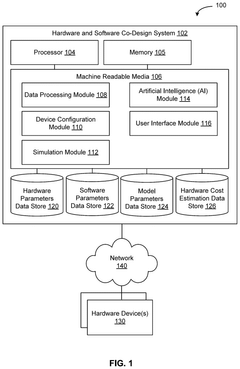
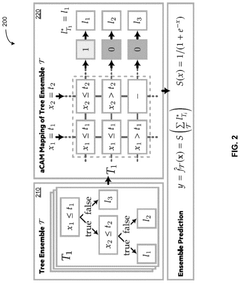
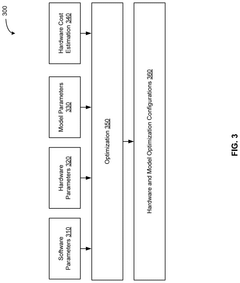
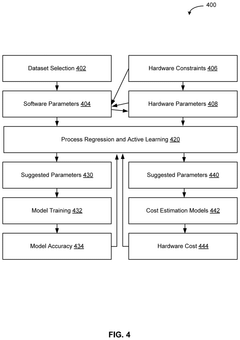
Artificial intelligence (AI) for hardware/software co-design of accelerators and machine learning models
PatentPendingUS20250173604A1
Innovation
- The system employs a hardware and software co-design approach that iteratively determines optimized configurations by co-designing hardware and software elements, using machine learning regression processes with active learning to simulate and evaluate various device configurations, thereby maximizing model accuracy and minimizing hardware costs.
Central air conditioning system AI optimization control method and system based on dynamic configuration parameter configuration
PatentPendingCN120466797A
Innovation
- By building an AI model library that integrates multiple algorithms, a two-way dynamic correlation mechanism between configuration parameters and models is established, data is collected and processed in real time and adaptively trained, and closed-loop optimization control driven by dynamic parameters is realized.


Safety Standards for AI-Controlled Battery Systems
The integration of artificial intelligence in battery management systems necessitates comprehensive safety standards to ensure reliable operation in automotive applications. Current regulatory frameworks are evolving to address the unique challenges posed by AI-controlled systems, where traditional deterministic safety approaches must adapt to accommodate machine learning algorithms' probabilistic nature.
Functional safety standards such as ISO 26262 are being extended to cover AI applications in automotive systems. These adaptations focus on establishing safety integrity levels for AI-controlled battery operations, requiring rigorous validation of machine learning models used in cell-to-chassis optimization. The standards emphasize the need for explainable AI algorithms that can provide transparent decision-making processes during critical battery management operations.
Cybersecurity considerations form another crucial aspect of safety standards for AI-controlled battery systems. The integration of AI introduces new attack vectors that malicious actors could exploit to compromise battery safety. Standards like ISO/SAE 21434 are being applied to ensure robust cybersecurity measures throughout the AI system lifecycle, from development to deployment and maintenance.
Validation and verification protocols for AI-controlled battery systems require specialized testing methodologies. These include scenario-based testing, edge case identification, and continuous monitoring of AI performance in real-world conditions. Safety standards mandate the implementation of fail-safe mechanisms that can override AI decisions when anomalous behavior is detected or when the system operates outside its trained parameters.
Data integrity and quality assurance represent fundamental requirements in safety standards for AI battery systems. The standards specify requirements for training data validation, model versioning, and continuous learning protocols that maintain safety performance over the system's operational lifetime. Regular auditing processes ensure that AI models continue to meet safety requirements as they adapt to new operational conditions.
Emergency response protocols within safety standards address scenarios where AI-controlled systems may malfunction or encounter unprecedented situations. These protocols define clear escalation procedures, human intervention capabilities, and system shutdown mechanisms to prevent catastrophic failures in battery operations.
Functional safety standards such as ISO 26262 are being extended to cover AI applications in automotive systems. These adaptations focus on establishing safety integrity levels for AI-controlled battery operations, requiring rigorous validation of machine learning models used in cell-to-chassis optimization. The standards emphasize the need for explainable AI algorithms that can provide transparent decision-making processes during critical battery management operations.
Cybersecurity considerations form another crucial aspect of safety standards for AI-controlled battery systems. The integration of AI introduces new attack vectors that malicious actors could exploit to compromise battery safety. Standards like ISO/SAE 21434 are being applied to ensure robust cybersecurity measures throughout the AI system lifecycle, from development to deployment and maintenance.
Validation and verification protocols for AI-controlled battery systems require specialized testing methodologies. These include scenario-based testing, edge case identification, and continuous monitoring of AI performance in real-world conditions. Safety standards mandate the implementation of fail-safe mechanisms that can override AI decisions when anomalous behavior is detected or when the system operates outside its trained parameters.
Data integrity and quality assurance represent fundamental requirements in safety standards for AI battery systems. The standards specify requirements for training data validation, model versioning, and continuous learning protocols that maintain safety performance over the system's operational lifetime. Regular auditing processes ensure that AI models continue to meet safety requirements as they adapt to new operational conditions.
Emergency response protocols within safety standards address scenarios where AI-controlled systems may malfunction or encounter unprecedented situations. These protocols define clear escalation procedures, human intervention capabilities, and system shutdown mechanisms to prevent catastrophic failures in battery operations.
Thermal Management in AI-Optimized Cell Configurations
Thermal management represents one of the most critical challenges in AI-optimized cell configurations, where dynamic positioning and real-time adjustments create complex heat distribution patterns. Traditional thermal management systems designed for static configurations prove inadequate when dealing with the variable thermal loads generated by adaptive cell arrangements. The integration of artificial intelligence into cell-to-chassis optimization introduces additional thermal considerations, as AI processing units generate supplementary heat while simultaneously managing the thermal profiles of reconfiguring cell arrays.
The fundamental challenge lies in predicting and managing thermal hotspots that emerge during dynamic reconfiguration processes. As AI algorithms continuously adjust cell positioning to optimize performance parameters, thermal gradients shift rapidly across the chassis structure. These transient thermal states can create localized overheating conditions that compromise both individual cell performance and overall system reliability. Advanced thermal modeling techniques must account for the temporal nature of these heat generation patterns, incorporating predictive algorithms that anticipate thermal loads based on planned configuration changes.
Effective thermal management in AI-optimized systems requires sophisticated cooling architectures capable of adapting to changing thermal landscapes. Liquid cooling systems with variable flow rates and intelligent routing mechanisms show promise for managing dynamic thermal loads. These systems utilize AI-driven control algorithms to predict cooling requirements based on anticipated cell movements and operational states. Micro-channel cooling networks embedded within the chassis structure provide targeted thermal regulation, allowing for zone-specific temperature control that adapts to real-time configuration changes.
The integration of thermal sensors throughout the chassis enables continuous monitoring of temperature distributions, feeding critical data back to the AI optimization algorithms. This thermal feedback loop allows the system to incorporate thermal constraints into configuration decisions, preventing arrangements that would create unsustainable thermal conditions. Machine learning models trained on thermal behavior patterns can predict optimal cooling strategies for specific cell configurations, reducing response times and improving thermal stability during transition periods.
Emerging thermal interface materials with adaptive properties offer additional solutions for managing heat transfer in dynamic configurations. Phase-change materials and thermally conductive polymers that respond to temperature variations provide passive thermal regulation capabilities. These materials can automatically adjust their thermal conductivity based on local temperature conditions, providing enhanced heat dissipation during high-load periods while maintaining thermal isolation during normal operations.
The fundamental challenge lies in predicting and managing thermal hotspots that emerge during dynamic reconfiguration processes. As AI algorithms continuously adjust cell positioning to optimize performance parameters, thermal gradients shift rapidly across the chassis structure. These transient thermal states can create localized overheating conditions that compromise both individual cell performance and overall system reliability. Advanced thermal modeling techniques must account for the temporal nature of these heat generation patterns, incorporating predictive algorithms that anticipate thermal loads based on planned configuration changes.
Effective thermal management in AI-optimized systems requires sophisticated cooling architectures capable of adapting to changing thermal landscapes. Liquid cooling systems with variable flow rates and intelligent routing mechanisms show promise for managing dynamic thermal loads. These systems utilize AI-driven control algorithms to predict cooling requirements based on anticipated cell movements and operational states. Micro-channel cooling networks embedded within the chassis structure provide targeted thermal regulation, allowing for zone-specific temperature control that adapts to real-time configuration changes.
The integration of thermal sensors throughout the chassis enables continuous monitoring of temperature distributions, feeding critical data back to the AI optimization algorithms. This thermal feedback loop allows the system to incorporate thermal constraints into configuration decisions, preventing arrangements that would create unsustainable thermal conditions. Machine learning models trained on thermal behavior patterns can predict optimal cooling strategies for specific cell configurations, reducing response times and improving thermal stability during transition periods.
Emerging thermal interface materials with adaptive properties offer additional solutions for managing heat transfer in dynamic configurations. Phase-change materials and thermally conductive polymers that respond to temperature variations provide passive thermal regulation capabilities. These materials can automatically adjust their thermal conductivity based on local temperature conditions, providing enhanced heat dissipation during high-load periods while maintaining thermal isolation during normal operations.
Unlock deeper insights with PatSnap Eureka Quick Research — get a full tech report to explore trends and direct your research. Try now!
Generate Your Research Report Instantly with AI Agent
Supercharge your innovation with PatSnap Eureka AI Agent Platform!