
Validate ATS Load Shedding During Generator Overload
AUG 25, 20268 MIN READ
Generate Your Research Report Instantly with AI Agent
Patsnap Eureka helps you evaluate technical feasibility & market potential.
ATS Load Shedding Technology Background and Objectives
Automatic Transfer Switch (ATS) load shedding technology has evolved as a critical component in modern power distribution systems, particularly in facilities requiring uninterrupted power supply. The fundamental concept emerged from the need to manage power distribution intelligently when primary power sources fail and backup generators must assume the electrical load. Traditional ATS systems simply transferred loads between power sources, but as electrical systems grew more complex and generator capacities became constrained by cost and space limitations, the necessity for selective load management became apparent.
The technology addresses a fundamental challenge in backup power systems: generator overload conditions that can occur during transfer events. When an ATS switches from utility power to generator power, the sudden application of total facility load can exceed generator capacity, potentially causing system instability, equipment damage, or complete power failure. This scenario is particularly critical in mission-critical facilities such as data centers, healthcare institutions, and industrial operations where power continuity directly impacts safety, operations, and financial performance.
Over the past two decades, ATS load shedding has transitioned from simple mechanical relay-based systems to sophisticated digital solutions incorporating microprocessor control, real-time monitoring, and programmable logic. Early implementations relied on fixed priority schemes and time-delayed contactors, while contemporary systems employ dynamic load assessment algorithms and communication protocols that enable coordinated responses across multiple electrical distribution points.
The primary technical objective of validating ATS load shedding during generator overload is to ensure reliable, predictable, and safe operation under stress conditions. This validation encompasses verifying response times, load prioritization accuracy, system coordination, and fail-safe mechanisms. The goal extends beyond mere functionality testing to include performance optimization, ensuring that critical loads remain powered while non-essential loads are shed in a controlled sequence that prevents generator damage and maintains system stability throughout the transfer and stabilization process.
The technology addresses a fundamental challenge in backup power systems: generator overload conditions that can occur during transfer events. When an ATS switches from utility power to generator power, the sudden application of total facility load can exceed generator capacity, potentially causing system instability, equipment damage, or complete power failure. This scenario is particularly critical in mission-critical facilities such as data centers, healthcare institutions, and industrial operations where power continuity directly impacts safety, operations, and financial performance.
Over the past two decades, ATS load shedding has transitioned from simple mechanical relay-based systems to sophisticated digital solutions incorporating microprocessor control, real-time monitoring, and programmable logic. Early implementations relied on fixed priority schemes and time-delayed contactors, while contemporary systems employ dynamic load assessment algorithms and communication protocols that enable coordinated responses across multiple electrical distribution points.
The primary technical objective of validating ATS load shedding during generator overload is to ensure reliable, predictable, and safe operation under stress conditions. This validation encompasses verifying response times, load prioritization accuracy, system coordination, and fail-safe mechanisms. The goal extends beyond mere functionality testing to include performance optimization, ensuring that critical loads remain powered while non-essential loads are shed in a controlled sequence that prevents generator damage and maintains system stability throughout the transfer and stabilization process.
Market Demand for Generator Overload Protection Systems
The global market for generator overload protection systems has experienced substantial growth driven by increasing reliance on backup power infrastructure across critical sectors. Data centers, healthcare facilities, telecommunications networks, and industrial manufacturing plants represent primary demand drivers, as these sectors cannot tolerate power interruptions that could result in operational failures, data loss, or safety hazards. The proliferation of edge computing facilities and the expansion of 5G infrastructure have further amplified requirements for reliable standby power systems equipped with sophisticated protection mechanisms.
Regulatory frameworks and safety standards have significantly influenced market demand patterns. Building codes in developed markets increasingly mandate automatic transfer switch systems with integrated load management capabilities for commercial and institutional buildings. Insurance requirements for business continuity and risk mitigation have compelled organizations to invest in advanced generator protection technologies that can prevent equipment damage and extend asset lifespan. The financial implications of generator failures, including repair costs and operational downtime, have made preventive protection systems economically attractive investments.
Emerging markets demonstrate accelerating adoption rates as infrastructure development progresses and power grid reliability remains inconsistent. Regions experiencing rapid urbanization and industrial growth show heightened demand for generator systems with intelligent load shedding capabilities. The transition toward hybrid power systems combining renewable energy sources with conventional generators has created new technical requirements for dynamic load management during overload conditions.
The market exhibits distinct segmentation based on power capacity ranges and application complexity. Small to medium commercial applications typically prioritize cost-effective solutions with basic overload protection, while mission-critical facilities demand sophisticated systems capable of selective load prioritization and real-time validation. The industrial segment shows particular interest in systems that can integrate with existing building management platforms and provide comprehensive monitoring capabilities.
Technological convergence between power management systems and IoT platforms has expanded market opportunities. End users increasingly seek solutions offering remote monitoring, predictive maintenance capabilities, and integration with smart building ecosystems. This trend has elevated expectations for ATS load shedding validation features that provide verifiable performance data and compliance documentation. The growing emphasis on energy efficiency and sustainability has also positioned intelligent load management as a value proposition beyond pure protection functionality.
Regulatory frameworks and safety standards have significantly influenced market demand patterns. Building codes in developed markets increasingly mandate automatic transfer switch systems with integrated load management capabilities for commercial and institutional buildings. Insurance requirements for business continuity and risk mitigation have compelled organizations to invest in advanced generator protection technologies that can prevent equipment damage and extend asset lifespan. The financial implications of generator failures, including repair costs and operational downtime, have made preventive protection systems economically attractive investments.
Emerging markets demonstrate accelerating adoption rates as infrastructure development progresses and power grid reliability remains inconsistent. Regions experiencing rapid urbanization and industrial growth show heightened demand for generator systems with intelligent load shedding capabilities. The transition toward hybrid power systems combining renewable energy sources with conventional generators has created new technical requirements for dynamic load management during overload conditions.
The market exhibits distinct segmentation based on power capacity ranges and application complexity. Small to medium commercial applications typically prioritize cost-effective solutions with basic overload protection, while mission-critical facilities demand sophisticated systems capable of selective load prioritization and real-time validation. The industrial segment shows particular interest in systems that can integrate with existing building management platforms and provide comprehensive monitoring capabilities.
Technological convergence between power management systems and IoT platforms has expanded market opportunities. End users increasingly seek solutions offering remote monitoring, predictive maintenance capabilities, and integration with smart building ecosystems. This trend has elevated expectations for ATS load shedding validation features that provide verifiable performance data and compliance documentation. The growing emphasis on energy efficiency and sustainability has also positioned intelligent load management as a value proposition beyond pure protection functionality.
Current ATS Load Shedding Challenges and Technical Barriers
Automatic Transfer Switch (ATS) load shedding during generator overload scenarios faces multiple technical challenges that impede reliable implementation and validation. The primary barrier stems from the complexity of accurately predicting and responding to transient load conditions during the critical transfer window between utility and generator power sources. Current systems struggle with the temporal coordination required to shed non-critical loads before generator protection mechanisms trigger, often resulting in complete system shutdowns rather than graceful degradation.
Existing ATS controllers typically rely on static load prioritization schemes that fail to account for dynamic operational contexts. These predetermined hierarchies cannot adapt to real-time conditions such as varying generator capacity due to fuel quality, ambient temperature effects on performance, or partial equipment failures. The lack of intelligent load profiling capabilities means systems cannot distinguish between momentary inrush currents and sustained overload conditions, leading to either premature load shedding or delayed response that damages generator components.
Communication latency between the ATS control system and downstream load management devices presents another significant obstacle. Traditional hardwired relay-based architectures introduce delays of 50-200 milliseconds, which proves insufficient when generator overload protection operates within 10-50 millisecond timeframes. This timing mismatch creates a critical gap where protective devices may activate before load shedding commands execute, defeating the purpose of selective load management.
Measurement accuracy and sensor reliability compound these challenges. Current transformers and voltage sensors in typical ATS installations often lack the precision needed to detect early-stage overload conditions, particularly when dealing with non-linear loads containing harmonics and power factor variations. The absence of standardized protocols for integrating advanced metering infrastructure with legacy ATS systems further limits the ability to implement sophisticated load shedding algorithms.
Testing and validation methodologies represent perhaps the most significant barrier. Reproducing realistic generator overload scenarios in controlled environments requires expensive test equipment and poses safety risks. Most facilities lack the capability to simulate diverse load profiles, generator response characteristics, and fault conditions necessary to comprehensively validate load shedding performance across operational scenarios. This validation gap results in systems deployed with uncertain reliability under actual emergency conditions.
Existing ATS controllers typically rely on static load prioritization schemes that fail to account for dynamic operational contexts. These predetermined hierarchies cannot adapt to real-time conditions such as varying generator capacity due to fuel quality, ambient temperature effects on performance, or partial equipment failures. The lack of intelligent load profiling capabilities means systems cannot distinguish between momentary inrush currents and sustained overload conditions, leading to either premature load shedding or delayed response that damages generator components.
Communication latency between the ATS control system and downstream load management devices presents another significant obstacle. Traditional hardwired relay-based architectures introduce delays of 50-200 milliseconds, which proves insufficient when generator overload protection operates within 10-50 millisecond timeframes. This timing mismatch creates a critical gap where protective devices may activate before load shedding commands execute, defeating the purpose of selective load management.
Measurement accuracy and sensor reliability compound these challenges. Current transformers and voltage sensors in typical ATS installations often lack the precision needed to detect early-stage overload conditions, particularly when dealing with non-linear loads containing harmonics and power factor variations. The absence of standardized protocols for integrating advanced metering infrastructure with legacy ATS systems further limits the ability to implement sophisticated load shedding algorithms.
Testing and validation methodologies represent perhaps the most significant barrier. Reproducing realistic generator overload scenarios in controlled environments requires expensive test equipment and poses safety risks. Most facilities lack the capability to simulate diverse load profiles, generator response characteristics, and fault conditions necessary to comprehensively validate load shedding performance across operational scenarios. This validation gap results in systems deployed with uncertain reliability under actual emergency conditions.
Existing Load Shedding Validation Solutions
01 Automatic Transfer Switch with Load Shedding Control
Systems that integrate automatic transfer switches with load shedding capabilities to manage power distribution during utility failures or generator operation. These systems can automatically disconnect non-critical loads when switching between power sources to prevent overload conditions and ensure stable operation of essential equipment.- Automatic Transfer Switch with Load Shedding Control: Systems that integrate automatic transfer switches with load shedding capabilities to manage power distribution during utility failures or generator operation. These systems can automatically disconnect non-critical loads when switching between power sources to prevent overload conditions and ensure continuous power to essential equipment.
- Priority-Based Load Shedding Methods: Techniques for implementing hierarchical load management where electrical loads are assigned priority levels and shed in predetermined sequences. The system monitors power availability and systematically disconnects lower priority loads first to maintain power to critical systems during insufficient power conditions.
- Intelligent Load Management Systems: Advanced control systems that utilize monitoring and communication technologies to dynamically manage load shedding operations. These systems can analyze real-time power consumption data, predict power requirements, and make automated decisions about which loads to shed based on current conditions and user-defined parameters.
- Generator-Integrated Load Shedding: Systems specifically designed for coordinating load shedding with backup generator operations. These solutions manage the transition between utility and generator power while ensuring the generator is not overloaded by automatically reducing connected loads to match available generator capacity.
- Programmable Load Shedding Controllers: Configurable control devices that allow users to customize load shedding parameters including timing sequences, load priorities, and restoration procedures. These controllers provide flexible programming options to adapt the load shedding behavior to specific facility requirements and operational needs.
02 Priority-Based Load Shedding Methods
Techniques for implementing hierarchical load management where electrical loads are assigned priority levels and shed in predetermined sequences. The system monitors power availability and systematically disconnects lower priority loads first to maintain power to critical equipment during insufficient power conditions.Expand Specific Solutions03 Intelligent Load Management Systems
Advanced control systems that utilize monitoring and communication technologies to dynamically manage load shedding operations. These systems can analyze real-time power consumption, predict demand, and make automated decisions about which loads to shed based on configurable parameters and operating conditions.Expand Specific Solutions04 Generator-Integrated Load Shedding
Load shedding mechanisms specifically designed for generator-based power systems that coordinate with generator capacity and startup sequences. These systems prevent generator overload during startup and operation by managing connected loads according to available generator capacity and operational status.Expand Specific Solutions05 Programmable Load Shedding Controllers
Configurable control devices that allow users to customize load shedding parameters, sequences, and conditions. These controllers provide flexibility in defining which loads to shed, timing delays, restoration sequences, and integration with building management or energy management systems.Expand Specific Solutions
Key Players in ATS and Generator Control Systems
The ATS load shedding during generator overload technology operates within a mature power management sector experiencing steady growth driven by increasing demand for reliable backup power systems and grid resilience. The market encompasses residential, commercial, and industrial applications, with significant expansion in renewable energy integration and microgrid deployments. Technology maturity varies across players, with established manufacturers like Generac Power Systems, Caterpillar, Cummins Power Generation, and ABB demonstrating advanced capabilities in automated transfer switch systems and intelligent load management. Mid-tier players including Kohler, Schneider Electric USA, and Eaton Intelligent Power offer comprehensive solutions integrating generator control with building management systems. Emerging innovations focus on IoT-enabled monitoring, predictive analytics, and seamless integration with smart grid infrastructure, positioning companies like Schweitzer Engineering Laboratories and Rockwell Automation Technologies at the forefront of digital transformation in power distribution control systems.
Generac Power Systems, Inc.
Technical Solution: Generac has developed advanced Automatic Transfer Switch (ATS) systems with integrated load shedding capabilities specifically designed for generator overload protection. Their solution employs intelligent load management algorithms that continuously monitor generator output parameters including voltage, frequency, and current levels. When the system detects generator overload conditions approaching critical thresholds, the ATS controller automatically initiates a prioritized load shedding sequence based on pre-configured load hierarchy settings. The system utilizes real-time power monitoring circuits and microprocessor-based control logic to calculate available generator capacity and systematically disconnect non-essential loads in predetermined stages, typically starting with lowest priority circuits. This progressive load reduction continues until generator operating parameters return to safe levels, preventing engine stall, voltage collapse, or equipment damage. The validation process includes simulation of various overload scenarios, verification of load shedding timing accuracy, and confirmation of proper load restoration sequencing once normal capacity is restored.
Strengths: Industry-leading expertise in residential and commercial backup power systems with proven ATS load management technology; comprehensive integration with Generac generator product lines ensuring optimized compatibility. Weaknesses: Solutions may be primarily optimized for Generac generators, potentially limiting cross-platform compatibility with other generator manufacturers.
Caterpillar, Inc.
Technical Solution: Caterpillar offers integrated generator and ATS systems with robust load shedding validation capabilities designed for mission-critical power applications. Their solution combines Cat generator control systems with intelligent transfer switch technology featuring adaptive load management. The system continuously monitors generator performance metrics including kilowatt output, power factor, engine speed, and temperature parameters. During overload conditions, the Cat ATS controller implements a sophisticated load shedding protocol that considers both electrical load magnitude and generator mechanical limitations. The validation methodology includes factory acceptance testing where simulated overload conditions verify proper ATS response timing, load prioritization accuracy, and system stability maintenance. Cat's approach incorporates predictive algorithms that can anticipate overload conditions based on load trending data, enabling proactive load management before critical thresholds are exceeded. The system architecture supports both automatic and manual load shedding modes, with comprehensive diagnostics and alarm functions to facilitate validation testing and ongoing performance monitoring in deployed installations.
Strengths: Seamless integration between Cat generators and control systems providing optimized performance; extensive field experience in heavy-duty industrial and data center applications ensuring reliability. Weaknesses: Premium pricing reflecting industrial-grade quality; solution ecosystem primarily centered on Caterpillar generator products.
Core Technologies in Overload Detection and Response
Dynamic load shedding system for a standby generator
PatentActiveUS8410633B2
Innovation
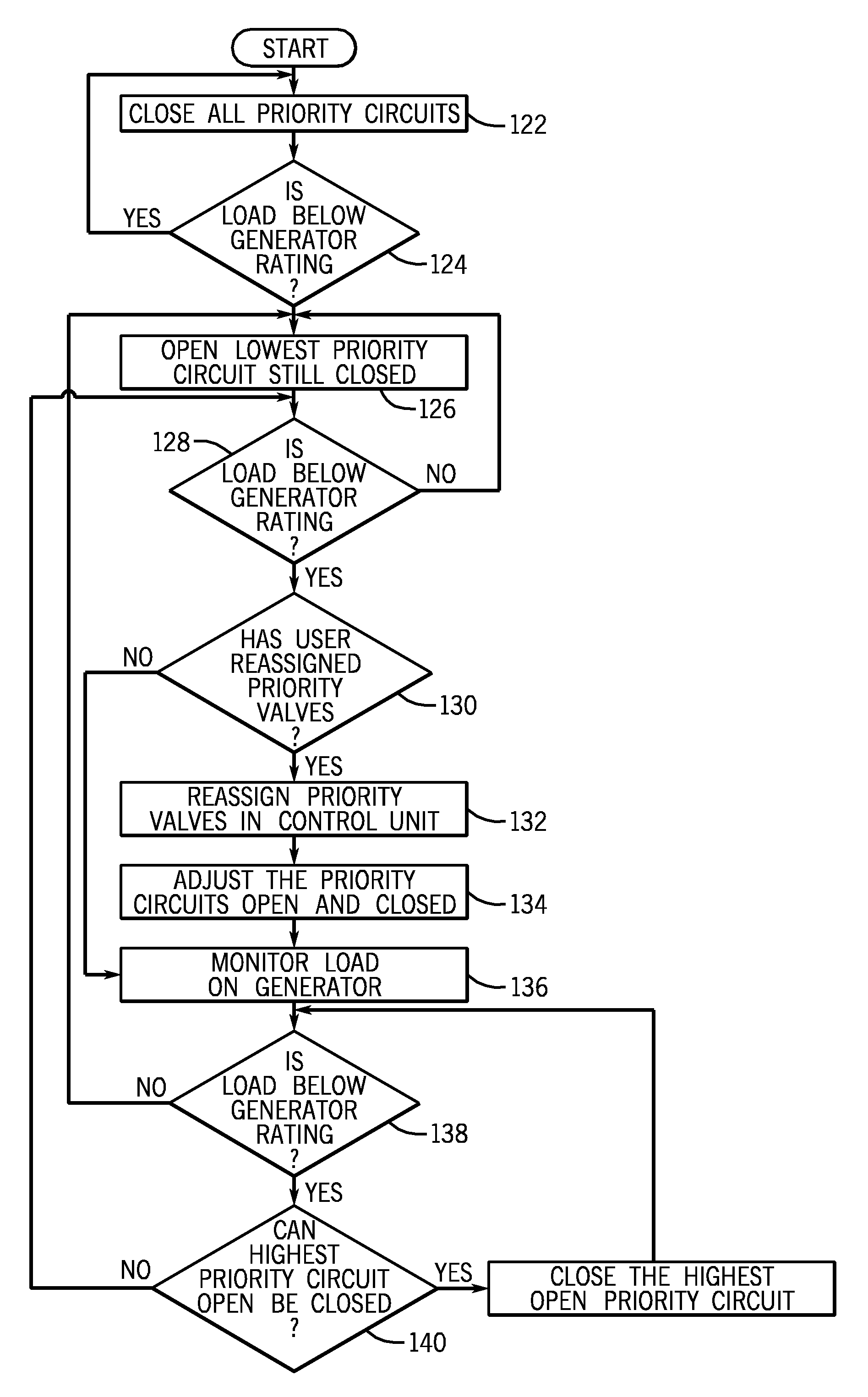
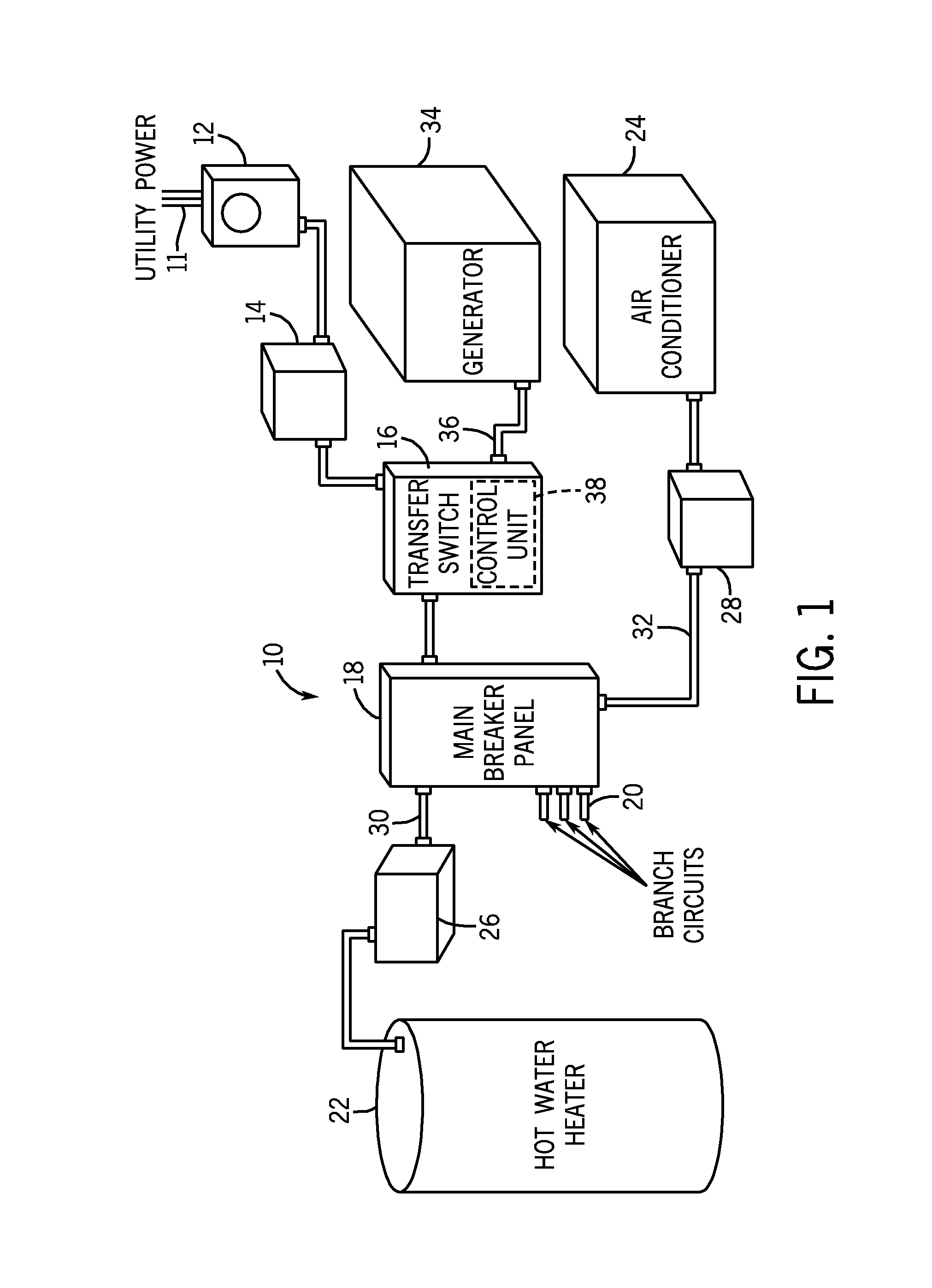
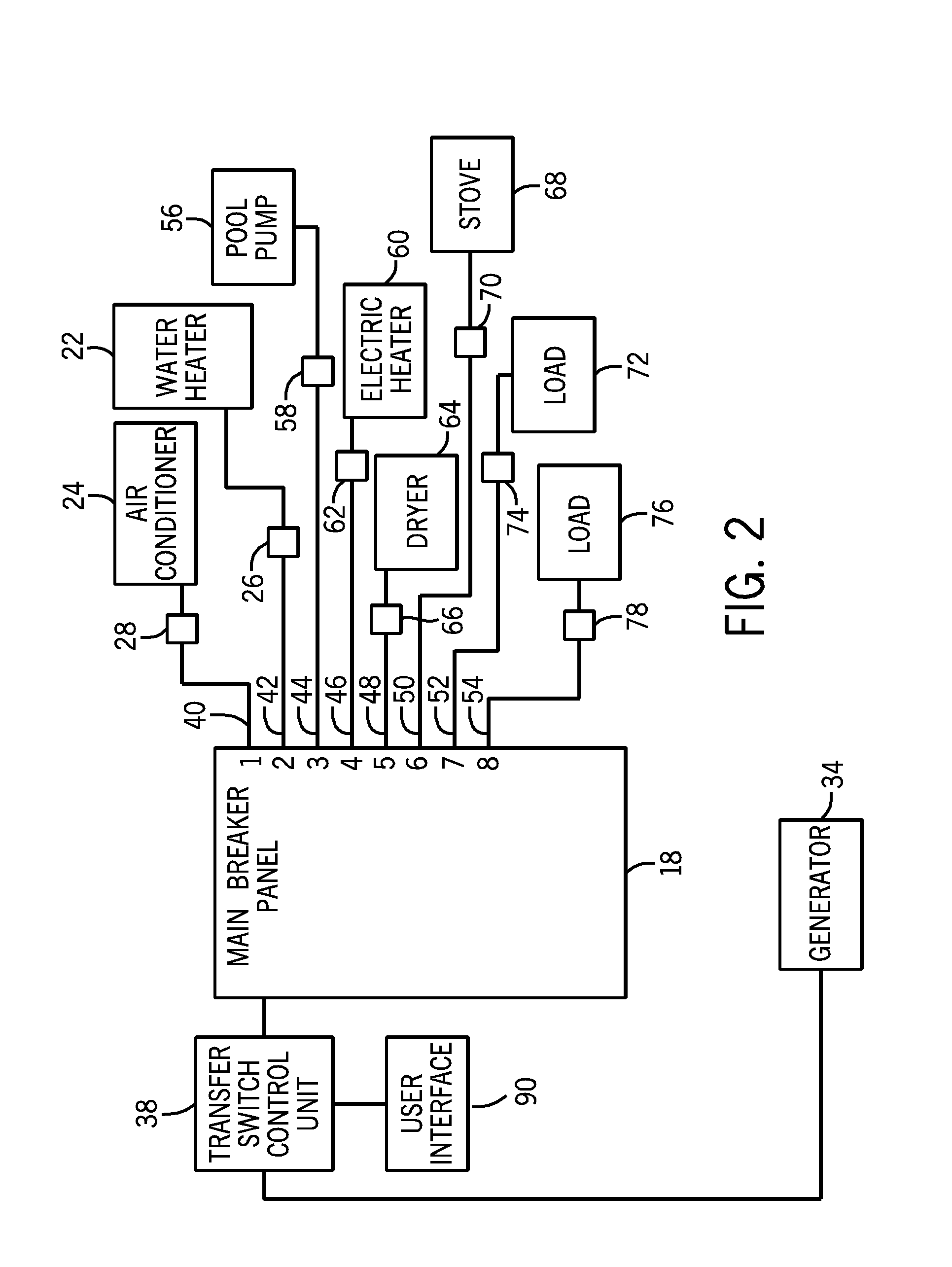
- A control unit within a transfer switch that allows users to dynamically reassigned priority values for electric loads through a user interface, enabling selective load shedding from a standby generator without rewiring, by monitoring and managing the load based on initial and redefined priority sequences.

Automatic transfer switch
PatentWO2000079669A1
Innovation
- An automatic transfer switch apparatus that includes a controller to detect utility voltage failures, start a backup generator, and switch between utility and generator power sources, prioritizing electrical circuits and managing generator load to prevent overload, using solenoid-driven relay switches and sensors for voltage and load monitoring.


Grid Code and Safety Standards for ATS Systems
Automatic Transfer Switch (ATS) systems operating in conjunction with backup generators must comply with stringent grid codes and safety standards to ensure reliable power transfer during overload conditions. International standards such as IEC 60947-6-1 define the fundamental requirements for ATS equipment, specifying performance criteria including switching capacity, endurance, and protection coordination. These standards mandate that ATS systems incorporate adequate load shedding mechanisms to prevent generator damage when operating beyond rated capacity, establishing clear thresholds for automatic disconnection of non-critical loads.
National electrical codes, including the National Electrical Code (NEC) Article 700 and 701 in North America, prescribe specific requirements for emergency and legally required standby systems. These regulations stipulate that ATS installations must include overload protection devices calibrated to generator nameplate ratings, with load shedding sequences prioritized according to load criticality classifications. The standards require documented validation procedures demonstrating that load shedding activates before generator thermal limits are exceeded, typically within 10-15 seconds of detecting sustained overload conditions.
Grid interconnection standards such as IEEE 1547 impose additional requirements when ATS systems interface with utility networks. These specifications mandate anti-islanding protection and synchronized transfer capabilities to prevent backfeeding during generator operation. Load shedding validation must demonstrate compliance with voltage and frequency deviation limits during transfer events, ensuring power quality remains within acceptable ranges defined by IEEE 519 for harmonic distortion and voltage regulation.
Safety certification bodies including UL, CSA, and CE enforce product-level compliance through rigorous testing protocols. UL 1008 specifically addresses ATS safety requirements, mandating temperature rise testing under overload scenarios and verification of protective device coordination. Validation testing must confirm that load shedding circuits operate independently of primary control systems, providing redundant protection against generator overload. Documentation requirements include detailed test reports demonstrating compliance with fault current ratings, short-circuit withstand capabilities, and environmental operating conditions specified in relevant standards.
National electrical codes, including the National Electrical Code (NEC) Article 700 and 701 in North America, prescribe specific requirements for emergency and legally required standby systems. These regulations stipulate that ATS installations must include overload protection devices calibrated to generator nameplate ratings, with load shedding sequences prioritized according to load criticality classifications. The standards require documented validation procedures demonstrating that load shedding activates before generator thermal limits are exceeded, typically within 10-15 seconds of detecting sustained overload conditions.
Grid interconnection standards such as IEEE 1547 impose additional requirements when ATS systems interface with utility networks. These specifications mandate anti-islanding protection and synchronized transfer capabilities to prevent backfeeding during generator operation. Load shedding validation must demonstrate compliance with voltage and frequency deviation limits during transfer events, ensuring power quality remains within acceptable ranges defined by IEEE 519 for harmonic distortion and voltage regulation.
Safety certification bodies including UL, CSA, and CE enforce product-level compliance through rigorous testing protocols. UL 1008 specifically addresses ATS safety requirements, mandating temperature rise testing under overload scenarios and verification of protective device coordination. Validation testing must confirm that load shedding circuits operate independently of primary control systems, providing redundant protection against generator overload. Documentation requirements include detailed test reports demonstrating compliance with fault current ratings, short-circuit withstand capabilities, and environmental operating conditions specified in relevant standards.
Testing Methodologies for Generator Overload Scenarios
Validating ATS load shedding during generator overload requires systematic testing methodologies that simulate real-world operational conditions while ensuring safety and measurement accuracy. The primary approach involves controlled laboratory testing combined with field validation protocols. Laboratory testing typically utilizes programmable load banks that can simulate various load profiles and overload conditions, allowing engineers to precisely control the magnitude and duration of generator overload scenarios. These load banks are configured to incrementally increase power demand beyond the generator's rated capacity, triggering the ATS load shedding sequence while monitoring system response parameters such as voltage stability, frequency deviation, and switching timing.
Field testing methodologies complement laboratory work by validating performance under actual installation conditions. This involves temporary instrumentation of existing ATS systems with power quality analyzers, current transformers, and data acquisition systems that capture transient behavior during simulated overload events. The testing protocol typically includes gradual load application, sudden load steps, and sustained overload conditions to evaluate different load shedding algorithms and priority schemes. Critical measurements include load shedding response time, voltage recovery characteristics, and the accuracy of load prioritization logic.
Advanced testing approaches incorporate hardware-in-the-loop simulation, where real ATS controllers interact with virtual generator and load models. This methodology enables comprehensive testing of edge cases and fault scenarios that would be impractical or unsafe to replicate in physical systems. The simulation environment can model complex load dynamics, generator governor response, and electrical transients with high fidelity. Additionally, automated test sequences can execute hundreds of scenarios to validate load shedding performance across the full operational envelope, including variations in ambient temperature, load power factor, and generator aging effects.
Documentation protocols for these testing methodologies emphasize traceability and repeatability. Each test scenario requires detailed recording of initial conditions, load profiles, system responses, and any deviations from expected behavior. Statistical analysis of multiple test runs establishes confidence intervals for critical performance parameters, ensuring that load shedding functions reliably across manufacturing tolerances and environmental variations.
Field testing methodologies complement laboratory work by validating performance under actual installation conditions. This involves temporary instrumentation of existing ATS systems with power quality analyzers, current transformers, and data acquisition systems that capture transient behavior during simulated overload events. The testing protocol typically includes gradual load application, sudden load steps, and sustained overload conditions to evaluate different load shedding algorithms and priority schemes. Critical measurements include load shedding response time, voltage recovery characteristics, and the accuracy of load prioritization logic.
Advanced testing approaches incorporate hardware-in-the-loop simulation, where real ATS controllers interact with virtual generator and load models. This methodology enables comprehensive testing of edge cases and fault scenarios that would be impractical or unsafe to replicate in physical systems. The simulation environment can model complex load dynamics, generator governor response, and electrical transients with high fidelity. Additionally, automated test sequences can execute hundreds of scenarios to validate load shedding performance across the full operational envelope, including variations in ambient temperature, load power factor, and generator aging effects.
Documentation protocols for these testing methodologies emphasize traceability and repeatability. Each test scenario requires detailed recording of initial conditions, load profiles, system responses, and any deviations from expected behavior. Statistical analysis of multiple test runs establishes confidence intervals for critical performance parameters, ensuring that load shedding functions reliably across manufacturing tolerances and environmental variations.
Unlock deeper insights with Patsnap Eureka Quick Research — get a full tech report to explore trends and direct your research. Try now!
Generate Your Research Report Instantly with AI Agent
Supercharge your innovation with Patsnap Eureka AI Agent Platform!