
Validate ATS Performance During Generator Frequency Drift
AUG 25, 20269 MIN READ
Generate Your Research Report Instantly with AI Agent
Patsnap Eureka helps you evaluate technical feasibility & market potential.
ATS and Generator Frequency Drift Background and Objectives
Automatic Transfer Switches (ATS) serve as critical components in power distribution systems, designed to automatically transfer electrical loads between primary utility power and backup generator sources during power outages or quality disturbances. These devices ensure continuous power supply to mission-critical facilities including hospitals, data centers, telecommunications infrastructure, and industrial operations where power interruption can result in significant operational disruptions or safety hazards.
The fundamental challenge in ATS operation emerges during generator startup and stabilization phases when frequency drift occurs. Unlike stable utility power that maintains consistent frequency at 50Hz or 60Hz depending on regional standards, backup generators experience transient frequency variations during initial startup, load acceptance, and synchronization processes. This frequency drift typically ranges from 5% to 10% deviation from nominal values, creating potential operational risks for ATS systems that must accurately detect, evaluate, and execute transfer decisions within milliseconds.
Traditional ATS designs primarily focused on voltage-based transfer logic, with frequency monitoring serving as a secondary parameter. However, modern power quality requirements and increasingly sensitive electronic loads demand more sophisticated frequency tracking capabilities. The technical objective centers on validating that ATS systems can reliably distinguish between acceptable generator frequency drift during normal startup sequences and genuine fault conditions requiring corrective action or transfer inhibition.
This validation requirement has intensified due to several converging factors. First, regulatory standards such as IEEE 446 and NFPA 110 have established stricter performance criteria for emergency power systems. Second, the proliferation of variable frequency drives and power electronics in connected loads has increased sensitivity to frequency deviations. Third, generator technologies have evolved with faster response characteristics, compressing the timeframe for ATS decision-making.
The primary technical objectives include establishing performance benchmarks for ATS frequency detection accuracy across the full range of generator drift scenarios, determining optimal transfer delay settings that balance speed with stability, and verifying fail-safe mechanisms prevent inappropriate transfers during out-of-specification frequency conditions. Additionally, validation must encompass various generator types, load profiles, and environmental conditions to ensure robust performance across diverse deployment scenarios.
The fundamental challenge in ATS operation emerges during generator startup and stabilization phases when frequency drift occurs. Unlike stable utility power that maintains consistent frequency at 50Hz or 60Hz depending on regional standards, backup generators experience transient frequency variations during initial startup, load acceptance, and synchronization processes. This frequency drift typically ranges from 5% to 10% deviation from nominal values, creating potential operational risks for ATS systems that must accurately detect, evaluate, and execute transfer decisions within milliseconds.
Traditional ATS designs primarily focused on voltage-based transfer logic, with frequency monitoring serving as a secondary parameter. However, modern power quality requirements and increasingly sensitive electronic loads demand more sophisticated frequency tracking capabilities. The technical objective centers on validating that ATS systems can reliably distinguish between acceptable generator frequency drift during normal startup sequences and genuine fault conditions requiring corrective action or transfer inhibition.
This validation requirement has intensified due to several converging factors. First, regulatory standards such as IEEE 446 and NFPA 110 have established stricter performance criteria for emergency power systems. Second, the proliferation of variable frequency drives and power electronics in connected loads has increased sensitivity to frequency deviations. Third, generator technologies have evolved with faster response characteristics, compressing the timeframe for ATS decision-making.
The primary technical objectives include establishing performance benchmarks for ATS frequency detection accuracy across the full range of generator drift scenarios, determining optimal transfer delay settings that balance speed with stability, and verifying fail-safe mechanisms prevent inappropriate transfers during out-of-specification frequency conditions. Additionally, validation must encompass various generator types, load profiles, and environmental conditions to ensure robust performance across diverse deployment scenarios.
Market Demand for Reliable ATS Systems
The global demand for reliable Automatic Transfer Switch (ATS) systems has intensified significantly in recent years, driven by the increasing dependence on uninterrupted power supply across critical infrastructure sectors. Healthcare facilities, data centers, telecommunications networks, and industrial manufacturing plants require seamless power transitions to prevent operational disruptions, equipment damage, and potential safety hazards. As power grid instability becomes more prevalent due to aging infrastructure and the integration of renewable energy sources, the need for ATS systems capable of handling complex power quality scenarios has become paramount.
Mission-critical facilities represent the primary market segment demanding advanced ATS solutions. Hospitals and medical centers cannot tolerate power interruptions that could compromise patient care equipment, while data centers face substantial financial losses from even momentary outages. The exponential growth of cloud computing and digital services has amplified this demand, as service level agreements increasingly require near-perfect uptime guarantees. Financial institutions, emergency response centers, and government facilities similarly depend on robust power transfer mechanisms to maintain operational continuity.
The market increasingly recognizes that traditional ATS performance validation under ideal conditions is insufficient. Real-world scenarios frequently involve generator frequency drift during startup, load transitions, or fuel quality variations. End users are demanding ATS systems that can reliably detect and respond to these dynamic frequency conditions without false transfers or delayed switching. This requirement has created a distinct market need for enhanced testing protocols and performance validation methodologies that accurately simulate generator frequency instability.
Regulatory frameworks and industry standards are evolving to address these concerns, with organizations such as the National Fire Protection Association and International Electrotechnical Commission updating requirements for ATS testing and certification. Insurance providers and facility auditors are scrutinizing power system reliability more closely, creating additional market pressure for validated ATS performance under diverse operating conditions. The convergence of stricter compliance requirements and heightened operational risk awareness has transformed reliable ATS performance from a technical preference into a fundamental procurement criterion across multiple industries.
Mission-critical facilities represent the primary market segment demanding advanced ATS solutions. Hospitals and medical centers cannot tolerate power interruptions that could compromise patient care equipment, while data centers face substantial financial losses from even momentary outages. The exponential growth of cloud computing and digital services has amplified this demand, as service level agreements increasingly require near-perfect uptime guarantees. Financial institutions, emergency response centers, and government facilities similarly depend on robust power transfer mechanisms to maintain operational continuity.
The market increasingly recognizes that traditional ATS performance validation under ideal conditions is insufficient. Real-world scenarios frequently involve generator frequency drift during startup, load transitions, or fuel quality variations. End users are demanding ATS systems that can reliably detect and respond to these dynamic frequency conditions without false transfers or delayed switching. This requirement has created a distinct market need for enhanced testing protocols and performance validation methodologies that accurately simulate generator frequency instability.
Regulatory frameworks and industry standards are evolving to address these concerns, with organizations such as the National Fire Protection Association and International Electrotechnical Commission updating requirements for ATS testing and certification. Insurance providers and facility auditors are scrutinizing power system reliability more closely, creating additional market pressure for validated ATS performance under diverse operating conditions. The convergence of stricter compliance requirements and heightened operational risk awareness has transformed reliable ATS performance from a technical preference into a fundamental procurement criterion across multiple industries.
Current ATS Validation Challenges and Technical Barriers
Validating ATS performance during generator frequency drift presents multiple technical barriers that stem from the complexity of simulating real-world transient conditions and the limitations of existing testing methodologies. Traditional validation approaches often rely on steady-state testing protocols that fail to capture the dynamic behavior of frequency variations occurring during generator startup, load changes, or grid disturbances. This gap between laboratory conditions and actual operational scenarios creates significant uncertainty in predicting ATS response accuracy and reliability.
One primary challenge involves the difficulty in generating controlled frequency drift profiles that accurately replicate the non-linear characteristics of actual generator behavior. Standard test equipment typically produces idealized frequency ramps or steps, which do not reflect the complex oscillations, overshoots, and rate-of-change variations observed in real generator systems. This discrepancy makes it challenging to establish meaningful pass-fail criteria and performance benchmarks that correlate with field performance.
The lack of standardized testing protocols specifically addressing frequency drift scenarios further complicates validation efforts. Existing industry standards such as IEC 60947 and UL 1008 provide limited guidance on dynamic frequency testing parameters, including drift rates, frequency boundaries, and duration requirements. This absence of consensus leads to inconsistent validation practices across manufacturers and creates difficulties in comparing ATS performance across different products and technologies.
Measurement accuracy and instrumentation limitations pose additional technical barriers. Capturing the precise timing of ATS switching decisions during rapid frequency changes requires high-resolution data acquisition systems capable of detecting sub-cycle variations. Many conventional testing setups lack the temporal resolution necessary to identify critical performance parameters such as detection latency, decision-making delays, and contact operation timing under dynamic frequency conditions.
The interaction between multiple protection functions within modern ATS systems introduces further complexity. Frequency drift validation must account for potential conflicts or coordination issues between under-frequency protection, over-frequency protection, rate-of-change detection, and voltage monitoring functions. Isolating the specific contribution of frequency drift to overall switching behavior while maintaining realistic system-level interactions remains a significant technical challenge that current validation methodologies struggle to address comprehensively.
One primary challenge involves the difficulty in generating controlled frequency drift profiles that accurately replicate the non-linear characteristics of actual generator behavior. Standard test equipment typically produces idealized frequency ramps or steps, which do not reflect the complex oscillations, overshoots, and rate-of-change variations observed in real generator systems. This discrepancy makes it challenging to establish meaningful pass-fail criteria and performance benchmarks that correlate with field performance.
The lack of standardized testing protocols specifically addressing frequency drift scenarios further complicates validation efforts. Existing industry standards such as IEC 60947 and UL 1008 provide limited guidance on dynamic frequency testing parameters, including drift rates, frequency boundaries, and duration requirements. This absence of consensus leads to inconsistent validation practices across manufacturers and creates difficulties in comparing ATS performance across different products and technologies.
Measurement accuracy and instrumentation limitations pose additional technical barriers. Capturing the precise timing of ATS switching decisions during rapid frequency changes requires high-resolution data acquisition systems capable of detecting sub-cycle variations. Many conventional testing setups lack the temporal resolution necessary to identify critical performance parameters such as detection latency, decision-making delays, and contact operation timing under dynamic frequency conditions.
The interaction between multiple protection functions within modern ATS systems introduces further complexity. Frequency drift validation must account for potential conflicts or coordination issues between under-frequency protection, over-frequency protection, rate-of-change detection, and voltage monitoring functions. Isolating the specific contribution of frequency drift to overall switching behavior while maintaining realistic system-level interactions remains a significant technical challenge that current validation methodologies struggle to address comprehensively.
Existing ATS Performance Validation Solutions
01 Fast switching and transfer time optimization
Automatic transfer switches can be designed with mechanisms to minimize the transfer time between power sources, ensuring seamless transition during power outages. Advanced control systems and mechanical designs enable rapid detection of power failure and quick switching to backup power sources. This reduces downtime and prevents interruption to critical loads. Technologies include pre-positioning mechanisms, fast-acting contactors, and optimized control algorithms that can achieve transfer times in milliseconds.- Fast switching and transfer time optimization: Automatic transfer switches can be designed with mechanisms to minimize the transfer time between power sources, ensuring rapid switching during power outages. This includes the use of advanced control circuits, optimized mechanical designs, and electronic switching components that reduce the delay in power transfer. Fast switching capabilities are critical for sensitive loads that cannot tolerate power interruptions, improving overall system reliability and performance.
- Intelligent monitoring and control systems: Modern automatic transfer switches incorporate intelligent monitoring systems that continuously assess power quality, voltage levels, and frequency of both primary and backup power sources. These systems use microprocessors and sensors to detect power anomalies and make informed decisions about when to initiate transfer operations. The integration of communication capabilities allows for remote monitoring and control, enabling predictive maintenance and real-time status updates.
- Load management and power distribution optimization: Advanced automatic transfer switches feature load management capabilities that prioritize critical loads during power transfer operations. These systems can selectively distribute available power to essential equipment while shedding non-critical loads. The optimization algorithms ensure balanced power distribution and prevent overloading of backup power sources, extending their operational life and maintaining system stability during emergency conditions.
- Enhanced mechanical durability and contact design: The mechanical components of automatic transfer switches are engineered for high durability and reliability through improved contact materials, arc suppression mechanisms, and robust switching mechanisms. Enhanced designs reduce wear and tear during switching operations, minimize contact resistance, and ensure consistent performance over extended operational cycles. These improvements contribute to longer service life and reduced maintenance requirements.
- Compact design and modular architecture: Modern automatic transfer switches utilize compact and modular designs that facilitate easier installation, maintenance, and scalability. The modular architecture allows for customization based on specific application requirements and enables straightforward upgrades or expansions. Space-efficient designs reduce the physical footprint while maintaining full functionality, making them suitable for applications with limited installation space.
02 Intelligent monitoring and control systems
Modern automatic transfer switches incorporate intelligent monitoring capabilities that continuously assess power quality, voltage levels, and system status. These systems use microprocessors and sensors to detect abnormalities in the primary power source and make informed decisions about when to transfer loads. The monitoring systems can also provide diagnostic information, remote communication capabilities, and predictive maintenance alerts to improve reliability and reduce operational costs.Expand Specific Solutions03 Load management and priority switching
Advanced automatic transfer switches can implement load management strategies that prioritize critical loads during power transfer events. These systems can selectively transfer loads based on importance, available backup power capacity, and operational requirements. Load shedding and sequential transfer capabilities help optimize the use of backup power sources and prevent overloading. This functionality is particularly important in applications where backup power capacity is limited or where certain loads must be maintained continuously.Expand Specific Solutions04 Enhanced safety and protection mechanisms
Automatic transfer switches incorporate multiple safety features to protect equipment and personnel during switching operations. These include interlocking mechanisms to prevent simultaneous connection of multiple power sources, arc suppression technologies, overcurrent protection, and ground fault detection. Advanced designs also feature fail-safe modes and redundant control systems to ensure reliable operation even under fault conditions. These safety mechanisms help prevent equipment damage and ensure compliance with electrical safety standards.Expand Specific Solutions05 Compact design and modular architecture
Modern automatic transfer switches feature compact designs that reduce installation space requirements while maintaining high performance. Modular architectures allow for flexible configuration and easy maintenance, with replaceable components and standardized interfaces. These designs facilitate integration into various electrical systems and enable scalability for different power ratings. Advanced materials and manufacturing techniques contribute to reduced size and weight while improving durability and thermal management.Expand Specific Solutions
Key Players in ATS and Power Transfer Industry
The automatic transfer switch (ATS) performance validation during generator frequency drift represents a critical challenge in power system reliability, currently positioned in a mature yet evolving technological phase. The market demonstrates robust growth driven by increasing demand for backup power systems across data centers, healthcare facilities, and industrial applications. Major players including Schneider Electric USA, Eaton Intelligent Power, and ABB Power T&D dominate the power management sector with established ATS solutions. Technology maturity varies significantly, with leaders like GE Infrastructure Technology and Kohler Co. advancing sophisticated frequency monitoring capabilities, while semiconductor giants Qualcomm, Microchip Technology, and Taiwan Semiconductor Manufacturing enable next-generation digital control systems. Emerging contributions from research entities like Korea Electrotechnology Research Institute and NEC Laboratories America drive innovation in real-time frequency detection algorithms. The competitive landscape reflects convergence between traditional electrical equipment manufacturers and advanced electronics providers, creating comprehensive solutions for dynamic grid conditions.
Schneider Electric USA, Inc.
Technical Solution: Schneider Electric provides comprehensive ATS testing solutions through their PowerLogic and EcoStruxure platforms. Their approach includes real-time monitoring of generator frequency variations during transfer operations, utilizing advanced digital relays and control systems to validate ATS performance under frequency drift conditions. The system employs sophisticated algorithms to detect frequency deviations ranging from 57-63 Hz, ensuring seamless transfer operations. Their testing methodology incorporates simulation of various generator loading scenarios and frequency ramp rates to verify ATS response times and transfer reliability. The solution integrates with building management systems to provide comprehensive performance analytics and predictive maintenance capabilities for critical power applications.
Strengths: Industry-leading expertise in power management systems, comprehensive testing protocols, excellent integration capabilities with existing infrastructure. Weaknesses: Higher initial investment costs, complex configuration requirements for customized applications.
GE Infrastructure Technology, Inc.
Technical Solution: GE provides advanced ATS performance validation through their Grid Solutions portfolio, incorporating digital protection relays and SCADA systems for comprehensive frequency monitoring. Their solution utilizes high-speed sampling technology to capture frequency variations with millisecond resolution, enabling precise analysis of ATS behavior during generator frequency drift events. The system implements sophisticated frequency rate-of-change detection algorithms to predict and validate transfer operations before critical frequency thresholds are reached. GE's testing framework includes simulation capabilities for various generator types and loading conditions, with automated reporting for compliance verification. The platform integrates with their Distributed Energy Resource Management Systems for coordinated testing of multiple generation sources.
Strengths: Advanced analytical capabilities, extensive experience in utility-scale applications, strong technical support infrastructure. Weaknesses: System complexity may require significant expertise, higher costs for smaller installations.
Core Technologies in Frequency Drift Detection
Automatic transfer switch system with synchronization control
PatentInactiveUS6980911B2
Innovation
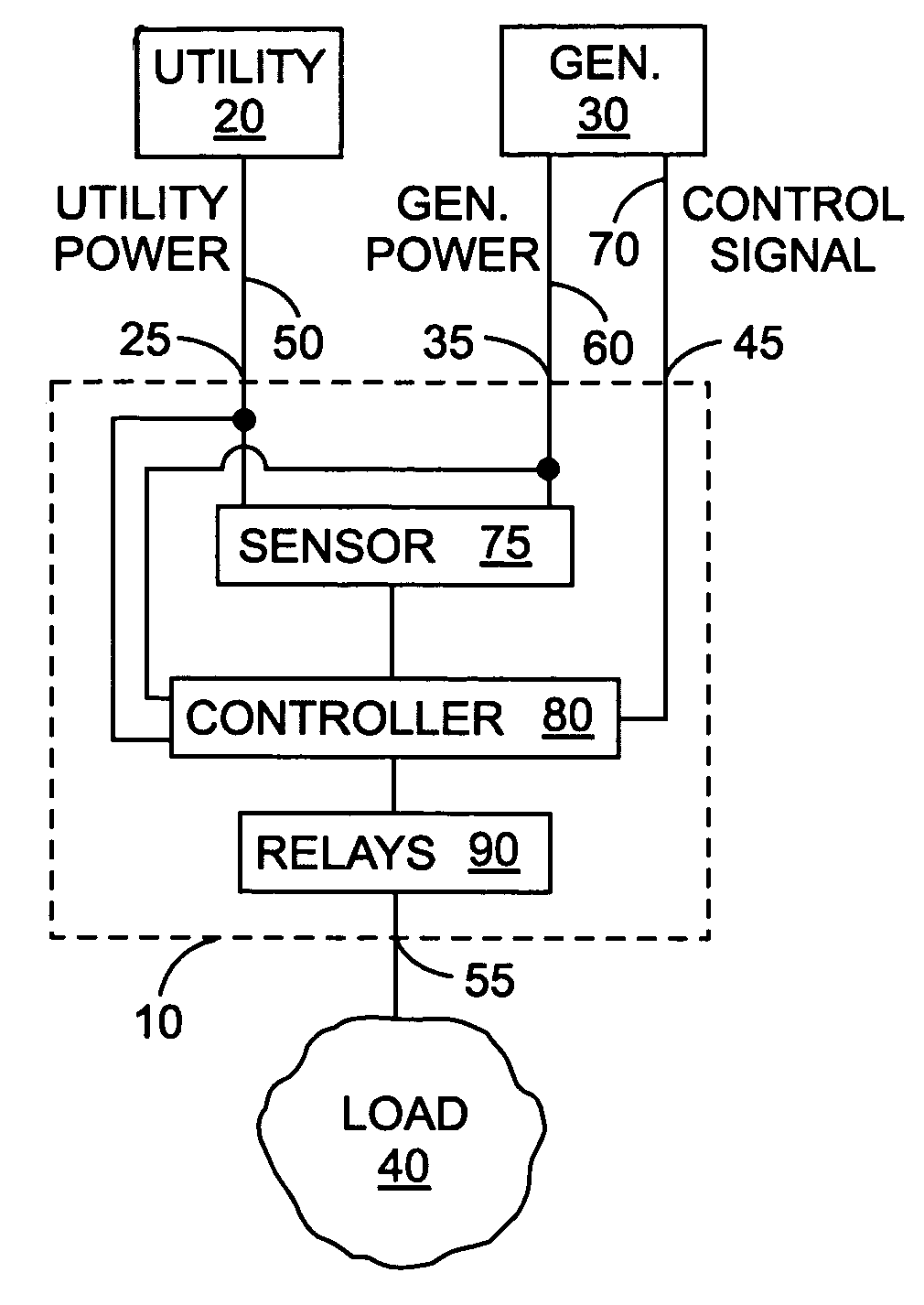
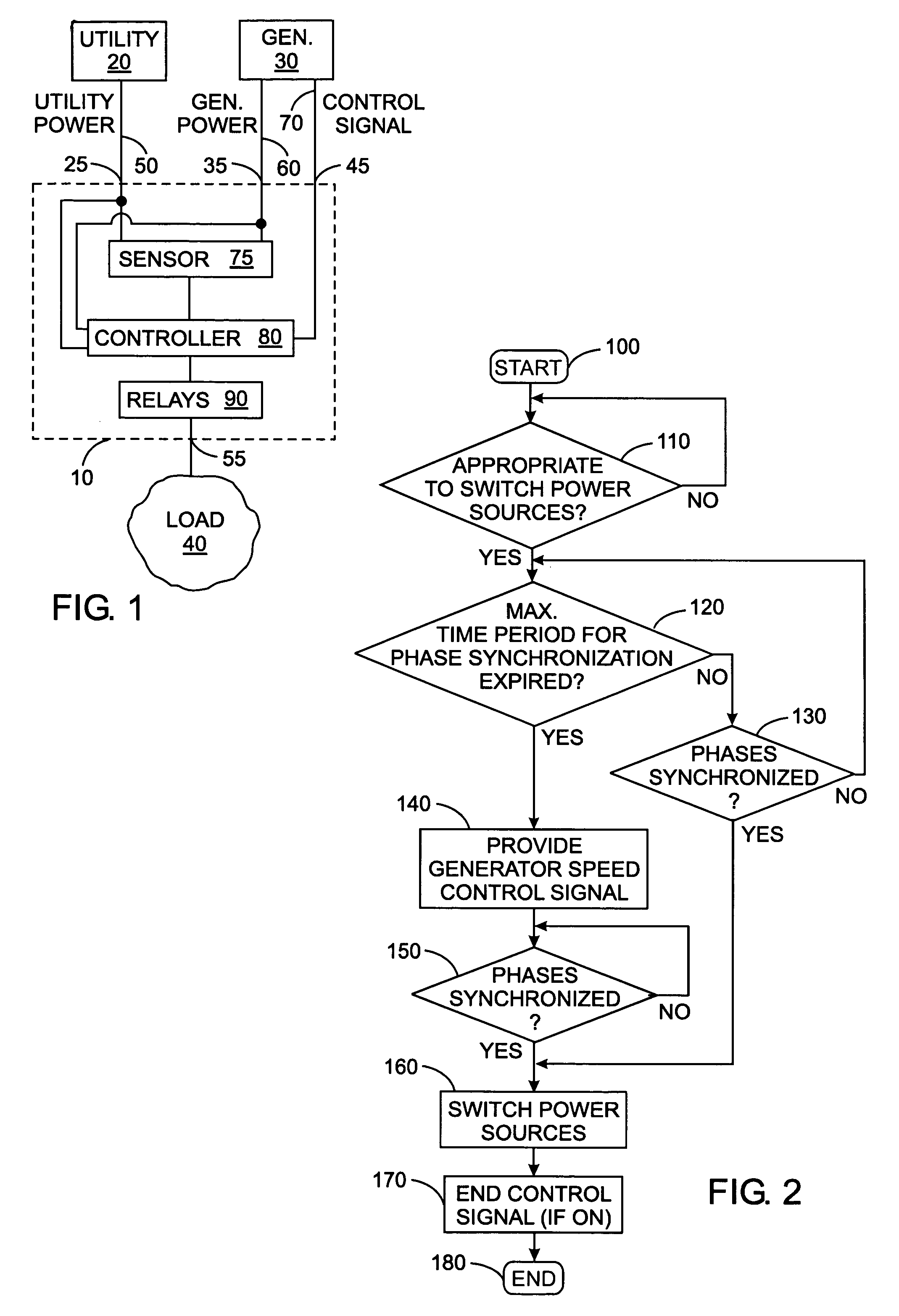
- An ATS system that includes a sensing device to monitor phase synchronization between power sources, a control device to generate a speed control signal for the generator if synchronization is delayed, allowing the generator to adjust its frequency and synchronize with the utility power source more rapidly.
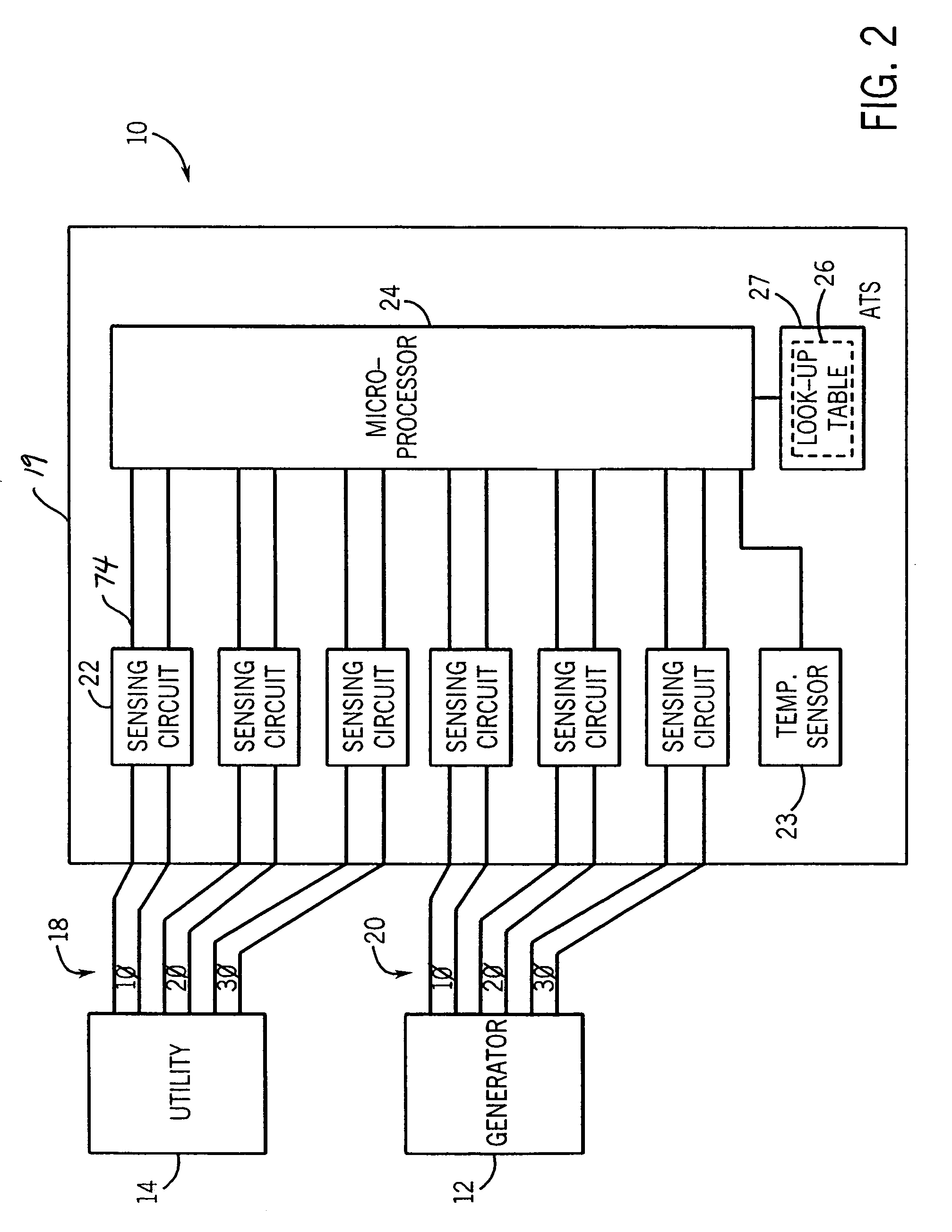
Method and apparatus for sensing voltage in an automatic transfer switch system
PatentInactiveUS7157811B2
Innovation
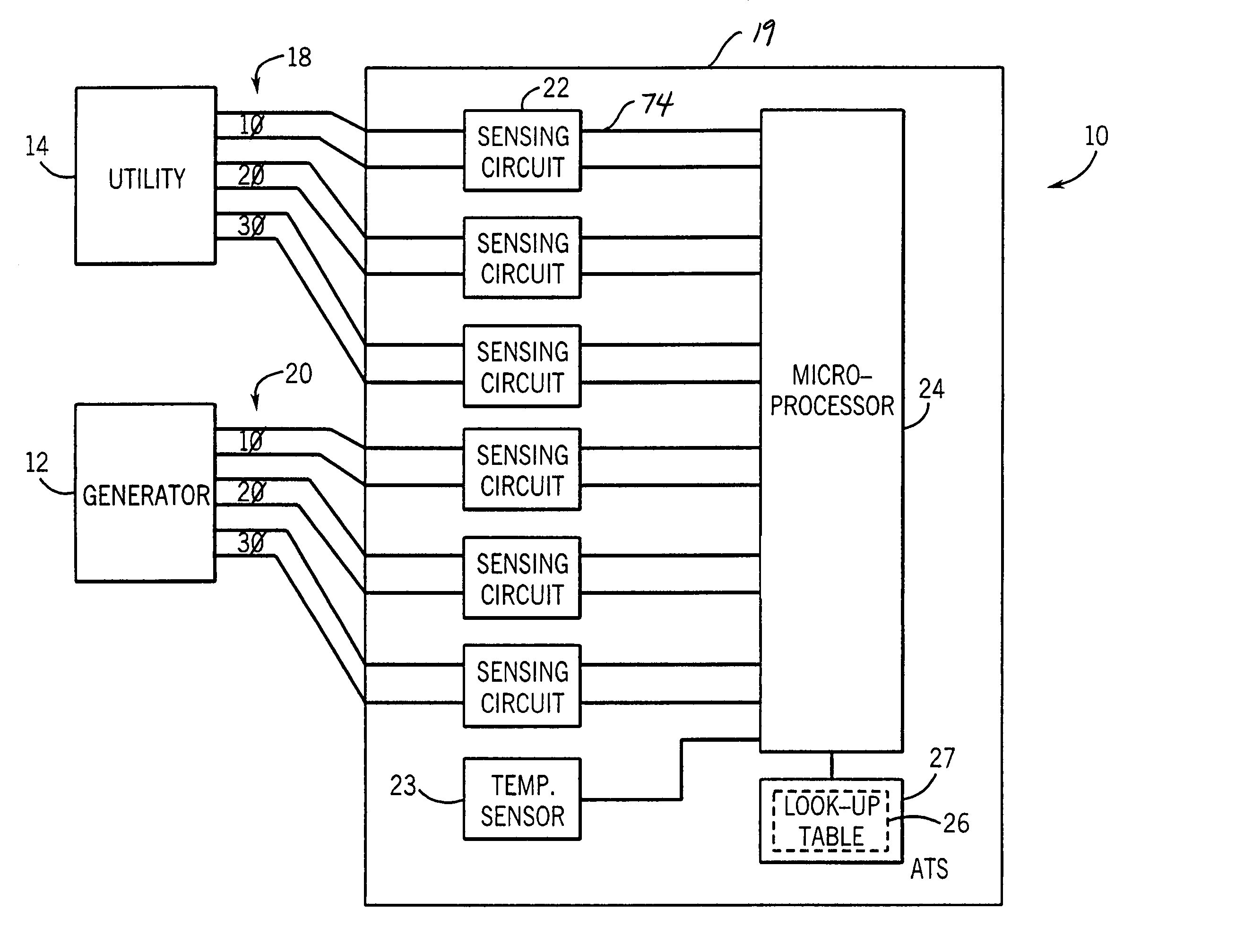
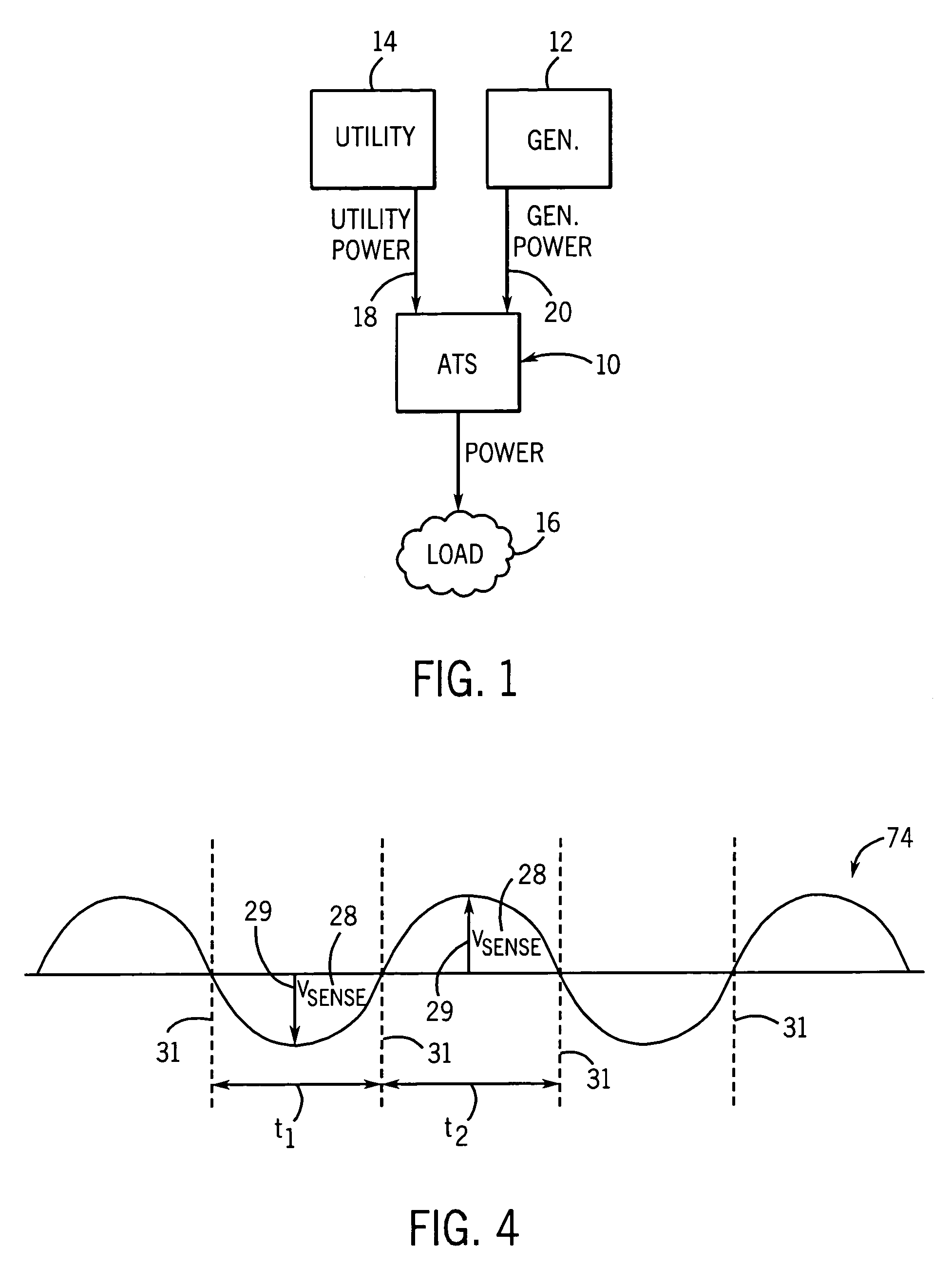
- The implementation of high frequency line matching transformers operating between 200–4 kHz, coupled with a processing unit and temperature sensor, allows for accurate voltage sensing and switching between AC power sources, using a look-up table or empirically-derived equations to determine actual voltage levels, reducing system size and cost.

Grid Code Compliance and Standards
Validating ATS performance during generator frequency drift necessitates strict adherence to grid code compliance and relevant international standards. Grid codes establish the technical requirements that distributed generation systems and automatic transfer switches must satisfy to ensure safe and reliable operation during abnormal frequency conditions. These regulatory frameworks vary across regions but share common objectives of maintaining grid stability and protecting both utility infrastructure and end-user equipment.
IEEE 1547 series standards provide comprehensive guidelines for interconnecting distributed energy resources with electric power systems, specifically addressing frequency ride-through capabilities and islanding detection requirements. The standard mandates that ATS systems must respond appropriately to frequency deviations beyond normal operating ranges, typically 59.3-60.5 Hz for 60 Hz systems and 49.5-50.5 Hz for 50 Hz systems. During generator frequency drift scenarios, compliance requires that the ATS neither disconnects prematurely nor remains connected when frequency excursions exceed permissible limits.
IEC 61000 series standards address electromagnetic compatibility and power quality aspects relevant to ATS operation during frequency transients. These standards define acceptable voltage and frequency variation tolerances that equipment must withstand without malfunction. Compliance verification involves demonstrating that the ATS maintains proper synchronization detection and transfer logic throughout the frequency drift event, preventing out-of-phase transfers that could damage connected loads or generation equipment.
Regional grid codes such as NERC standards in North America, European Network Codes, and national regulations in various jurisdictions impose additional requirements for frequency response characteristics. These may include specific time-delay settings, frequency gradient thresholds, and coordination requirements with upstream protective devices. Validation testing must demonstrate conformance with applicable local codes while ensuring the ATS performs its fundamental function of providing continuous power supply during utility disturbances.
Certification bodies such as UL, CSA, and TÜV provide third-party verification that ATS designs meet applicable standards. However, field validation remains essential to confirm performance under actual operating conditions where generator characteristics, load dynamics, and system impedances may differ from laboratory test environments.
IEEE 1547 series standards provide comprehensive guidelines for interconnecting distributed energy resources with electric power systems, specifically addressing frequency ride-through capabilities and islanding detection requirements. The standard mandates that ATS systems must respond appropriately to frequency deviations beyond normal operating ranges, typically 59.3-60.5 Hz for 60 Hz systems and 49.5-50.5 Hz for 50 Hz systems. During generator frequency drift scenarios, compliance requires that the ATS neither disconnects prematurely nor remains connected when frequency excursions exceed permissible limits.
IEC 61000 series standards address electromagnetic compatibility and power quality aspects relevant to ATS operation during frequency transients. These standards define acceptable voltage and frequency variation tolerances that equipment must withstand without malfunction. Compliance verification involves demonstrating that the ATS maintains proper synchronization detection and transfer logic throughout the frequency drift event, preventing out-of-phase transfers that could damage connected loads or generation equipment.
Regional grid codes such as NERC standards in North America, European Network Codes, and national regulations in various jurisdictions impose additional requirements for frequency response characteristics. These may include specific time-delay settings, frequency gradient thresholds, and coordination requirements with upstream protective devices. Validation testing must demonstrate conformance with applicable local codes while ensuring the ATS performs its fundamental function of providing continuous power supply during utility disturbances.
Certification bodies such as UL, CSA, and TÜV provide third-party verification that ATS designs meet applicable standards. However, field validation remains essential to confirm performance under actual operating conditions where generator characteristics, load dynamics, and system impedances may differ from laboratory test environments.
Real-time Monitoring and Diagnostic Methods
Real-time monitoring and diagnostic methods are essential for validating ATS performance during generator frequency drift scenarios, as they enable immediate detection of anomalies and facilitate rapid response to prevent system failures. Advanced monitoring systems typically employ multi-layered sensor networks that continuously track critical parameters including frequency deviation rates, voltage fluctuations, phase angle variations, and switching response times. These sensors must operate with millisecond-level precision to capture transient events that occur during frequency drift conditions, ensuring comprehensive data collection across all operational states.
Modern diagnostic frameworks integrate sophisticated signal processing algorithms that analyze frequency drift patterns in real-time, distinguishing between normal operational variations and potentially hazardous conditions. Digital signal processors equipped with Fast Fourier Transform capabilities enable spectral analysis of frequency components, while wavelet transform techniques provide time-frequency domain insights into transient behaviors. Machine learning algorithms are increasingly deployed to establish baseline performance profiles and identify deviations that may indicate degraded ATS functionality or impending failures.
Communication protocols play a crucial role in real-time monitoring architectures, with industrial Ethernet standards such as IEC 61850 and Modbus TCP facilitating high-speed data transmission between field devices and central monitoring stations. Cloud-based platforms enable remote diagnostics and predictive maintenance capabilities, allowing engineers to access performance data and conduct analysis from any location. Edge computing solutions reduce latency by processing critical diagnostic algorithms locally, ensuring that time-sensitive decisions can be executed without dependency on network connectivity.
Visualization tools provide operators with intuitive dashboards displaying frequency drift trajectories, ATS response characteristics, and system health indicators through color-coded alerts and trend graphs. Historical data logging capabilities support post-event analysis and compliance documentation, while automated reporting functions generate performance summaries that facilitate continuous improvement initiatives. Integration with building management systems ensures coordinated responses across multiple subsystems during frequency disturbance events.
Modern diagnostic frameworks integrate sophisticated signal processing algorithms that analyze frequency drift patterns in real-time, distinguishing between normal operational variations and potentially hazardous conditions. Digital signal processors equipped with Fast Fourier Transform capabilities enable spectral analysis of frequency components, while wavelet transform techniques provide time-frequency domain insights into transient behaviors. Machine learning algorithms are increasingly deployed to establish baseline performance profiles and identify deviations that may indicate degraded ATS functionality or impending failures.
Communication protocols play a crucial role in real-time monitoring architectures, with industrial Ethernet standards such as IEC 61850 and Modbus TCP facilitating high-speed data transmission between field devices and central monitoring stations. Cloud-based platforms enable remote diagnostics and predictive maintenance capabilities, allowing engineers to access performance data and conduct analysis from any location. Edge computing solutions reduce latency by processing critical diagnostic algorithms locally, ensuring that time-sensitive decisions can be executed without dependency on network connectivity.
Visualization tools provide operators with intuitive dashboards displaying frequency drift trajectories, ATS response characteristics, and system health indicators through color-coded alerts and trend graphs. Historical data logging capabilities support post-event analysis and compliance documentation, while automated reporting functions generate performance summaries that facilitate continuous improvement initiatives. Integration with building management systems ensures coordinated responses across multiple subsystems during frequency disturbance events.
Unlock deeper insights with Patsnap Eureka Quick Research — get a full tech report to explore trends and direct your research. Try now!
Generate Your Research Report Instantly with AI Agent
Supercharge your innovation with Patsnap Eureka AI Agent Platform!