

Validate Electrostatic Painting Masking For Critical Interfaces
AUG 13, 20269 MIN READ
Generate Your Research Report Instantly with AI Agent
Patsnap Eureka helps you evaluate technical feasibility & market potential.
Electrostatic Painting Masking Background and Objectives
Electrostatic painting has emerged as a dominant coating technology in manufacturing industries since its commercial introduction in the 1960s. This process leverages electrostatic forces to attract charged paint particles to grounded conductive surfaces, achieving superior transfer efficiency, uniform coverage, and reduced material waste compared to conventional spray methods. The technology has become particularly critical in automotive, aerospace, and industrial equipment manufacturing where high-quality surface finishes are essential for both aesthetic appeal and corrosion protection.
However, the inherent nature of electrostatic attraction presents significant challenges when coating complex assemblies containing critical interfaces that must remain paint-free. These interfaces include precision-machined mating surfaces, threaded connections, electrical contact points, bearing surfaces, and sealing areas where even microscopic paint contamination can compromise functional performance, dimensional tolerances, or assembly integrity. Traditional masking solutions often prove inadequate under electrostatic conditions, as charged paint particles can wrap around conventional masks or penetrate through gaps due to the Faraday cage effect and electrostatic field lines.
The primary objective of this technical investigation is to systematically validate effective masking methodologies specifically designed for electrostatic painting environments. This involves identifying masking materials, configurations, and application techniques that can reliably protect critical interfaces from paint deposition while maintaining production efficiency and cost-effectiveness. The validation process must address multiple technical dimensions including electrostatic shielding effectiveness, adhesion reliability under paint booth conditions, ease of application and removal, and compatibility with various substrate materials and geometries.
Furthermore, this research aims to establish quantifiable performance criteria and testing protocols that can objectively assess masking solution effectiveness. These criteria encompass paint edge definition sharpness, contamination levels on protected surfaces, masking material residue characteristics, and durability across multiple production cycles. The ultimate goal is to develop validated masking strategies that enable manufacturers to confidently apply electrostatic painting to increasingly complex assemblies without compromising the integrity of critical functional interfaces, thereby expanding the applicability and economic benefits of this efficient coating technology.
However, the inherent nature of electrostatic attraction presents significant challenges when coating complex assemblies containing critical interfaces that must remain paint-free. These interfaces include precision-machined mating surfaces, threaded connections, electrical contact points, bearing surfaces, and sealing areas where even microscopic paint contamination can compromise functional performance, dimensional tolerances, or assembly integrity. Traditional masking solutions often prove inadequate under electrostatic conditions, as charged paint particles can wrap around conventional masks or penetrate through gaps due to the Faraday cage effect and electrostatic field lines.
The primary objective of this technical investigation is to systematically validate effective masking methodologies specifically designed for electrostatic painting environments. This involves identifying masking materials, configurations, and application techniques that can reliably protect critical interfaces from paint deposition while maintaining production efficiency and cost-effectiveness. The validation process must address multiple technical dimensions including electrostatic shielding effectiveness, adhesion reliability under paint booth conditions, ease of application and removal, and compatibility with various substrate materials and geometries.
Furthermore, this research aims to establish quantifiable performance criteria and testing protocols that can objectively assess masking solution effectiveness. These criteria encompass paint edge definition sharpness, contamination levels on protected surfaces, masking material residue characteristics, and durability across multiple production cycles. The ultimate goal is to develop validated masking strategies that enable manufacturers to confidently apply electrostatic painting to increasingly complex assemblies without compromising the integrity of critical functional interfaces, thereby expanding the applicability and economic benefits of this efficient coating technology.
Market Demand for Critical Interface Protection Solutions
The automotive and industrial manufacturing sectors are experiencing intensified demand for advanced surface protection solutions during electrostatic painting processes. Critical interfaces such as threaded connections, precision mating surfaces, electrical contacts, and sealing areas require absolute protection from paint contamination to maintain functional integrity and assembly accuracy. Traditional masking methods including tapes, plugs, and caps often prove inadequate for complex geometries and high-volume production environments, driving manufacturers to seek more reliable and cost-effective alternatives.
Automotive manufacturers face particular pressure as vehicle electrification accelerates and production volumes increase. Battery enclosures, electric motor housings, and power electronics assemblies contain numerous critical interfaces where even microscopic paint intrusion can compromise electrical conductivity, thermal management, or structural integrity. The shift toward aluminum and mixed-material construction further complicates masking requirements, as these substrates demand specialized surface preparation and protection strategies that conventional methods struggle to address consistently.
Industrial equipment manufacturers encounter similar challenges across diverse applications including aerospace components, heavy machinery, and precision instruments. Regulatory requirements for corrosion resistance and aesthetic quality necessitate complete paint coverage on external surfaces while simultaneously protecting internal interfaces. The economic impact of rework, warranty claims, and production delays caused by inadequate masking creates substantial financial incentives for improved solutions. Quality control data indicates that interface contamination remains a persistent source of assembly defects and field failures across multiple industries.
Emerging market segments including renewable energy equipment, medical devices, and consumer electronics are introducing new masking requirements as these products increasingly incorporate painted metal components with demanding interface specifications. The convergence of aesthetic expectations, functional performance requirements, and cost pressures is expanding the addressable market for validated electrostatic painting masking solutions. Manufacturers are actively seeking technologies that can demonstrate repeatable protection performance, reduce labor intensity, minimize material waste, and integrate seamlessly with existing production workflows while meeting stringent quality standards.
Automotive manufacturers face particular pressure as vehicle electrification accelerates and production volumes increase. Battery enclosures, electric motor housings, and power electronics assemblies contain numerous critical interfaces where even microscopic paint intrusion can compromise electrical conductivity, thermal management, or structural integrity. The shift toward aluminum and mixed-material construction further complicates masking requirements, as these substrates demand specialized surface preparation and protection strategies that conventional methods struggle to address consistently.
Industrial equipment manufacturers encounter similar challenges across diverse applications including aerospace components, heavy machinery, and precision instruments. Regulatory requirements for corrosion resistance and aesthetic quality necessitate complete paint coverage on external surfaces while simultaneously protecting internal interfaces. The economic impact of rework, warranty claims, and production delays caused by inadequate masking creates substantial financial incentives for improved solutions. Quality control data indicates that interface contamination remains a persistent source of assembly defects and field failures across multiple industries.
Emerging market segments including renewable energy equipment, medical devices, and consumer electronics are introducing new masking requirements as these products increasingly incorporate painted metal components with demanding interface specifications. The convergence of aesthetic expectations, functional performance requirements, and cost pressures is expanding the addressable market for validated electrostatic painting masking solutions. Manufacturers are actively seeking technologies that can demonstrate repeatable protection performance, reduce labor intensity, minimize material waste, and integrate seamlessly with existing production workflows while meeting stringent quality standards.
Current Masking Technology Status and Interface Challenges
Electrostatic painting has become a dominant finishing technology across automotive, aerospace, and industrial manufacturing sectors due to its superior transfer efficiency, uniform coating distribution, and environmental benefits. However, the process presents significant challenges when applied to components with critical interfaces that require protection from paint deposition. Current masking technologies must balance the dual requirements of providing complete protection during high-voltage electrostatic application while maintaining dimensional accuracy and ease of removal without damaging substrate surfaces.
Traditional masking approaches for electrostatic painting primarily include mechanical plugs, caps, tapes, and liquid maskants. Mechanical masking solutions such as silicone or rubber plugs offer reusability and dimensional stability but face limitations in complex geometries and threaded interfaces where precise fit is essential. These solutions often struggle with paint creep along edges due to electrostatic field concentration at interface boundaries. Adhesive tapes provide flexibility for irregular surfaces but present challenges including residue contamination, adhesive degradation under paint booth temperatures, and inconsistent edge sealing that allows paint penetration through capillary action.
Liquid maskants represent an alternative approach, offering conformability to complex geometries through spray or dip application. However, these materials introduce process complexity through additional curing steps, potential compatibility issues with subsequent assembly operations, and difficulties in achieving uniform thickness control. The removal process often requires chemical strippers or mechanical peeling, which risks damaging critical interface surfaces and introduces additional quality control requirements.
The fundamental challenge in masking critical interfaces during electrostatic painting stems from the behavior of charged paint particles in electric fields. Paint particles follow field lines and concentrate at edges, corners, and interface gaps, creating wrap-around effects that compromise masking effectiveness. This phenomenon is particularly problematic for precision interfaces such as bearing surfaces, sealing faces, electrical contacts, and threaded connections where even minimal paint contamination can affect functionality, dimensional tolerances, or subsequent assembly operations.
Current industry practice reveals significant variation in masking effectiveness across different interface types and geometries. Flat sealing surfaces generally achieve adequate protection with properly applied tape systems, while complex three-dimensional interfaces, deep recesses, and micro-threaded features continue to present reliability concerns. Quality control data indicates that masking failures account for substantial rework costs, with rejection rates varying from two to fifteen percent depending on component complexity and interface criticality.
Traditional masking approaches for electrostatic painting primarily include mechanical plugs, caps, tapes, and liquid maskants. Mechanical masking solutions such as silicone or rubber plugs offer reusability and dimensional stability but face limitations in complex geometries and threaded interfaces where precise fit is essential. These solutions often struggle with paint creep along edges due to electrostatic field concentration at interface boundaries. Adhesive tapes provide flexibility for irregular surfaces but present challenges including residue contamination, adhesive degradation under paint booth temperatures, and inconsistent edge sealing that allows paint penetration through capillary action.
Liquid maskants represent an alternative approach, offering conformability to complex geometries through spray or dip application. However, these materials introduce process complexity through additional curing steps, potential compatibility issues with subsequent assembly operations, and difficulties in achieving uniform thickness control. The removal process often requires chemical strippers or mechanical peeling, which risks damaging critical interface surfaces and introduces additional quality control requirements.
The fundamental challenge in masking critical interfaces during electrostatic painting stems from the behavior of charged paint particles in electric fields. Paint particles follow field lines and concentrate at edges, corners, and interface gaps, creating wrap-around effects that compromise masking effectiveness. This phenomenon is particularly problematic for precision interfaces such as bearing surfaces, sealing faces, electrical contacts, and threaded connections where even minimal paint contamination can affect functionality, dimensional tolerances, or subsequent assembly operations.
Current industry practice reveals significant variation in masking effectiveness across different interface types and geometries. Flat sealing surfaces generally achieve adequate protection with properly applied tape systems, while complex three-dimensional interfaces, deep recesses, and micro-threaded features continue to present reliability concerns. Quality control data indicates that masking failures account for substantial rework costs, with rejection rates varying from two to fifteen percent depending on component complexity and interface criticality.
Existing Masking Solutions for Critical Interface Validation
01 Masking materials and compositions for electrostatic painting
Specialized masking materials are designed to withstand electrostatic painting processes while preventing paint deposition on protected areas. These materials typically feature properties such as electrical conductivity or insulation, adhesion resistance to paint particles, and easy removability after painting. The compositions may include polymeric films, tapes, or coatings that can effectively block charged paint particles during electrostatic application.- Masking materials and compositions for electrostatic painting: Specialized masking materials are designed to withstand electrostatic painting processes while preventing paint deposition on protected areas. These materials typically feature properties such as electrical conductivity or insulation, adhesion resistance to paint particles, and easy removability after painting. The compositions may include polymeric films, tapes, or coatings specifically formulated to resist electrostatic attraction of paint particles while maintaining dimensional stability during the painting process.
- Masking devices and fixtures for automotive components: Reusable masking fixtures and devices are employed to protect specific areas of automotive parts during electrostatic painting operations. These devices are designed with conductive or non-conductive properties to control paint deposition patterns. The fixtures typically feature precise geometries that conform to component surfaces, ensuring consistent masking results across multiple painting cycles. They may incorporate quick-release mechanisms for efficient installation and removal.
- Validation methods and quality control systems: Systematic validation approaches are implemented to verify the effectiveness of masking in electrostatic painting processes. These methods include visual inspection protocols, measurement techniques for paint thickness on masked versus unmasked areas, and automated detection systems. Quality control procedures may involve statistical sampling, defect analysis, and documentation of masking performance to ensure consistent production standards and identify areas requiring process improvement.
- Electrostatic painting process optimization with masking: Process parameters are optimized to achieve effective masking during electrostatic painting operations. This includes controlling voltage levels, paint flow rates, and spray patterns to minimize paint wrap-around onto masked areas. The optimization considers the interaction between electrostatic fields and masking materials, adjusting process conditions to maintain sharp paint boundaries. Techniques may involve modifying booth configurations, grounding strategies, and application equipment settings.
- Automated masking and demasking systems: Automated systems are developed for applying and removing masking materials in electrostatic painting lines to improve efficiency and consistency. These systems may include robotic applicators, programmable masking dispensers, and automated removal mechanisms that reduce manual labor and human error. The automation integrates with production line controls to synchronize masking operations with painting cycles, ensuring proper coverage and minimizing production downtime.
02 Validation methods for masking effectiveness
Testing and validation procedures are employed to ensure masking materials perform adequately in electrostatic painting environments. These methods involve evaluating the masking's ability to prevent paint penetration, assessing edge definition quality, and measuring paint thickness variations at masked boundaries. Validation may include visual inspection, measurement techniques, and quality control protocols to verify that masked areas remain paint-free and meet specified standards.Expand Specific Solutions03 Automated masking application and removal systems
Automated systems facilitate the precise application and removal of masking materials in electrostatic painting operations. These systems may incorporate robotic mechanisms, positioning devices, and control systems to ensure consistent masking placement and efficient removal without damaging the painted surface. Automation improves repeatability, reduces labor costs, and minimizes human error in masking operations.Expand Specific Solutions04 Conductive and non-conductive masking techniques
Different masking approaches utilize either conductive or non-conductive materials depending on the specific requirements of the electrostatic painting process. Conductive masking can help control the electric field distribution and prevent paint wrap-around effects, while non-conductive masking provides insulation to completely block paint deposition. The selection between these techniques depends on factors such as part geometry, paint type, and desired finish quality.Expand Specific Solutions05 Quality inspection and defect detection in masked areas
Inspection systems and methods are implemented to detect defects and validate the quality of masking in electrostatic painting processes. These may include optical inspection, imaging systems, or sensor-based detection to identify paint bleed-through, incomplete masking coverage, or adhesion failures. Quality control measures ensure that masked areas meet specifications and that any defects are identified before final product acceptance.Expand Specific Solutions
Key Players in Industrial Coating and Masking Systems
The electrostatic painting masking technology for critical interfaces operates within a mature industrial finishing sector, primarily serving automotive, aerospace, and electronics manufacturing markets. The competitive landscape spans from established coating equipment manufacturers like Dürr Systems and Carlisle Fluid Technologies to semiconductor giants including Samsung Electronics, TSMC, and Intel who require precision masking solutions for advanced manufacturing processes. Technology maturity varies significantly across applications, with automotive electrostatic painting representing well-established processes, while semiconductor and precision electronics applications demand cutting-edge masking innovations. Key players like Applied Materials, 3M Innovative Properties, and specialized firms such as Wuxi Zhonglian Electronic Equipment and Guangzhou Lynn Electrostatic Technology drive advancement in electrostatic application techniques and masking materials. The market demonstrates steady growth driven by increasing demand for high-quality surface finishing, environmental regulations favoring electrostatic methods, and expanding applications in emerging technologies requiring precise interface protection during coating processes.
3M Innovative Properties Co.
Technical Solution: 3M develops specialized masking materials and validation methodologies specifically designed for electrostatic painting of critical interfaces. Their product portfolio includes high-temperature resistant masking tapes, conformable films, and liquid masking compounds that withstand electrostatic charging without breakdown[13][15]. The technology features proprietary adhesive formulations that provide clean removal without residue on precision surfaces such as gasket seating areas, optical interfaces, and electronic connectors. Their validation approach incorporates standardized test protocols including dielectric strength testing, paint edge definition measurements, and adhesive residue analysis using spectroscopic methods[14][16]. The masking materials are engineered with controlled surface resistivity to prevent electrostatic charge accumulation that could cause paint wrap-around or corona discharge damage to sensitive components during the coating process.
Strengths: Wide material selection for diverse applications, excellent conformability to complex geometries, and strong quality consistency. Weaknesses: Requires skilled application techniques for optimal performance and may have longer lead times for custom material specifications.
Dürr Systems GmbH
Technical Solution: Dürr Systems specializes in advanced electrostatic painting technologies with comprehensive masking solutions for critical interfaces. Their systems employ precision masking techniques using specialized fixtures, tapes, and plugs designed to protect sensitive areas during electrostatic coating processes[1][4]. The technology integrates automated masking application systems that ensure consistent coverage of critical interfaces such as mounting points, electrical contacts, and precision-machined surfaces. Their electrostatic painting booths feature controlled environment parameters including humidity and temperature regulation to optimize paint adhesion while preventing overspray on masked areas[2][5]. The validation process includes pre-production testing protocols, adhesion testing on non-masked areas, and inspection procedures to verify complete protection of critical interfaces throughout the painting cycle.
Strengths: Industry-leading automation capabilities, comprehensive validation protocols, and extensive experience in automotive and industrial applications. Weaknesses: High initial capital investment requirements and complex system integration for specialized applications.
Core Technologies in Electrostatic Masking Validation
Antistatically conductive masking film for electrostatic spray painting
PatentInactiveUS5096761A
Innovation
- Development of antistatically conductive masking films comprising a polymer with carboxylic acid moieties and a quaternary amine, or a polyolefin with a particulate conductive filler, which can be grounded to prevent static buildup and ensure smooth electrostatic spray painting.
Method of painting a plastic work piece using an electrostatically isolated mask
PatentInactiveUS20170136491A1
Innovation
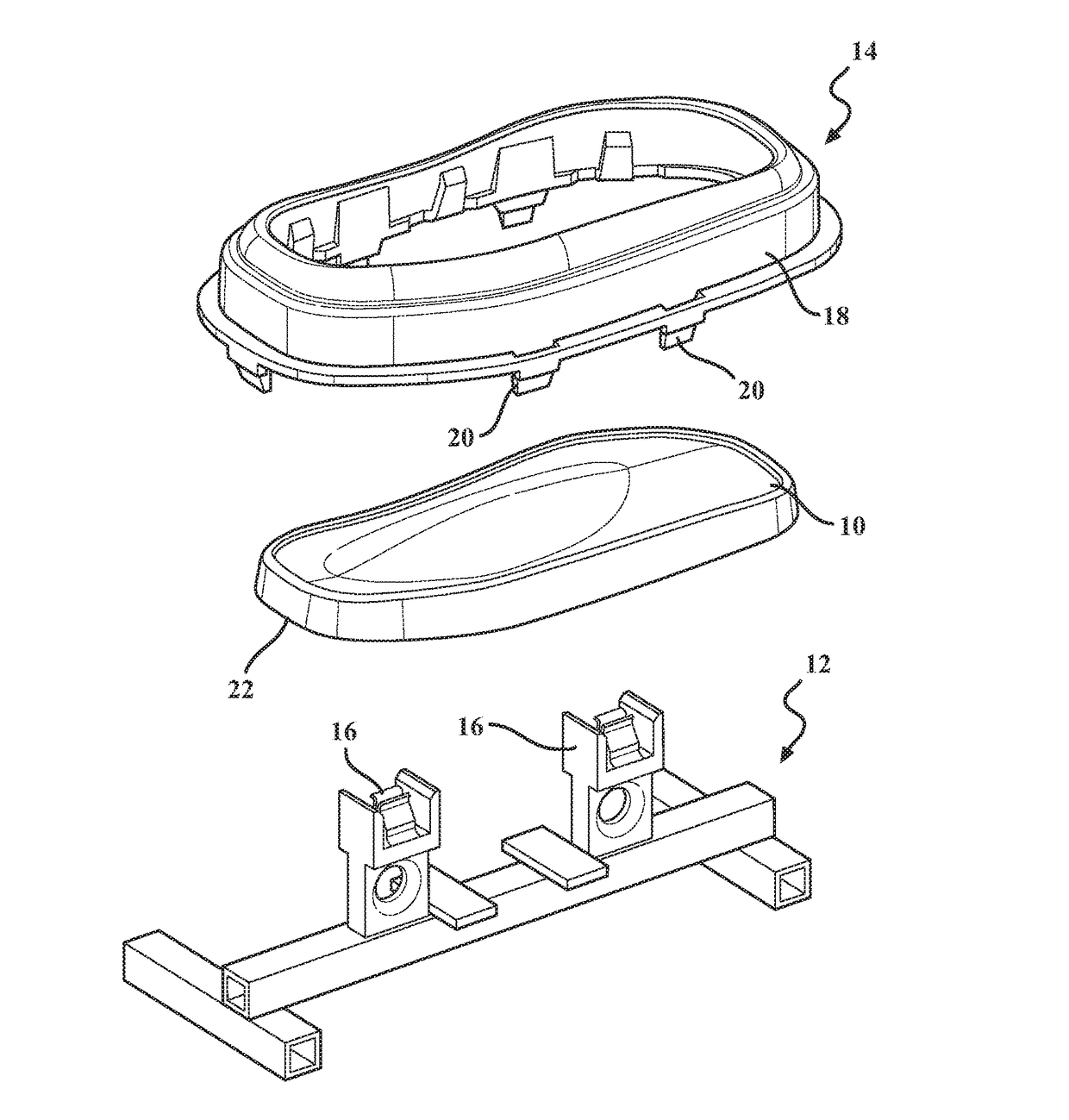
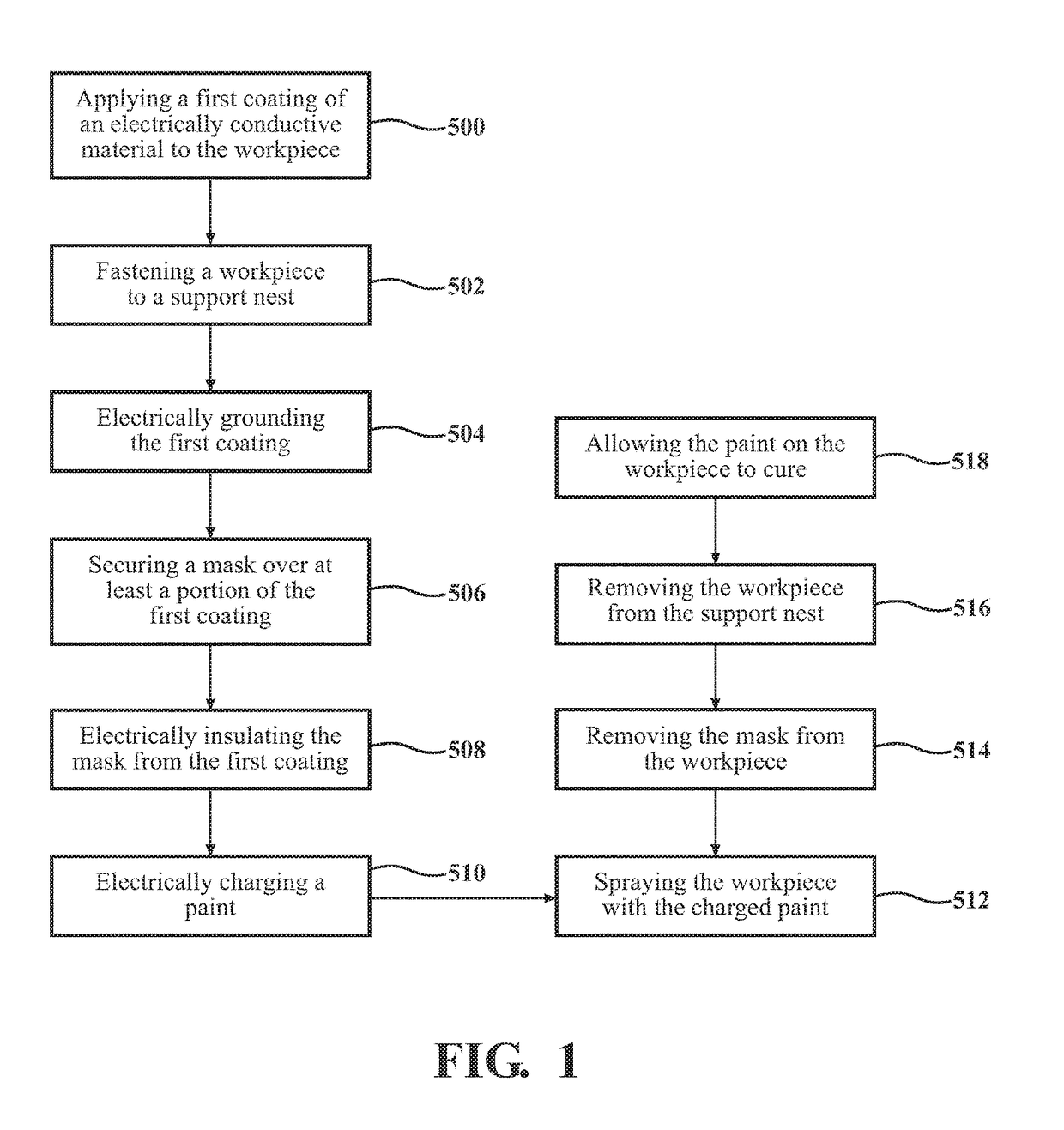
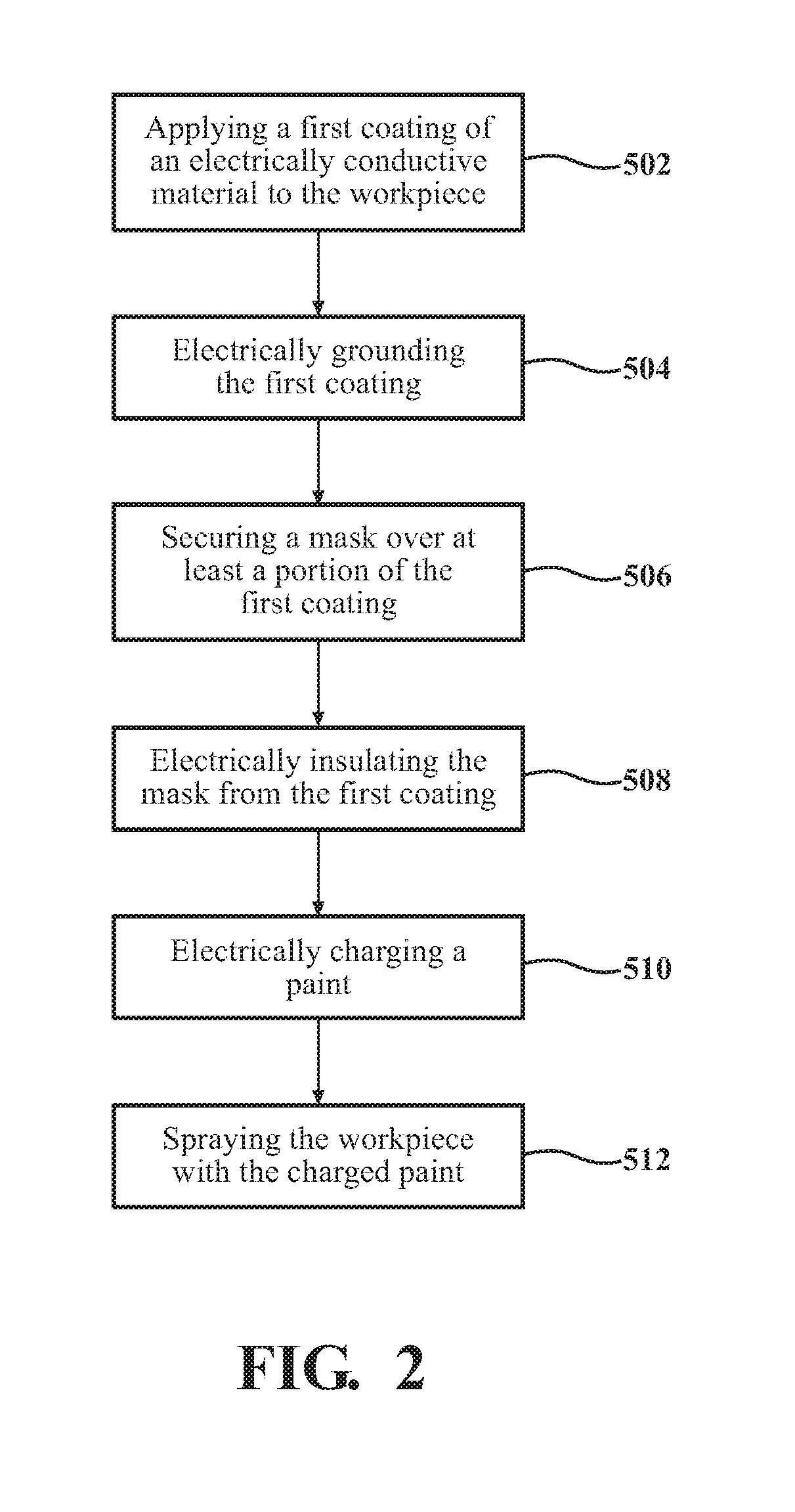
- Applying a conductive coating to the plastic work piece, grounding it, and using an electrically insulated non-conductive mask to direct electrostatically charged paint only to the work piece, thereby increasing paint transfer efficiency and achieving a cleaner, more precise two-tone finish.

Quality Standards and Validation Protocols
Establishing robust quality standards for electrostatic painting masking validation requires adherence to internationally recognized frameworks and industry-specific benchmarks. The validation process must align with ISO 9001 quality management principles and automotive industry standards such as IATF 16949, which mandate systematic approaches to process validation and control. For aerospace applications, AS9100 standards provide additional requirements for critical interface protection, emphasizing traceability and documentation throughout the masking and painting processes. These standards form the foundation for developing comprehensive validation protocols that ensure consistent performance across production environments.
Validation protocols must incorporate multiple assessment layers to verify masking effectiveness at critical interfaces. Initial qualification testing should include adhesion strength measurements using standardized pull-off tests, typically requiring minimum adhesion values of 0.5-1.0 MPa for temporary masking materials. Dimensional accuracy verification ensures masked areas maintain tolerances within ±0.1mm for precision interfaces. Paint edge definition quality must be assessed through microscopic examination, with acceptance criteria limiting paint bleed or overspray to less than 0.5mm beyond masked boundaries. Environmental resistance testing validates masking integrity under typical painting conditions, including exposure to temperatures up to 200°C and humidity levels exceeding 85% relative humidity.
Statistical process control methods should be integrated into validation protocols to ensure ongoing compliance and early detection of deviations. Implementing capability indices such as Cpk values greater than 1.33 demonstrates process stability and predictability. Sampling plans following ANSI/ASQ Z1.4 standards provide statistically valid inspection frequencies, typically requiring 100% inspection during initial validation phases, transitioning to reduced sampling once process capability is established. Real-time monitoring systems utilizing vision inspection technology can automate defect detection, achieving detection rates exceeding 99.5% for critical masking failures.
Documentation requirements constitute a critical component of validation protocols, ensuring traceability and regulatory compliance. Validation master plans must define acceptance criteria, test methodologies, equipment calibration schedules, and personnel qualification requirements. Installation Qualification, Operational Qualification, and Performance Qualification protocols systematically verify equipment capability, process parameters, and sustained performance over extended production runs. Periodic revalidation intervals, typically conducted annually or following significant process changes, maintain validation status and adapt to evolving quality requirements. This comprehensive approach ensures electrostatic painting masking processes consistently meet stringent quality standards while supporting continuous improvement initiatives.
Validation protocols must incorporate multiple assessment layers to verify masking effectiveness at critical interfaces. Initial qualification testing should include adhesion strength measurements using standardized pull-off tests, typically requiring minimum adhesion values of 0.5-1.0 MPa for temporary masking materials. Dimensional accuracy verification ensures masked areas maintain tolerances within ±0.1mm for precision interfaces. Paint edge definition quality must be assessed through microscopic examination, with acceptance criteria limiting paint bleed or overspray to less than 0.5mm beyond masked boundaries. Environmental resistance testing validates masking integrity under typical painting conditions, including exposure to temperatures up to 200°C and humidity levels exceeding 85% relative humidity.
Statistical process control methods should be integrated into validation protocols to ensure ongoing compliance and early detection of deviations. Implementing capability indices such as Cpk values greater than 1.33 demonstrates process stability and predictability. Sampling plans following ANSI/ASQ Z1.4 standards provide statistically valid inspection frequencies, typically requiring 100% inspection during initial validation phases, transitioning to reduced sampling once process capability is established. Real-time monitoring systems utilizing vision inspection technology can automate defect detection, achieving detection rates exceeding 99.5% for critical masking failures.
Documentation requirements constitute a critical component of validation protocols, ensuring traceability and regulatory compliance. Validation master plans must define acceptance criteria, test methodologies, equipment calibration schedules, and personnel qualification requirements. Installation Qualification, Operational Qualification, and Performance Qualification protocols systematically verify equipment capability, process parameters, and sustained performance over extended production runs. Periodic revalidation intervals, typically conducted annually or following significant process changes, maintain validation status and adapt to evolving quality requirements. This comprehensive approach ensures electrostatic painting masking processes consistently meet stringent quality standards while supporting continuous improvement initiatives.
Cost-Benefit Analysis of Masking Technologies
The economic evaluation of masking technologies for electrostatic painting applications requires comprehensive assessment of both direct and indirect cost factors against anticipated benefits. Initial capital investment varies significantly across masking solutions, with traditional tape and paper methods requiring minimal upfront expenditure, while precision-engineered silicone caps and custom fixtures demand substantial initial outlays ranging from moderate tooling costs to significant automated system investments. However, this initial cost differential must be weighed against long-term operational efficiency and quality outcomes.
Labor costs constitute a critical component in the overall economic equation. Manual masking techniques, despite lower material costs, incur substantial recurring expenses through labor-intensive application and removal processes. Time studies indicate that manual masking of complex interfaces can consume 15-30 minutes per component, translating to significant cumulative costs in high-volume production environments. Conversely, reusable precision masking systems demonstrate superior labor efficiency, reducing application time to 2-5 minutes per unit while ensuring consistent quality standards.
Material consumption patterns reveal distinct economic profiles across technologies. Disposable masking materials generate continuous procurement costs and waste disposal expenses, whereas durable solutions like silicone masks and mechanical fixtures offer extended service life spanning thousands of cycles. The break-even analysis typically favors reusable systems when production volumes exceed 500-1000 units annually, with return on investment periods ranging from 6-18 months depending on component complexity and production scale.
Quality-related costs significantly impact the economic justification for advanced masking technologies. Defect rates associated with inadequate masking lead to rework expenses, material waste, and potential warranty claims. Premium masking solutions demonstrating defect reduction from 3-5% to below 0.5% generate substantial cost avoidance through improved first-pass yield and reduced quality control requirements. Additionally, enhanced process reliability enables reduced inspection intensity, further contributing to operational cost savings while maintaining stringent quality standards for critical interfaces.
Labor costs constitute a critical component in the overall economic equation. Manual masking techniques, despite lower material costs, incur substantial recurring expenses through labor-intensive application and removal processes. Time studies indicate that manual masking of complex interfaces can consume 15-30 minutes per component, translating to significant cumulative costs in high-volume production environments. Conversely, reusable precision masking systems demonstrate superior labor efficiency, reducing application time to 2-5 minutes per unit while ensuring consistent quality standards.
Material consumption patterns reveal distinct economic profiles across technologies. Disposable masking materials generate continuous procurement costs and waste disposal expenses, whereas durable solutions like silicone masks and mechanical fixtures offer extended service life spanning thousands of cycles. The break-even analysis typically favors reusable systems when production volumes exceed 500-1000 units annually, with return on investment periods ranging from 6-18 months depending on component complexity and production scale.
Quality-related costs significantly impact the economic justification for advanced masking technologies. Defect rates associated with inadequate masking lead to rework expenses, material waste, and potential warranty claims. Premium masking solutions demonstrating defect reduction from 3-5% to below 0.5% generate substantial cost avoidance through improved first-pass yield and reduced quality control requirements. Additionally, enhanced process reliability enables reduced inspection intensity, further contributing to operational cost savings while maintaining stringent quality standards for critical interfaces.
Unlock deeper insights with Patsnap Eureka Quick Research — get a full tech report to explore trends and direct your research. Try now!
Generate Your Research Report Instantly with AI Agent
Supercharge your innovation with Patsnap Eureka AI Agent Platform!