Vertical Wind Turbine Energy Conversion Efficiency Improvements
MAR 30, 20269 MIN READ
Generate Your Research Report Instantly with AI Agent
PatSnap Eureka helps you evaluate technical feasibility & market potential.
Vertical Wind Turbine Technology Background and Efficiency Goals
Vertical Axis Wind Turbines (VAWTs) emerged as an alternative to conventional horizontal axis designs in the early 1920s, with French inventor Georges Darrieus pioneering the curved-blade configuration that bears his name. Unlike their horizontal counterparts, VAWTs operate independently of wind direction and feature a vertical rotation axis, making them particularly suitable for urban environments and distributed energy applications. The technology gained renewed attention during the 1970s energy crisis, leading to significant research investments and prototype development across North America and Europe.
The fundamental appeal of vertical wind turbines lies in their unique operational characteristics. These systems eliminate the need for complex yaw mechanisms and can capture wind from any direction without repositioning. The generator and gearbox placement at ground level simplifies maintenance procedures and reduces structural loading on the tower. Additionally, VAWTs typically operate at lower tip speeds, resulting in reduced noise generation and lower bird strike risks compared to horizontal axis turbines.
However, the technology has historically struggled with inherent efficiency limitations that have prevented widespread commercial adoption. Traditional VAWT designs suffer from cyclical torque variations throughout each rotation, creating periods of negative torque that reduce overall energy extraction. The phenomenon of dynamic stall occurs as blades experience rapidly changing angles of attack, leading to flow separation and reduced aerodynamic performance. Furthermore, the lower swept area utilization and ground proximity effects have contributed to capacity factors typically 20-30% lower than equivalent horizontal axis installations.
Current efficiency improvement goals focus on addressing these fundamental limitations through advanced aerodynamic optimization, intelligent control systems, and innovative blade configurations. Research initiatives target achieving capacity factors exceeding 35% while maintaining the inherent advantages of vertical axis operation. Key performance objectives include minimizing torque ripple through optimized blade profiles, implementing active flow control mechanisms, and developing hybrid designs that combine multiple rotor configurations.
The integration of computational fluid dynamics modeling with machine learning algorithms represents a promising pathway for breakthrough efficiency gains. Advanced materials and manufacturing techniques enable the creation of variable-geometry blades and adaptive control surfaces that can respond dynamically to changing wind conditions. These technological convergences position vertical wind turbines as potentially viable solutions for distributed renewable energy generation, particularly in complex urban wind environments where traditional horizontal axis turbines face significant operational challenges.
The fundamental appeal of vertical wind turbines lies in their unique operational characteristics. These systems eliminate the need for complex yaw mechanisms and can capture wind from any direction without repositioning. The generator and gearbox placement at ground level simplifies maintenance procedures and reduces structural loading on the tower. Additionally, VAWTs typically operate at lower tip speeds, resulting in reduced noise generation and lower bird strike risks compared to horizontal axis turbines.
However, the technology has historically struggled with inherent efficiency limitations that have prevented widespread commercial adoption. Traditional VAWT designs suffer from cyclical torque variations throughout each rotation, creating periods of negative torque that reduce overall energy extraction. The phenomenon of dynamic stall occurs as blades experience rapidly changing angles of attack, leading to flow separation and reduced aerodynamic performance. Furthermore, the lower swept area utilization and ground proximity effects have contributed to capacity factors typically 20-30% lower than equivalent horizontal axis installations.
Current efficiency improvement goals focus on addressing these fundamental limitations through advanced aerodynamic optimization, intelligent control systems, and innovative blade configurations. Research initiatives target achieving capacity factors exceeding 35% while maintaining the inherent advantages of vertical axis operation. Key performance objectives include minimizing torque ripple through optimized blade profiles, implementing active flow control mechanisms, and developing hybrid designs that combine multiple rotor configurations.
The integration of computational fluid dynamics modeling with machine learning algorithms represents a promising pathway for breakthrough efficiency gains. Advanced materials and manufacturing techniques enable the creation of variable-geometry blades and adaptive control surfaces that can respond dynamically to changing wind conditions. These technological convergences position vertical wind turbines as potentially viable solutions for distributed renewable energy generation, particularly in complex urban wind environments where traditional horizontal axis turbines face significant operational challenges.
Market Demand for Enhanced Vertical Wind Energy Systems
The global wind energy market has experienced unprecedented growth, with vertical axis wind turbines (VAWTs) emerging as a promising alternative to traditional horizontal axis systems. Enhanced vertical wind energy systems address critical limitations of conventional designs, particularly in urban environments and distributed energy applications where space constraints and wind turbulence present significant challenges.
Urban energy markets represent a substantial opportunity for improved vertical wind systems. Cities worldwide are implementing renewable energy mandates and seeking localized power generation solutions that can integrate seamlessly with existing infrastructure. Enhanced VAWTs offer advantages in noise reduction, visual impact, and maintenance accessibility that align with urban deployment requirements.
The distributed energy sector demonstrates strong demand for more efficient vertical wind technologies. Small-scale commercial and residential applications require systems that can operate effectively in variable wind conditions while maintaining cost-effectiveness. Improved energy conversion efficiency directly addresses the economic viability concerns that have historically limited VAWT adoption in these markets.
Industrial applications present another significant demand driver for enhanced vertical wind systems. Manufacturing facilities, data centers, and remote installations require reliable auxiliary power sources that can complement grid connections or primary generation systems. Higher efficiency vertical turbines can provide economic justification for these applications where traditional wind solutions may be impractical.
Emerging markets in developing regions show increasing interest in decentralized renewable energy solutions. Enhanced vertical wind systems can serve rural electrification projects and off-grid communities where improved efficiency translates directly to better energy access and reduced system costs. The simpler installation and maintenance requirements of vertical systems align well with local technical capabilities.
Grid-scale applications are beginning to recognize the potential of advanced vertical wind technologies. Utility companies are exploring hybrid renewable installations where improved VAWTs can complement solar arrays and provide more consistent power output profiles. Enhanced efficiency makes these systems increasingly competitive with conventional wind technologies in specific deployment scenarios.
The market demand is further driven by technological convergence with energy storage systems and smart grid infrastructure. Enhanced vertical wind systems can integrate more effectively with battery storage and demand management systems, creating comprehensive energy solutions that address grid stability and peak demand challenges.
Urban energy markets represent a substantial opportunity for improved vertical wind systems. Cities worldwide are implementing renewable energy mandates and seeking localized power generation solutions that can integrate seamlessly with existing infrastructure. Enhanced VAWTs offer advantages in noise reduction, visual impact, and maintenance accessibility that align with urban deployment requirements.
The distributed energy sector demonstrates strong demand for more efficient vertical wind technologies. Small-scale commercial and residential applications require systems that can operate effectively in variable wind conditions while maintaining cost-effectiveness. Improved energy conversion efficiency directly addresses the economic viability concerns that have historically limited VAWT adoption in these markets.
Industrial applications present another significant demand driver for enhanced vertical wind systems. Manufacturing facilities, data centers, and remote installations require reliable auxiliary power sources that can complement grid connections or primary generation systems. Higher efficiency vertical turbines can provide economic justification for these applications where traditional wind solutions may be impractical.
Emerging markets in developing regions show increasing interest in decentralized renewable energy solutions. Enhanced vertical wind systems can serve rural electrification projects and off-grid communities where improved efficiency translates directly to better energy access and reduced system costs. The simpler installation and maintenance requirements of vertical systems align well with local technical capabilities.
Grid-scale applications are beginning to recognize the potential of advanced vertical wind technologies. Utility companies are exploring hybrid renewable installations where improved VAWTs can complement solar arrays and provide more consistent power output profiles. Enhanced efficiency makes these systems increasingly competitive with conventional wind technologies in specific deployment scenarios.
The market demand is further driven by technological convergence with energy storage systems and smart grid infrastructure. Enhanced vertical wind systems can integrate more effectively with battery storage and demand management systems, creating comprehensive energy solutions that address grid stability and peak demand challenges.
Current VAWT Efficiency Challenges and Technical Barriers
Vertical Axis Wind Turbines face significant aerodynamic inefficiencies that fundamentally limit their energy conversion capabilities. The primary challenge stems from the inherent asymmetric flow conditions experienced during rotation, where blades encounter varying relative wind speeds and angles of attack throughout each revolution. This cyclical variation creates substantial torque fluctuations and reduces overall power extraction efficiency compared to horizontal axis counterparts.
Dynamic stall phenomena represent another critical barrier, occurring when blades operate at high angles of attack during portions of their rotational cycle. This leads to flow separation, increased drag, and reduced lift generation, particularly problematic at low tip-speed ratios where VAWTs typically operate. The resulting power coefficient rarely exceeds 35-40% of the theoretical Betz limit, significantly constraining commercial viability.
Structural challenges compound aerodynamic limitations, as VAWTs experience complex loading patterns including significant bending moments and fatigue stresses. The omnidirectional wind acceptance, while advantageous for installation flexibility, creates multidirectional loading that complicates structural design and increases material requirements. Blade-strut connections and central shaft assemblies must withstand these variable loads while maintaining precise geometric tolerances essential for optimal aerodynamic performance.
Manufacturing and scaling difficulties present additional technical barriers. The curved blade geometries required for optimal VAWT performance are more complex and expensive to produce than straight HAWT blades. Quality control becomes increasingly challenging as turbine size increases, with dimensional tolerances directly impacting aerodynamic efficiency. The vertical configuration also complicates transportation and installation logistics for larger systems.
Control system integration poses unique challenges due to the variable torque output and complex wake interactions. Traditional pitch control mechanisms used in HAWTs are difficult to implement effectively in rotating vertical configurations. Additionally, the proximity of blades to support structures creates interference effects that are difficult to predict and mitigate through conventional control strategies.
Noise and vibration issues, while often overlooked, create significant barriers for urban and distributed applications where VAWTs might otherwise excel. The blade-wake interactions and structural resonances generate acoustic signatures that can limit deployment in populated areas, reducing the addressable market for these systems despite their potential advantages in turbulent wind environments.
Dynamic stall phenomena represent another critical barrier, occurring when blades operate at high angles of attack during portions of their rotational cycle. This leads to flow separation, increased drag, and reduced lift generation, particularly problematic at low tip-speed ratios where VAWTs typically operate. The resulting power coefficient rarely exceeds 35-40% of the theoretical Betz limit, significantly constraining commercial viability.
Structural challenges compound aerodynamic limitations, as VAWTs experience complex loading patterns including significant bending moments and fatigue stresses. The omnidirectional wind acceptance, while advantageous for installation flexibility, creates multidirectional loading that complicates structural design and increases material requirements. Blade-strut connections and central shaft assemblies must withstand these variable loads while maintaining precise geometric tolerances essential for optimal aerodynamic performance.
Manufacturing and scaling difficulties present additional technical barriers. The curved blade geometries required for optimal VAWT performance are more complex and expensive to produce than straight HAWT blades. Quality control becomes increasingly challenging as turbine size increases, with dimensional tolerances directly impacting aerodynamic efficiency. The vertical configuration also complicates transportation and installation logistics for larger systems.
Control system integration poses unique challenges due to the variable torque output and complex wake interactions. Traditional pitch control mechanisms used in HAWTs are difficult to implement effectively in rotating vertical configurations. Additionally, the proximity of blades to support structures creates interference effects that are difficult to predict and mitigate through conventional control strategies.
Noise and vibration issues, while often overlooked, create significant barriers for urban and distributed applications where VAWTs might otherwise excel. The blade-wake interactions and structural resonances generate acoustic signatures that can limit deployment in populated areas, reducing the addressable market for these systems despite their potential advantages in turbulent wind environments.
Existing VAWT Energy Conversion Enhancement Solutions
01 Blade design optimization for improved aerodynamic performance
Vertical wind turbines can achieve higher energy conversion efficiency through optimized blade configurations and aerodynamic profiles. This includes modifications to blade shape, angle of attack, pitch control mechanisms, and airfoil geometry to maximize lift-to-drag ratios and capture wind energy more effectively across varying wind speeds. Advanced blade designs can reduce turbulence and improve the overall power coefficient of the turbine.- Blade design optimization for improved aerodynamic performance: Optimizing the blade geometry, profile, and configuration of vertical wind turbines can significantly enhance energy conversion efficiency. This includes modifications to blade curvature, twist angles, airfoil shapes, and the number of blades to maximize wind capture and reduce drag. Advanced blade designs can improve the lift-to-drag ratio and increase the overall power coefficient of the turbine across various wind speeds.
- Generator and power conversion system improvements: Enhancing the electrical generation and power conversion components can improve overall energy conversion efficiency. This includes the use of permanent magnet generators, optimized coil configurations, advanced power electronics, and efficient rectification systems. Improvements in the electromagnetic design and reduction of electrical losses in the conversion process contribute to higher energy output from the captured wind energy.
- Structural configuration and rotor arrangement: The overall structural design and rotor arrangement of vertical wind turbines affects energy conversion efficiency. This includes multi-stage rotor systems, counter-rotating configurations, and innovative mounting structures that optimize wind flow patterns. Proper spacing between components and strategic positioning of multiple rotors can enhance wind capture and reduce turbulence effects, leading to improved performance.
- Control systems and adaptive mechanisms: Implementing intelligent control systems and adaptive mechanisms can optimize turbine operation under varying wind conditions. This includes variable pitch control, rotational speed regulation, and real-time adjustment systems that respond to wind direction and velocity changes. Smart control algorithms can maximize power extraction while protecting the turbine from damage during extreme conditions, thereby improving overall efficiency and reliability.
- Augmentation devices and wind concentration systems: Incorporating augmentation devices such as diffusers, concentrators, or guide vanes can increase the effective wind speed reaching the turbine blades. These devices redirect and accelerate wind flow toward the rotor, effectively increasing the available wind energy. Shrouds, deflectors, and specially designed housings can create favorable pressure differentials that enhance the energy conversion efficiency of vertical wind turbines.
02 Rotor configuration and structural improvements
The structural design and configuration of the rotor assembly significantly impacts energy conversion efficiency. This includes innovations in rotor geometry, multi-stage rotor systems, helical or spiral rotor arrangements, and the integration of guide vanes or diffusers to enhance wind flow through the turbine. Optimized rotor configurations can increase torque generation and reduce mechanical losses during energy conversion.Expand Specific Solutions03 Generator and power transmission system optimization
Improving the efficiency of the generator and power transmission components is crucial for maximizing overall energy conversion. This involves the use of high-efficiency permanent magnet generators, optimized gear ratios, direct-drive systems that eliminate mechanical losses, and advanced power electronics for better electrical energy conversion. These improvements reduce energy losses between mechanical rotation and electrical output.Expand Specific Solutions04 Wind flow enhancement and augmentation systems
Energy conversion efficiency can be increased through the implementation of wind flow augmentation devices such as concentrators, deflectors, shrouds, or ducted systems that channel and accelerate wind toward the turbine blades. These systems create favorable pressure differentials and increase the effective wind speed experienced by the rotor, thereby enhancing power output without increasing turbine size.Expand Specific Solutions05 Control systems and adaptive operation strategies
Advanced control algorithms and adaptive operation strategies enable vertical wind turbines to optimize performance under varying wind conditions. This includes real-time monitoring systems, variable speed control, intelligent pitch adjustment, load management, and predictive algorithms that adjust turbine parameters to maintain optimal tip-speed ratios and maximize energy capture efficiency across different operational scenarios.Expand Specific Solutions
Key Players in Vertical Wind Turbine Industry
The vertical wind turbine energy conversion efficiency improvement sector represents an emerging segment within the broader wind energy industry, which has reached substantial maturity with a global market exceeding $100 billion annually. While horizontal axis turbines dominate commercial deployments, vertical axis wind turbine (VAWT) technology remains in early-to-mid development stages, attracting significant research investment. Technology maturity varies considerably across market players, with established giants like Vestas Wind Systems A/S, Siemens Gamesa Renewable Energy, and ABB Ltd. leveraging decades of wind energy expertise to advance VAWT efficiency solutions. Meanwhile, specialized companies such as Sany Renewable Energy Co., Ltd. and Power Enable Solutions Ltd. focus specifically on turbine optimization technologies. Academic institutions including Nanjing University of Aeronautics & Astronautics, Harbin Engineering University, and China University of Petroleum contribute fundamental research, while component manufacturers like NTN Corp. and Groschopp AG provide critical subsystems. The competitive landscape indicates growing convergence between traditional wind energy leaders and innovative technology developers pursuing breakthrough efficiency improvements.
Siemens Gamesa Renewable Energy Innovation & Technology SL
Technical Solution: Siemens Gamesa has developed innovative vertical wind turbine solutions featuring advanced magnetic bearing systems and direct-drive generators to eliminate mechanical losses associated with traditional gearboxes. Their approach incorporates aerodynamic blade profiling using NACA airfoil designs optimized for vertical axis rotation, combined with variable geometry mechanisms that adapt blade curvature based on operational conditions. The technology includes integrated power electronics with maximum power point tracking algorithms that continuously optimize energy extraction efficiency across the entire wind speed spectrum.
Strengths: Strong engineering expertise, integrated power electronics solutions, comprehensive turbine system approach. Weaknesses: Higher initial capital costs, complex maintenance requirements for advanced control systems.
GE Infrastructure Technology, Inc.
Technical Solution: GE has developed vertical axis wind turbine technology focusing on urban and distributed energy applications, incorporating lightweight composite materials and modular blade designs for improved energy conversion efficiency. Their system utilizes advanced power conditioning electronics with grid-tie capabilities and energy storage integration. The technology features self-starting capabilities at low wind speeds through optimized blade geometry and includes predictive maintenance systems using IoT sensors to monitor performance parameters and optimize operational efficiency in real-time.
Strengths: Extensive power generation experience, strong grid integration capabilities, comprehensive maintenance support infrastructure. Weaknesses: Limited vertical turbine market presence, higher complexity in urban installation requirements.
Core Innovations in Vertical Turbine Aerodynamic Design
Vertical axis wind turbine
PatentActiveUS10612515B2
Innovation
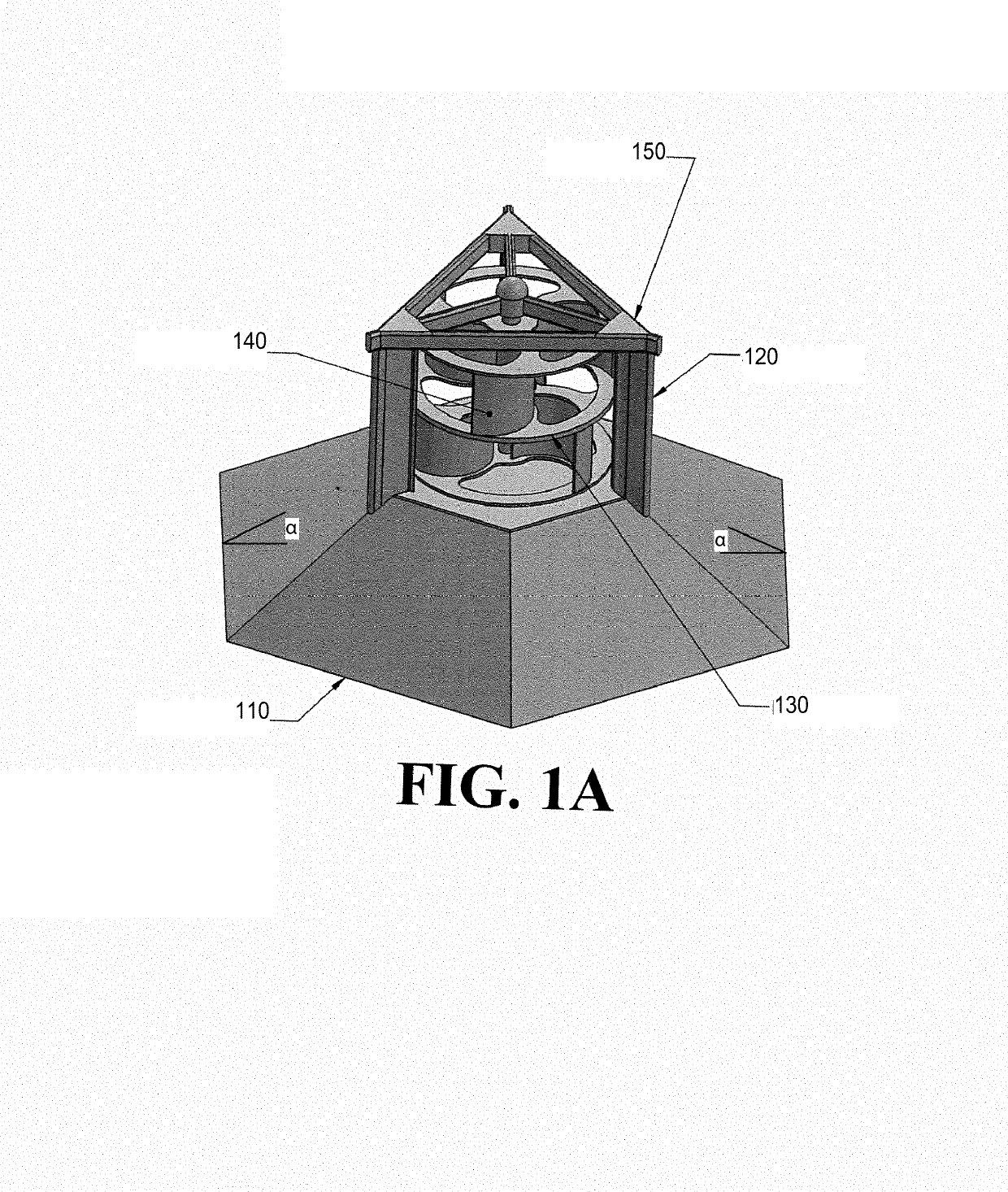
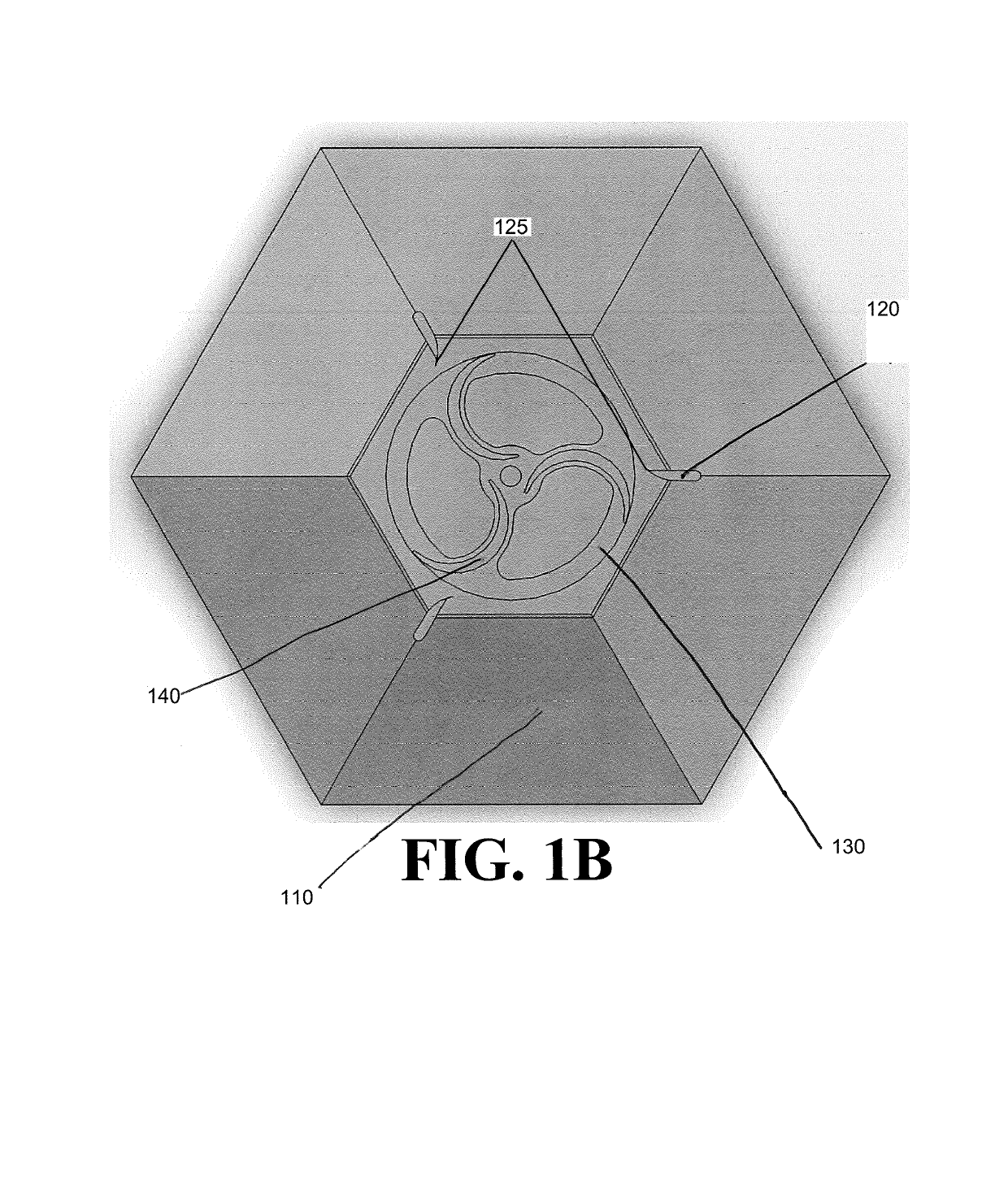
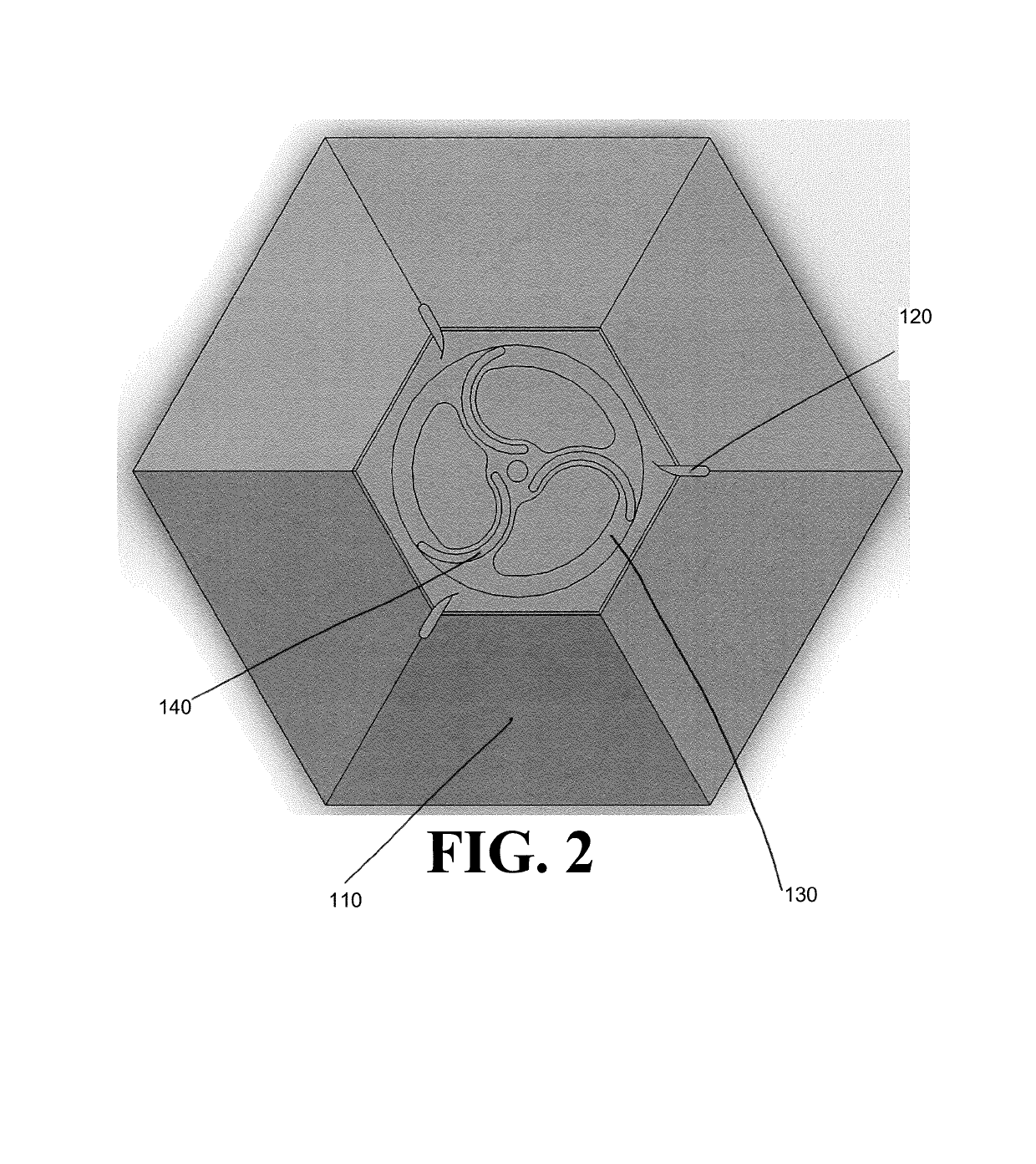
- A VAWT design incorporating a rotationally symmetric stator skirt with trapezoidal panels, stator fins that direct wind to rotor blades, and a top frame to enhance wind channeling and torque transfer, utilizing both aerodynamic lift and drag forces to increase wind energy conversion efficiency.

Device for converting the kinetic energy of a medium into rotation of a rotor
PatentWO2012060731A1
Innovation
- A device with a turbine featuring a rotor with a vertical axis and blades, a stator with guide vanes and confuser plates forming a lattice hyperboloid surface, and an electric generator, where the stator's inner surface is designed to accelerate and twist the flow, increasing torque and power by converting flat flows into spatial flows along the rotor axis, and allowing multiple sections to operate at different speeds with separate generators.


Environmental Impact Assessment of Vertical Wind Systems
Vertical wind turbine systems present distinct environmental advantages and challenges compared to their horizontal counterparts. These systems typically operate at lower rotational speeds and generate reduced noise levels, making them more suitable for urban and residential environments. The reduced acoustic footprint stems from their helical blade design and lower tip speeds, which minimize aerodynamic noise generation and mechanical vibration transmission.
The visual impact of vertical wind systems differs significantly from traditional horizontal turbines. Their compact vertical profile creates less visual intrusion on landscape aesthetics, particularly in densely populated areas. However, the environmental assessment must consider the cumulative visual effect when multiple units are deployed in wind farms, as their cylindrical structures may create different skyline alterations compared to conventional three-blade horizontal turbines.
Bird and bat mortality rates associated with vertical wind turbines demonstrate notably lower collision frequencies. The slower blade rotation speeds and more visible blade movement patterns allow wildlife to better detect and avoid the rotating components. Studies indicate mortality rates approximately 60-80% lower than horizontal axis turbines, though site-specific factors such as migration routes and local wildlife populations significantly influence these outcomes.
Ground-level environmental impacts require careful evaluation, particularly regarding electromagnetic interference and shadow flicker effects. Vertical systems generate different electromagnetic signatures due to their blade configuration and rotation patterns, potentially affecting radio communications and radar systems differently than horizontal turbines. Shadow flicker impacts are generally reduced due to the vertical orientation, though intermittent shadowing patterns may still occur in specific geometric configurations.
Soil and vegetation impacts during installation and operation phases present unique considerations. Vertical turbines typically require smaller foundation footprints but may need deeper anchoring systems, affecting subsurface soil structures and root systems differently. The concentrated load distribution can influence local drainage patterns and soil compaction in ways distinct from horizontal turbine installations.
The lifecycle environmental assessment must account for material composition differences in vertical systems. Many vertical designs utilize different materials and manufacturing processes, affecting carbon footprint calculations and end-of-life recycling considerations. The environmental benefits of improved urban integration and reduced transportation requirements for installation must be weighed against potential increases in material intensity per unit of energy generated.
The visual impact of vertical wind systems differs significantly from traditional horizontal turbines. Their compact vertical profile creates less visual intrusion on landscape aesthetics, particularly in densely populated areas. However, the environmental assessment must consider the cumulative visual effect when multiple units are deployed in wind farms, as their cylindrical structures may create different skyline alterations compared to conventional three-blade horizontal turbines.
Bird and bat mortality rates associated with vertical wind turbines demonstrate notably lower collision frequencies. The slower blade rotation speeds and more visible blade movement patterns allow wildlife to better detect and avoid the rotating components. Studies indicate mortality rates approximately 60-80% lower than horizontal axis turbines, though site-specific factors such as migration routes and local wildlife populations significantly influence these outcomes.
Ground-level environmental impacts require careful evaluation, particularly regarding electromagnetic interference and shadow flicker effects. Vertical systems generate different electromagnetic signatures due to their blade configuration and rotation patterns, potentially affecting radio communications and radar systems differently than horizontal turbines. Shadow flicker impacts are generally reduced due to the vertical orientation, though intermittent shadowing patterns may still occur in specific geometric configurations.
Soil and vegetation impacts during installation and operation phases present unique considerations. Vertical turbines typically require smaller foundation footprints but may need deeper anchoring systems, affecting subsurface soil structures and root systems differently. The concentrated load distribution can influence local drainage patterns and soil compaction in ways distinct from horizontal turbine installations.
The lifecycle environmental assessment must account for material composition differences in vertical systems. Many vertical designs utilize different materials and manufacturing processes, affecting carbon footprint calculations and end-of-life recycling considerations. The environmental benefits of improved urban integration and reduced transportation requirements for installation must be weighed against potential increases in material intensity per unit of energy generated.
Grid Integration Standards for Small-Scale Wind Turbines
The integration of small-scale vertical wind turbines into existing electrical grids requires adherence to specific technical standards that ensure safe, reliable, and efficient operation. Current grid integration standards primarily focus on IEEE 1547 and IEC 61400 series, which establish fundamental requirements for distributed energy resources and wind turbine systems respectively. These standards address critical aspects including voltage regulation, frequency stability, power quality, and protective relay coordination.
Power quality requirements represent a fundamental challenge for small-scale vertical wind turbines due to their inherently variable power output characteristics. Grid codes typically mandate total harmonic distortion levels below 5% and voltage fluctuation limits within ±10% of nominal values. Vertical wind turbines, with their lower cut-in wind speeds and different aerodynamic behavior compared to horizontal axis systems, often exhibit more frequent power fluctuations that can challenge these requirements.
Interconnection standards specify mandatory safety and protection systems including anti-islanding protection, ground fault detection, and automatic disconnection capabilities. Small-scale vertical wind turbines must incorporate inverter systems that comply with UL 1741 certification requirements, ensuring proper grid synchronization and fault response behavior. The inverter technology must provide reactive power support and voltage ride-through capabilities as defined in updated grid codes.
Emerging smart grid standards are reshaping integration requirements for distributed wind resources. IEEE 2030 series standards introduce communication protocols and interoperability requirements that enable advanced grid management functions. Small-scale vertical wind turbines increasingly need to support bidirectional communication capabilities, allowing grid operators to monitor performance and implement demand response strategies.
Regional variations in grid integration standards create additional complexity for vertical wind turbine deployment. European EN 50438 standards differ significantly from North American requirements, particularly regarding voltage ranges and frequency response characteristics. These variations necessitate adaptive inverter designs and region-specific certification processes that can impact the economic viability of small-scale installations.
Future standardization efforts focus on microgrid integration and energy storage coordination, recognizing the growing trend toward distributed energy systems. Proposed standards address dynamic grid support functions and enhanced fault ride-through capabilities that will be essential for widespread adoption of small-scale vertical wind turbines in modern electrical infrastructure.
Power quality requirements represent a fundamental challenge for small-scale vertical wind turbines due to their inherently variable power output characteristics. Grid codes typically mandate total harmonic distortion levels below 5% and voltage fluctuation limits within ±10% of nominal values. Vertical wind turbines, with their lower cut-in wind speeds and different aerodynamic behavior compared to horizontal axis systems, often exhibit more frequent power fluctuations that can challenge these requirements.
Interconnection standards specify mandatory safety and protection systems including anti-islanding protection, ground fault detection, and automatic disconnection capabilities. Small-scale vertical wind turbines must incorporate inverter systems that comply with UL 1741 certification requirements, ensuring proper grid synchronization and fault response behavior. The inverter technology must provide reactive power support and voltage ride-through capabilities as defined in updated grid codes.
Emerging smart grid standards are reshaping integration requirements for distributed wind resources. IEEE 2030 series standards introduce communication protocols and interoperability requirements that enable advanced grid management functions. Small-scale vertical wind turbines increasingly need to support bidirectional communication capabilities, allowing grid operators to monitor performance and implement demand response strategies.
Regional variations in grid integration standards create additional complexity for vertical wind turbine deployment. European EN 50438 standards differ significantly from North American requirements, particularly regarding voltage ranges and frequency response characteristics. These variations necessitate adaptive inverter designs and region-specific certification processes that can impact the economic viability of small-scale installations.
Future standardization efforts focus on microgrid integration and energy storage coordination, recognizing the growing trend toward distributed energy systems. Proposed standards address dynamic grid support functions and enhanced fault ride-through capabilities that will be essential for widespread adoption of small-scale vertical wind turbines in modern electrical infrastructure.
Unlock deeper insights with PatSnap Eureka Quick Research — get a full tech report to explore trends and direct your research. Try now!
Generate Your Research Report Instantly with AI Agent
Supercharge your innovation with PatSnap Eureka AI Agent Platform!