

Zinc vs Solid State: Safety in Aqueous Applications
APR 17, 20269 MIN READ
Generate Your Research Report Instantly with AI Agent
Patsnap Eureka helps you evaluate technical feasibility & market potential.
Zinc and Solid State Battery Safety Background and Objectives
Battery safety has emerged as a critical concern in the rapidly expanding energy storage market, particularly as applications extend into aqueous environments where traditional lithium-ion technologies face significant limitations. The intersection of electrochemical performance and safety requirements has driven intensive research into alternative battery chemistries, with zinc-based and solid-state technologies representing two promising pathways for addressing safety challenges in water-exposed applications.
The evolution of battery technology has been fundamentally shaped by the need to balance energy density, performance, and safety considerations. Traditional lithium-ion batteries, while offering high energy density, present inherent safety risks including thermal runaway, fire hazards, and toxic gas emission when exposed to moisture or physical damage. These limitations become particularly pronounced in aqueous applications such as marine systems, underwater devices, grid-scale energy storage in humid environments, and portable electronics used in wet conditions.
Zinc-based battery technologies have gained renewed attention due to their inherent safety advantages in aqueous environments. Unlike lithium, zinc exhibits stable electrochemical behavior in water-based electrolytes and does not pose fire or explosion risks. The abundance and low toxicity of zinc materials further enhance their safety profile, making them attractive for applications where environmental exposure is inevitable. However, challenges including dendrite formation, limited cycle life, and capacity degradation have historically constrained their commercial adoption.
Solid-state battery technology represents an alternative approach to addressing safety concerns through the elimination of liquid electrolytes. By replacing flammable organic electrolytes with solid ionic conductors, these systems theoretically eliminate leakage risks and reduce fire hazards. The solid electrolyte interface also provides enhanced mechanical stability and potentially superior performance in extreme environmental conditions, including exposure to moisture and temperature variations.
The primary objective of this technological investigation centers on establishing a comprehensive safety comparison framework between zinc-based and solid-state battery technologies specifically for aqueous applications. This analysis aims to identify the fundamental safety mechanisms, failure modes, and environmental resilience characteristics of each technology platform. Understanding these safety profiles is essential for determining optimal application scenarios and guiding future development priorities.
Secondary objectives include evaluating the practical implementation challenges associated with each technology in real-world aqueous environments, assessing the long-term reliability and degradation patterns under moisture exposure, and identifying potential hybrid approaches that could combine the safety advantages of both technologies. The ultimate goal is to provide strategic guidance for technology selection and development investment decisions in the growing market for water-resistant and submersible energy storage solutions.
The evolution of battery technology has been fundamentally shaped by the need to balance energy density, performance, and safety considerations. Traditional lithium-ion batteries, while offering high energy density, present inherent safety risks including thermal runaway, fire hazards, and toxic gas emission when exposed to moisture or physical damage. These limitations become particularly pronounced in aqueous applications such as marine systems, underwater devices, grid-scale energy storage in humid environments, and portable electronics used in wet conditions.
Zinc-based battery technologies have gained renewed attention due to their inherent safety advantages in aqueous environments. Unlike lithium, zinc exhibits stable electrochemical behavior in water-based electrolytes and does not pose fire or explosion risks. The abundance and low toxicity of zinc materials further enhance their safety profile, making them attractive for applications where environmental exposure is inevitable. However, challenges including dendrite formation, limited cycle life, and capacity degradation have historically constrained their commercial adoption.
Solid-state battery technology represents an alternative approach to addressing safety concerns through the elimination of liquid electrolytes. By replacing flammable organic electrolytes with solid ionic conductors, these systems theoretically eliminate leakage risks and reduce fire hazards. The solid electrolyte interface also provides enhanced mechanical stability and potentially superior performance in extreme environmental conditions, including exposure to moisture and temperature variations.
The primary objective of this technological investigation centers on establishing a comprehensive safety comparison framework between zinc-based and solid-state battery technologies specifically for aqueous applications. This analysis aims to identify the fundamental safety mechanisms, failure modes, and environmental resilience characteristics of each technology platform. Understanding these safety profiles is essential for determining optimal application scenarios and guiding future development priorities.
Secondary objectives include evaluating the practical implementation challenges associated with each technology in real-world aqueous environments, assessing the long-term reliability and degradation patterns under moisture exposure, and identifying potential hybrid approaches that could combine the safety advantages of both technologies. The ultimate goal is to provide strategic guidance for technology selection and development investment decisions in the growing market for water-resistant and submersible energy storage solutions.
Market Demand for Safe Aqueous Battery Applications
The global battery market is experiencing unprecedented growth driven by the urgent need for safer energy storage solutions across multiple sectors. Traditional lithium-ion batteries, while dominant, face significant safety concerns including thermal runaway, fire hazards, and toxic gas emissions, particularly in aqueous environments where water exposure can lead to catastrophic failures.
Aqueous battery applications represent a rapidly expanding market segment encompassing grid-scale energy storage, marine applications, underwater vehicles, and emergency backup systems. These applications demand batteries that can operate safely in humid conditions, withstand water ingress, and maintain performance without posing environmental or safety risks. The market demand is particularly acute in coastal regions and marine industries where traditional battery technologies face operational limitations.
Zinc-based aqueous batteries are gaining significant traction due to their inherent safety advantages. Zinc's non-toxic nature, abundance, and stable electrochemical behavior in aqueous electrolytes make it an attractive alternative for safety-critical applications. The technology addresses growing concerns about battery safety in residential energy storage systems, where homeowners prioritize non-flammable and environmentally benign solutions.
Solid-state battery technology, while promising enhanced safety through elimination of liquid electrolytes, faces unique challenges in aqueous environments. The market demand for solid-state solutions is driven by applications requiring absolute moisture protection and extended operational life. However, manufacturing complexity and cost considerations currently limit widespread adoption in price-sensitive aqueous applications.
The regulatory landscape is increasingly favoring safer battery chemistries, with stricter safety standards emerging for energy storage installations near populated areas. Environmental regulations are also driving demand for batteries with reduced environmental impact, particularly in marine and coastal applications where electrolyte leakage poses ecological risks.
Market research indicates strong demand growth in sectors including renewable energy integration, electric marine vessels, and stationary storage systems. The aqueous battery market is particularly attractive to manufacturers seeking to differentiate through safety positioning, as end-users increasingly prioritize operational safety over marginal performance gains.
Industrial applications such as data centers, hospitals, and critical infrastructure facilities are driving demand for inherently safe battery technologies that can operate reliably in various environmental conditions without compromising safety protocols or requiring extensive containment systems.
Aqueous battery applications represent a rapidly expanding market segment encompassing grid-scale energy storage, marine applications, underwater vehicles, and emergency backup systems. These applications demand batteries that can operate safely in humid conditions, withstand water ingress, and maintain performance without posing environmental or safety risks. The market demand is particularly acute in coastal regions and marine industries where traditional battery technologies face operational limitations.
Zinc-based aqueous batteries are gaining significant traction due to their inherent safety advantages. Zinc's non-toxic nature, abundance, and stable electrochemical behavior in aqueous electrolytes make it an attractive alternative for safety-critical applications. The technology addresses growing concerns about battery safety in residential energy storage systems, where homeowners prioritize non-flammable and environmentally benign solutions.
Solid-state battery technology, while promising enhanced safety through elimination of liquid electrolytes, faces unique challenges in aqueous environments. The market demand for solid-state solutions is driven by applications requiring absolute moisture protection and extended operational life. However, manufacturing complexity and cost considerations currently limit widespread adoption in price-sensitive aqueous applications.
The regulatory landscape is increasingly favoring safer battery chemistries, with stricter safety standards emerging for energy storage installations near populated areas. Environmental regulations are also driving demand for batteries with reduced environmental impact, particularly in marine and coastal applications where electrolyte leakage poses ecological risks.
Market research indicates strong demand growth in sectors including renewable energy integration, electric marine vessels, and stationary storage systems. The aqueous battery market is particularly attractive to manufacturers seeking to differentiate through safety positioning, as end-users increasingly prioritize operational safety over marginal performance gains.
Industrial applications such as data centers, hospitals, and critical infrastructure facilities are driving demand for inherently safe battery technologies that can operate reliably in various environmental conditions without compromising safety protocols or requiring extensive containment systems.
Current Safety Challenges in Zinc vs Solid State Aqueous Systems
Zinc-based aqueous battery systems face significant safety challenges related to dendrite formation during charging cycles. When zinc ions are reduced at the anode, they tend to form irregular, needle-like structures that can penetrate separators and cause internal short circuits. This phenomenon becomes more pronounced at higher current densities and can lead to thermal runaway events, particularly in sealed battery configurations where pressure buildup occurs.
Hydrogen gas evolution represents another critical safety concern in zinc aqueous systems. The parasitic reaction between zinc and water produces hydrogen gas, especially under alkaline conditions or when the system operates outside optimal pH ranges. Accumulated hydrogen can create explosive atmospheres and increase internal pressure, potentially causing battery swelling, electrolyte leakage, or catastrophic failure in extreme cases.
Solid-state aqueous systems encounter different but equally challenging safety issues. Interfacial instability between solid electrolytes and aqueous solutions can lead to localized heating and chemical decomposition. The formation of gas bubbles at solid-liquid interfaces creates mechanical stress that may cause electrolyte cracking or delamination, compromising the battery's structural integrity and creating potential failure points.
Electrolyte management poses distinct challenges for both technologies. Zinc systems suffer from electrolyte consumption through side reactions and water loss during operation, leading to concentration changes that affect performance and safety margins. The corrosive nature of some zinc electrolytes can degrade current collectors and housing materials, potentially causing leakage or contamination.
Solid-state aqueous systems face thermal management difficulties due to limited heat dissipation pathways through solid electrolytes. Temperature gradients can cause differential expansion and contraction, leading to mechanical stress and potential separator failure. Additionally, the limited ionic conductivity of many solid electrolytes at lower temperatures creates operational constraints that may force systems to operate at elevated temperatures, increasing safety risks.
Both technologies struggle with water management issues. Zinc systems require careful water balance to prevent electrolyte crystallization or excessive dilution, while solid-state systems must prevent water migration that could cause swelling or chemical degradation of solid components. These challenges become more complex in real-world applications where temperature and humidity variations are common.
Hydrogen gas evolution represents another critical safety concern in zinc aqueous systems. The parasitic reaction between zinc and water produces hydrogen gas, especially under alkaline conditions or when the system operates outside optimal pH ranges. Accumulated hydrogen can create explosive atmospheres and increase internal pressure, potentially causing battery swelling, electrolyte leakage, or catastrophic failure in extreme cases.
Solid-state aqueous systems encounter different but equally challenging safety issues. Interfacial instability between solid electrolytes and aqueous solutions can lead to localized heating and chemical decomposition. The formation of gas bubbles at solid-liquid interfaces creates mechanical stress that may cause electrolyte cracking or delamination, compromising the battery's structural integrity and creating potential failure points.
Electrolyte management poses distinct challenges for both technologies. Zinc systems suffer from electrolyte consumption through side reactions and water loss during operation, leading to concentration changes that affect performance and safety margins. The corrosive nature of some zinc electrolytes can degrade current collectors and housing materials, potentially causing leakage or contamination.
Solid-state aqueous systems face thermal management difficulties due to limited heat dissipation pathways through solid electrolytes. Temperature gradients can cause differential expansion and contraction, leading to mechanical stress and potential separator failure. Additionally, the limited ionic conductivity of many solid electrolytes at lower temperatures creates operational constraints that may force systems to operate at elevated temperatures, increasing safety risks.
Both technologies struggle with water management issues. Zinc systems require careful water balance to prevent electrolyte crystallization or excessive dilution, while solid-state systems must prevent water migration that could cause swelling or chemical degradation of solid components. These challenges become more complex in real-world applications where temperature and humidity variations are common.
Existing Safety Solutions for Aqueous Battery Applications
01 Solid electrolyte materials for enhanced safety
Solid-state batteries utilize solid electrolyte materials instead of liquid electrolytes to eliminate leakage and flammability risks. These materials include ceramic, polymer, and composite electrolytes that provide improved thermal stability and reduce the risk of thermal runaway. The solid electrolytes act as physical barriers preventing dendrite formation and short circuits, significantly enhancing battery safety during operation and in accident scenarios.- Solid electrolyte materials for enhanced safety: Solid-state batteries utilize solid electrolyte materials instead of liquid electrolytes to eliminate leakage and flammability risks. These materials include ceramic, polymer, and composite electrolytes that provide improved thermal stability and mechanical strength. The solid electrolytes prevent dendrite formation and short circuits, significantly enhancing battery safety. Advanced solid electrolyte compositions can operate across wide temperature ranges while maintaining structural integrity.
- Zinc battery safety through electrolyte optimization: Zinc-based batteries employ optimized aqueous or gel electrolytes to improve safety characteristics. These electrolytes are designed to prevent zinc dendrite growth, reduce corrosion, and minimize hydrogen evolution during charging cycles. Additives and pH control mechanisms are incorporated to enhance the stability and safety of zinc electrodes. The aqueous nature of these electrolytes provides inherent non-flammability advantages over organic liquid electrolytes.
- Thermal management and safety monitoring systems: Advanced battery systems incorporate thermal management technologies and real-time safety monitoring mechanisms. These include temperature sensors, pressure relief valves, and thermal insulation layers that prevent overheating and thermal runaway. Intelligent battery management systems continuously monitor voltage, current, and temperature parameters to detect abnormal conditions. Safety shutdown mechanisms are triggered automatically when predetermined thresholds are exceeded.
- Protective coatings and separator technologies: Specialized protective coatings and advanced separator materials are employed to enhance battery safety. These include ceramic-coated separators, polymer composite membranes, and surface-modified electrode materials that prevent internal short circuits. The protective layers provide thermal shutdown functionality and mechanical barrier properties. Multi-layered separator structures with different porosity and chemical compositions improve both safety and electrochemical performance.
- Battery encapsulation and structural safety design: Battery safety is enhanced through robust encapsulation methods and structural design features. These include hermetically sealed casings, pressure-resistant housings, and flame-retardant packaging materials. The structural designs incorporate safety vents, current interrupt devices, and impact-resistant components. Advanced manufacturing techniques ensure consistent quality and reliability of safety-critical components throughout the battery assembly.
02 Zinc battery electrolyte optimization for safety
Zinc batteries employ optimized aqueous or gel electrolytes with additives to prevent zinc dendrite growth and improve safety characteristics. The electrolyte formulations include corrosion inhibitors and pH stabilizers that reduce the risk of hydrogen gas generation and thermal events. These non-flammable electrolyte systems provide inherent safety advantages over lithium-based systems while maintaining electrochemical performance.Expand Specific Solutions03 Thermal management and safety monitoring systems
Advanced battery systems incorporate thermal management structures and real-time safety monitoring mechanisms to prevent overheating and detect abnormal conditions. These systems include temperature sensors, pressure relief valves, and heat dissipation components that maintain safe operating temperatures. Integrated monitoring circuits can detect early signs of failure and trigger protective responses to prevent catastrophic events.Expand Specific Solutions04 Separator and barrier layer technologies
Specialized separator materials and protective barrier layers are designed to prevent internal short circuits and contain potential failures. These components include multi-layer separators with shutdown functions, ceramic-coated membranes, and flame-retardant materials that provide mechanical strength and thermal stability. The barrier technologies effectively isolate electrodes and prevent penetration by dendrites or contaminants.Expand Specific Solutions05 Battery housing and structural safety features
Battery enclosures and structural designs incorporate safety features such as pressure relief mechanisms, impact-resistant materials, and sealed constructions to contain failures and protect against external damage. The housing designs include venting systems for controlled gas release, reinforced casings to withstand mechanical stress, and hermetic sealing to prevent moisture ingress. These structural elements ensure safe operation under various environmental conditions and abuse scenarios.Expand Specific Solutions
Key Players in Zinc and Solid State Aqueous Battery Industry
The zinc versus solid-state battery safety competition in aqueous applications represents an emerging market segment within the broader energy storage industry, currently in its early commercialization phase with significant growth potential driven by increasing demand for safer battery technologies. The market demonstrates moderate technical maturity, with established players like General Electric Company and BASF Coatings GmbH leveraging their extensive materials science expertise, while specialized coating companies including Atotech Deutschland, Henkel AG, and Chemetall GmbH contribute advanced surface treatment solutions critical for aqueous battery performance. Research institutions such as Central South University, Oregon State University, and City University of Hong Kong are advancing fundamental zinc chemistry and solid-state electrolyte technologies, indicating strong academic foundation supporting commercial development. The competitive landscape features a mix of traditional chemical giants, specialized coating manufacturers, and emerging technology companies like Nanexa AB, suggesting a fragmented but rapidly evolving market where technological differentiation in safety, performance, and manufacturing scalability will determine market leadership positions.
Atotech Deutschland GmbH & Co. KG
Technical Solution: Atotech focuses on electroplating and surface finishing technologies, including aqueous zinc plating systems that emphasize operational safety and environmental compliance. Their zinc electroplating processes utilize water-based electrolytes with optimized additive packages to achieve uniform coating thickness and enhanced corrosion resistance. The company's aqueous zinc systems are designed to minimize worker exposure to hazardous chemicals while maintaining high-quality surface finishes. These processes incorporate advanced filtration and purification systems to ensure consistent electrolyte performance and reduce waste generation in industrial plating operations.
Strengths: Deep electroplating expertise, established industrial customer base, comprehensive process control systems. Weaknesses: Limited to surface treatment applications, requires significant capital investment for equipment setup and maintenance.
Henkel AG & Co. KGaA
Technical Solution: Henkel has developed comprehensive aqueous zinc-based adhesive and coating solutions that prioritize safety in industrial applications. Their water-based zinc formulations eliminate hazardous air pollutants while providing robust bonding and protective properties. The company's aqueous systems incorporate advanced polymer chemistry to enhance zinc particle dispersion and stability, ensuring consistent performance across various application conditions. These formulations are designed to meet stringent safety regulations while delivering superior corrosion protection and mechanical properties required in automotive, electronics, and construction industries.
Strengths: Global market presence, strong regulatory compliance expertise, integrated supply chain capabilities. Weaknesses: Competition from specialized coating manufacturers, potential performance trade-offs in extreme environmental conditions.
Core Safety Innovations in Zinc vs Solid State Technologies
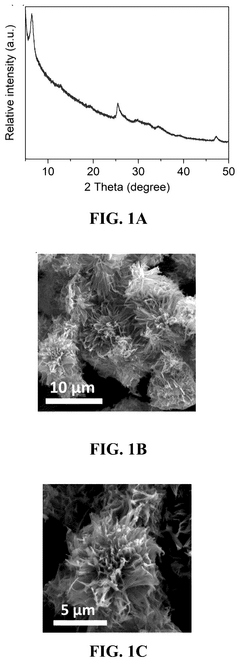
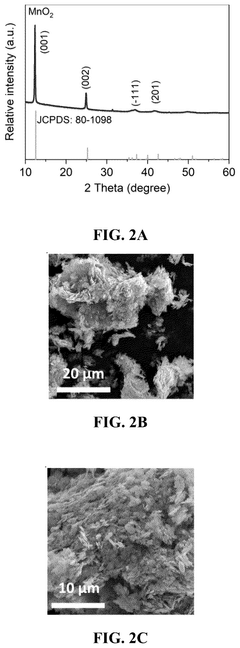
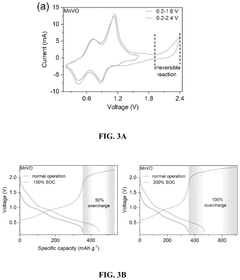
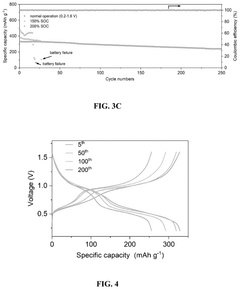
Aqueous zinc-ion battery with stable performance during overcharging
PatentPendingUS20250219158A1
Innovation
- Incorporation of bromine-based self-sacrificial additives into the electrolyte that undergo oxidation before electrolyte decomposition, providing overcharge protection and maintaining stable electrolyte environments, using cathode materials like Mn2+ expanded hydrated vanadium (MnVO) and manganese dioxide (MnO2).
Aqueous zinc-metal batteries comprising "water-in-salt" electrolyte
PatentWO2020076985A1
Innovation
- The development of high-concentration aqueous electrolytes, specifically 'water-in-salt' electrolytes containing zinc halides and additional metal or nonmetal halides, which enhance the Coulombic efficiency by modifying the hydration shell of zinc ions and reducing side reactions, allowing for a higher concentration of zinc and improved cycling stability.


Environmental Impact Assessment of Aqueous Battery Technologies
The environmental implications of aqueous battery technologies present a complex landscape where zinc-based and solid-state systems demonstrate markedly different ecological footprints. Zinc-ion batteries leverage abundant zinc resources, which are significantly more environmentally benign during extraction compared to lithium or cobalt mining operations. The aqueous electrolyte systems eliminate the need for toxic organic solvents, reducing manufacturing-related environmental hazards and simplifying waste treatment processes.
Manufacturing processes for zinc-based aqueous systems generate substantially lower carbon emissions due to reduced energy requirements for electrode preparation and cell assembly. The water-based electrolytes can be processed at ambient temperatures, contrasting sharply with solid-state systems that often require high-temperature sintering processes for electrolyte preparation. This temperature differential translates to approximately 40-60% lower energy consumption during production phases.
Solid-state aqueous batteries, while offering enhanced safety profiles, present unique environmental challenges related to ceramic electrolyte production. The synthesis of solid electrolyte materials typically involves energy-intensive processes and specialized precursor chemicals that may have adverse environmental impacts. However, these systems compensate through extended operational lifespans, potentially reducing overall lifecycle environmental burden through decreased replacement frequency.
End-of-life considerations favor zinc-based systems due to established recycling infrastructure for zinc materials. Zinc recovery processes are well-developed and economically viable, achieving recovery rates exceeding 95% in industrial applications. The aqueous electrolytes can be neutralized and treated through conventional wastewater management systems, minimizing specialized disposal requirements.
Solid-state components present recycling challenges due to the complex ceramic matrices that resist conventional separation techniques. Current recycling methodologies for solid electrolytes remain largely experimental, requiring development of specialized recovery processes. However, the inert nature of many solid electrolyte materials reduces potential soil and groundwater contamination risks during disposal.
Water consumption patterns differ significantly between these technologies. Zinc-based systems require substantial water volumes for electrolyte preparation and cell washing processes, potentially straining water resources in manufacturing regions. Solid-state systems minimize water usage during production but may require water-intensive cooling systems during high-temperature processing phases, creating different but equally significant environmental considerations for sustainable manufacturing implementation.
Manufacturing processes for zinc-based aqueous systems generate substantially lower carbon emissions due to reduced energy requirements for electrode preparation and cell assembly. The water-based electrolytes can be processed at ambient temperatures, contrasting sharply with solid-state systems that often require high-temperature sintering processes for electrolyte preparation. This temperature differential translates to approximately 40-60% lower energy consumption during production phases.
Solid-state aqueous batteries, while offering enhanced safety profiles, present unique environmental challenges related to ceramic electrolyte production. The synthesis of solid electrolyte materials typically involves energy-intensive processes and specialized precursor chemicals that may have adverse environmental impacts. However, these systems compensate through extended operational lifespans, potentially reducing overall lifecycle environmental burden through decreased replacement frequency.
End-of-life considerations favor zinc-based systems due to established recycling infrastructure for zinc materials. Zinc recovery processes are well-developed and economically viable, achieving recovery rates exceeding 95% in industrial applications. The aqueous electrolytes can be neutralized and treated through conventional wastewater management systems, minimizing specialized disposal requirements.
Solid-state components present recycling challenges due to the complex ceramic matrices that resist conventional separation techniques. Current recycling methodologies for solid electrolytes remain largely experimental, requiring development of specialized recovery processes. However, the inert nature of many solid electrolyte materials reduces potential soil and groundwater contamination risks during disposal.
Water consumption patterns differ significantly between these technologies. Zinc-based systems require substantial water volumes for electrolyte preparation and cell washing processes, potentially straining water resources in manufacturing regions. Solid-state systems minimize water usage during production but may require water-intensive cooling systems during high-temperature processing phases, creating different but equally significant environmental considerations for sustainable manufacturing implementation.
Safety Standards and Testing Protocols for Aqueous Batteries
The development of comprehensive safety standards for aqueous batteries represents a critical foundation for the widespread adoption of both zinc-based and solid-state technologies in water-based applications. Current international standards primarily derive from established frameworks such as IEC 62133 and UL 1642, which have been adapted to address the unique characteristics of aqueous electrolyte systems. These standards encompass thermal stability requirements, electrical safety parameters, and mechanical integrity specifications that must be validated through rigorous testing protocols.
Testing methodologies for aqueous battery systems require specialized approaches that account for the presence of water-based electrolytes and their interaction with active materials. Standard test protocols include accelerated aging studies under controlled humidity conditions, thermal runaway assessment through controlled heating scenarios, and electrolyte leakage evaluation under various stress conditions. For zinc-based systems, specific attention is given to dendrite formation testing and hydrogen gas evolution monitoring, while solid-state aqueous batteries undergo specialized interface stability assessments and ionic conductivity degradation analysis.
Certification processes for aqueous batteries involve multi-stage validation procedures that typically span 12-18 months for comprehensive evaluation. Initial screening tests focus on basic safety parameters including overcharge protection, short-circuit resistance, and thermal stability within operating temperature ranges of -20°C to 60°C. Advanced testing phases incorporate long-term cycling studies, environmental stress testing, and failure mode analysis to establish safety margins and operational boundaries.
Regulatory compliance frameworks vary significantly across global markets, with the European Union implementing the most stringent requirements through the Battery Regulation 2023/1542, which specifically addresses aqueous battery technologies. North American standards, governed by ANSI and UL specifications, emphasize performance-based testing criteria, while Asian markets, particularly China and Japan, have developed region-specific protocols that prioritize manufacturing quality control and end-of-life safety considerations.
Emerging testing protocols specifically address the unique safety challenges posed by aqueous electrolyte systems, including corrosion resistance evaluation, electrolyte stability under extreme pH conditions, and gas generation assessment during normal and abuse conditions. These protocols incorporate advanced analytical techniques such as in-situ electrochemical impedance spectroscopy and real-time gas chromatography to provide comprehensive safety validation for next-generation aqueous battery technologies.
Testing methodologies for aqueous battery systems require specialized approaches that account for the presence of water-based electrolytes and their interaction with active materials. Standard test protocols include accelerated aging studies under controlled humidity conditions, thermal runaway assessment through controlled heating scenarios, and electrolyte leakage evaluation under various stress conditions. For zinc-based systems, specific attention is given to dendrite formation testing and hydrogen gas evolution monitoring, while solid-state aqueous batteries undergo specialized interface stability assessments and ionic conductivity degradation analysis.
Certification processes for aqueous batteries involve multi-stage validation procedures that typically span 12-18 months for comprehensive evaluation. Initial screening tests focus on basic safety parameters including overcharge protection, short-circuit resistance, and thermal stability within operating temperature ranges of -20°C to 60°C. Advanced testing phases incorporate long-term cycling studies, environmental stress testing, and failure mode analysis to establish safety margins and operational boundaries.
Regulatory compliance frameworks vary significantly across global markets, with the European Union implementing the most stringent requirements through the Battery Regulation 2023/1542, which specifically addresses aqueous battery technologies. North American standards, governed by ANSI and UL specifications, emphasize performance-based testing criteria, while Asian markets, particularly China and Japan, have developed region-specific protocols that prioritize manufacturing quality control and end-of-life safety considerations.
Emerging testing protocols specifically address the unique safety challenges posed by aqueous electrolyte systems, including corrosion resistance evaluation, electrolyte stability under extreme pH conditions, and gas generation assessment during normal and abuse conditions. These protocols incorporate advanced analytical techniques such as in-situ electrochemical impedance spectroscopy and real-time gas chromatography to provide comprehensive safety validation for next-generation aqueous battery technologies.
Unlock deeper insights with Patsnap Eureka Quick Research — get a full tech report to explore trends and direct your research. Try now!
Generate Your Research Report Instantly with AI Agent
Supercharge your innovation with Patsnap Eureka AI Agent Platform!