Ethylene (C₂H₄) is a colorless, flammable gas and the simplest member of the alkene family—characterized by a carbon-carbon double bond. It is not only the most widely produced organic chemical globally, but also a cornerstone of the petrochemical industry. As a highly reactive olefin, ethylene serves as a critical precursor for polymers, solvents, additives, and intermediates across plastics, agriculture, and packaging.
With global ethylene production exceeding 200 million tons annually, its relevance spans from polyethylene synthesis to ethylene oxide, vinyl chloride, and industrial ethanol. Meanwhile, growing pressure to decarbonize the chemical industry is accelerating research into bio-based ethylene production, electrocatalytic conversion, and smart reactor design.
This article explores the molecular nature, physicochemical traits, commercial formats, and application domains of ethylene—while examining how platforms like PatSnap Eureka AI Agent are helping R&D teams navigate the evolving innovation landscape.
Ask Patsnap Eureka AI
Patsnap Eureka AI provides instant, trusted answers to any technical questions.
Molecular Composition and Structural Characteristics
Ethylene’s formula C₂H₄ reflects a symmetrical molecule with two carbon atoms connected by a double bond (C=C), and each carbon bonded to two hydrogen atoms. This double bond introduces significant reactivity, making ethylene a key monomer in addition reactions, polymerization, and oxidation chemistry.
Key Features:
Planar structure with sp² hybridized carbon atoms
High electron density at the π bond, favoring electrophilic attack
Low molecular weight, contributing to gaseous form at room temperature
Moderate dipole moment, improving interactions with polarizable reagents
The C=C bond length (~134 pm) and bond dissociation energy (~611 kJ/mol) make ethylene reactive yet controllable—ideal for large-scale transformation.
Material Grades and Commercial Forms
Ethylene is supplied globally via gas pipelines, cryogenic tankers, and on-site cracking units. While pure ethylene gas is the norm in chemical production, it also appears in blended forms and as intermediates:
Commercial Formats:
Polymer-grade ethylene (PGE): ≥99.9% purity for polyethylene production
Chemical-grade ethylene: 95–98% purity for industrial synthesis
Ethylene mixtures: Ethylene/argon, ethylene/ethane blends for process modulation
Stabilized liquid ethylene under cryogenic storage (boiling point: −104 °C)
Material Safety Note:
Ethylene is highly flammable, asphyxiating in high concentrations, and forms explosive mixtures with air between 2.7–36% vol.
Physicochemical Properties of Ethylene
Property
Description
Molecular Weight
28.05 g/mol
Boiling Point
−103.7 °C (gas at room temperature)
Reactivity
High, due to double bond and accessible π-electrons
Solubility
Slightly soluble in water; soluble in organic solvents
Density (gas)
1.178 kg/m³ at 0 °C
Flammability
High; flash point −136 °C; explosive in air
Ethylene’s small size and reactivity enable rapid transformation in catalytic systems, making it a molecular gateway to thousands of downstream chemicals.
Application Domains
1. Polymer Industry
Over 60% of global ethylene output is converted into polyethylene (PE) via polymerization:
High-Density Polyethylene (HDPE): Used in rigid containers, pipes, toys
Low-Density Polyethylene (LDPE): Used in films, bags, coatings
Linear Low-Density PE (LLDPE): For stretch films and flexible packaging
Ethylene copolymers (e.g., EVA, EPDM) are used in foams, adhesives, and automotive parts.
2. Agriculture and Plant Hormone Signaling
Ethylene acts as a natural plant hormone regulating:
Fruit ripening (commercial ethylene gas is used post-harvest)
Flower senescence and leaf abscission
Stress responses and growth regulation
Ethylene-releasing compounds like ethephon are applied in controlled agricultural settings.
3. Chemical Derivatives
Ethylene is the starting point for numerous chemicals:
CO₂ footprint from cracking and purification remains substantial
Innovation Trends in Ethylene Chemistry
With rising demand and decarbonization pressures, ethylene-related research is advancing rapidly:
Current Innovation Hotspots:
Bio-ethylene production from ethanol fermentation or biomass dehydration
Electrocatalytic CO₂-to-ethylene conversion using Cu-based nanocatalysts
Membrane separation tech for cryogenic ethylene/ethane mixtures
Single-site catalysis in ethylene polymerization (e.g., metallocene catalysts)
Digital reactor modeling for thermal cracking optimization
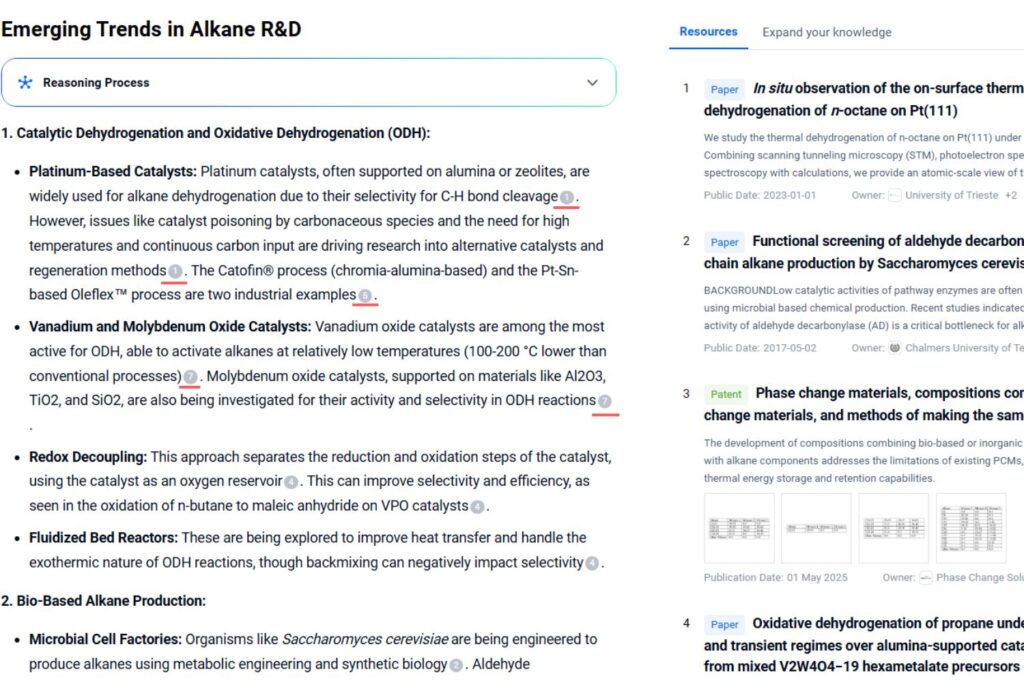
🔍 Navigating this rapidly evolving R&D space requires more than traditional patent databases. PatSnap Eureka AI Agent empowers innovation teams with AI-powered reasoning and explainable IP analytics. From tracking breakthroughs in CO₂ electroreduction to mapping ethylene cracking catalysts across jurisdictions, Eureka links global patent intelligence with transparent logic chains—so chemists, engineers, and strategists can make better-informed decisions, faster.
Future Outlook
As a keystone molecule, ethylene will remain at the heart of modern chemistry—but its pathways of production and transformation are being radically reimagined. Key future directions include:
Zero-carbon ethylene via renewable electricity
Hybrid bio-electrochemical platforms for ethylene conversion
AI-optimized catalyst discovery for selective ethylene reactions
Lifecycle analytics for ethylene derivatives in packaging and infrastructure
Circular economy integration through ethylene recovery and reuse
Conclusion
Ethylene’s impact is unmatched in the chemical world—powering plastics, agriculture, energy, and consumer products. As technology and regulation evolve, so too must the innovation tools that support chemical discovery and strategy.
PatSnap Eureka AI Agent offers ethylene researchers a smarter way to explore reaction pathways, monitor competitive IP, and visualize trends across the global chemical innovation landscape—with every answer backed by traceable data and reasoning.
FAQ: Ethylene in Focus
Q1: What makes ethylene unique among hydrocarbons?
Ethylene is the simplest alkene, featuring a double bond that makes it highly reactive and ideal for polymerization. This reactivity distinguishes it from alkanes and enables its wide use in chemical synthesis.
Q2: What are the most common products made from ethylene?
Ethylene is primarily used to produce polyethylene, ethylene oxide, ethylene dichloride (for PVC), and ethylbenzene (for styrene and polystyrene). It is foundational in plastics, solvents, fibers, and antifreeze production.
Q3: How is ethylene typically produced?
Ethylene is predominantly obtained through steam cracking of hydrocarbons such as naphtha, ethane, or propane. Emerging methods include bio-ethylene production via ethanol dehydration or microbial synthesis.
Q4: Is ethylene environmentally sustainable?
While ethylene production from fossil fuels has a significant carbon footprint, bio-based and green routes—such as ethanol-derived ethylene—are gaining attention as sustainable alternatives.
Q5: Can ethylene be used in biomedicine or electronics?
Yes. Ethylene derivatives such as ethylene glycol are used in drug delivery systems and antifreeze, while modified polyethylene is finding roles in flexible electronics, sensors, and packaging for medical devices.
Q6: How does PatSnap Eureka AI Agent support ethylene innovation?
PatSnap Eureka AI Agent accelerates ethylene R&D by uncovering key patent landscapes, identifying synthesis breakthroughs, and revealing commercial strategies—backed by AI-generated insights and source-linked documentation.
Explore Eureka AI Agent for Ethylene-Centered Innovation
Want to stay ahead in ethylene-based technologies and patents? 👉 Try PatSnap Eureka AI Agent— where chemical intelligence meets explainable AI.