


What is a Laser Diode?
A laser diode is a highly efficient semiconductor device that generates coherent light through the process of stimulated emission. It features a p-n junction as its gain medium and a cavity region functioning as a resonator. When powered by an appropriate voltage, the gain medium amplifies light, overcoming cavity losses, and achieves threshold conditions, producing a strong, focused light beam.
This article will explore the structure, working principle, and diverse applications of laser diodes, highlighting their importance in technology and innovation.
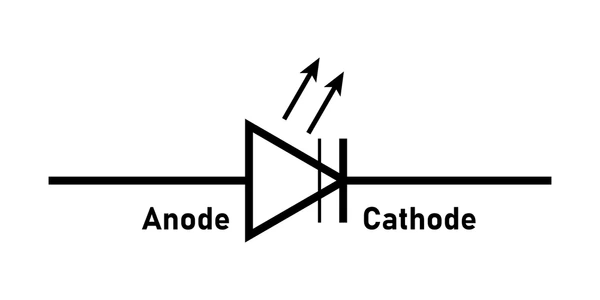
How Does a Laser Diode Work?
Electron-Hole Recombination: Applying a forward bias across the p-n junction drives electrons from the n-side and holes from the p-side into the intrinsic region. Here, they recombine and release energy as photons, initiating the light emission process.
Stimulated Emission: The photons generated in the active region interact with other electron-hole pairs. This interaction triggers the emission of additional photons with the same frequency and phase, resulting in a coherent light output.
Cavity Resonance: The diode’s cavity region, often formed by its end facets, provides feedback to the emitted light. This feedback allows the light to oscillate at specific wavelengths, producing a focused and consistent laser beam.
Threshold Condition: Below a specific current level, the gain cannot overcome losses, and light output remains negligible. However, once the current surpasses this threshold, the laser’s output power increases dramatically.
Key Features of Laser Diodes
Energy Efficiency: Laser diodes consume less power while offering high efficiency compared to other light sources.
Directional Emission: They emit highly directional light with greater spatial brightness, avoiding the droop phenomenon seen in LEDs.
Precision and Stability: Their narrow linewidth and high stability make them ideal for precision tasks like atomic clocks and quantum computing.
Customizable Wavelengths: Laser diodes can be tuned for various wavelengths, enhancing their versatility across different applications.
Wide Applications: They are integral to fields like optical communication, laser printing, spectroscopy, metrology, and medical technology.
Reliability: Designed for durability, they perform reliably in challenging environments, including space-based systems.
Optimized Beam Quality: Beam divergence is manageable, enabling high brightness critical for optical fiber coupling and industrial tasks.
Structural Flexibility: Available in edge-emitting, surface-emitting, and external-cavity designs, they cater to diverse power and efficiency needs.
Industrial Power: High-power models are efficient and dependable for material processing and other industrial uses.
Types of Laser Diodes
Types of Laser Diodes: A Streamlined Guide
Edge-Emitting Diodes:
- Double Heterostructure: Low bandgap layer between two high bandgap layers.
- Quantum Well: Thin quantum layer improves efficiency and quantization.
- Multiple Quantum Well: Enhanced gain with stacked quantum wells.
- Quantum Wire/Dots: Higher efficiency with nanostructured active layers.
- Quantum Cascade: Tunable for long wavelengths via quantum layer thickness.
- SCH Lasers: Efficient light confinement with additional quantum well layers.
- DFB Lasers: Stable wavelength output with integrated diffraction grating, ideal for optical communications.
VCSELs: Emit light from the surface, offering circular beams and single-mode operation.
External-Cavity Lasers: Tunable with narrow linewidths using gratings or prisms.
High-Power Laser Types:
- Broad Area: Multi-mode with high power but lower beam quality.
- Tapered Lasers: Improved brightness with better beam quality than broad area designs.
- Ridge Waveguide: Oval output facets for enhanced modes.
- SCOWL: Compact design with diffraction-limited circular beams.
Diode Arrays and Stacks:
- Vertical diode stacks provide scalable high power and cost efficiency, commonly used for fiber laser pumping.
Applications of Laser Diode
Optical Communications
Laser diodes power optical communication systems, transmitting data through fibers over long distances with high precision.
Material Processing
In industrial settings, laser diodes enable precise cutting, welding, and surface treatments for metals and plastics.
Optical Storage
They play a vital role in data storage devices like CDs, DVDs, and Blu-ray discs for reading and writing data.
Medical Technology
Laser diodes support surgeries, diagnostics, and therapies by delivering precise and controlled light energy.
Advanced Displays
They are key components in RGB projectors and next-generation display technologies for bright, focused light beams.
Spectroscopy and Metrology
Laser diodes are indispensable for material analysis and measuring physical properties with high accuracy.
Barcode Scanning and Sensing
Their coherent light ensures precise performance in barcode scanners and a variety of sensor applications.
Laser Pump Sources
Laser diodes enhance the efficiency of solid-state lasers when used as pump sources.
Telecommunications Networks
In Dense Wave Division Multiplexing (DWDM) systems, they boost data capacity in modern networks.
Scientific Exploration
Laser diodes are essential tools in research fields like microscopy, holography, and spectroscopy for their precision.
Application Cases
| Product/Project | Technical Outcomes | Application Scenarios |
|---|---|---|
| Nitride-based laser diodes Xerox Holdings Corp. | Utilizes metal-oxide cladding layer (e.g. ITO) instead of p-doped AlGaN for improved optical confinement and reduced series resistance. InGaN waveguide/cladding layers enhance optical confinement with low losses. | High-power laser diodes for industrial applications like cutting, welding, and material processing. |
| Semiconductor light-emitting devices Hitachi Ltd. | Improved light-emitting efficiency and increased carrier concentration by using MgSe as the p-type cladding layer material. | Optoelectronic devices, semiconductor lasers, and light-emitting diodes. |
| Laser diode modulation control Microchip Technology, Inc. | Programmable control of laser diode modulation and operating point, enabling integrated circuit solutions for laser output parameter control. | Laser diode control systems, optical communication, and laser-based applications. |
| Laser diode array BAE Systems Plc | Array of laser diodes with integrated cooling channels for temperature control, allowing emission of the same wavelength at different junction temperatures. | High-power laser systems, defense applications, and industrial material processing. |
Latest Technical Innovations in Laser Diode
High-Power Laser Arrays
Kilowatt-class diode arrays now achieve 1 kW power with over 80% efficiency and lifespans beyond 40,000 hours. Ridge waveguide lasers deliver single-mode operation and over 100 mW output at 400–420 nm, ideal for telecom.
AlGaInN Laser Developments
AlGaInN lasers span 380–530 nm, crucial for underwater communication and defense. Mini-arrays reach 2.5 W continuous power, while larger bars achieve 4 W. PAMBE offers precise, efficient growth of these structures, outperforming traditional methods.
Applications and Innovations
Nitride-based lasers now provide higher power and better beam quality, enhancing applications in displays, imaging, communication, and quantum technologies. Vertical-cavity designs further improve efficiency for recording and communication systems.
To get detailed scientific explanations of Laser Diode, try Patsnap Eureka.
