
Hybrid translation apparatus and method thereof
a technology of hybrid translation and translation apparatus, applied in the field of hybrid translation technique, can solve the problems of ambiguity in translation, the knowledge of bilingual translation for transformation is relatively limited, and each of the methods has a deficiency in solving the problem of translation, so as to improve the performance of an automatic translation system and reduce data scarcity.
Patent Information
- Authority / Receiving Office
- US · United States
- Patent Type
- Patents(United States)
- Current Assignee / Owner
- Publication Date
- 2013-06-04
- Estimated Expiration
- Not applicable · inactive patent
Smart Images
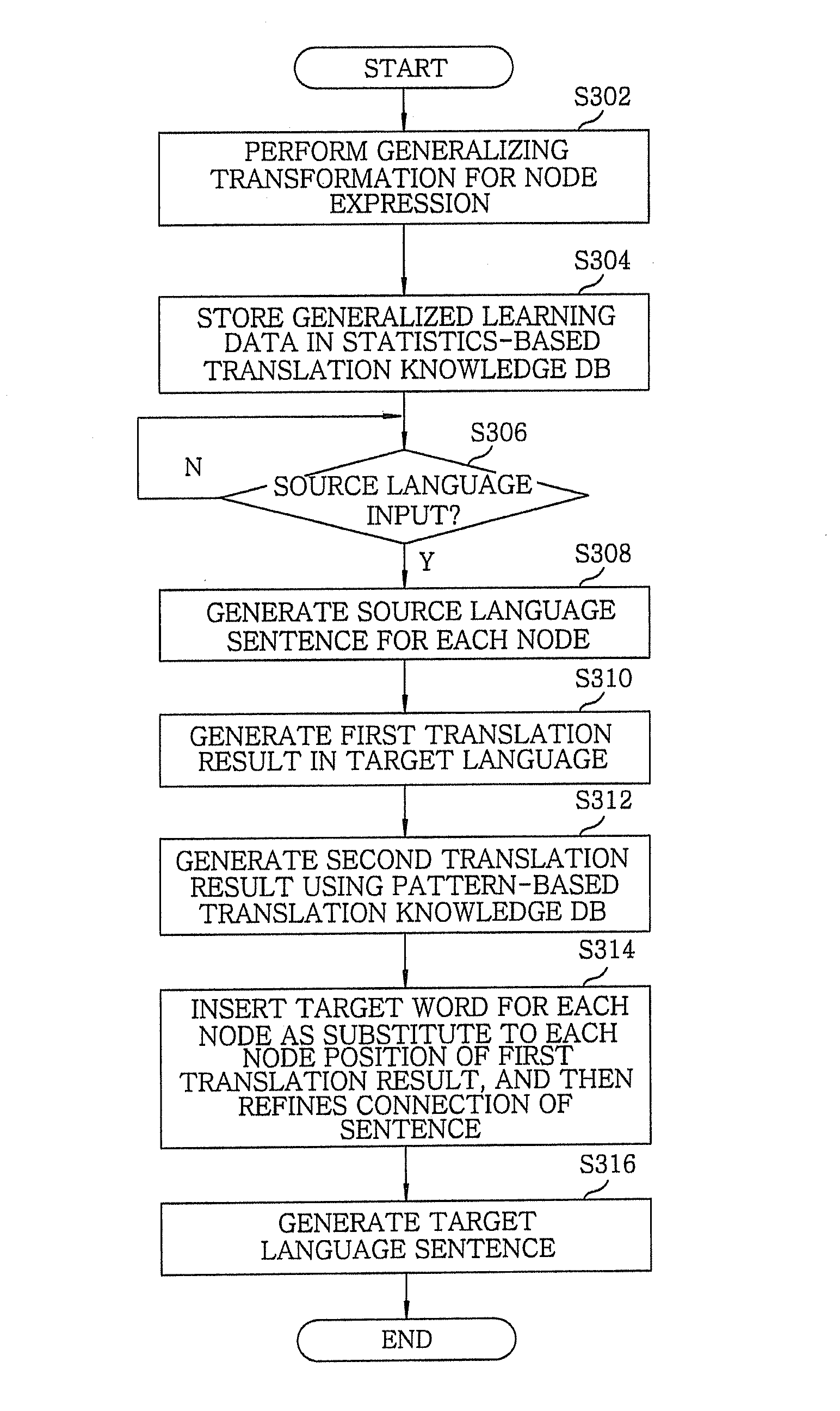
Figure 1 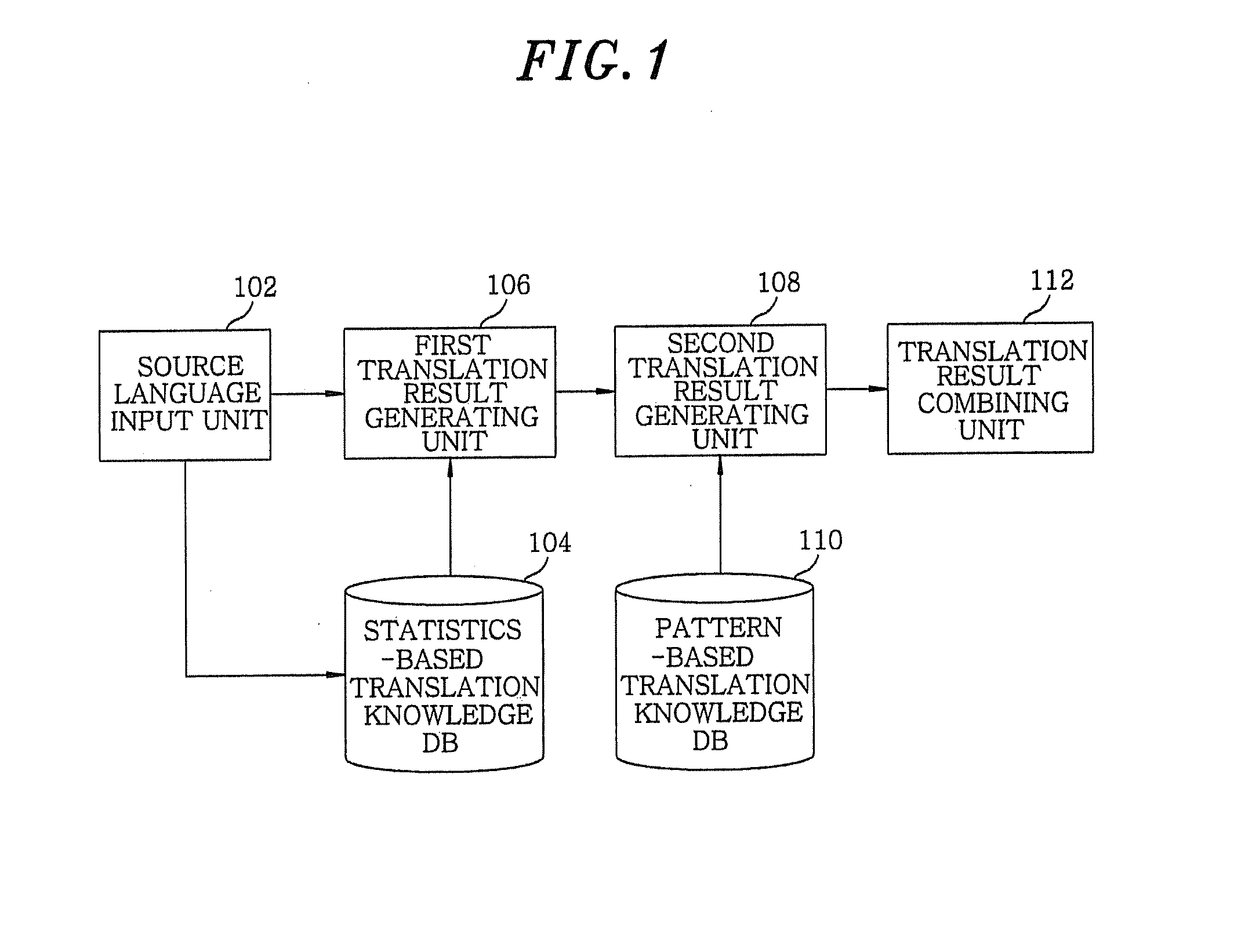
Figure 2 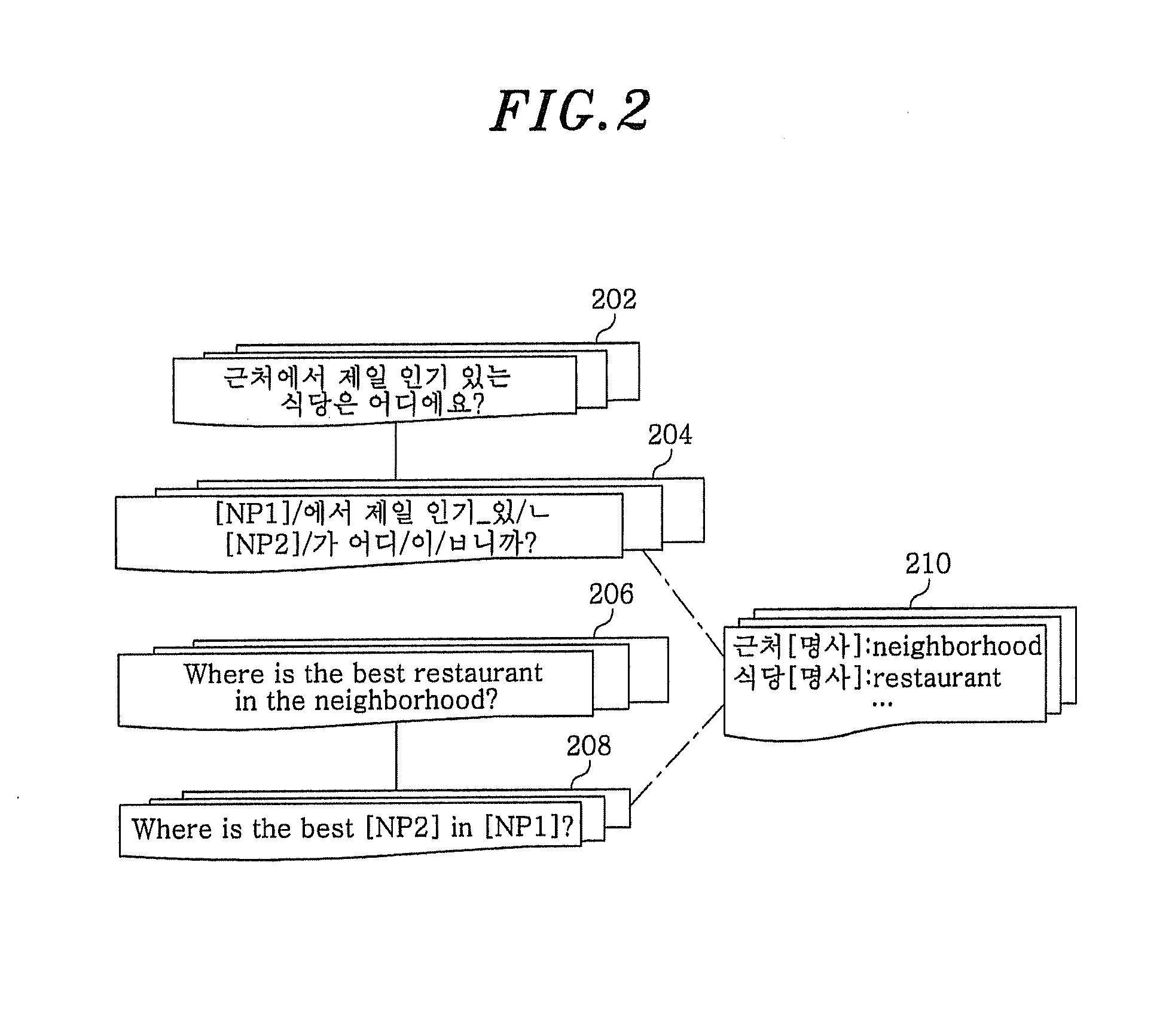
Figure 3
Abstract
Description
CROSS-REFERENCE TO RELATED APPLICATIONS
[0001] The present invention claims priority of Korean Patent Application No. 10-2009-0118671, filed on Dec. 02, 2009, which is incorporated herein by reference.FIELD OF THE INVENTION
[0002] The present invention relates to a hybrid translation technique; and more particularly, to a hybrid translation apparatus and method, which are suitable for translating a source language sentence into a target language sentence using a hybrid technique including a statistical method and a pattern-based method.BACKGROUND OF THE INVENTION
[0003] As well-known in the art, the statistical method of an automatic translation technique refers to a technique for solving the problem of translation ambiguity by automatically learning translation knowledge actually preferred by people through training data.
[0004] However, a parallel corpus used as learning data is utilized as lexicon-based sentence data. Thus, bilingual translation knowledge for transformation is relatively...
Examples
Embodiment Construction
[0017]Before explaining the present invention, the terms used herein will be defined as follows:
[0018]First, an automatic translation system refers to a system that automatically translates an input sentence of a source language into a translated sentence of a target language using bilingual translation knowledge for translation;
[0019]Second, a language analysis system refers to a data processing system that analyzes linguistic internal expression information, such as the parts of speech, syntactic unit, syntactic structure, etc. of a natural language sentence, divides the elements of the sentence into units of analysis, and labels them with analysis information;
[0020]Third, a morphological analysis apparatus in the language analysis system refers to an analysis apparatus that parses the lexemes determining the headword of a lexicon of each of clauses constituting a sentence and the morphemes having part-of-speech information;
[0021]Fourth, a syntactic analysis apparatus in the langu...