

A parking recognition method based on spatio-temporal clustering
A recognition method and clustering algorithm technology, applied in character and pattern recognition, instruments, calculations, etc., can solve problems such as high degree of path overlap, point clusters are easily mistakenly merged into one category, and error parking is avoided, so as to avoid randomness , good generalization ability, and the effect of reducing merge errors
Patent Information
- Authority / Receiving Office
- CN · China
- Patent Type
- Patents(China)
- Current Assignee / Owner
- Publication Date
- 2021-05-04
- Estimated Expiration
- Not applicable · inactive patent
Smart Images
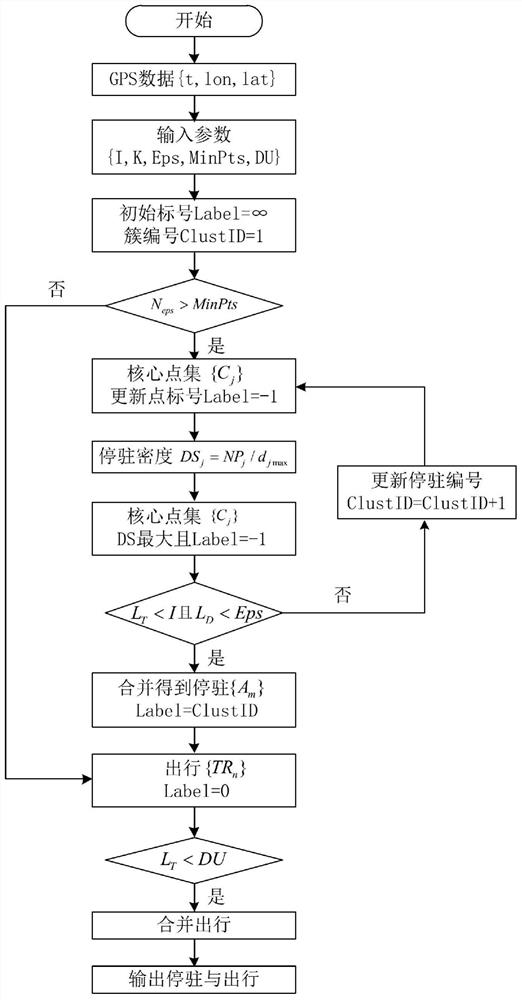
Figure 1 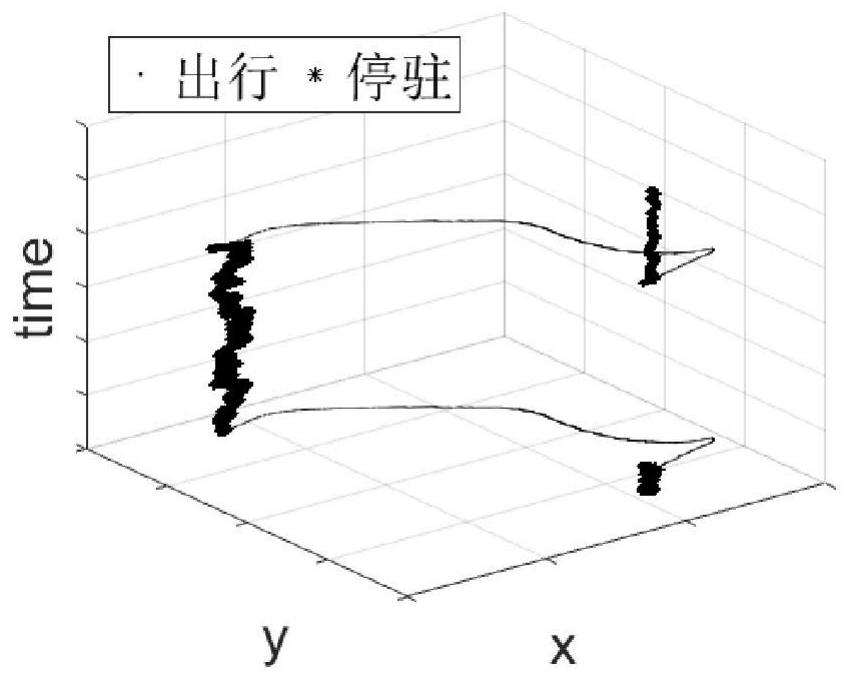
Figure 2 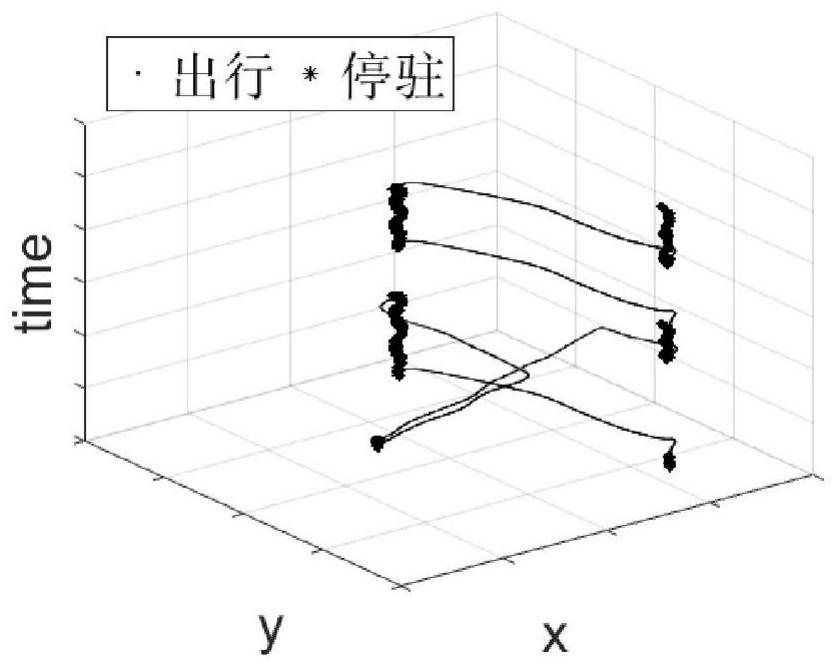
Figure 3
Abstract
Description
technical field
[0001] The invention belongs to the field of traffic data mining, and in particular relates to cluster analysis of time series data and identification of stops in individual travel trajectories. Background technique
[0002] With the rapid popularization and development of smart phones, precise positioning functions and rich sensor modules provide hardware conditions for real-time collection of individual travel trajectories. In the face of a large amount of travel trajectory data, analyzing individual behavior characteristics and identifying activity patterns has become a major problem in data services for urban traffic. Recognition of parking based on individual GPS trajectory data is a prerequisite for judging OD, estimating travel mode and travel purpose. The current related research is mainly based on the static speed characteristics, the direction characteristics of the movement, and combined with the road network to make regular judgments. However, b...
Examples
Embodiment example
[0072] Select two full-day travel GPS trajectories collected by smart phones. Trajectory I is characterized by long parking time and relatively scattered points in space. The recording time is from 6:37:02 to 20:06:53, including 3 parking and 2 trips; Trajectory II is characterized by a large number of trips and a high degree of path overlap. The recording time is from 7:04:13 to 18:44:05, including 6 stops and 5 trips.
[0073] Setting parameters: search length k=61, temporal proximity threshold I=30s, spatial proximity threshold Eps=30m, minimum number of core point discrimination MinPts=30, minimum parking duration DU=120s.
[0074] Table 1 Travel log
[0075]
[0076]
[0077] For the GPS trajectory data of the travel log in Table 1, according to figure 1 The flow chart of the parking recognition method based on spatio-temporal clustering of the present invention is shown, which processes and recognizes parking in trajectory I and trajectory II, and outputs the park...