
a lamp
A technology for lamps and components, applied in the field of lighting, can solve the problems of large wind resistance and easy falling off, and achieve the effect of preventing hidden traffic hazards and avoiding lamp damage.
Patent Information
- Authority / Receiving Office
- CN · China
- Patent Type
- Patents(China)
- Current Assignee / Owner
- Publication Date
- 2021-08-31
Smart Images
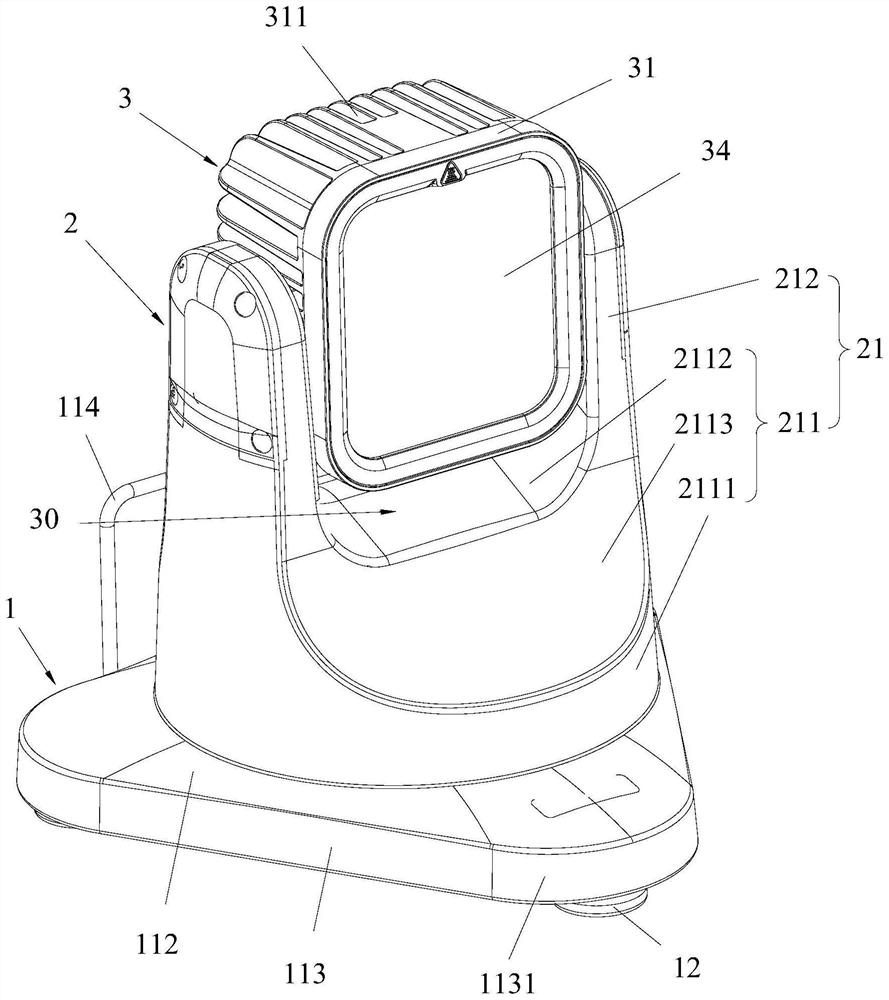
Figure 1 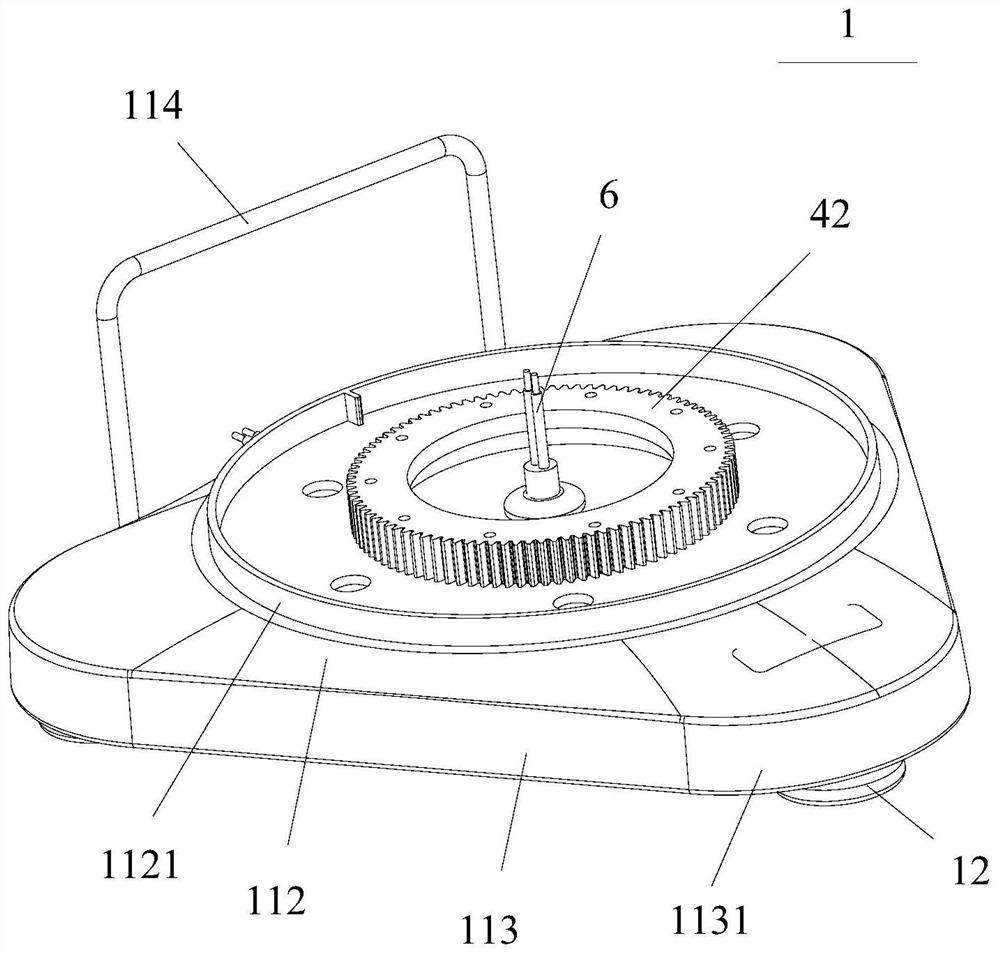
Figure 2 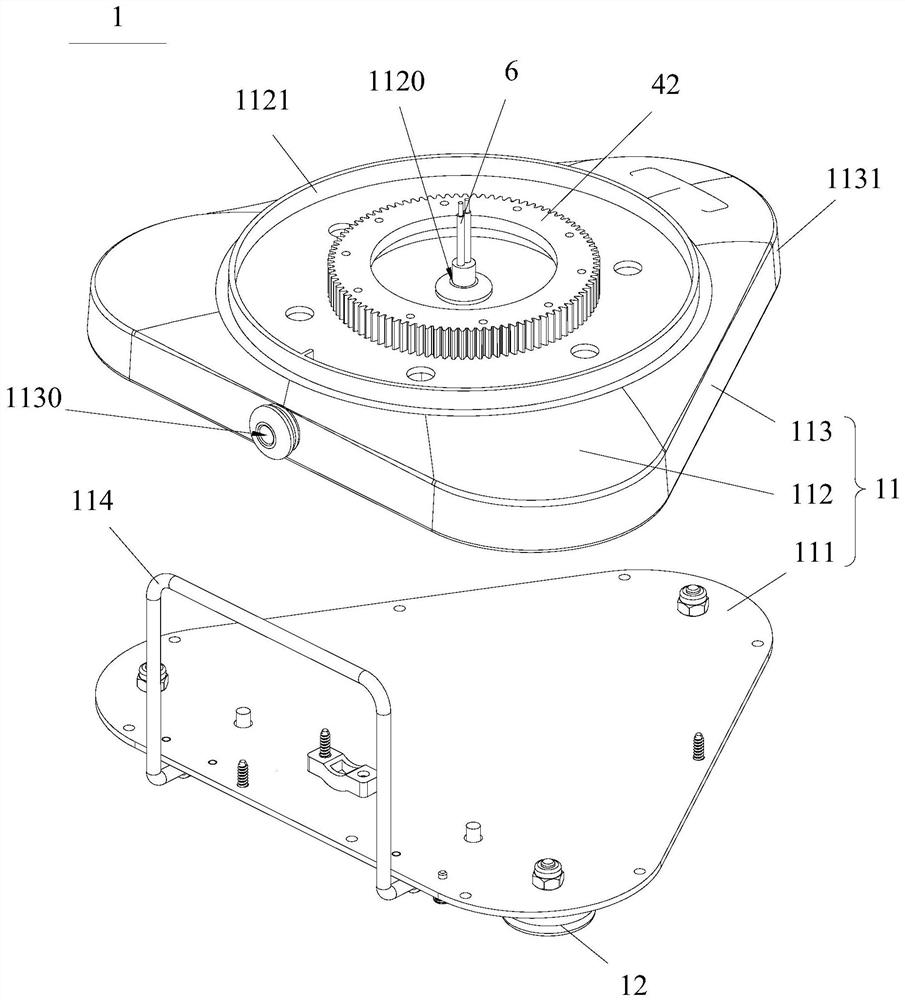
Figure 3
Abstract
Description
technical field
[0001] The present application relates to the technical field of lighting, in particular to a lamp. Background technique
[0002] For routine maintenance, emergency rescue, and criminal investigation and pursuit operations at night, affected by the lighting environment of the incident site and the driving ability of the vehicle itself, auxiliary operating vehicles with long-distance search functions are often required to provide on-site assistance from nearby roads. Illumination, reducing lighting blind spots on the job site. Dedicated lighting vehicles are expensive and cost-effective, and operating departments are more inclined to purchase high-power, long-distance lamps that can be flexibly disassembled and installed on the roof or in the cargo box of the vehicle.
[0003] Compared with the solution of installing searchlights in the cargo compartment, the solution of installing searchlights on the roof has the advantages of wide lighting range, no need to...
Examples
Embodiment Construction
[0028] In order to make the purpose, technical solution and advantages of the present application clearer, the present application will be further described in detail below in conjunction with the accompanying drawings and embodiments. It should be understood that the specific embodiments described here are only used to explain the present application, not to limit the present application.
[0029] It should be noted that when a component is referred to as being “fixed on” or “disposed on” another component, it may be directly or indirectly located on the other component. When an element is referred to as being "connected to" another element, it can be directly or indirectly connected to the other element. The terms "upper", "lower", "left", "right", "front", "rear", "vertical", "horizontal", "top", "bottom", "inner", "outer", etc. The indicated orientation or position is based on the orientation or position shown in the drawings, and is only for convenience of description, a...