
Two-part garbage can in which the bottom is separable from the sidewall
a garbage can and sidewall technology, applied in the field of trash can assemblies, can solve the problems of allowing trash to fall out, affecting the quality of trash cans,
Patent Information
- Authority / Receiving Office
- US · United States
- Patent Type
- Applications(United States)
- Current Assignee / Owner
- Publication Date
- 2021-12-16
- Estimated Expiration
- Not applicable · inactive patent
Smart Images
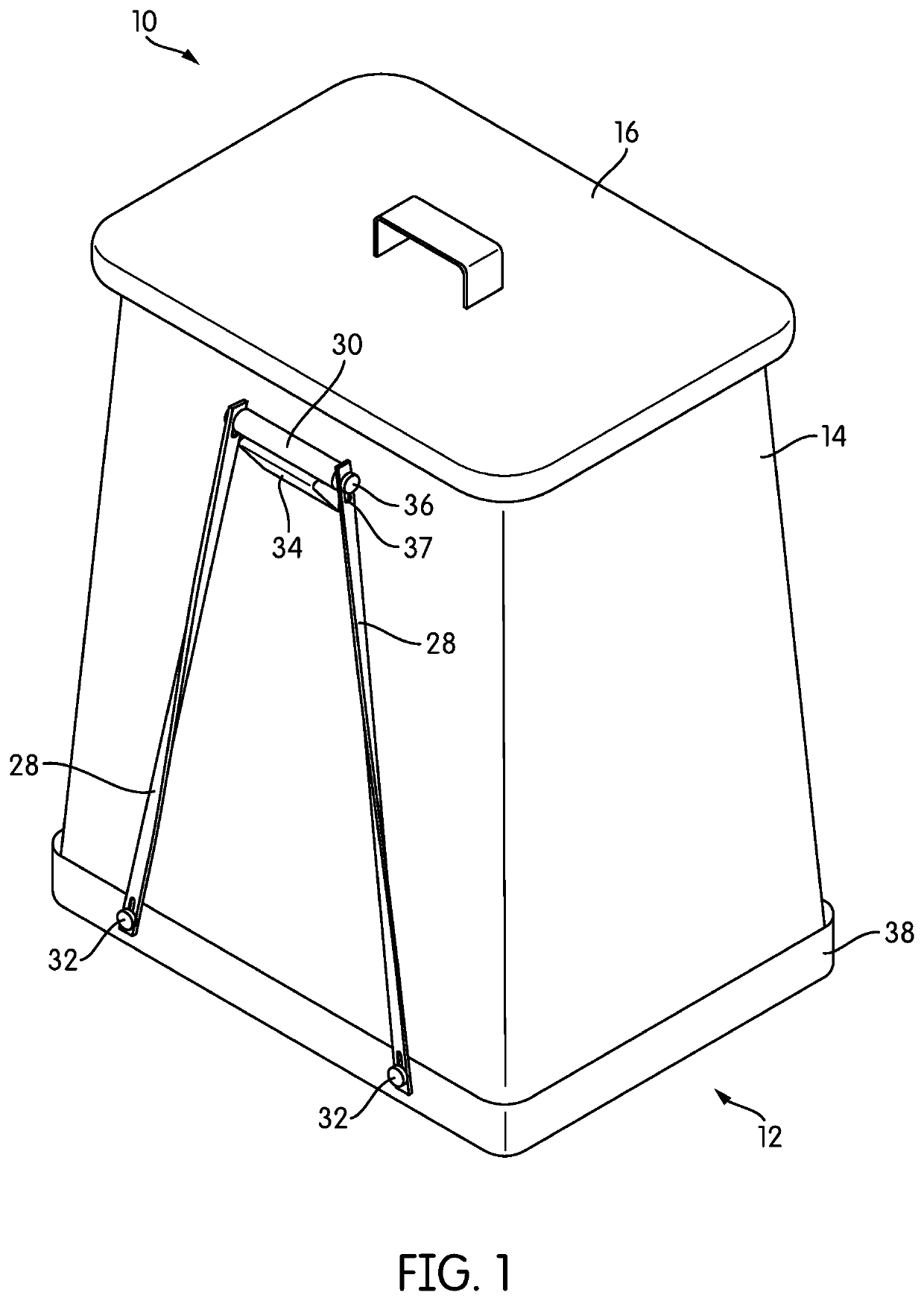
Figure 1 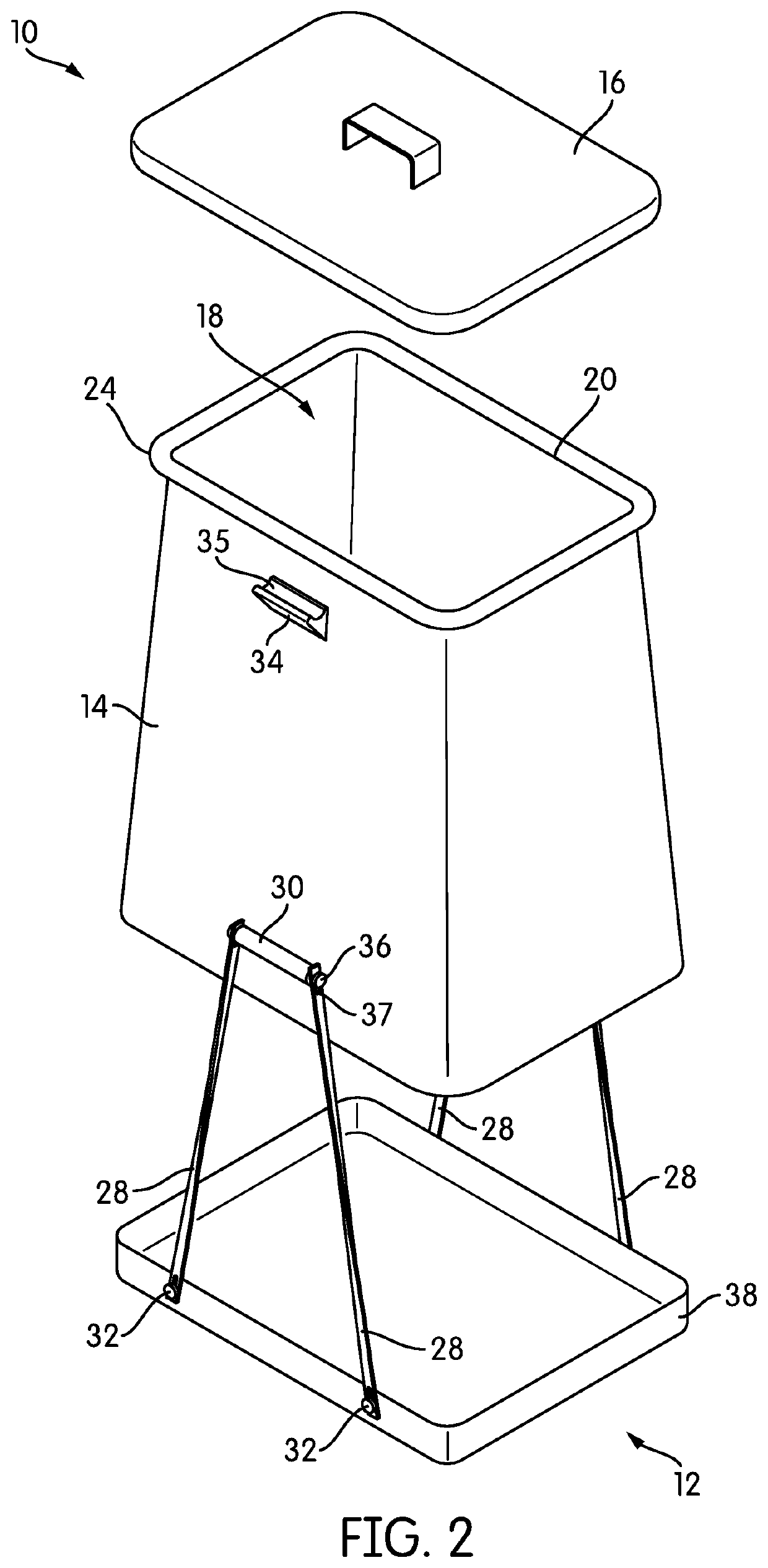
Figure 2 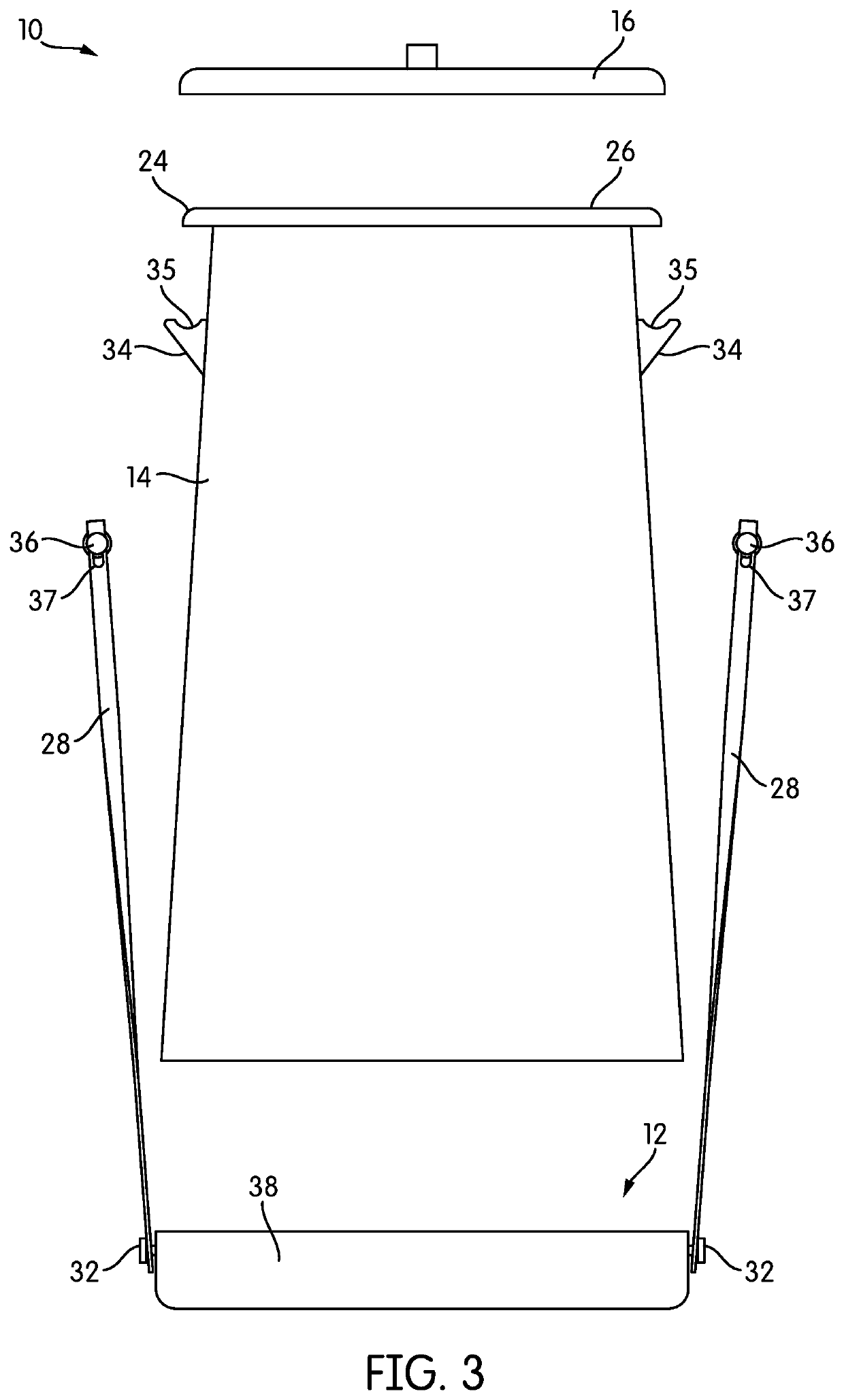
Figure 3
Abstract
Description
CROSS-REFERENCE TO RELATED APPLICATIONS
[0001] This application is a continuation of U.S. application Ser. No. 16 / 898,774, filed Jun. 11, 2020. The contents of that application are incorporated by reference herein in their entirety.TECHNICAL FIELD
[0002] This invention relates to trash can assemblies for collecting and disposing of trash.BACKGROUND
[0003] The humble trash can is ubiquitous in modern homes. Meant to store trash temporarily until it can be removed to a larger container for collection, trash cans are used in a variety of sizes throughout the home. While trash cans are made in nearly endless varieties, the typical trash can is essentially a round or rectilinear bucket. A lid may or may not be used to cover the trash can. In many cases, a plastic trash bag, or other type of impermeable liner, is used with the trash can. The trash bag helps to contain liquids and odors, and keeps the inside of the trash can at least somewhat cleaner.
[0004] The problem with the typical trash can ...
Examples
Embodiment Construction
[0020]FIG. 1 is a perspective view of a trash can 10 according to an embodiment of the invention. Trash can 10 includes a base 12 and a sidewall 14. A simple lid 16 tops sidewall 14 and closes trash can 10 in FIG. 1, but other types of lids may be used in other embodiments. In the illustrated embodiment, base 12, sidewall 14, and lid 16 have rectilinear features, although they could be round or rounded in other embodiments. As will be described below in more detail, base 12 and sidewall 14 are separable from one another.
[0021]FIG. 2 is an exploded perspective view and FIG. 3 is an exploded side view of trash can 10, illustrating the separability of base 12 and sidewall 14. Base 12 and sidewall 14 together define a hollow cavity 18 sized and otherwise adapted to hold a trash bag (not shown in FIGS. 2-3). Hollow cavity 18 extends between a top opening 20 of sidewall 14 and a bottom opening 22 of sidewall 14. Top opening 20 is sized to allow a trash bag or other material to be placed w...