

Endopelvic fascia treatment for incontinence
a technology of endopelvic fascia and incontinence, which is applied in the field of treatment of urinary incontinence, can solve the problems of shortening the response time of the tissue plane to stress pulses, incontinence, prolapse, etc., and affecting the quality of life of the patient,
Patent Information
- Authority / Receiving Office
- US · United States
- Patent Type
- Patents(United States)
- Current Assignee / Owner
- Publication Date
- 2004-06-15
- Estimated Expiration
- Not applicable · inactive patent
Smart Images
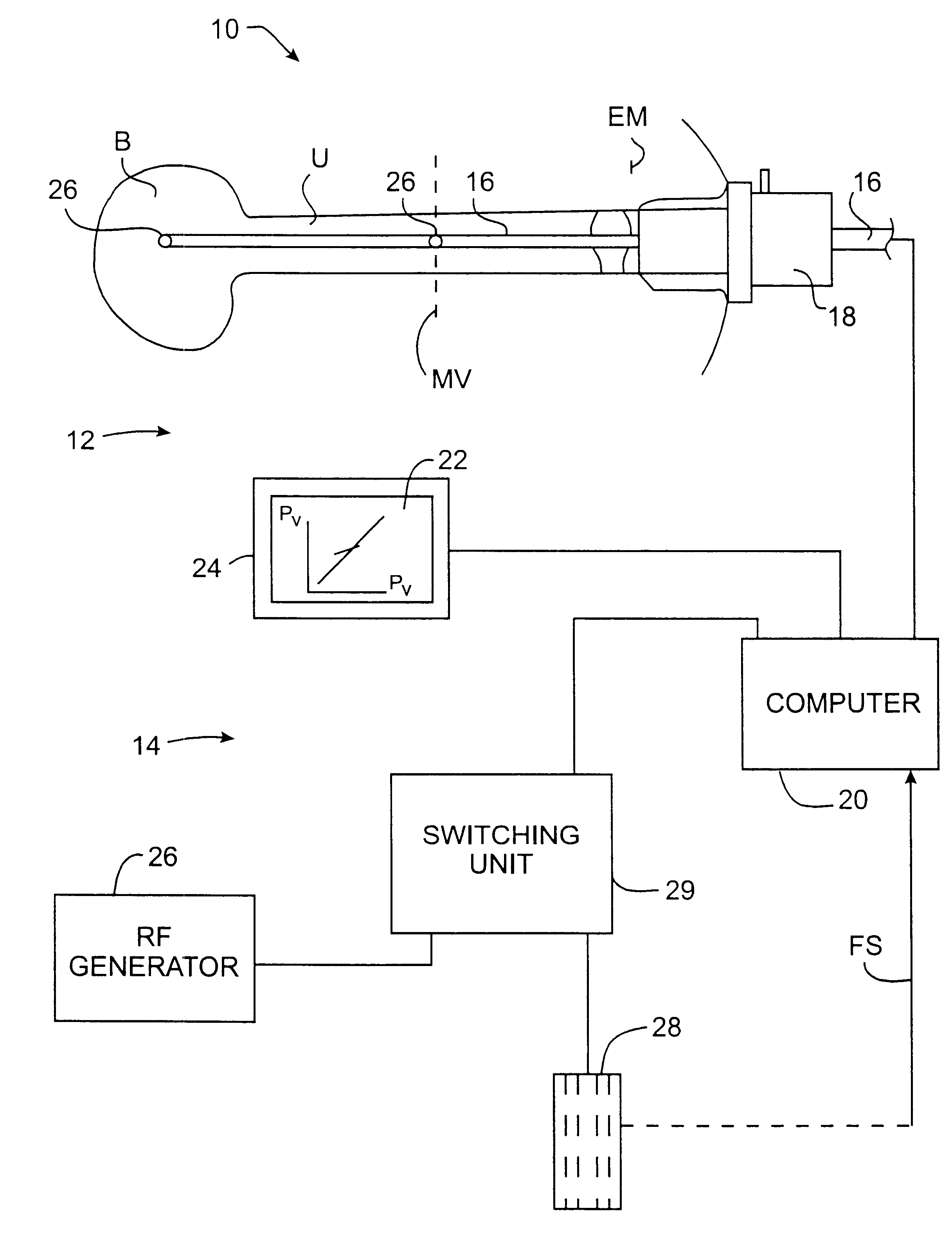
Figure 1 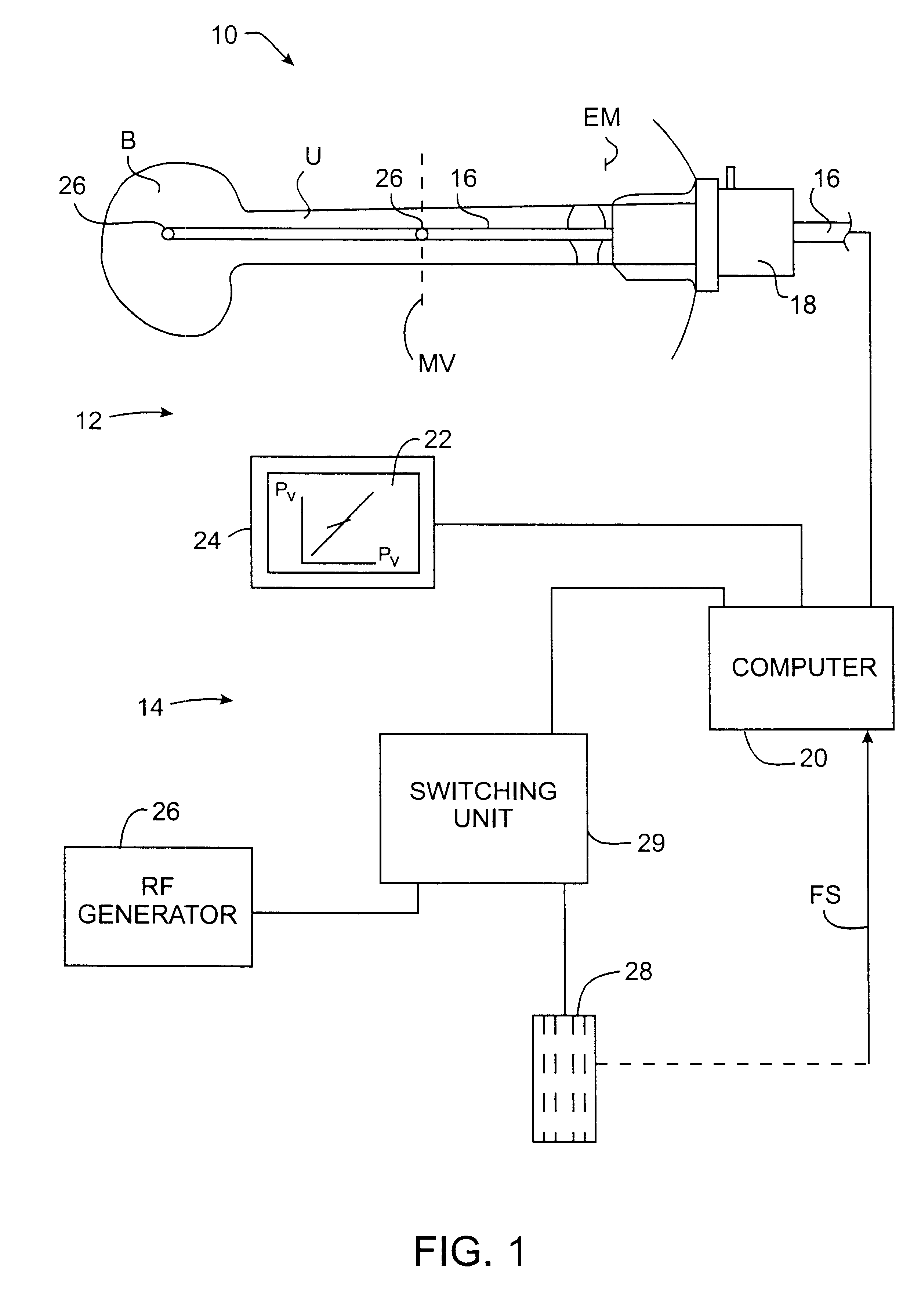
Figure 2 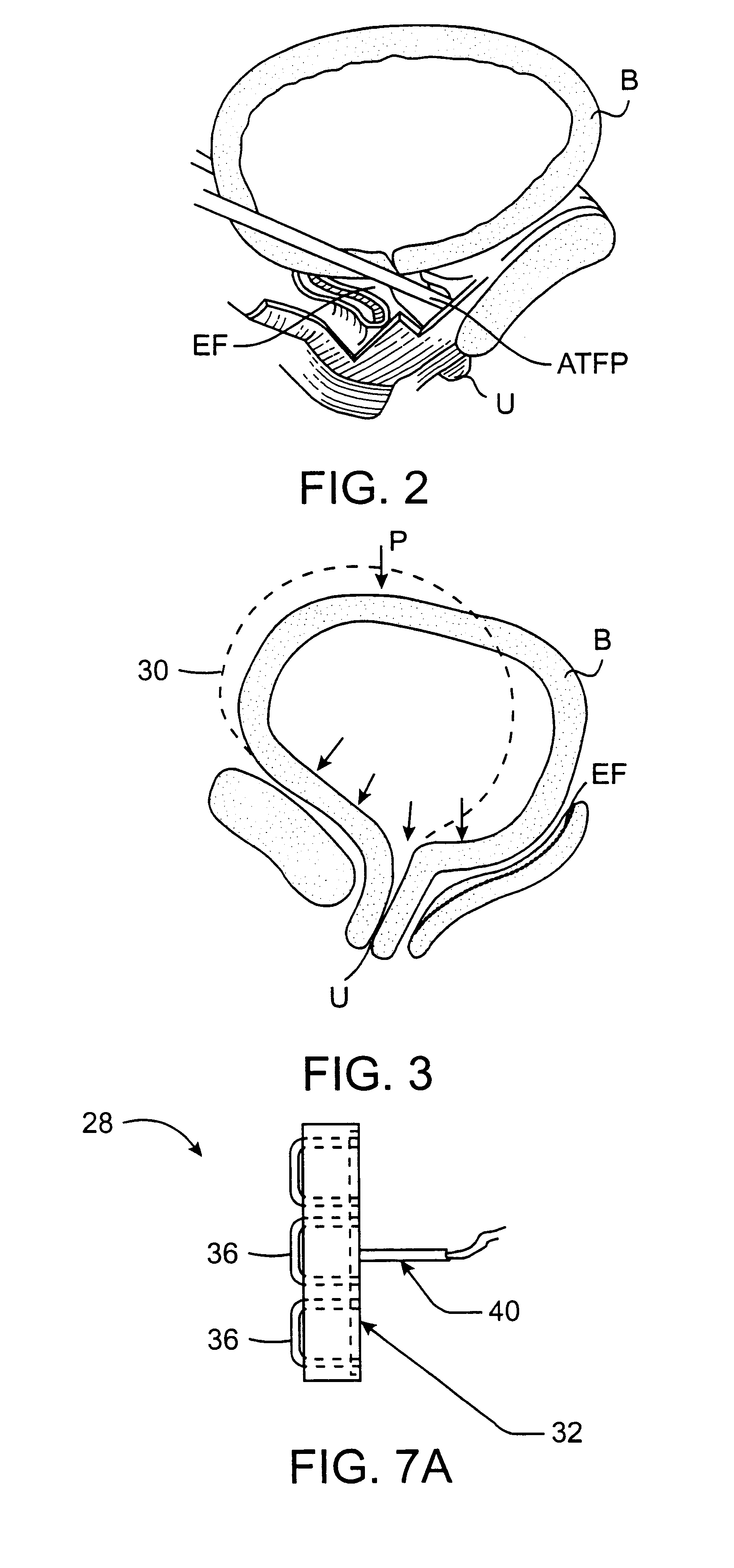
Figure 3
Abstract
Description
1. Field of the InventionThe present invention generally relates to medical devices, methods, and systems, particularly for the treatment of urinary incontinence.Urinary incontinence arises in both men and women with varying degrees of severity, and from different causes. In men, the condition frequently occurs as a result of prostatectomies which result in mechanical damage to the urinary sphincter. In women, the condition typically arises after pregnancy when musculoskeletal damage has occurred as a result of inelastic stretching of the structures supporting the genitourinary tract. Specifically, pregnancy can result in inelastic stretching of the pelvic floor, the external sphincter, and the tissue structures which support the bladder, urethra, and bladder neck region. In each of these cases, urinary leakage typically occurs when a patient's abdominal pressure increases as a result of stress, e.g., coughing, sneezing, laughing, exercise, or the like.Treatment of urinary incontine...
Examples
Embodiment Construction
The present invention generally provides methods, devices, and systems which enhance the structural support provided by a body's tissues, particularly as a therapy for incontinence. The techniques of the invention will generally involve promoting the formation of scar tissue so as to stiffen a tissue structure, and / or the attachment of two adjacent tissues (which are normally free to slide relative to each other) to each other. Energy may be directed from a probe into one or more fascial tissues of the pelvic support system. The energy may lead to the formation of stiff scar tissue, and / or it may attach adjacent fascial tissues together by fusing, cross-linking of collagen, the formation of adhesions, or the like. Optionally, the energy may also cause contraction of the fascial tissue by heating this collagenous layer to a contraction temperature over about 60.degree. C. Alternatively, stiffening and / or attachment of adjacent fascial layers may be provided without significant contra...