
Reactive polymer fused deposition manufacturing
a technology of reactive polymers and fused deposition, which is applied in the field of additive or fused deposition manufacturing, can solve the problems of limiting factors for high-strength components, part distortion, and so as to increase the mechanical strength of thermoplastics, increase bonding, and increase the effect of melt viscosity and melting point elevation
Patent Information
- Authority / Receiving Office
- US · United States
- Patent Type
- Patents(United States)
- Current Assignee / Owner
- Publication Date
- 2017-05-16
Smart Images
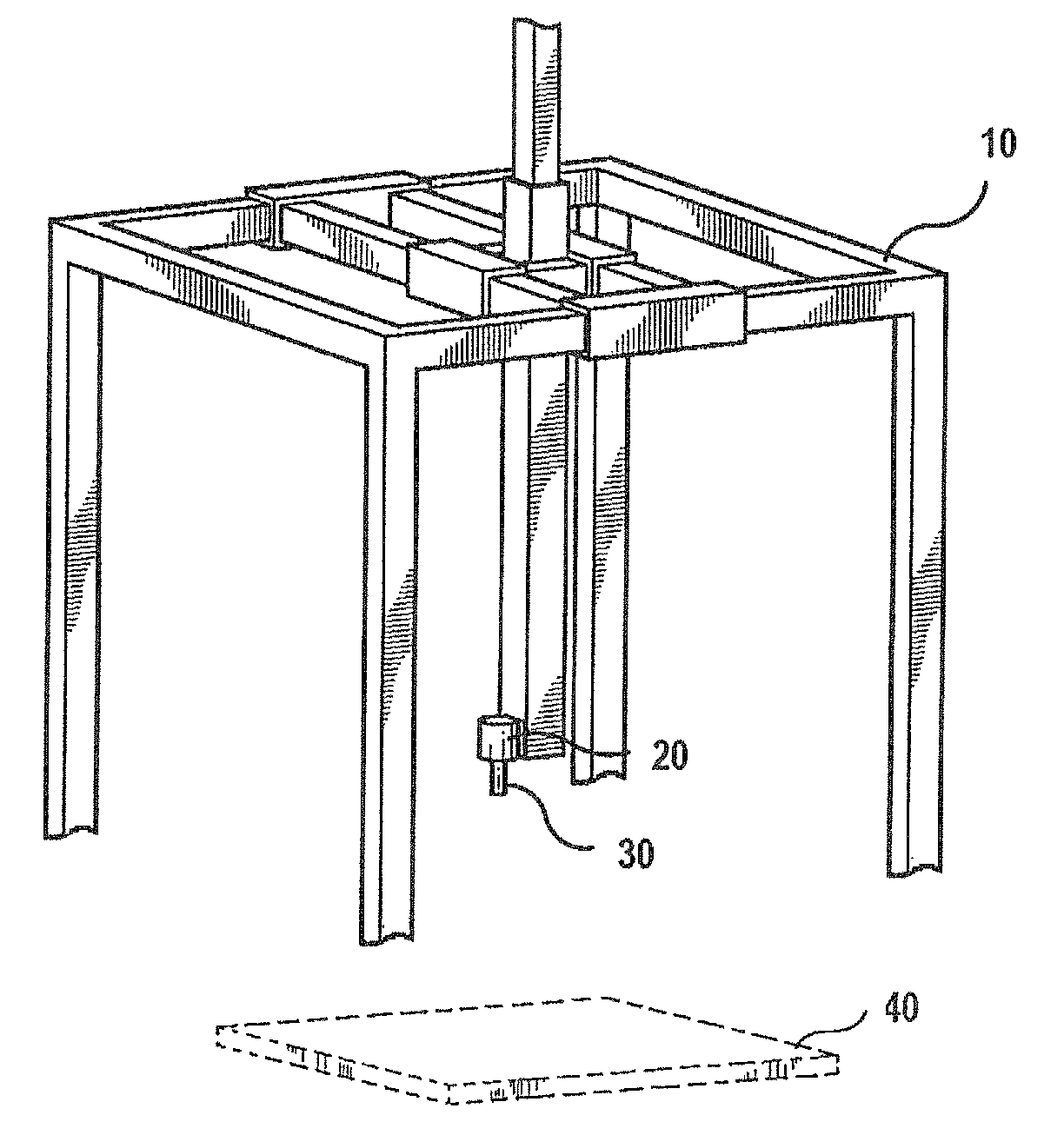
Figure 1 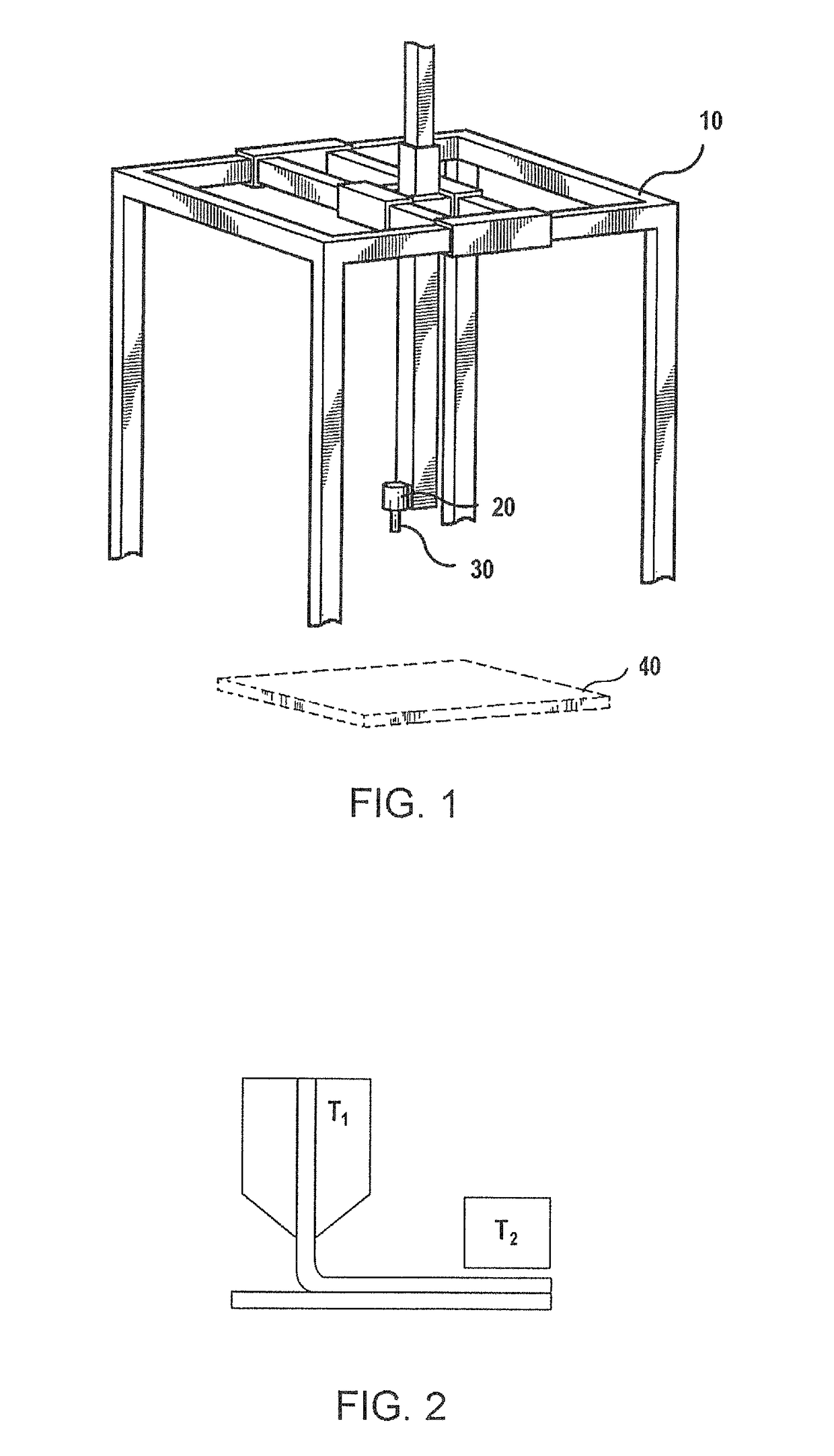
Figure 2 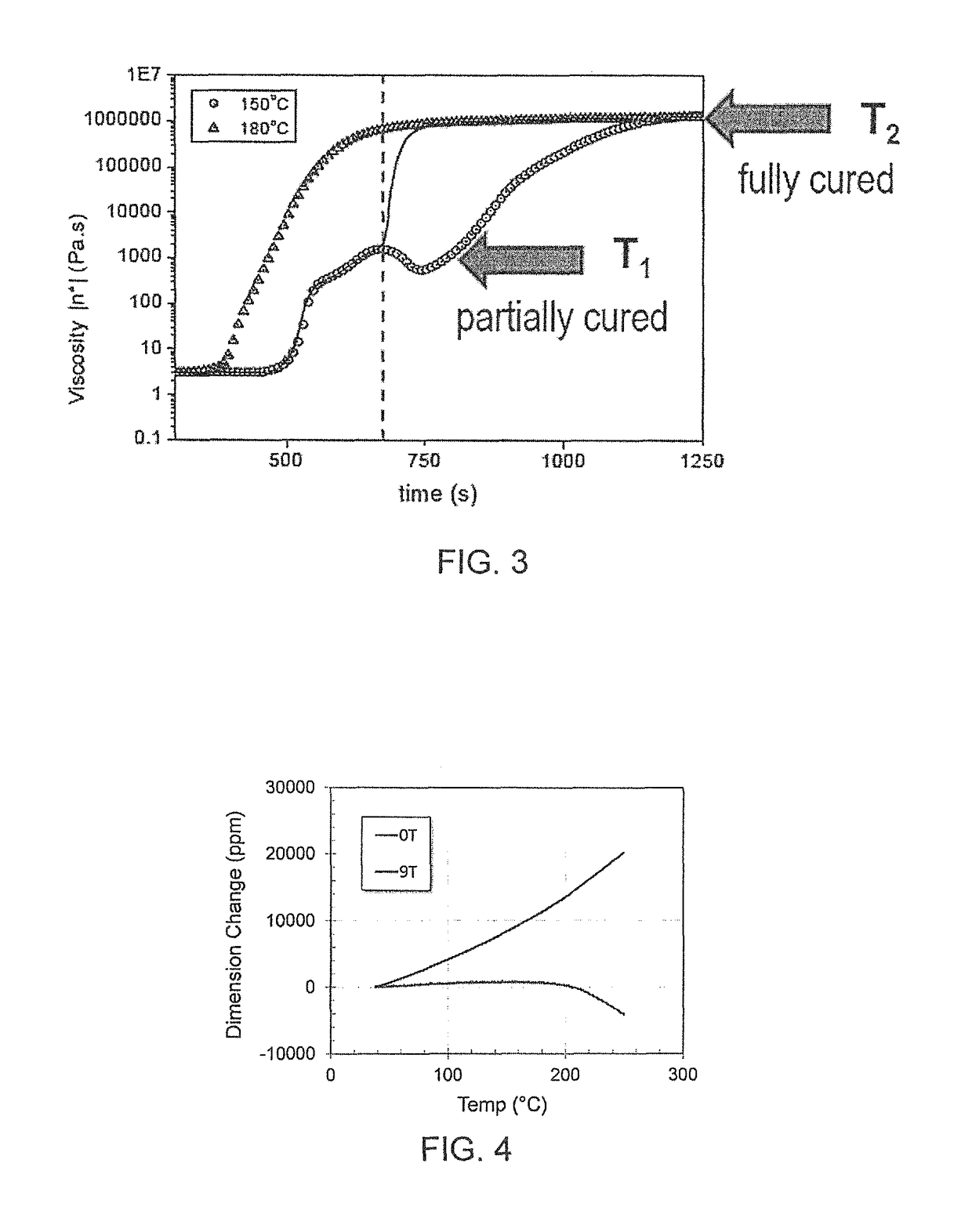
Figure 3
Abstract
Description
GOVERNMENT RIGHTS
[0001] This invention was made with government support under Contract No. DE-AC05-00OR22725 awarded by the U.S. Department of Energy. The government has certain rights in the invention.FIELD OF THE INVENTION
[0002] The present invention relates to additive or fused deposition manufacturing, and more particularly to use of reactive polymers, for additive or fused deposition manufacturing.BACKGROUND OF THE INVENTION
[0003] Additive manufacturing may be used to quickly and efficiently manufacture complex three-dimensional components layer-by-layer. Such additive manufacturing may be accomplished using polymers, alloys, powders, wires, or similar feed stock materials that transition from a liquid or granular state to a cured, solid component.
[0004] Polymer-based additive manufacturing is presently accomplished by several technologies that rely on feeding polymer materials through a nozzle that is precisely located over a preheated polymer substrate. Parts are manufactured by ...
Examples
Embodiment Construction
[0014]The present invention provides materials and processes for additive manufacturing and / or FDM with cross-linkable polymers. The method and materials of this invention address limitations discussed above with a materials and processing solution using reactive polymers, such as epoxies and polyurethanes. This method and materials of this invention enable rapid out-of-the-box printing with minimal part distortion and enhanced cross-layer bonding.
[0015]FIG. 1 shows a portion of a conventional polymer extrusion system 10, such as that feeds a polymer material into a liquefier to extrude a melted, liquefied polymer material. As shown the polymer extrusion system 10 uses a moveable print head 20 with a nozzle 30, positioned with respect to a work surface (not shown) to create a desired work piece, component, or part 40. The nozzle 30 can be any suitable nozzle, and desirably provides a sufficient throughput of low viscosity material, such as at a low process pressure (e.g., ≦about 100...