
Compositions and methods of treating gliomas
a technology of gliomas and compositions, applied in the field of compositions and methods of treating gliomas, can solve the problem of unmet medical needs for new potent agents
Patent Information
- Authority / Receiving Office
- US · United States
- Patent Type
- Patents(United States)
- Current Assignee / Owner
- Publication Date
- 2017-09-12
Smart Images
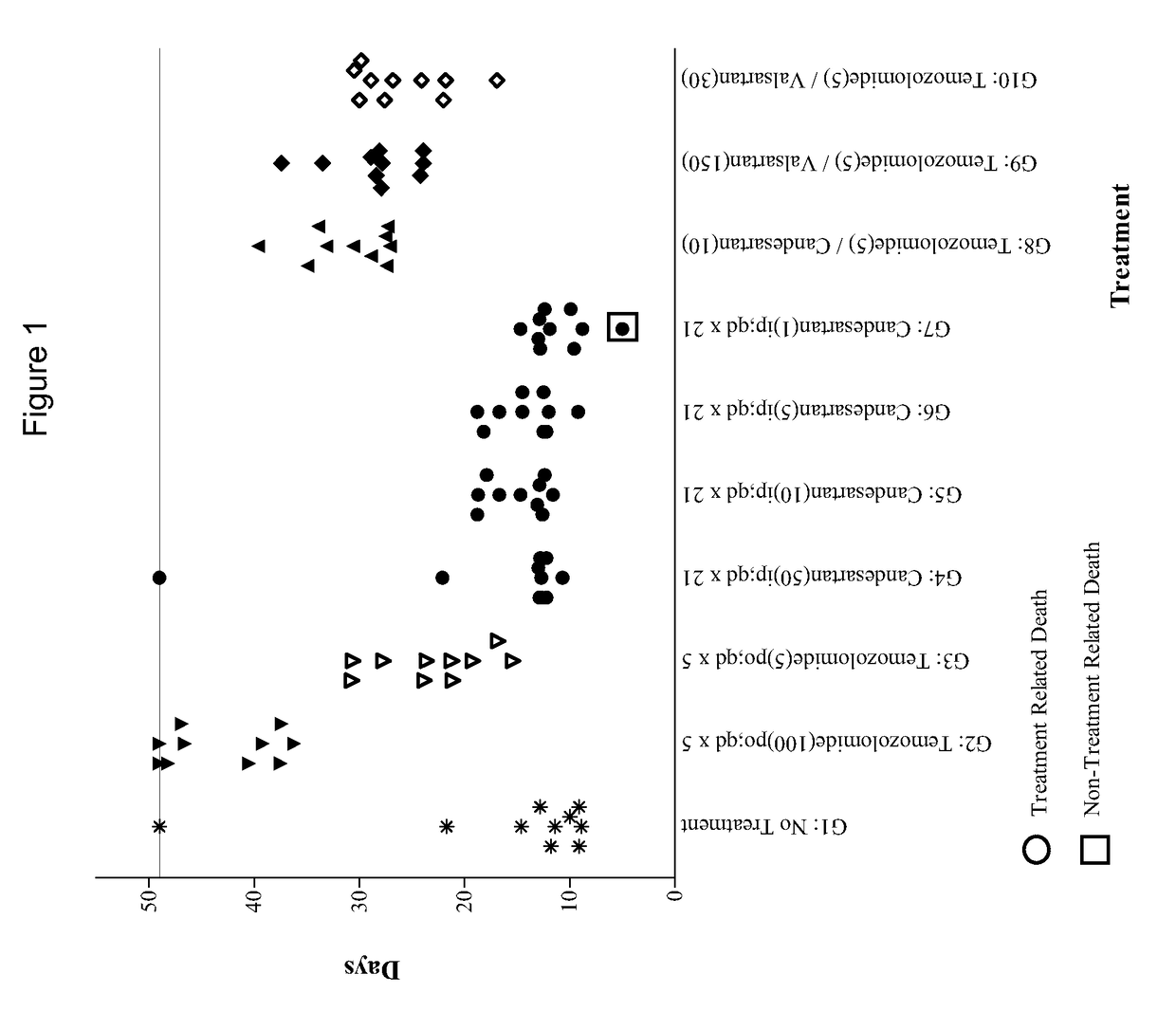
Figure 1 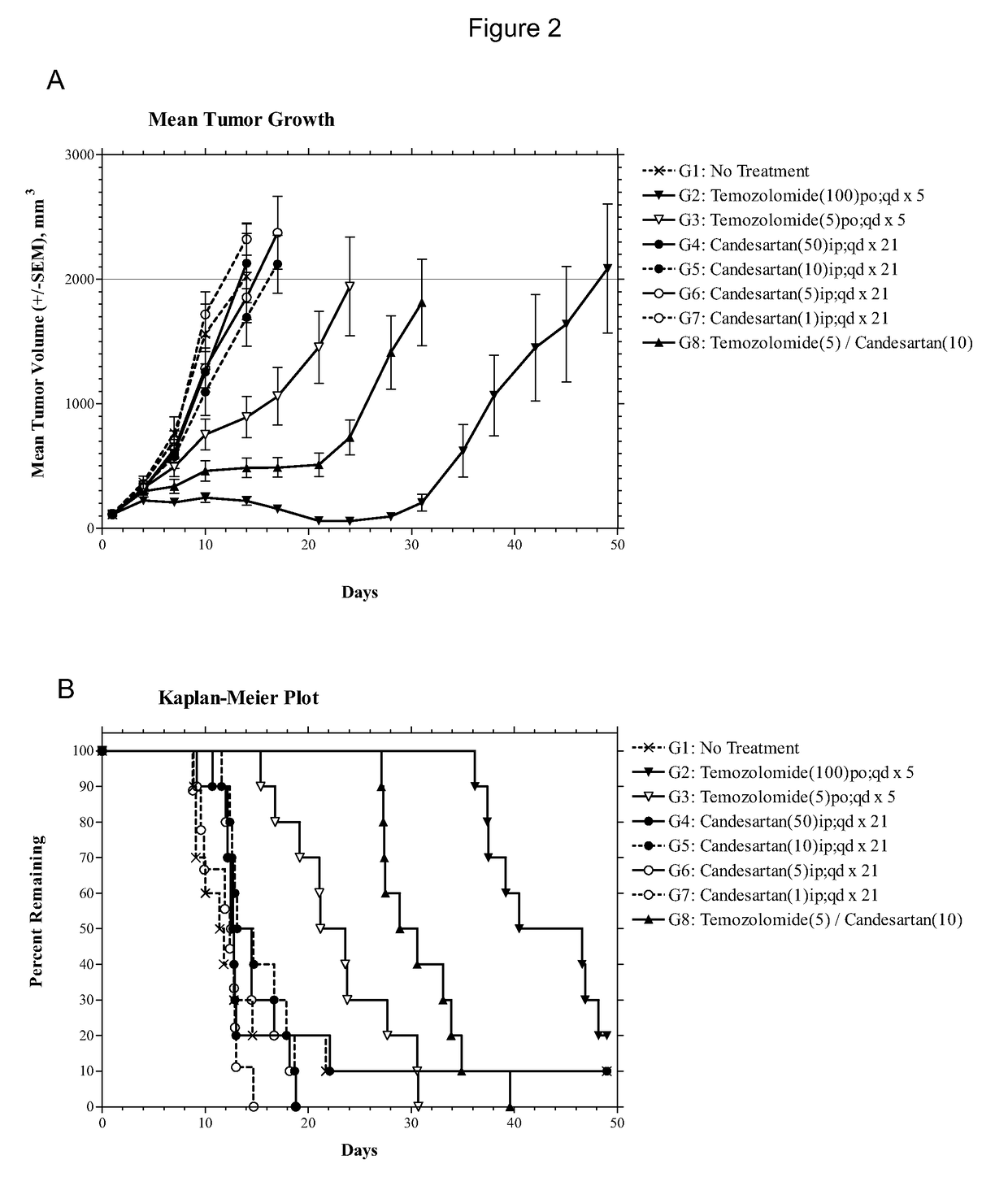
Figure 2 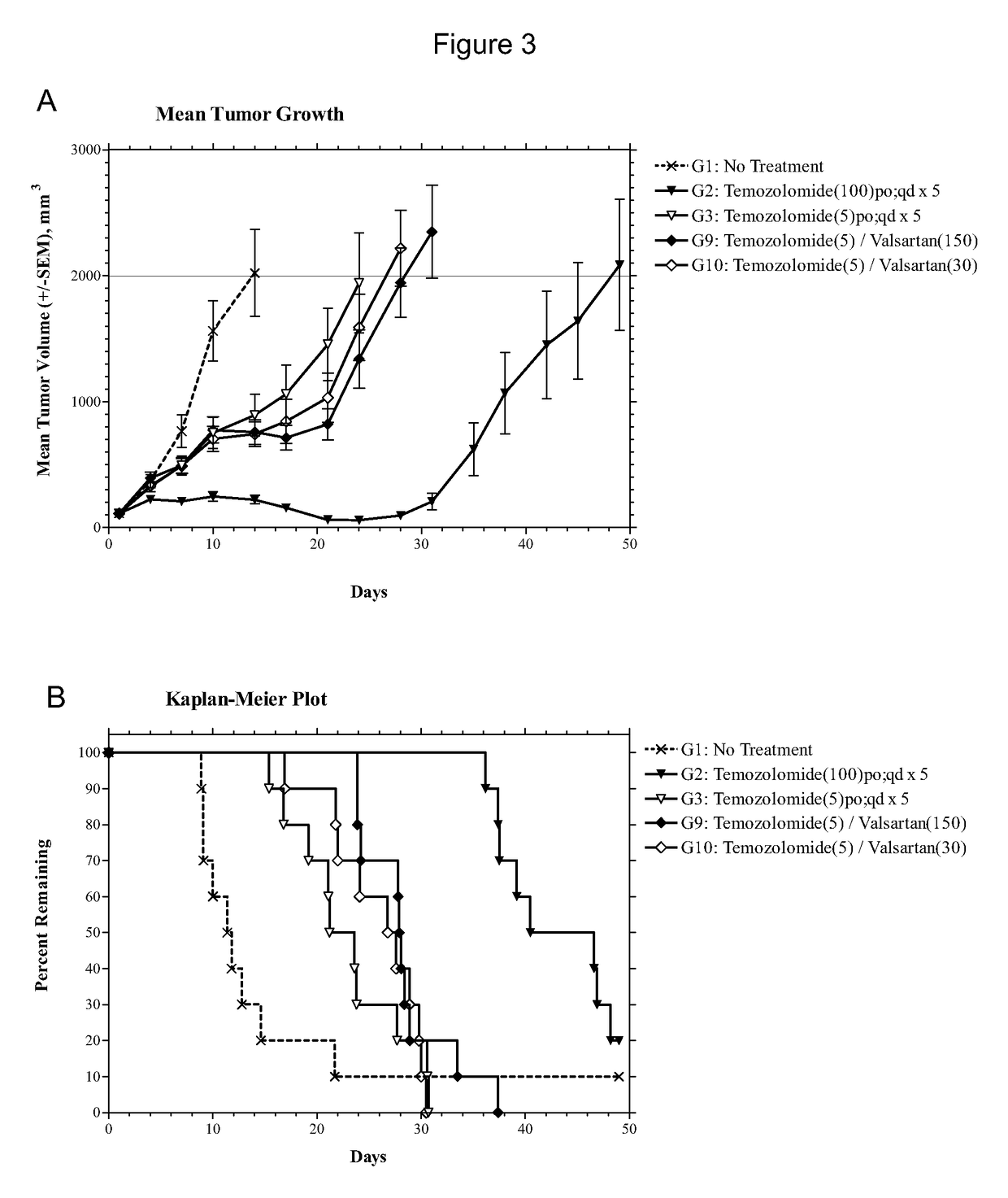
Figure 3
Abstract
Description
CROSS-REFERENCE TO RELATED APPLICATIONS
[0001] The present invention is the National Stage of International Application No. PCT / US2012 / 057085 filed Sep. 25, 2012, which claims benefit to U.S. provisional application Ser. No. 61 / 539,779, filed Sep. 27, 2011. The entire contents of the above application are incorporated by reference as if recited in full herein.FIELD OF THE INVENTION
[0002] This invention is directed to, inter alia, compositions and methods of treating gliomas.BACKGROUND OF THE INVENTION
[0003] Gliomas are one of the most frequent types of nervous system tumors, making up 32% of the total diagnosed cases. Gliomas often carry a bleak prognosis and thus are among the most devastating diseases. Signs and symptoms depend on several factors (size, rate of growth, localization of the tumor) and are mainly represented by headaches, seizures, neurological deficits, and changes in mental status. The treatment for gliomas generally involves surgical removal, followed by a course of r...
Examples
example 1
[0080]Female athymic nude mice (nu / nu, Harlan) were 8 to 12 weeks old. Xenografts were initiated with U87MG human glioblastomas (Piedmont Research Center, Morrisville, N.C.) by serial subcutaneous transplantation in these mice. Each test mouse received a U87MG tumor fragment of the size 1 mm3. When the average size of the tumors approached the target range of 80 to 120 mm3, treatment with temozolomide alone or a combination of temozolomide and candesartan cilexetil (abbreviated as candesartan in the Examples) were initiated. Body weight and tumor size were monitored.
[0081]Temozolomide was dissolved in deionized water. It was administered at either 5 mg / kg orally (p.o.) per day or 100 mg / kg (p.o.) per day, once daily from day 1 to day 5 of the treatment (qd×5). Candesartan in 0.5% carboxymethyl cellulose was dissolved in deionized water and administered intraperitoneally (i.p.) at the dose of 10 mg / kg once daily from day 1 to day 21 (qd×21).
[0082]The endpoint of the experiment is a m...
example 2
[0086]The experiment consisted of groups (n=10) of female athymic nude mice bearing subcutaneous U87MG xenografts (75-144 mm3) on Day 1. Candesartan was evaluated as monotherapies at dosages of 1, 5, 10 and 50 mg / kg administered intraperitoneally (i.p.) on a once daily for twenty-one days (qd×21) schedule. The combinations of temozolomide (5 mg / kg p.o. qd×5) with candesartan (10 mg / kg i.p. qd×21) or valsartan (150 or 30 mg / kg i.p. qd×21) were also evaluated in comparison to temozolomide alone (5 mg / kg p.o. qd×5). The study included an untreated tumor growth control group and a positive control group that received temozolomide at 100 mg / kg p.o. qd×5. Dosing was initiated on Day 1, and tumors were measured twice each week until the study was ended on Day 49. Animals were monitored individually and each mouse was euthanized for endpoint when its tumor attained a volume of 2000 mm3 (about 2 grams) or on the final day (Day 49), whichever came first. Tumor samples were collected at endpoi...
example 3
[0124]In this Example, candesartan administered on different schedules in combination with temozolomide were evaluated for efficacy in nu / nu mice bearing subcutaneous U87MG human glioblastoma xenografts.
[0125]Temozolomide (5 mg / kg p.o. qd×5) in combination with candesartan administered at 10 mg / kg i.p. were administered on three different schedules: once daily for thirty-five days (qd×35), once daily for five days (qd×5), and once daily for thirty days beginning on Day 6 (qd×30 start Day 6). The experiment included temozolomide monotherapy (5 mg / kg p.o. qd×5) and positive control (100 mg / kg p.o. qd×5) groups. An untreated group served as the control group for efficacy analysis. Dosing was initiated on Day 1, except where indicated otherwise, and tumors were measured twice each week until the study was ended on Day 46. Animals were monitored individually and each mouse was euthanized for endpoint when its tumor attained a volume of 2000 mm3 (about 2 grams) or on the final day (Day 46...