

Accelerometer Sensor Signal Conditioning: Techniques for Clean Outputs
JUN 27, 20269 MIN READ
Generate Your Research Report Instantly with AI Agent
PatSnap Eureka helps you evaluate technical feasibility & market potential.
Accelerometer Signal Conditioning Background and Objectives
Accelerometer sensors have become ubiquitous in modern electronic systems, spanning applications from consumer electronics and automotive safety systems to industrial monitoring and aerospace navigation. These micro-electromechanical systems (MEMS) devices convert mechanical acceleration into electrical signals, enabling precise measurement of motion, vibration, and orientation changes. However, the raw output signals from accelerometer sensors are inherently susceptible to various forms of noise, interference, and distortion that can significantly compromise measurement accuracy and system performance.
The evolution of accelerometer technology has progressed from early piezoelectric devices to sophisticated capacitive and piezoresistive MEMS sensors capable of detecting accelerations ranging from micro-g levels to hundreds of g-forces. As sensor sensitivity has increased and applications have become more demanding, the importance of effective signal conditioning has grown exponentially. Modern accelerometer applications require not only high precision but also real-time processing capabilities, low power consumption, and robust performance across varying environmental conditions.
Signal conditioning represents the critical interface between the physical sensor element and the digital processing system. This intermediate stage encompasses amplification, filtering, offset correction, linearization, and analog-to-digital conversion processes that transform the raw sensor output into clean, usable digital data. The quality of signal conditioning directly impacts the overall system performance, affecting parameters such as signal-to-noise ratio, bandwidth, dynamic range, and measurement resolution.
Contemporary accelerometer signal conditioning faces several technical challenges including thermal drift compensation, vibration-induced noise rejection, electromagnetic interference mitigation, and power supply noise suppression. Additionally, the trend toward miniaturization and integration has introduced new complexities related to crosstalk between multiple sensor axes, package stress effects, and manufacturing variations that must be addressed through sophisticated conditioning techniques.
The primary objective of advanced accelerometer signal conditioning is to maximize the extraction of meaningful acceleration information while minimizing the impact of unwanted artifacts and disturbances. This involves developing adaptive filtering algorithms, implementing intelligent gain control mechanisms, and creating robust calibration procedures that can maintain accuracy across the sensor's operational lifetime. Furthermore, modern conditioning systems must balance performance requirements with constraints such as power consumption, processing latency, and implementation cost to meet the diverse needs of emerging applications in Internet of Things devices, autonomous vehicles, and precision instrumentation systems.
The evolution of accelerometer technology has progressed from early piezoelectric devices to sophisticated capacitive and piezoresistive MEMS sensors capable of detecting accelerations ranging from micro-g levels to hundreds of g-forces. As sensor sensitivity has increased and applications have become more demanding, the importance of effective signal conditioning has grown exponentially. Modern accelerometer applications require not only high precision but also real-time processing capabilities, low power consumption, and robust performance across varying environmental conditions.
Signal conditioning represents the critical interface between the physical sensor element and the digital processing system. This intermediate stage encompasses amplification, filtering, offset correction, linearization, and analog-to-digital conversion processes that transform the raw sensor output into clean, usable digital data. The quality of signal conditioning directly impacts the overall system performance, affecting parameters such as signal-to-noise ratio, bandwidth, dynamic range, and measurement resolution.
Contemporary accelerometer signal conditioning faces several technical challenges including thermal drift compensation, vibration-induced noise rejection, electromagnetic interference mitigation, and power supply noise suppression. Additionally, the trend toward miniaturization and integration has introduced new complexities related to crosstalk between multiple sensor axes, package stress effects, and manufacturing variations that must be addressed through sophisticated conditioning techniques.
The primary objective of advanced accelerometer signal conditioning is to maximize the extraction of meaningful acceleration information while minimizing the impact of unwanted artifacts and disturbances. This involves developing adaptive filtering algorithms, implementing intelligent gain control mechanisms, and creating robust calibration procedures that can maintain accuracy across the sensor's operational lifetime. Furthermore, modern conditioning systems must balance performance requirements with constraints such as power consumption, processing latency, and implementation cost to meet the diverse needs of emerging applications in Internet of Things devices, autonomous vehicles, and precision instrumentation systems.
Market Demand for High-Precision Accelerometer Applications
The global market for high-precision accelerometer applications has experienced substantial growth driven by the proliferation of advanced technologies requiring accurate motion sensing and vibration monitoring. Consumer electronics represent the largest market segment, with smartphones, tablets, and wearable devices incorporating multiple accelerometers for screen orientation, gesture recognition, and fitness tracking. The automotive industry has emerged as a critical growth driver, utilizing high-precision accelerometers in electronic stability control systems, airbag deployment mechanisms, and advanced driver assistance systems.
Industrial automation and manufacturing sectors demonstrate increasing demand for precision accelerometers in condition monitoring applications. These systems require clean, noise-free signals to detect minute vibrations that indicate equipment wear, misalignment, or impending failure. The aerospace and defense industries maintain stringent requirements for accelerometer performance, particularly in navigation systems, flight control mechanisms, and structural health monitoring of aircraft components.
Healthcare applications represent a rapidly expanding market segment, with accelerometers integrated into medical devices for patient monitoring, fall detection systems, and rehabilitation equipment. The aging global population and increased focus on remote healthcare monitoring have accelerated adoption in this sector. Gaming and virtual reality applications have created new demand for ultra-responsive accelerometers capable of detecting subtle movements with minimal latency.
The Internet of Things ecosystem has generated significant demand for low-power, high-precision accelerometers in smart city infrastructure, environmental monitoring systems, and industrial IoT applications. These applications require robust signal conditioning to maintain accuracy in challenging electromagnetic environments while minimizing power consumption.
Emerging applications in robotics, autonomous vehicles, and precision agriculture continue to expand market opportunities. The trend toward miniaturization while maintaining or improving performance specifications has intensified the need for advanced signal conditioning techniques. Market growth is further supported by increasing adoption of predictive maintenance strategies across industries, where clean accelerometer outputs are essential for accurate analysis and decision-making.
Industrial automation and manufacturing sectors demonstrate increasing demand for precision accelerometers in condition monitoring applications. These systems require clean, noise-free signals to detect minute vibrations that indicate equipment wear, misalignment, or impending failure. The aerospace and defense industries maintain stringent requirements for accelerometer performance, particularly in navigation systems, flight control mechanisms, and structural health monitoring of aircraft components.
Healthcare applications represent a rapidly expanding market segment, with accelerometers integrated into medical devices for patient monitoring, fall detection systems, and rehabilitation equipment. The aging global population and increased focus on remote healthcare monitoring have accelerated adoption in this sector. Gaming and virtual reality applications have created new demand for ultra-responsive accelerometers capable of detecting subtle movements with minimal latency.
The Internet of Things ecosystem has generated significant demand for low-power, high-precision accelerometers in smart city infrastructure, environmental monitoring systems, and industrial IoT applications. These applications require robust signal conditioning to maintain accuracy in challenging electromagnetic environments while minimizing power consumption.
Emerging applications in robotics, autonomous vehicles, and precision agriculture continue to expand market opportunities. The trend toward miniaturization while maintaining or improving performance specifications has intensified the need for advanced signal conditioning techniques. Market growth is further supported by increasing adoption of predictive maintenance strategies across industries, where clean accelerometer outputs are essential for accurate analysis and decision-making.
Current Noise and Interference Challenges in Accelerometer Outputs
Accelerometer sensors face significant noise and interference challenges that compromise signal integrity and measurement accuracy across various applications. These challenges stem from multiple sources and manifest in different forms, creating complex signal conditioning requirements for achieving clean, reliable outputs.
Thermal noise represents one of the most fundamental interference sources in accelerometer systems. This white noise originates from the random motion of charge carriers within the sensor's electronic components and increases with temperature. The noise floor established by thermal effects directly impacts the sensor's resolution and minimum detectable acceleration levels, particularly affecting precision measurements in low-acceleration environments.
Electronic interference from switching circuits, power supplies, and digital processing units creates substantial challenges in modern accelerometer implementations. High-frequency switching noise from adjacent digital circuits can couple into sensitive analog signal paths through electromagnetic interference or ground loops. Power supply ripple and voltage fluctuations introduce low-frequency noise components that can mask or distort actual acceleration signals, especially in battery-powered portable devices.
Environmental electromagnetic interference poses another critical challenge, particularly in industrial and automotive applications. Radio frequency emissions from wireless communication systems, motor drives, and switching power supplies can penetrate sensor circuits and create spurious signals. The increasing prevalence of wireless devices and high-speed digital systems has intensified this challenge, requiring more sophisticated shielding and filtering approaches.
Mechanical vibrations and acoustic interference create unique challenges for accelerometer signal conditioning. Unwanted mechanical coupling from nearby machinery, structural vibrations, or acoustic waves can introduce false acceleration readings that are difficult to distinguish from legitimate signals. These mechanical noise sources often occur at specific frequencies that may overlap with the desired measurement bandwidth.
Cross-axis sensitivity and mounting-induced interference represent additional challenges specific to accelerometer implementations. Imperfect sensor alignment, mounting stress, and thermal expansion can cause unwanted coupling between measurement axes, leading to crosstalk and measurement errors. These effects become particularly problematic in high-precision applications where small acceleration changes must be accurately detected.
Ground loops and common-mode interference create systematic noise issues in multi-sensor systems or when accelerometers interface with other electronic systems. Differences in ground potential between various system components can introduce current flows that manifest as noise in the acceleration measurements. This challenge becomes more severe in distributed sensing systems or when sensors are located remotely from processing electronics.
Thermal noise represents one of the most fundamental interference sources in accelerometer systems. This white noise originates from the random motion of charge carriers within the sensor's electronic components and increases with temperature. The noise floor established by thermal effects directly impacts the sensor's resolution and minimum detectable acceleration levels, particularly affecting precision measurements in low-acceleration environments.
Electronic interference from switching circuits, power supplies, and digital processing units creates substantial challenges in modern accelerometer implementations. High-frequency switching noise from adjacent digital circuits can couple into sensitive analog signal paths through electromagnetic interference or ground loops. Power supply ripple and voltage fluctuations introduce low-frequency noise components that can mask or distort actual acceleration signals, especially in battery-powered portable devices.
Environmental electromagnetic interference poses another critical challenge, particularly in industrial and automotive applications. Radio frequency emissions from wireless communication systems, motor drives, and switching power supplies can penetrate sensor circuits and create spurious signals. The increasing prevalence of wireless devices and high-speed digital systems has intensified this challenge, requiring more sophisticated shielding and filtering approaches.
Mechanical vibrations and acoustic interference create unique challenges for accelerometer signal conditioning. Unwanted mechanical coupling from nearby machinery, structural vibrations, or acoustic waves can introduce false acceleration readings that are difficult to distinguish from legitimate signals. These mechanical noise sources often occur at specific frequencies that may overlap with the desired measurement bandwidth.
Cross-axis sensitivity and mounting-induced interference represent additional challenges specific to accelerometer implementations. Imperfect sensor alignment, mounting stress, and thermal expansion can cause unwanted coupling between measurement axes, leading to crosstalk and measurement errors. These effects become particularly problematic in high-precision applications where small acceleration changes must be accurately detected.
Ground loops and common-mode interference create systematic noise issues in multi-sensor systems or when accelerometers interface with other electronic systems. Differences in ground potential between various system components can introduce current flows that manifest as noise in the acceleration measurements. This challenge becomes more severe in distributed sensing systems or when sensors are located remotely from processing electronics.
Existing Signal Conditioning Solutions for Clean Accelerometer Data
01 Signal processing and filtering techniques for accelerometer data
Various signal processing methods are employed to enhance accelerometer sensor signal quality, including digital filtering, noise reduction algorithms, and signal conditioning techniques. These methods help eliminate unwanted noise, smooth signal variations, and improve the overall accuracy of acceleration measurements by processing raw sensor data through mathematical algorithms and filtering circuits.- Signal processing and filtering techniques for accelerometer data: Various signal processing methods are employed to enhance accelerometer sensor signal quality, including digital filtering, noise reduction algorithms, and signal conditioning techniques. These methods help eliminate unwanted noise, improve signal-to-noise ratio, and extract meaningful motion data from raw accelerometer outputs. Advanced filtering approaches can distinguish between actual motion signals and environmental interference.
- Calibration and compensation methods for accelerometer sensors: Calibration techniques are essential for maintaining accurate accelerometer measurements and compensating for sensor drift, temperature effects, and manufacturing variations. These methods involve systematic correction of sensor outputs, offset compensation, and scale factor adjustments to ensure consistent and reliable signal quality across different operating conditions and sensor units.
- Multi-axis accelerometer signal integration and fusion: Integration of signals from multiple accelerometer axes enables comprehensive motion detection and improved overall signal quality. Signal fusion techniques combine data from different sensor orientations to provide more accurate motion measurements, reduce individual axis errors, and enhance the robustness of motion detection systems through redundancy and cross-validation.
- Real-time signal quality assessment and monitoring: Real-time monitoring systems evaluate accelerometer signal quality continuously, detecting anomalies, signal degradation, and sensor malfunctions. These systems implement quality metrics, threshold-based detection algorithms, and adaptive signal processing to maintain optimal performance and provide feedback on sensor health and measurement reliability.
- Hardware optimization and sensor design for improved signal quality: Hardware-level improvements focus on sensor design, packaging, and electronic circuit optimization to enhance signal quality at the source. These approaches include improved sensor materials, better mechanical isolation, optimized analog-to-digital conversion, and enhanced electromagnetic interference shielding to minimize signal corruption and maximize measurement accuracy.
02 Calibration and compensation methods for accelerometer sensors
Calibration techniques are essential for maintaining high signal quality in accelerometer sensors. These methods involve systematic procedures to correct for sensor bias, scale factor errors, and temperature-related drift. Compensation algorithms adjust the sensor output to account for manufacturing variations and environmental factors that could degrade signal accuracy over time.Expand Specific Solutions03 Multi-axis accelerometer signal integration and fusion
Advanced techniques for combining signals from multiple accelerometer axes or multiple sensors to improve overall measurement quality and reliability. These approaches utilize sensor fusion algorithms, data integration methods, and cross-axis correlation analysis to enhance signal-to-noise ratio and provide more robust acceleration measurements in complex motion scenarios.Expand Specific Solutions04 Error detection and signal validation mechanisms
Implementation of diagnostic systems and validation algorithms to detect and correct errors in accelerometer sensor signals. These mechanisms include fault detection routines, signal integrity checks, and automatic error correction procedures that identify anomalous readings, sensor malfunctions, or data corruption to maintain consistent signal quality throughout operation.Expand Specific Solutions05 Hardware optimization and sensor design improvements
Physical and electronic design enhancements to accelerometer sensors that directly impact signal quality at the hardware level. These improvements include optimized sensor geometry, enhanced electronic circuits, better shielding techniques, and advanced manufacturing processes that reduce inherent noise sources and improve the fundamental signal characteristics of the accelerometer device.Expand Specific Solutions
Key Players in Accelerometer and Signal Conditioning Industry
The accelerometer sensor signal conditioning market represents a mature yet evolving technological landscape driven by increasing demand for precision motion sensing across automotive, aerospace, and consumer electronics sectors. The industry has reached a substantial scale with established players like Honeywell International, Siemens AG, and Texas Instruments leading traditional conditioning circuit development, while specialized firms such as InvenSense and Analog Devices advance integrated MEMS solutions. Technology maturity varies significantly across applications, with automotive giants like Robert Bosch and Continental Automotive pushing sophisticated multi-axis conditioning systems for safety applications, whereas aerospace leaders including Boeing and Atlantic Inertial Systems focus on high-precision military-grade solutions. The competitive dynamics show consolidation among semiconductor manufacturers like Qualcomm integrating conditioning capabilities into system-on-chip designs, while niche players such as NIRA Dynamics and Heidenhain maintain specialized positioning in industrial automation and precision measurement applications.
Honeywell International Technologies Ltd.
Technical Solution: Honeywell develops accelerometer signal conditioning solutions primarily for aerospace and industrial applications, focusing on high-reliability and harsh environment performance. Their signal conditioning approach utilizes hybrid analog-digital architectures with redundant signal paths and built-in self-test capabilities. Honeywell's accelerometer systems incorporate precision charge amplifiers, multi-stage filtering networks, and digital signal processors that implement advanced algorithms for vibration analysis and condition monitoring. Their solutions feature programmable gain settings, adaptive filtering techniques that automatically adjust to changing environmental conditions, and comprehensive diagnostic capabilities including sensor health monitoring and fault detection. The signal conditioning circuits are designed to operate across extended temperature ranges from -55°C to +125°C while maintaining accuracy specifications.
Strengths: Exceptional reliability and environmental robustness, comprehensive diagnostic and self-test capabilities. Weaknesses: Higher cost and complexity, primarily focused on specialized industrial applications rather than consumer markets.
Texas Instruments Incorporated
Technical Solution: Texas Instruments provides accelerometer signal conditioning solutions through their precision analog front-end (AFE) circuits and dedicated signal conditioning ICs. Their approach focuses on external signal conditioning using high-precision operational amplifiers, programmable gain amplifiers, and low-pass filters specifically designed for MEMS accelerometer applications. TI's signal conditioning architecture typically includes charge amplifiers for piezoelectric accelerometers, instrumentation amplifiers with gains up to 1000x, and active filters with programmable cutoff frequencies. Their solutions feature ultra-low noise performance with input-referred noise as low as 4nV/√Hz and excellent common-mode rejection ratios exceeding 120dB, enabling clean signal extraction even in electrically noisy environments.
Strengths: Flexible discrete solutions allowing custom optimization, excellent noise performance and precision specifications. Weaknesses: Requires more design effort and board space, higher complexity in implementation compared to integrated solutions.
Core Innovations in Accelerometer Noise Reduction Techniques
Signal conditioning system for improving low-frequency measurement performance of acceleration sensor
PatentActiveUS20220357358A1
Innovation
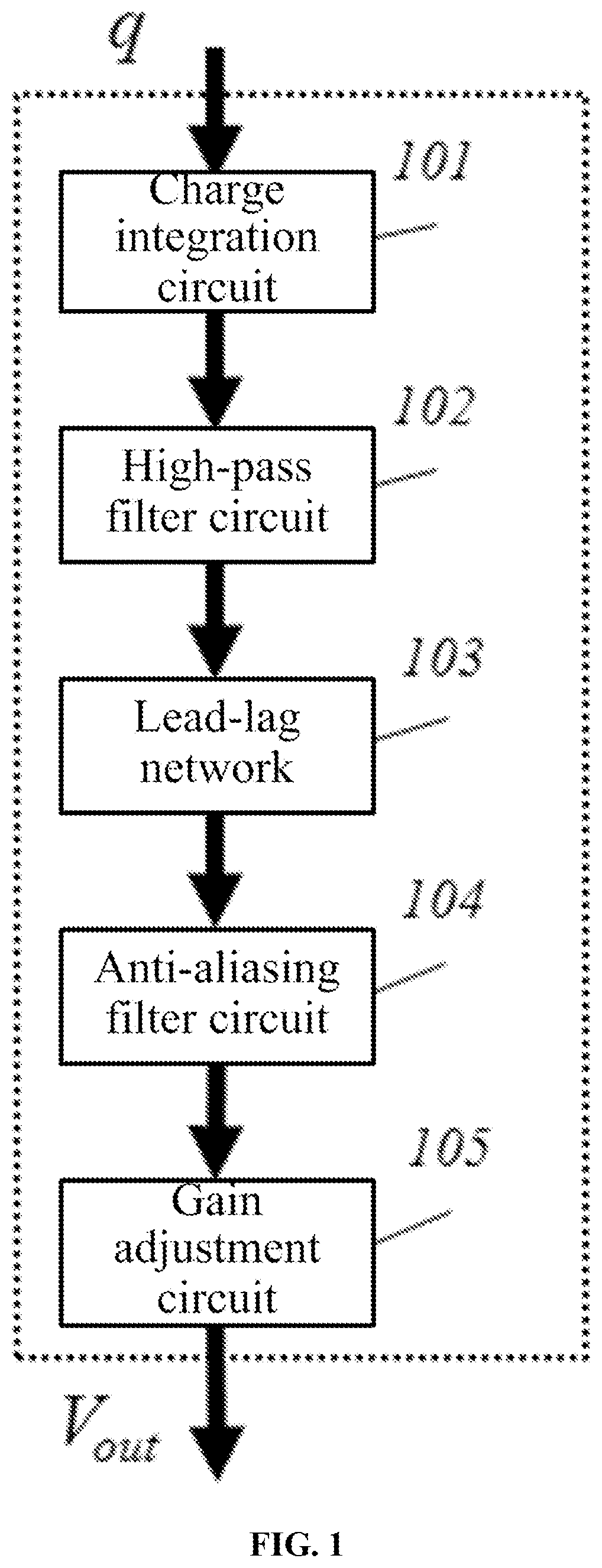
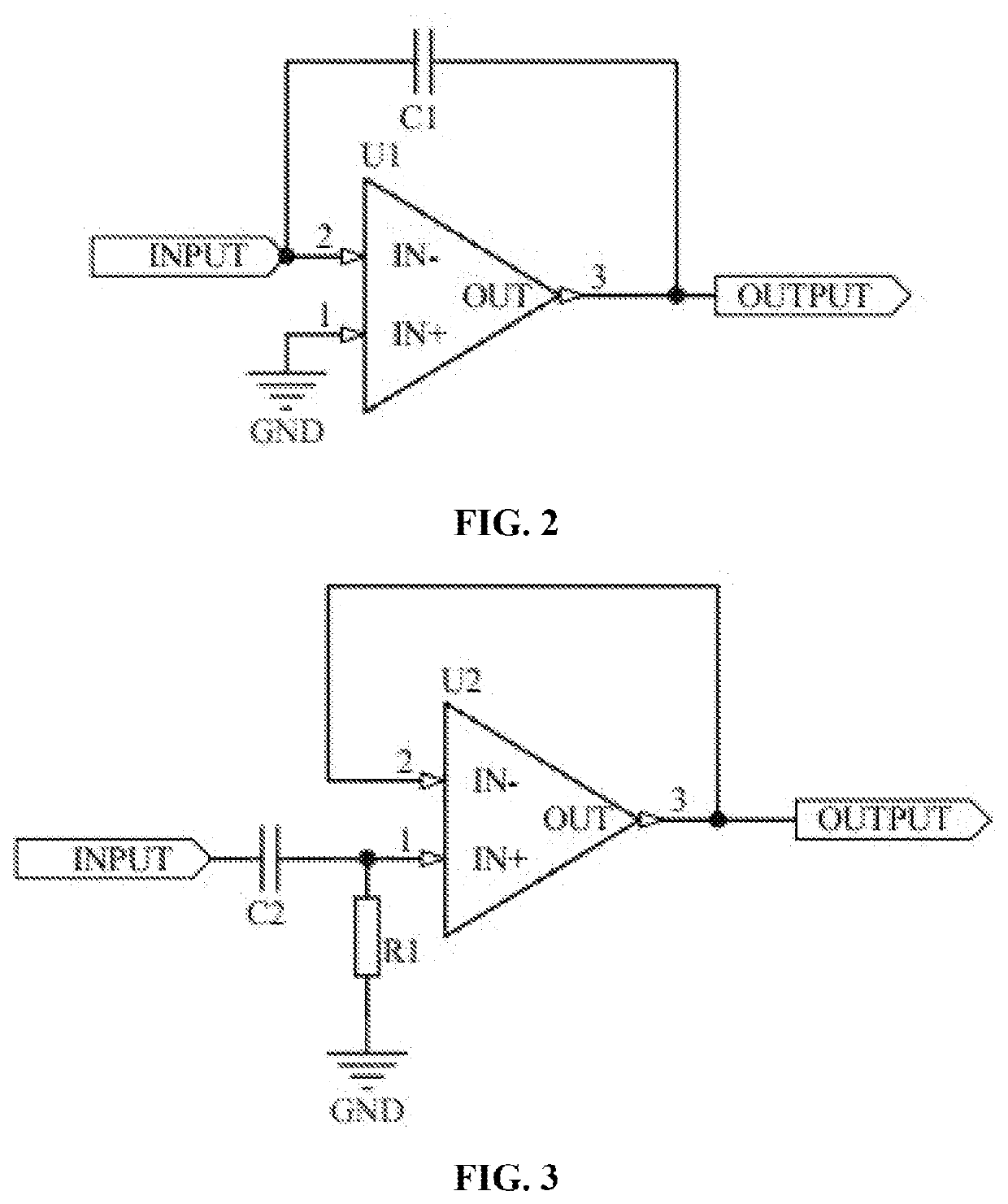
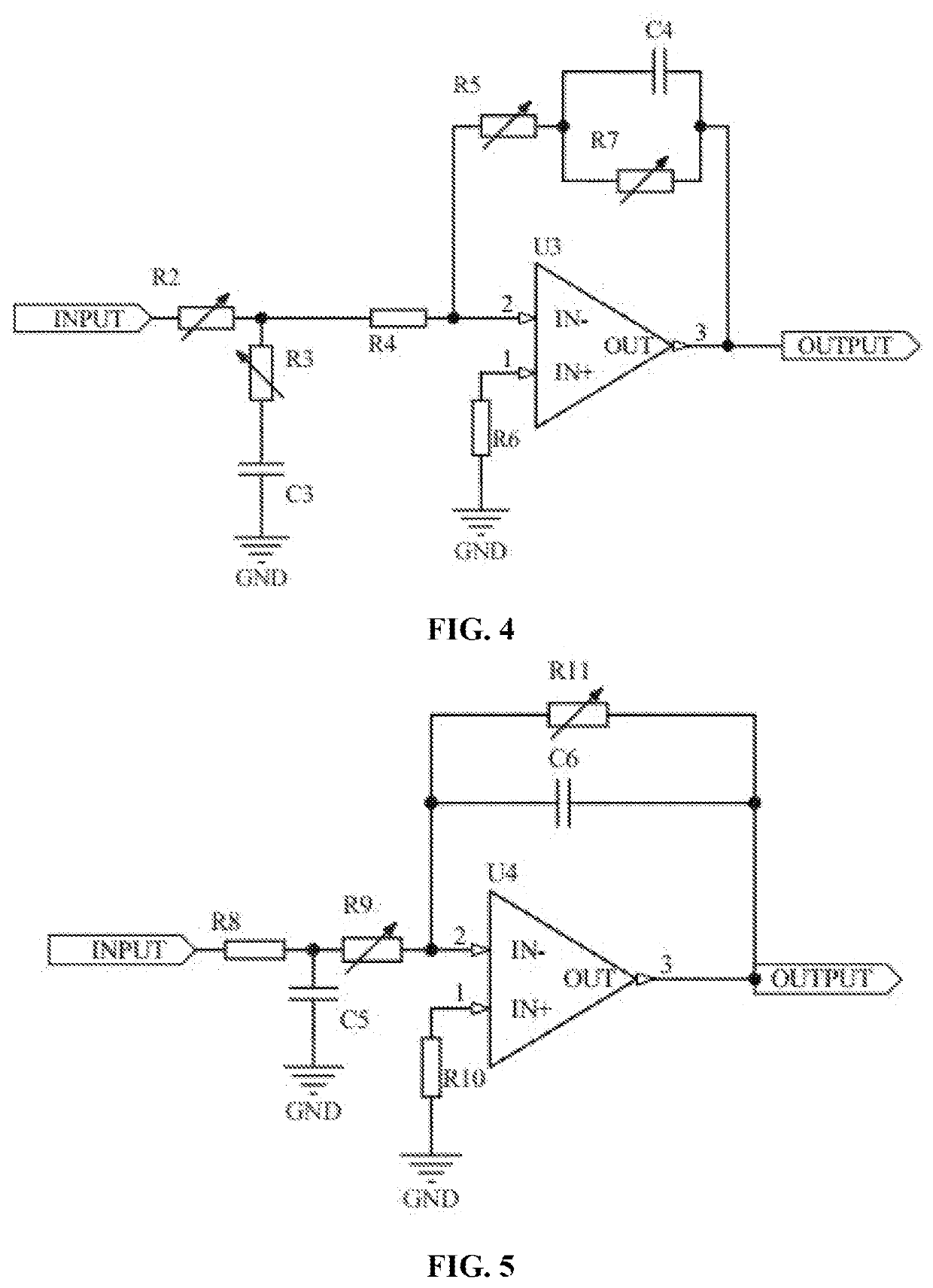
- A signal conditioning system comprising a charge integration circuit, high-pass filter circuit, lead-lag network, anti-aliasing filter circuit, and gain adjustment circuit is used to correct and expand the measurement bandwidth of the sensor, improving low-frequency measurement performance without altering the sensor's internal structure.

Analog signal conditioning circuit having feedback offset cancellation
PatentInactiveUS20050052296A1
Innovation
- A signal conditioning circuit with a feedback loop that includes an analog-to-digital converter, a digital controller, and a digital-to-analog converter to quickly and accurately compensate for DC offset in the analog signal, using a method that averages multiple samples to stabilize the output and reduce noise.


EMC Standards and Regulations for Accelerometer Systems
Electromagnetic compatibility standards and regulations form the cornerstone of accelerometer system design and deployment, ensuring these sensitive measurement devices operate reliably in complex electromagnetic environments. The regulatory landscape encompasses multiple international and regional frameworks, with IEC 61000 series serving as the primary international standard for EMC requirements. This comprehensive standard addresses both emission and immunity criteria, establishing test methodologies and performance thresholds that accelerometer systems must satisfy.
The Federal Communications Commission regulations in the United States, particularly Part 15 for unintentional radiators, directly impact accelerometer systems integrated into electronic devices. Similarly, the European Union's EMC Directive 2014/30/EU mandates compliance for accelerometer-based products entering the European market. These regulations establish specific limits for conducted and radiated emissions while defining immunity requirements against electromagnetic disturbances that could compromise signal conditioning accuracy.
Military and aerospace applications operate under more stringent standards, including MIL-STD-461 and DO-160, which address the unique electromagnetic challenges in defense and aviation environments. These standards recognize that accelerometer signal conditioning circuits must maintain precision measurements even when subjected to intense electromagnetic fields, lightning strikes, or intentional jamming signals.
Industry-specific regulations further refine EMC requirements based on application contexts. Automotive accelerometer systems must comply with ISO 11452 series standards, addressing the electromagnetic environment within vehicles where multiple electronic systems operate simultaneously. Medical device regulations, including IEC 60601-1-2, establish EMC requirements for accelerometer systems used in patient monitoring and diagnostic equipment.
Compliance verification involves standardized testing procedures conducted in specialized facilities such as anechoic chambers and reverberation chambers. These tests evaluate both the electromagnetic emissions generated by accelerometer signal conditioning circuits and their susceptibility to external electromagnetic interference. The testing protocols simulate real-world electromagnetic environments, ensuring accelerometer systems maintain signal integrity across their operational frequency ranges.
Recent regulatory developments reflect the increasing complexity of electromagnetic environments, with updated standards addressing higher frequency ranges and more sophisticated interference patterns. Emerging 5G communications, Internet of Things deployments, and electric vehicle proliferation create new electromagnetic challenges that accelerometer systems must navigate while maintaining measurement accuracy and regulatory compliance.
The Federal Communications Commission regulations in the United States, particularly Part 15 for unintentional radiators, directly impact accelerometer systems integrated into electronic devices. Similarly, the European Union's EMC Directive 2014/30/EU mandates compliance for accelerometer-based products entering the European market. These regulations establish specific limits for conducted and radiated emissions while defining immunity requirements against electromagnetic disturbances that could compromise signal conditioning accuracy.
Military and aerospace applications operate under more stringent standards, including MIL-STD-461 and DO-160, which address the unique electromagnetic challenges in defense and aviation environments. These standards recognize that accelerometer signal conditioning circuits must maintain precision measurements even when subjected to intense electromagnetic fields, lightning strikes, or intentional jamming signals.
Industry-specific regulations further refine EMC requirements based on application contexts. Automotive accelerometer systems must comply with ISO 11452 series standards, addressing the electromagnetic environment within vehicles where multiple electronic systems operate simultaneously. Medical device regulations, including IEC 60601-1-2, establish EMC requirements for accelerometer systems used in patient monitoring and diagnostic equipment.
Compliance verification involves standardized testing procedures conducted in specialized facilities such as anechoic chambers and reverberation chambers. These tests evaluate both the electromagnetic emissions generated by accelerometer signal conditioning circuits and their susceptibility to external electromagnetic interference. The testing protocols simulate real-world electromagnetic environments, ensuring accelerometer systems maintain signal integrity across their operational frequency ranges.
Recent regulatory developments reflect the increasing complexity of electromagnetic environments, with updated standards addressing higher frequency ranges and more sophisticated interference patterns. Emerging 5G communications, Internet of Things deployments, and electric vehicle proliferation create new electromagnetic challenges that accelerometer systems must navigate while maintaining measurement accuracy and regulatory compliance.
Power Efficiency Considerations in Signal Conditioning Circuits
Power efficiency represents a critical design consideration in accelerometer signal conditioning circuits, particularly as modern applications demand extended battery life and reduced thermal dissipation. The conditioning circuitry typically consumes significant power through operational amplifiers, analog-to-digital converters, and filtering components, making optimization essential for portable and IoT applications.
Low-power operational amplifier selection forms the foundation of efficient signal conditioning design. Modern CMOS op-amps offer supply currents in the microampere range while maintaining adequate bandwidth for accelerometer signals. Rail-to-rail input/output amplifiers maximize signal swing efficiency, reducing the need for higher supply voltages and consequently lowering overall power consumption.
Supply voltage optimization directly impacts power efficiency, with many contemporary designs operating at 1.8V or lower supply rails. This approach reduces both static and dynamic power consumption while maintaining signal integrity through careful noise floor management. Voltage reference circuits utilizing bandgap or sub-bandgap techniques provide stable references with minimal current draw.
Duty cycling and power management strategies enable significant power savings in intermittent sensing applications. Intelligent wake-up circuits monitor accelerometer outputs for activity detection, allowing the conditioning circuitry to enter sleep modes during inactive periods. This approach can reduce average power consumption by orders of magnitude in motion-triggered applications.
Analog front-end integration reduces power consumption by eliminating discrete component losses and optimizing signal paths. Single-chip solutions incorporating programmable gain amplifiers, anti-aliasing filters, and ADCs demonstrate superior power efficiency compared to discrete implementations through reduced parasitic losses and optimized bias current distribution.
Digital signal processing migration allows power-hungry analog filtering functions to be replaced with efficient digital implementations. Modern microcontrollers with dedicated DSP capabilities can perform complex filtering operations at lower power levels than equivalent analog circuits, particularly when combined with appropriate sampling strategies and algorithmic optimization.
Adaptive biasing techniques dynamically adjust circuit operating points based on signal requirements and environmental conditions. These methods maintain adequate performance during active periods while reducing quiescent current consumption during low-activity phases, optimizing the power-performance trade-off across varying operational scenarios.
Low-power operational amplifier selection forms the foundation of efficient signal conditioning design. Modern CMOS op-amps offer supply currents in the microampere range while maintaining adequate bandwidth for accelerometer signals. Rail-to-rail input/output amplifiers maximize signal swing efficiency, reducing the need for higher supply voltages and consequently lowering overall power consumption.
Supply voltage optimization directly impacts power efficiency, with many contemporary designs operating at 1.8V or lower supply rails. This approach reduces both static and dynamic power consumption while maintaining signal integrity through careful noise floor management. Voltage reference circuits utilizing bandgap or sub-bandgap techniques provide stable references with minimal current draw.
Duty cycling and power management strategies enable significant power savings in intermittent sensing applications. Intelligent wake-up circuits monitor accelerometer outputs for activity detection, allowing the conditioning circuitry to enter sleep modes during inactive periods. This approach can reduce average power consumption by orders of magnitude in motion-triggered applications.
Analog front-end integration reduces power consumption by eliminating discrete component losses and optimizing signal paths. Single-chip solutions incorporating programmable gain amplifiers, anti-aliasing filters, and ADCs demonstrate superior power efficiency compared to discrete implementations through reduced parasitic losses and optimized bias current distribution.
Digital signal processing migration allows power-hungry analog filtering functions to be replaced with efficient digital implementations. Modern microcontrollers with dedicated DSP capabilities can perform complex filtering operations at lower power levels than equivalent analog circuits, particularly when combined with appropriate sampling strategies and algorithmic optimization.
Adaptive biasing techniques dynamically adjust circuit operating points based on signal requirements and environmental conditions. These methods maintain adequate performance during active periods while reducing quiescent current consumption during low-activity phases, optimizing the power-performance trade-off across varying operational scenarios.
Unlock deeper insights with PatSnap Eureka Quick Research — get a full tech report to explore trends and direct your research. Try now!
Generate Your Research Report Instantly with AI Agent
Supercharge your innovation with PatSnap Eureka AI Agent Platform!