

Optimize Accelerometer Sensor Orientation for Maximum Sensitivity
JUN 27, 20269 MIN READ
Generate Your Research Report Instantly with AI Agent
PatSnap Eureka helps you evaluate technical feasibility & market potential.
Accelerometer Sensor Optimization Background and Objectives
Accelerometer sensors have evolved significantly since their inception in the early 20th century, transitioning from mechanical pendulum-based systems to sophisticated microelectromechanical systems (MEMS) that dominate today's market. The fundamental principle of measuring acceleration through inertial forces has remained constant, but the precision, miniaturization, and integration capabilities have advanced exponentially. Modern accelerometers utilize capacitive, piezoresistive, or piezoelectric sensing mechanisms, with capacitive MEMS accelerometers becoming the predominant choice for consumer electronics due to their excellent sensitivity-to-noise ratio and temperature stability.
The evolution of accelerometer technology has been driven by increasing demands for higher sensitivity, lower power consumption, and enhanced environmental robustness. Early applications focused primarily on navigation and industrial monitoring, but the proliferation of smartphones, wearable devices, and Internet of Things applications has created unprecedented requirements for sensor performance optimization. Current trends indicate a shift toward multi-axis sensing capabilities, improved dynamic range, and intelligent sensor fusion algorithms that maximize the utility of orientation-dependent measurements.
Sensor orientation optimization represents a critical frontier in accelerometer development, as the geometric relationship between the sensing element and the measured acceleration vector directly impacts measurement accuracy and sensitivity. Traditional approaches have relied on fixed orthogonal configurations, but emerging applications demand adaptive orientation strategies that can dynamically adjust to maximize signal quality under varying operational conditions. This optimization challenge encompasses both hardware design considerations and algorithmic approaches for real-time orientation adjustment.
The primary objective of accelerometer sensor orientation optimization is to achieve maximum sensitivity across diverse operational scenarios while maintaining measurement accuracy and system reliability. This involves developing methodologies to determine optimal sensor placement angles, implementing dynamic orientation adjustment mechanisms, and creating algorithms that can predict and compensate for orientation-dependent sensitivity variations. The goal extends beyond simple sensitivity maximization to include noise reduction, cross-axis interference minimization, and power consumption optimization.
Secondary objectives include establishing standardized frameworks for orientation optimization evaluation, developing cost-effective implementation strategies for mass production, and ensuring compatibility with existing sensor fusion architectures. The ultimate aim is to create accelerometer systems that can autonomously optimize their orientation configuration based on application requirements and environmental conditions, thereby maximizing measurement fidelity while minimizing system complexity and power consumption.
The evolution of accelerometer technology has been driven by increasing demands for higher sensitivity, lower power consumption, and enhanced environmental robustness. Early applications focused primarily on navigation and industrial monitoring, but the proliferation of smartphones, wearable devices, and Internet of Things applications has created unprecedented requirements for sensor performance optimization. Current trends indicate a shift toward multi-axis sensing capabilities, improved dynamic range, and intelligent sensor fusion algorithms that maximize the utility of orientation-dependent measurements.
Sensor orientation optimization represents a critical frontier in accelerometer development, as the geometric relationship between the sensing element and the measured acceleration vector directly impacts measurement accuracy and sensitivity. Traditional approaches have relied on fixed orthogonal configurations, but emerging applications demand adaptive orientation strategies that can dynamically adjust to maximize signal quality under varying operational conditions. This optimization challenge encompasses both hardware design considerations and algorithmic approaches for real-time orientation adjustment.
The primary objective of accelerometer sensor orientation optimization is to achieve maximum sensitivity across diverse operational scenarios while maintaining measurement accuracy and system reliability. This involves developing methodologies to determine optimal sensor placement angles, implementing dynamic orientation adjustment mechanisms, and creating algorithms that can predict and compensate for orientation-dependent sensitivity variations. The goal extends beyond simple sensitivity maximization to include noise reduction, cross-axis interference minimization, and power consumption optimization.
Secondary objectives include establishing standardized frameworks for orientation optimization evaluation, developing cost-effective implementation strategies for mass production, and ensuring compatibility with existing sensor fusion architectures. The ultimate aim is to create accelerometer systems that can autonomously optimize their orientation configuration based on application requirements and environmental conditions, thereby maximizing measurement fidelity while minimizing system complexity and power consumption.
Market Demand for High-Sensitivity Accelerometer Applications
The market demand for high-sensitivity accelerometer applications has experienced substantial growth across multiple industries, driven by the increasing need for precise motion detection and measurement capabilities. Consumer electronics represent the largest market segment, where smartphones, tablets, and wearable devices require highly sensitive accelerometers for screen rotation, step counting, gesture recognition, and fall detection features. The proliferation of fitness trackers and smartwatches has particularly intensified the demand for accelerometers capable of detecting subtle movements and vibrations.
Automotive applications constitute another significant market driver, with modern vehicles incorporating multiple accelerometer sensors for airbag deployment systems, electronic stability control, rollover detection, and advanced driver assistance systems. The transition toward autonomous vehicles has further amplified the requirement for ultra-sensitive accelerometers that can detect minute changes in vehicle dynamics and road conditions. These applications demand accelerometers with enhanced sensitivity to ensure passenger safety and optimal vehicle performance.
Industrial automation and machinery monitoring applications represent a rapidly expanding market segment. Manufacturing facilities increasingly rely on condition monitoring systems that utilize high-sensitivity accelerometers to detect early signs of equipment failure, vibration anomalies, and structural health issues. Predictive maintenance strategies have become essential for reducing downtime and operational costs, creating sustained demand for precision accelerometer solutions.
The aerospace and defense sectors continue to drive demand for specialized high-sensitivity accelerometers used in navigation systems, inertial measurement units, and structural health monitoring of aircraft and spacecraft. These applications require exceptional precision and reliability under extreme environmental conditions, pushing the boundaries of accelerometer sensitivity requirements.
Emerging applications in virtual and augmented reality systems, robotics, and Internet of Things devices are creating new market opportunities. Gaming controllers, haptic feedback systems, and motion capture technologies require accelerometers with enhanced sensitivity to provide immersive user experiences and precise motion tracking capabilities.
The medical device industry has also emerged as a significant market segment, with applications ranging from patient monitoring systems to surgical instruments and prosthetic devices. These applications demand accelerometers with high sensitivity and low noise characteristics to ensure accurate physiological measurements and device functionality.
Market growth is further supported by the miniaturization trend in electronic devices, which necessitates smaller accelerometers without compromising sensitivity performance. This requirement has intensified research and development efforts focused on optimizing sensor orientation and design parameters to achieve maximum sensitivity within constrained form factors.
Automotive applications constitute another significant market driver, with modern vehicles incorporating multiple accelerometer sensors for airbag deployment systems, electronic stability control, rollover detection, and advanced driver assistance systems. The transition toward autonomous vehicles has further amplified the requirement for ultra-sensitive accelerometers that can detect minute changes in vehicle dynamics and road conditions. These applications demand accelerometers with enhanced sensitivity to ensure passenger safety and optimal vehicle performance.
Industrial automation and machinery monitoring applications represent a rapidly expanding market segment. Manufacturing facilities increasingly rely on condition monitoring systems that utilize high-sensitivity accelerometers to detect early signs of equipment failure, vibration anomalies, and structural health issues. Predictive maintenance strategies have become essential for reducing downtime and operational costs, creating sustained demand for precision accelerometer solutions.
The aerospace and defense sectors continue to drive demand for specialized high-sensitivity accelerometers used in navigation systems, inertial measurement units, and structural health monitoring of aircraft and spacecraft. These applications require exceptional precision and reliability under extreme environmental conditions, pushing the boundaries of accelerometer sensitivity requirements.
Emerging applications in virtual and augmented reality systems, robotics, and Internet of Things devices are creating new market opportunities. Gaming controllers, haptic feedback systems, and motion capture technologies require accelerometers with enhanced sensitivity to provide immersive user experiences and precise motion tracking capabilities.
The medical device industry has also emerged as a significant market segment, with applications ranging from patient monitoring systems to surgical instruments and prosthetic devices. These applications demand accelerometers with high sensitivity and low noise characteristics to ensure accurate physiological measurements and device functionality.
Market growth is further supported by the miniaturization trend in electronic devices, which necessitates smaller accelerometers without compromising sensitivity performance. This requirement has intensified research and development efforts focused on optimizing sensor orientation and design parameters to achieve maximum sensitivity within constrained form factors.
Current Accelerometer Orientation Challenges and Limitations
Accelerometer sensor orientation optimization faces significant technical constraints rooted in fundamental physics and manufacturing limitations. The primary challenge stems from the inherent trade-off between sensitivity and measurement range, where maximizing sensitivity in one axis often compromises performance in perpendicular directions. This creates a complex optimization problem that cannot be solved through simple geometric adjustments alone.
Manufacturing tolerances represent another critical limitation affecting orientation optimization. Even minor deviations in sensor mounting angles, typically within ±0.5 degrees, can substantially impact sensitivity measurements. These tolerances become particularly problematic in high-precision applications where maximum sensitivity is required, as the cumulative effect of multiple tolerance stack-ups can reduce overall system performance by 10-15%.
Temperature-induced orientation drift poses ongoing challenges for maintaining optimal sensor positioning. Thermal expansion and contraction of mounting materials cause microscopic shifts in sensor orientation, leading to sensitivity variations across operating temperature ranges. This phenomenon is especially pronounced in automotive and aerospace applications where temperature fluctuations can exceed 100°C, resulting in sensitivity degradation of up to 8% from nominal values.
Cross-axis sensitivity interference creates additional complexity in orientation optimization. When sensors are positioned for maximum sensitivity along the primary measurement axis, unwanted coupling effects often increase sensitivity to off-axis accelerations. This cross-talk can introduce measurement errors of 2-5% in multi-axis configurations, forcing engineers to compromise between maximum single-axis sensitivity and overall system accuracy.
Mechanical vibration and resonance effects further complicate optimal orientation strategies. Sensor mounting structures exhibit natural frequencies that can amplify or attenuate specific acceleration components depending on orientation. These resonant behaviors create frequency-dependent sensitivity variations that make it difficult to achieve consistent maximum sensitivity across the entire operational bandwidth.
Package-level constraints impose additional limitations on orientation flexibility. Standard sensor packages often restrict mounting options to discrete angular positions, preventing fine-tuned orientation adjustments. Custom packaging solutions can address these limitations but introduce significant cost increases and extended development timelines, making them impractical for many commercial applications.
Environmental factors including humidity, pressure variations, and electromagnetic interference interact with sensor orientation to create unpredictable sensitivity fluctuations. These effects are often orientation-dependent, meaning that positions optimized for maximum sensitivity under laboratory conditions may perform poorly in real-world environments where multiple environmental stressors are present simultaneously.
Manufacturing tolerances represent another critical limitation affecting orientation optimization. Even minor deviations in sensor mounting angles, typically within ±0.5 degrees, can substantially impact sensitivity measurements. These tolerances become particularly problematic in high-precision applications where maximum sensitivity is required, as the cumulative effect of multiple tolerance stack-ups can reduce overall system performance by 10-15%.
Temperature-induced orientation drift poses ongoing challenges for maintaining optimal sensor positioning. Thermal expansion and contraction of mounting materials cause microscopic shifts in sensor orientation, leading to sensitivity variations across operating temperature ranges. This phenomenon is especially pronounced in automotive and aerospace applications where temperature fluctuations can exceed 100°C, resulting in sensitivity degradation of up to 8% from nominal values.
Cross-axis sensitivity interference creates additional complexity in orientation optimization. When sensors are positioned for maximum sensitivity along the primary measurement axis, unwanted coupling effects often increase sensitivity to off-axis accelerations. This cross-talk can introduce measurement errors of 2-5% in multi-axis configurations, forcing engineers to compromise between maximum single-axis sensitivity and overall system accuracy.
Mechanical vibration and resonance effects further complicate optimal orientation strategies. Sensor mounting structures exhibit natural frequencies that can amplify or attenuate specific acceleration components depending on orientation. These resonant behaviors create frequency-dependent sensitivity variations that make it difficult to achieve consistent maximum sensitivity across the entire operational bandwidth.
Package-level constraints impose additional limitations on orientation flexibility. Standard sensor packages often restrict mounting options to discrete angular positions, preventing fine-tuned orientation adjustments. Custom packaging solutions can address these limitations but introduce significant cost increases and extended development timelines, making them impractical for many commercial applications.
Environmental factors including humidity, pressure variations, and electromagnetic interference interact with sensor orientation to create unpredictable sensitivity fluctuations. These effects are often orientation-dependent, meaning that positions optimized for maximum sensitivity under laboratory conditions may perform poorly in real-world environments where multiple environmental stressors are present simultaneously.
Existing Orientation Optimization Solutions for Accelerometers
01 Accelerometer sensor calibration and compensation methods
Various calibration techniques are employed to improve accelerometer sensitivity by compensating for manufacturing variations, temperature effects, and environmental factors. These methods include automatic calibration algorithms, offset compensation, and gain adjustment procedures that enhance the accuracy and sensitivity of accelerometer measurements across different operating conditions.- Accelerometer sensor calibration and compensation methods: Various calibration techniques are employed to improve accelerometer sensitivity by compensating for manufacturing variations, temperature effects, and aging. These methods include self-calibration algorithms, reference-based calibration, and real-time compensation mechanisms that adjust sensor output to maintain consistent sensitivity across different operating conditions.
- MEMS accelerometer structural design optimization: The physical structure and design of MEMS accelerometers significantly impacts their sensitivity. Optimization techniques include adjusting proof mass dimensions, spring constant modifications, electrode spacing, and capacitive plate configurations to enhance the sensor's ability to detect small acceleration changes with improved signal-to-noise ratio.
- Signal processing and amplification circuits: Electronic circuits and signal processing algorithms are implemented to amplify and condition the raw accelerometer signals, thereby improving effective sensitivity. These include differential amplifiers, analog-to-digital converters with enhanced resolution, noise filtering techniques, and digital signal processing methods that extract meaningful acceleration data from weak sensor outputs.
- Multi-axis sensitivity enhancement techniques: Advanced methods for improving sensitivity across multiple axes simultaneously, including cross-axis sensitivity reduction, orthogonal sensor arrangements, and compensation algorithms that account for inter-axis coupling effects. These techniques ensure consistent and accurate sensitivity performance in three-dimensional acceleration measurements.
- Environmental adaptation and stability improvement: Methods to maintain accelerometer sensitivity under varying environmental conditions such as temperature fluctuations, humidity changes, and mechanical stress. These approaches include temperature compensation circuits, hermetic packaging designs, stress isolation techniques, and adaptive algorithms that maintain sensor performance across different operating environments.
02 MEMS accelerometer structural design optimization
Microelectromechanical systems accelerometer designs focus on optimizing the mechanical structure to enhance sensitivity. This includes modifications to proof mass geometry, spring configurations, and sensing element arrangements to increase the mechanical displacement response to acceleration inputs, thereby improving overall sensor sensitivity and performance.Expand Specific Solutions03 Signal processing and amplification circuits
Electronic circuits and signal processing techniques are implemented to amplify and condition the output signals from accelerometer sensing elements. These include low-noise amplifiers, analog-to-digital converters, and digital signal processing algorithms that enhance the signal-to-noise ratio and improve the effective sensitivity of the accelerometer system.Expand Specific Solutions04 Multi-axis accelerometer sensitivity enhancement
Advanced multi-axis accelerometer configurations utilize specialized sensing arrangements and cross-axis compensation techniques to improve sensitivity in multiple directions simultaneously. These designs incorporate orthogonal sensing elements and mathematical algorithms to enhance the detection capability for complex motion patterns and reduce cross-axis interference.Expand Specific Solutions05 Temperature and environmental compensation
Compensation mechanisms are integrated to maintain accelerometer sensitivity across varying environmental conditions. These include temperature coefficient correction, humidity compensation, and aging effects mitigation through both hardware design modifications and software-based correction algorithms that ensure consistent sensitivity performance over the sensor's operational lifetime.Expand Specific Solutions
Key Players in Accelerometer and MEMS Sensor Industry
The accelerometer sensor orientation optimization market represents a mature technology sector within the broader MEMS sensor industry, currently valued at approximately $2.8 billion globally with steady 6-8% annual growth. The competitive landscape is dominated by established Japanese and German manufacturers, with Murata Manufacturing, Robert Bosch GmbH, and DENSO Corp leading in automotive applications, while Samsung Electro-Mechanics and Alps Alpine focus on consumer electronics integration. Technology maturity varies significantly across applications - automotive-grade accelerometers from companies like Siemens AG and Hitachi Ltd. demonstrate high reliability and precision, whereas consumer-focused solutions from Panasonic Holdings and JVCKenwood prioritize cost-effectiveness. The market shows consolidation trends with major players like Thales SA and Proterial Ltd. investing heavily in advanced calibration algorithms and multi-axis optimization techniques, indicating the transition from hardware-centric to software-enhanced sensitivity solutions.
Murata Manufacturing Co. Ltd.
Technical Solution: Murata focuses on optimizing accelerometer sensitivity through advanced ceramic packaging and precise crystal lattice orientation control. Their approach involves using proprietary piezoelectric materials with optimized crystallographic orientations to maximize charge generation per unit acceleration. The company employs sophisticated finite element modeling to determine optimal sensor geometry and mounting configurations that minimize parasitic capacitances while maximizing mechanical coupling efficiency. Their sensors feature multi-layer ceramic substrates with controlled thermal expansion coefficients to maintain sensitivity stability across temperature ranges, achieving sensitivity improvements of up to 25% compared to standard orientations through their patented orientation optimization techniques.
Strengths: Excellent miniaturization capabilities, superior temperature stability, cost-effective manufacturing for high volumes. Weaknesses: Limited customization options for specialized applications, primarily focused on consumer electronics market segments.
Robert Bosch GmbH
Technical Solution: Bosch has developed advanced MEMS accelerometer technology with optimized crystal orientation and packaging design to maximize sensitivity across multiple axes. Their sensors utilize specialized silicon wafer orientation techniques and employ differential capacitive sensing with optimized electrode spacing to enhance signal-to-noise ratio. The company implements advanced calibration algorithms that compensate for temperature drift and cross-axis sensitivity, achieving sensitivity levels up to 16,384 LSB/g in their high-performance automotive accelerometers. Their orientation optimization includes careful consideration of die attachment methods and wire bonding techniques to minimize mechanical stress that could affect sensor performance.
Strengths: Industry-leading automotive qualification standards, extensive experience in harsh environment applications, robust calibration algorithms. Weaknesses: Higher cost compared to consumer-grade solutions, complex manufacturing processes requiring specialized equipment.
Core Patents in Accelerometer Sensitivity Maximization
Acceleration sensor
PatentWO2013161597A1
Innovation
- The acceleration sensor design includes a fixed portion, a weight portion, a vibrating beam, and a detection portion, where the vibrating beam is oriented at 45° to both axes, and the weight is positioned within a notch aligned with the center of gravity, allowing displacement in the Z-axis direction, and utilizing a piezoelectric layer for vibration and detection, with the vibrating beam's length optimized to enhance sensitivity.


Positioning system for single or multi-axis sensitive instrument calibration and calibration system for use therewith
PatentInactiveUS7467536B2
Innovation
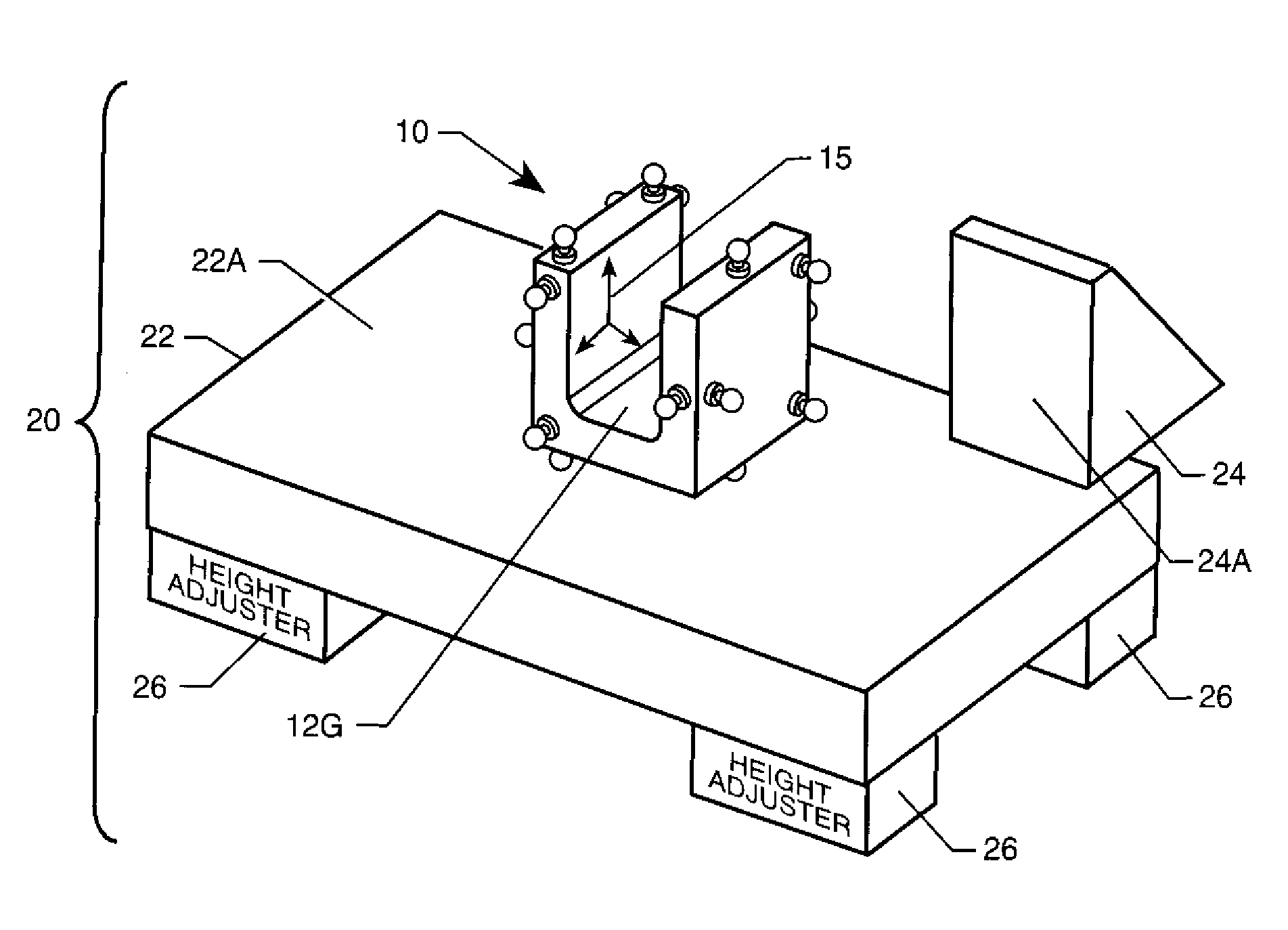
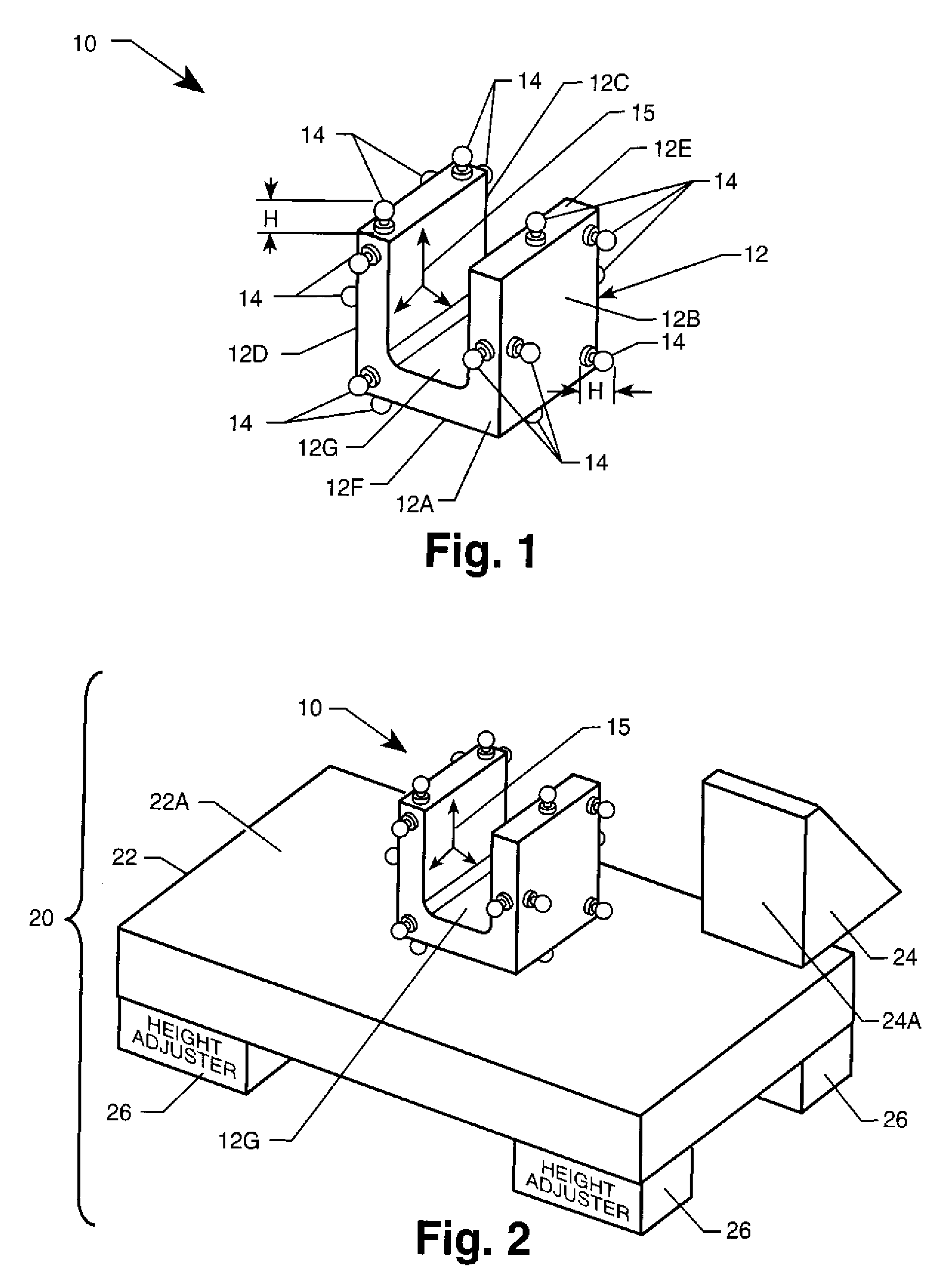
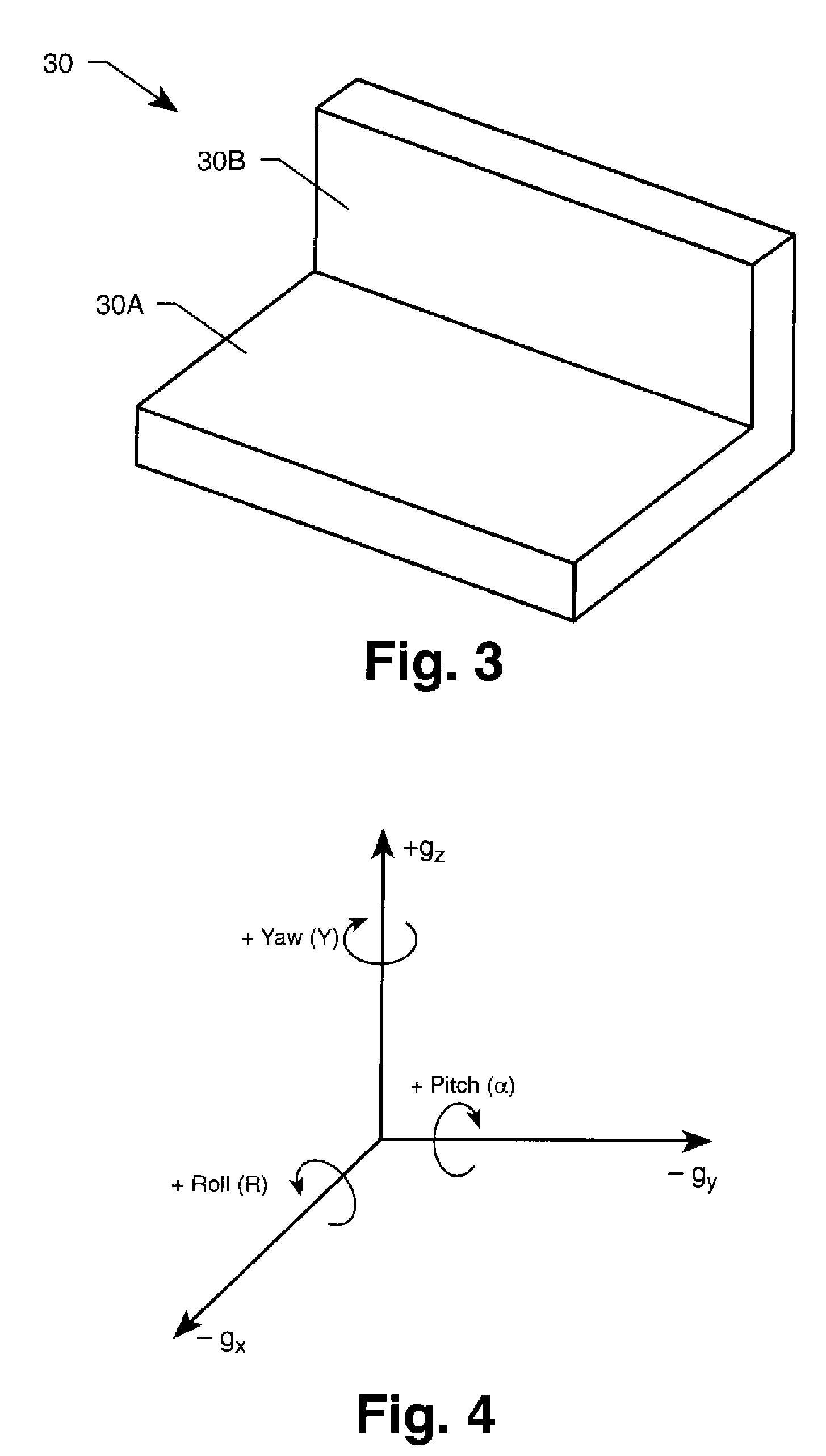
- A positioning and calibration system with a six-plane positioner and a linear calibration model that allows for in-situ calibration by aligning the instrument's sensitive axes with the gravitational vector, using a data collection and processing system to estimate calibration coefficients through multiple linear regression, reducing the need for precise angular positioning and accommodating temperature effects.

Calibration Standards for Accelerometer Sensitivity Testing
Accelerometer sensitivity testing requires adherence to established calibration standards to ensure measurement accuracy and repeatability across different sensor orientations. The International Organization for Standardization (ISO) 16063 series provides comprehensive guidelines for vibration and shock sensor calibration, while IEEE Standard 1293 specifically addresses inertial sensor testing protocols. These standards define reference conditions, measurement uncertainties, and traceability requirements essential for optimizing sensor orientation.
Primary calibration methods include laser interferometry and earth's gravity reference systems, both recognized by international metrology institutes. Laser interferometry offers the highest accuracy for dynamic calibration, typically achieving uncertainties below 1% across frequency ranges from 1 Hz to 10 kHz. Gravity-based calibration provides absolute reference for static sensitivity measurements, enabling precise determination of sensor axis alignment and cross-axis sensitivity characteristics.
Temperature compensation standards mandate testing across operational temperature ranges, typically -40°C to +85°C for industrial applications. Calibration protocols require multiple orientation positions, including ±1g along each sensing axis, to characterize sensitivity variations and identify optimal mounting configurations. The standards specify minimum dwell times and measurement averaging procedures to minimize thermal drift effects during testing.
Frequency response calibration follows ISO 16063-21 guidelines, requiring swept-sine or random vibration excitation across the sensor's operational bandwidth. Reference accelerometers with NIST-traceable calibration serve as measurement standards, maintaining uncertainty chains to primary standards. Cross-axis sensitivity testing, limited to 5% of primary axis sensitivity per ISO specifications, ensures proper sensor orientation identification.
Documentation requirements include calibration certificates with measurement uncertainties, environmental conditions, and equipment traceability. Periodic recalibration intervals, typically 12-24 months depending on application criticality, maintain measurement confidence. Quality management systems following ISO/IEC 17025 ensure calibration laboratory competence and measurement reliability for sensitivity optimization programs.
Primary calibration methods include laser interferometry and earth's gravity reference systems, both recognized by international metrology institutes. Laser interferometry offers the highest accuracy for dynamic calibration, typically achieving uncertainties below 1% across frequency ranges from 1 Hz to 10 kHz. Gravity-based calibration provides absolute reference for static sensitivity measurements, enabling precise determination of sensor axis alignment and cross-axis sensitivity characteristics.
Temperature compensation standards mandate testing across operational temperature ranges, typically -40°C to +85°C for industrial applications. Calibration protocols require multiple orientation positions, including ±1g along each sensing axis, to characterize sensitivity variations and identify optimal mounting configurations. The standards specify minimum dwell times and measurement averaging procedures to minimize thermal drift effects during testing.
Frequency response calibration follows ISO 16063-21 guidelines, requiring swept-sine or random vibration excitation across the sensor's operational bandwidth. Reference accelerometers with NIST-traceable calibration serve as measurement standards, maintaining uncertainty chains to primary standards. Cross-axis sensitivity testing, limited to 5% of primary axis sensitivity per ISO specifications, ensures proper sensor orientation identification.
Documentation requirements include calibration certificates with measurement uncertainties, environmental conditions, and equipment traceability. Periodic recalibration intervals, typically 12-24 months depending on application criticality, maintain measurement confidence. Quality management systems following ISO/IEC 17025 ensure calibration laboratory competence and measurement reliability for sensitivity optimization programs.
Multi-Axis Integration Strategies for Enhanced Performance
Multi-axis integration represents a fundamental paradigm shift in accelerometer design philosophy, moving beyond traditional single-axis optimization toward comprehensive three-dimensional sensing architectures. This approach leverages the inherent geometric relationships between orthogonal sensing axes to create synergistic effects that amplify overall system sensitivity while maintaining measurement accuracy across all spatial dimensions.
The core principle underlying multi-axis integration strategies involves the strategic arrangement of sensing elements to maximize cross-axis sensitivity coupling. By implementing carefully calibrated angular offsets between primary sensing axes, engineers can achieve constructive interference patterns that enhance signal amplitude without introducing significant noise penalties. This technique particularly benefits applications requiring detection of subtle acceleration changes across multiple planes simultaneously.
Advanced integration methodologies employ differential sensing configurations where multiple accelerometer elements are positioned at optimized orientations relative to each other. These configurations utilize mathematical algorithms to combine individual axis outputs, creating composite signals with enhanced sensitivity characteristics. The resulting system demonstrates improved signal-to-noise ratios compared to conventional parallel-axis arrangements.
Quaternion-based orientation algorithms play a crucial role in multi-axis integration strategies, enabling real-time optimization of effective sensing directions based on dynamic operating conditions. These algorithms continuously adjust the weighting factors applied to individual axis contributions, ensuring maximum sensitivity is maintained regardless of device orientation changes during operation.
Implementation challenges include managing thermal drift across multiple sensing elements and maintaining calibration stability over extended operational periods. Successful multi-axis integration requires sophisticated compensation algorithms that account for manufacturing tolerances and environmental variations affecting individual sensor elements.
Recent developments in MEMS fabrication techniques have enabled the creation of monolithic multi-axis structures with precisely controlled geometric relationships between sensing elements. These integrated designs eliminate assembly-related orientation errors while providing superior mechanical stability and reduced package complexity compared to discrete multi-sensor approaches.
The core principle underlying multi-axis integration strategies involves the strategic arrangement of sensing elements to maximize cross-axis sensitivity coupling. By implementing carefully calibrated angular offsets between primary sensing axes, engineers can achieve constructive interference patterns that enhance signal amplitude without introducing significant noise penalties. This technique particularly benefits applications requiring detection of subtle acceleration changes across multiple planes simultaneously.
Advanced integration methodologies employ differential sensing configurations where multiple accelerometer elements are positioned at optimized orientations relative to each other. These configurations utilize mathematical algorithms to combine individual axis outputs, creating composite signals with enhanced sensitivity characteristics. The resulting system demonstrates improved signal-to-noise ratios compared to conventional parallel-axis arrangements.
Quaternion-based orientation algorithms play a crucial role in multi-axis integration strategies, enabling real-time optimization of effective sensing directions based on dynamic operating conditions. These algorithms continuously adjust the weighting factors applied to individual axis contributions, ensuring maximum sensitivity is maintained regardless of device orientation changes during operation.
Implementation challenges include managing thermal drift across multiple sensing elements and maintaining calibration stability over extended operational periods. Successful multi-axis integration requires sophisticated compensation algorithms that account for manufacturing tolerances and environmental variations affecting individual sensor elements.
Recent developments in MEMS fabrication techniques have enabled the creation of monolithic multi-axis structures with precisely controlled geometric relationships between sensing elements. These integrated designs eliminate assembly-related orientation errors while providing superior mechanical stability and reduced package complexity compared to discrete multi-sensor approaches.
Unlock deeper insights with PatSnap Eureka Quick Research — get a full tech report to explore trends and direct your research. Try now!
Generate Your Research Report Instantly with AI Agent
Supercharge your innovation with PatSnap Eureka AI Agent Platform!