

Compare Ultrasonic vs MEMS Accelerometer Sensor Performance
JUN 27, 202610 MIN READ
Generate Your Research Report Instantly with AI Agent
PatSnap Eureka helps you evaluate technical feasibility & market potential.
Ultrasonic vs MEMS Accelerometer Technology Background and Goals
The evolution of motion sensing technology has been fundamentally shaped by two distinct technological paradigms: ultrasonic sensing and MEMS accelerometry. Both technologies emerged from different scientific foundations yet converge in their application to motion detection, positioning, and inertial measurement systems. Understanding their comparative performance characteristics has become increasingly critical as industries demand more precise, reliable, and cost-effective sensing solutions.
Ultrasonic sensing technology originated from sonar principles, utilizing high-frequency sound waves typically ranging from 20 kHz to several MHz to detect motion, distance, and positional changes. The technology leverages the Doppler effect and time-of-flight measurements to determine object movement and acceleration indirectly. Early ultrasonic sensors were primarily employed in industrial proximity detection and automotive parking assistance systems.
MEMS accelerometers represent a revolutionary advancement in semiconductor-based sensing technology. These microscopic mechanical structures, fabricated using silicon micromachining techniques, directly measure acceleration forces through capacitive, piezoresistive, or piezoelectric sensing mechanisms. The miniaturization capabilities of MEMS technology have enabled integration into consumer electronics, automotive safety systems, and industrial monitoring applications.
The technological objectives driving comparative analysis between these sensing modalities center on several critical performance parameters. Accuracy and precision requirements vary significantly across applications, from consumer fitness tracking demanding moderate precision to aerospace navigation systems requiring exceptional accuracy. Response time characteristics become paramount in safety-critical applications where millisecond-level detection capabilities can prevent catastrophic failures.
Environmental robustness represents another fundamental goal in sensor selection. Ultrasonic sensors face challenges in extreme temperature variations, humidity fluctuations, and acoustic interference, while MEMS accelerometers must withstand mechanical shock, vibration, and electromagnetic interference. Power consumption optimization drives selection criteria for battery-powered and energy-harvesting applications, where operational longevity directly impacts system viability.
Cost-effectiveness considerations encompass not only initial sensor pricing but also integration complexity, calibration requirements, and long-term maintenance needs. The scalability of manufacturing processes influences volume production feasibility, particularly for consumer electronics applications requiring millions of units annually.
The ultimate technological goal involves identifying optimal sensor selection criteria based on specific application requirements, environmental constraints, and performance expectations. This comparative analysis aims to establish clear decision frameworks for engineers and system designers, enabling informed technology choices that balance performance, cost, and reliability considerations across diverse application domains.
Ultrasonic sensing technology originated from sonar principles, utilizing high-frequency sound waves typically ranging from 20 kHz to several MHz to detect motion, distance, and positional changes. The technology leverages the Doppler effect and time-of-flight measurements to determine object movement and acceleration indirectly. Early ultrasonic sensors were primarily employed in industrial proximity detection and automotive parking assistance systems.
MEMS accelerometers represent a revolutionary advancement in semiconductor-based sensing technology. These microscopic mechanical structures, fabricated using silicon micromachining techniques, directly measure acceleration forces through capacitive, piezoresistive, or piezoelectric sensing mechanisms. The miniaturization capabilities of MEMS technology have enabled integration into consumer electronics, automotive safety systems, and industrial monitoring applications.
The technological objectives driving comparative analysis between these sensing modalities center on several critical performance parameters. Accuracy and precision requirements vary significantly across applications, from consumer fitness tracking demanding moderate precision to aerospace navigation systems requiring exceptional accuracy. Response time characteristics become paramount in safety-critical applications where millisecond-level detection capabilities can prevent catastrophic failures.
Environmental robustness represents another fundamental goal in sensor selection. Ultrasonic sensors face challenges in extreme temperature variations, humidity fluctuations, and acoustic interference, while MEMS accelerometers must withstand mechanical shock, vibration, and electromagnetic interference. Power consumption optimization drives selection criteria for battery-powered and energy-harvesting applications, where operational longevity directly impacts system viability.
Cost-effectiveness considerations encompass not only initial sensor pricing but also integration complexity, calibration requirements, and long-term maintenance needs. The scalability of manufacturing processes influences volume production feasibility, particularly for consumer electronics applications requiring millions of units annually.
The ultimate technological goal involves identifying optimal sensor selection criteria based on specific application requirements, environmental constraints, and performance expectations. This comparative analysis aims to establish clear decision frameworks for engineers and system designers, enabling informed technology choices that balance performance, cost, and reliability considerations across diverse application domains.
Market Demand for Motion Sensing Applications
The motion sensing market has experienced unprecedented growth driven by the proliferation of smart devices, autonomous systems, and Internet of Things applications. Consumer electronics represent the largest segment, with smartphones, tablets, wearables, and gaming devices requiring precise motion detection for screen orientation, gesture recognition, and user interface control. The automotive sector has emerged as a critical growth driver, demanding high-performance accelerometers for electronic stability control, airbag deployment systems, and advanced driver assistance systems.
Industrial automation applications increasingly rely on motion sensors for predictive maintenance, vibration monitoring, and equipment health assessment. Manufacturing facilities utilize these sensors to detect anomalies in rotating machinery, conveyor systems, and robotic assemblies, enabling proactive maintenance strategies that reduce downtime and operational costs. The aerospace and defense industries require motion sensors with exceptional reliability and precision for navigation systems, flight control, and structural health monitoring applications.
Healthcare and medical device markets present expanding opportunities for motion sensing technologies. Wearable health monitors, fall detection systems for elderly care, and rehabilitation devices depend on accurate motion measurement capabilities. The growing emphasis on remote patient monitoring and telehealth services has accelerated demand for compact, low-power motion sensors that can operate continuously while maintaining measurement accuracy.
Emerging applications in augmented reality, virtual reality, and mixed reality systems create new performance requirements for motion sensors. These applications demand ultra-low latency, high sampling rates, and minimal drift characteristics to provide seamless user experiences. The gaming industry continues to drive innovation in motion sensing, requiring sensors capable of detecting subtle movements and gestures with high precision.
Smart home and building automation systems increasingly incorporate motion sensors for security, energy management, and occupancy detection. The integration of artificial intelligence and machine learning algorithms with motion sensing data enables more sophisticated behavioral analysis and predictive capabilities, expanding the addressable market for advanced sensor technologies.
The market demonstrates clear segmentation based on performance requirements, power consumption constraints, and cost sensitivity. High-end applications prioritize accuracy and reliability, while consumer applications emphasize cost-effectiveness and power efficiency. This segmentation creates distinct opportunities for both ultrasonic and MEMS accelerometer technologies, each addressing specific market needs based on their inherent performance characteristics and manufacturing advantages.
Industrial automation applications increasingly rely on motion sensors for predictive maintenance, vibration monitoring, and equipment health assessment. Manufacturing facilities utilize these sensors to detect anomalies in rotating machinery, conveyor systems, and robotic assemblies, enabling proactive maintenance strategies that reduce downtime and operational costs. The aerospace and defense industries require motion sensors with exceptional reliability and precision for navigation systems, flight control, and structural health monitoring applications.
Healthcare and medical device markets present expanding opportunities for motion sensing technologies. Wearable health monitors, fall detection systems for elderly care, and rehabilitation devices depend on accurate motion measurement capabilities. The growing emphasis on remote patient monitoring and telehealth services has accelerated demand for compact, low-power motion sensors that can operate continuously while maintaining measurement accuracy.
Emerging applications in augmented reality, virtual reality, and mixed reality systems create new performance requirements for motion sensors. These applications demand ultra-low latency, high sampling rates, and minimal drift characteristics to provide seamless user experiences. The gaming industry continues to drive innovation in motion sensing, requiring sensors capable of detecting subtle movements and gestures with high precision.
Smart home and building automation systems increasingly incorporate motion sensors for security, energy management, and occupancy detection. The integration of artificial intelligence and machine learning algorithms with motion sensing data enables more sophisticated behavioral analysis and predictive capabilities, expanding the addressable market for advanced sensor technologies.
The market demonstrates clear segmentation based on performance requirements, power consumption constraints, and cost sensitivity. High-end applications prioritize accuracy and reliability, while consumer applications emphasize cost-effectiveness and power efficiency. This segmentation creates distinct opportunities for both ultrasonic and MEMS accelerometer technologies, each addressing specific market needs based on their inherent performance characteristics and manufacturing advantages.
Current State and Challenges of Ultrasonic and MEMS Technologies
Ultrasonic sensor technology has reached significant maturity in distance measurement and proximity detection applications, with established manufacturing processes enabling cost-effective production. Current ultrasonic sensors demonstrate reliable performance in harsh environmental conditions, including dust, moisture, and temperature variations. However, these sensors face fundamental limitations in precision measurement applications due to environmental factors affecting sound wave propagation, such as air density, humidity, and temperature fluctuations.
MEMS accelerometer technology has evolved rapidly over the past two decades, achieving remarkable miniaturization and integration capabilities. Modern MEMS accelerometers offer exceptional sensitivity and bandwidth characteristics, with some devices capable of detecting micro-g accelerations across frequency ranges extending to several kilohertz. The semiconductor manufacturing processes enable high-volume production with consistent quality and performance parameters.
Geographic distribution of technological expertise shows distinct patterns, with ultrasonic sensor development concentrated primarily in Germany, Japan, and the United States, where established industrial automation companies maintain strong research capabilities. MEMS accelerometer development centers are predominantly located in Silicon Valley, Taiwan, and South Korea, leveraging advanced semiconductor fabrication facilities and expertise.
Current technical challenges for ultrasonic sensors include crosstalk interference in multi-sensor arrays, limited resolution in high-precision applications, and performance degradation in extreme temperature environments. The fundamental physics of acoustic wave propagation creates inherent constraints on measurement accuracy and response time, particularly in dynamic measurement scenarios.
MEMS accelerometer technology faces different constraints, primarily related to noise floor limitations, temperature coefficient variations, and long-term stability issues. Manufacturing process variations can introduce offset errors and sensitivity mismatches, requiring sophisticated calibration procedures. Additionally, packaging-induced stress effects can significantly impact sensor performance and reliability over extended operational periods.
Integration challenges emerge when comparing both technologies for motion sensing applications. Ultrasonic sensors excel in absolute position measurement but struggle with dynamic response requirements. MEMS accelerometers provide excellent dynamic response characteristics but require complex signal processing algorithms for position determination through integration processes, which can accumulate errors over time.
Power consumption considerations reveal significant differences between the technologies. Ultrasonic sensors typically require higher power levels for acoustic signal generation and processing, while MEMS accelerometers can operate at extremely low power levels, making them suitable for battery-powered and IoT applications where energy efficiency is critical.
MEMS accelerometer technology has evolved rapidly over the past two decades, achieving remarkable miniaturization and integration capabilities. Modern MEMS accelerometers offer exceptional sensitivity and bandwidth characteristics, with some devices capable of detecting micro-g accelerations across frequency ranges extending to several kilohertz. The semiconductor manufacturing processes enable high-volume production with consistent quality and performance parameters.
Geographic distribution of technological expertise shows distinct patterns, with ultrasonic sensor development concentrated primarily in Germany, Japan, and the United States, where established industrial automation companies maintain strong research capabilities. MEMS accelerometer development centers are predominantly located in Silicon Valley, Taiwan, and South Korea, leveraging advanced semiconductor fabrication facilities and expertise.
Current technical challenges for ultrasonic sensors include crosstalk interference in multi-sensor arrays, limited resolution in high-precision applications, and performance degradation in extreme temperature environments. The fundamental physics of acoustic wave propagation creates inherent constraints on measurement accuracy and response time, particularly in dynamic measurement scenarios.
MEMS accelerometer technology faces different constraints, primarily related to noise floor limitations, temperature coefficient variations, and long-term stability issues. Manufacturing process variations can introduce offset errors and sensitivity mismatches, requiring sophisticated calibration procedures. Additionally, packaging-induced stress effects can significantly impact sensor performance and reliability over extended operational periods.
Integration challenges emerge when comparing both technologies for motion sensing applications. Ultrasonic sensors excel in absolute position measurement but struggle with dynamic response requirements. MEMS accelerometers provide excellent dynamic response characteristics but require complex signal processing algorithms for position determination through integration processes, which can accumulate errors over time.
Power consumption considerations reveal significant differences between the technologies. Ultrasonic sensors typically require higher power levels for acoustic signal generation and processing, while MEMS accelerometers can operate at extremely low power levels, making them suitable for battery-powered and IoT applications where energy efficiency is critical.
Current Ultrasonic and MEMS Accelerometer Solutions
01 MEMS accelerometer design and fabrication techniques
Advanced microfabrication methods and structural designs for MEMS accelerometers to enhance sensitivity, reduce noise, and improve overall performance. These techniques focus on optimizing the mechanical structure, proof mass design, and sensing elements to achieve better acceleration detection capabilities across different frequency ranges and environmental conditions.- MEMS accelerometer design and fabrication techniques: Advanced microfabrication methods and structural designs for MEMS accelerometers to enhance sensitivity, reduce noise, and improve overall performance. These techniques focus on optimizing the mechanical structure, proof mass design, and sensing elements to achieve better acceleration detection capabilities across different frequency ranges and environmental conditions.
- Ultrasonic sensor performance optimization: Methods and systems for improving ultrasonic sensor accuracy, range, and reliability through signal processing algorithms, transducer design improvements, and noise reduction techniques. These approaches enhance the detection capabilities and measurement precision of ultrasonic sensors in various applications including distance measurement and object detection.
- Sensor fusion and calibration methods: Techniques for combining data from multiple sensor types and implementing calibration procedures to improve measurement accuracy and system reliability. These methods involve sophisticated algorithms for data processing, error correction, and compensation for environmental factors that may affect sensor performance.
- Signal processing and noise reduction algorithms: Advanced digital signal processing techniques specifically designed for accelerometer and ultrasonic sensor applications to filter noise, enhance signal quality, and extract meaningful data from sensor outputs. These algorithms improve the signal-to-noise ratio and enable more accurate measurements in challenging environments.
- Multi-axis sensing and motion detection systems: Comprehensive sensing solutions that utilize multiple accelerometer axes and integrated sensor arrays to detect complex motion patterns, orientation changes, and dynamic movements. These systems provide enhanced spatial awareness and motion tracking capabilities for various applications requiring precise movement detection.
02 Ultrasonic sensor performance optimization
Methods and systems for improving ultrasonic sensor accuracy, range, and reliability through signal processing algorithms, transducer design improvements, and noise reduction techniques. These approaches enhance the detection capabilities and measurement precision of ultrasonic sensors in various applications including distance measurement and object detection.Expand Specific Solutions03 Sensor fusion and calibration methods
Techniques for combining data from multiple sensor types and implementing calibration procedures to improve measurement accuracy and system reliability. These methods involve advanced algorithms for data processing, error correction, and compensation techniques that enhance the overall performance of sensor systems in real-world applications.Expand Specific Solutions04 Signal processing and noise reduction algorithms
Advanced digital signal processing techniques specifically designed for accelerometer and ultrasonic sensor applications to filter noise, enhance signal quality, and extract meaningful data from sensor outputs. These algorithms improve measurement precision and enable better performance in challenging environmental conditions.Expand Specific Solutions05 Multi-axis sensing and motion detection systems
Comprehensive systems that utilize multiple sensing axes and detection methods to provide enhanced motion tracking and orientation sensing capabilities. These systems integrate various sensor technologies to deliver improved accuracy in detecting acceleration, vibration, and movement patterns across different spatial dimensions.Expand Specific Solutions
Key Players in Ultrasonic and MEMS Sensor Industry
The ultrasonic versus MEMS accelerometer sensor market represents a mature yet evolving competitive landscape characterized by distinct technological trajectories and market positioning. The industry has reached a growth phase where MEMS technology dominates consumer applications due to cost-effectiveness and miniaturization capabilities, while ultrasonic sensors maintain specialized niches requiring high precision. Market size continues expanding driven by IoT, automotive, and industrial automation demands. Technology maturity varies significantly between approaches - established players like Analog Devices, Bosch, STMicroelectronics, and InvenSense lead MEMS innovation with proven manufacturing scalability, while companies such as Honeywell and Kulite Semiconductor maintain ultrasonic sensor expertise for specialized applications. Asian manufacturers including Samsung Electro-Mechanics, Senodia Technologies, and MEMSensing represent emerging competitive forces, particularly in cost-sensitive markets. The competitive dynamics reflect a bifurcated market where MEMS accelerometers achieve volume leadership through consumer electronics integration, while ultrasonic solutions serve precision-critical industrial and scientific applications requiring superior accuracy and environmental resilience.
Analog Devices, Inc.
Technical Solution: ADI offers comprehensive MEMS accelerometer solutions with their ADXL series featuring ultra-low power consumption down to 2μA in measurement mode and noise density as low as 25μg/√Hz. Their accelerometers provide excellent temperature stability with ±0.5mg offset drift over temperature and support multiple communication interfaces including SPI and I2C. The company also develops ultrasonic sensor technologies for industrial applications, offering ToF measurement capabilities with sub-millimeter accuracy for distance sensing applications.
Strengths: Industry-leading low power consumption, excellent noise performance, robust temperature compensation. Weaknesses: Higher cost compared to basic solutions, complex integration for advanced features.
NXP USA, Inc.
Technical Solution: NXP provides MEMS accelerometer solutions with their FXLS series featuring low-power operation, high-resolution 14-bit ADCs, and embedded functions for motion detection and orientation sensing. Their accelerometers offer selectable measurement ranges from ±2g to ±8g with excellent temperature stability and integrated digital filters. The sensors include advanced features like transient detection, pulse detection, and orientation detection with configurable thresholds. NXP also develops ultrasonic sensor interface ICs and signal processing solutions for automotive parking assistance and industrial proximity sensing applications with enhanced noise immunity.
Strengths: Automotive market focus, robust signal processing capabilities, integrated system solutions. Weaknesses: Limited high-g range options, smaller MEMS sensor portfolio compared to specialized vendors.
Core Technologies in Ultrasonic vs MEMS Sensing
High performance micro-electro-mechanical systems accelerometer
PatentActiveUS20200166537A1
Innovation
- A resonant sensor design featuring two identical resonant elements connected to a proof mass through microlevers, driven in different modes to enhance sensitivity and stability, with a differential output circuit to cancel common mode effects, and serpentine flexures to reduce spring hardening and improve stress distribution.


Method, processor, and system for performance parameter calibration of MEMS acceleration sensor
PatentActiveCN105628976A
Innovation
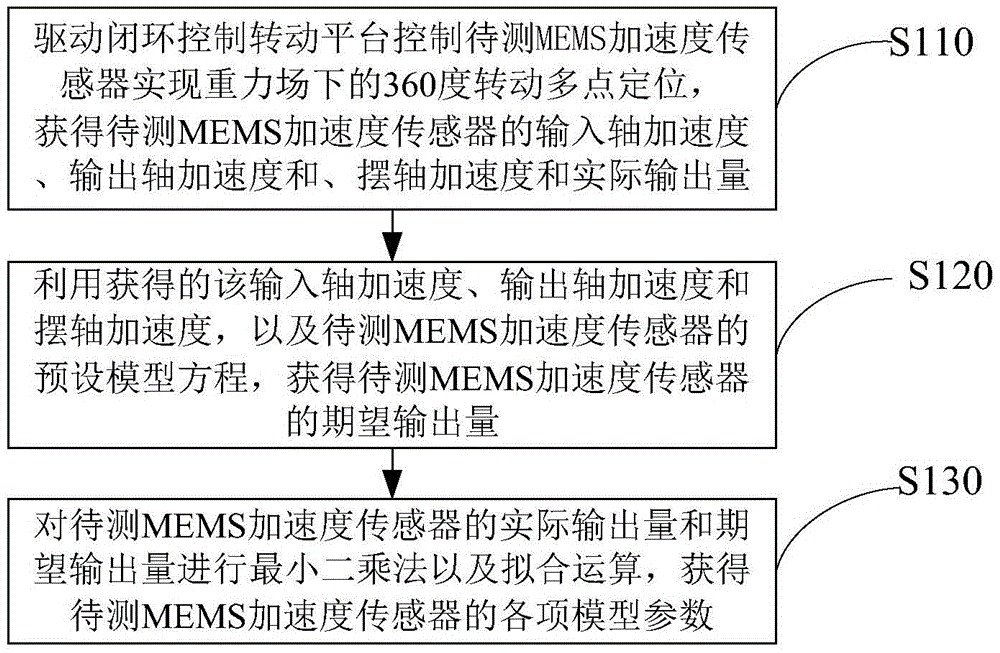
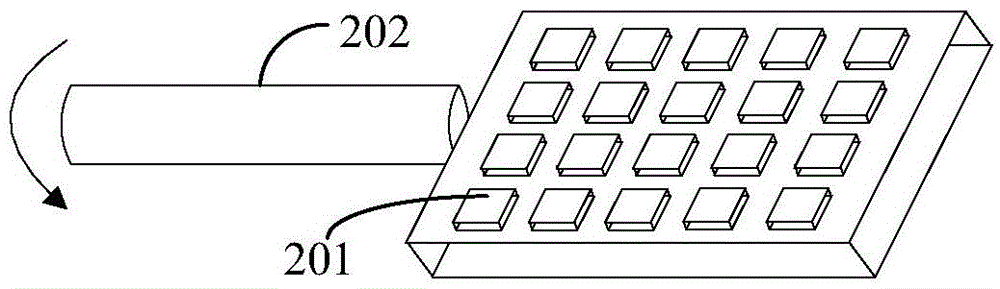
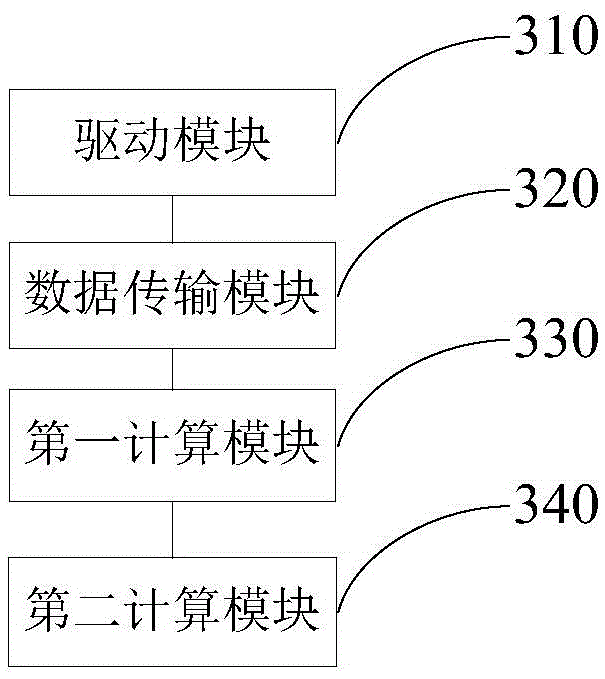
- By driving the closed-loop control rotating platform, the MEMS acceleration sensor to be tested performs 360-degree rotation and multi-point positioning to obtain the input shaft acceleration, output shaft acceleration and pendulum shaft acceleration. The expected output is calculated using the preset model equation and fitted by the least square method. The model parameters are obtained through calculation, excluding items such as quadratic nonlinear coefficients and cross-coupling sensitivity.

Performance Benchmarking and Testing Standards
Performance benchmarking of ultrasonic and MEMS accelerometer sensors requires standardized testing protocols to ensure accurate and comparable results across different sensor technologies. The IEEE 1293 standard provides fundamental guidelines for inertial sensor testing, while ISO 16063 series establishes comprehensive vibration calibration procedures applicable to both sensor types. These standards define critical parameters including frequency response, sensitivity, linearity, and noise characteristics that must be evaluated under controlled conditions.
Testing methodologies for MEMS accelerometers typically follow ASTM F2625 standards, which specify procedures for measuring key performance metrics such as bias stability, scale factor accuracy, and temperature coefficient variations. The testing environment requires precise temperature control, typically within ±0.1°C, and vibration isolation to eliminate external interference. Standard test frequencies range from DC to several kilohertz, with amplitude sweeps covering the full measurement range of each sensor.
Ultrasonic accelerometer evaluation protocols focus on acoustic coupling efficiency and signal processing algorithms. Testing standards emphasize the importance of surface preparation and coupling medium consistency, as these factors significantly impact measurement accuracy. The evaluation process includes assessment of detection threshold, spatial resolution, and immunity to electromagnetic interference under various environmental conditions.
Comparative benchmarking requires identical test fixtures and data acquisition systems to eliminate systematic errors. Reference accelerometers with NIST-traceable calibration serve as measurement standards, typically featuring uncertainty levels below 1% across the frequency range of interest. Multi-axis testing platforms enable simultaneous evaluation of cross-axis sensitivity and alignment accuracy for both sensor technologies.
Environmental stress testing protocols include temperature cycling from -40°C to +85°C, humidity exposure up to 95% relative humidity, and shock testing at levels up to 1000g. These standardized conditions reveal performance degradation patterns and long-term stability characteristics essential for reliability assessment. Accelerated aging tests following MIL-STD-883 procedures provide insights into sensor lifetime expectations under operational stress conditions.
Data analysis standards require statistical evaluation of measurement uncertainty, including Type A and Type B uncertainty components as defined by the Guide to Uncertainty in Measurement. Performance metrics must be reported with confidence intervals and traceability chains to national measurement standards, ensuring reproducibility and comparability across different testing laboratories and evaluation periods.
Testing methodologies for MEMS accelerometers typically follow ASTM F2625 standards, which specify procedures for measuring key performance metrics such as bias stability, scale factor accuracy, and temperature coefficient variations. The testing environment requires precise temperature control, typically within ±0.1°C, and vibration isolation to eliminate external interference. Standard test frequencies range from DC to several kilohertz, with amplitude sweeps covering the full measurement range of each sensor.
Ultrasonic accelerometer evaluation protocols focus on acoustic coupling efficiency and signal processing algorithms. Testing standards emphasize the importance of surface preparation and coupling medium consistency, as these factors significantly impact measurement accuracy. The evaluation process includes assessment of detection threshold, spatial resolution, and immunity to electromagnetic interference under various environmental conditions.
Comparative benchmarking requires identical test fixtures and data acquisition systems to eliminate systematic errors. Reference accelerometers with NIST-traceable calibration serve as measurement standards, typically featuring uncertainty levels below 1% across the frequency range of interest. Multi-axis testing platforms enable simultaneous evaluation of cross-axis sensitivity and alignment accuracy for both sensor technologies.
Environmental stress testing protocols include temperature cycling from -40°C to +85°C, humidity exposure up to 95% relative humidity, and shock testing at levels up to 1000g. These standardized conditions reveal performance degradation patterns and long-term stability characteristics essential for reliability assessment. Accelerated aging tests following MIL-STD-883 procedures provide insights into sensor lifetime expectations under operational stress conditions.
Data analysis standards require statistical evaluation of measurement uncertainty, including Type A and Type B uncertainty components as defined by the Guide to Uncertainty in Measurement. Performance metrics must be reported with confidence intervals and traceability chains to national measurement standards, ensuring reproducibility and comparability across different testing laboratories and evaluation periods.
Integration Challenges and System Design Considerations
The integration of ultrasonic and MEMS accelerometer sensors into modern systems presents distinct challenges that significantly impact overall system performance and design complexity. Each sensor type requires fundamentally different interface architectures, with ultrasonic sensors demanding specialized analog front-end circuits for signal conditioning and time-of-flight measurement, while MEMS accelerometers typically utilize digital interfaces such as SPI or I2C protocols. This disparity necessitates careful consideration of mixed-signal design principles and appropriate isolation techniques to prevent cross-interference between analog and digital domains.
Power management strategies differ substantially between these sensor technologies, creating additional system-level complications. Ultrasonic sensors exhibit dynamic power consumption patterns with high peak currents during transmission phases followed by low-power reception periods, requiring sophisticated power supply designs with adequate decoupling and transient response capabilities. Conversely, MEMS accelerometers maintain relatively constant power consumption but offer various low-power modes that must be properly managed through software control algorithms.
Mechanical mounting and packaging considerations present unique challenges for each sensor type. Ultrasonic sensors require careful acoustic coupling design to ensure optimal signal transmission and reception, with mounting materials and geometries directly affecting measurement accuracy. Environmental factors such as temperature variations, humidity, and acoustic interference must be addressed through appropriate housing design and signal processing algorithms. MEMS accelerometers demand rigid mechanical coupling to accurately capture vibration signatures while simultaneously requiring isolation from unwanted mechanical noise sources.
Signal processing requirements impose different computational burdens on system resources. Ultrasonic sensor data processing involves complex algorithms for time-of-flight calculation, temperature compensation, and noise filtering, often requiring dedicated digital signal processing capabilities or high-performance microcontrollers. MEMS accelerometer integration typically involves simpler data acquisition but may require sophisticated filtering and analysis algorithms for specific applications such as condition monitoring or predictive maintenance.
Calibration and maintenance protocols vary significantly between sensor technologies, affecting long-term system reliability and operational costs. Ultrasonic sensors may require periodic recalibration to account for transducer aging and environmental drift, while MEMS accelerometers generally offer superior long-term stability but may need bias correction algorithms. System designers must implement appropriate diagnostic capabilities and self-test functions to ensure continued measurement accuracy throughout the operational lifetime.
Power management strategies differ substantially between these sensor technologies, creating additional system-level complications. Ultrasonic sensors exhibit dynamic power consumption patterns with high peak currents during transmission phases followed by low-power reception periods, requiring sophisticated power supply designs with adequate decoupling and transient response capabilities. Conversely, MEMS accelerometers maintain relatively constant power consumption but offer various low-power modes that must be properly managed through software control algorithms.
Mechanical mounting and packaging considerations present unique challenges for each sensor type. Ultrasonic sensors require careful acoustic coupling design to ensure optimal signal transmission and reception, with mounting materials and geometries directly affecting measurement accuracy. Environmental factors such as temperature variations, humidity, and acoustic interference must be addressed through appropriate housing design and signal processing algorithms. MEMS accelerometers demand rigid mechanical coupling to accurately capture vibration signatures while simultaneously requiring isolation from unwanted mechanical noise sources.
Signal processing requirements impose different computational burdens on system resources. Ultrasonic sensor data processing involves complex algorithms for time-of-flight calculation, temperature compensation, and noise filtering, often requiring dedicated digital signal processing capabilities or high-performance microcontrollers. MEMS accelerometer integration typically involves simpler data acquisition but may require sophisticated filtering and analysis algorithms for specific applications such as condition monitoring or predictive maintenance.
Calibration and maintenance protocols vary significantly between sensor technologies, affecting long-term system reliability and operational costs. Ultrasonic sensors may require periodic recalibration to account for transducer aging and environmental drift, while MEMS accelerometers generally offer superior long-term stability but may need bias correction algorithms. System designers must implement appropriate diagnostic capabilities and self-test functions to ensure continued measurement accuracy throughout the operational lifetime.
Unlock deeper insights with PatSnap Eureka Quick Research — get a full tech report to explore trends and direct your research. Try now!
Generate Your Research Report Instantly with AI Agent
Supercharge your innovation with PatSnap Eureka AI Agent Platform!