
Achieving Sub-Angular Resolution Accuracy With Optimized AO Tools
JUN 23, 20269 MIN READ
Generate Your Research Report Instantly with AI Agent
Patsnap Eureka helps you evaluate technical feasibility & market potential.
AO Sub-Angular Resolution Background and Objectives
Adaptive Optics (AO) technology has emerged as a revolutionary solution for correcting atmospheric turbulence effects in ground-based astronomical observations and high-precision optical systems. Since its inception in the 1970s, AO systems have evolved from basic tip-tilt correction mechanisms to sophisticated multi-conjugate and extreme adaptive optics configurations capable of delivering near-diffraction-limited performance.
The fundamental challenge in modern optical systems lies in achieving sub-angular resolution accuracy, which refers to the ability to resolve and measure angular separations smaller than the theoretical diffraction limit of the optical system. This capability is crucial for applications ranging from exoplanet detection and characterization to high-resolution stellar interferometry and precision astrometry missions.
Traditional AO systems have primarily focused on correcting low-order atmospheric aberrations, achieving Strehl ratios of 30-60% in near-infrared wavelengths. However, the demand for sub-angular resolution performance requires correction of higher-order modes and implementation of advanced control algorithms that can operate at kilohertz frequencies with nanometer-level precision.
The evolution toward sub-angular resolution has been driven by several technological breakthroughs, including the development of high-actuator-count deformable mirrors, pyramid wavefront sensors, and predictive control algorithms. These advances have enabled the correction of atmospheric turbulence cells as small as 10-15 centimeters, significantly improving the point spread function stability and coherence.
Current research objectives focus on optimizing AO tool performance through integrated approaches combining hardware improvements and algorithmic innovations. Key targets include achieving consistent sub-milliarcsecond astrometric precision, enabling direct imaging of Earth-like exoplanets, and supporting next-generation extremely large telescopes with apertures exceeding 30 meters.
The optimization of AO tools for sub-angular resolution encompasses multiple technical domains, including real-time control system architecture, wavefront sensing methodologies, and atmospheric turbulence modeling. Success in this field requires coordinated advancement across optical design, signal processing, and mechanical engineering disciplines to achieve the stringent performance requirements demanded by cutting-edge astronomical and industrial applications.
The fundamental challenge in modern optical systems lies in achieving sub-angular resolution accuracy, which refers to the ability to resolve and measure angular separations smaller than the theoretical diffraction limit of the optical system. This capability is crucial for applications ranging from exoplanet detection and characterization to high-resolution stellar interferometry and precision astrometry missions.
Traditional AO systems have primarily focused on correcting low-order atmospheric aberrations, achieving Strehl ratios of 30-60% in near-infrared wavelengths. However, the demand for sub-angular resolution performance requires correction of higher-order modes and implementation of advanced control algorithms that can operate at kilohertz frequencies with nanometer-level precision.
The evolution toward sub-angular resolution has been driven by several technological breakthroughs, including the development of high-actuator-count deformable mirrors, pyramid wavefront sensors, and predictive control algorithms. These advances have enabled the correction of atmospheric turbulence cells as small as 10-15 centimeters, significantly improving the point spread function stability and coherence.
Current research objectives focus on optimizing AO tool performance through integrated approaches combining hardware improvements and algorithmic innovations. Key targets include achieving consistent sub-milliarcsecond astrometric precision, enabling direct imaging of Earth-like exoplanets, and supporting next-generation extremely large telescopes with apertures exceeding 30 meters.
The optimization of AO tools for sub-angular resolution encompasses multiple technical domains, including real-time control system architecture, wavefront sensing methodologies, and atmospheric turbulence modeling. Success in this field requires coordinated advancement across optical design, signal processing, and mechanical engineering disciplines to achieve the stringent performance requirements demanded by cutting-edge astronomical and industrial applications.
Market Demand for High-Precision AO Systems
The global market for high-precision adaptive optics systems is experiencing unprecedented growth driven by expanding applications across multiple sectors. Ground-based astronomical observatories represent the largest segment, where the demand for sub-angular resolution capabilities has intensified due to the construction of extremely large telescopes and the need to compete with space-based observations. Major observatories worldwide are investing heavily in next-generation AO systems to maximize their scientific output and maintain competitive advantages in astronomical research.
The defense and aerospace sector constitutes another significant market driver, particularly for applications requiring precise beam control and atmospheric turbulence compensation. Military surveillance systems, satellite communications, and laser weapon platforms increasingly rely on advanced AO technologies to achieve operational effectiveness. The growing emphasis on space situational awareness and missile defense systems has further amplified demand for high-precision optical systems capable of sub-angular resolution performance.
Industrial applications are emerging as a rapidly expanding market segment, with laser manufacturing, materials processing, and precision metrology driving adoption. The semiconductor industry's transition to extreme ultraviolet lithography and advanced packaging technologies requires unprecedented optical precision, creating substantial demand for optimized AO solutions. Medical applications, particularly in ophthalmology and laser surgery, represent another growing market where sub-angular precision directly impacts patient outcomes and procedure success rates.
The commercial space industry has introduced new market dynamics, with satellite constellation operators and space-based manufacturing requiring robust AO systems for inter-satellite communications and precision operations. Earth observation missions increasingly demand higher resolution capabilities, driving specifications toward sub-angular performance levels that were previously exclusive to research applications.
Market growth is further accelerated by technological convergence trends, where traditional boundaries between astronomical, defense, and industrial applications are blurring. Cross-sector technology transfer is enabling cost reductions and performance improvements, making high-precision AO systems accessible to previously underserved market segments. The integration of artificial intelligence and machine learning capabilities into AO control systems is creating additional value propositions and expanding addressable markets.
Regional market dynamics show strong growth in Asia-Pacific regions, driven by substantial government investments in space programs and advanced manufacturing capabilities. European markets emphasize scientific research applications, while North American demand spans across defense, commercial, and research sectors, creating a diverse and resilient market foundation for continued expansion.
The defense and aerospace sector constitutes another significant market driver, particularly for applications requiring precise beam control and atmospheric turbulence compensation. Military surveillance systems, satellite communications, and laser weapon platforms increasingly rely on advanced AO technologies to achieve operational effectiveness. The growing emphasis on space situational awareness and missile defense systems has further amplified demand for high-precision optical systems capable of sub-angular resolution performance.
Industrial applications are emerging as a rapidly expanding market segment, with laser manufacturing, materials processing, and precision metrology driving adoption. The semiconductor industry's transition to extreme ultraviolet lithography and advanced packaging technologies requires unprecedented optical precision, creating substantial demand for optimized AO solutions. Medical applications, particularly in ophthalmology and laser surgery, represent another growing market where sub-angular precision directly impacts patient outcomes and procedure success rates.
The commercial space industry has introduced new market dynamics, with satellite constellation operators and space-based manufacturing requiring robust AO systems for inter-satellite communications and precision operations. Earth observation missions increasingly demand higher resolution capabilities, driving specifications toward sub-angular performance levels that were previously exclusive to research applications.
Market growth is further accelerated by technological convergence trends, where traditional boundaries between astronomical, defense, and industrial applications are blurring. Cross-sector technology transfer is enabling cost reductions and performance improvements, making high-precision AO systems accessible to previously underserved market segments. The integration of artificial intelligence and machine learning capabilities into AO control systems is creating additional value propositions and expanding addressable markets.
Regional market dynamics show strong growth in Asia-Pacific regions, driven by substantial government investments in space programs and advanced manufacturing capabilities. European markets emphasize scientific research applications, while North American demand spans across defense, commercial, and research sectors, creating a diverse and resilient market foundation for continued expansion.
Current AO Limitations and Sub-Angular Challenges
Current adaptive optics systems face fundamental limitations that prevent them from achieving sub-angular resolution accuracy, primarily stemming from atmospheric turbulence modeling inadequacies and hardware constraints. Traditional AO systems rely on Kolmogorov turbulence models that oversimplify the complex, multi-layered atmospheric distortions encountered in real-world conditions. These models fail to account for non-stationary turbulence patterns, altitude-dependent variations, and temporal coherence fluctuations that significantly impact wavefront correction accuracy.
Wavefront sensor limitations represent another critical bottleneck in achieving sub-angular precision. Conventional Shack-Hartmann sensors suffer from limited spatial sampling resolution and measurement noise that becomes increasingly problematic when attempting to detect minute atmospheric disturbances. The finite number of subapertures constrains the system's ability to resolve high-order aberrations, while photon noise in low-light conditions further degrades measurement accuracy below the sub-angular threshold.
Deformable mirror technology presents significant mechanical constraints that impede sub-angular correction capabilities. Current actuator densities and stroke limitations prevent precise correction of high-spatial-frequency aberrations. The coupling between adjacent actuators introduces systematic errors that accumulate across the mirror surface, creating residual wavefront errors that exceed sub-angular tolerance requirements. Additionally, hysteresis effects and thermal drift in actuator positioning contribute to long-term stability issues.
Temporal bandwidth limitations pose substantial challenges for sub-angular AO performance. The finite correction speed of current systems, typically operating at frequencies below 2 kHz, cannot adequately compensate for rapidly evolving atmospheric disturbances. This temporal lag results in correction errors that manifest as angular resolution degradation, particularly problematic for applications requiring sustained sub-angular accuracy over extended observation periods.
Control algorithm deficiencies further compound these hardware limitations. Traditional proportional-integral controllers lack the sophistication needed to handle the complex, non-linear dynamics of atmospheric turbulence at sub-angular scales. The algorithms struggle with predictive correction capabilities and often exhibit instability when attempting aggressive correction parameters necessary for sub-angular performance.
System calibration and alignment tolerances represent additional barriers to sub-angular achievement. Minute misalignments between optical components, thermal-induced distortions, and mechanical vibrations introduce systematic errors that accumulate throughout the optical train. These effects become increasingly significant when pursuing sub-angular accuracy, requiring unprecedented precision in system integration and environmental control that current methodologies cannot consistently deliver.
Wavefront sensor limitations represent another critical bottleneck in achieving sub-angular precision. Conventional Shack-Hartmann sensors suffer from limited spatial sampling resolution and measurement noise that becomes increasingly problematic when attempting to detect minute atmospheric disturbances. The finite number of subapertures constrains the system's ability to resolve high-order aberrations, while photon noise in low-light conditions further degrades measurement accuracy below the sub-angular threshold.
Deformable mirror technology presents significant mechanical constraints that impede sub-angular correction capabilities. Current actuator densities and stroke limitations prevent precise correction of high-spatial-frequency aberrations. The coupling between adjacent actuators introduces systematic errors that accumulate across the mirror surface, creating residual wavefront errors that exceed sub-angular tolerance requirements. Additionally, hysteresis effects and thermal drift in actuator positioning contribute to long-term stability issues.
Temporal bandwidth limitations pose substantial challenges for sub-angular AO performance. The finite correction speed of current systems, typically operating at frequencies below 2 kHz, cannot adequately compensate for rapidly evolving atmospheric disturbances. This temporal lag results in correction errors that manifest as angular resolution degradation, particularly problematic for applications requiring sustained sub-angular accuracy over extended observation periods.
Control algorithm deficiencies further compound these hardware limitations. Traditional proportional-integral controllers lack the sophistication needed to handle the complex, non-linear dynamics of atmospheric turbulence at sub-angular scales. The algorithms struggle with predictive correction capabilities and often exhibit instability when attempting aggressive correction parameters necessary for sub-angular performance.
System calibration and alignment tolerances represent additional barriers to sub-angular achievement. Minute misalignments between optical components, thermal-induced distortions, and mechanical vibrations introduce systematic errors that accumulate throughout the optical train. These effects become increasingly significant when pursuing sub-angular accuracy, requiring unprecedented precision in system integration and environmental control that current methodologies cannot consistently deliver.
Existing AO Optimization Solutions and Methods
01 Adaptive optics wavefront correction systems
Advanced wavefront correction systems utilize deformable mirrors and real-time control algorithms to compensate for atmospheric turbulence and optical aberrations. These systems employ sophisticated feedback mechanisms to continuously adjust optical elements, enabling sub-angular resolution measurements by correcting phase distortions in real-time. The technology incorporates multiple actuators and sensors to achieve precise wavefront shaping for enhanced angular accuracy.- Adaptive optics wavefront correction systems: Advanced wavefront correction systems utilize deformable mirrors and real-time control algorithms to compensate for atmospheric turbulence and optical aberrations. These systems employ sophisticated feedback mechanisms to continuously adjust optical elements, enabling sub-angular resolution measurements by correcting phase distortions in real-time. The technology incorporates multiple actuators and sensors to achieve precise wavefront control across the optical aperture.
- High-precision measurement algorithms and calibration methods: Sophisticated computational algorithms and calibration techniques are employed to enhance measurement accuracy in adaptive optics systems. These methods include advanced signal processing, error correction algorithms, and systematic calibration procedures that account for instrumental effects and environmental variations. The approaches utilize statistical analysis and machine learning techniques to improve measurement precision and reduce systematic errors.
- Multi-conjugate and tomographic reconstruction techniques: Advanced reconstruction methods utilize multiple guide stars and tomographic approaches to create three-dimensional maps of atmospheric turbulence. These techniques enable improved correction over larger fields of view by sampling the atmosphere at different altitudes and positions. The methods incorporate complex mathematical models and iterative reconstruction algorithms to achieve enhanced angular resolution performance across extended observation areas.
- Laser guide star and beacon systems: Artificial beacon systems create reference sources for wavefront sensing in regions where natural guide stars are unavailable or insufficient. These systems utilize high-power laser sources to generate artificial reference points in the atmosphere, enabling adaptive optics correction across larger sky coverage areas. The technology incorporates precise beam steering and power control mechanisms to optimize beacon characteristics for different observing conditions.
- Wavefront sensing and detector technologies: Advanced sensor systems and detection methods provide high-speed, high-sensitivity measurements of optical wavefront distortions. These technologies include specialized detector arrays, novel sensing geometries, and improved readout electronics that enable rapid sampling of atmospheric conditions. The systems incorporate low-noise detection schemes and optimized optical designs to maximize sensitivity while maintaining fast temporal response for real-time correction applications.
02 High-precision angular measurement techniques
Specialized measurement methodologies employ interferometric principles and phase detection algorithms to achieve sub-angular resolution accuracy. These techniques utilize coherent light sources and advanced signal processing to detect minute angular variations beyond conventional measurement limits. The systems incorporate calibration procedures and error correction mechanisms to maintain measurement precision across varying environmental conditions.Expand Specific Solutions03 Optical sensor array configurations
Multi-element sensor arrays are configured in specific geometric arrangements to enhance angular resolution capabilities. These configurations utilize spatial sampling techniques and array processing algorithms to reconstruct high-resolution angular information from distributed measurements. The sensor arrangements optimize signal-to-noise ratios and minimize systematic errors through redundant measurement pathways and cross-correlation analysis.Expand Specific Solutions04 Digital signal processing for resolution enhancement
Advanced computational algorithms process optical signals to extract sub-angular resolution information through mathematical reconstruction techniques. These processing methods employ Fourier analysis, statistical filtering, and machine learning approaches to enhance measurement accuracy beyond hardware limitations. The algorithms incorporate noise reduction, pattern recognition, and predictive modeling to achieve superior angular precision.Expand Specific Solutions05 Calibration and error compensation methods
Systematic calibration procedures and error compensation techniques ensure consistent sub-angular resolution performance across operational conditions. These methods address thermal drift, mechanical instabilities, and environmental variations through automated correction algorithms and reference standard comparisons. The compensation systems utilize real-time monitoring and adaptive adjustment mechanisms to maintain measurement accuracy over extended operational periods.Expand Specific Solutions
Key Players in AO and Precision Optics Industry
The adaptive optics (AO) technology sector for achieving sub-angular resolution accuracy represents a mature yet rapidly evolving market, currently valued in the billions globally with strong growth projections driven by applications in astronomy, defense, and medical imaging. The competitive landscape spans from established optical giants like Canon, Carl Zeiss SMT, and Thorlabs providing foundational components, to specialized AO companies such as Imagine Optic and poLight delivering cutting-edge solutions. Technology maturity varies significantly across segments, with companies like NVIDIA and Apple driving computational advances, while Boeing and aerospace applications push precision boundaries. Academic institutions including University of Rochester, Caltech, and Chinese research centers contribute fundamental breakthroughs, while semiconductor manufacturers like Samsung Electronics and SMIC enable miniaturization. The industry shows strong consolidation potential as traditional optics companies integrate with tech giants to deliver comprehensive AO solutions for emerging applications in AR/VR and autonomous systems.
Canon, Inc.
Technical Solution: Canon develops advanced adaptive optics systems integrated into their high-end imaging equipment, utilizing proprietary deformable mirror technology and sophisticated wavefront correction algorithms. Their AO systems employ multi-actuator deformable mirrors with over 1000 correction elements, combined with high-speed wavefront sensors operating at kilohertz frequencies. Canon's approach focuses on real-time atmospheric turbulence compensation for astronomical telescopes and precision optical systems, achieving Strehl ratios exceeding 0.8 in moderate seeing conditions. Their technology incorporates machine learning algorithms for predictive wavefront correction and optimized control loops for enhanced system stability and performance.
Strengths: Strong integration capabilities with imaging systems and robust manufacturing infrastructure for scalable production. Weaknesses: Limited specialization in pure adaptive optics compared to dedicated AO companies, potentially higher costs for specialized applications.
Thorlabs, Inc.
Technical Solution: Thorlabs offers comprehensive adaptive optics solutions including deformable mirrors, wavefront sensors, and complete AO systems designed for research and industrial applications. Their product portfolio features MEMS-based deformable mirrors with up to 492 actuators and Shack-Hartmann wavefront sensors capable of measuring aberrations with high spatial and temporal resolution. Thorlabs' AO systems integrate proprietary control software with real-time correction algorithms, achieving closed-loop bandwidths exceeding 1 kHz for dynamic aberration correction. Their modular approach allows customization for specific applications requiring sub-angular resolution accuracy, particularly in microscopy, laser beam shaping, and optical communications where precise wavefront control is essential for optimal system performance.
Strengths: Comprehensive product ecosystem with excellent modularity and strong support for research applications. Weaknesses: Less specialized in cutting-edge AO research compared to dedicated research institutions, moderate performance in extreme precision applications.
Core Innovations in Sub-Angular AO Techniques
Common-path interference self-adaption optical OCT retinal imaging instrument
PatentActiveCN105105707A
Innovation
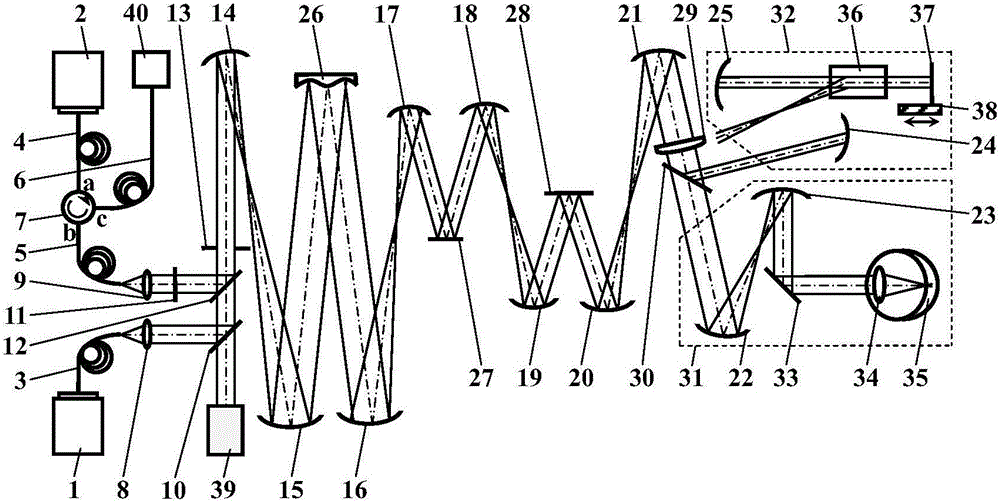
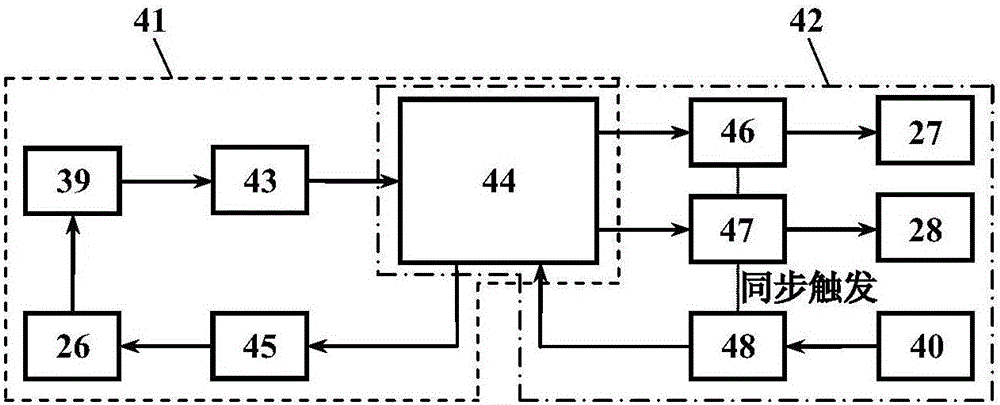
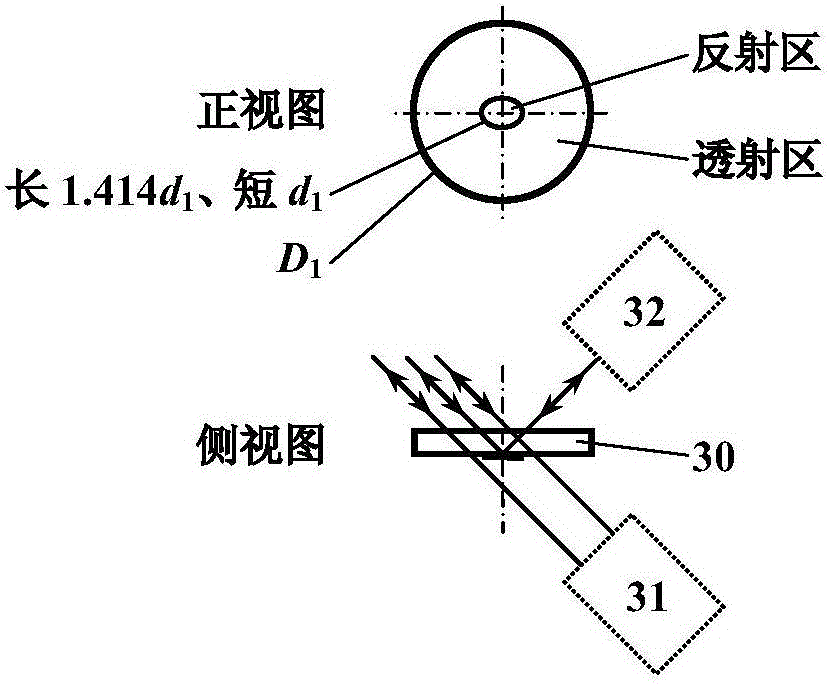
- The adaptive optics OCT retinal imager using a common-path interference structure separates the sample beam and the reference beam through the central reflection edge transmission beam splitter, reducing aberrations, simplifying the optical path, eliminating the need for a separate reference arm system and polarization adjustment devices, and using Common path interference structure to overcome the above problems.

AO System Calibration and Metrology Standards
The establishment of robust calibration and metrology standards represents a critical foundation for achieving sub-angular resolution accuracy in adaptive optics systems. Current industry practices rely on a combination of interferometric measurements, wavefront sensing calibration protocols, and systematic error characterization methodologies to ensure consistent performance across different operational conditions.
Interferometric calibration techniques form the cornerstone of precision AO system validation. These methods utilize laser interferometry to establish reference wavefront measurements with nanometer-level accuracy, enabling the characterization of deformable mirror response functions and actuator coupling effects. The calibration process typically involves creating known aberration patterns and measuring the system's ability to detect and correct these distortions with sub-wavelength precision.
Wavefront sensor calibration protocols have evolved to address the specific requirements of high-precision applications. Modern standards incorporate pupil registration accuracy verification, detector linearity assessment, and noise characterization procedures. These protocols ensure that Shack-Hartmann sensors and pyramid wavefront sensors maintain their specified sensitivity and dynamic range throughout operational lifecycles.
Systematic error mitigation strategies focus on identifying and quantifying non-common path aberrations, thermal drift effects, and mechanical instabilities that can compromise sub-angular resolution performance. Standardized measurement procedures include the use of calibrated phase screens, artificial guide star simulators, and environmental monitoring systems to establish baseline performance metrics.
Emerging metrology standards are incorporating machine learning-based calibration approaches that can adapt to changing system conditions and optimize performance parameters in real-time. These advanced methodologies promise to enhance calibration accuracy while reducing the time and complexity associated with traditional manual calibration procedures.
The integration of these calibration and metrology standards ensures that AO systems can consistently deliver the precision required for demanding applications such as exoplanet detection and high-resolution astronomical imaging, where sub-angular resolution accuracy directly impacts scientific discovery capabilities.
Interferometric calibration techniques form the cornerstone of precision AO system validation. These methods utilize laser interferometry to establish reference wavefront measurements with nanometer-level accuracy, enabling the characterization of deformable mirror response functions and actuator coupling effects. The calibration process typically involves creating known aberration patterns and measuring the system's ability to detect and correct these distortions with sub-wavelength precision.
Wavefront sensor calibration protocols have evolved to address the specific requirements of high-precision applications. Modern standards incorporate pupil registration accuracy verification, detector linearity assessment, and noise characterization procedures. These protocols ensure that Shack-Hartmann sensors and pyramid wavefront sensors maintain their specified sensitivity and dynamic range throughout operational lifecycles.
Systematic error mitigation strategies focus on identifying and quantifying non-common path aberrations, thermal drift effects, and mechanical instabilities that can compromise sub-angular resolution performance. Standardized measurement procedures include the use of calibrated phase screens, artificial guide star simulators, and environmental monitoring systems to establish baseline performance metrics.
Emerging metrology standards are incorporating machine learning-based calibration approaches that can adapt to changing system conditions and optimize performance parameters in real-time. These advanced methodologies promise to enhance calibration accuracy while reducing the time and complexity associated with traditional manual calibration procedures.
The integration of these calibration and metrology standards ensures that AO systems can consistently deliver the precision required for demanding applications such as exoplanet detection and high-resolution astronomical imaging, where sub-angular resolution accuracy directly impacts scientific discovery capabilities.
Environmental Factors in AO Performance Optimization
Environmental conditions play a critical role in determining the performance limits of adaptive optics systems seeking sub-angular resolution accuracy. Atmospheric turbulence remains the primary environmental challenge, with the Fried parameter and coherence time directly influencing the correction bandwidth requirements. Temperature gradients, humidity variations, and wind patterns create complex wavefront distortions that evolve on millisecond timescales, demanding sophisticated real-time compensation strategies.
Altitude-dependent atmospheric characteristics significantly impact AO system design considerations. Ground-based telescopes face the full atmospheric column effects, while high-altitude observatories benefit from reduced atmospheric thickness but encounter unique challenges such as temperature stability and mechanical vibrations from wind loading. The atmospheric coherence length varies substantially with observing zenith angle, requiring adaptive control algorithms that can dynamically adjust correction parameters based on real-time atmospheric conditions.
Thermal environment management emerges as a crucial factor for maintaining sub-angular precision. Temperature fluctuations affect both optical component stability and deformable mirror response characteristics. Thermal gradients within the optical path introduce additional aberrations that can compromise the effectiveness of wavefront correction. Advanced AO systems incorporate environmental monitoring sensors to track temperature, pressure, and humidity variations, enabling predictive compensation algorithms.
Vibration isolation becomes increasingly critical as resolution requirements approach sub-angular levels. Ground-based disturbances, wind-induced oscillations, and mechanical resonances from tracking systems can introduce high-frequency wavefront errors that exceed the correction bandwidth of traditional AO systems. Multi-layer isolation strategies and active vibration cancellation techniques are essential for achieving the mechanical stability required for sub-angular performance.
Electromagnetic interference and radio frequency environments also influence AO system performance, particularly in the control electronics and sensor systems. Proper shielding and grounding strategies must be implemented to prevent environmental electromagnetic fields from degrading the precision of wavefront measurements and actuator control signals necessary for sub-angular resolution achievement.
Altitude-dependent atmospheric characteristics significantly impact AO system design considerations. Ground-based telescopes face the full atmospheric column effects, while high-altitude observatories benefit from reduced atmospheric thickness but encounter unique challenges such as temperature stability and mechanical vibrations from wind loading. The atmospheric coherence length varies substantially with observing zenith angle, requiring adaptive control algorithms that can dynamically adjust correction parameters based on real-time atmospheric conditions.
Thermal environment management emerges as a crucial factor for maintaining sub-angular precision. Temperature fluctuations affect both optical component stability and deformable mirror response characteristics. Thermal gradients within the optical path introduce additional aberrations that can compromise the effectiveness of wavefront correction. Advanced AO systems incorporate environmental monitoring sensors to track temperature, pressure, and humidity variations, enabling predictive compensation algorithms.
Vibration isolation becomes increasingly critical as resolution requirements approach sub-angular levels. Ground-based disturbances, wind-induced oscillations, and mechanical resonances from tracking systems can introduce high-frequency wavefront errors that exceed the correction bandwidth of traditional AO systems. Multi-layer isolation strategies and active vibration cancellation techniques are essential for achieving the mechanical stability required for sub-angular performance.
Electromagnetic interference and radio frequency environments also influence AO system performance, particularly in the control electronics and sensor systems. Proper shielding and grounding strategies must be implemented to prevent environmental electromagnetic fields from degrading the precision of wavefront measurements and actuator control signals necessary for sub-angular resolution achievement.
Unlock deeper insights with Patsnap Eureka Quick Research — get a full tech report to explore trends and direct your research. Try now!
Generate Your Research Report Instantly with AI Agent
Supercharge your innovation with Patsnap Eureka AI Agent Platform!