

Achieving Ultra-thin Membrane Electrode Designs for Compact Systems
MAR 10, 20269 MIN READ
Generate Your Research Report Instantly with AI Agent
PatSnap Eureka helps you evaluate technical feasibility & market potential.
Ultra-thin Membrane Electrode Background and Objectives
Ultra-thin membrane electrodes represent a critical advancement in electrochemical device miniaturization, emerging from the growing demand for portable, lightweight, and space-efficient energy systems. The evolution of membrane electrode technology traces back to the 1960s with early fuel cell developments, progressing through decades of material science innovations that have enabled thickness reductions from millimeter-scale to current sub-micrometer dimensions. This technological progression has been driven by advances in nanomaterial synthesis, precision manufacturing techniques, and deeper understanding of electrochemical interface phenomena.
The fundamental challenge in ultra-thin membrane electrode design lies in maintaining electrochemical performance while dramatically reducing material thickness. Traditional thick electrodes rely on bulk material properties for conductivity and structural integrity, whereas ultra-thin designs must optimize surface-to-volume ratios and interface characteristics. Key technological milestones include the development of atomic layer deposition techniques, advanced polymer electrolyte membranes, and nanostructured catalyst supports that enable functional electrodes at nanoscale dimensions.
Current market drivers for ultra-thin membrane electrodes span multiple sectors including portable electronics, medical implants, automotive applications, and aerospace systems. The miniaturization trend in consumer electronics demands power sources that occupy minimal space while delivering adequate performance. Medical device applications require biocompatible, long-lasting power solutions that can be integrated into increasingly sophisticated implantable systems. The automotive industry's shift toward electrification creates demand for compact auxiliary power systems and sensors.
The primary technical objectives for ultra-thin membrane electrode development focus on achieving optimal balance between thickness reduction and performance retention. Critical targets include maintaining ionic conductivity above 10^-2 S/cm despite reduced material volume, ensuring mechanical stability under operational stresses, and achieving power densities comparable to conventional designs. Manufacturing scalability represents another crucial objective, requiring development of cost-effective production methods suitable for industrial implementation.
Advanced material engineering approaches target the creation of hybrid structures that combine multiple functional layers within ultra-thin architectures. These designs integrate catalyst layers, ion-conducting membranes, and current collectors into cohesive systems measuring less than 10 micrometers total thickness. The strategic goal involves developing standardized design principles that can be adapted across different electrochemical applications while maintaining consistent performance characteristics and manufacturing feasibility.
The fundamental challenge in ultra-thin membrane electrode design lies in maintaining electrochemical performance while dramatically reducing material thickness. Traditional thick electrodes rely on bulk material properties for conductivity and structural integrity, whereas ultra-thin designs must optimize surface-to-volume ratios and interface characteristics. Key technological milestones include the development of atomic layer deposition techniques, advanced polymer electrolyte membranes, and nanostructured catalyst supports that enable functional electrodes at nanoscale dimensions.
Current market drivers for ultra-thin membrane electrodes span multiple sectors including portable electronics, medical implants, automotive applications, and aerospace systems. The miniaturization trend in consumer electronics demands power sources that occupy minimal space while delivering adequate performance. Medical device applications require biocompatible, long-lasting power solutions that can be integrated into increasingly sophisticated implantable systems. The automotive industry's shift toward electrification creates demand for compact auxiliary power systems and sensors.
The primary technical objectives for ultra-thin membrane electrode development focus on achieving optimal balance between thickness reduction and performance retention. Critical targets include maintaining ionic conductivity above 10^-2 S/cm despite reduced material volume, ensuring mechanical stability under operational stresses, and achieving power densities comparable to conventional designs. Manufacturing scalability represents another crucial objective, requiring development of cost-effective production methods suitable for industrial implementation.
Advanced material engineering approaches target the creation of hybrid structures that combine multiple functional layers within ultra-thin architectures. These designs integrate catalyst layers, ion-conducting membranes, and current collectors into cohesive systems measuring less than 10 micrometers total thickness. The strategic goal involves developing standardized design principles that can be adapted across different electrochemical applications while maintaining consistent performance characteristics and manufacturing feasibility.
Market Demand for Compact Electrochemical Systems
The global electrochemical systems market is experiencing unprecedented growth driven by the urgent need for miniaturization across multiple industries. Consumer electronics manufacturers are demanding increasingly compact power solutions to support the development of wearable devices, implantable medical sensors, and ultra-portable electronic gadgets. The proliferation of Internet of Things devices has created substantial demand for miniaturized electrochemical components that can operate efficiently within severely constrained spatial environments.
Medical device applications represent a particularly compelling market segment for compact electrochemical systems. The growing trend toward minimally invasive medical procedures and continuous health monitoring has generated significant demand for ultra-thin membrane electrode assemblies. Implantable glucose sensors, cardiac monitoring devices, and drug delivery systems all require electrochemical components that maintain high performance while occupying minimal space within the human body.
The automotive industry's transition toward electrification has intensified the need for space-efficient electrochemical solutions. Electric vehicle manufacturers are prioritizing compact battery management systems and fuel cell technologies that maximize energy density while minimizing vehicle weight and spatial requirements. Advanced driver assistance systems and autonomous vehicle technologies further amplify the demand for miniaturized electrochemical sensors and power systems.
Industrial automation and robotics sectors are driving substantial market demand for compact electrochemical systems capable of operating in confined spaces. Manufacturing equipment increasingly requires integrated sensing and power solutions that can function effectively within tight mechanical constraints while maintaining industrial-grade reliability and performance standards.
The aerospace and defense industries present unique market opportunities for ultra-thin membrane electrode technologies. Satellite systems, unmanned aerial vehicles, and portable military equipment demand electrochemical solutions that combine exceptional performance with minimal weight and volume characteristics. These applications often require custom-engineered solutions that push the boundaries of current miniaturization capabilities.
Emerging applications in environmental monitoring and smart infrastructure are creating new market segments for compact electrochemical systems. Distributed sensor networks for air quality monitoring, water treatment systems, and smart building technologies require cost-effective, space-efficient electrochemical components that can be deployed at scale across diverse environmental conditions.
Medical device applications represent a particularly compelling market segment for compact electrochemical systems. The growing trend toward minimally invasive medical procedures and continuous health monitoring has generated significant demand for ultra-thin membrane electrode assemblies. Implantable glucose sensors, cardiac monitoring devices, and drug delivery systems all require electrochemical components that maintain high performance while occupying minimal space within the human body.
The automotive industry's transition toward electrification has intensified the need for space-efficient electrochemical solutions. Electric vehicle manufacturers are prioritizing compact battery management systems and fuel cell technologies that maximize energy density while minimizing vehicle weight and spatial requirements. Advanced driver assistance systems and autonomous vehicle technologies further amplify the demand for miniaturized electrochemical sensors and power systems.
Industrial automation and robotics sectors are driving substantial market demand for compact electrochemical systems capable of operating in confined spaces. Manufacturing equipment increasingly requires integrated sensing and power solutions that can function effectively within tight mechanical constraints while maintaining industrial-grade reliability and performance standards.
The aerospace and defense industries present unique market opportunities for ultra-thin membrane electrode technologies. Satellite systems, unmanned aerial vehicles, and portable military equipment demand electrochemical solutions that combine exceptional performance with minimal weight and volume characteristics. These applications often require custom-engineered solutions that push the boundaries of current miniaturization capabilities.
Emerging applications in environmental monitoring and smart infrastructure are creating new market segments for compact electrochemical systems. Distributed sensor networks for air quality monitoring, water treatment systems, and smart building technologies require cost-effective, space-efficient electrochemical components that can be deployed at scale across diverse environmental conditions.
Current State and Challenges of Thin Membrane Technologies
Ultra-thin membrane electrode technologies have reached a critical juncture in their development trajectory, with current commercial implementations achieving membrane thicknesses ranging from 10-50 micrometers in fuel cell applications and 5-25 micrometers in electrolyzer systems. Leading manufacturers such as Nafion, Aquivion, and emerging polymer electrolyte developers have successfully demonstrated proton exchange membranes with thicknesses below 15 micrometers while maintaining adequate mechanical integrity and ionic conductivity.
The state-of-the-art manufacturing processes predominantly rely on solution casting, extrusion coating, and advanced roll-to-roll techniques. These methods have enabled mass production capabilities but face inherent limitations in achieving uniform thickness distribution across large membrane areas. Current precision tolerances typically range within ±2-3 micrometers, which becomes increasingly challenging as target thicknesses approach single-digit micrometer ranges.
Mechanical durability represents the most significant challenge constraining further thickness reduction. Ultra-thin membranes exhibit increased susceptibility to pinhole formation, stress-induced cracking, and dimensional instability under operational conditions. The trade-off between membrane thickness and mechanical robustness creates a fundamental design constraint, particularly in compact systems where space limitations prevent the use of additional reinforcement layers.
Ionic conductivity optimization presents another critical challenge. While thinner membranes theoretically offer reduced ohmic resistance, the relationship becomes complex when considering interfacial effects and electrode-membrane integration. Current research indicates that membranes below 10 micrometers may experience conductivity degradation due to increased influence of surface phenomena and potential dehydration effects in compact system configurations.
Manufacturing scalability remains a significant bottleneck for ultra-thin membrane production. Existing industrial processes struggle to maintain consistent quality control at reduced thicknesses, leading to increased defect rates and production costs. The yield rates for membranes below 15 micrometers typically decrease by 15-25% compared to conventional thickness ranges, directly impacting commercial viability.
Integration challenges within compact systems introduce additional complexity layers. Ultra-thin membranes require specialized handling procedures, modified assembly techniques, and enhanced sealing mechanisms to prevent edge failures and gas crossover. The reduced material thickness also necessitates redesigned flow field architectures and optimized compression strategies to ensure uniform contact pressure distribution without membrane damage.
Current technological gaps include limited availability of high-throughput characterization methods for ultra-thin membrane quality assessment, insufficient understanding of long-term degradation mechanisms specific to reduced thickness configurations, and lack of standardized testing protocols for mechanical and electrochemical performance evaluation in compact system environments.
The state-of-the-art manufacturing processes predominantly rely on solution casting, extrusion coating, and advanced roll-to-roll techniques. These methods have enabled mass production capabilities but face inherent limitations in achieving uniform thickness distribution across large membrane areas. Current precision tolerances typically range within ±2-3 micrometers, which becomes increasingly challenging as target thicknesses approach single-digit micrometer ranges.
Mechanical durability represents the most significant challenge constraining further thickness reduction. Ultra-thin membranes exhibit increased susceptibility to pinhole formation, stress-induced cracking, and dimensional instability under operational conditions. The trade-off between membrane thickness and mechanical robustness creates a fundamental design constraint, particularly in compact systems where space limitations prevent the use of additional reinforcement layers.
Ionic conductivity optimization presents another critical challenge. While thinner membranes theoretically offer reduced ohmic resistance, the relationship becomes complex when considering interfacial effects and electrode-membrane integration. Current research indicates that membranes below 10 micrometers may experience conductivity degradation due to increased influence of surface phenomena and potential dehydration effects in compact system configurations.
Manufacturing scalability remains a significant bottleneck for ultra-thin membrane production. Existing industrial processes struggle to maintain consistent quality control at reduced thicknesses, leading to increased defect rates and production costs. The yield rates for membranes below 15 micrometers typically decrease by 15-25% compared to conventional thickness ranges, directly impacting commercial viability.
Integration challenges within compact systems introduce additional complexity layers. Ultra-thin membranes require specialized handling procedures, modified assembly techniques, and enhanced sealing mechanisms to prevent edge failures and gas crossover. The reduced material thickness also necessitates redesigned flow field architectures and optimized compression strategies to ensure uniform contact pressure distribution without membrane damage.
Current technological gaps include limited availability of high-throughput characterization methods for ultra-thin membrane quality assessment, insufficient understanding of long-term degradation mechanisms specific to reduced thickness configurations, and lack of standardized testing protocols for mechanical and electrochemical performance evaluation in compact system environments.
Existing Ultra-thin MEA Design Solutions
01 Ultra-thin membrane electrode assembly structure design
Development of membrane electrode assemblies with reduced thickness through optimized structural design and layer configuration. This involves precise control of component dimensions and arrangement to achieve ultra-thin profiles while maintaining mechanical integrity and electrochemical performance. The design focuses on minimizing overall thickness through innovative stacking and bonding methods.- Ultra-thin membrane electrode assembly structure design: Development of membrane electrode assemblies with reduced thickness through optimized structural design and layer configuration. This involves precise control of component thickness, improved bonding interfaces, and integration of multiple functional layers into compact structures. The ultra-thin design enhances performance while reducing material usage and overall device dimensions.
- Catalyst layer thickness reduction techniques: Methods for producing ultra-thin catalyst layers in membrane electrode assemblies through advanced coating and deposition techniques. These approaches include controlled spraying, printing, or sputtering methods that achieve uniform catalyst distribution at minimal thickness. The reduction in catalyst layer thickness improves mass transport, reduces material costs, and enhances electrochemical performance.
- Thin electrolyte membrane fabrication: Techniques for manufacturing ultra-thin electrolyte membranes with enhanced mechanical strength and ionic conductivity. This includes polymer processing methods, reinforcement strategies, and composite membrane structures that maintain durability while achieving reduced thickness. The thin membranes enable lower resistance and improved efficiency in electrochemical devices.
- Gas diffusion layer optimization for thin electrodes: Development of ultra-thin gas diffusion layers with optimized porosity, hydrophobicity, and electrical conductivity. These layers are designed to facilitate efficient gas transport and water management while maintaining minimal thickness. Advanced materials and surface treatments are employed to achieve the desired properties in reduced dimensions.
- Manufacturing processes for ultra-thin membrane electrodes: Advanced manufacturing and assembly processes specifically designed for producing ultra-thin membrane electrode assemblies. These include roll-to-roll processing, precision lamination, hot pressing techniques, and automated quality control methods. The processes ensure uniform thickness, proper adhesion between layers, and high production yield while maintaining the integrity of thin components.
02 Thin film catalyst layer fabrication techniques
Advanced methods for producing ultra-thin catalyst layers with controlled thickness and uniform distribution. These techniques include specialized coating, deposition, and printing processes that enable precise control over catalyst loading and layer thickness. The approaches aim to reduce material usage while maintaining or improving catalytic activity and durability.Expand Specific Solutions03 Ultra-thin electrolyte membrane materials and processing
Development of thin electrolyte membranes with enhanced mechanical strength and ionic conductivity. This includes novel polymer materials, composite membranes, and processing methods that allow for thickness reduction without compromising proton conductivity or chemical stability. Special attention is given to preventing membrane degradation and improving durability.Expand Specific Solutions04 Bonding and lamination methods for ultra-thin structures
Specialized techniques for assembling ultra-thin membrane electrode components through hot pressing, adhesive bonding, or direct lamination. These methods ensure strong interfacial contact between layers while avoiding damage to thin components. The processes are optimized to maintain uniform pressure distribution and prevent delamination in ultra-thin configurations.Expand Specific Solutions05 Support and reinforcement structures for ultra-thin electrodes
Integration of support layers, reinforcement materials, or porous substrates to provide mechanical stability to ultra-thin membrane electrodes. These structures help prevent tearing, wrinkling, or deformation during manufacturing and operation while minimizing additional thickness. The reinforcement approaches balance mechanical support with electrochemical accessibility and mass transport requirements.Expand Specific Solutions
Key Players in Membrane and Electrode Manufacturing
The ultra-thin membrane electrode technology sector is experiencing rapid growth driven by increasing demand for compact energy systems across automotive, consumer electronics, and industrial applications. The market demonstrates significant expansion potential as miniaturization trends accelerate across multiple industries. Technology maturity varies considerably among key players, with established corporations like Samsung Display, Sharp Corp., Canon Inc., and Toshiba Corp. leading in manufacturing capabilities and commercial deployment. Research institutions including MIT, Caltech, Princeton University, and ETH Zurich are advancing fundamental breakthroughs in membrane materials and electrode architectures. Specialized companies such as Nanotek Instruments and EVE Energy focus on battery applications, while industrial giants like Robert Bosch and W.L. Gore & Associates leverage their materials expertise for automotive and industrial implementations, creating a diverse competitive landscape spanning early research through commercial production.
Umicore SA
Technical Solution: Umicore has developed proprietary ultra-thin membrane electrode assemblies through their advanced catalyst coating technologies, achieving membrane thicknesses of 8-12 micrometers while maintaining high electrochemical performance. Their approach utilizes precision slot-die coating processes to apply catalyst layers with uniform thickness control within ±2 micrometers. The company's MEA design incorporates low-loading platinum group metal catalysts (0.15-0.25 mg/cm²) with enhanced activity through alloying with transition metals. Umicore's technology enables compact fuel cell systems with power densities exceeding 1.8 W/cm² while reducing precious metal content by 40% compared to conventional designs. Their manufacturing process includes advanced quality control systems ensuring consistent performance across large-scale production volumes for automotive and stationary applications.
Strengths: Industrial-scale manufacturing capability with proven quality control and cost-effective precious metal utilization. Weaknesses: Limited flexibility in membrane chemistry and dependence on platinum group metals for catalyst systems.
Fraunhofer-Gesellschaft eV
Technical Solution: Fraunhofer institutes have developed innovative ultra-thin membrane electrode architectures using roll-to-roll processing techniques for high-volume manufacturing. Their technology focuses on creating membrane thicknesses below 15 micrometers through advanced polymer processing and catalyst integration methods. The approach incorporates novel ionomer materials with enhanced proton conductivity (>200 mS/cm at 80°C) while maintaining mechanical integrity in thin-film configurations. Fraunhofer's MEA design utilizes structured catalyst layers with gradient porosity to optimize mass transport and reduce concentration losses. The technology includes integrated gas diffusion layers with thickness reduction of 30% compared to conventional designs, enabling compact fuel cell stacks with volume power density exceeding 4 kW/L for automotive and portable applications.
Strengths: Scalable roll-to-roll manufacturing process with excellent reproducibility and cost-effectiveness for large-scale production. Weaknesses: Limited customization options for specialized applications and moderate performance in extreme operating conditions.
Core Innovations in Thin Film Electrode Technologies
Membrane electrode assembly, method for manufacturing the same, and fuel cell including the same
PatentInactiveUS20080220307A1
Innovation
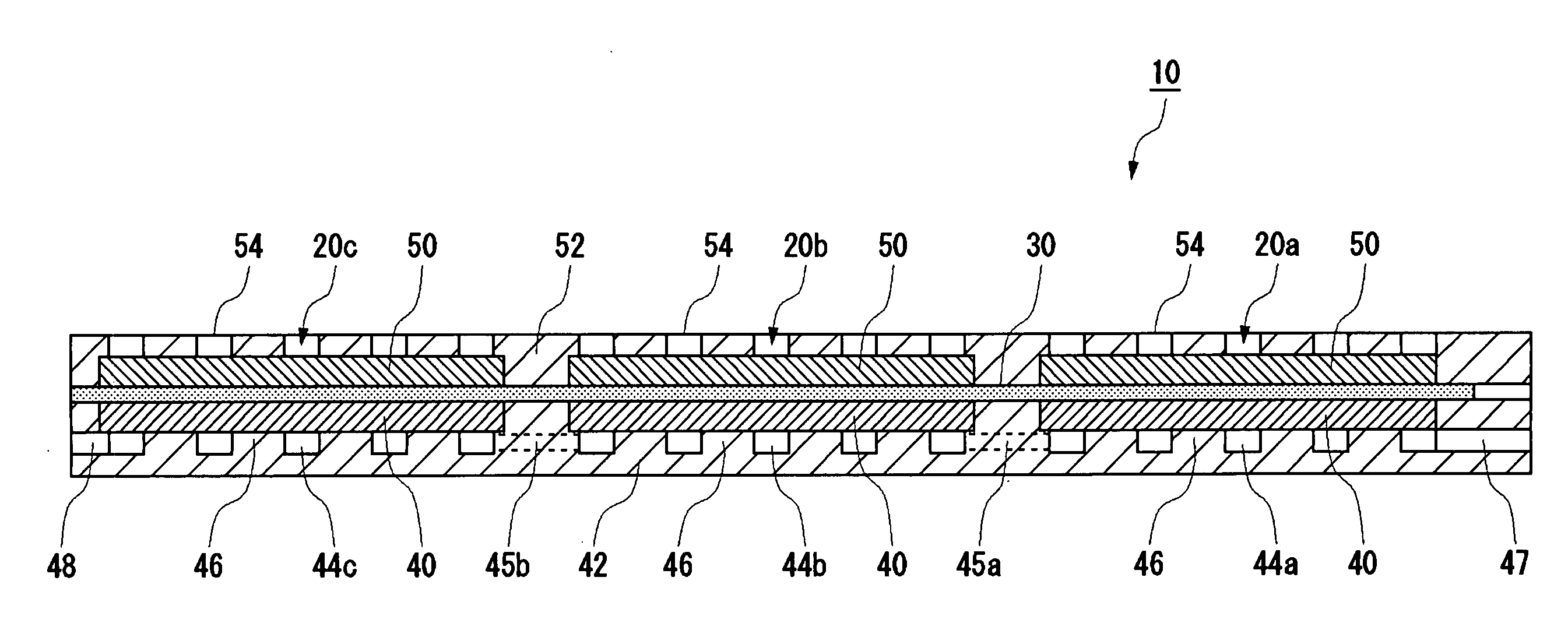
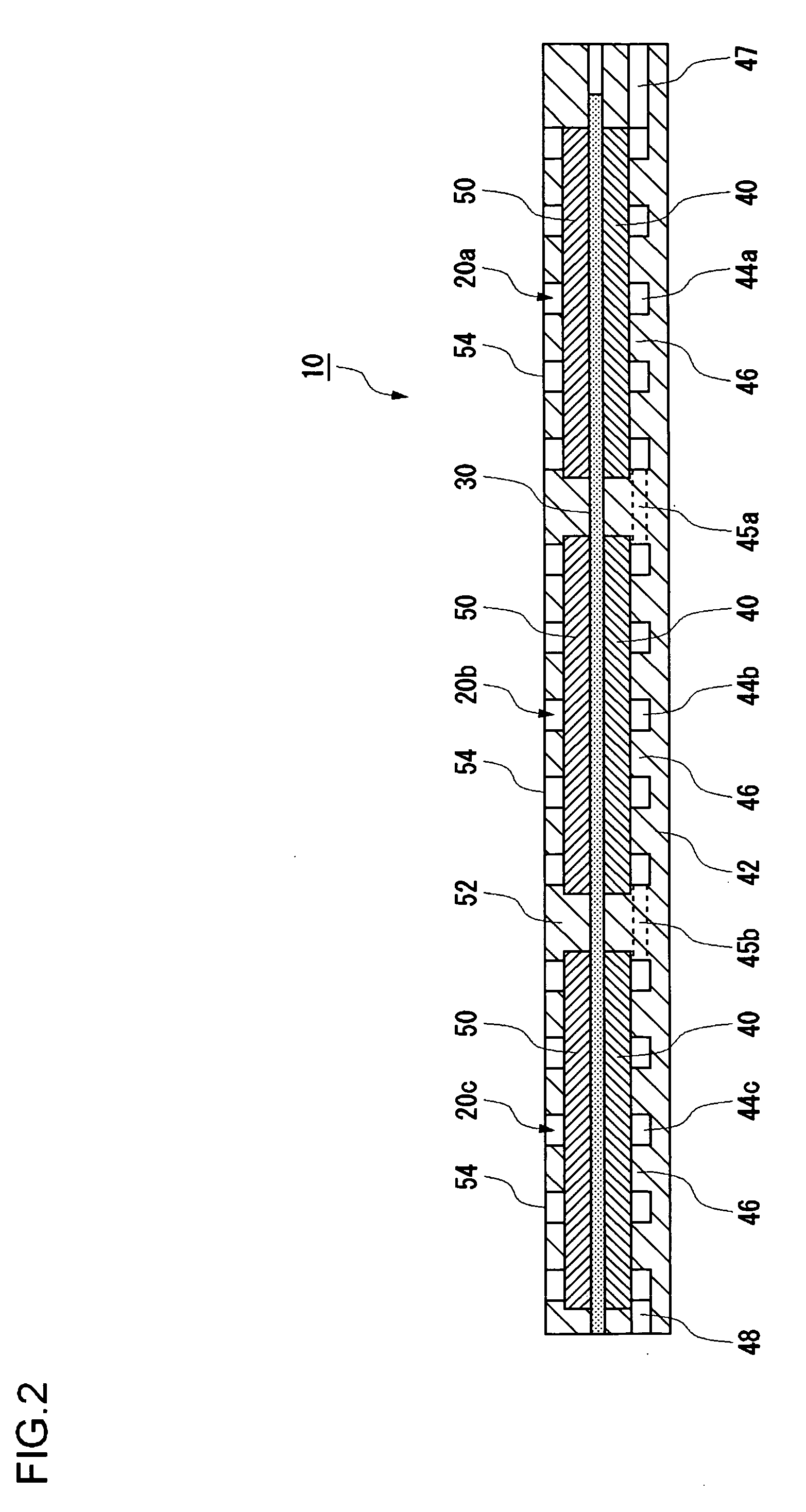
- A membrane electrode assembly with a non-electrode-forming region where the cathode is not disposed, and an electrode-forming region with a thinner electrolyte membrane, allowing water to travel away from the cathode and preventing accumulation, while also incorporating thin membrane regions and grooves to enhance water permeation and prevent anode drying.

Electrode composition for electrospraying
PatentWO2022216136A1
Innovation
- An electrode composition for electrospraying is developed, comprising conductive metal powder with an average particle diameter of 150 nm or less, ceramic powder, binder resin, and solvent, optimized to achieve an average thickness of 1 μm or less with excellent thickness uniformity, enabling the formation of ultra-thin electrodes with excellent electrical conductivity and preventing shape deformation during co-sintering.


Manufacturing Scalability for Ultra-thin MEAs
The transition from laboratory-scale ultra-thin membrane electrode assembly (MEA) production to industrial manufacturing presents significant scalability challenges that must be addressed to enable widespread commercial deployment. Current manufacturing processes for ultra-thin MEAs, typically ranging from 5-15 micrometers in thickness, rely heavily on precision coating techniques and controlled environmental conditions that are difficult to maintain at large production volumes.
Roll-to-roll manufacturing emerges as the most promising approach for achieving scalability in ultra-thin MEA production. This continuous processing method enables high-throughput manufacturing while maintaining the precise thickness control essential for ultra-thin designs. However, the implementation requires sophisticated tension control systems and real-time monitoring capabilities to prevent membrane damage during the coating and drying processes. The challenge intensifies when dealing with substrates thinner than 10 micrometers, where even minor variations in processing parameters can result in defects or complete membrane failure.
Quality control mechanisms represent another critical scalability bottleneck. Traditional inspection methods suitable for thicker MEAs become inadequate for ultra-thin variants, necessitating the development of advanced in-line monitoring systems. Non-destructive testing techniques, including optical coherence tomography and high-resolution imaging systems, must be integrated into production lines to ensure consistent quality without compromising throughput rates.
Material handling and storage considerations become exponentially more complex with ultra-thin MEAs. The increased fragility of these components requires specialized handling equipment and environmental controls throughout the manufacturing process. Automated handling systems must incorporate gentle manipulation techniques and contamination prevention measures to maintain product integrity during high-volume production.
Cost optimization strategies focus on reducing material waste and improving yield rates, which are particularly crucial for ultra-thin MEA manufacturing due to higher raw material costs per unit area. Advanced process control algorithms and predictive maintenance systems help minimize production interruptions and maintain consistent output quality. The integration of artificial intelligence and machine learning technologies enables real-time optimization of processing parameters, contributing to improved scalability and reduced manufacturing costs.
Supply chain considerations also impact manufacturing scalability, as ultra-thin MEA production requires specialized raw materials and components that may have limited supplier bases. Establishing robust supplier relationships and developing alternative sourcing strategies becomes essential for maintaining production continuity at scale.
Roll-to-roll manufacturing emerges as the most promising approach for achieving scalability in ultra-thin MEA production. This continuous processing method enables high-throughput manufacturing while maintaining the precise thickness control essential for ultra-thin designs. However, the implementation requires sophisticated tension control systems and real-time monitoring capabilities to prevent membrane damage during the coating and drying processes. The challenge intensifies when dealing with substrates thinner than 10 micrometers, where even minor variations in processing parameters can result in defects or complete membrane failure.
Quality control mechanisms represent another critical scalability bottleneck. Traditional inspection methods suitable for thicker MEAs become inadequate for ultra-thin variants, necessitating the development of advanced in-line monitoring systems. Non-destructive testing techniques, including optical coherence tomography and high-resolution imaging systems, must be integrated into production lines to ensure consistent quality without compromising throughput rates.
Material handling and storage considerations become exponentially more complex with ultra-thin MEAs. The increased fragility of these components requires specialized handling equipment and environmental controls throughout the manufacturing process. Automated handling systems must incorporate gentle manipulation techniques and contamination prevention measures to maintain product integrity during high-volume production.
Cost optimization strategies focus on reducing material waste and improving yield rates, which are particularly crucial for ultra-thin MEA manufacturing due to higher raw material costs per unit area. Advanced process control algorithms and predictive maintenance systems help minimize production interruptions and maintain consistent output quality. The integration of artificial intelligence and machine learning technologies enables real-time optimization of processing parameters, contributing to improved scalability and reduced manufacturing costs.
Supply chain considerations also impact manufacturing scalability, as ultra-thin MEA production requires specialized raw materials and components that may have limited supplier bases. Establishing robust supplier relationships and developing alternative sourcing strategies becomes essential for maintaining production continuity at scale.
Material Durability and Performance Trade-offs
The development of ultra-thin membrane electrode assemblies presents a fundamental challenge in balancing material durability with electrochemical performance. As membrane thickness decreases to achieve compact system designs, the mechanical integrity of the polymer electrolyte becomes increasingly compromised, leading to accelerated degradation under operational stresses. This trade-off manifests most prominently in proton exchange membrane fuel cells, where membranes thinner than 15 micrometers exhibit significantly reduced lifespans despite offering superior ionic conductivity and reduced ohmic losses.
Material degradation mechanisms intensify in ultra-thin configurations due to increased vulnerability to mechanical stress, chemical attack, and thermal cycling. The reduced polymer matrix density in thinner membranes creates preferential pathways for radical species migration, accelerating membrane degradation through chain scission and crosslinking reactions. Simultaneously, the decreased mechanical robustness leads to higher susceptibility to pinhole formation and crack propagation under differential pressure conditions.
Performance optimization in ultra-thin designs requires careful consideration of catalyst layer integration and interfacial properties. While thinner membranes reduce proton transport resistance and enable higher power densities, they often necessitate modified catalyst formulations to maintain adequate three-phase boundary stability. The reduced membrane thickness can lead to increased fuel crossover rates, particularly in direct methanol fuel cell applications, compromising overall system efficiency and catalyst utilization.
Advanced material engineering approaches have emerged to address these durability-performance conflicts. Reinforced membrane structures incorporating nanofiber supports or ceramic fillers demonstrate improved mechanical properties while maintaining thin profiles. Gradient membrane designs, featuring variable thickness distributions, offer localized optimization of durability and performance characteristics within single membrane structures.
The economic implications of material selection significantly influence the viability of ultra-thin membrane technologies. High-performance materials capable of maintaining durability at reduced thicknesses often command premium pricing, potentially offsetting the cost benefits achieved through material reduction. Long-term operational costs must account for increased replacement frequencies and system maintenance requirements associated with accelerated membrane degradation in ultra-thin configurations.
Material degradation mechanisms intensify in ultra-thin configurations due to increased vulnerability to mechanical stress, chemical attack, and thermal cycling. The reduced polymer matrix density in thinner membranes creates preferential pathways for radical species migration, accelerating membrane degradation through chain scission and crosslinking reactions. Simultaneously, the decreased mechanical robustness leads to higher susceptibility to pinhole formation and crack propagation under differential pressure conditions.
Performance optimization in ultra-thin designs requires careful consideration of catalyst layer integration and interfacial properties. While thinner membranes reduce proton transport resistance and enable higher power densities, they often necessitate modified catalyst formulations to maintain adequate three-phase boundary stability. The reduced membrane thickness can lead to increased fuel crossover rates, particularly in direct methanol fuel cell applications, compromising overall system efficiency and catalyst utilization.
Advanced material engineering approaches have emerged to address these durability-performance conflicts. Reinforced membrane structures incorporating nanofiber supports or ceramic fillers demonstrate improved mechanical properties while maintaining thin profiles. Gradient membrane designs, featuring variable thickness distributions, offer localized optimization of durability and performance characteristics within single membrane structures.
The economic implications of material selection significantly influence the viability of ultra-thin membrane technologies. High-performance materials capable of maintaining durability at reduced thicknesses often command premium pricing, potentially offsetting the cost benefits achieved through material reduction. Long-term operational costs must account for increased replacement frequencies and system maintenance requirements associated with accelerated membrane degradation in ultra-thin configurations.
Unlock deeper insights with PatSnap Eureka Quick Research — get a full tech report to explore trends and direct your research. Try now!
Generate Your Research Report Instantly with AI Agent
Supercharge your innovation with PatSnap Eureka AI Agent Platform!