

Optimizing Patterned Electrode Design for Energy Conversion
MAR 10, 20269 MIN READ
Generate Your Research Report Instantly with AI Agent
PatSnap Eureka helps you evaluate technical feasibility & market potential.
Patterned Electrode Technology Background and Objectives
Patterned electrode technology represents a paradigm shift in energy conversion systems, emerging from the fundamental need to enhance electrochemical performance through precise geometric control of electrode surfaces. This technology involves the deliberate structuring of electrode materials at micro and nanoscale levels to create specific patterns, textures, and architectures that optimize charge transfer, mass transport, and overall energy conversion efficiency.
The historical development of patterned electrodes traces back to early semiconductor fabrication techniques in the 1970s, which were subsequently adapted for electrochemical applications. Initial efforts focused on simple geometric patterns to increase surface area, but the field has evolved dramatically with advances in lithography, etching, and additive manufacturing technologies. The integration of computational modeling and materials science has enabled researchers to design electrodes with unprecedented precision and functionality.
Contemporary energy conversion challenges demand electrodes that can simultaneously address multiple performance criteria including high power density, extended cycle life, rapid charge-discharge rates, and cost-effectiveness. Traditional planar electrodes often fall short of these requirements due to limited surface area, poor electrolyte penetration, and suboptimal current distribution. Patterned electrode technology addresses these limitations by creating three-dimensional architectures that maximize active surface area while maintaining structural integrity.
The primary objective of optimizing patterned electrode design centers on achieving superior energy conversion efficiency through strategic manipulation of electrode geometry, porosity, and surface chemistry. This involves developing patterns that enhance ion transport pathways, minimize ohmic losses, and promote uniform current distribution across the electrode surface. Advanced patterning techniques enable the creation of hierarchical structures that operate effectively across multiple length scales.
Key technical objectives include maximizing the electrochemically active surface area without compromising mechanical stability, optimizing pore size distribution for enhanced electrolyte accessibility, and designing patterns that facilitate rapid electron transport. Additionally, the technology aims to enable scalable manufacturing processes that can produce consistent, high-quality patterned electrodes for commercial applications.
The ultimate goal extends beyond individual electrode performance to encompass system-level optimization, where patterned electrodes contribute to overall device efficiency, longevity, and economic viability in various energy conversion applications including batteries, fuel cells, supercapacitors, and electrolyzers.
The historical development of patterned electrodes traces back to early semiconductor fabrication techniques in the 1970s, which were subsequently adapted for electrochemical applications. Initial efforts focused on simple geometric patterns to increase surface area, but the field has evolved dramatically with advances in lithography, etching, and additive manufacturing technologies. The integration of computational modeling and materials science has enabled researchers to design electrodes with unprecedented precision and functionality.
Contemporary energy conversion challenges demand electrodes that can simultaneously address multiple performance criteria including high power density, extended cycle life, rapid charge-discharge rates, and cost-effectiveness. Traditional planar electrodes often fall short of these requirements due to limited surface area, poor electrolyte penetration, and suboptimal current distribution. Patterned electrode technology addresses these limitations by creating three-dimensional architectures that maximize active surface area while maintaining structural integrity.
The primary objective of optimizing patterned electrode design centers on achieving superior energy conversion efficiency through strategic manipulation of electrode geometry, porosity, and surface chemistry. This involves developing patterns that enhance ion transport pathways, minimize ohmic losses, and promote uniform current distribution across the electrode surface. Advanced patterning techniques enable the creation of hierarchical structures that operate effectively across multiple length scales.
Key technical objectives include maximizing the electrochemically active surface area without compromising mechanical stability, optimizing pore size distribution for enhanced electrolyte accessibility, and designing patterns that facilitate rapid electron transport. Additionally, the technology aims to enable scalable manufacturing processes that can produce consistent, high-quality patterned electrodes for commercial applications.
The ultimate goal extends beyond individual electrode performance to encompass system-level optimization, where patterned electrodes contribute to overall device efficiency, longevity, and economic viability in various energy conversion applications including batteries, fuel cells, supercapacitors, and electrolyzers.
Market Demand for Advanced Energy Conversion Systems
The global energy conversion market is experiencing unprecedented growth driven by the urgent need for sustainable energy solutions and the transition away from fossil fuels. Advanced energy conversion systems, particularly those incorporating optimized patterned electrode designs, are positioned at the forefront of this transformation. The market encompasses diverse applications including fuel cells, batteries, solar cells, and electrolyzers, all of which benefit significantly from enhanced electrode performance.
Renewable energy integration represents the largest demand driver for advanced energy conversion technologies. As governments worldwide implement aggressive carbon neutrality targets, the need for efficient energy storage and conversion systems has intensified. Patterned electrode designs offer superior performance characteristics including increased surface area, improved mass transport, and enhanced electrochemical activity, making them essential for next-generation energy systems.
The electric vehicle revolution has created substantial demand for high-performance battery systems with optimized electrode architectures. Automotive manufacturers are increasingly seeking energy conversion solutions that deliver higher energy density, faster charging capabilities, and extended cycle life. Patterned electrodes address these requirements by providing controlled ion transport pathways and reduced internal resistance.
Industrial applications present another significant market segment, particularly in sectors requiring reliable backup power systems and grid-scale energy storage. Manufacturing facilities, data centers, and telecommunications infrastructure demand energy conversion systems with exceptional efficiency and durability. Advanced patterned electrode designs enable these systems to operate at higher current densities while maintaining stability over extended periods.
The hydrogen economy emergence has generated substantial interest in electrolyzer and fuel cell technologies featuring sophisticated electrode designs. Green hydrogen production requires electrolyzers with optimized electrode patterns to achieve maximum efficiency and minimize energy consumption. Similarly, fuel cell applications in transportation and stationary power generation benefit from patterned electrodes that enhance gas distribution and reaction kinetics.
Consumer electronics continue driving demand for compact, high-performance energy conversion systems. Portable devices require batteries with rapid charging capabilities and extended operational life, characteristics that patterned electrode designs can deliver through improved electrochemical performance and thermal management.
Market growth is further accelerated by supportive government policies, including renewable energy mandates, electric vehicle incentives, and research funding for advanced energy technologies. These initiatives create favorable conditions for companies developing innovative electrode designs and energy conversion systems.
Renewable energy integration represents the largest demand driver for advanced energy conversion technologies. As governments worldwide implement aggressive carbon neutrality targets, the need for efficient energy storage and conversion systems has intensified. Patterned electrode designs offer superior performance characteristics including increased surface area, improved mass transport, and enhanced electrochemical activity, making them essential for next-generation energy systems.
The electric vehicle revolution has created substantial demand for high-performance battery systems with optimized electrode architectures. Automotive manufacturers are increasingly seeking energy conversion solutions that deliver higher energy density, faster charging capabilities, and extended cycle life. Patterned electrodes address these requirements by providing controlled ion transport pathways and reduced internal resistance.
Industrial applications present another significant market segment, particularly in sectors requiring reliable backup power systems and grid-scale energy storage. Manufacturing facilities, data centers, and telecommunications infrastructure demand energy conversion systems with exceptional efficiency and durability. Advanced patterned electrode designs enable these systems to operate at higher current densities while maintaining stability over extended periods.
The hydrogen economy emergence has generated substantial interest in electrolyzer and fuel cell technologies featuring sophisticated electrode designs. Green hydrogen production requires electrolyzers with optimized electrode patterns to achieve maximum efficiency and minimize energy consumption. Similarly, fuel cell applications in transportation and stationary power generation benefit from patterned electrodes that enhance gas distribution and reaction kinetics.
Consumer electronics continue driving demand for compact, high-performance energy conversion systems. Portable devices require batteries with rapid charging capabilities and extended operational life, characteristics that patterned electrode designs can deliver through improved electrochemical performance and thermal management.
Market growth is further accelerated by supportive government policies, including renewable energy mandates, electric vehicle incentives, and research funding for advanced energy technologies. These initiatives create favorable conditions for companies developing innovative electrode designs and energy conversion systems.
Current Status and Challenges in Electrode Patterning
The global electrode patterning landscape demonstrates significant technological maturity in traditional manufacturing sectors, yet faces substantial challenges when applied to advanced energy conversion systems. Current fabrication capabilities span from conventional photolithography techniques achieving feature sizes down to 100 nanometers to emerging nanoimprint lithography and electron beam lithography methods capable of sub-10 nanometer precision. However, these established processes often prove inadequate for the complex three-dimensional architectures and multi-scale hierarchical structures required in next-generation energy conversion devices.
Manufacturing scalability represents a critical bottleneck in contemporary electrode patterning approaches. While laboratory-scale demonstrations consistently achieve impressive performance metrics, translating these results to industrial production volumes remains problematic. Roll-to-roll processing techniques show promise for large-area applications but struggle with pattern fidelity and registration accuracy across extended substrates. The cost-performance trade-off becomes particularly acute when considering high-resolution patterning methods, where processing times and equipment costs escalate exponentially with decreasing feature sizes.
Material compatibility issues constitute another fundamental challenge constraining current electrode patterning methodologies. Many advanced electrode materials, including metal-organic frameworks, conducting polymers, and nanostructured composites, exhibit poor compatibility with standard photoresist systems and etching chemistries. This incompatibility necessitates the development of specialized processing protocols, often resulting in compromised pattern quality or material degradation during fabrication.
Process integration complexity significantly impacts the practical implementation of patterned electrode designs. Multi-layer electrode architectures require precise alignment between successive patterning steps, with overlay tolerances often exceeding the capabilities of existing equipment. Thermal budget constraints during processing can limit material choices and processing sequences, particularly when temperature-sensitive components are involved in the electrode structure.
Quality control and metrology challenges further complicate the electrode patterning landscape. Existing inspection techniques struggle to adequately characterize the three-dimensional nature of modern electrode patterns, particularly when evaluating subsurface features or internal porosity distributions. This limitation hampers process optimization efforts and makes it difficult to establish reliable process-property relationships necessary for systematic design improvements.
Emerging applications in flexible and stretchable energy conversion devices introduce additional constraints on electrode patterning processes. Traditional rigid substrate processing approaches prove inadequate for these applications, requiring the development of new patterning strategies compatible with polymer substrates and capable of maintaining electrical performance under mechanical deformation.
Manufacturing scalability represents a critical bottleneck in contemporary electrode patterning approaches. While laboratory-scale demonstrations consistently achieve impressive performance metrics, translating these results to industrial production volumes remains problematic. Roll-to-roll processing techniques show promise for large-area applications but struggle with pattern fidelity and registration accuracy across extended substrates. The cost-performance trade-off becomes particularly acute when considering high-resolution patterning methods, where processing times and equipment costs escalate exponentially with decreasing feature sizes.
Material compatibility issues constitute another fundamental challenge constraining current electrode patterning methodologies. Many advanced electrode materials, including metal-organic frameworks, conducting polymers, and nanostructured composites, exhibit poor compatibility with standard photoresist systems and etching chemistries. This incompatibility necessitates the development of specialized processing protocols, often resulting in compromised pattern quality or material degradation during fabrication.
Process integration complexity significantly impacts the practical implementation of patterned electrode designs. Multi-layer electrode architectures require precise alignment between successive patterning steps, with overlay tolerances often exceeding the capabilities of existing equipment. Thermal budget constraints during processing can limit material choices and processing sequences, particularly when temperature-sensitive components are involved in the electrode structure.
Quality control and metrology challenges further complicate the electrode patterning landscape. Existing inspection techniques struggle to adequately characterize the three-dimensional nature of modern electrode patterns, particularly when evaluating subsurface features or internal porosity distributions. This limitation hampers process optimization efforts and makes it difficult to establish reliable process-property relationships necessary for systematic design improvements.
Emerging applications in flexible and stretchable energy conversion devices introduce additional constraints on electrode patterning processes. Traditional rigid substrate processing approaches prove inadequate for these applications, requiring the development of new patterning strategies compatible with polymer substrates and capable of maintaining electrical performance under mechanical deformation.
Current Patterned Electrode Design Solutions
01 Patterned electrode fabrication using photolithography and etching
Patterned electrodes can be fabricated using photolithography techniques combined with etching processes. This method involves depositing electrode materials on a substrate, applying photoresist, exposing it to light through a mask to create desired patterns, and then etching away unwanted material. This approach enables precise control over electrode geometry and spacing, making it suitable for various electronic and display applications.- Patterned electrode fabrication using photolithography and etching: Patterned electrodes can be fabricated using photolithography techniques combined with etching processes. This method involves depositing electrode materials on a substrate, applying photoresist, exposing it to light through a mask to create desired patterns, and then etching away unwanted material. This approach enables precise control over electrode geometry and spacing, making it suitable for various electronic and display applications.
- Inkjet printing and direct patterning methods for electrode formation: Direct patterning techniques such as inkjet printing, screen printing, or other additive manufacturing methods can be employed to create patterned electrodes. These methods involve depositing conductive inks or pastes in specific patterns directly onto substrates without the need for masks or complex lithography steps. This approach offers advantages in terms of cost-effectiveness, material efficiency, and the ability to pattern on flexible or curved surfaces.
- Patterned transparent electrodes for display and touch panel applications: Transparent conductive materials such as indium tin oxide or metal mesh structures can be patterned to create electrodes for display panels, touch screens, and optoelectronic devices. The patterning process ensures optimal transparency while maintaining electrical conductivity. Various techniques including laser ablation, chemical etching, or selective deposition can be used to create fine patterns that are nearly invisible to the user while providing necessary electrical functionality.
- Multi-layer and three-dimensional patterned electrode structures: Complex electrode architectures can be achieved through multi-layer patterning processes or three-dimensional structuring techniques. These approaches involve sequential deposition and patterning of multiple electrode layers with different materials or geometries, or creating electrodes with three-dimensional features such as pillars, wells, or textured surfaces. Such structures are particularly useful for applications requiring enhanced surface area, improved charge collection, or specific field distributions.
- Patterned electrodes for energy storage and sensor applications: Specialized patterning techniques can be applied to create electrodes optimized for batteries, supercapacitors, biosensors, and chemical sensors. The patterns may include interdigitated structures, microporous designs, or specific geometric arrangements that enhance ion transport, increase active surface area, or improve sensitivity. Materials selection and pattern design are tailored to the specific electrochemical or sensing requirements of the target application.
02 Inkjet printing and direct patterning methods for electrode formation
Direct patterning techniques such as inkjet printing, screen printing, or other additive manufacturing methods can be employed to create patterned electrodes. These methods involve depositing conductive inks or pastes in specific patterns directly onto substrates without the need for masks or complex lithography steps. This approach offers advantages in terms of cost-effectiveness, material efficiency, and the ability to pattern on flexible or irregular surfaces.Expand Specific Solutions03 Patterned transparent electrodes for display and touch panel applications
Transparent conductive materials such as indium tin oxide or metal mesh structures can be patterned to create electrodes for display panels, touch screens, and optoelectronic devices. The patterning process ensures optimal transparency while maintaining electrical conductivity. Various techniques including laser ablation, chemical etching, or selective deposition can be used to achieve the desired electrode patterns with minimal impact on optical properties.Expand Specific Solutions04 Multi-layer and three-dimensional patterned electrode structures
Complex electrode architectures can be created by forming multiple patterned layers or three-dimensional structures. This involves sequential deposition and patterning of different electrode materials with insulating layers in between. Such structures enable increased functionality, higher integration density, and improved performance in applications such as sensors, batteries, and microelectronic devices. The fabrication may involve multiple lithography steps, layer alignment, and via formation for interlayer connections.Expand Specific Solutions05 Patterned electrodes for energy storage and electrochemical devices
Electrode patterning techniques are applied to enhance the performance of batteries, supercapacitors, and fuel cells. By creating specific patterns in electrode materials, the surface area can be increased, ion transport pathways optimized, and overall electrochemical performance improved. Methods include laser patterning, template-assisted deposition, and controlled etching to create microstructures or nanostructures that facilitate better electrolyte access and charge transfer.Expand Specific Solutions
Major Players in Electrode Manufacturing Industry
The competitive landscape for optimizing patterned electrode design in energy conversion reflects a mature, rapidly expanding market driven by the global energy transition. The industry spans multiple development stages, from established players like General Electric Company and Mitsubishi Electric Corp. leveraging decades of power systems expertise, to emerging specialists like Enovix Operations focusing on advanced battery architectures. Market size continues growing substantially across renewable energy, electric vehicles, and energy storage sectors. Technology maturity varies significantly - while companies like LG Energy Solution and Toyota Central R&D Labs demonstrate commercial-scale production capabilities, research institutions including Korea Advanced Institute of Science & Technology and Nanyang Technological University continue advancing fundamental electrode optimization techniques. The ecosystem encompasses traditional industrial giants (Robert Bosch GmbH, Sumitomo Electric Industries), specialized energy storage innovators (Dalian Rongke Power), and academic research centers, indicating both established commercial applications and ongoing technological evolution in electrode design optimization.
General Electric Company
Technical Solution: General Electric has developed advanced patterned electrode technologies primarily for fuel cell and electrolyzer applications in their energy portfolio. Their approach utilizes precision manufacturing techniques including electron beam lithography and reactive ion etching to create optimized electrode patterns for proton exchange membrane systems. GE's patterned electrode designs focus on creating flow field structures that enhance reactant distribution while minimizing pressure drop and improving water management. The company has integrated their electrode patterning technology with advanced materials including platinum group metal catalysts and carbon-based supports to achieve higher power density and improved durability in energy conversion systems. Their manufacturing processes are designed for scalability to support commercial deployment in industrial energy applications.
Strengths: Extensive industrial experience, integrated energy system capabilities. Weaknesses: Primary focus on large-scale industrial applications, limited consumer market presence.
Alliance for Sustainable Energy LLC
Technical Solution: The Alliance for Sustainable Energy, operating the National Renewable Energy Laboratory (NREL), has developed cutting-edge research in patterned electrode design for various energy conversion technologies including solar cells, fuel cells, and advanced batteries. Their research focuses on computational modeling and experimental validation of electrode microstructures to optimize charge transport and minimize losses. The organization has pioneered novel patterning techniques using advanced lithography and self-assembly methods to create electrodes with precisely controlled morphologies. Their work includes development of gradient-structured electrodes and bio-inspired patterns that enhance energy conversion efficiency through improved surface area utilization and reduced transport limitations in electrochemical systems.
Strengths: Leading research capabilities, comprehensive fundamental understanding of energy conversion. Weaknesses: Research-focused organization with limited direct commercial manufacturing experience.
Key Innovations in Electrode Pattern Optimization
System for converting energy with an enhanced electric field
PatentInactiveEP2483450A1
Innovation
- An energy conversion system featuring a first electrode with an elongated electrically conductive means of small radius of curvature and significant length, combined with an inter-electrode space of specific thickness, exploits the 'corona effect' to significantly increase the electric field around the second electrode, enhancing conversion efficiency and yield.
Electrode Pattern For Resistance Heating Element and Wafer processing Apparatus
PatentActiveUS20080029195A1
Innovation
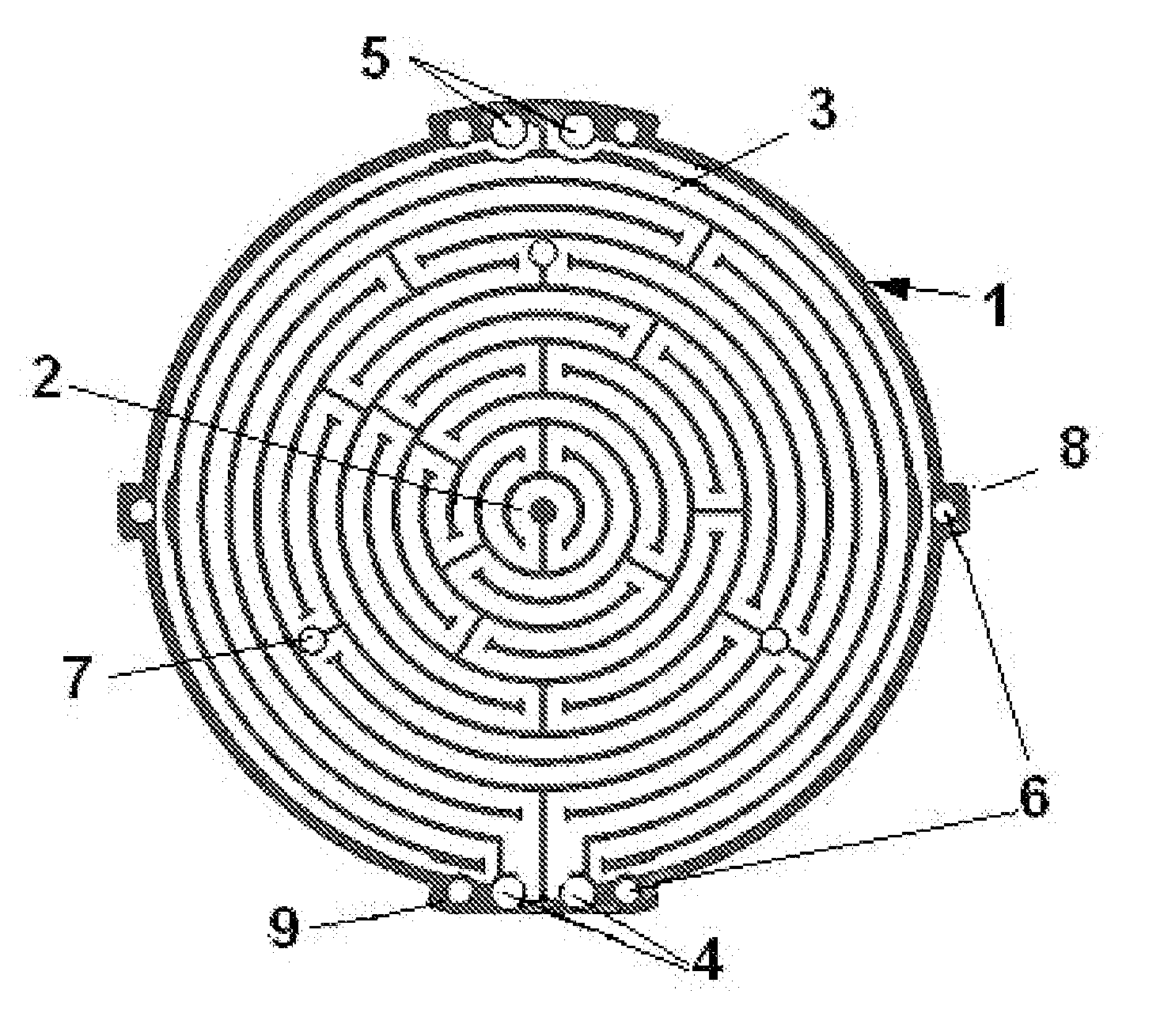
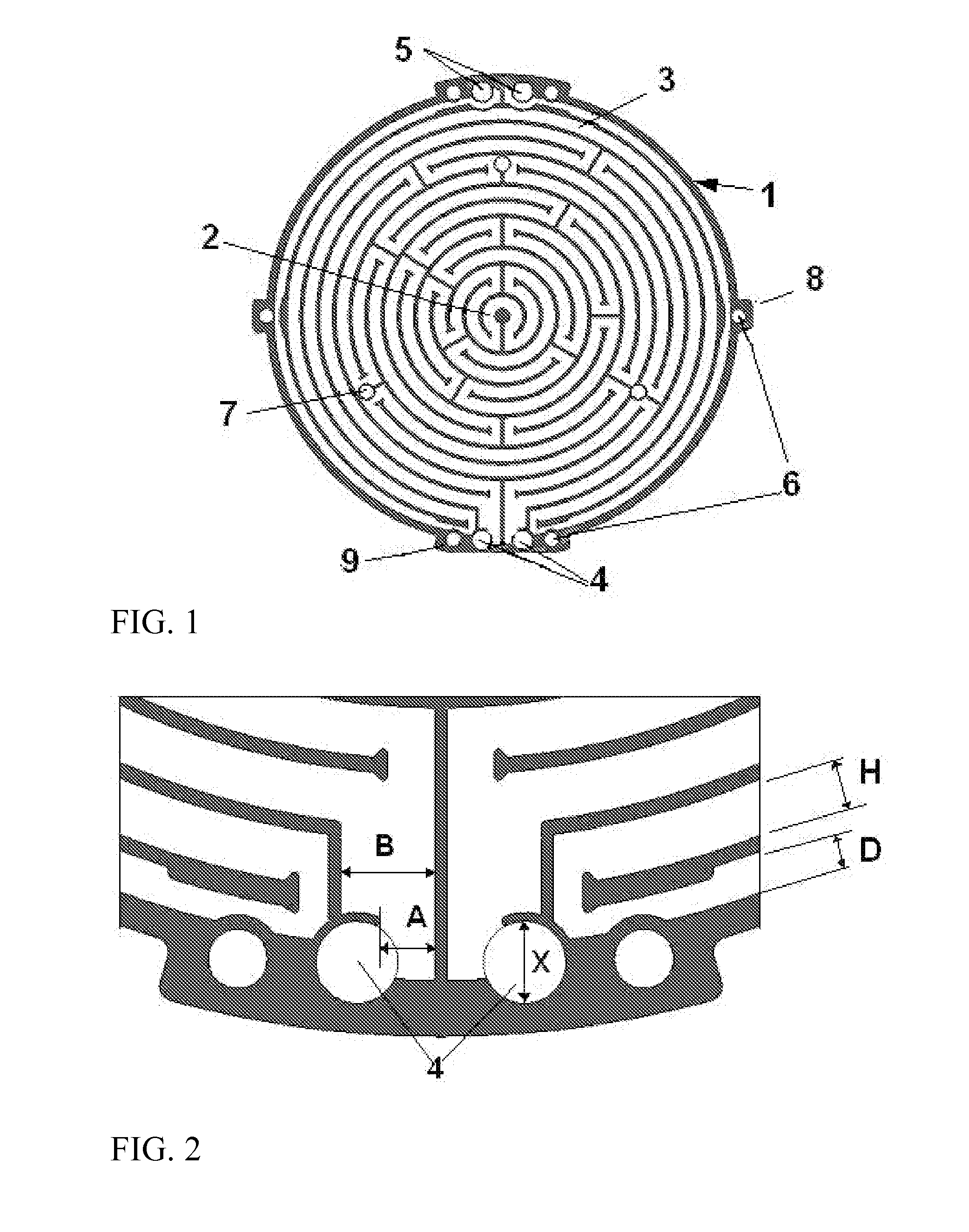
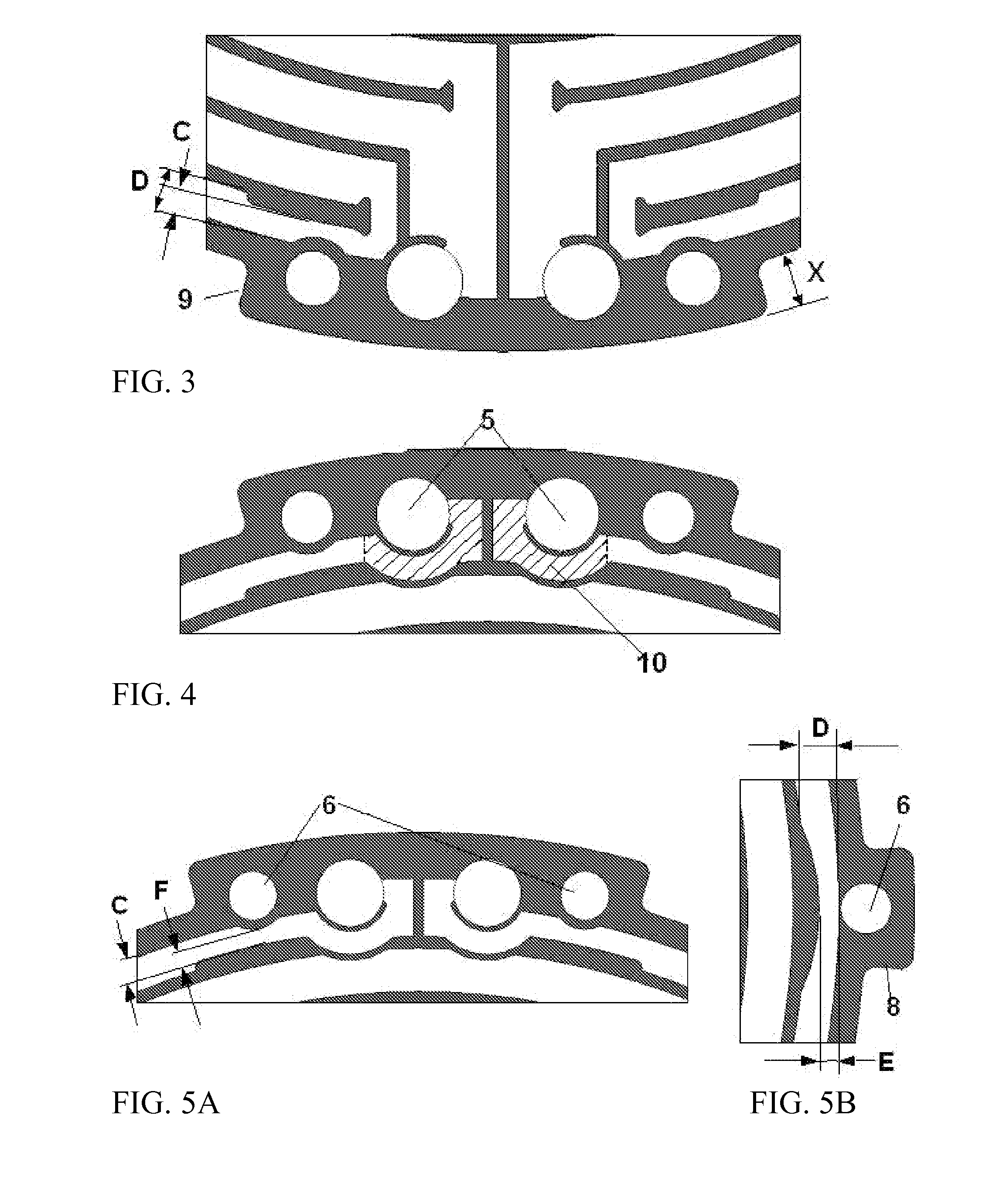
- Optimized electrode pattern design that matches power density with heat loss boundary conditions, reduces electrode width near heat loss areas, and adjusts path widths to compensate for heat loss, ensuring uniform temperature distribution across the wafer surface.

Environmental Impact Assessment of Electrode Materials
The environmental implications of electrode materials in patterned electrode designs for energy conversion systems represent a critical consideration that spans the entire lifecycle from raw material extraction to end-of-life disposal. Traditional electrode materials such as lithium, cobalt, and rare earth elements pose significant environmental challenges due to their mining processes, which often involve habitat destruction, water contamination, and substantial carbon emissions. The extraction of these materials frequently occurs in ecologically sensitive regions, leading to biodiversity loss and soil degradation.
Manufacturing processes for patterned electrodes introduce additional environmental concerns through the use of toxic solvents, high-temperature processing, and energy-intensive fabrication techniques. The photolithography and etching processes commonly employed in electrode patterning generate hazardous waste streams containing heavy metals and organic compounds that require specialized treatment and disposal methods. These manufacturing stages contribute significantly to the overall carbon footprint of energy conversion devices.
The operational phase environmental impact varies considerably depending on the electrode material composition and device efficiency. While optimized patterned electrodes can enhance energy conversion efficiency, thereby reducing the environmental cost per unit of energy produced, the materials themselves may continue to pose risks through potential leaching or degradation products during normal operation.
End-of-life management presents perhaps the most pressing environmental challenge for electrode materials. Current recycling technologies for complex patterned electrodes remain limited, with most devices ending up in electronic waste streams where valuable materials are lost and potentially harmful substances may leach into soil and groundwater systems. The intricate patterns and material combinations in advanced electrode designs complicate separation and recovery processes.
Emerging sustainable alternatives include bio-derived electrode materials, abundant earth elements, and recyclable polymer-based systems. These materials offer reduced environmental impact during extraction and processing while maintaining competitive performance characteristics. However, their long-term environmental effects and scalability remain under investigation.
Life cycle assessment studies indicate that material selection represents the most significant factor in determining overall environmental impact, often outweighing efficiency gains from advanced patterning techniques. This finding emphasizes the critical importance of incorporating environmental considerations into the early stages of electrode design optimization.
Manufacturing processes for patterned electrodes introduce additional environmental concerns through the use of toxic solvents, high-temperature processing, and energy-intensive fabrication techniques. The photolithography and etching processes commonly employed in electrode patterning generate hazardous waste streams containing heavy metals and organic compounds that require specialized treatment and disposal methods. These manufacturing stages contribute significantly to the overall carbon footprint of energy conversion devices.
The operational phase environmental impact varies considerably depending on the electrode material composition and device efficiency. While optimized patterned electrodes can enhance energy conversion efficiency, thereby reducing the environmental cost per unit of energy produced, the materials themselves may continue to pose risks through potential leaching or degradation products during normal operation.
End-of-life management presents perhaps the most pressing environmental challenge for electrode materials. Current recycling technologies for complex patterned electrodes remain limited, with most devices ending up in electronic waste streams where valuable materials are lost and potentially harmful substances may leach into soil and groundwater systems. The intricate patterns and material combinations in advanced electrode designs complicate separation and recovery processes.
Emerging sustainable alternatives include bio-derived electrode materials, abundant earth elements, and recyclable polymer-based systems. These materials offer reduced environmental impact during extraction and processing while maintaining competitive performance characteristics. However, their long-term environmental effects and scalability remain under investigation.
Life cycle assessment studies indicate that material selection represents the most significant factor in determining overall environmental impact, often outweighing efficiency gains from advanced patterning techniques. This finding emphasizes the critical importance of incorporating environmental considerations into the early stages of electrode design optimization.
Manufacturing Scalability and Cost Analysis
The manufacturing scalability of patterned electrode designs for energy conversion presents significant challenges that directly impact commercial viability. Current fabrication methods, including photolithography, electron beam lithography, and nanoimprinting, face substantial cost barriers when transitioning from laboratory-scale production to industrial manufacturing. The precision required for optimal electrode patterns often necessitates expensive equipment and controlled environments, resulting in production costs that can be 3-5 times higher than conventional electrode manufacturing.
Roll-to-roll processing emerges as a promising solution for achieving manufacturing scalability, particularly for flexible substrate applications. This continuous manufacturing approach can reduce production costs by up to 70% compared to batch processing methods while maintaining acceptable pattern fidelity for most energy conversion applications. However, the technology currently faces limitations in achieving the sub-micron precision required for high-performance applications, creating a trade-off between cost efficiency and optimal performance.
Material costs represent another critical factor in the economic equation. Advanced patterning techniques often require specialized materials, including high-purity metals, conductive polymers, and novel nanomaterials, which can account for 40-60% of total production costs. The development of alternative materials and recycling processes becomes essential for achieving cost-competitive manufacturing at scale.
Equipment capital expenditure poses a significant barrier to market entry, with advanced patterning systems requiring investments ranging from $2-10 million per production line. The amortization of these costs over large production volumes becomes crucial for achieving competitive unit economics. Industry analysis suggests that minimum production volumes of 100,000 units annually are typically required to justify such capital investments.
Quality control and yield optimization present additional scalability challenges. Patterned electrodes require stringent dimensional tolerances and surface quality standards, with defect rates below 0.1% necessary for commercial applications. Implementing real-time monitoring systems and automated defect detection adds complexity and cost to the manufacturing process but remains essential for maintaining product consistency at scale.
The integration of artificial intelligence and machine learning in manufacturing processes shows promise for optimizing both quality and cost efficiency. Predictive maintenance algorithms can reduce equipment downtime by 20-30%, while adaptive process control systems can improve yield rates and reduce material waste, contributing to overall cost reduction in large-scale production environments.
Roll-to-roll processing emerges as a promising solution for achieving manufacturing scalability, particularly for flexible substrate applications. This continuous manufacturing approach can reduce production costs by up to 70% compared to batch processing methods while maintaining acceptable pattern fidelity for most energy conversion applications. However, the technology currently faces limitations in achieving the sub-micron precision required for high-performance applications, creating a trade-off between cost efficiency and optimal performance.
Material costs represent another critical factor in the economic equation. Advanced patterning techniques often require specialized materials, including high-purity metals, conductive polymers, and novel nanomaterials, which can account for 40-60% of total production costs. The development of alternative materials and recycling processes becomes essential for achieving cost-competitive manufacturing at scale.
Equipment capital expenditure poses a significant barrier to market entry, with advanced patterning systems requiring investments ranging from $2-10 million per production line. The amortization of these costs over large production volumes becomes crucial for achieving competitive unit economics. Industry analysis suggests that minimum production volumes of 100,000 units annually are typically required to justify such capital investments.
Quality control and yield optimization present additional scalability challenges. Patterned electrodes require stringent dimensional tolerances and surface quality standards, with defect rates below 0.1% necessary for commercial applications. Implementing real-time monitoring systems and automated defect detection adds complexity and cost to the manufacturing process but remains essential for maintaining product consistency at scale.
The integration of artificial intelligence and machine learning in manufacturing processes shows promise for optimizing both quality and cost efficiency. Predictive maintenance algorithms can reduce equipment downtime by 20-30%, while adaptive process control systems can improve yield rates and reduce material waste, contributing to overall cost reduction in large-scale production environments.
Unlock deeper insights with PatSnap Eureka Quick Research — get a full tech report to explore trends and direct your research. Try now!
Generate Your Research Report Instantly with AI Agent
Supercharge your innovation with PatSnap Eureka AI Agent Platform!