

Active Memory Expansion in Wearable Tech: Power Management
MAR 19, 20269 MIN READ
Generate Your Research Report Instantly with AI Agent
PatSnap Eureka helps you evaluate technical feasibility & market potential.
Active Memory Expansion Background and Power Objectives
Active memory expansion in wearable technology represents a critical frontier in addressing the fundamental constraints of miniaturized computing devices. Traditional wearable devices face severe limitations in memory capacity due to physical space constraints, power consumption requirements, and thermal management challenges. The evolution of wearable technology has consistently pushed against these boundaries, from early fitness trackers with minimal storage to sophisticated smartwatches and augmented reality glasses requiring substantial computational resources.
The historical development of memory technologies in wearable devices has progressed through several distinct phases. Initial implementations relied heavily on embedded flash memory with limited capacity, typically ranging from 4GB to 32GB. As user expectations grew and applications became more sophisticated, manufacturers began exploring hybrid memory architectures combining volatile and non-volatile storage solutions. The emergence of advanced compression algorithms and cloud-based storage integration marked significant milestones in overcoming physical memory limitations.
Current market demands for wearable devices emphasize seamless user experiences requiring instant access to applications, media content, and real-time data processing capabilities. Health monitoring applications generate continuous data streams, while entertainment and productivity features demand substantial local storage for offline functionality. These requirements have created an urgent need for memory expansion solutions that maintain the compact form factors essential to wearable device adoption.
The primary technical objectives for active memory expansion in wearable technology center on achieving dynamic storage scaling while maintaining stringent power efficiency standards. Power management emerges as the most critical challenge, as memory operations typically consume 20-40% of total device power in active states. The target objectives include implementing intelligent memory allocation algorithms that can predict usage patterns and optimize power consumption accordingly.
Advanced power management strategies must address multiple operational scenarios, including standby modes, burst data processing, and continuous monitoring applications. The integration of ultra-low-power memory controllers with adaptive voltage scaling capabilities represents a key technological goal. These systems must achieve memory expansion ratios of 2-4x while maintaining power consumption increases below 15% compared to baseline configurations.
Thermal management considerations further complicate power objectives, as increased memory activity generates heat that must be dissipated within the confined spaces of wearable devices. The development of thermally-aware memory management protocols ensures sustained performance without compromising user comfort or device reliability.
The historical development of memory technologies in wearable devices has progressed through several distinct phases. Initial implementations relied heavily on embedded flash memory with limited capacity, typically ranging from 4GB to 32GB. As user expectations grew and applications became more sophisticated, manufacturers began exploring hybrid memory architectures combining volatile and non-volatile storage solutions. The emergence of advanced compression algorithms and cloud-based storage integration marked significant milestones in overcoming physical memory limitations.
Current market demands for wearable devices emphasize seamless user experiences requiring instant access to applications, media content, and real-time data processing capabilities. Health monitoring applications generate continuous data streams, while entertainment and productivity features demand substantial local storage for offline functionality. These requirements have created an urgent need for memory expansion solutions that maintain the compact form factors essential to wearable device adoption.
The primary technical objectives for active memory expansion in wearable technology center on achieving dynamic storage scaling while maintaining stringent power efficiency standards. Power management emerges as the most critical challenge, as memory operations typically consume 20-40% of total device power in active states. The target objectives include implementing intelligent memory allocation algorithms that can predict usage patterns and optimize power consumption accordingly.
Advanced power management strategies must address multiple operational scenarios, including standby modes, burst data processing, and continuous monitoring applications. The integration of ultra-low-power memory controllers with adaptive voltage scaling capabilities represents a key technological goal. These systems must achieve memory expansion ratios of 2-4x while maintaining power consumption increases below 15% compared to baseline configurations.
Thermal management considerations further complicate power objectives, as increased memory activity generates heat that must be dissipated within the confined spaces of wearable devices. The development of thermally-aware memory management protocols ensures sustained performance without compromising user comfort or device reliability.
Market Demand for Power-Efficient Wearable Memory Solutions
The global wearable technology market has experienced unprecedented growth, driven by increasing consumer adoption of smartwatches, fitness trackers, augmented reality glasses, and health monitoring devices. This expansion has created substantial demand for advanced memory solutions that can support complex applications while maintaining stringent power efficiency requirements. Traditional memory architectures struggle to meet the dual demands of high performance and ultra-low power consumption essential for wearable devices.
Consumer expectations for wearable devices have evolved significantly, with users demanding sophisticated features including real-time health analytics, continuous biometric monitoring, advanced fitness tracking, and seamless connectivity with multiple devices. These applications require substantial memory capacity and rapid data processing capabilities, creating a critical need for active memory expansion technologies that can dynamically allocate resources based on application requirements while minimizing power consumption.
The healthcare sector represents a particularly compelling market segment for power-efficient wearable memory solutions. Medical-grade wearables require continuous data collection and processing for patient monitoring, medication adherence tracking, and emergency response systems. These applications demand reliable memory performance with extended battery life, as device failures or frequent charging requirements can compromise patient safety and treatment effectiveness.
Enterprise applications have emerged as another significant demand driver, with companies deploying wearable devices for workforce management, safety monitoring, and productivity enhancement. Industrial wearables operating in harsh environments require robust memory solutions capable of handling large datasets while maintaining operational efficiency throughout extended work shifts without frequent recharging.
The sports and fitness market continues to fuel demand for advanced wearable memory technologies. Professional athletes and fitness enthusiasts require devices capable of storing and processing extensive performance data, including detailed biometric information, environmental conditions, and training analytics. These applications necessitate memory solutions that can handle intensive data operations while preserving battery life for extended training sessions.
Emerging applications in augmented reality and virtual reality wearables present substantial growth opportunities for power-efficient memory solutions. These devices require significant memory bandwidth and capacity to support immersive experiences while maintaining comfortable form factors and acceptable battery life. The convergence of entertainment, productivity, and communication applications in AR/VR wearables creates complex memory management challenges that active expansion technologies can address effectively.
Consumer expectations for wearable devices have evolved significantly, with users demanding sophisticated features including real-time health analytics, continuous biometric monitoring, advanced fitness tracking, and seamless connectivity with multiple devices. These applications require substantial memory capacity and rapid data processing capabilities, creating a critical need for active memory expansion technologies that can dynamically allocate resources based on application requirements while minimizing power consumption.
The healthcare sector represents a particularly compelling market segment for power-efficient wearable memory solutions. Medical-grade wearables require continuous data collection and processing for patient monitoring, medication adherence tracking, and emergency response systems. These applications demand reliable memory performance with extended battery life, as device failures or frequent charging requirements can compromise patient safety and treatment effectiveness.
Enterprise applications have emerged as another significant demand driver, with companies deploying wearable devices for workforce management, safety monitoring, and productivity enhancement. Industrial wearables operating in harsh environments require robust memory solutions capable of handling large datasets while maintaining operational efficiency throughout extended work shifts without frequent recharging.
The sports and fitness market continues to fuel demand for advanced wearable memory technologies. Professional athletes and fitness enthusiasts require devices capable of storing and processing extensive performance data, including detailed biometric information, environmental conditions, and training analytics. These applications necessitate memory solutions that can handle intensive data operations while preserving battery life for extended training sessions.
Emerging applications in augmented reality and virtual reality wearables present substantial growth opportunities for power-efficient memory solutions. These devices require significant memory bandwidth and capacity to support immersive experiences while maintaining comfortable form factors and acceptable battery life. The convergence of entertainment, productivity, and communication applications in AR/VR wearables creates complex memory management challenges that active expansion technologies can address effectively.
Current Power Management Challenges in Active Memory Systems
Active memory expansion in wearable devices faces significant power management challenges that fundamentally limit system performance and user experience. The primary constraint stems from the inherent conflict between expanding memory capacity and maintaining the ultra-low power consumption requirements essential for wearable applications. Traditional memory architectures designed for desktop and mobile systems prove inadequate when adapted to wearable form factors, where power budgets are measured in milliwatts rather than watts.
Dynamic power consumption represents the most critical challenge in active memory systems for wearables. As memory capacity increases through expansion techniques, the switching activity and data movement operations exponentially increase power draw. Current DRAM-based expansion solutions consume between 15-25 milliwatts during active operations, which can drain typical wearable batteries within 4-6 hours of continuous use. This power overhead becomes particularly problematic during memory-intensive tasks such as real-time health monitoring, augmented reality processing, or continuous sensor data logging.
Leakage current management poses another substantial challenge in expanded memory architectures. As memory density increases through stacking or parallel configurations, static power consumption grows proportionally. Advanced process nodes, while offering higher density, exhibit increased subthreshold leakage that becomes dominant during standby modes. Wearable devices spending 80-90% of their operational time in low-power states makes this leakage particularly detrimental to overall energy efficiency.
Thermal constraints create additional complexity in power management strategies. Expanded memory systems generate concentrated heat loads that exceed the thermal dissipation capabilities of compact wearable enclosures. Temperature increases above 40°C not only affect user comfort but also trigger thermal throttling mechanisms that reduce memory performance and increase power consumption through inefficient operating points.
Memory controller efficiency represents a critical bottleneck in current implementations. Existing controllers designed for conventional systems lack the sophisticated power gating, dynamic voltage scaling, and predictive power management features necessary for wearable applications. The overhead of memory management operations can consume 20-30% of total system power, significantly impacting the power budget available for core processing functions.
Voltage regulation challenges further complicate power management in active memory expansion systems. Multiple voltage domains required for different memory types and operating modes demand complex power delivery networks that introduce conversion losses and electromagnetic interference. Current solutions achieve only 70-80% power conversion efficiency, representing substantial energy waste in power-constrained wearable environments.
Dynamic power consumption represents the most critical challenge in active memory systems for wearables. As memory capacity increases through expansion techniques, the switching activity and data movement operations exponentially increase power draw. Current DRAM-based expansion solutions consume between 15-25 milliwatts during active operations, which can drain typical wearable batteries within 4-6 hours of continuous use. This power overhead becomes particularly problematic during memory-intensive tasks such as real-time health monitoring, augmented reality processing, or continuous sensor data logging.
Leakage current management poses another substantial challenge in expanded memory architectures. As memory density increases through stacking or parallel configurations, static power consumption grows proportionally. Advanced process nodes, while offering higher density, exhibit increased subthreshold leakage that becomes dominant during standby modes. Wearable devices spending 80-90% of their operational time in low-power states makes this leakage particularly detrimental to overall energy efficiency.
Thermal constraints create additional complexity in power management strategies. Expanded memory systems generate concentrated heat loads that exceed the thermal dissipation capabilities of compact wearable enclosures. Temperature increases above 40°C not only affect user comfort but also trigger thermal throttling mechanisms that reduce memory performance and increase power consumption through inefficient operating points.
Memory controller efficiency represents a critical bottleneck in current implementations. Existing controllers designed for conventional systems lack the sophisticated power gating, dynamic voltage scaling, and predictive power management features necessary for wearable applications. The overhead of memory management operations can consume 20-30% of total system power, significantly impacting the power budget available for core processing functions.
Voltage regulation challenges further complicate power management in active memory expansion systems. Multiple voltage domains required for different memory types and operating modes demand complex power delivery networks that introduce conversion losses and electromagnetic interference. Current solutions achieve only 70-80% power conversion efficiency, representing substantial energy waste in power-constrained wearable environments.
Existing Power Management Solutions for Active Memory
01 Dynamic power state transitions based on memory activity
Memory systems can dynamically transition between different power states based on detected activity levels or access patterns. By monitoring memory usage and adjusting power states accordingly, the system can reduce power consumption during periods of low activity while maintaining performance during active periods. This approach involves detecting idle periods and transitioning memory components to low-power states, then quickly returning to active states when access is required.- Dynamic power state transitions based on memory activity: Memory systems can dynamically transition between different power states based on detected activity levels or access patterns. By monitoring memory usage and adjusting power states accordingly, the system can reduce power consumption during periods of low activity while maintaining performance during active periods. This approach involves detecting idle periods and transitioning memory components to low-power states, then quickly returning to active states when access is required.
- Selective memory bank or rank power management: Power management techniques can be applied selectively to individual memory banks, ranks, or modules rather than the entire memory system. This granular approach allows unused or infrequently accessed memory sections to enter low-power states while keeping active sections fully operational. The system tracks which memory regions are in use and independently controls power states for each section, optimizing overall power consumption without significantly impacting performance.
- Predictive power management using access pattern analysis: Advanced power management systems analyze historical memory access patterns to predict future usage and proactively adjust power states. By learning typical access behaviors and workload characteristics, the system can anticipate idle periods and prepare memory components for power state transitions. This predictive approach minimizes latency penalties associated with power state changes while maximizing energy savings through intelligent forecasting of memory activity.
- Self-refresh and partial array self-refresh techniques: Memory devices can implement self-refresh modes where only portions of the memory array are refreshed based on actual data storage needs. Partial array self-refresh allows specific memory regions containing valid data to maintain their contents while unused regions are powered down completely. This technique significantly reduces refresh power consumption, which is a major component of memory power usage, by eliminating unnecessary refresh operations for unused memory locations.
- Temperature-aware and adaptive power management: Memory power management systems can incorporate temperature monitoring and adjust power states based on thermal conditions. By tracking temperature sensors and correlating thermal data with power consumption patterns, the system can implement adaptive strategies that balance performance, power efficiency, and thermal constraints. This approach prevents overheating while optimizing power usage, and can adjust refresh rates and power states dynamically based on operating temperature ranges.
02 Selective memory bank or rank power management
Power management techniques can be applied selectively to individual memory banks, ranks, or modules rather than the entire memory system. This granular approach allows unused or infrequently accessed memory sections to enter low-power states while keeping active sections fully operational. The system tracks which memory regions are in use and independently controls power states for each section, optimizing overall power consumption without significantly impacting performance.Expand Specific Solutions03 Predictive power management using access pattern analysis
Advanced power management systems analyze historical memory access patterns to predict future usage and proactively adjust power states. By learning typical access behaviors and workload characteristics, the system can anticipate idle periods and prepare memory components for power state transitions. This predictive approach minimizes latency penalties associated with power state changes while maximizing energy savings through intelligent forecasting of memory activity.Expand Specific Solutions04 Self-refresh and partial array self-refresh techniques
Memory devices can implement self-refresh modes where the memory maintains its data with minimal power consumption by periodically refreshing only the necessary portions of the array. Partial array self-refresh extends this concept by allowing different sections of memory to refresh at different rates or selectively disabling refresh for unused regions. These techniques significantly reduce power consumption during standby or low-activity periods while preserving data integrity.Expand Specific Solutions05 Temperature-aware and adaptive power management
Power management strategies can incorporate temperature monitoring and thermal considerations to optimize both performance and power consumption. The system adjusts refresh rates, power states, and operating parameters based on temperature readings to prevent overheating while minimizing unnecessary power usage. Adaptive algorithms continuously tune power management parameters based on real-time conditions including temperature, workload, and performance requirements to achieve optimal efficiency across varying operating conditions.Expand Specific Solutions
Key Players in Wearable Memory and Power Management Industry
The active memory expansion in wearable tech power management sector represents a rapidly evolving competitive landscape characterized by intense innovation and diverse technological approaches. The industry is in a growth phase, driven by increasing demand for sophisticated wearable devices requiring efficient memory and power solutions. Market leaders like Apple, Samsung Electronics, and Huawei Technologies dominate through integrated hardware-software ecosystems, while semiconductor specialists including Intel, Micron Technology, and SK Hynix provide critical memory components. Technology maturity varies significantly across segments, with established players like Sony and Microsoft Technology Licensing leveraging decades of experience, while emerging companies such as GoerTek Technology and specialized firms like Fuman Microelectronics focus on niche power management solutions. The competitive dynamics reflect a convergence of consumer electronics, semiconductor manufacturing, and advanced materials science capabilities.
Apple, Inc.
Technical Solution: Apple implements advanced power management for active memory expansion in wearables through its custom silicon architecture, featuring unified memory systems that dynamically allocate resources based on application demands. The company utilizes sophisticated algorithms to predict memory usage patterns and preemptively manage power states, switching between high-performance and low-power modes seamlessly. Their approach includes intelligent caching mechanisms that keep frequently accessed data in faster, more power-efficient memory tiers while moving less critical data to slower but more energy-conserving storage. Apple's implementation also features real-time thermal management that adjusts memory expansion activities based on device temperature and battery levels, ensuring optimal performance without compromising battery life in devices like Apple Watch and AirPods.
Strengths: Highly integrated hardware-software optimization, excellent battery life management, seamless user experience. Weaknesses: Proprietary ecosystem limitations, higher manufacturing costs, limited third-party integration flexibility.
Samsung Electronics Co., Ltd.
Technical Solution: Samsung's active memory expansion technology in wearables leverages their advanced LPDDR and eUFS memory solutions combined with AI-driven power management algorithms. Their approach utilizes dynamic voltage and frequency scaling (DVFS) to optimize power consumption during memory operations, while implementing intelligent data compression techniques to reduce actual memory usage. Samsung integrates their proprietary memory controllers that can predict application behavior and preload data efficiently, minimizing power-hungry memory access operations. The company's solution includes adaptive refresh rate management for DRAM components and implements sophisticated sleep modes that can maintain data integrity while consuming minimal power. Their technology also features thermal-aware memory management that adjusts expansion activities based on device temperature sensors.
Strengths: Leading memory technology expertise, cost-effective manufacturing, strong semiconductor integration capabilities. Weaknesses: Software ecosystem less mature than competitors, dependency on Android platform optimizations.
Core Innovations in Low-Power Active Memory Technologies
Wearable device-aware supervised power management for mobile platforms
PatentActiveUS20190107880A1
Innovation
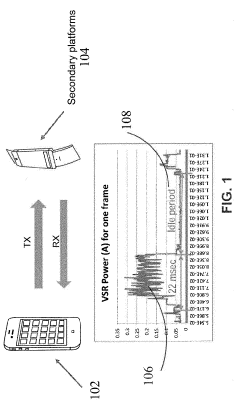
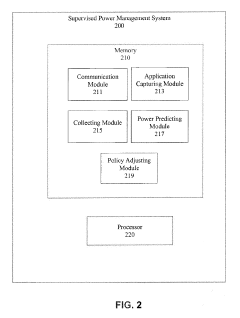
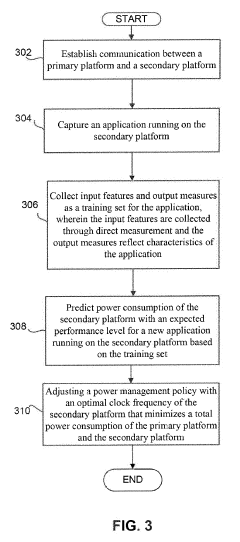
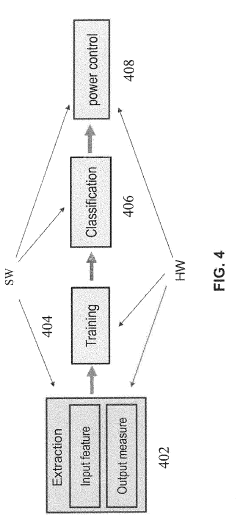
- A supervised power management system that establishes communication between primary and secondary platforms, collects input features and output measures to create a training set, predicts power consumption, and adjusts Dynamic Voltage Frequency Scaling (DVFS) parameters to optimize power usage and performance on both platforms.
Augmented reality / virtual reality (ar/VR) system integration with power and performance management
PatentPendingUS20250068474A1
Innovation
- Adaptive cross-layer power, thermal, and performance management is implemented within AR/VR display devices, where application performance modes are registered, and power states of individual subsystems are periodically reconfigured to achieve power, thermal, and performance tradeoffs, allowing applications to adapt their UX to changing system states.


Battery Life Impact Assessment and Optimization Strategies
Active memory expansion in wearable devices presents significant challenges to battery performance, with power consumption patterns varying dramatically based on memory access frequency and data processing intensity. Current assessments indicate that dynamic memory scaling can increase power draw by 15-40% during peak operation periods, directly correlating with reduced operational time between charging cycles.
The primary battery life impact stems from three critical factors: memory controller overhead, data transfer energy costs, and thermal management requirements. Memory controllers in wearable devices typically consume 8-12% of total system power during active expansion phases, while data transfer operations between primary and expanded memory segments can account for an additional 5-8% power overhead. Thermal effects compound these issues, as increased memory activity generates heat that requires active cooling mechanisms, further depleting battery reserves.
Optimization strategies focus on intelligent memory management algorithms that predict usage patterns and preemptively allocate resources. Adaptive memory compression techniques have demonstrated 20-25% power savings by reducing actual memory access requirements while maintaining performance levels. These systems employ machine learning models to analyze application behavior and optimize memory allocation timing.
Power-aware memory scheduling represents another crucial optimization avenue, implementing time-sliced memory expansion that aligns with natural usage patterns. This approach reduces continuous power drain by activating expanded memory only during predicted high-demand periods, achieving up to 30% improvement in overall battery efficiency.
Advanced power gating strategies enable selective shutdown of unused memory segments, with granular control systems managing individual memory banks based on real-time demand analysis. Combined with voltage scaling techniques, these methods can extend battery life by 18-22% while maintaining responsive memory expansion capabilities.
Dynamic frequency scaling synchronized with memory operations offers additional optimization potential, automatically adjusting processor and memory clock speeds based on workload requirements. This coordinated approach prevents power waste during low-intensity operations while ensuring adequate performance during memory-intensive tasks.
The primary battery life impact stems from three critical factors: memory controller overhead, data transfer energy costs, and thermal management requirements. Memory controllers in wearable devices typically consume 8-12% of total system power during active expansion phases, while data transfer operations between primary and expanded memory segments can account for an additional 5-8% power overhead. Thermal effects compound these issues, as increased memory activity generates heat that requires active cooling mechanisms, further depleting battery reserves.
Optimization strategies focus on intelligent memory management algorithms that predict usage patterns and preemptively allocate resources. Adaptive memory compression techniques have demonstrated 20-25% power savings by reducing actual memory access requirements while maintaining performance levels. These systems employ machine learning models to analyze application behavior and optimize memory allocation timing.
Power-aware memory scheduling represents another crucial optimization avenue, implementing time-sliced memory expansion that aligns with natural usage patterns. This approach reduces continuous power drain by activating expanded memory only during predicted high-demand periods, achieving up to 30% improvement in overall battery efficiency.
Advanced power gating strategies enable selective shutdown of unused memory segments, with granular control systems managing individual memory banks based on real-time demand analysis. Combined with voltage scaling techniques, these methods can extend battery life by 18-22% while maintaining responsive memory expansion capabilities.
Dynamic frequency scaling synchronized with memory operations offers additional optimization potential, automatically adjusting processor and memory clock speeds based on workload requirements. This coordinated approach prevents power waste during low-intensity operations while ensuring adequate performance during memory-intensive tasks.
Thermal Management Considerations for Active Memory Systems
Thermal management represents a critical engineering challenge in active memory expansion systems for wearable devices, where the compact form factor and proximity to human skin create stringent temperature constraints. The integration of high-density memory modules within limited space generates concentrated heat loads that can compromise both system performance and user comfort, necessitating sophisticated thermal design strategies.
Active memory systems in wearables typically operate within a thermal envelope of 35-40°C surface temperature to maintain user comfort during extended wear periods. However, dynamic memory operations, particularly during intensive data processing or large file transfers, can generate localized hotspots exceeding 60°C without proper thermal management. This thermal challenge is exacerbated by the inherently poor heat dissipation characteristics of miniaturized wearable enclosures.
Advanced thermal interface materials play a pivotal role in managing heat distribution across active memory components. Phase-change materials and graphene-based thermal pads have emerged as preferred solutions, offering thermal conductivities exceeding 400 W/mK while maintaining flexibility required for wearable applications. These materials enable efficient heat spreading from concentrated memory die locations to larger surface areas for improved dissipation.
Micro-scale heat sink architectures specifically designed for wearable memory modules incorporate ultra-thin fin structures and vapor chamber technologies. These solutions, typically measuring less than 2mm in height, utilize advanced manufacturing techniques such as micro-machining and 3D printing to achieve optimal surface area-to-volume ratios within space-constrained environments.
Dynamic thermal throttling algorithms represent a software-based approach to thermal management, automatically reducing memory access frequencies and voltages when temperature thresholds are exceeded. These intelligent systems can decrease power consumption by up to 30% during thermal stress events while maintaining acceptable performance levels for most wearable applications.
Innovative cooling approaches include thermoelectric cooling elements and passive heat pipes integrated directly into wearable device chassis. These solutions leverage body heat differentials and ambient air circulation to create continuous cooling effects, though they require careful optimization to avoid excessive power consumption that could negate the benefits of active memory expansion.
Active memory systems in wearables typically operate within a thermal envelope of 35-40°C surface temperature to maintain user comfort during extended wear periods. However, dynamic memory operations, particularly during intensive data processing or large file transfers, can generate localized hotspots exceeding 60°C without proper thermal management. This thermal challenge is exacerbated by the inherently poor heat dissipation characteristics of miniaturized wearable enclosures.
Advanced thermal interface materials play a pivotal role in managing heat distribution across active memory components. Phase-change materials and graphene-based thermal pads have emerged as preferred solutions, offering thermal conductivities exceeding 400 W/mK while maintaining flexibility required for wearable applications. These materials enable efficient heat spreading from concentrated memory die locations to larger surface areas for improved dissipation.
Micro-scale heat sink architectures specifically designed for wearable memory modules incorporate ultra-thin fin structures and vapor chamber technologies. These solutions, typically measuring less than 2mm in height, utilize advanced manufacturing techniques such as micro-machining and 3D printing to achieve optimal surface area-to-volume ratios within space-constrained environments.
Dynamic thermal throttling algorithms represent a software-based approach to thermal management, automatically reducing memory access frequencies and voltages when temperature thresholds are exceeded. These intelligent systems can decrease power consumption by up to 30% during thermal stress events while maintaining acceptable performance levels for most wearable applications.
Innovative cooling approaches include thermoelectric cooling elements and passive heat pipes integrated directly into wearable device chassis. These solutions leverage body heat differentials and ambient air circulation to create continuous cooling effects, though they require careful optimization to avoid excessive power consumption that could negate the benefits of active memory expansion.
Unlock deeper insights with PatSnap Eureka Quick Research — get a full tech report to explore trends and direct your research. Try now!
Generate Your Research Report Instantly with AI Agent
Supercharge your innovation with PatSnap Eureka AI Agent Platform!