
Adapt PCM Systems for Evolving Network Infrastructures
MAR 6, 20269 MIN READ
Generate Your Research Report Instantly with AI Agent
Patsnap Eureka helps you evaluate technical feasibility & market potential.
PCM Network Adaptation Background and Objectives
Pulse Code Modulation (PCM) systems have served as the fundamental digital encoding standard for audio and telecommunications since their inception in the 1930s and widespread adoption in the 1960s. Originally designed for circuit-switched telephone networks, PCM technology enabled the conversion of analog signals into digital format through systematic sampling, quantization, and encoding processes. The evolution from traditional Time Division Multiplexing (TDM) networks to modern packet-switched infrastructures has created unprecedented challenges for PCM system integration and performance optimization.
The historical development of PCM systems followed a linear progression from basic 64 kbps voice channels to sophisticated multi-channel configurations supporting various sampling rates and bit depths. Early implementations focused primarily on voice transmission quality and bandwidth efficiency within predictable, dedicated circuit environments. However, the emergence of Internet Protocol (IP) networks, Software-Defined Networking (SDN), and cloud-based communication platforms has fundamentally altered the operational landscape for PCM systems.
Contemporary network infrastructures exhibit dynamic characteristics including variable latency, packet loss, jitter, and bandwidth fluctuations that directly impact PCM signal integrity and transmission reliability. The shift toward virtualized network functions, edge computing architectures, and 5G wireless technologies demands adaptive PCM implementations capable of real-time optimization based on network conditions and quality of service requirements.
The primary objective of adapting PCM systems for evolving network infrastructures centers on developing intelligent, self-configuring mechanisms that can dynamically adjust encoding parameters, error correction algorithms, and transmission protocols. This adaptation must ensure consistent audio quality while maximizing bandwidth utilization across diverse network topologies and varying performance conditions.
Key technical objectives include implementing adaptive bitrate control mechanisms that respond to network congestion, developing robust error concealment strategies for packet-loss scenarios, and creating seamless interoperability between legacy TDM systems and modern IP-based networks. Additionally, the integration of machine learning algorithms for predictive network behavior analysis and proactive PCM parameter adjustment represents a critical advancement pathway.
The ultimate goal involves establishing PCM systems that maintain transparent operation across heterogeneous network environments while supporting emerging applications such as real-time collaboration platforms, IoT audio devices, and immersive communication experiences that demand superior audio fidelity and minimal latency.
The historical development of PCM systems followed a linear progression from basic 64 kbps voice channels to sophisticated multi-channel configurations supporting various sampling rates and bit depths. Early implementations focused primarily on voice transmission quality and bandwidth efficiency within predictable, dedicated circuit environments. However, the emergence of Internet Protocol (IP) networks, Software-Defined Networking (SDN), and cloud-based communication platforms has fundamentally altered the operational landscape for PCM systems.
Contemporary network infrastructures exhibit dynamic characteristics including variable latency, packet loss, jitter, and bandwidth fluctuations that directly impact PCM signal integrity and transmission reliability. The shift toward virtualized network functions, edge computing architectures, and 5G wireless technologies demands adaptive PCM implementations capable of real-time optimization based on network conditions and quality of service requirements.
The primary objective of adapting PCM systems for evolving network infrastructures centers on developing intelligent, self-configuring mechanisms that can dynamically adjust encoding parameters, error correction algorithms, and transmission protocols. This adaptation must ensure consistent audio quality while maximizing bandwidth utilization across diverse network topologies and varying performance conditions.
Key technical objectives include implementing adaptive bitrate control mechanisms that respond to network congestion, developing robust error concealment strategies for packet-loss scenarios, and creating seamless interoperability between legacy TDM systems and modern IP-based networks. Additionally, the integration of machine learning algorithms for predictive network behavior analysis and proactive PCM parameter adjustment represents a critical advancement pathway.
The ultimate goal involves establishing PCM systems that maintain transparent operation across heterogeneous network environments while supporting emerging applications such as real-time collaboration platforms, IoT audio devices, and immersive communication experiences that demand superior audio fidelity and minimal latency.
Market Demand for Adaptive PCM Solutions
The telecommunications industry is experiencing unprecedented transformation driven by the convergence of 5G networks, edge computing, and Internet of Things deployments. This evolution has created substantial market demand for adaptive Pulse Code Modulation systems capable of dynamically adjusting to diverse network conditions and requirements. Traditional PCM implementations, designed for static network environments, are increasingly inadequate for modern infrastructure demands that require real-time adaptability and optimization.
Enterprise customers across telecommunications, broadcasting, and data center sectors are actively seeking PCM solutions that can seamlessly transition between different encoding parameters, sampling rates, and compression algorithms based on network conditions. The proliferation of software-defined networking and network function virtualization has further amplified this demand, as organizations require PCM systems that can be programmatically configured and optimized without hardware modifications.
Cloud service providers represent a particularly significant market segment driving adaptive PCM adoption. These organizations operate massive distributed infrastructures where network conditions vary dramatically across geographic regions and time periods. Their requirements for cost-effective bandwidth utilization while maintaining service quality have created strong demand for intelligent PCM systems that can automatically adjust compression ratios and encoding schemes based on available network capacity and latency requirements.
The emergence of edge computing applications has introduced new market dynamics for adaptive PCM solutions. Edge deployments often operate in resource-constrained environments with variable connectivity to central data centers. This scenario demands PCM systems capable of operating efficiently under diverse conditions, from high-bandwidth fiber connections to limited wireless links, while maintaining consistent performance standards.
Industrial IoT applications constitute another growing market segment requiring adaptive PCM capabilities. Manufacturing facilities, smart cities, and autonomous vehicle networks generate diverse data streams with varying criticality levels and transmission requirements. These applications demand PCM systems that can prioritize and adapt encoding strategies based on data importance and network availability.
The broadcasting and media industry continues to drive significant demand for adaptive PCM solutions as content delivery networks become increasingly complex. Modern streaming platforms require PCM systems that can dynamically adjust to varying audience loads, geographic distribution patterns, and device capabilities while maintaining consistent audio and video quality across all delivery channels.
Market research indicates strong growth potential for adaptive PCM technologies, particularly in regions experiencing rapid digital infrastructure development. The increasing complexity of network topologies and the growing emphasis on automated network management are expected to sustain robust demand for these solutions throughout the next decade.
Enterprise customers across telecommunications, broadcasting, and data center sectors are actively seeking PCM solutions that can seamlessly transition between different encoding parameters, sampling rates, and compression algorithms based on network conditions. The proliferation of software-defined networking and network function virtualization has further amplified this demand, as organizations require PCM systems that can be programmatically configured and optimized without hardware modifications.
Cloud service providers represent a particularly significant market segment driving adaptive PCM adoption. These organizations operate massive distributed infrastructures where network conditions vary dramatically across geographic regions and time periods. Their requirements for cost-effective bandwidth utilization while maintaining service quality have created strong demand for intelligent PCM systems that can automatically adjust compression ratios and encoding schemes based on available network capacity and latency requirements.
The emergence of edge computing applications has introduced new market dynamics for adaptive PCM solutions. Edge deployments often operate in resource-constrained environments with variable connectivity to central data centers. This scenario demands PCM systems capable of operating efficiently under diverse conditions, from high-bandwidth fiber connections to limited wireless links, while maintaining consistent performance standards.
Industrial IoT applications constitute another growing market segment requiring adaptive PCM capabilities. Manufacturing facilities, smart cities, and autonomous vehicle networks generate diverse data streams with varying criticality levels and transmission requirements. These applications demand PCM systems that can prioritize and adapt encoding strategies based on data importance and network availability.
The broadcasting and media industry continues to drive significant demand for adaptive PCM solutions as content delivery networks become increasingly complex. Modern streaming platforms require PCM systems that can dynamically adjust to varying audience loads, geographic distribution patterns, and device capabilities while maintaining consistent audio and video quality across all delivery channels.
Market research indicates strong growth potential for adaptive PCM technologies, particularly in regions experiencing rapid digital infrastructure development. The increasing complexity of network topologies and the growing emphasis on automated network management are expected to sustain robust demand for these solutions throughout the next decade.
Current PCM Infrastructure Challenges and Limitations
PCM systems operating within contemporary network infrastructures face significant scalability constraints that limit their effectiveness in modern distributed environments. Traditional PCM architectures were designed for relatively static network topologies with predictable traffic patterns, making them inadequate for handling the dynamic scaling requirements of cloud-native applications and microservices architectures. The rigid configuration models inherent in legacy PCM systems create bottlenecks when attempting to accommodate rapid service provisioning and deprovisioning cycles.
Latency optimization presents another critical challenge, particularly as network infrastructures evolve toward edge computing paradigms. Current PCM implementations often introduce additional processing delays due to their centralized monitoring and control mechanisms. These delays become increasingly problematic in latency-sensitive applications such as real-time communications, autonomous systems, and industrial IoT deployments where millisecond-level responsiveness is crucial.
The integration complexity between PCM systems and emerging network technologies represents a substantial technical barrier. Modern network infrastructures increasingly rely on software-defined networking, network function virtualization, and container orchestration platforms. However, existing PCM solutions struggle to seamlessly interface with these technologies due to incompatible APIs, disparate data formats, and conflicting operational models.
Resource allocation inefficiencies plague current PCM deployments, particularly in heterogeneous network environments. Traditional PCM systems lack the intelligence to dynamically optimize resource distribution across diverse infrastructure components, leading to suboptimal performance and increased operational costs. This limitation becomes more pronounced as organizations adopt hybrid cloud strategies and multi-vendor network equipment.
Security vulnerabilities in existing PCM infrastructures pose significant risks as network attack surfaces expand. Many current PCM implementations lack robust encryption mechanisms for inter-component communications and fail to provide adequate access control granularity. The increasing sophistication of cyber threats targeting network management systems exposes critical weaknesses in traditional PCM security architectures.
Monitoring and observability gaps represent another fundamental limitation, as current PCM systems often provide insufficient visibility into complex, distributed network behaviors. The lack of comprehensive telemetry collection and real-time analytics capabilities hampers effective troubleshooting and performance optimization efforts across evolving network infrastructures.
Latency optimization presents another critical challenge, particularly as network infrastructures evolve toward edge computing paradigms. Current PCM implementations often introduce additional processing delays due to their centralized monitoring and control mechanisms. These delays become increasingly problematic in latency-sensitive applications such as real-time communications, autonomous systems, and industrial IoT deployments where millisecond-level responsiveness is crucial.
The integration complexity between PCM systems and emerging network technologies represents a substantial technical barrier. Modern network infrastructures increasingly rely on software-defined networking, network function virtualization, and container orchestration platforms. However, existing PCM solutions struggle to seamlessly interface with these technologies due to incompatible APIs, disparate data formats, and conflicting operational models.
Resource allocation inefficiencies plague current PCM deployments, particularly in heterogeneous network environments. Traditional PCM systems lack the intelligence to dynamically optimize resource distribution across diverse infrastructure components, leading to suboptimal performance and increased operational costs. This limitation becomes more pronounced as organizations adopt hybrid cloud strategies and multi-vendor network equipment.
Security vulnerabilities in existing PCM infrastructures pose significant risks as network attack surfaces expand. Many current PCM implementations lack robust encryption mechanisms for inter-component communications and fail to provide adequate access control granularity. The increasing sophistication of cyber threats targeting network management systems exposes critical weaknesses in traditional PCM security architectures.
Monitoring and observability gaps represent another fundamental limitation, as current PCM systems often provide insufficient visibility into complex, distributed network behaviors. The lack of comprehensive telemetry collection and real-time analytics capabilities hampers effective troubleshooting and performance optimization efforts across evolving network infrastructures.
Existing PCM Adaptation Solutions and Approaches
01 PCM-based thermal energy storage systems
Phase change materials (PCM) are utilized in thermal energy storage systems to absorb and release heat during phase transitions. These systems can store thermal energy efficiently by utilizing the latent heat of phase change, typically between solid and liquid states. PCM systems are designed to maintain temperature stability and provide heating or cooling applications in various industrial and residential settings. The materials are selected based on their melting point, thermal conductivity, and heat storage capacity to optimize energy efficiency.- PCM-based thermal energy storage systems: Phase change materials (PCM) are utilized in thermal energy storage systems to absorb and release heat during phase transitions. These systems can store thermal energy efficiently by utilizing the latent heat of phase change, typically between solid and liquid states. PCM systems are designed to maintain temperature stability and provide heating or cooling applications in various industrial and residential settings. The materials are selected based on their melting point, heat storage capacity, and thermal conductivity properties.
- PCM encapsulation and containment methods: Encapsulation techniques are employed to contain phase change materials and prevent leakage during phase transitions. Various containment methods include microencapsulation, macroencapsulation, and integration into porous matrices or composite structures. These methods enhance the durability and usability of PCM systems by providing structural support and preventing material degradation. Encapsulation also improves heat transfer characteristics and allows for easier integration into building materials and thermal management systems.
- PCM applications in building and construction: Phase change materials are integrated into building materials and construction elements to improve thermal regulation and energy efficiency. Applications include incorporation into walls, roofs, floors, and insulation materials to reduce heating and cooling loads. PCM-enhanced building components can absorb excess heat during peak temperature periods and release it when temperatures drop, thereby stabilizing indoor climate conditions. This passive thermal management approach reduces energy consumption and enhances occupant comfort.
- PCM composite materials and enhanced thermal conductivity: Composite materials incorporating phase change materials with enhanced thermal conductivity additives are developed to improve heat transfer rates. These composites combine PCM with materials such as graphite, metal foams, carbon nanotubes, or expanded graphite to overcome the inherently low thermal conductivity of many phase change materials. The enhanced thermal conductivity allows for faster charging and discharging cycles in thermal energy storage applications. Such composites are particularly useful in applications requiring rapid thermal response and efficient heat distribution.
- PCM systems for electronics cooling and thermal management: Phase change materials are employed in thermal management systems for electronic devices and components to dissipate heat and maintain optimal operating temperatures. PCM-based cooling solutions absorb heat generated by electronic components during operation, preventing overheating and thermal damage. These systems are particularly beneficial for high-power electronics, battery thermal management, and portable devices where space and weight constraints limit traditional cooling methods. The passive nature of PCM cooling provides reliable thermal regulation without requiring active power consumption.
02 PCM encapsulation and containment methods
Encapsulation techniques are employed to contain phase change materials and prevent leakage during phase transitions. Various containment methods include microencapsulation, macroencapsulation, and the use of porous matrices or containers. These methods enhance the structural integrity of PCM systems and improve heat transfer characteristics. Encapsulation also protects the PCM from environmental degradation and allows for easier integration into building materials and thermal management systems.Expand Specific Solutions03 PCM integration in building materials and construction
Phase change materials are incorporated into building materials such as wallboards, concrete, and insulation to enhance thermal regulation in buildings. This integration allows buildings to passively store and release thermal energy, reducing heating and cooling loads. The PCM-enhanced materials help maintain comfortable indoor temperatures and improve energy efficiency. Applications include thermal mass enhancement, temperature stabilization, and reduction of peak energy demand in residential and commercial buildings.Expand Specific Solutions04 PCM applications in electronic cooling and thermal management
Phase change materials are applied in electronic devices and systems for thermal management and heat dissipation. PCM-based cooling systems absorb excess heat generated by electronic components during operation, preventing overheating and maintaining optimal operating temperatures. These systems are particularly useful in high-power electronics, battery thermal management, and telecommunications equipment. The use of PCM enhances reliability and extends the lifespan of electronic devices by providing passive cooling solutions.Expand Specific Solutions05 PCM composite materials and enhanced thermal conductivity
Composite materials combining phase change materials with high thermal conductivity additives are developed to improve heat transfer rates. These composites incorporate materials such as graphite, metal foams, carbon nanotubes, or expanded graphite to enhance the thermal performance of PCM systems. The improved thermal conductivity addresses the limitation of low heat transfer rates in pure PCM materials. These enhanced composites are used in applications requiring rapid thermal response and efficient energy storage and release.Expand Specific Solutions
Key Players in PCM and Network Infrastructure Industry
The PCM systems adaptation market is experiencing rapid evolution driven by the transition to software-defined and cloud-native network infrastructures. The industry is in a mature growth phase with significant market expansion fueled by 5G deployment, edge computing demands, and AI-driven network optimization requirements. Technology maturity varies significantly across market players, with established telecommunications giants like Huawei Technologies, Ericsson, and Samsung Electronics leading in traditional PCM implementations, while companies like Intel, Siemens, and Ciena are advancing next-generation adaptive solutions. Network infrastructure specialists including Extreme Networks, ViaSat, and Deutsche Telekom are driving practical deployment innovations. Emerging players like Unifabrix are pioneering memory fabric solutions that enhance PCM system performance. The competitive landscape shows strong consolidation around companies offering integrated hardware-software platforms, with research institutions like ETRI and Columbia University contributing foundational technologies for future PCM system architectures.
Huawei Technologies Co., Ltd.
Technical Solution: Huawei has developed comprehensive PCM (Pulse Code Modulation) adaptation solutions for evolving network infrastructures, focusing on software-defined networking (SDN) and network function virtualization (NFV) integration. Their approach includes dynamic bandwidth allocation algorithms that automatically adjust PCM parameters based on real-time network conditions and traffic patterns. The company implements intelligent codec selection mechanisms that can switch between different PCM variants (A-law, μ-law) and sampling rates depending on network capacity and quality requirements. Huawei's solution incorporates machine learning algorithms to predict network congestion and proactively modify PCM encoding parameters to maintain voice quality while optimizing bandwidth utilization. Their platform supports seamless migration from legacy TDM-based PCM systems to IP-based infrastructures through hybrid gateway solutions.
Strengths: Advanced AI-driven optimization, comprehensive SDN/NFV integration, strong R&D capabilities. Weaknesses: Geopolitical restrictions in some markets, complex implementation requirements.
Intel Corp.
Technical Solution: Intel provides hardware-accelerated PCM processing solutions designed for modern network infrastructures through their specialized signal processing units and FPGA-based platforms. Their approach focuses on edge computing integration, enabling distributed PCM processing closer to end-users to reduce latency and improve quality of service. Intel's solution includes optimized instruction sets and dedicated hardware blocks for efficient PCM encoding/decoding operations, supporting high-density voice processing in virtualized environments. The company offers development frameworks and APIs that enable network equipment manufacturers to implement adaptive PCM systems that can dynamically adjust to varying network conditions. Their platform supports real-time PCM parameter optimization based on network telemetry data and provides hardware-level security features for voice traffic protection.
Strengths: Superior hardware acceleration capabilities, extensive ecosystem support, proven scalability. Weaknesses: Higher power consumption, dependency on Intel architecture, premium pricing.
Core Innovations in Dynamic PCM Network Integration
Multi-level phase change device
PatentActiveUS20180308547A1
Innovation
- A multi-level phase change device is developed, utilizing two alloys of phase change materials with different glass transition temperatures, separated by a diffusion barrier, and programmed using a sequence of pulses to achieve various resistance states, allowing for multi-bit data storage by altering the phase change material's state between high and low resistance states.
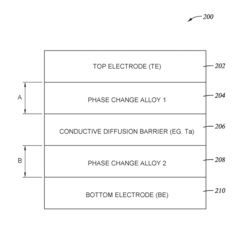
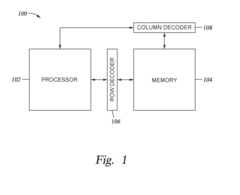
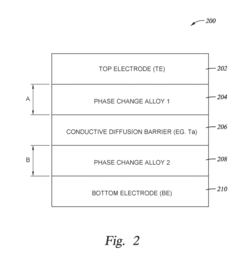
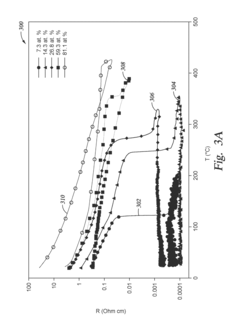
Phase change memory with multi-level programming
PatentActiveUS20230301207A1
Innovation
- The PCM device employs a stack of phase change material layers with alternating insulating layers, where each layer has a different length, allowing for programming of multiple bits through varying voltage pulses, enabling bidirectional programming from high to low conductance with reduced conductance asymmetry.


Network Standards and Protocol Compliance Requirements
PCM systems operating within modern network infrastructures must adhere to a complex ecosystem of evolving standards and protocols that govern data transmission, quality assurance, and interoperability. The fundamental compliance framework encompasses ITU-T G.711 and G.722 standards for audio encoding, alongside emerging specifications such as G.729.1 for scalable coding and G.719 for full-band audio communication. These standards define critical parameters including sampling rates, quantization levels, and compression algorithms that directly impact PCM system design and implementation.
Network protocol compliance extends beyond audio coding standards to encompass transport layer requirements. Real-time Transport Protocol (RTP) specifications, particularly RFC 3550 and its extensions, establish mandatory guidelines for PCM payload formatting, timestamp synchronization, and sequence numbering. Session Initiation Protocol (SIP) compliance under RFC 3261 governs call establishment and media negotiation processes, while Session Description Protocol (SDP) requirements ensure proper media capability advertisement and parameter exchange between PCM endpoints.
Quality of Service (QoS) compliance represents another critical dimension, with IEEE 802.1p traffic classification and Differentiated Services Code Point (DSCP) marking requirements becoming increasingly stringent. PCM systems must implement proper packet prioritization mechanisms to meet ITU-T Y.1541 network performance objectives, particularly regarding delay variation and packet loss ratios that directly affect audio quality perception.
Security compliance requirements have intensified with the adoption of Secure Real-time Transport Protocol (SRTP) under RFC 3711 and Transport Layer Security (TLS) protocols. PCM systems must integrate cryptographic capabilities for media encryption while maintaining compatibility with key management frameworks such as DTLS-SRTP and ZRTP protocols.
Emerging network architectures introduce additional compliance challenges, particularly with Software-Defined Networking (SDN) and Network Function Virtualization (NFV) environments. PCM systems must adapt to dynamic network conditions while maintaining compliance with OpenFlow specifications and ETSI NFV architectural frameworks, ensuring seamless operation across virtualized infrastructure components and cloud-native deployments.
Network protocol compliance extends beyond audio coding standards to encompass transport layer requirements. Real-time Transport Protocol (RTP) specifications, particularly RFC 3550 and its extensions, establish mandatory guidelines for PCM payload formatting, timestamp synchronization, and sequence numbering. Session Initiation Protocol (SIP) compliance under RFC 3261 governs call establishment and media negotiation processes, while Session Description Protocol (SDP) requirements ensure proper media capability advertisement and parameter exchange between PCM endpoints.
Quality of Service (QoS) compliance represents another critical dimension, with IEEE 802.1p traffic classification and Differentiated Services Code Point (DSCP) marking requirements becoming increasingly stringent. PCM systems must implement proper packet prioritization mechanisms to meet ITU-T Y.1541 network performance objectives, particularly regarding delay variation and packet loss ratios that directly affect audio quality perception.
Security compliance requirements have intensified with the adoption of Secure Real-time Transport Protocol (SRTP) under RFC 3711 and Transport Layer Security (TLS) protocols. PCM systems must integrate cryptographic capabilities for media encryption while maintaining compatibility with key management frameworks such as DTLS-SRTP and ZRTP protocols.
Emerging network architectures introduce additional compliance challenges, particularly with Software-Defined Networking (SDN) and Network Function Virtualization (NFV) environments. PCM systems must adapt to dynamic network conditions while maintaining compliance with OpenFlow specifications and ETSI NFV architectural frameworks, ensuring seamless operation across virtualized infrastructure components and cloud-native deployments.
Interoperability Challenges in Multi-Vendor Environments
The integration of PCM systems across multi-vendor network environments presents significant interoperability challenges that fundamentally impact system performance and operational efficiency. These challenges stem from the heterogeneous nature of modern network infrastructures, where equipment from different manufacturers must seamlessly communicate and coordinate PCM operations.
Protocol standardization represents one of the most critical interoperability barriers. Different vendors often implement proprietary extensions to standard PCM protocols, creating compatibility gaps that prevent effective cross-vendor communication. These variations in protocol interpretation can lead to synchronization issues, data format mismatches, and inconsistent quality of service delivery across network segments.
Interface compatibility poses another substantial challenge in multi-vendor PCM deployments. Hardware and software interfaces vary significantly between manufacturers, requiring complex adaptation layers and middleware solutions. The lack of universal interface standards forces network operators to invest heavily in custom integration solutions, increasing both deployment costs and system complexity.
Configuration management becomes exponentially more complex in multi-vendor environments. Each vendor typically provides proprietary management tools and configuration interfaces, making unified network administration challenging. This fragmentation leads to increased operational overhead, higher training requirements for technical staff, and greater potential for configuration errors that can compromise PCM system performance.
Timing and synchronization issues emerge as critical concerns when PCM systems from different vendors must operate in coordination. Variations in clock accuracy, jitter tolerance, and synchronization protocols can result in data corruption, dropped connections, and degraded service quality. These timing discrepancies are particularly problematic in applications requiring precise synchronization, such as real-time communications and industrial control systems.
Quality assurance and testing complexity increases dramatically in multi-vendor scenarios. Comprehensive interoperability testing requires extensive validation across all possible vendor combinations, creating significant resource demands. The dynamic nature of network infrastructures means that ongoing compatibility verification becomes a continuous operational requirement rather than a one-time deployment activity.
Protocol standardization represents one of the most critical interoperability barriers. Different vendors often implement proprietary extensions to standard PCM protocols, creating compatibility gaps that prevent effective cross-vendor communication. These variations in protocol interpretation can lead to synchronization issues, data format mismatches, and inconsistent quality of service delivery across network segments.
Interface compatibility poses another substantial challenge in multi-vendor PCM deployments. Hardware and software interfaces vary significantly between manufacturers, requiring complex adaptation layers and middleware solutions. The lack of universal interface standards forces network operators to invest heavily in custom integration solutions, increasing both deployment costs and system complexity.
Configuration management becomes exponentially more complex in multi-vendor environments. Each vendor typically provides proprietary management tools and configuration interfaces, making unified network administration challenging. This fragmentation leads to increased operational overhead, higher training requirements for technical staff, and greater potential for configuration errors that can compromise PCM system performance.
Timing and synchronization issues emerge as critical concerns when PCM systems from different vendors must operate in coordination. Variations in clock accuracy, jitter tolerance, and synchronization protocols can result in data corruption, dropped connections, and degraded service quality. These timing discrepancies are particularly problematic in applications requiring precise synchronization, such as real-time communications and industrial control systems.
Quality assurance and testing complexity increases dramatically in multi-vendor scenarios. Comprehensive interoperability testing requires extensive validation across all possible vendor combinations, creating significant resource demands. The dynamic nature of network infrastructures means that ongoing compatibility verification becomes a continuous operational requirement rather than a one-time deployment activity.
Unlock deeper insights with Patsnap Eureka Quick Research — get a full tech report to explore trends and direct your research. Try now!
Generate Your Research Report Instantly with AI Agent
Supercharge your innovation with Patsnap Eureka AI Agent Platform!