
Pulse Code Modulation vs Emerging Audio Technologies
MAR 6, 20269 MIN READ
Generate Your Research Report Instantly with AI Agent
Patsnap Eureka helps you evaluate technical feasibility & market potential.
PCM Technology Background and Digital Audio Goals
Pulse Code Modulation emerged in the 1930s through the pioneering work of Alec Reeves at International Telephone and Telegraph Company, fundamentally transforming how audio signals are captured, processed, and transmitted in digital systems. This revolutionary technique converts continuous analog audio waveforms into discrete digital representations through systematic sampling and quantization processes, establishing the foundation for modern digital audio infrastructure.
The evolution of PCM technology has been marked by significant milestones that shaped contemporary audio standards. The introduction of the Compact Disc in 1982 standardized 16-bit PCM at 44.1 kHz sampling rate, while professional audio applications adopted 48 kHz standards. Subsequent developments expanded bit depths to 24-bit and sampling rates to 96 kHz and beyond, addressing the growing demands for higher fidelity reproduction in studio environments and audiophile markets.
Contemporary digital audio objectives center on achieving transparent reproduction of acoustic events while maintaining computational efficiency and storage practicality. The primary technical goals include minimizing quantization noise through advanced dithering techniques, extending dynamic range capabilities, and reducing aliasing artifacts through sophisticated anti-aliasing filter designs. These objectives drive continuous refinements in PCM implementation across various applications.
The emergence of alternative audio technologies has introduced new paradigms that challenge traditional PCM approaches. Direct Stream Digital technology, exemplified by Super Audio CD format, employs single-bit sigma-delta modulation at extremely high sampling rates, offering different trade-offs between temporal and amplitude resolution. Object-based audio formats like Dolby Atmos represent spatial audio evolution, moving beyond channel-based PCM toward three-dimensional soundfield representation.
Modern digital audio goals increasingly emphasize perceptual optimization and adaptive processing capabilities. Advanced psychoacoustic modeling enables more efficient encoding while maintaining subjective quality, while machine learning approaches promise intelligent audio enhancement and restoration. The integration of immersive audio technologies demands new PCM variants capable of handling complex spatial metadata alongside traditional temporal audio data.
The trajectory toward higher resolution audio continues driving PCM evolution, with emerging applications in virtual reality, augmented reality, and professional content creation requiring unprecedented fidelity and low-latency processing capabilities. These evolving requirements position PCM technology at a critical juncture where traditional approaches must adapt to accommodate next-generation audio experiences while maintaining backward compatibility with established infrastructure.
The evolution of PCM technology has been marked by significant milestones that shaped contemporary audio standards. The introduction of the Compact Disc in 1982 standardized 16-bit PCM at 44.1 kHz sampling rate, while professional audio applications adopted 48 kHz standards. Subsequent developments expanded bit depths to 24-bit and sampling rates to 96 kHz and beyond, addressing the growing demands for higher fidelity reproduction in studio environments and audiophile markets.
Contemporary digital audio objectives center on achieving transparent reproduction of acoustic events while maintaining computational efficiency and storage practicality. The primary technical goals include minimizing quantization noise through advanced dithering techniques, extending dynamic range capabilities, and reducing aliasing artifacts through sophisticated anti-aliasing filter designs. These objectives drive continuous refinements in PCM implementation across various applications.
The emergence of alternative audio technologies has introduced new paradigms that challenge traditional PCM approaches. Direct Stream Digital technology, exemplified by Super Audio CD format, employs single-bit sigma-delta modulation at extremely high sampling rates, offering different trade-offs between temporal and amplitude resolution. Object-based audio formats like Dolby Atmos represent spatial audio evolution, moving beyond channel-based PCM toward three-dimensional soundfield representation.
Modern digital audio goals increasingly emphasize perceptual optimization and adaptive processing capabilities. Advanced psychoacoustic modeling enables more efficient encoding while maintaining subjective quality, while machine learning approaches promise intelligent audio enhancement and restoration. The integration of immersive audio technologies demands new PCM variants capable of handling complex spatial metadata alongside traditional temporal audio data.
The trajectory toward higher resolution audio continues driving PCM evolution, with emerging applications in virtual reality, augmented reality, and professional content creation requiring unprecedented fidelity and low-latency processing capabilities. These evolving requirements position PCM technology at a critical juncture where traditional approaches must adapt to accommodate next-generation audio experiences while maintaining backward compatibility with established infrastructure.
Market Demand for Advanced Audio Codec Solutions
The global audio codec market is experiencing unprecedented growth driven by the proliferation of streaming services, high-resolution audio content, and immersive entertainment experiences. Traditional Pulse Code Modulation, while foundational to digital audio, faces increasing pressure from market demands for superior compression efficiency, lower latency, and enhanced audio quality across diverse applications.
Streaming platforms represent the largest demand driver for advanced audio codec solutions. Services like Spotify, Apple Music, and Netflix require codecs that can deliver high-quality audio while minimizing bandwidth consumption and storage costs. The shift toward lossless and high-resolution audio streaming has created substantial market pressure for codecs that can efficiently handle 24-bit/192kHz content without compromising quality or requiring excessive data rates.
Gaming and virtual reality applications constitute another rapidly expanding market segment demanding low-latency audio solutions. Real-time gaming environments require audio codecs capable of processing spatial audio with minimal delay, while VR applications need immersive 3D audio rendering capabilities that traditional PCM cannot efficiently provide. These applications drive demand for specialized codecs optimized for interactive media.
Mobile device manufacturers increasingly seek power-efficient audio solutions to extend battery life while maintaining audio quality. The proliferation of wireless audio devices, particularly true wireless earbuds, has intensified demand for codecs that can operate efficiently within strict power and processing constraints while supporting advanced features like active noise cancellation and spatial audio.
Enterprise communication markets, accelerated by remote work trends, require codecs optimized for voice clarity and background noise suppression. Video conferencing platforms and unified communication systems demand solutions that can maintain intelligibility across varying network conditions while supporting multiple participants and real-time processing.
The automotive industry presents emerging opportunities for advanced audio codecs, particularly with the integration of in-vehicle entertainment systems and autonomous driving technologies. Connected vehicles require codecs capable of handling multiple audio streams simultaneously while supporting voice recognition and hands-free communication systems.
Market demand increasingly favors codec solutions that offer adaptive bitrate capabilities, allowing dynamic quality adjustment based on network conditions and device capabilities. This flexibility has become essential for applications serving diverse user bases with varying connectivity and hardware specifications.
Streaming platforms represent the largest demand driver for advanced audio codec solutions. Services like Spotify, Apple Music, and Netflix require codecs that can deliver high-quality audio while minimizing bandwidth consumption and storage costs. The shift toward lossless and high-resolution audio streaming has created substantial market pressure for codecs that can efficiently handle 24-bit/192kHz content without compromising quality or requiring excessive data rates.
Gaming and virtual reality applications constitute another rapidly expanding market segment demanding low-latency audio solutions. Real-time gaming environments require audio codecs capable of processing spatial audio with minimal delay, while VR applications need immersive 3D audio rendering capabilities that traditional PCM cannot efficiently provide. These applications drive demand for specialized codecs optimized for interactive media.
Mobile device manufacturers increasingly seek power-efficient audio solutions to extend battery life while maintaining audio quality. The proliferation of wireless audio devices, particularly true wireless earbuds, has intensified demand for codecs that can operate efficiently within strict power and processing constraints while supporting advanced features like active noise cancellation and spatial audio.
Enterprise communication markets, accelerated by remote work trends, require codecs optimized for voice clarity and background noise suppression. Video conferencing platforms and unified communication systems demand solutions that can maintain intelligibility across varying network conditions while supporting multiple participants and real-time processing.
The automotive industry presents emerging opportunities for advanced audio codecs, particularly with the integration of in-vehicle entertainment systems and autonomous driving technologies. Connected vehicles require codecs capable of handling multiple audio streams simultaneously while supporting voice recognition and hands-free communication systems.
Market demand increasingly favors codec solutions that offer adaptive bitrate capabilities, allowing dynamic quality adjustment based on network conditions and device capabilities. This flexibility has become essential for applications serving diverse user bases with varying connectivity and hardware specifications.
Current PCM Limitations and Emerging Audio Challenges
Pulse Code Modulation, despite its widespread adoption as the foundation of digital audio, faces significant limitations that increasingly constrain modern audio applications. The fundamental constraint lies in PCM's fixed sampling rate and bit depth architecture, which creates an inherent trade-off between audio quality and data efficiency. Traditional PCM systems typically operate at 44.1 kHz or 48 kHz sampling rates with 16-bit resolution, resulting in substantial data volumes that challenge storage and transmission capabilities in contemporary multimedia environments.
The quantization noise inherent in PCM systems presents another critical limitation. This noise floor becomes particularly problematic in high-dynamic-range audio applications where subtle audio details are crucial. The linear quantization approach of PCM fails to account for human auditory perception characteristics, leading to inefficient bit allocation across frequency ranges where human hearing sensitivity varies significantly.
Bandwidth requirements represent a major bottleneck for PCM implementation in emerging applications. High-resolution audio formats demanding 96 kHz sampling rates and 24-bit depth generate data streams exceeding 4.6 Mbps for stereo content, creating substantial challenges for real-time streaming, wireless transmission, and mobile device applications where bandwidth and power consumption are critical constraints.
Emerging audio challenges further expose PCM's inadequacies in modern technological contexts. Immersive audio technologies, including spatial audio and 3D soundscapes, require multi-channel processing capabilities that exponentially increase PCM data requirements. Virtual and augmented reality applications demand ultra-low latency audio processing, where PCM's buffering requirements introduce unacceptable delays that compromise user experience and presence sensation.
The proliferation of Internet of Things devices and edge computing scenarios presents additional challenges for PCM-based systems. These environments require audio processing solutions that minimize computational overhead and memory footprint while maintaining acceptable quality levels. PCM's uniform sampling approach proves inefficient for applications involving speech processing, environmental sound monitoring, and machine learning-based audio analysis where adaptive sampling strategies could provide superior performance.
Machine learning integration represents another area where PCM limitations become apparent. Modern AI-driven audio applications benefit from frequency-domain representations and perceptually-motivated encoding schemes that align more closely with neural network architectures and training methodologies, highlighting the need for more sophisticated audio representation technologies beyond traditional PCM approaches.
The quantization noise inherent in PCM systems presents another critical limitation. This noise floor becomes particularly problematic in high-dynamic-range audio applications where subtle audio details are crucial. The linear quantization approach of PCM fails to account for human auditory perception characteristics, leading to inefficient bit allocation across frequency ranges where human hearing sensitivity varies significantly.
Bandwidth requirements represent a major bottleneck for PCM implementation in emerging applications. High-resolution audio formats demanding 96 kHz sampling rates and 24-bit depth generate data streams exceeding 4.6 Mbps for stereo content, creating substantial challenges for real-time streaming, wireless transmission, and mobile device applications where bandwidth and power consumption are critical constraints.
Emerging audio challenges further expose PCM's inadequacies in modern technological contexts. Immersive audio technologies, including spatial audio and 3D soundscapes, require multi-channel processing capabilities that exponentially increase PCM data requirements. Virtual and augmented reality applications demand ultra-low latency audio processing, where PCM's buffering requirements introduce unacceptable delays that compromise user experience and presence sensation.
The proliferation of Internet of Things devices and edge computing scenarios presents additional challenges for PCM-based systems. These environments require audio processing solutions that minimize computational overhead and memory footprint while maintaining acceptable quality levels. PCM's uniform sampling approach proves inefficient for applications involving speech processing, environmental sound monitoring, and machine learning-based audio analysis where adaptive sampling strategies could provide superior performance.
Machine learning integration represents another area where PCM limitations become apparent. Modern AI-driven audio applications benefit from frequency-domain representations and perceptually-motivated encoding schemes that align more closely with neural network architectures and training methodologies, highlighting the need for more sophisticated audio representation technologies beyond traditional PCM approaches.
Current Audio Compression and Processing Solutions
01 Basic pulse code modulation systems and methods
Fundamental pulse code modulation (PCM) techniques involve converting analog audio signals into digital format through sampling, quantization, and encoding processes. These systems establish the foundation for digital audio transmission and storage by representing continuous audio waveforms as discrete digital values. The basic PCM architecture includes analog-to-digital conversion, signal processing, and digital-to-analog conversion for audio reproduction.- Basic pulse code modulation systems and methods: Fundamental pulse code modulation (PCM) techniques involve converting analog audio signals into digital format through sampling, quantization, and encoding processes. These systems establish the foundation for digital audio transmission and storage by representing continuous audio waveforms as discrete digital values. The technology enables accurate reproduction of audio signals while providing noise immunity and signal processing capabilities that are essential for modern audio applications.
- Advanced PCM encoding and compression techniques: Enhanced encoding methods improve upon traditional PCM by implementing sophisticated compression algorithms and adaptive quantization schemes. These techniques optimize bit rate utilization while maintaining audio quality, enabling more efficient storage and transmission of digital audio data. Advanced modulation schemes incorporate error correction, dynamic range optimization, and adaptive bit allocation to achieve superior performance in various audio applications.
- Multi-channel and spatial audio processing: Modern audio technologies extend PCM principles to handle multiple audio channels simultaneously, enabling surround sound and three-dimensional audio experiences. These systems process and encode spatial audio information to create immersive soundscapes for entertainment and professional applications. The technology incorporates channel management, spatial positioning algorithms, and synchronized multi-stream processing to deliver enhanced audio experiences.
- Digital audio interface and transmission protocols: Specialized interface standards and transmission protocols facilitate the transfer of PCM audio data between devices and systems. These protocols define electrical characteristics, timing requirements, and data formatting conventions to ensure reliable audio signal exchange. The technology encompasses both wired and wireless transmission methods, supporting various bandwidth requirements and latency constraints for professional and consumer audio applications.
- Emerging audio codec technologies and standards: Next-generation audio codecs integrate advanced signal processing techniques with PCM foundations to address evolving requirements for high-resolution audio, low-latency streaming, and adaptive quality delivery. These technologies incorporate machine learning algorithms, perceptual coding models, and flexible bitrate management to optimize audio quality across diverse playback scenarios. Innovation focuses on balancing computational efficiency with audio fidelity while supporting emerging applications in virtual reality, augmented reality, and interactive media.
02 Advanced PCM encoding and compression techniques
Enhanced pulse code modulation methods incorporate sophisticated encoding algorithms and compression techniques to improve audio quality while reducing bandwidth requirements. These approaches include adaptive quantization, differential encoding, and predictive coding methods that optimize the digital representation of audio signals. Advanced techniques enable more efficient data transmission and storage without significant quality degradation.Expand Specific Solutions03 Multi-channel and spatial audio processing
Modern audio technologies extend PCM principles to handle multiple audio channels and spatial audio formats. These systems process and encode multi-dimensional audio information to create immersive sound experiences. The technologies support various channel configurations and enable three-dimensional audio positioning through advanced signal processing and encoding schemes.Expand Specific Solutions04 Digital audio transmission and communication systems
PCM-based transmission systems facilitate the reliable transfer of digital audio data across various communication channels. These systems incorporate error correction, synchronization mechanisms, and modulation techniques to ensure high-fidelity audio delivery. The technologies address challenges in bandwidth optimization, signal integrity, and compatibility across different transmission media and protocols.Expand Specific Solutions05 Emerging audio coding and quality enhancement
Next-generation audio technologies integrate artificial intelligence, adaptive algorithms, and perceptual coding to enhance audio quality and user experience. These innovations include dynamic bit rate allocation, intelligent noise reduction, and context-aware audio processing. The emerging techniques leverage machine learning and advanced signal processing to optimize audio reproduction across diverse playback environments and devices.Expand Specific Solutions
Key Players in Audio Codec and DSP Industry
The Pulse Code Modulation versus emerging audio technologies landscape represents a mature market undergoing significant transformation. Traditional PCM technology, while established as the digital audio standard, faces increasing competition from advanced codecs and AI-enhanced audio processing. The industry is transitioning from a growth phase to innovation-driven differentiation, with market size expanding through premium audio applications and IoT integration. Technology maturity varies significantly across players: established semiconductor leaders like Intel, Qualcomm, and Texas Instruments maintain strong PCM implementations, while companies such as Dolby Laboratories and Fraunhofer-Gesellschaft drive codec innovation. Consumer electronics giants including Apple, Samsung, and LG Electronics integrate both traditional and emerging technologies, whereas specialized firms like Bang & Olufsen and Aputure focus on high-fidelity applications. The competitive landscape shows convergence between traditional PCM applications and next-generation audio technologies, with established players leveraging their manufacturing scale while newer entrants pursue specialized, high-value segments.
Fraunhofer-Gesellschaft eV
Technical Solution: Fraunhofer Institute developed the revolutionary MP3 and AAC audio codecs, fundamentally transforming how audio is compressed and transmitted compared to uncompressed PCM. Their latest research focuses on MPEG-H 3D Audio, which enables immersive audio experiences with object-based rendering and personalized sound delivery. The institute's emerging technologies include AI-enhanced audio coding that adapts compression parameters in real-time based on content analysis, achieving up to 50% better compression efficiency than traditional methods. Their xHE-AAC codec provides superior quality at low bitrates, making it ideal for streaming applications where PCM would be impractical.
Strengths: Pioneering research capabilities, standardization influence, comprehensive codec portfolio. Weaknesses: Academic focus may delay commercialization, complex licensing structures, limited direct market presence.
Samsung Electronics Co., Ltd.
Technical Solution: Samsung has developed comprehensive audio processing solutions including their proprietary UHQ (Ultra High Quality) audio technology and 360 Audio platform. Their systems utilize advanced upsampling algorithms to enhance compressed audio beyond PCM quality, employing machine learning models trained on millions of audio samples. The company's emerging technologies include AI-powered audio restoration, real-time audio optimization based on listening environment analysis, and multi-dimensional audio processing for their Galaxy devices and smart TVs. Their latest innovations incorporate edge AI processing to deliver personalized audio experiences while maintaining low power consumption.
Strengths: Vertical integration capabilities, extensive consumer electronics portfolio, strong R&D investment. Weaknesses: Fragmented audio ecosystem, intense competition in consumer markets, dependency on Android platform limitations.
Core Innovations in Next-Gen Audio Technologies
"Pulse code modulation compression systems"
PatentInactiveGB2294618B
Innovation
- A novel PCM compression system that produces digital delta values and uses sample coding with variable nibble sequences, including reference sample nibbles and bit-size selectors, allowing for dynamic adjustment of bit sizes to represent delta values accurately across different signal conditions, enabling efficient compression without compromising sound quality.


Pulse-width modulation of pulse-code modulated signals at selectable or dynamically varying sample rates
PatentActiveUS7626519B2
Innovation
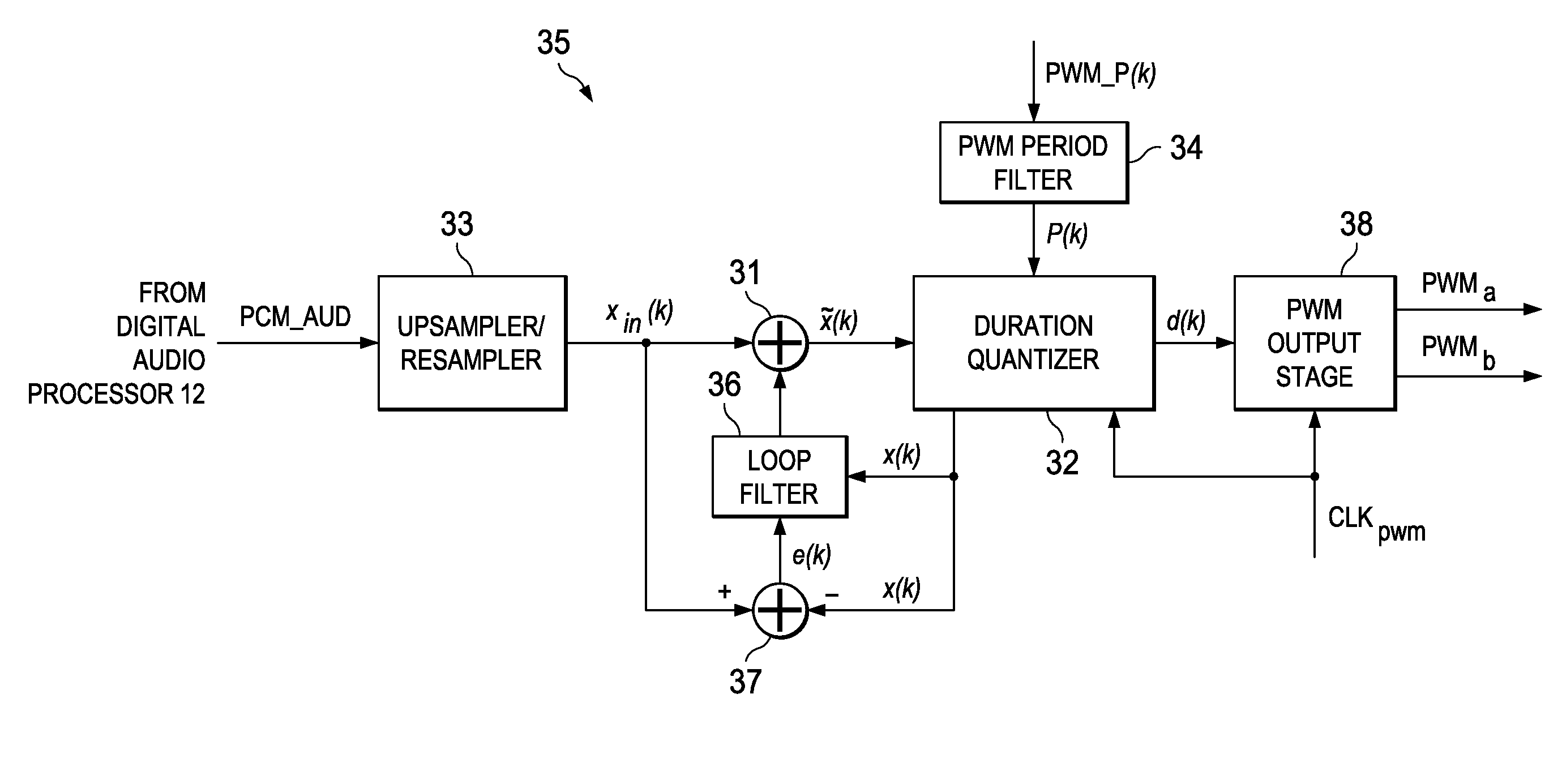
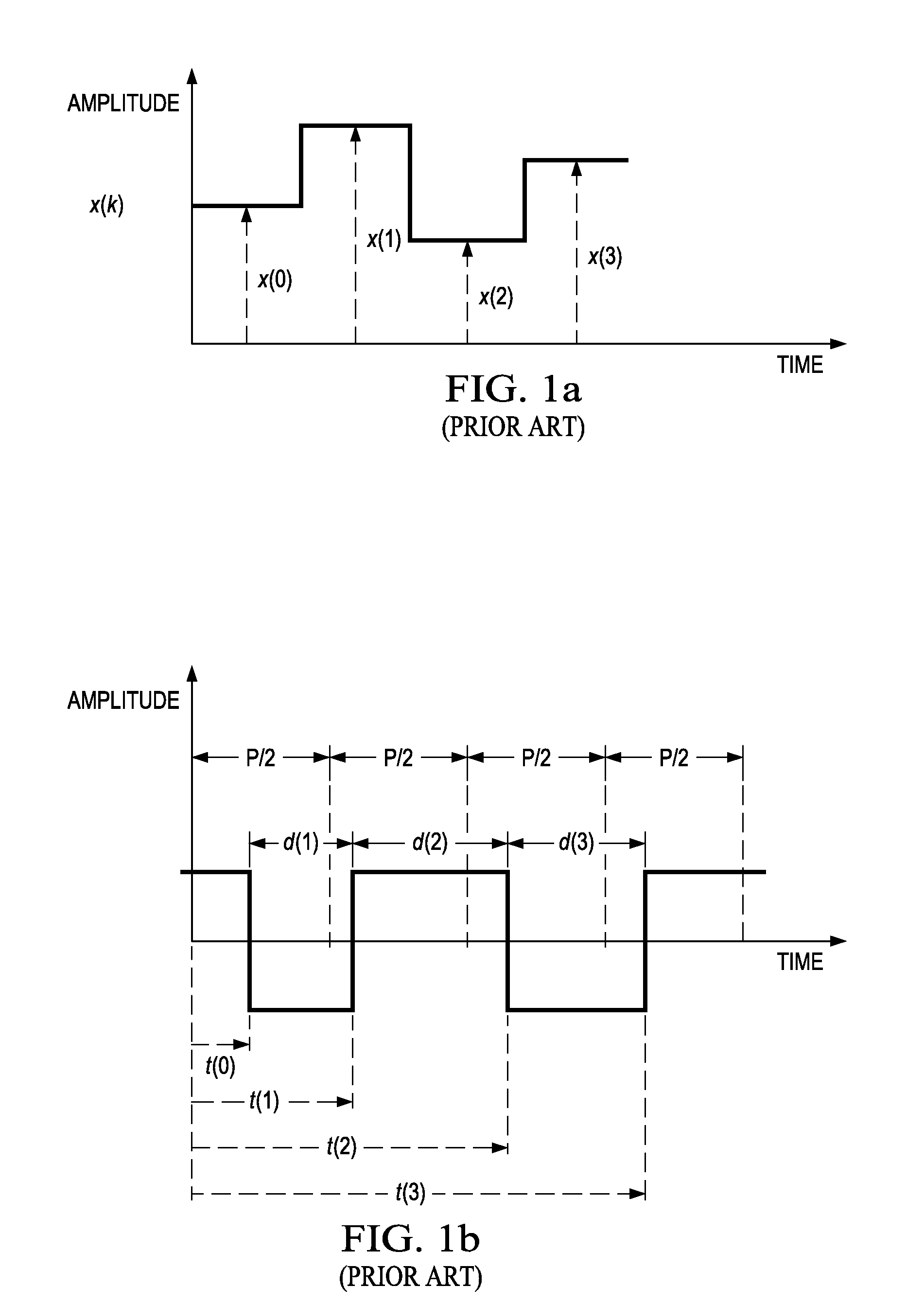
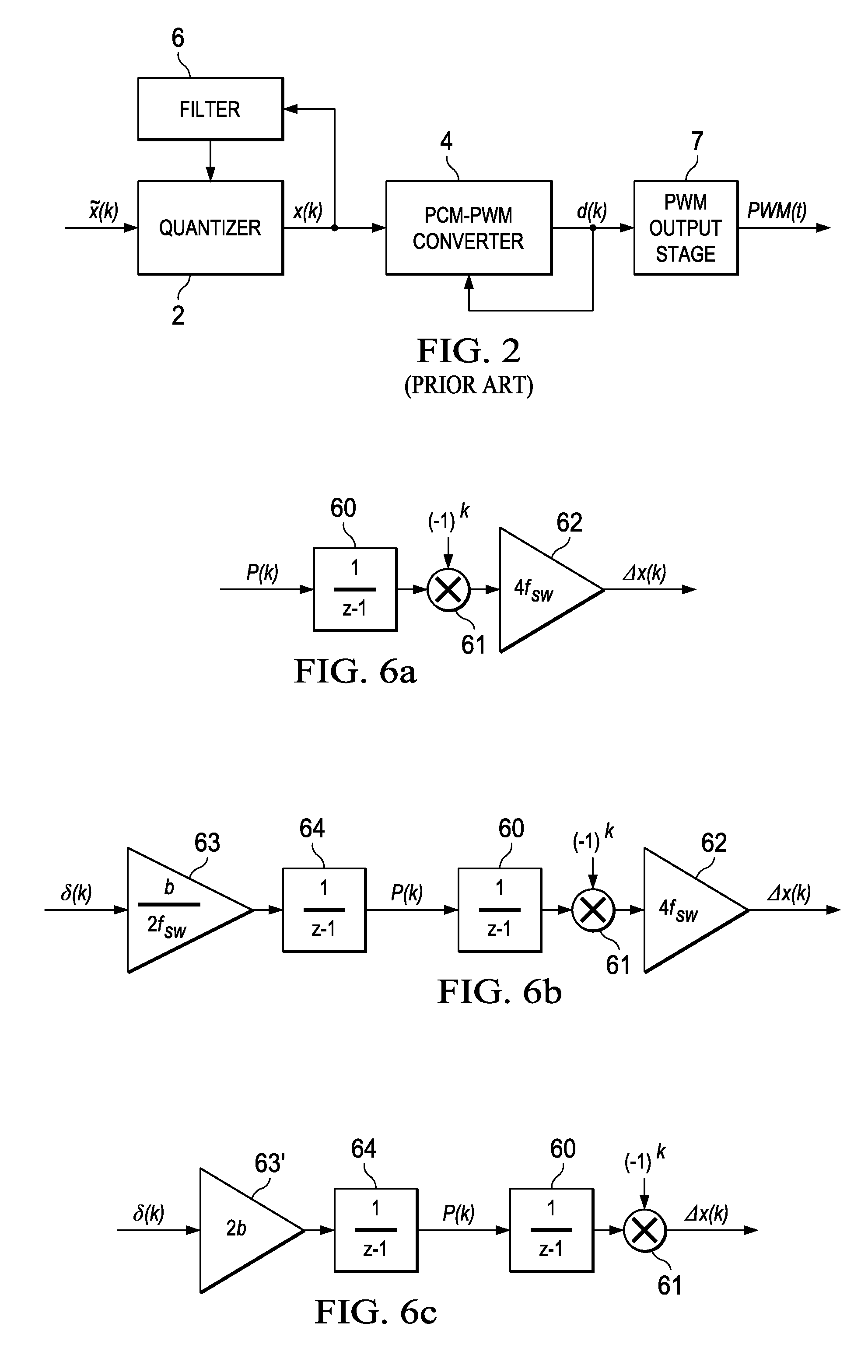
- A circuit and method that dynamically adjusts the PWM period over a continuous range, aligning transition times with the PWM clock grid while using filter functions to suppress transients, allowing the PWM signal to be slaved to an input sample rate and operate from a fixed clock frequency.

Audio Standards and Compatibility Requirements
The evolution of audio technologies has created a complex landscape of standards and compatibility requirements that must be carefully navigated when comparing Pulse Code Modulation (PCM) with emerging audio technologies. PCM, established as the foundation of digital audio through standards like AES3, AES/EBU, and S/PDIF, maintains widespread compatibility across professional and consumer audio equipment. These standards define specific sampling rates, bit depths, and transmission protocols that ensure interoperability across diverse hardware platforms.
Emerging audio technologies face significant standardization challenges as they attempt to establish market presence while maintaining backward compatibility with existing PCM-based infrastructure. High-resolution audio formats must comply with evolving standards such as MQA (Master Quality Authenticated), DSD (Direct Stream Digital), and various lossless compression protocols. Each format requires specific decoder implementations and hardware support, creating fragmentation in the compatibility ecosystem.
The compatibility matrix becomes increasingly complex when considering multi-channel audio standards. While PCM seamlessly integrates with established surround sound formats like Dolby Digital and DTS, emerging technologies such as object-based audio (Dolby Atmos, DTS:X) require new transmission standards and processing capabilities. These advanced formats demand updated HDMI specifications, enhanced bandwidth requirements, and specialized audio processing units that may not be universally available across all playback systems.
Streaming platforms and digital distribution networks present additional standardization challenges. PCM's universal acceptance ensures consistent playback across all devices, while emerging formats often require platform-specific implementations and codec support. The lack of unified standards for high-resolution streaming creates compatibility gaps that limit widespread adoption of advanced audio technologies.
Professional audio workflows must address standards compliance across the entire production chain. While PCM maintains consistent behavior from recording to mastering to distribution, emerging technologies often require format conversions and specialized processing that can introduce compatibility issues. The integration of AI-enhanced audio processing and spatial audio technologies necessitates new standardization efforts to ensure consistent implementation across different manufacturers and platforms.
Future compatibility frameworks must balance innovation with backward compatibility, establishing clear migration paths that protect existing investments while enabling technological advancement. The development of adaptive audio standards and universal codec frameworks will be crucial for seamless integration of emerging technologies with established PCM infrastructure.
Emerging audio technologies face significant standardization challenges as they attempt to establish market presence while maintaining backward compatibility with existing PCM-based infrastructure. High-resolution audio formats must comply with evolving standards such as MQA (Master Quality Authenticated), DSD (Direct Stream Digital), and various lossless compression protocols. Each format requires specific decoder implementations and hardware support, creating fragmentation in the compatibility ecosystem.
The compatibility matrix becomes increasingly complex when considering multi-channel audio standards. While PCM seamlessly integrates with established surround sound formats like Dolby Digital and DTS, emerging technologies such as object-based audio (Dolby Atmos, DTS:X) require new transmission standards and processing capabilities. These advanced formats demand updated HDMI specifications, enhanced bandwidth requirements, and specialized audio processing units that may not be universally available across all playback systems.
Streaming platforms and digital distribution networks present additional standardization challenges. PCM's universal acceptance ensures consistent playback across all devices, while emerging formats often require platform-specific implementations and codec support. The lack of unified standards for high-resolution streaming creates compatibility gaps that limit widespread adoption of advanced audio technologies.
Professional audio workflows must address standards compliance across the entire production chain. While PCM maintains consistent behavior from recording to mastering to distribution, emerging technologies often require format conversions and specialized processing that can introduce compatibility issues. The integration of AI-enhanced audio processing and spatial audio technologies necessitates new standardization efforts to ensure consistent implementation across different manufacturers and platforms.
Future compatibility frameworks must balance innovation with backward compatibility, establishing clear migration paths that protect existing investments while enabling technological advancement. The development of adaptive audio standards and universal codec frameworks will be crucial for seamless integration of emerging technologies with established PCM infrastructure.
Energy Efficiency in Modern Audio Processing
Energy efficiency has emerged as a critical consideration in modern audio processing systems, particularly as the industry transitions from traditional Pulse Code Modulation (PCM) to more sophisticated emerging audio technologies. The growing demand for portable devices, IoT applications, and battery-powered audio equipment has intensified the focus on power consumption optimization across all stages of the audio processing pipeline.
Traditional PCM systems, while straightforward in implementation, often exhibit suboptimal energy characteristics due to their fixed sampling rates and bit depths. These systems typically operate at constant power levels regardless of signal complexity, leading to unnecessary energy consumption during periods of low audio activity or silence. The linear nature of PCM processing also requires continuous high-frequency clock operations, contributing to baseline power draw that remains relatively constant across varying workloads.
Emerging audio technologies demonstrate significantly improved energy efficiency through adaptive processing techniques. Advanced audio codecs such as Opus, AAC-LC, and proprietary solutions implement dynamic bit allocation and variable complexity encoding that scales power consumption with signal requirements. These systems can reduce processing intensity during quiet passages while maintaining full performance during complex audio segments, achieving power savings of 30-60% compared to equivalent PCM implementations.
Modern audio processors increasingly incorporate dedicated low-power modes and clock gating mechanisms that were absent in traditional PCM-focused architectures. Hardware-accelerated audio processing units now feature multiple power domains, allowing selective activation of processing blocks based on current audio workload requirements. This granular power management enables substantial energy savings in mobile and embedded applications.
Machine learning-enhanced audio processing introduces new paradigms for energy optimization through predictive power management and intelligent resource allocation. Neural network-based audio enhancement and noise reduction algorithms can be dynamically scaled or bypassed based on content analysis, providing superior energy efficiency compared to always-on traditional processing chains.
The integration of advanced power management techniques, including dynamic voltage and frequency scaling specifically optimized for audio workloads, represents a significant advancement over legacy PCM systems. These innovations enable modern audio processing platforms to achieve processing capabilities that would have required significantly higher power consumption in traditional implementations, making sophisticated audio technologies viable for battery-constrained applications.
Traditional PCM systems, while straightforward in implementation, often exhibit suboptimal energy characteristics due to their fixed sampling rates and bit depths. These systems typically operate at constant power levels regardless of signal complexity, leading to unnecessary energy consumption during periods of low audio activity or silence. The linear nature of PCM processing also requires continuous high-frequency clock operations, contributing to baseline power draw that remains relatively constant across varying workloads.
Emerging audio technologies demonstrate significantly improved energy efficiency through adaptive processing techniques. Advanced audio codecs such as Opus, AAC-LC, and proprietary solutions implement dynamic bit allocation and variable complexity encoding that scales power consumption with signal requirements. These systems can reduce processing intensity during quiet passages while maintaining full performance during complex audio segments, achieving power savings of 30-60% compared to equivalent PCM implementations.
Modern audio processors increasingly incorporate dedicated low-power modes and clock gating mechanisms that were absent in traditional PCM-focused architectures. Hardware-accelerated audio processing units now feature multiple power domains, allowing selective activation of processing blocks based on current audio workload requirements. This granular power management enables substantial energy savings in mobile and embedded applications.
Machine learning-enhanced audio processing introduces new paradigms for energy optimization through predictive power management and intelligent resource allocation. Neural network-based audio enhancement and noise reduction algorithms can be dynamically scaled or bypassed based on content analysis, providing superior energy efficiency compared to always-on traditional processing chains.
The integration of advanced power management techniques, including dynamic voltage and frequency scaling specifically optimized for audio workloads, represents a significant advancement over legacy PCM systems. These innovations enable modern audio processing platforms to achieve processing capabilities that would have required significantly higher power consumption in traditional implementations, making sophisticated audio technologies viable for battery-constrained applications.
Unlock deeper insights with Patsnap Eureka Quick Research — get a full tech report to explore trends and direct your research. Try now!
Generate Your Research Report Instantly with AI Agent
Supercharge your innovation with Patsnap Eureka AI Agent Platform!