Advanced Characterization Techniques for Metalloids Evaluation
OCT 13, 202510 MIN READ
Generate Your Research Report Instantly with AI Agent
Patsnap Eureka helps you evaluate technical feasibility & market potential.
Metalloid Characterization Background and Objectives
Metalloids, elements with properties intermediate between metals and non-metals, have gained significant attention in various technological applications over the past decades. The characterization of these elements presents unique challenges due to their hybrid nature, requiring specialized techniques that can accurately evaluate their physical, chemical, and electronic properties. The evolution of metalloid characterization techniques has progressed from basic chemical analysis methods in the early 20th century to sophisticated spectroscopic and microscopic approaches in the modern era.
The field has witnessed remarkable advancements, particularly in the last two decades, with the development of high-resolution imaging techniques, advanced spectroscopy methods, and computational modeling approaches. These developments have been driven by the increasing importance of metalloids in semiconductor technology, energy storage systems, and advanced materials science. Silicon, germanium, arsenic, antimony, tellurium, and boron represent the primary focus of these characterization efforts, each presenting unique analytical challenges.
Current technological trends indicate a growing need for more precise, non-destructive, and in-situ characterization techniques capable of analyzing metalloids at the nanoscale and in complex matrices. The integration of artificial intelligence and machine learning algorithms with traditional characterization methods is emerging as a promising direction, enabling more accurate interpretation of complex data sets and predictive modeling of metalloid behavior under various conditions.
The primary objectives of advanced metalloid characterization techniques include achieving higher spatial resolution to examine nanoscale structures, improving detection sensitivity to trace concentrations, enabling real-time monitoring of dynamic processes, and developing non-destructive methods for analyzing metalloids in functional devices. Additionally, there is a pressing need for techniques that can simultaneously evaluate multiple properties, such as electronic structure, chemical bonding, and morphological features.
Understanding the fundamental properties of metalloids through advanced characterization is crucial for developing next-generation electronic devices, photovoltaic cells, thermoelectric materials, and quantum computing components. The semiconductor industry, in particular, relies heavily on precise characterization of silicon and germanium to optimize device performance and reliability.
The convergence of multiple analytical techniques, often referred to as correlative or multimodal analysis, represents a significant trend in metalloid characterization. This approach combines complementary methods such as electron microscopy, X-ray spectroscopy, and scanning probe techniques to provide comprehensive insights into metalloid properties across different length scales and under various environmental conditions.
The field has witnessed remarkable advancements, particularly in the last two decades, with the development of high-resolution imaging techniques, advanced spectroscopy methods, and computational modeling approaches. These developments have been driven by the increasing importance of metalloids in semiconductor technology, energy storage systems, and advanced materials science. Silicon, germanium, arsenic, antimony, tellurium, and boron represent the primary focus of these characterization efforts, each presenting unique analytical challenges.
Current technological trends indicate a growing need for more precise, non-destructive, and in-situ characterization techniques capable of analyzing metalloids at the nanoscale and in complex matrices. The integration of artificial intelligence and machine learning algorithms with traditional characterization methods is emerging as a promising direction, enabling more accurate interpretation of complex data sets and predictive modeling of metalloid behavior under various conditions.
The primary objectives of advanced metalloid characterization techniques include achieving higher spatial resolution to examine nanoscale structures, improving detection sensitivity to trace concentrations, enabling real-time monitoring of dynamic processes, and developing non-destructive methods for analyzing metalloids in functional devices. Additionally, there is a pressing need for techniques that can simultaneously evaluate multiple properties, such as electronic structure, chemical bonding, and morphological features.
Understanding the fundamental properties of metalloids through advanced characterization is crucial for developing next-generation electronic devices, photovoltaic cells, thermoelectric materials, and quantum computing components. The semiconductor industry, in particular, relies heavily on precise characterization of silicon and germanium to optimize device performance and reliability.
The convergence of multiple analytical techniques, often referred to as correlative or multimodal analysis, represents a significant trend in metalloid characterization. This approach combines complementary methods such as electron microscopy, X-ray spectroscopy, and scanning probe techniques to provide comprehensive insights into metalloid properties across different length scales and under various environmental conditions.
Market Applications and Industry Demand Analysis
The global market for advanced metalloid characterization techniques has witnessed substantial growth in recent years, driven primarily by increasing demands in semiconductor manufacturing, renewable energy technologies, and materials science research. The semiconductor industry remains the largest consumer of these technologies, with an estimated market value exceeding $5 billion for metalloid evaluation equipment alone, as manufacturers seek to enhance quality control and performance optimization in silicon-based components.
Particularly noteworthy is the rising demand from the solar photovoltaic sector, where precise characterization of silicon and germanium properties directly impacts energy conversion efficiency. Market research indicates that manufacturers are willing to invest significantly in advanced characterization tools that can detect impurities at parts-per-trillion levels, as even minimal contamination can reduce solar cell efficiency by several percentage points.
The electronics industry continues to drive innovation in metalloid characterization, with particular emphasis on techniques capable of analyzing nanoscale structures and interfaces. As device architectures shrink below 5nm, traditional characterization methods become insufficient, creating market opportunities for novel approaches such as advanced scanning probe microscopy and synchrotron-based spectroscopy techniques.
Healthcare and biomedical applications represent an emerging market segment, with growing interest in metalloid-based nanomaterials for diagnostic and therapeutic purposes. This sector demands characterization techniques that can evaluate not only physical and chemical properties but also biological interactions and toxicity profiles, creating specialized niches for integrated analytical platforms.
Environmental monitoring and regulatory compliance have become significant market drivers, particularly in regions with stringent environmental protection policies. Industries dealing with metalloid compounds increasingly require sophisticated characterization capabilities to ensure compliance with evolving regulations regarding arsenic, antimony, and other potentially hazardous metalloids.
The geographical distribution of market demand shows concentration in East Asia (particularly Taiwan, South Korea, and Japan) due to semiconductor manufacturing hubs, followed by North America and Europe where research institutions and specialized materials companies predominate. Emerging economies, particularly China and India, are showing accelerated growth rates in adoption as they expand their high-technology manufacturing capabilities.
Industry surveys indicate that end-users prioritize multi-modal characterization systems that combine complementary techniques, offering comprehensive metalloid evaluation without requiring multiple separate instruments. This trend toward integrated analytical solutions represents a significant shift from previous preferences for specialized single-technique instruments.
Particularly noteworthy is the rising demand from the solar photovoltaic sector, where precise characterization of silicon and germanium properties directly impacts energy conversion efficiency. Market research indicates that manufacturers are willing to invest significantly in advanced characterization tools that can detect impurities at parts-per-trillion levels, as even minimal contamination can reduce solar cell efficiency by several percentage points.
The electronics industry continues to drive innovation in metalloid characterization, with particular emphasis on techniques capable of analyzing nanoscale structures and interfaces. As device architectures shrink below 5nm, traditional characterization methods become insufficient, creating market opportunities for novel approaches such as advanced scanning probe microscopy and synchrotron-based spectroscopy techniques.
Healthcare and biomedical applications represent an emerging market segment, with growing interest in metalloid-based nanomaterials for diagnostic and therapeutic purposes. This sector demands characterization techniques that can evaluate not only physical and chemical properties but also biological interactions and toxicity profiles, creating specialized niches for integrated analytical platforms.
Environmental monitoring and regulatory compliance have become significant market drivers, particularly in regions with stringent environmental protection policies. Industries dealing with metalloid compounds increasingly require sophisticated characterization capabilities to ensure compliance with evolving regulations regarding arsenic, antimony, and other potentially hazardous metalloids.
The geographical distribution of market demand shows concentration in East Asia (particularly Taiwan, South Korea, and Japan) due to semiconductor manufacturing hubs, followed by North America and Europe where research institutions and specialized materials companies predominate. Emerging economies, particularly China and India, are showing accelerated growth rates in adoption as they expand their high-technology manufacturing capabilities.
Industry surveys indicate that end-users prioritize multi-modal characterization systems that combine complementary techniques, offering comprehensive metalloid evaluation without requiring multiple separate instruments. This trend toward integrated analytical solutions represents a significant shift from previous preferences for specialized single-technique instruments.
Current Challenges in Metalloid Characterization
Despite significant advancements in analytical methodologies, the characterization of metalloids presents unique challenges that continue to impede comprehensive evaluation. The intermediate nature of metalloids, possessing properties of both metals and non-metals, creates inherent difficulties in developing standardized analytical protocols. Current techniques often struggle with accurately quantifying metalloids at trace concentrations, particularly in complex matrices where interference effects can significantly impact measurement precision.
The heterogeneous distribution of metalloids within samples presents a substantial obstacle for representative sampling and analysis. This spatial variability necessitates sophisticated mapping techniques that many conventional methods cannot adequately provide. Furthermore, the speciation of metalloids—determining their exact chemical forms—remains particularly challenging yet critically important, as toxicity and environmental mobility vary dramatically between different species of the same element.
Existing characterization methods frequently encounter sensitivity limitations when dealing with metalloids. For instance, boron and silicon detection at sub-ppm levels requires specialized instrumentation that may not be readily available in standard analytical laboratories. The detection limits of conventional techniques often prove insufficient for environmental monitoring or advanced materials characterization where ultra-trace analysis is essential.
Matrix effects represent another significant challenge, as metalloids in complex biological or geological samples can experience signal suppression or enhancement during analysis. These effects can lead to substantial measurement errors if not properly accounted for through appropriate calibration strategies or matrix-matching procedures.
The dynamic behavior of metalloids under different environmental conditions further complicates their characterization. Many metalloids undergo rapid transformation between different oxidation states or chemical forms in response to changing pH, redox conditions, or microbial activity. Current analytical approaches often provide only a static snapshot rather than capturing these dynamic processes.
Instrumentation limitations also persist, with many advanced techniques requiring expensive, specialized equipment and highly trained operators. This creates accessibility barriers for routine analysis in many research and industrial settings. Additionally, sample preparation protocols for metalloid analysis frequently involve complex digestion procedures that can introduce contamination or analyte loss, compromising measurement accuracy.
Standardization across different analytical platforms remains inadequate, making inter-laboratory comparisons challenging. The lack of certified reference materials for many metalloid species and matrices further complicates method validation and quality assurance efforts in this field.
The heterogeneous distribution of metalloids within samples presents a substantial obstacle for representative sampling and analysis. This spatial variability necessitates sophisticated mapping techniques that many conventional methods cannot adequately provide. Furthermore, the speciation of metalloids—determining their exact chemical forms—remains particularly challenging yet critically important, as toxicity and environmental mobility vary dramatically between different species of the same element.
Existing characterization methods frequently encounter sensitivity limitations when dealing with metalloids. For instance, boron and silicon detection at sub-ppm levels requires specialized instrumentation that may not be readily available in standard analytical laboratories. The detection limits of conventional techniques often prove insufficient for environmental monitoring or advanced materials characterization where ultra-trace analysis is essential.
Matrix effects represent another significant challenge, as metalloids in complex biological or geological samples can experience signal suppression or enhancement during analysis. These effects can lead to substantial measurement errors if not properly accounted for through appropriate calibration strategies or matrix-matching procedures.
The dynamic behavior of metalloids under different environmental conditions further complicates their characterization. Many metalloids undergo rapid transformation between different oxidation states or chemical forms in response to changing pH, redox conditions, or microbial activity. Current analytical approaches often provide only a static snapshot rather than capturing these dynamic processes.
Instrumentation limitations also persist, with many advanced techniques requiring expensive, specialized equipment and highly trained operators. This creates accessibility barriers for routine analysis in many research and industrial settings. Additionally, sample preparation protocols for metalloid analysis frequently involve complex digestion procedures that can introduce contamination or analyte loss, compromising measurement accuracy.
Standardization across different analytical platforms remains inadequate, making inter-laboratory comparisons challenging. The lack of certified reference materials for many metalloid species and matrices further complicates method validation and quality assurance efforts in this field.
State-of-the-Art Characterization Methodologies
01 Spectroscopic techniques for metalloid analysis
Various spectroscopic methods are employed for the characterization and evaluation of metalloids. These techniques include X-ray photoelectron spectroscopy (XPS), Raman spectroscopy, and infrared spectroscopy, which provide information about the electronic structure, bonding characteristics, and chemical composition of metalloid materials. These non-destructive analytical methods allow for detailed surface analysis and can detect trace amounts of metalloid elements in different matrices.- Spectroscopic techniques for metalloid analysis: Various spectroscopic methods are employed for the characterization and evaluation of metalloids. These techniques include X-ray spectroscopy, Raman spectroscopy, and infrared spectroscopy, which can provide detailed information about the electronic structure, bonding characteristics, and chemical composition of metalloid materials. These non-destructive analytical methods allow for precise determination of metalloid properties at different structural levels.
- Microscopy and imaging techniques for metalloid surface characterization: Advanced microscopy techniques are utilized to evaluate the surface morphology and structural properties of metalloid materials. These include scanning electron microscopy (SEM), transmission electron microscopy (TEM), and atomic force microscopy (AFM). These imaging methods provide high-resolution visualization of metalloid surfaces, enabling the assessment of grain boundaries, defects, and topographical features that influence the material's properties and performance.
- Electrical and thermal characterization methods: Specialized techniques for measuring the electrical and thermal properties of metalloids are essential for evaluating their performance in semiconductor applications. These methods include Hall effect measurements, four-point probe testing, thermal conductivity analysis, and thermoelectric characterization. Such techniques provide critical data on carrier concentration, mobility, resistivity, and thermal behavior, which are fundamental parameters for metalloid-based electronic devices.
- Computational modeling and simulation for metalloid evaluation: Advanced computational methods are employed to model and predict the properties and behavior of metalloid materials. These include density functional theory (DFT) calculations, molecular dynamics simulations, and machine learning approaches. These computational techniques enable researchers to understand electronic structures, predict material properties, and optimize metalloid compositions for specific applications without extensive experimental testing.
- Chemical and compositional analysis techniques: Various analytical methods are used to determine the chemical composition and purity of metalloid materials. These techniques include X-ray fluorescence (XRF), inductively coupled plasma mass spectrometry (ICP-MS), energy-dispersive X-ray spectroscopy (EDX), and secondary ion mass spectrometry (SIMS). These methods provide quantitative data on elemental composition, impurity levels, and chemical bonding states, which are crucial for quality control and performance evaluation of metalloid materials.
02 Microscopy and imaging techniques for metalloid evaluation
Advanced microscopy techniques are crucial for the structural characterization of metalloids at micro and nano scales. Scanning electron microscopy (SEM), transmission electron microscopy (TEM), and atomic force microscopy (AFM) provide high-resolution imaging of metalloid surfaces and interfaces. These techniques help in understanding the morphology, crystallinity, and defect structures in metalloid materials, which are essential parameters for evaluating their performance in various applications.Expand Specific Solutions03 Electrical and thermal characterization methods
Electrical and thermal characterization techniques are essential for evaluating the functional properties of metalloids. These include Hall effect measurements, four-point probe resistivity testing, thermal conductivity analysis, and thermoelectric property measurements. Such techniques provide critical information about carrier concentration, mobility, conductivity, and thermal behavior of metalloid materials, which are important for their applications in semiconductor devices and thermoelectric materials.Expand Specific Solutions04 Chemical and compositional analysis techniques
Various analytical methods are used to determine the chemical composition and purity of metalloid materials. These include inductively coupled plasma mass spectrometry (ICP-MS), X-ray fluorescence (XRF), energy-dispersive X-ray spectroscopy (EDX), and secondary ion mass spectrometry (SIMS). These techniques provide quantitative and qualitative information about elemental composition, impurities, and dopants in metalloid samples, which is crucial for quality control and performance evaluation.Expand Specific Solutions05 Computational and modeling approaches for metalloid characterization
Computational methods and modeling techniques are increasingly used to complement experimental characterization of metalloids. These include density functional theory (DFT) calculations, molecular dynamics simulations, and machine learning approaches for predicting and interpreting material properties. These computational tools help in understanding the electronic structure, bonding characteristics, and physical properties of metalloids, providing insights that may be difficult to obtain through experimental methods alone.Expand Specific Solutions
Leading Research Institutions and Equipment Manufacturers
The metalloids characterization techniques market is in a growth phase, with increasing demand driven by advanced materials research and industrial applications. The market size is expanding due to technological advancements in analytical instruments and growing applications across semiconductor, energy, and manufacturing sectors. In terms of technical maturity, established players like Carl Zeiss Microscopy and Bruker Nano lead with sophisticated imaging and spectroscopy solutions, while research institutions such as Central South University, Institute of Metal Research CAS, and Northwestern University contribute significant innovations. Companies like JFE Steel, China Steel, and Toho Titanium represent industrial adopters driving practical applications. The competitive landscape shows a blend of specialized instrument manufacturers, research institutions, and industrial end-users collaborating to advance characterization capabilities for metalloids evaluation.
Central South University
Technical Solution: Central South University has developed a comprehensive metalloid characterization platform combining synchrotron radiation X-ray absorption spectroscopy (SR-XAS) with advanced electrochemical analysis techniques. Their approach focuses particularly on the speciation and distribution of metalloids in complex environmental and industrial samples. The university's research team has pioneered the use of X-ray absorption near-edge structure (XANES) and extended X-ray absorption fine structure (EXAFS) spectroscopy to determine the chemical state and local coordination environment of metalloids like arsenic, antimony, and selenium in various matrices[2]. They've also developed novel sample preparation methods that preserve the original chemical state of metalloids during analysis. Recently, the team has integrated machine learning algorithms with spectroscopic data to automatically identify metalloid species in complex mixtures and predict their behavior under different environmental conditions[4]. Their work has been particularly influential in understanding metalloid mobility in mining waste and developing remediation strategies.
Strengths: Exceptional chemical speciation capabilities; non-destructive analysis preserves sample integrity; high sensitivity for environmental monitoring applications. Weaknesses: Limited accessibility to synchrotron facilities restricts routine analysis; complex data interpretation requires specialized expertise; challenging to apply to industrial process control due to infrastructure requirements.
Central Iron & Steel Research Institute
Technical Solution: The Central Iron & Steel Research Institute (CISRI) has developed specialized metalloid characterization techniques focused on steel and alloy applications. Their approach combines traditional metallography with advanced spectroscopic methods to evaluate the distribution and effects of metalloids like boron, silicon, and germanium in steel microstructures. CISRI has pioneered the use of secondary ion mass spectrometry (SIMS) with ultra-low energy primary ions to achieve depth profiling of metalloid segregation at steel grain boundaries with nanometer resolution[1]. This technique has been crucial for understanding how trace amounts of boron influence hardenability in high-strength steels. The institute has also developed a novel laser-induced breakdown spectroscopy (LIBS) system with spatial mapping capabilities that enables rapid visualization of metalloid distribution across large sample areas, making it suitable for production quality control[3]. Their recent work integrates digital image analysis with traditional metallographic techniques to quantify the relationship between metalloid-containing precipitates and mechanical properties in advanced high-strength steels.
Strengths: Specialized techniques optimized for steel industry applications; high throughput capabilities suitable for quality control; strong correlation between characterization results and mechanical properties. Weaknesses: Techniques are highly specialized for ferrous materials with limited applicability to other systems; quantitative analysis requires extensive calibration; some methods have limited spatial resolution compared to electron microscopy techniques.
Key Innovations in Metalloid Spectroscopy and Imaging
Method for rapid characterization of metallic powders
PatentPendingUS20250231113A1
Innovation
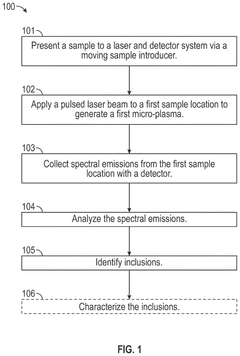
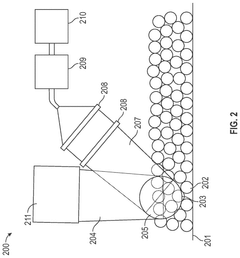
- A method utilizing a laser and detector system to generate micro-plasmas in metallic powder samples, analyze spectral emissions, and identify inclusions, including non-metallic and off-chemistry particles, with optional additional spectroscopy systems for enhanced characterization.
Apparatus and method for characterizing metallic materials
PatentInactiveDE102019126833A1
Innovation
- A detection device using eddy current, electromagnetic-acoustic, and optical sensors to wirelessly characterize metallic materials, providing data for optimal machining parameters without damaging the material, and integrating with processing machines or automated production lines.


Environmental Impact and Sustainability Considerations
The environmental implications of metalloid characterization techniques have become increasingly significant as regulatory frameworks worldwide emphasize sustainable practices. Advanced characterization methods for metalloids such as arsenic, antimony, and tellurium often involve chemical processes that generate hazardous waste streams containing acids, organic solvents, and heavy metal reagents. These waste products require specialized disposal protocols to prevent environmental contamination, particularly in aquatic ecosystems where metalloids can bioaccumulate and disrupt ecological balance.
Recent advancements in green analytical chemistry have led to the development of more environmentally friendly characterization techniques. Microwave-assisted extraction methods, for instance, significantly reduce solvent consumption while maintaining analytical precision. Similarly, supercritical fluid extraction using CO2 offers a non-toxic alternative to traditional organic solvent-based methods, minimizing the environmental footprint of metalloid analysis procedures.
Life cycle assessment (LCA) studies of various characterization techniques reveal substantial differences in environmental impact. Conventional atomic absorption spectroscopy typically consumes more energy and produces more waste than newer technologies like portable X-ray fluorescence analyzers, which enable in-situ measurements without sample preparation. This reduction in sample processing not only decreases waste generation but also minimizes the risk of cross-contamination and environmental exposure during transport.
The sustainability of metalloid characterization extends beyond immediate environmental concerns to resource consumption. Many advanced techniques rely on rare earth elements and precious metals in their detection systems. Developing circular economy approaches for instrument recycling and refurbishment represents an emerging priority for analytical laboratories and equipment manufacturers, with several industry leaders implementing take-back programs for obsolete instrumentation.
Water consumption presents another critical sustainability consideration. Traditional wet chemistry methods for metalloid characterization can require significant volumes of ultrapure water, a resource-intensive product. Dry analytical techniques such as laser-induced breakdown spectroscopy (LIBS) and X-ray photoelectron spectroscopy (XPS) offer water-conserving alternatives, though their application remains limited by higher instrumentation costs and technical complexity.
Carbon footprint reduction strategies for metalloid characterization laboratories include optimizing sample throughput, implementing energy-efficient instrumentation, and utilizing renewable energy sources. Several certification systems now recognize laboratories that adopt sustainable practices, creating market incentives for environmentally responsible metalloid analysis. These certifications increasingly influence procurement decisions in both public and private sectors, driving industry-wide improvements in environmental performance.
Recent advancements in green analytical chemistry have led to the development of more environmentally friendly characterization techniques. Microwave-assisted extraction methods, for instance, significantly reduce solvent consumption while maintaining analytical precision. Similarly, supercritical fluid extraction using CO2 offers a non-toxic alternative to traditional organic solvent-based methods, minimizing the environmental footprint of metalloid analysis procedures.
Life cycle assessment (LCA) studies of various characterization techniques reveal substantial differences in environmental impact. Conventional atomic absorption spectroscopy typically consumes more energy and produces more waste than newer technologies like portable X-ray fluorescence analyzers, which enable in-situ measurements without sample preparation. This reduction in sample processing not only decreases waste generation but also minimizes the risk of cross-contamination and environmental exposure during transport.
The sustainability of metalloid characterization extends beyond immediate environmental concerns to resource consumption. Many advanced techniques rely on rare earth elements and precious metals in their detection systems. Developing circular economy approaches for instrument recycling and refurbishment represents an emerging priority for analytical laboratories and equipment manufacturers, with several industry leaders implementing take-back programs for obsolete instrumentation.
Water consumption presents another critical sustainability consideration. Traditional wet chemistry methods for metalloid characterization can require significant volumes of ultrapure water, a resource-intensive product. Dry analytical techniques such as laser-induced breakdown spectroscopy (LIBS) and X-ray photoelectron spectroscopy (XPS) offer water-conserving alternatives, though their application remains limited by higher instrumentation costs and technical complexity.
Carbon footprint reduction strategies for metalloid characterization laboratories include optimizing sample throughput, implementing energy-efficient instrumentation, and utilizing renewable energy sources. Several certification systems now recognize laboratories that adopt sustainable practices, creating market incentives for environmentally responsible metalloid analysis. These certifications increasingly influence procurement decisions in both public and private sectors, driving industry-wide improvements in environmental performance.
Standardization and Quality Control Protocols
The standardization of characterization techniques for metalloids evaluation represents a critical foundation for ensuring reliable and reproducible results across different laboratories and research institutions. Current standardization efforts focus on establishing universal protocols that address the unique challenges posed by metalloids' dual nature between metals and non-metals. Organizations such as ASTM International, ISO, and NIST have developed specific guidelines for sample preparation, instrument calibration, and data interpretation specifically tailored to metalloid analysis.
Quality control protocols for metalloid characterization typically involve multi-level verification systems. These include the use of certified reference materials (CRMs) specifically designed for metalloid analysis, which serve as benchmarks for validating measurement accuracy. Round-robin testing programs among laboratories have become increasingly common, allowing for inter-laboratory comparison and identification of systematic errors in characterization methodologies.
Statistical quality control methods have evolved significantly for metalloid evaluation, incorporating advanced uncertainty quantification approaches. These methods account for the complex matrix effects often encountered when analyzing metalloids in various environmental and industrial samples. Particularly noteworthy is the development of multivariate statistical tools that can identify and correct for interference effects common in metalloid speciation analysis.
Automation in quality control has emerged as a key trend, with integrated systems that perform real-time monitoring of instrument performance during metalloid characterization. These systems employ artificial intelligence algorithms to detect drift patterns and anomalies that might compromise data quality, enabling immediate corrective actions rather than post-analysis data rejection.
Documentation requirements have become more stringent, with comprehensive metadata collection now considered essential for metalloid characterization. This includes detailed recording of sample history, preparation methods, instrument parameters, and environmental conditions during analysis. Such thorough documentation facilitates troubleshooting when unexpected results occur and enables meaningful comparison between studies conducted at different times or locations.
Proficiency testing programs specifically designed for metalloid analysis techniques have gained prominence, with participation increasingly becoming a requirement for laboratory accreditation. These programs assess not only measurement accuracy but also the laboratory's ability to correctly interpret complex metalloid speciation data and identify potential interferences that might affect results.
The integration of digital tools for quality management has streamlined compliance with standardization requirements. Electronic laboratory notebooks and laboratory information management systems (LIMS) with specialized modules for metalloid analysis help ensure adherence to established protocols while maintaining comprehensive audit trails for regulatory compliance.
Quality control protocols for metalloid characterization typically involve multi-level verification systems. These include the use of certified reference materials (CRMs) specifically designed for metalloid analysis, which serve as benchmarks for validating measurement accuracy. Round-robin testing programs among laboratories have become increasingly common, allowing for inter-laboratory comparison and identification of systematic errors in characterization methodologies.
Statistical quality control methods have evolved significantly for metalloid evaluation, incorporating advanced uncertainty quantification approaches. These methods account for the complex matrix effects often encountered when analyzing metalloids in various environmental and industrial samples. Particularly noteworthy is the development of multivariate statistical tools that can identify and correct for interference effects common in metalloid speciation analysis.
Automation in quality control has emerged as a key trend, with integrated systems that perform real-time monitoring of instrument performance during metalloid characterization. These systems employ artificial intelligence algorithms to detect drift patterns and anomalies that might compromise data quality, enabling immediate corrective actions rather than post-analysis data rejection.
Documentation requirements have become more stringent, with comprehensive metadata collection now considered essential for metalloid characterization. This includes detailed recording of sample history, preparation methods, instrument parameters, and environmental conditions during analysis. Such thorough documentation facilitates troubleshooting when unexpected results occur and enables meaningful comparison between studies conducted at different times or locations.
Proficiency testing programs specifically designed for metalloid analysis techniques have gained prominence, with participation increasingly becoming a requirement for laboratory accreditation. These programs assess not only measurement accuracy but also the laboratory's ability to correctly interpret complex metalloid speciation data and identify potential interferences that might affect results.
The integration of digital tools for quality management has streamlined compliance with standardization requirements. Electronic laboratory notebooks and laboratory information management systems (LIMS) with specialized modules for metalloid analysis help ensure adherence to established protocols while maintaining comprehensive audit trails for regulatory compliance.
Unlock deeper insights with Patsnap Eureka Quick Research — get a full tech report to explore trends and direct your research. Try now!
Generate Your Research Report Instantly with AI Agent
Supercharge your innovation with Patsnap Eureka AI Agent Platform!