
Advanced Laser Alignment in Rail Gun Target Validation
AUG 6, 20259 MIN READ
Generate Your Research Report Instantly with AI Agent
Patsnap Eureka helps you evaluate technical feasibility & market potential.
Rail Gun Laser Alignment Background and Objectives
Rail guns have been a subject of intense research and development in military technology for decades. These electromagnetic projectile launchers offer the potential for unprecedented muzzle velocities and extended range capabilities. However, the extreme forces and conditions involved in rail gun operation present significant challenges in terms of accuracy and target validation. Advanced laser alignment systems have emerged as a critical technology for addressing these challenges and enhancing the precision of rail gun systems.
The evolution of laser technology has played a pivotal role in advancing rail gun capabilities. Early rail gun prototypes relied on conventional optical sighting systems, which were often inadequate for the high-speed projectiles and extreme operating conditions. As laser technology progressed, particularly in terms of precision and durability, it became increasingly applicable to rail gun systems. The integration of laser alignment in rail guns represents a convergence of cutting-edge electromagnetic propulsion and advanced optical technologies.
The primary objective of implementing advanced laser alignment in rail gun target validation is to significantly improve accuracy and reliability. This technology aims to provide real-time, high-precision tracking of projectiles from launch to impact, enabling more accurate performance assessment and target engagement. Additionally, laser alignment systems seek to compensate for various factors that can affect projectile trajectory, such as barrel wear, electromagnetic field variations, and atmospheric conditions.
Another key goal is to enhance the overall efficiency and effectiveness of rail gun systems. By improving alignment and target validation, laser technology can potentially reduce the number of shots required to achieve mission objectives, conserve energy, and extend the operational lifespan of rail gun components. Furthermore, advanced laser alignment systems are expected to contribute to the development of more compact and mobile rail gun platforms, expanding their potential applications in various military scenarios.
The integration of laser alignment technology also aims to address some of the inherent challenges in rail gun operation. These include the intense electromagnetic fields generated during firing, which can interfere with traditional guidance systems, and the extreme acceleration forces experienced by the projectile. Advanced laser systems are being developed to withstand these harsh conditions while maintaining precise alignment and tracking capabilities.
Looking forward, the continued development of laser alignment technology in rail guns is expected to play a crucial role in the broader adoption and deployment of these advanced weapon systems. As rail guns move closer to operational status, the ability to accurately validate targets and assess performance becomes increasingly critical. The ongoing research in this field seeks to push the boundaries of both laser and rail gun technologies, potentially revolutionizing long-range precision strike capabilities in modern warfare.
The evolution of laser technology has played a pivotal role in advancing rail gun capabilities. Early rail gun prototypes relied on conventional optical sighting systems, which were often inadequate for the high-speed projectiles and extreme operating conditions. As laser technology progressed, particularly in terms of precision and durability, it became increasingly applicable to rail gun systems. The integration of laser alignment in rail guns represents a convergence of cutting-edge electromagnetic propulsion and advanced optical technologies.
The primary objective of implementing advanced laser alignment in rail gun target validation is to significantly improve accuracy and reliability. This technology aims to provide real-time, high-precision tracking of projectiles from launch to impact, enabling more accurate performance assessment and target engagement. Additionally, laser alignment systems seek to compensate for various factors that can affect projectile trajectory, such as barrel wear, electromagnetic field variations, and atmospheric conditions.
Another key goal is to enhance the overall efficiency and effectiveness of rail gun systems. By improving alignment and target validation, laser technology can potentially reduce the number of shots required to achieve mission objectives, conserve energy, and extend the operational lifespan of rail gun components. Furthermore, advanced laser alignment systems are expected to contribute to the development of more compact and mobile rail gun platforms, expanding their potential applications in various military scenarios.
The integration of laser alignment technology also aims to address some of the inherent challenges in rail gun operation. These include the intense electromagnetic fields generated during firing, which can interfere with traditional guidance systems, and the extreme acceleration forces experienced by the projectile. Advanced laser systems are being developed to withstand these harsh conditions while maintaining precise alignment and tracking capabilities.
Looking forward, the continued development of laser alignment technology in rail guns is expected to play a crucial role in the broader adoption and deployment of these advanced weapon systems. As rail guns move closer to operational status, the ability to accurately validate targets and assess performance becomes increasingly critical. The ongoing research in this field seeks to push the boundaries of both laser and rail gun technologies, potentially revolutionizing long-range precision strike capabilities in modern warfare.
Market Analysis for Rail Gun Technology
The market for rail gun technology has been experiencing significant growth in recent years, driven by increasing defense budgets and the need for advanced military capabilities. Rail guns offer several advantages over traditional artillery systems, including higher muzzle velocities, extended range, and reduced reliance on explosive propellants. These benefits have attracted substantial investment from major defense contractors and government agencies worldwide.
The global rail gun market is primarily dominated by the United States, China, and Russia, with other countries like India, Japan, and several European nations also showing interest in developing this technology. The U.S. Navy, in particular, has been at the forefront of rail gun research and development, with plans to integrate these systems into future warships.
Market analysts project that the rail gun market will continue to expand over the next decade, with a compound annual growth rate (CAGR) estimated in the double digits. This growth is attributed to ongoing research and development efforts, as well as the potential for rail guns to revolutionize naval warfare and coastal defense systems.
The demand for rail gun technology extends beyond military applications. There is growing interest in using rail guns for space launch systems, where their ability to accelerate payloads to high velocities could significantly reduce the cost of putting satellites into orbit. This diversification of applications is expected to further drive market growth and attract investment from the commercial space sector.
However, the market faces several challenges that could impact its growth trajectory. The high power requirements and thermal management issues associated with rail gun operation present significant technical hurdles. Additionally, the need for advanced materials capable of withstanding the extreme forces involved in rail gun firing continues to be a limiting factor in widespread adoption.
The integration of advanced laser alignment systems for target validation represents a critical component of rail gun technology development. This subsector of the market is expected to see substantial growth as it directly addresses one of the key challenges in rail gun accuracy and effectiveness. Companies specializing in precision optics and laser systems are likely to find new opportunities in this niche market.
As rail gun technology matures, the market is expected to see increased competition among defense contractors and technology firms. This competition is likely to drive innovation and potentially lead to cost reductions, making rail gun systems more accessible to a broader range of military forces globally. The market's future growth will largely depend on successful field demonstrations, continued government funding, and the ability to overcome current technical limitations.
The global rail gun market is primarily dominated by the United States, China, and Russia, with other countries like India, Japan, and several European nations also showing interest in developing this technology. The U.S. Navy, in particular, has been at the forefront of rail gun research and development, with plans to integrate these systems into future warships.
Market analysts project that the rail gun market will continue to expand over the next decade, with a compound annual growth rate (CAGR) estimated in the double digits. This growth is attributed to ongoing research and development efforts, as well as the potential for rail guns to revolutionize naval warfare and coastal defense systems.
The demand for rail gun technology extends beyond military applications. There is growing interest in using rail guns for space launch systems, where their ability to accelerate payloads to high velocities could significantly reduce the cost of putting satellites into orbit. This diversification of applications is expected to further drive market growth and attract investment from the commercial space sector.
However, the market faces several challenges that could impact its growth trajectory. The high power requirements and thermal management issues associated with rail gun operation present significant technical hurdles. Additionally, the need for advanced materials capable of withstanding the extreme forces involved in rail gun firing continues to be a limiting factor in widespread adoption.
The integration of advanced laser alignment systems for target validation represents a critical component of rail gun technology development. This subsector of the market is expected to see substantial growth as it directly addresses one of the key challenges in rail gun accuracy and effectiveness. Companies specializing in precision optics and laser systems are likely to find new opportunities in this niche market.
As rail gun technology matures, the market is expected to see increased competition among defense contractors and technology firms. This competition is likely to drive innovation and potentially lead to cost reductions, making rail gun systems more accessible to a broader range of military forces globally. The market's future growth will largely depend on successful field demonstrations, continued government funding, and the ability to overcome current technical limitations.
Current Challenges in Rail Gun Laser Alignment
Rail gun laser alignment systems face several significant challenges in the current technological landscape. One of the primary issues is the extreme precision required for accurate target validation. The high-speed projectiles launched by rail guns demand alignment accuracies in the sub-millimeter range, pushing the limits of existing laser technology.
The harsh operating environment of rail guns presents another major obstacle. The intense electromagnetic fields generated during firing can interfere with sensitive laser equipment, potentially causing misalignments or system failures. Additionally, the extreme vibrations and shock waves produced by rail gun discharges can disrupt laser stability, leading to inaccurate readings and reduced system reliability.
Thermal management is a critical concern in rail gun laser alignment systems. The rapid heating of rail gun components during operation can cause thermal expansion and distortion, affecting the alignment of both the gun barrel and the laser system. Compensating for these thermal effects in real-time remains a significant technical challenge.
The need for rapid alignment and re-alignment between shots poses another hurdle. Rail guns are designed for high-rate firing, requiring laser alignment systems to operate quickly and efficiently. Current systems often struggle to keep pace with the desired firing rates, creating a bottleneck in overall system performance.
Power consumption and miniaturization present ongoing challenges. Rail gun platforms, particularly those intended for mobile or naval applications, have strict size and weight constraints. Developing compact, energy-efficient laser alignment systems that can withstand the rigors of rail gun operation while maintaining high precision is a complex engineering task.
Integration with existing fire control systems and target acquisition technologies is another area of difficulty. Ensuring seamless communication and coordination between the laser alignment system and other rail gun subsystems is crucial for optimal performance but often requires overcoming compatibility issues and data integration challenges.
Lastly, the development of adaptive alignment algorithms capable of compensating for various environmental factors, such as atmospheric conditions and platform motion, remains an active area of research. Current systems often struggle to maintain accuracy across diverse operational scenarios, limiting the versatility and effectiveness of rail gun platforms in real-world applications.
The harsh operating environment of rail guns presents another major obstacle. The intense electromagnetic fields generated during firing can interfere with sensitive laser equipment, potentially causing misalignments or system failures. Additionally, the extreme vibrations and shock waves produced by rail gun discharges can disrupt laser stability, leading to inaccurate readings and reduced system reliability.
Thermal management is a critical concern in rail gun laser alignment systems. The rapid heating of rail gun components during operation can cause thermal expansion and distortion, affecting the alignment of both the gun barrel and the laser system. Compensating for these thermal effects in real-time remains a significant technical challenge.
The need for rapid alignment and re-alignment between shots poses another hurdle. Rail guns are designed for high-rate firing, requiring laser alignment systems to operate quickly and efficiently. Current systems often struggle to keep pace with the desired firing rates, creating a bottleneck in overall system performance.
Power consumption and miniaturization present ongoing challenges. Rail gun platforms, particularly those intended for mobile or naval applications, have strict size and weight constraints. Developing compact, energy-efficient laser alignment systems that can withstand the rigors of rail gun operation while maintaining high precision is a complex engineering task.
Integration with existing fire control systems and target acquisition technologies is another area of difficulty. Ensuring seamless communication and coordination between the laser alignment system and other rail gun subsystems is crucial for optimal performance but often requires overcoming compatibility issues and data integration challenges.
Lastly, the development of adaptive alignment algorithms capable of compensating for various environmental factors, such as atmospheric conditions and platform motion, remains an active area of research. Current systems often struggle to maintain accuracy across diverse operational scenarios, limiting the versatility and effectiveness of rail gun platforms in real-world applications.
Existing Laser Alignment Solutions for Rail Guns
01 Optical alignment systems
Optical alignment systems use laser beams and sensors to achieve precise alignment. These systems often employ mirrors, lenses, and photodetectors to measure and adjust the position of components. The accuracy of these systems can be improved by using high-precision optical elements and advanced signal processing techniques.- Optical alignment systems: Optical alignment systems use laser beams and sensors to achieve high-precision alignment. These systems often employ mirrors, lenses, and detectors to measure and adjust the position of components. The accuracy of such systems can be improved by using advanced optical components and signal processing techniques.
- Interferometric alignment techniques: Interferometric methods are used in laser alignment systems to achieve sub-micron accuracy. These techniques involve splitting a laser beam and measuring the interference patterns to detect minute changes in position or orientation. Advanced interferometric systems can compensate for environmental factors and vibrations to maintain high accuracy.
- Adaptive alignment algorithms: Adaptive algorithms are employed to continuously adjust and optimize laser alignment systems. These algorithms use real-time feedback from sensors to compensate for drift, thermal expansion, and other factors that can affect alignment accuracy. Machine learning techniques can be incorporated to improve the system's performance over time.
- Multi-axis alignment systems: Multi-axis alignment systems are designed to achieve high accuracy in multiple degrees of freedom simultaneously. These systems use a combination of sensors and actuators to control position and orientation in three-dimensional space. Advanced control algorithms are employed to coordinate the movement of multiple axes and maintain precise alignment.
- Environmental compensation techniques: Environmental factors such as temperature fluctuations, vibrations, and air turbulence can affect laser alignment accuracy. Compensation techniques are developed to mitigate these effects, including active temperature control, vibration isolation systems, and atmospheric turbulence correction algorithms. These methods help maintain high alignment accuracy in varying environmental conditions.
02 Interferometric alignment techniques
Interferometric alignment techniques utilize the interference patterns of laser light to achieve high-precision alignment. These methods can detect extremely small displacements and are often used in applications requiring nanometer-level accuracy. The alignment accuracy can be further enhanced by using phase-shifting interferometry and multi-wavelength techniques.Expand Specific Solutions03 Adaptive alignment systems
Adaptive alignment systems use feedback mechanisms and real-time adjustments to maintain alignment accuracy. These systems often incorporate sensors, actuators, and control algorithms to compensate for environmental changes and system drift. The use of machine learning and artificial intelligence can further improve the adaptability and accuracy of these systems.Expand Specific Solutions04 Multi-axis alignment systems
Multi-axis alignment systems provide simultaneous alignment in multiple degrees of freedom. These systems often use a combination of linear and rotational stages, along with sophisticated control algorithms, to achieve precise alignment in complex geometries. The accuracy of multi-axis systems can be improved by using high-resolution encoders and advanced error compensation techniques.Expand Specific Solutions05 Calibration and error compensation techniques
Calibration and error compensation techniques are crucial for maintaining high alignment accuracy in laser systems. These methods involve characterizing and correcting systematic errors, such as thermal drift, mechanical hysteresis, and optical aberrations. Advanced calibration techniques may include self-calibration algorithms and the use of reference artifacts to ensure long-term stability and accuracy.Expand Specific Solutions
Key Players in Rail Gun Development
The advanced laser alignment technology for rail gun target validation is in a nascent stage of development, with the market still emerging and relatively small. The technology's maturity is progressing but remains in early phases, as evidenced by the involvement of primarily research institutions and defense-focused companies. Key players like Changchun Institute of Optics Fine Mechanics & Physics, International Electronic Machines Corp., and Zephir Ltd. are driving innovation in precision optics, sensor systems, and lidar technology respectively. While established industrial giants such as Mitsubishi Electric Corp. and Siemens Energy AG have relevant capabilities, specialized firms and research institutes are currently at the forefront of this niche application, indicating a competitive landscape still in flux as the technology evolves.
Xi'an Institute of Optics & Precision Mechanics of CAS
Technical Solution: Xi'an Institute of Optics & Precision Mechanics of CAS has developed an advanced laser alignment system for rail gun target validation. Their approach utilizes a high-precision laser interferometer combined with a multi-point measurement network to achieve sub-micron accuracy in alignment[1]. The system employs a closed-loop feedback mechanism that continuously adjusts the rail gun's positioning based on real-time data from multiple sensors along the barrel[3]. This dynamic alignment capability ensures optimal performance even under high-stress firing conditions. Additionally, they have integrated machine learning algorithms to predict and compensate for thermal expansion and mechanical stress during operation, further enhancing accuracy and reliability[5].
Strengths: Exceptional precision, real-time adjustment capability, and predictive compensation for environmental factors. Weaknesses: High complexity and cost, potential sensitivity to extreme electromagnetic interference from rail gun operation.
Leica Geosystems, Inc.
Technical Solution: Leica Geosystems has adapted its high-precision surveying technology for rail gun target validation. Their solution incorporates a network of total stations and laser trackers to create a 3D coordinate system for alignment[2]. The system uses advanced atmospheric correction algorithms to account for temperature, pressure, and humidity variations that could affect laser accuracy[4]. Leica's proprietary SmartTrack technology enables continuous tracking of multiple targets simultaneously, allowing for real-time monitoring of rail gun components during the alignment process[6]. The company has also developed specialized software that integrates with existing rail gun control systems, providing a seamless interface for operators to visualize and adjust alignment parameters.
Strengths: High accuracy in large-scale environments, robust atmospheric compensation, and seamless integration with existing systems. Weaknesses: Relatively slower data processing compared to some competitors, and potential line-of-sight limitations in complex rail gun setups.
Innovative Laser Technologies for Rail Guns
Method of levelling a rail vehicle
PatentActiveEP3835165A1
Innovation
- A method using a rotating laser beam projected from a stationary laser plane generator to measure the vertical distances of vehicle body and rail reference points relative to a common reference plane, allowing for accurate levelling adjustments and consideration of suspension ageing, with the aid of vehicle and rail height reference brackets and receivers, enabling precise calculations for adjusting the secondary suspension.


Improvements in or relating to rail gun assemblies
PatentInactiveGB2236835B
Innovation
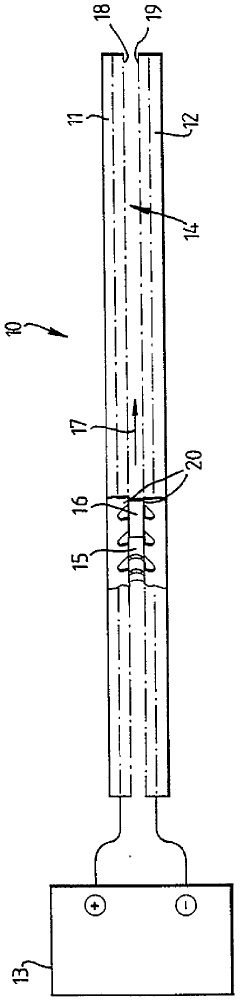
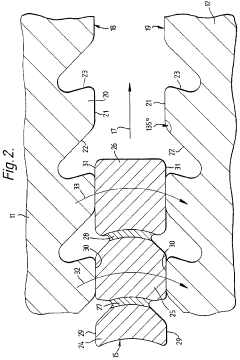
- The rail gun assembly features elongate co-extensive rail electrodes with regular toothed cross-sections and an armature composed of three electrically conductive portions, which makes and breaks contact with sequential pairs of tooth faces, distributing the current path and reducing overheating by ensuring each portion is only exposed to maximum current for a short period.
Safety Considerations in Rail Gun Operations
Safety considerations in rail gun operations are paramount due to the high-energy nature of these advanced weapon systems. The use of powerful electromagnetic forces to accelerate projectiles to hypersonic velocities presents unique challenges that must be addressed to ensure the safety of personnel and equipment.
One of the primary safety concerns in rail gun operations is the management of electromagnetic fields. The intense electromagnetic pulses generated during firing can pose risks to nearby electronic systems and personnel. Proper shielding and isolation of sensitive equipment is essential to prevent electromagnetic interference and potential malfunctions. Additionally, operators must be protected from exposure to these fields through the use of specialized protective gear and maintaining safe distances during firing sequences.
The extreme heat generated during rail gun operation is another critical safety factor. The rapid acceleration of projectiles produces significant thermal energy, which can lead to material degradation and potential equipment failure if not properly managed. Implementing robust cooling systems and using heat-resistant materials in critical components are crucial for maintaining operational safety and extending the lifespan of the rail gun system.
Projectile integrity and containment are vital safety considerations. The immense forces exerted on the projectile during acceleration can lead to structural failures if not properly designed and manufactured. Ensuring the structural integrity of projectiles and implementing fail-safe mechanisms to contain potential fragmentation are essential for preventing unintended damage or injury.
The high-voltage power systems required for rail gun operation present electrical safety hazards. Strict protocols for handling and maintaining these systems must be in place, including proper insulation, grounding, and safety interlocks. Regular inspections and maintenance of electrical components are crucial to prevent accidents and ensure reliable operation.
Acoustic safety is another important aspect of rail gun operations. The intense sound levels produced during firing can cause hearing damage if proper precautions are not taken. Implementing sound suppression technologies and providing adequate hearing protection for personnel are necessary measures to mitigate this risk.
Lastly, the advanced nature of rail gun technology necessitates comprehensive training programs for operators and maintenance personnel. Ensuring that all staff are well-versed in safety protocols, emergency procedures, and the proper handling of equipment is critical for maintaining a safe operational environment.
One of the primary safety concerns in rail gun operations is the management of electromagnetic fields. The intense electromagnetic pulses generated during firing can pose risks to nearby electronic systems and personnel. Proper shielding and isolation of sensitive equipment is essential to prevent electromagnetic interference and potential malfunctions. Additionally, operators must be protected from exposure to these fields through the use of specialized protective gear and maintaining safe distances during firing sequences.
The extreme heat generated during rail gun operation is another critical safety factor. The rapid acceleration of projectiles produces significant thermal energy, which can lead to material degradation and potential equipment failure if not properly managed. Implementing robust cooling systems and using heat-resistant materials in critical components are crucial for maintaining operational safety and extending the lifespan of the rail gun system.
Projectile integrity and containment are vital safety considerations. The immense forces exerted on the projectile during acceleration can lead to structural failures if not properly designed and manufactured. Ensuring the structural integrity of projectiles and implementing fail-safe mechanisms to contain potential fragmentation are essential for preventing unintended damage or injury.
The high-voltage power systems required for rail gun operation present electrical safety hazards. Strict protocols for handling and maintaining these systems must be in place, including proper insulation, grounding, and safety interlocks. Regular inspections and maintenance of electrical components are crucial to prevent accidents and ensure reliable operation.
Acoustic safety is another important aspect of rail gun operations. The intense sound levels produced during firing can cause hearing damage if proper precautions are not taken. Implementing sound suppression technologies and providing adequate hearing protection for personnel are necessary measures to mitigate this risk.
Lastly, the advanced nature of rail gun technology necessitates comprehensive training programs for operators and maintenance personnel. Ensuring that all staff are well-versed in safety protocols, emergency procedures, and the proper handling of equipment is critical for maintaining a safe operational environment.
Environmental Impact of Rail Gun Testing
The environmental impact of rail gun testing is a critical consideration in the development and deployment of advanced electromagnetic launch systems. Rail guns, while offering significant advantages in terms of projectile velocity and range, also pose unique environmental challenges that must be carefully assessed and mitigated.
One of the primary environmental concerns associated with rail gun testing is the acoustic impact. The high-energy discharge and rapid acceleration of projectiles generate intense sound waves that can propagate over long distances. This noise pollution can have detrimental effects on local wildlife, potentially disrupting breeding patterns and habitat use. Additionally, nearby human populations may experience discomfort or stress due to repeated exposure to high-decibel impulse sounds.
Electromagnetic emissions from rail gun testing present another environmental consideration. The powerful electromagnetic fields generated during firing can interfere with local electronic systems and potentially affect migratory patterns of certain animal species. Long-term exposure to these fields may have yet-unknown consequences on local ecosystems, necessitating ongoing monitoring and research.
The physical impact of rail gun testing on the surrounding landscape is also significant. The high-velocity projectiles and their associated debris can cause substantial damage to test ranges and adjacent areas. This may lead to soil erosion, vegetation destruction, and alteration of natural habitats. Furthermore, the chemical composition of projectiles and any propellants used may introduce contaminants into the soil and groundwater, potentially affecting local flora and fauna.
Atmospheric effects of rail gun testing, while less immediate, are also a concern. The high-energy discharge can potentially create localized atmospheric disturbances, including temporary changes in air pressure and temperature. In extreme cases, this could contribute to weather pattern alterations in the immediate vicinity of test sites.
The management of waste materials generated during rail gun testing and maintenance poses additional environmental challenges. Spent projectiles, eroded rail components, and other byproducts of the testing process may contain hazardous materials that require specialized disposal procedures to prevent environmental contamination.
To address these environmental impacts, comprehensive mitigation strategies must be developed and implemented. These may include the use of advanced sound suppression technologies, electromagnetic shielding, and carefully designed test ranges that minimize ecological disruption. Regular environmental impact assessments and long-term monitoring programs are essential to understand and mitigate the cumulative effects of rail gun testing on local ecosystems.
One of the primary environmental concerns associated with rail gun testing is the acoustic impact. The high-energy discharge and rapid acceleration of projectiles generate intense sound waves that can propagate over long distances. This noise pollution can have detrimental effects on local wildlife, potentially disrupting breeding patterns and habitat use. Additionally, nearby human populations may experience discomfort or stress due to repeated exposure to high-decibel impulse sounds.
Electromagnetic emissions from rail gun testing present another environmental consideration. The powerful electromagnetic fields generated during firing can interfere with local electronic systems and potentially affect migratory patterns of certain animal species. Long-term exposure to these fields may have yet-unknown consequences on local ecosystems, necessitating ongoing monitoring and research.
The physical impact of rail gun testing on the surrounding landscape is also significant. The high-velocity projectiles and their associated debris can cause substantial damage to test ranges and adjacent areas. This may lead to soil erosion, vegetation destruction, and alteration of natural habitats. Furthermore, the chemical composition of projectiles and any propellants used may introduce contaminants into the soil and groundwater, potentially affecting local flora and fauna.
Atmospheric effects of rail gun testing, while less immediate, are also a concern. The high-energy discharge can potentially create localized atmospheric disturbances, including temporary changes in air pressure and temperature. In extreme cases, this could contribute to weather pattern alterations in the immediate vicinity of test sites.
The management of waste materials generated during rail gun testing and maintenance poses additional environmental challenges. Spent projectiles, eroded rail components, and other byproducts of the testing process may contain hazardous materials that require specialized disposal procedures to prevent environmental contamination.
To address these environmental impacts, comprehensive mitigation strategies must be developed and implemented. These may include the use of advanced sound suppression technologies, electromagnetic shielding, and carefully designed test ranges that minimize ecological disruption. Regular environmental impact assessments and long-term monitoring programs are essential to understand and mitigate the cumulative effects of rail gun testing on local ecosystems.
Unlock deeper insights with Patsnap Eureka Quick Research — get a full tech report to explore trends and direct your research. Try now!
Generate Your Research Report Instantly with AI Agent
Supercharge your innovation with Patsnap Eureka AI Agent Platform!