

Performance Standards for Next-Gen Rail Guns
AUG 6, 20259 MIN READ
Generate Your Research Report Instantly with AI Agent
PatSnap Eureka helps you evaluate technical feasibility & market potential.
Rail Gun Evolution and Objectives
Rail guns have evolved significantly since their inception in the early 20th century. Initially conceived as a theoretical concept, these electromagnetic projectile launchers have progressed from laboratory experiments to practical military applications. The evolution of rail guns has been driven by advancements in materials science, power systems, and electromagnetic field manipulation.
Early rail gun prototypes faced numerous challenges, including rail erosion, power supply limitations, and projectile design issues. However, persistent research and development efforts have led to substantial improvements in these areas. Modern rail guns can now achieve muzzle velocities exceeding Mach 7, far surpassing conventional chemical propellant-based weapons.
The primary objective of next-generation rail gun development is to enhance overall system performance while addressing key operational constraints. This includes increasing muzzle velocity, improving projectile accuracy, extending barrel life, and reducing the size and weight of the power supply systems. These advancements aim to make rail guns more practical for field deployment on naval vessels and potentially land-based platforms.
Another critical goal is to improve the rail gun's rate of fire. Current systems are limited by the time required to charge capacitors between shots. Developing more efficient power storage and rapid charging technologies is essential to achieve a sustained rate of fire comparable to conventional naval guns.
Enhancing projectile design is also a key objective. Next-generation rail guns aim to develop projectiles that can withstand the extreme acceleration forces while maintaining aerodynamic stability during flight. This involves research into advanced materials and innovative projectile geometries to optimize range, accuracy, and terminal effects.
Reliability and durability remain significant challenges in rail gun development. Future systems must demonstrate the ability to fire hundreds or thousands of rounds without significant degradation of the rails or other critical components. This requires advancements in materials science, particularly in developing more resilient rail materials and innovative cooling systems.
The integration of rail guns into existing combat systems is another important objective. This includes developing fire control systems capable of accurately targeting hypersonic projectiles and creating logistics systems to support rail gun operations in the field. Additionally, there is a focus on reducing the overall size and power requirements of rail gun systems to make them more suitable for a wider range of naval platforms.
As rail gun technology continues to mature, the ultimate goal is to create a weapon system that offers significant advantages over conventional naval guns and missile systems in terms of range, speed, and cost-effectiveness. Achieving these objectives will position rail guns as a transformative technology in modern naval warfare, potentially reshaping maritime strategy and tactics in the coming decades.
Early rail gun prototypes faced numerous challenges, including rail erosion, power supply limitations, and projectile design issues. However, persistent research and development efforts have led to substantial improvements in these areas. Modern rail guns can now achieve muzzle velocities exceeding Mach 7, far surpassing conventional chemical propellant-based weapons.
The primary objective of next-generation rail gun development is to enhance overall system performance while addressing key operational constraints. This includes increasing muzzle velocity, improving projectile accuracy, extending barrel life, and reducing the size and weight of the power supply systems. These advancements aim to make rail guns more practical for field deployment on naval vessels and potentially land-based platforms.
Another critical goal is to improve the rail gun's rate of fire. Current systems are limited by the time required to charge capacitors between shots. Developing more efficient power storage and rapid charging technologies is essential to achieve a sustained rate of fire comparable to conventional naval guns.
Enhancing projectile design is also a key objective. Next-generation rail guns aim to develop projectiles that can withstand the extreme acceleration forces while maintaining aerodynamic stability during flight. This involves research into advanced materials and innovative projectile geometries to optimize range, accuracy, and terminal effects.
Reliability and durability remain significant challenges in rail gun development. Future systems must demonstrate the ability to fire hundreds or thousands of rounds without significant degradation of the rails or other critical components. This requires advancements in materials science, particularly in developing more resilient rail materials and innovative cooling systems.
The integration of rail guns into existing combat systems is another important objective. This includes developing fire control systems capable of accurately targeting hypersonic projectiles and creating logistics systems to support rail gun operations in the field. Additionally, there is a focus on reducing the overall size and power requirements of rail gun systems to make them more suitable for a wider range of naval platforms.
As rail gun technology continues to mature, the ultimate goal is to create a weapon system that offers significant advantages over conventional naval guns and missile systems in terms of range, speed, and cost-effectiveness. Achieving these objectives will position rail guns as a transformative technology in modern naval warfare, potentially reshaping maritime strategy and tactics in the coming decades.
Military Demand Analysis
The military demand for next-generation rail guns is driven by the evolving nature of modern warfare and the need for advanced long-range precision strike capabilities. As conventional artillery systems reach their technological limits, rail guns offer a promising solution to extend engagement ranges, increase projectile velocities, and reduce logistical burdens associated with traditional propellant-based systems.
The United States Department of Defense has shown significant interest in rail gun technology, with the Navy leading research and development efforts. The strategic importance of rail guns lies in their potential to provide rapid, long-range fire support for both land and naval operations. These weapons could revolutionize naval warfare by offering a cost-effective alternative to expensive missile systems for engaging both sea and land targets at extended ranges.
Market analysis indicates a growing demand for rail gun systems among major military powers. Countries like China and Russia are also investing in rail gun technology, recognizing its potential to shift the balance of power in regional conflicts. The global market for advanced artillery systems, including rail guns, is expected to expand as nations seek to modernize their military capabilities.
The performance standards for next-generation rail guns are primarily focused on achieving higher muzzle velocities, extended range, improved accuracy, and increased rate of fire. Military planners are looking for systems capable of launching projectiles at speeds exceeding Mach 7, with ranges of 100 nautical miles or more. Such capabilities would provide a significant tactical advantage in both offensive and defensive scenarios.
Durability and reliability are also critical factors driving military demand. The intense electromagnetic forces and heat generated during rail gun operation pose significant engineering challenges. Military requirements emphasize the need for systems that can withstand repeated firings without degradation of performance or structural integrity.
Energy efficiency and power management are additional considerations shaping military demand. The high energy requirements of rail guns necessitate advanced power storage and delivery systems. Research is ongoing to develop compact, high-capacity power sources that can support sustained firing operations in both shipboard and land-based configurations.
The integration of rail guns with existing combat systems and fire control networks is another key aspect of military demand. Armed forces require seamless interoperability between rail guns and other weapons platforms, as well as advanced targeting and tracking systems to fully leverage the extended range and high velocity of rail gun projectiles.
The United States Department of Defense has shown significant interest in rail gun technology, with the Navy leading research and development efforts. The strategic importance of rail guns lies in their potential to provide rapid, long-range fire support for both land and naval operations. These weapons could revolutionize naval warfare by offering a cost-effective alternative to expensive missile systems for engaging both sea and land targets at extended ranges.
Market analysis indicates a growing demand for rail gun systems among major military powers. Countries like China and Russia are also investing in rail gun technology, recognizing its potential to shift the balance of power in regional conflicts. The global market for advanced artillery systems, including rail guns, is expected to expand as nations seek to modernize their military capabilities.
The performance standards for next-generation rail guns are primarily focused on achieving higher muzzle velocities, extended range, improved accuracy, and increased rate of fire. Military planners are looking for systems capable of launching projectiles at speeds exceeding Mach 7, with ranges of 100 nautical miles or more. Such capabilities would provide a significant tactical advantage in both offensive and defensive scenarios.
Durability and reliability are also critical factors driving military demand. The intense electromagnetic forces and heat generated during rail gun operation pose significant engineering challenges. Military requirements emphasize the need for systems that can withstand repeated firings without degradation of performance or structural integrity.
Energy efficiency and power management are additional considerations shaping military demand. The high energy requirements of rail guns necessitate advanced power storage and delivery systems. Research is ongoing to develop compact, high-capacity power sources that can support sustained firing operations in both shipboard and land-based configurations.
The integration of rail guns with existing combat systems and fire control networks is another key aspect of military demand. Armed forces require seamless interoperability between rail guns and other weapons platforms, as well as advanced targeting and tracking systems to fully leverage the extended range and high velocity of rail gun projectiles.
Technical Hurdles in Rail Gun Development
Rail gun technology faces several significant technical hurdles that must be overcome to achieve the desired performance standards for next-generation systems. One of the primary challenges is the rapid wear and erosion of the rails due to the extreme conditions during firing. The high currents and temperatures generated during launch cause substantial damage to the rail surfaces, limiting the operational lifespan of the weapon system.
Another major obstacle is the development of power supplies capable of delivering the massive electrical currents required for rail gun operation. Current power systems struggle to provide the necessary energy density and rapid discharge rates needed for effective rail gun performance. This limitation directly impacts the weapon's rate of fire and overall effectiveness in combat scenarios.
The projectile design presents another set of challenges. Engineers must create projectiles that can withstand the enormous accelerations and electromagnetic forces experienced during launch while maintaining aerodynamic stability and accuracy over long distances. The materials used in projectile construction must balance durability, conductivity, and weight to optimize performance.
Thermal management is a critical issue that affects both the rail gun system and the projectile. The intense heat generated during firing can cause structural damage to components and affect the weapon's accuracy. Developing effective cooling systems and heat-resistant materials is essential for maintaining consistent performance and extending the operational life of rail gun systems.
Electromagnetic interference (EMI) poses a significant challenge to the integration of rail guns with other shipboard systems. The powerful electromagnetic fields generated during firing can disrupt sensitive electronic equipment, potentially compromising the vessel's overall combat capabilities. Shielding and EMI mitigation strategies must be developed to ensure seamless operation alongside other critical systems.
Achieving consistent and reliable performance across multiple shots remains a persistent challenge. Variations in rail wear, power delivery, and environmental conditions can lead to inconsistencies in projectile velocity and accuracy. Developing robust control systems and adaptive algorithms to compensate for these variables is crucial for meeting the stringent performance standards required for next-generation rail guns.
Lastly, the scalability of rail gun technology presents ongoing challenges. While smaller-scale prototypes have demonstrated promising results, scaling up to full-sized, combat-ready systems introduces new engineering complexities. Issues such as structural integrity, heat dissipation, and power management become increasingly difficult to address as the size and power of the rail gun system increase.
Another major obstacle is the development of power supplies capable of delivering the massive electrical currents required for rail gun operation. Current power systems struggle to provide the necessary energy density and rapid discharge rates needed for effective rail gun performance. This limitation directly impacts the weapon's rate of fire and overall effectiveness in combat scenarios.
The projectile design presents another set of challenges. Engineers must create projectiles that can withstand the enormous accelerations and electromagnetic forces experienced during launch while maintaining aerodynamic stability and accuracy over long distances. The materials used in projectile construction must balance durability, conductivity, and weight to optimize performance.
Thermal management is a critical issue that affects both the rail gun system and the projectile. The intense heat generated during firing can cause structural damage to components and affect the weapon's accuracy. Developing effective cooling systems and heat-resistant materials is essential for maintaining consistent performance and extending the operational life of rail gun systems.
Electromagnetic interference (EMI) poses a significant challenge to the integration of rail guns with other shipboard systems. The powerful electromagnetic fields generated during firing can disrupt sensitive electronic equipment, potentially compromising the vessel's overall combat capabilities. Shielding and EMI mitigation strategies must be developed to ensure seamless operation alongside other critical systems.
Achieving consistent and reliable performance across multiple shots remains a persistent challenge. Variations in rail wear, power delivery, and environmental conditions can lead to inconsistencies in projectile velocity and accuracy. Developing robust control systems and adaptive algorithms to compensate for these variables is crucial for meeting the stringent performance standards required for next-generation rail guns.
Lastly, the scalability of rail gun technology presents ongoing challenges. While smaller-scale prototypes have demonstrated promising results, scaling up to full-sized, combat-ready systems introduces new engineering complexities. Issues such as structural integrity, heat dissipation, and power management become increasingly difficult to address as the size and power of the rail gun system increase.
Current Rail Gun Design Solutions
01 Electromagnetic rail gun design and performance
Electromagnetic rail guns use powerful electromagnetic forces to accelerate projectiles to extremely high velocities. These systems typically consist of parallel conducting rails, a power source, and a projectile. The performance of rail guns is often measured by factors such as muzzle velocity, projectile mass, and energy efficiency. Advancements in rail gun technology focus on improving these performance metrics through innovative designs and materials.- Electromagnetic rail gun design and performance: Electromagnetic rail guns use powerful electromagnetic forces to launch projectiles at high velocities. These systems typically consist of parallel conducting rails, a power source, and a projectile. The design focuses on optimizing the electromagnetic field, reducing friction, and managing heat generation to improve overall performance and projectile velocity.
- Projectile design for rail guns: Specialized projectiles are crucial for rail gun performance. These projectiles are designed to withstand the extreme forces and temperatures experienced during launch. Key considerations include aerodynamics, material composition, and structural integrity to maximize range, accuracy, and impact energy while minimizing wear on the rail gun system.
- Power supply and energy storage systems: Efficient power supply and energy storage are critical for rail gun performance. Advanced capacitor banks, pulsed power systems, and energy management techniques are employed to deliver the massive amounts of electrical energy required for launching projectiles. These systems aim to improve energy density, discharge rates, and overall system efficiency.
- Rail gun barrel and launcher design: The design of rail gun barrels and launchers significantly impacts performance. Innovations focus on materials science, thermal management, and structural engineering to withstand the extreme conditions during firing. Advanced cooling systems, composite materials, and novel geometries are explored to enhance durability, reduce wear, and improve projectile guidance.
- Control systems and fire control for rail guns: Sophisticated control systems and fire control mechanisms are essential for optimizing rail gun performance. These systems incorporate advanced sensors, real-time data processing, and predictive algorithms to enhance accuracy, targeting, and overall system efficiency. They also manage power delivery, projectile loading, and thermal regulation to maximize firing rate and reliability.
02 Projectile design for rail guns
The design of projectiles plays a crucial role in rail gun performance. Specialized projectiles are engineered to withstand the extreme forces and temperatures experienced during launch. Factors such as aerodynamics, material composition, and structural integrity are considered to optimize projectile performance and accuracy. Advanced projectile designs may incorporate features to reduce friction, improve stability, and enhance penetration capabilities.Expand Specific Solutions03 Power supply and energy storage systems
Efficient power supply and energy storage systems are critical for rail gun performance. These systems must be capable of delivering extremely high currents in short time intervals. Advancements in capacitor technology, pulse-forming networks, and energy storage devices contribute to improved rail gun performance by providing more powerful and controlled energy delivery to the electromagnetic rails.Expand Specific Solutions04 Rail and conductor materials
The choice of materials for rails and conductors significantly impacts rail gun performance. High-strength, low-resistance materials are preferred to withstand the extreme forces and temperatures while minimizing energy losses. Research focuses on developing novel alloys and composite materials that can enhance durability, conductivity, and overall system efficiency.Expand Specific Solutions05 Cooling and thermal management
Effective cooling and thermal management are essential for maintaining rail gun performance and longevity. The intense heat generated during operation can lead to rail erosion and decreased efficiency. Advanced cooling systems, including liquid cooling and heat-resistant materials, are developed to mitigate thermal issues and improve the overall performance and lifespan of rail gun systems.Expand Specific Solutions
Key Players in Rail Gun Research
The development of next-generation rail guns is in an early stage, with significant potential for growth as military technologies advance. The market size is relatively small but expanding, driven by increasing defense budgets and the need for long-range precision strike capabilities. The technology is still maturing, with several key players contributing to its development. Universities like Harbin Institute of Technology and North University of China are conducting foundational research, while companies such as British Steel Plc and Shaanxi Sirui Advanced Materials Co., Ltd. are likely focusing on materials development. Research institutions like the Naval Research Laboratory and the 206th Research Institute are probably leading in system integration and testing. The competitive landscape is characterized by a mix of academic, industrial, and governmental entities, each contributing specialized expertise to advance rail gun technology.
North University of China
Technical Solution: North University of China has focused on developing a rail gun system optimized for rapid fire and compact integration. Their design features a novel electromagnetic augmentation technique that enhances projectile acceleration while reducing overall system size. The university's rail gun employs advanced composite materials in rail construction, balancing conductivity and durability. They have achieved firing rates of up to 10 rounds per minute with projectile velocities consistently exceeding 2 km/s [6]. The system also incorporates an innovative energy recovery mechanism to improve overall efficiency.
Strengths: High firing rate, compact design, and energy efficiency. Weaknesses: Potential limitations in maximum achievable velocity, may require frequent maintenance due to high firing rate.
206th Research Institute
Technical Solution: The 206th Research Institute has developed a rail gun system focused on long-range precision engagement. Their design incorporates advanced projectile guidance and rail profiling techniques to enhance accuracy at extended ranges. The institute's rail gun utilizes a hybrid power supply system, combining capacitors and rotating machines to achieve high energy delivery with improved sustainability. They have demonstrated consistent groupings of less than 0.5 meters at ranges of 100 km, with projectile velocities exceeding 2.4 km/s [7]. The system also features an integrated fire control system that accounts for environmental factors and Earth's rotation for extreme long-range engagements.
Strengths: Exceptional long-range accuracy, advanced projectile guidance, and sustainable power supply. Weaknesses: Potentially higher complexity and cost, may require specialized training for operation and maintenance.
Breakthrough Rail Gun Technologies
Inductive pulse forming network for high-current, high-power applications
PatentInactiveUS7675198B1
Innovation
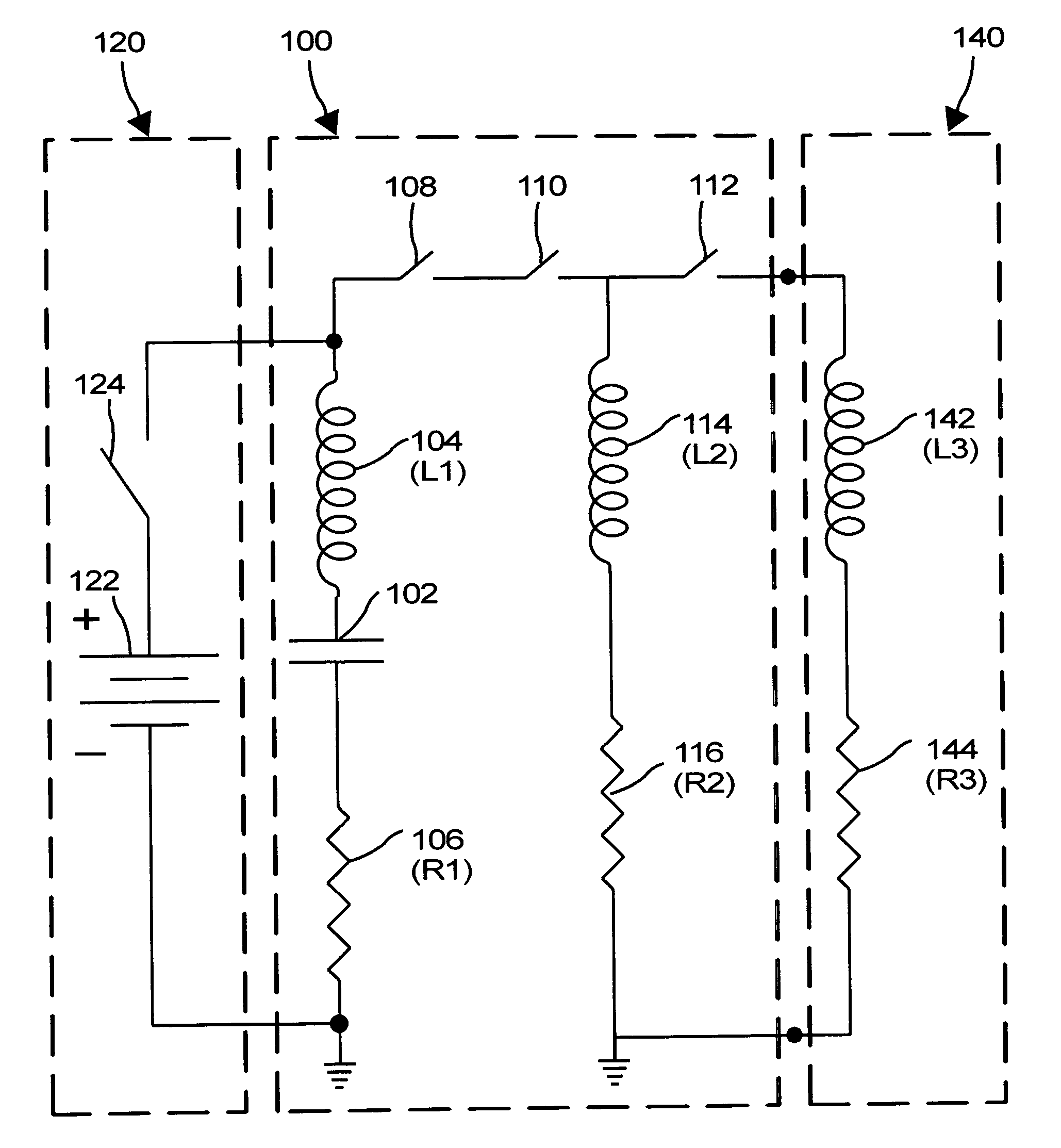
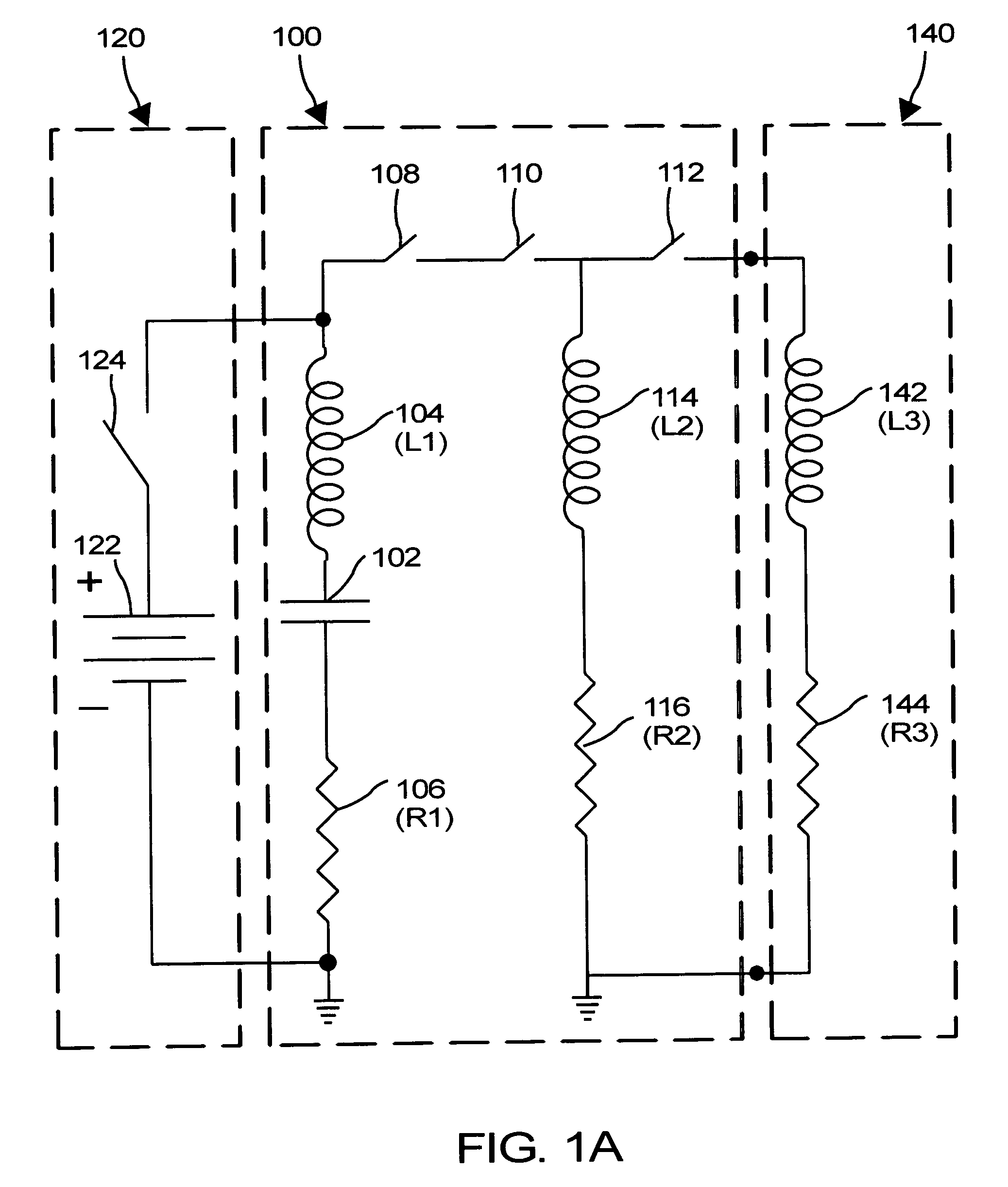
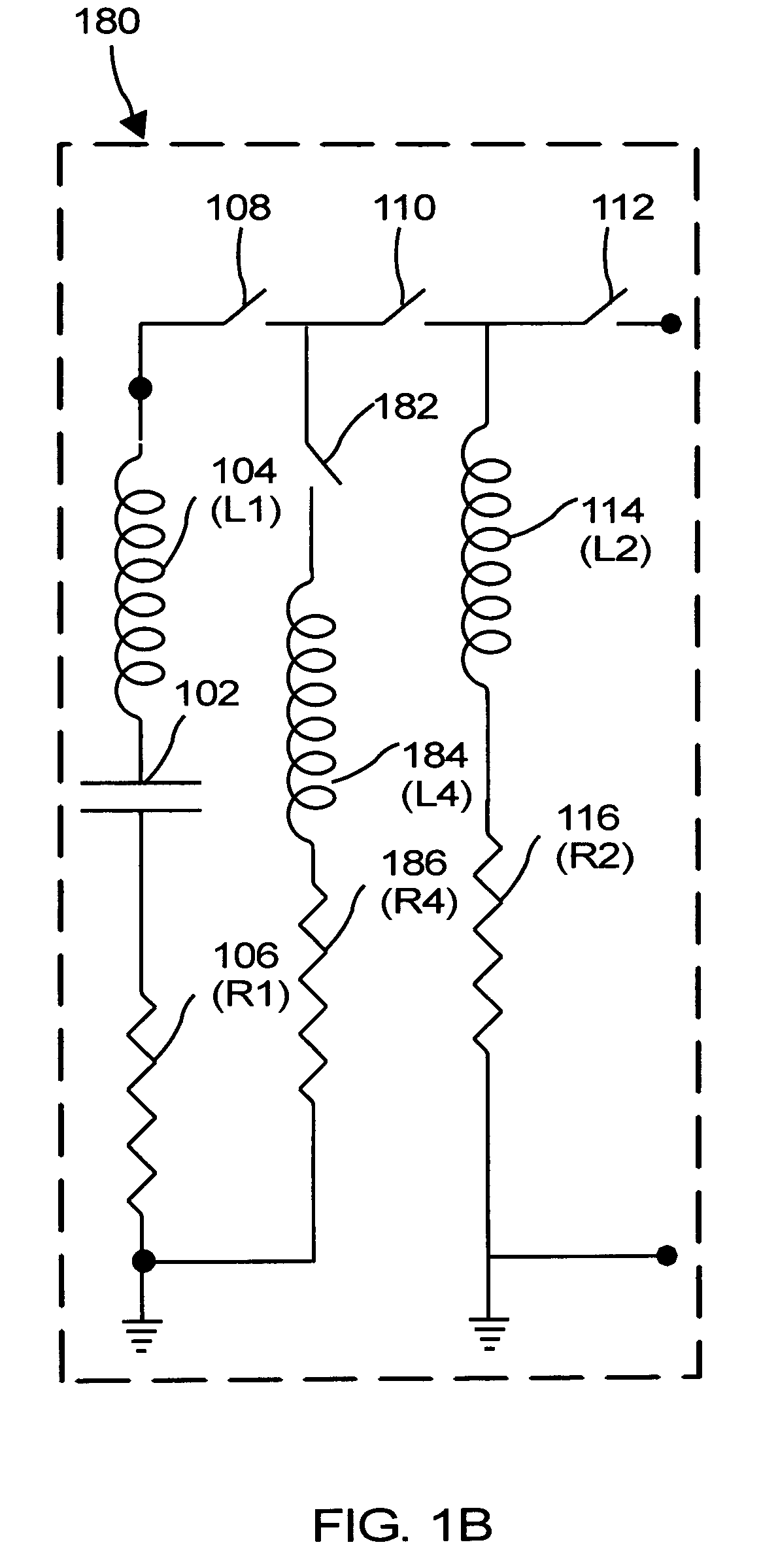
- An inductive PFN design that stores electrical energy in a low-voltage, high-energy density network capacitor and converts it into a magnetic field to supply high-current pulses, using a network inductor and switches to manage energy transfer, allowing for smaller, lighter, and safer power delivery systems.
Electromagnetic gain with rails
PatentInactiveEP0478452A1
Innovation
- The design incorporates a segmented rail system with power supply units connected to each segment, using storage capacitors and regulation inductors to manage current intensity and pulse generation, with a Crowbar Switch for capacitor protection, and a pre-launcher to provide initial speed to the projectile, optimizing pulse timing and reducing wear on the rails.


Materials Science Advancements
Materials science advancements play a crucial role in enhancing the performance of next-generation rail guns. The development of novel materials with superior properties is essential for addressing the challenges associated with high-energy electromagnetic launch systems.
One of the primary areas of focus is the development of advanced conductors for rail gun systems. Researchers are exploring the use of carbon nanotube-based materials and graphene composites to create lightweight, high-strength conductors with improved electrical and thermal properties. These materials offer the potential to reduce rail erosion and increase the overall efficiency of the rail gun system.
Another significant advancement is in the field of high-strength, heat-resistant alloys for rail construction. New alloys incorporating elements such as tungsten, molybdenum, and rhenium are being developed to withstand the extreme temperatures and pressures generated during rail gun operation. These materials exhibit superior mechanical properties and thermal stability, potentially extending the operational lifespan of rail gun systems.
Ceramic composites are also gaining attention for their potential applications in rail gun technology. Advanced ceramics, such as silicon carbide and boron nitride, are being investigated for their high hardness, low density, and excellent thermal properties. These materials could be used to create more durable rail linings and projectile sabots, improving overall system performance and reliability.
Nanomaterials are emerging as a promising avenue for enhancing rail gun performance. Nanostructured coatings and surface treatments are being developed to reduce friction and wear between the projectile and the rails. These innovations could lead to increased muzzle velocities and improved accuracy while minimizing rail degradation.
The integration of smart materials and adaptive structures into rail gun systems is another area of active research. Shape memory alloys and piezoelectric materials are being explored for their potential to provide real-time adjustments to rail geometry and alignment, optimizing performance under varying operational conditions.
Advancements in polymer science are contributing to the development of improved insulation materials and structural components for rail gun systems. High-performance polymers with enhanced dielectric strength and thermal stability are being engineered to withstand the extreme electromagnetic and thermal environments encountered during rail gun operation.
As materials science continues to evolve, the synergy between computational materials design and experimental validation is accelerating the discovery and optimization of new materials for rail gun applications. This interdisciplinary approach is paving the way for significant improvements in rail gun performance standards, bringing us closer to the realization of next-generation electromagnetic launch systems.
One of the primary areas of focus is the development of advanced conductors for rail gun systems. Researchers are exploring the use of carbon nanotube-based materials and graphene composites to create lightweight, high-strength conductors with improved electrical and thermal properties. These materials offer the potential to reduce rail erosion and increase the overall efficiency of the rail gun system.
Another significant advancement is in the field of high-strength, heat-resistant alloys for rail construction. New alloys incorporating elements such as tungsten, molybdenum, and rhenium are being developed to withstand the extreme temperatures and pressures generated during rail gun operation. These materials exhibit superior mechanical properties and thermal stability, potentially extending the operational lifespan of rail gun systems.
Ceramic composites are also gaining attention for their potential applications in rail gun technology. Advanced ceramics, such as silicon carbide and boron nitride, are being investigated for their high hardness, low density, and excellent thermal properties. These materials could be used to create more durable rail linings and projectile sabots, improving overall system performance and reliability.
Nanomaterials are emerging as a promising avenue for enhancing rail gun performance. Nanostructured coatings and surface treatments are being developed to reduce friction and wear between the projectile and the rails. These innovations could lead to increased muzzle velocities and improved accuracy while minimizing rail degradation.
The integration of smart materials and adaptive structures into rail gun systems is another area of active research. Shape memory alloys and piezoelectric materials are being explored for their potential to provide real-time adjustments to rail geometry and alignment, optimizing performance under varying operational conditions.
Advancements in polymer science are contributing to the development of improved insulation materials and structural components for rail gun systems. High-performance polymers with enhanced dielectric strength and thermal stability are being engineered to withstand the extreme electromagnetic and thermal environments encountered during rail gun operation.
As materials science continues to evolve, the synergy between computational materials design and experimental validation is accelerating the discovery and optimization of new materials for rail gun applications. This interdisciplinary approach is paving the way for significant improvements in rail gun performance standards, bringing us closer to the realization of next-generation electromagnetic launch systems.
Energy Storage Innovations
Energy storage innovations are crucial for the development of next-generation rail guns, as these advanced weapons require immense amounts of power delivered in extremely short time frames. Current energy storage technologies face significant challenges in meeting the demanding performance standards of rail guns. However, recent advancements in capacitor technology and pulsed power systems show promising potential for overcoming these limitations.
One of the key areas of innovation is in the development of high-energy density capacitors. Traditional capacitors struggle to store sufficient energy for rail gun applications while maintaining a practical size and weight. New materials and designs, such as nanostructured dielectrics and multi-layer ceramic capacitors, are pushing the boundaries of energy density. These advanced capacitors can store more energy in a smaller volume, making them ideal for integration into compact rail gun systems.
Supercapacitors represent another exciting avenue for energy storage innovation. By combining the high power density of traditional capacitors with the high energy density of batteries, supercapacitors offer a unique solution for rail gun power requirements. Recent breakthroughs in electrode materials, such as graphene and carbon nanotubes, have significantly improved the performance of supercapacitors, potentially enabling them to meet the rapid discharge needs of rail guns.
Pulsed power systems are also undergoing rapid development to meet the specific needs of rail guns. These systems aim to deliver enormous amounts of energy in microsecond timescales, which is essential for accelerating projectiles to hypersonic velocities. Innovations in switch technology, such as solid-state switches and plasma switches, are enhancing the efficiency and reliability of pulsed power systems. These advancements allow for faster switching times and higher current capacities, directly translating to improved rail gun performance.
Another promising area of research is in hybrid energy storage systems. By combining different storage technologies, such as capacitors and batteries, these hybrid systems can leverage the strengths of each component to meet the complex power requirements of rail guns. For instance, high-power capacitors can be used for the initial discharge, while high-energy batteries provide sustained power for rapid-fire capabilities.
Thermal management is a critical aspect of energy storage for rail guns, as the extreme power levels generate significant heat. Innovations in cooling systems, including advanced heat sinks and phase-change materials, are being developed to maintain optimal operating temperatures for energy storage components. These thermal management solutions are essential for ensuring the reliability and longevity of rail gun power systems under intense operational conditions.
One of the key areas of innovation is in the development of high-energy density capacitors. Traditional capacitors struggle to store sufficient energy for rail gun applications while maintaining a practical size and weight. New materials and designs, such as nanostructured dielectrics and multi-layer ceramic capacitors, are pushing the boundaries of energy density. These advanced capacitors can store more energy in a smaller volume, making them ideal for integration into compact rail gun systems.
Supercapacitors represent another exciting avenue for energy storage innovation. By combining the high power density of traditional capacitors with the high energy density of batteries, supercapacitors offer a unique solution for rail gun power requirements. Recent breakthroughs in electrode materials, such as graphene and carbon nanotubes, have significantly improved the performance of supercapacitors, potentially enabling them to meet the rapid discharge needs of rail guns.
Pulsed power systems are also undergoing rapid development to meet the specific needs of rail guns. These systems aim to deliver enormous amounts of energy in microsecond timescales, which is essential for accelerating projectiles to hypersonic velocities. Innovations in switch technology, such as solid-state switches and plasma switches, are enhancing the efficiency and reliability of pulsed power systems. These advancements allow for faster switching times and higher current capacities, directly translating to improved rail gun performance.
Another promising area of research is in hybrid energy storage systems. By combining different storage technologies, such as capacitors and batteries, these hybrid systems can leverage the strengths of each component to meet the complex power requirements of rail guns. For instance, high-power capacitors can be used for the initial discharge, while high-energy batteries provide sustained power for rapid-fire capabilities.
Thermal management is a critical aspect of energy storage for rail guns, as the extreme power levels generate significant heat. Innovations in cooling systems, including advanced heat sinks and phase-change materials, are being developed to maintain optimal operating temperatures for energy storage components. These thermal management solutions are essential for ensuring the reliability and longevity of rail gun power systems under intense operational conditions.
Unlock deeper insights with PatSnap Eureka Quick Research — get a full tech report to explore trends and direct your research. Try now!
Generate Your Research Report Instantly with AI Agent
Supercharge your innovation with PatSnap Eureka AI Agent Platform!