
AIP Power Output: Maximizing for Sustained Use
MAR 23, 20269 MIN READ
Generate Your Research Report Instantly with AI Agent
Patsnap Eureka helps you evaluate technical feasibility & market potential.
AIP Power Output Background and Objectives
Air-Independent Propulsion (AIP) systems represent a critical technological advancement in submarine warfare capabilities, bridging the operational gap between conventional diesel-electric submarines and nuclear-powered vessels. The evolution of AIP technology began in the 1930s with early closed-cycle diesel engines, progressing through various iterations including Stirling engines, fuel cells, and closed-cycle steam turbines. This technological journey has been driven by the fundamental military requirement for extended submerged endurance without the complexity and cost associated with nuclear propulsion systems.
The strategic importance of AIP technology has intensified with modern naval warfare demands, where stealth and persistence are paramount. Traditional diesel-electric submarines face significant operational limitations due to their need for frequent snorkeling to recharge batteries, creating vulnerability windows and restricting tactical flexibility. AIP systems address these constraints by enabling submarines to remain submerged for weeks rather than days, fundamentally altering underwater warfare dynamics.
Current market drivers include increasing global submarine procurement programs, with over 40 navies worldwide operating or planning to acquire AIP-equipped submarines. The technology has become particularly attractive for coastal defense and regional power projection missions, where the cost-effectiveness ratio compared to nuclear submarines is most favorable. Regional tensions in areas such as the South China Sea, Baltic Sea, and Mediterranean have accelerated demand for advanced conventional submarine capabilities.
The primary technical objective for maximizing AIP power output centers on achieving optimal energy density while maintaining system reliability and operational safety. This involves developing more efficient energy conversion processes, advanced energy storage solutions, and integrated power management systems. Key performance targets include extending submerged endurance beyond 21 days at patrol speeds, increasing maximum sustainable power output to support higher transit speeds, and reducing system maintenance requirements.
Secondary objectives encompass miniaturization of AIP components to maximize available submarine internal volume, reduction of acoustic signatures to maintain stealth advantages, and improvement of system responsiveness to varying power demands. The integration challenge requires seamless coordination between AIP systems and traditional diesel-electric propulsion, creating hybrid power architectures that optimize performance across diverse operational scenarios.
Environmental considerations have emerged as additional driving factors, with naval forces seeking cleaner propulsion alternatives that reduce logistical footprints and environmental impact. This has led to increased focus on hydrogen fuel cell technologies and advanced battery systems that complement AIP capabilities. The convergence of these technical, operational, and environmental objectives defines the current landscape for AIP power output maximization research and development efforts.
The strategic importance of AIP technology has intensified with modern naval warfare demands, where stealth and persistence are paramount. Traditional diesel-electric submarines face significant operational limitations due to their need for frequent snorkeling to recharge batteries, creating vulnerability windows and restricting tactical flexibility. AIP systems address these constraints by enabling submarines to remain submerged for weeks rather than days, fundamentally altering underwater warfare dynamics.
Current market drivers include increasing global submarine procurement programs, with over 40 navies worldwide operating or planning to acquire AIP-equipped submarines. The technology has become particularly attractive for coastal defense and regional power projection missions, where the cost-effectiveness ratio compared to nuclear submarines is most favorable. Regional tensions in areas such as the South China Sea, Baltic Sea, and Mediterranean have accelerated demand for advanced conventional submarine capabilities.
The primary technical objective for maximizing AIP power output centers on achieving optimal energy density while maintaining system reliability and operational safety. This involves developing more efficient energy conversion processes, advanced energy storage solutions, and integrated power management systems. Key performance targets include extending submerged endurance beyond 21 days at patrol speeds, increasing maximum sustainable power output to support higher transit speeds, and reducing system maintenance requirements.
Secondary objectives encompass miniaturization of AIP components to maximize available submarine internal volume, reduction of acoustic signatures to maintain stealth advantages, and improvement of system responsiveness to varying power demands. The integration challenge requires seamless coordination between AIP systems and traditional diesel-electric propulsion, creating hybrid power architectures that optimize performance across diverse operational scenarios.
Environmental considerations have emerged as additional driving factors, with naval forces seeking cleaner propulsion alternatives that reduce logistical footprints and environmental impact. This has led to increased focus on hydrogen fuel cell technologies and advanced battery systems that complement AIP capabilities. The convergence of these technical, operational, and environmental objectives defines the current landscape for AIP power output maximization research and development efforts.
Market Demand for High-Performance AIP Systems
The global submarine market has experienced unprecedented growth driven by escalating geopolitical tensions and maritime security concerns. Naval forces worldwide are increasingly prioritizing stealth capabilities and extended underwater endurance, creating substantial demand for advanced Air-Independent Propulsion systems that can deliver sustained high power output without compromising operational security.
Military applications represent the primary driver of AIP system demand, with defense budgets allocating significant resources toward next-generation submarine platforms. Modern naval warfare requirements emphasize prolonged submerged operations, often exceeding traditional battery-powered capabilities by substantial margins. This operational imperative has created a critical market need for AIP systems capable of maintaining consistent power delivery over extended mission durations.
The commercial maritime sector presents emerging opportunities for high-performance AIP technology. Deep-sea research vessels, underwater mining operations, and autonomous underwater vehicle platforms require reliable power systems that can operate independently for weeks or months. These applications demand robust power output characteristics that can support complex scientific instrumentation, propulsion systems, and communication equipment simultaneously.
Regional market dynamics reveal concentrated demand in Asia-Pacific, Europe, and North America, where naval modernization programs are actively pursuing AIP-equipped submarine fleets. Countries with extensive maritime territories and strategic waterways demonstrate particularly strong interest in sustained-use AIP capabilities, recognizing the tactical advantages of extended submerged operations.
Technology integration requirements are driving demand toward AIP systems with enhanced power density and operational flexibility. Modern submarine designs incorporate increasingly sophisticated electronic warfare systems, advanced sonar arrays, and automated control systems, all requiring stable, high-output power sources. The market specifically seeks AIP solutions that can seamlessly transition between different power demand profiles while maintaining optimal efficiency.
Cost-effectiveness considerations influence procurement decisions, with naval operators evaluating total lifecycle costs against operational capabilities. High-performance AIP systems that demonstrate superior power output sustainability often justify premium pricing through reduced maintenance requirements and extended operational availability, creating market opportunities for advanced technology providers.
Military applications represent the primary driver of AIP system demand, with defense budgets allocating significant resources toward next-generation submarine platforms. Modern naval warfare requirements emphasize prolonged submerged operations, often exceeding traditional battery-powered capabilities by substantial margins. This operational imperative has created a critical market need for AIP systems capable of maintaining consistent power delivery over extended mission durations.
The commercial maritime sector presents emerging opportunities for high-performance AIP technology. Deep-sea research vessels, underwater mining operations, and autonomous underwater vehicle platforms require reliable power systems that can operate independently for weeks or months. These applications demand robust power output characteristics that can support complex scientific instrumentation, propulsion systems, and communication equipment simultaneously.
Regional market dynamics reveal concentrated demand in Asia-Pacific, Europe, and North America, where naval modernization programs are actively pursuing AIP-equipped submarine fleets. Countries with extensive maritime territories and strategic waterways demonstrate particularly strong interest in sustained-use AIP capabilities, recognizing the tactical advantages of extended submerged operations.
Technology integration requirements are driving demand toward AIP systems with enhanced power density and operational flexibility. Modern submarine designs incorporate increasingly sophisticated electronic warfare systems, advanced sonar arrays, and automated control systems, all requiring stable, high-output power sources. The market specifically seeks AIP solutions that can seamlessly transition between different power demand profiles while maintaining optimal efficiency.
Cost-effectiveness considerations influence procurement decisions, with naval operators evaluating total lifecycle costs against operational capabilities. High-performance AIP systems that demonstrate superior power output sustainability often justify premium pricing through reduced maintenance requirements and extended operational availability, creating market opportunities for advanced technology providers.
Current AIP Power Limitations and Technical Challenges
Air-Independent Propulsion systems face several fundamental limitations that constrain their power output capabilities and operational effectiveness. The most significant challenge lies in energy density constraints of current fuel cell and battery technologies. Conventional AIP systems utilizing fuel cells typically achieve energy densities of 200-400 Wh/kg, substantially lower than diesel engines, which limits both power generation capacity and operational duration.
Thermal management represents another critical bottleneck in AIP power optimization. High-power fuel cell operations generate substantial heat that must be efficiently dissipated to maintain optimal performance and prevent system degradation. Current cooling systems add significant weight and complexity while consuming parasitic power, reducing net output efficiency. The challenge intensifies in submarine applications where heat signature management is crucial for stealth operations.
Fuel storage and handling present ongoing technical obstacles, particularly for hydrogen-based systems. Compressed hydrogen storage requires heavy pressure vessels, while metal hydride storage systems suffer from slow kinetics and temperature sensitivity. Liquid hydrogen storage, though offering higher energy density, introduces cryogenic handling complexities and boil-off losses that compromise sustained operation capabilities.
System integration challenges significantly impact overall power output efficiency. Current AIP architectures struggle with seamless integration between fuel cells, batteries, and conventional propulsion systems. Power conditioning and distribution inefficiencies result in 15-25% energy losses during conversion and transmission processes. Additionally, the need for redundant safety systems and monitoring equipment further reduces net power availability.
Operational degradation over time poses substantial sustainability concerns. Fuel cell membrane degradation, catalyst poisoning, and electrolyte contamination progressively reduce power output capacity. Current systems experience 2-5% annual performance degradation, necessitating frequent maintenance cycles that interrupt operational availability.
Environmental sensitivity limitations restrict AIP performance across varying operational conditions. Temperature fluctuations, humidity variations, and pressure changes significantly affect fuel cell efficiency and battery performance. These factors become particularly problematic during extended underwater operations where environmental control systems consume additional power, creating a negative feedback loop that further constrains net power output for propulsion and mission-critical systems.
Thermal management represents another critical bottleneck in AIP power optimization. High-power fuel cell operations generate substantial heat that must be efficiently dissipated to maintain optimal performance and prevent system degradation. Current cooling systems add significant weight and complexity while consuming parasitic power, reducing net output efficiency. The challenge intensifies in submarine applications where heat signature management is crucial for stealth operations.
Fuel storage and handling present ongoing technical obstacles, particularly for hydrogen-based systems. Compressed hydrogen storage requires heavy pressure vessels, while metal hydride storage systems suffer from slow kinetics and temperature sensitivity. Liquid hydrogen storage, though offering higher energy density, introduces cryogenic handling complexities and boil-off losses that compromise sustained operation capabilities.
System integration challenges significantly impact overall power output efficiency. Current AIP architectures struggle with seamless integration between fuel cells, batteries, and conventional propulsion systems. Power conditioning and distribution inefficiencies result in 15-25% energy losses during conversion and transmission processes. Additionally, the need for redundant safety systems and monitoring equipment further reduces net power availability.
Operational degradation over time poses substantial sustainability concerns. Fuel cell membrane degradation, catalyst poisoning, and electrolyte contamination progressively reduce power output capacity. Current systems experience 2-5% annual performance degradation, necessitating frequent maintenance cycles that interrupt operational availability.
Environmental sensitivity limitations restrict AIP performance across varying operational conditions. Temperature fluctuations, humidity variations, and pressure changes significantly affect fuel cell efficiency and battery performance. These factors become particularly problematic during extended underwater operations where environmental control systems consume additional power, creating a negative feedback loop that further constrains net power output for propulsion and mission-critical systems.
Existing AIP Power Optimization Solutions
01 Air-independent propulsion system configuration and control
Air-independent propulsion (AIP) systems utilize specialized configurations to optimize power output in underwater vessels. These systems incorporate control mechanisms to regulate fuel supply, oxidizer flow, and combustion parameters to achieve stable and efficient power generation. The configuration includes integration of fuel cells, combustion chambers, and exhaust management systems designed specifically for submerged operation without atmospheric air access.- Air-independent propulsion system configuration and control: Air-independent propulsion (AIP) systems utilize specialized configurations to optimize power output in underwater vessels. These systems incorporate control mechanisms to regulate fuel supply, oxidizer flow, and combustion parameters to achieve stable and efficient power generation. The configuration includes integration of fuel cells, combustion chambers, and energy conversion units designed to operate without atmospheric air, enabling extended submerged operations.
- Fuel cell based AIP power generation: Fuel cell technology is employed in AIP systems to generate electrical power through electrochemical reactions. These systems utilize hydrogen or reformed fuels combined with stored oxidizers to produce electricity with high efficiency and low noise signatures. The fuel cell stacks are designed with specific membrane materials and catalyst configurations to maximize power density while maintaining operational reliability in marine environments.
- Stirling engine integration for AIP applications: Stirling engines are integrated into AIP systems as closed-cycle heat engines that convert thermal energy into mechanical power. These engines operate using external combustion with stored oxygen, providing quiet and efficient power generation for submarine propulsion. The system design focuses on heat exchanger optimization, working fluid selection, and thermal management to enhance power output and operational duration.
- Energy storage and power management systems: Advanced energy storage solutions are incorporated to buffer and manage power output from AIP systems. These include battery banks, supercapacitors, and hybrid energy storage configurations that smooth power delivery and handle peak load demands. Power management systems coordinate between the AIP generator and energy storage to optimize efficiency, extend operational range, and provide backup power capabilities.
- Thermal management and waste heat recovery: Thermal management systems are critical for maintaining optimal operating temperatures in AIP power units and recovering waste heat for improved overall efficiency. These systems employ heat exchangers, cooling circuits, and thermal insulation to dissipate excess heat while capturing usable thermal energy. Waste heat recovery mechanisms convert residual thermal energy into additional electrical or mechanical power, enhancing the total power output of the AIP system.
02 Fuel cell-based AIP power generation
Fuel cell technology serves as a core component in AIP systems, converting chemical energy directly into electrical power. These systems employ hydrogen-oxygen reactions or other fuel combinations to generate electricity with high efficiency and minimal noise. The fuel cell stacks are designed to operate under high pressure conditions typical of submarine environments, with thermal management systems to handle heat generation during power production.Expand Specific Solutions03 Stirling engine integration for AIP applications
Stirling engines provide an alternative approach to AIP power generation through closed-cycle heat engine operation. These systems utilize external combustion with stored oxidizer to drive pistons and generate mechanical or electrical power. The technology offers advantages in terms of fuel flexibility and operational reliability, with designs optimized for submarine power requirements and acoustic signature reduction.Expand Specific Solutions04 Power output optimization and energy management
Advanced control systems and energy management strategies are employed to maximize AIP power output efficiency. These approaches include load balancing, thermal efficiency optimization, and integration with battery systems for hybrid power configurations. Monitoring and control algorithms adjust operational parameters in real-time to maintain optimal performance across varying power demands while extending operational endurance.Expand Specific Solutions05 Exhaust and thermal management systems
Specialized exhaust handling and thermal management systems are critical for AIP power output sustainability. These systems manage combustion byproducts, dissipate waste heat, and maintain pressure equilibrium with the surrounding water environment. Technologies include exhaust gas cooling, carbon dioxide scrubbing, and heat exchangers designed to minimize thermal signature while ensuring safe and efficient operation of the propulsion system.Expand Specific Solutions
Leading AIP System Manufacturers and Suppliers
The AIP power output maximization market is in a rapidly evolving growth stage, driven by increasing demand for sustained high-performance computing across AI and data-intensive applications. The market demonstrates substantial scale potential, evidenced by the diverse participation of major technology corporations spanning semiconductors, consumer electronics, and enterprise solutions. Technology maturity varies significantly across market participants, with established semiconductor leaders like Intel Corp., Samsung Electronics, and Apple Inc. driving advanced processor architectures, while companies such as Microsoft Technology Licensing LLC and Google LLC focus on software optimization solutions. Traditional hardware manufacturers including Dell Products LP, Hewlett Packard Enterprise Development LP, and Toshiba Corp. contribute enterprise-grade power management systems. The competitive landscape also features specialized players like Infineon Technologies AG and VIA Technologies Inc. developing targeted power efficiency solutions, alongside emerging companies such as Lancium LLC pioneering innovative approaches to sustained power delivery, indicating a maturing but still fragmented technological ecosystem.
Intel Corp.
Technical Solution: Intel has developed advanced power management technologies including Dynamic Voltage and Frequency Scaling (DVFS) and Turbo Boost technology for sustained AI workloads. Their approach focuses on adaptive power delivery systems that can maintain optimal performance while managing thermal constraints. The company implements sophisticated power gating techniques and multi-core power balancing to ensure consistent AI processing power output over extended periods. Their latest processors feature enhanced power efficiency architectures specifically designed for AI inference and training workloads, incorporating real-time power monitoring and adjustment capabilities.
Strengths: Industry-leading power management expertise, extensive ecosystem support. Weaknesses: Higher power consumption compared to specialized AI chips, complex thermal management requirements.
Microsoft Technology Licensing LLC
Technical Solution: Microsoft has developed comprehensive AI power optimization technologies through their Azure cloud infrastructure and custom AI accelerator designs. Their approach includes intelligent power management systems that dynamically allocate resources based on AI workload requirements, ensuring sustained performance while optimizing energy consumption. Microsoft implements advanced thermal management solutions, predictive power scaling, and workload distribution algorithms to maintain consistent AI processing capabilities. Their power optimization framework includes real-time monitoring systems, automated power adjustment mechanisms, and integration with renewable energy sources for sustainable AI operations. The company's solutions also feature multi-tenant power isolation and quality-of-service guarantees for enterprise AI applications.
Strengths: Comprehensive cloud infrastructure expertise, enterprise-grade power management solutions, strong software integration capabilities. Weaknesses: Dependency on third-party hardware vendors, limited control over low-level power optimization features.
Key Patents in AIP Power Enhancement Technologies
Power output apparatus, control method of power output apparatus, and vehicle equipped with power output apparatus
PatentActiveEP1984223B1
Innovation
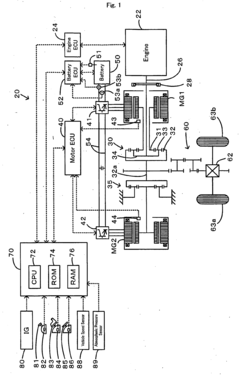
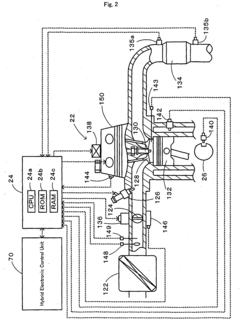
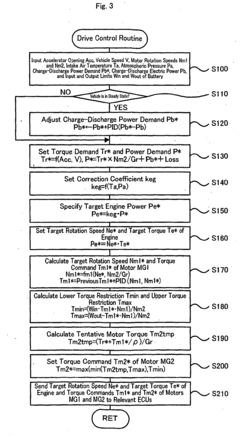
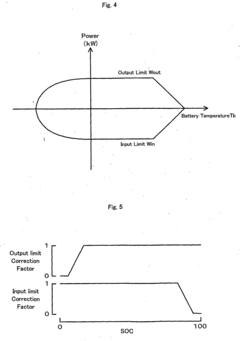
- A power output apparatus with an internal combustion engine, electric power-mechanical power input/output mechanism, motor, accumulator unit, and control module that sets a target drive point based on driving force demand, charge-discharge power demand, and air density-affecting physical quantities, ensuring controlled output within input/output limits to maintain efficient operation and prevent excessive battery charging/discharging.
System and method for maximizing power output from an internal combustion engine
PatentInactiveUS20070244624A1
Innovation
- A system and method utilizing a control module connected to a microprocessor and dynamometer to adjust fuel flow, ignition timing, and intake air flow in real-time, providing closed-loop control to maximize engine power output at specific RPM ranges by measuring and adjusting these variables until optimal power is achieved.


Safety Standards for AIP Power Systems
The development of comprehensive safety standards for Air Independent Propulsion (AIP) power systems represents a critical foundation for maximizing sustained power output while ensuring operational reliability. Current international frameworks, including IMO guidelines and naval classification society standards, establish baseline requirements for AIP system safety protocols. These standards encompass thermal management, pressure vessel integrity, and emergency shutdown procedures that directly impact sustained power generation capabilities.
Hydrogen-based AIP systems require specialized safety protocols due to the inherent risks associated with hydrogen storage and fuel cell operations. Safety standards mandate redundant leak detection systems, automated ventilation protocols, and flame arrestor installations. These requirements influence system design parameters and can affect power output efficiency, necessitating careful balance between safety compliance and performance optimization. Advanced monitoring systems must continuously assess hydrogen concentration levels while maintaining minimal power consumption overhead.
Stirling engine AIP configurations face distinct safety challenges related to high-temperature operations and closed-loop working fluid management. Safety standards specify maximum operating temperatures, pressure relief valve configurations, and thermal barrier requirements. These constraints directly influence the thermodynamic cycle efficiency and sustained power output potential. Compliance with vibration isolation standards also impacts system integration and power transmission efficiency.
Battery safety protocols for AIP systems address thermal runaway prevention, electrolyte containment, and charging cycle management. Modern lithium-ion battery safety standards require sophisticated battery management systems that monitor cell temperatures, voltage differentials, and charging rates. These safety systems consume auxiliary power but are essential for preventing catastrophic failures that could compromise sustained operations.
Emergency response protocols form a crucial component of AIP safety standards, defining rapid system isolation procedures and backup power activation sequences. These standards ensure that safety shutdowns can be executed without compromising critical submarine systems, while establishing clear procedures for system restart and power restoration. The integration of safety systems with power management controllers enables automated responses that minimize downtime during emergency situations.
Certification processes for AIP safety compliance involve extensive testing protocols that validate system performance under various failure scenarios. These standards ensure that safety systems function reliably throughout the operational envelope while maintaining compatibility with sustained power output requirements.
Hydrogen-based AIP systems require specialized safety protocols due to the inherent risks associated with hydrogen storage and fuel cell operations. Safety standards mandate redundant leak detection systems, automated ventilation protocols, and flame arrestor installations. These requirements influence system design parameters and can affect power output efficiency, necessitating careful balance between safety compliance and performance optimization. Advanced monitoring systems must continuously assess hydrogen concentration levels while maintaining minimal power consumption overhead.
Stirling engine AIP configurations face distinct safety challenges related to high-temperature operations and closed-loop working fluid management. Safety standards specify maximum operating temperatures, pressure relief valve configurations, and thermal barrier requirements. These constraints directly influence the thermodynamic cycle efficiency and sustained power output potential. Compliance with vibration isolation standards also impacts system integration and power transmission efficiency.
Battery safety protocols for AIP systems address thermal runaway prevention, electrolyte containment, and charging cycle management. Modern lithium-ion battery safety standards require sophisticated battery management systems that monitor cell temperatures, voltage differentials, and charging rates. These safety systems consume auxiliary power but are essential for preventing catastrophic failures that could compromise sustained operations.
Emergency response protocols form a crucial component of AIP safety standards, defining rapid system isolation procedures and backup power activation sequences. These standards ensure that safety shutdowns can be executed without compromising critical submarine systems, while establishing clear procedures for system restart and power restoration. The integration of safety systems with power management controllers enables automated responses that minimize downtime during emergency situations.
Certification processes for AIP safety compliance involve extensive testing protocols that validate system performance under various failure scenarios. These standards ensure that safety systems function reliably throughout the operational envelope while maintaining compatibility with sustained power output requirements.
Environmental Impact of AIP Power Technologies
Air-Independent Propulsion (AIP) power technologies present a complex environmental profile that requires careful evaluation across multiple dimensions. While these systems offer significant advantages over conventional diesel-electric propulsion in terms of operational stealth and endurance, their environmental implications vary considerably depending on the specific technology employed and operational parameters.
Fuel cell-based AIP systems, particularly those utilizing hydrogen and oxygen, demonstrate relatively favorable environmental characteristics during operation. These systems produce only water vapor as a direct byproduct, eliminating local emissions of nitrogen oxides, sulfur compounds, and particulate matter that characterize conventional combustion engines. However, the environmental impact assessment must extend beyond operational emissions to encompass the entire lifecycle, including hydrogen production, storage, and distribution infrastructure.
Stirling engine AIP configurations present a different environmental profile, typically operating on liquid oxygen and diesel fuel or ethanol. While these systems maintain lower emission levels compared to surface diesel operations due to optimized combustion conditions and reduced operational frequency, they still generate carbon dioxide and trace combustion byproducts. The closed-cycle nature of Stirling systems allows for better emission control and potential carbon capture integration.
Closed-cycle diesel systems, another prominent AIP variant, operate by burning diesel fuel in a pure oxygen environment, with exhaust gases processed through scrubbing systems before discharge. This approach significantly reduces the environmental footprint compared to conventional diesel operations, as the controlled combustion environment minimizes harmful emissions and allows for more effective waste gas treatment.
The manufacturing and disposal phases of AIP systems introduce additional environmental considerations. Advanced materials used in fuel cells, including platinum group metals and specialized membranes, require energy-intensive production processes and present recycling challenges. Similarly, the cryogenic storage systems necessary for liquid oxygen handling involve complex manufacturing processes with associated environmental costs.
Operational environmental benefits extend beyond direct emissions to include reduced acoustic signatures, which minimize marine ecosystem disruption. The enhanced underwater endurance capabilities of AIP systems also reduce surface transit requirements, potentially decreasing overall fuel consumption and emissions per operational mission compared to conventional submarines requiring frequent snorkeling operations.
Fuel cell-based AIP systems, particularly those utilizing hydrogen and oxygen, demonstrate relatively favorable environmental characteristics during operation. These systems produce only water vapor as a direct byproduct, eliminating local emissions of nitrogen oxides, sulfur compounds, and particulate matter that characterize conventional combustion engines. However, the environmental impact assessment must extend beyond operational emissions to encompass the entire lifecycle, including hydrogen production, storage, and distribution infrastructure.
Stirling engine AIP configurations present a different environmental profile, typically operating on liquid oxygen and diesel fuel or ethanol. While these systems maintain lower emission levels compared to surface diesel operations due to optimized combustion conditions and reduced operational frequency, they still generate carbon dioxide and trace combustion byproducts. The closed-cycle nature of Stirling systems allows for better emission control and potential carbon capture integration.
Closed-cycle diesel systems, another prominent AIP variant, operate by burning diesel fuel in a pure oxygen environment, with exhaust gases processed through scrubbing systems before discharge. This approach significantly reduces the environmental footprint compared to conventional diesel operations, as the controlled combustion environment minimizes harmful emissions and allows for more effective waste gas treatment.
The manufacturing and disposal phases of AIP systems introduce additional environmental considerations. Advanced materials used in fuel cells, including platinum group metals and specialized membranes, require energy-intensive production processes and present recycling challenges. Similarly, the cryogenic storage systems necessary for liquid oxygen handling involve complex manufacturing processes with associated environmental costs.
Operational environmental benefits extend beyond direct emissions to include reduced acoustic signatures, which minimize marine ecosystem disruption. The enhanced underwater endurance capabilities of AIP systems also reduce surface transit requirements, potentially decreasing overall fuel consumption and emissions per operational mission compared to conventional submarines requiring frequent snorkeling operations.
Unlock deeper insights with Patsnap Eureka Quick Research — get a full tech report to explore trends and direct your research. Try now!
Generate Your Research Report Instantly with AI Agent
Supercharge your innovation with Patsnap Eureka AI Agent Platform!