
Evaluating AIP in Next-Generation Submersible Platforms
MAR 23, 20269 MIN READ
Generate Your Research Report Instantly with AI Agent
Patsnap Eureka helps you evaluate technical feasibility & market potential.
AIP Technology Background and Submersible Integration Goals
Air-Independent Propulsion (AIP) technology represents a revolutionary advancement in submarine propulsion systems, fundamentally transforming underwater vessel capabilities since its introduction in the late 20th century. This technology enables submarines to operate submerged for extended periods without surfacing or using snorkels, addressing one of the most critical limitations of conventional diesel-electric submarines.
The evolution of AIP systems began with early fuel cell experiments in the 1960s, progressing through various technological approaches including Stirling engines, fuel cells, and closed-cycle systems. Each iteration has contributed to enhanced stealth capabilities, extended underwater endurance, and improved operational flexibility. Modern AIP systems can sustain submerged operations for weeks rather than days, representing a paradigm shift in submarine warfare and civilian underwater operations.
Contemporary AIP technology encompasses multiple propulsion methodologies, with polymer electrolyte membrane fuel cells, Stirling engines, and closed-cycle diesel systems leading the technological landscape. These systems operate on fundamentally different principles but share the common objective of providing oxygen-independent power generation for propulsion and onboard systems.
The integration of AIP technology into next-generation submersible platforms presents unique engineering challenges and opportunities. Modern integration approaches focus on hybrid propulsion architectures that seamlessly combine traditional diesel-electric systems with AIP modules, optimizing power distribution and operational efficiency across diverse mission profiles.
Next-generation submersible platforms demand enhanced stealth characteristics, extended operational ranges, and improved payload capacities. AIP integration directly addresses these requirements by eliminating the need for frequent surface operations, reducing acoustic signatures, and enabling sustained deep-water missions. The technology's maturation has reached a point where it can support complex multi-role platforms capable of surveillance, research, and tactical operations.
Current integration goals emphasize modular design approaches that allow for scalable AIP implementation across different platform sizes and mission requirements. Advanced energy management systems coordinate between conventional batteries, AIP modules, and auxiliary power sources to maximize operational efficiency and mission duration.
The strategic importance of AIP technology extends beyond military applications, encompassing scientific research vessels, commercial underwater platforms, and autonomous underwater vehicles. This broad applicability drives continued innovation in system miniaturization, efficiency improvements, and cost reduction initiatives.
Future integration objectives focus on achieving seamless operational transitions between propulsion modes, implementing intelligent power management systems, and developing maintenance-friendly modular architectures. These goals align with broader trends toward autonomous operations and reduced crew requirements in next-generation submersible platforms.
The evolution of AIP systems began with early fuel cell experiments in the 1960s, progressing through various technological approaches including Stirling engines, fuel cells, and closed-cycle systems. Each iteration has contributed to enhanced stealth capabilities, extended underwater endurance, and improved operational flexibility. Modern AIP systems can sustain submerged operations for weeks rather than days, representing a paradigm shift in submarine warfare and civilian underwater operations.
Contemporary AIP technology encompasses multiple propulsion methodologies, with polymer electrolyte membrane fuel cells, Stirling engines, and closed-cycle diesel systems leading the technological landscape. These systems operate on fundamentally different principles but share the common objective of providing oxygen-independent power generation for propulsion and onboard systems.
The integration of AIP technology into next-generation submersible platforms presents unique engineering challenges and opportunities. Modern integration approaches focus on hybrid propulsion architectures that seamlessly combine traditional diesel-electric systems with AIP modules, optimizing power distribution and operational efficiency across diverse mission profiles.
Next-generation submersible platforms demand enhanced stealth characteristics, extended operational ranges, and improved payload capacities. AIP integration directly addresses these requirements by eliminating the need for frequent surface operations, reducing acoustic signatures, and enabling sustained deep-water missions. The technology's maturation has reached a point where it can support complex multi-role platforms capable of surveillance, research, and tactical operations.
Current integration goals emphasize modular design approaches that allow for scalable AIP implementation across different platform sizes and mission requirements. Advanced energy management systems coordinate between conventional batteries, AIP modules, and auxiliary power sources to maximize operational efficiency and mission duration.
The strategic importance of AIP technology extends beyond military applications, encompassing scientific research vessels, commercial underwater platforms, and autonomous underwater vehicles. This broad applicability drives continued innovation in system miniaturization, efficiency improvements, and cost reduction initiatives.
Future integration objectives focus on achieving seamless operational transitions between propulsion modes, implementing intelligent power management systems, and developing maintenance-friendly modular architectures. These goals align with broader trends toward autonomous operations and reduced crew requirements in next-generation submersible platforms.
Market Demand for Advanced Submersible Propulsion Systems
The global submersible market is experiencing unprecedented growth driven by expanding applications across military, commercial, and scientific sectors. Naval forces worldwide are increasingly investing in advanced submarine capabilities to maintain strategic advantages in underwater warfare and surveillance operations. The demand for next-generation propulsion systems has intensified as nations seek to enhance their submarine fleets' stealth, endurance, and operational effectiveness.
Commercial underwater exploration represents another significant growth driver, with deep-sea mining, offshore energy development, and underwater infrastructure inspection creating substantial market opportunities. The rising demand for rare earth minerals and the expansion of offshore wind farms have particularly accelerated the need for sophisticated submersible platforms equipped with advanced propulsion technologies.
Scientific research institutions and oceanographic organizations are driving demand for specialized submersible vehicles capable of extended underwater missions. Climate change research, marine biology studies, and deep-ocean exploration require platforms with superior endurance and reduced environmental impact, making AIP systems increasingly attractive for these applications.
The market demonstrates strong regional variations, with Asia-Pacific emerging as the fastest-growing segment due to territorial disputes and maritime security concerns. European markets show consistent demand driven by advanced naval programs and environmental research initiatives, while North American markets focus on both defense applications and commercial deep-sea operations.
Current market trends indicate a shift toward hybrid propulsion systems that combine traditional diesel-electric capabilities with advanced AIP technologies. This hybrid approach addresses operational flexibility requirements while providing the extended underwater endurance that modern missions demand. The integration of fuel cell technology, Stirling engines, and closed-cycle systems represents the primary technological pathways being pursued by major defense contractors and specialized marine technology companies.
Market analysts project sustained growth in the advanced submersible propulsion sector, driven by technological maturation, cost reductions, and expanding application domains. The convergence of military modernization programs, commercial underwater activities, and scientific research initiatives creates a robust foundation for continued market expansion in the coming decade.
Commercial underwater exploration represents another significant growth driver, with deep-sea mining, offshore energy development, and underwater infrastructure inspection creating substantial market opportunities. The rising demand for rare earth minerals and the expansion of offshore wind farms have particularly accelerated the need for sophisticated submersible platforms equipped with advanced propulsion technologies.
Scientific research institutions and oceanographic organizations are driving demand for specialized submersible vehicles capable of extended underwater missions. Climate change research, marine biology studies, and deep-ocean exploration require platforms with superior endurance and reduced environmental impact, making AIP systems increasingly attractive for these applications.
The market demonstrates strong regional variations, with Asia-Pacific emerging as the fastest-growing segment due to territorial disputes and maritime security concerns. European markets show consistent demand driven by advanced naval programs and environmental research initiatives, while North American markets focus on both defense applications and commercial deep-sea operations.
Current market trends indicate a shift toward hybrid propulsion systems that combine traditional diesel-electric capabilities with advanced AIP technologies. This hybrid approach addresses operational flexibility requirements while providing the extended underwater endurance that modern missions demand. The integration of fuel cell technology, Stirling engines, and closed-cycle systems represents the primary technological pathways being pursued by major defense contractors and specialized marine technology companies.
Market analysts project sustained growth in the advanced submersible propulsion sector, driven by technological maturation, cost reductions, and expanding application domains. The convergence of military modernization programs, commercial underwater activities, and scientific research initiatives creates a robust foundation for continued market expansion in the coming decade.
Current AIP Technology Status and Implementation Challenges
Air-Independent Propulsion technology has reached varying levels of maturity across different technological pathways, with each approach demonstrating distinct advantages and limitations in operational deployment. Fuel cell systems, particularly Proton Exchange Membrane Fuel Cells, represent the most advanced AIP technology currently in service, successfully integrated into submarines such as the German Type 212A and Japanese Soryu-class vessels. These systems achieve energy densities of approximately 400-600 Wh/kg and can sustain submerged operations for 2-3 weeks at low speeds.
Stirling engine-based AIP systems have demonstrated robust operational reliability in Swedish Gotland-class and other European submarines. These closed-cycle engines typically operate at thermal efficiencies of 30-35% and provide power outputs ranging from 65-110 kW. However, mechanical complexity and maintenance requirements present ongoing challenges for extended deployment scenarios.
Closed-cycle diesel systems, while offering higher power density compared to other AIP technologies, face significant technical hurdles related to exhaust gas management and thermal signature control. The liquid oxygen storage requirements create additional safety considerations and limit operational flexibility in combat scenarios.
Current implementation challenges center on energy storage optimization, with lithium-ion battery integration becoming increasingly critical for next-generation platforms. The transition from traditional lead-acid systems to advanced battery technologies requires comprehensive redesign of power management architectures and thermal control systems.
System integration complexity represents a major technical barrier, as AIP modules must seamlessly interface with existing submarine propulsion and life support systems. Space constraints within submarine hulls necessitate highly compact designs, often compromising maintenance accessibility and component replaceability.
Operational challenges include extended maintenance cycles, specialized crew training requirements, and supply chain dependencies for consumables such as hydrogen, oxygen, and specialized catalysts. The acoustic signature management of AIP systems remains a critical concern, as mechanical components can potentially compromise stealth capabilities.
Cost-effectiveness analysis reveals significant capital investment requirements, with AIP retrofits typically representing 15-25% of total submarine construction costs. Long-term operational cost benefits must be weighed against initial implementation expenses and ongoing maintenance overhead.
Stirling engine-based AIP systems have demonstrated robust operational reliability in Swedish Gotland-class and other European submarines. These closed-cycle engines typically operate at thermal efficiencies of 30-35% and provide power outputs ranging from 65-110 kW. However, mechanical complexity and maintenance requirements present ongoing challenges for extended deployment scenarios.
Closed-cycle diesel systems, while offering higher power density compared to other AIP technologies, face significant technical hurdles related to exhaust gas management and thermal signature control. The liquid oxygen storage requirements create additional safety considerations and limit operational flexibility in combat scenarios.
Current implementation challenges center on energy storage optimization, with lithium-ion battery integration becoming increasingly critical for next-generation platforms. The transition from traditional lead-acid systems to advanced battery technologies requires comprehensive redesign of power management architectures and thermal control systems.
System integration complexity represents a major technical barrier, as AIP modules must seamlessly interface with existing submarine propulsion and life support systems. Space constraints within submarine hulls necessitate highly compact designs, often compromising maintenance accessibility and component replaceability.
Operational challenges include extended maintenance cycles, specialized crew training requirements, and supply chain dependencies for consumables such as hydrogen, oxygen, and specialized catalysts. The acoustic signature management of AIP systems remains a critical concern, as mechanical components can potentially compromise stealth capabilities.
Cost-effectiveness analysis reveals significant capital investment requirements, with AIP retrofits typically representing 15-25% of total submarine construction costs. Long-term operational cost benefits must be weighed against initial implementation expenses and ongoing maintenance overhead.
Existing AIP Solutions for Next-Generation Submarines
01 Artificial intelligence-based process control and optimization systems
Advanced artificial intelligence algorithms and machine learning models are employed to monitor, analyze, and optimize industrial processes in real-time. These systems can predict process parameters, detect anomalies, and automatically adjust operational conditions to improve efficiency, reduce energy consumption, and enhance product quality. The AI systems integrate with existing control infrastructure and utilize historical data to continuously improve decision-making capabilities.- Artificial intelligence-based process control and optimization systems: Advanced artificial intelligence and machine learning algorithms are employed to monitor, control, and optimize industrial processes in real-time. These systems utilize neural networks, deep learning models, and predictive analytics to analyze process parameters, detect anomalies, and automatically adjust operational conditions. The AI-driven approach enables improved process efficiency, reduced energy consumption, enhanced product quality, and minimized downtime through intelligent decision-making and adaptive control strategies.
- Intelligent data processing and analysis platforms: Comprehensive data processing platforms integrate multiple data sources and employ artificial intelligence techniques for advanced analytics. These platforms utilize big data processing capabilities, cloud computing infrastructure, and intelligent algorithms to extract valuable insights from large-scale datasets. The systems support real-time data streaming, pattern recognition, and predictive modeling to enable informed decision-making across various applications including industrial monitoring, quality control, and operational optimization.
- Automated inspection and quality control systems: Intelligent inspection systems leverage computer vision, image processing, and artificial intelligence to perform automated quality assessment and defect detection. These systems employ high-resolution imaging devices combined with deep learning models to identify defects, measure dimensions, and verify product specifications with high accuracy. The automated approach reduces manual inspection requirements, improves detection reliability, and enables real-time quality monitoring throughout manufacturing processes.
- Smart manufacturing execution and scheduling systems: Advanced manufacturing execution systems integrate artificial intelligence for intelligent production planning, scheduling, and resource allocation. These systems analyze production requirements, equipment capabilities, and resource constraints to generate optimized manufacturing schedules. The intelligent scheduling algorithms consider multiple objectives including throughput maximization, lead time minimization, and resource utilization optimization, enabling flexible and efficient manufacturing operations with adaptive responses to dynamic production environments.
- Predictive maintenance and equipment health monitoring: Intelligent maintenance systems utilize sensor data, machine learning algorithms, and predictive analytics to monitor equipment health and forecast potential failures. These systems continuously collect operational data from machinery, analyze performance trends, and identify early warning signs of degradation or malfunction. The predictive approach enables proactive maintenance scheduling, reduces unplanned downtime, extends equipment lifespan, and optimizes maintenance resource allocation through data-driven insights and failure prediction models.
02 Intelligent production scheduling and resource allocation
AI-powered systems are utilized to optimize production scheduling, resource allocation, and supply chain management in manufacturing environments. These solutions analyze multiple variables including equipment availability, material inventory, workforce capacity, and demand forecasts to generate optimal production plans. The systems can dynamically adjust schedules in response to disruptions and prioritize tasks to maximize throughput while minimizing costs and delays.Expand Specific Solutions03 Predictive maintenance and equipment health monitoring
Machine learning algorithms are applied to monitor equipment conditions and predict potential failures before they occur. By analyzing sensor data, vibration patterns, temperature fluctuations, and operational parameters, these systems can identify early warning signs of degradation and recommend maintenance actions. This approach reduces unplanned downtime, extends equipment lifespan, and optimizes maintenance resource allocation.Expand Specific Solutions04 Quality inspection and defect detection using AI vision systems
Computer vision and deep learning technologies are implemented for automated quality inspection and defect detection in manufacturing processes. These systems can identify surface defects, dimensional variations, and assembly errors with high accuracy and speed. The AI models are trained on large datasets of product images and can adapt to new defect types, significantly improving inspection efficiency compared to manual methods.Expand Specific Solutions05 Energy management and consumption optimization
Artificial intelligence systems are deployed to monitor and optimize energy consumption across industrial facilities. These solutions analyze energy usage patterns, identify inefficiencies, and recommend or automatically implement energy-saving measures. The systems consider factors such as production schedules, equipment operation modes, and environmental conditions to minimize energy costs while maintaining operational requirements.Expand Specific Solutions
Key Players in AIP and Submersible Platform Industry
The AIP (Air-Independent Propulsion) technology for next-generation submersible platforms represents a rapidly evolving market in the growth stage, driven by increasing demand for extended underwater endurance capabilities. The market demonstrates significant expansion potential, particularly in defense and deep-sea exploration sectors, with substantial investments flowing into research and development. Technology maturity varies considerably across the competitive landscape, with established defense contractors like Thales SA leveraging decades of naval systems expertise, while specialized underwater technology companies such as VOYIS Imaging Inc. focus on advanced imaging and sensor integration. Chinese state enterprises including China State Shipbuilding Group and Guangzhou Shipyard International lead manufacturing capabilities, supported by extensive academic research from institutions like Harbin Engineering University, Northwestern Polytechnical University, and Ocean University of China. The integration of AI processing capabilities, evidenced by NVIDIA's involvement, indicates the sector's evolution toward intelligent autonomous systems, creating a multi-tiered competitive environment spanning traditional shipbuilding, advanced electronics, and emerging AI technologies.
Harbin Engineering University
Technical Solution: Harbin Engineering University has developed advanced AIP systems focusing on fuel cell and Stirling engine technologies for submarine applications. Their research emphasizes closed-cycle propulsion systems that enable extended underwater endurance without surface charging. The university's AIP solutions integrate lithium-ion battery systems with fuel cell stacks, achieving operational depths exceeding 300 meters with continuous submerged operation for over 20 days. Their modular design approach allows for scalable power output ranging from 100kW to 500kW, specifically optimized for next-generation submersible platforms requiring silent operation and minimal thermal signature.
Strengths: Leading expertise in marine engineering and established AIP research programs with proven track record. Weaknesses: Limited commercial deployment experience compared to international defense contractors.
Thales SA
Technical Solution: Thales has developed the MESMA (Module d'Energie Sous-Marine Autonome) AIP system, which utilizes ethanol and liquid oxygen in a closed-cycle steam turbine configuration. This system provides 200kW of power output and enables submarines to remain submerged for up to 21 days at speeds of 4 knots. The MESMA system features advanced thermal management and exhaust gas processing capabilities, making it suitable for next-generation submersible platforms. Thales' AIP technology incorporates sophisticated control systems and safety protocols, with operational experience in multiple naval applications including the Scorpène-class submarines.
Strengths: Proven commercial AIP systems with operational deployment and extensive naval industry experience. Weaknesses: Higher complexity and maintenance requirements compared to fuel cell alternatives.
Core AIP Innovations and Patent Analysis
Anaerobic propulsion of a sub-marine device comprising the sequenced dissolution of an on-board solid hydride
PatentPendingIN202014022478A
Innovation
- An anaerobic propulsion process using on-board solid form storage of borohydrides or aluminohydrides, involving sequential dissolution in a storage reservoir with a basic aqueous solution, forced circulation, and recycling of the aqueous solution to optimize hydrogen production and minimize crystallization risks.


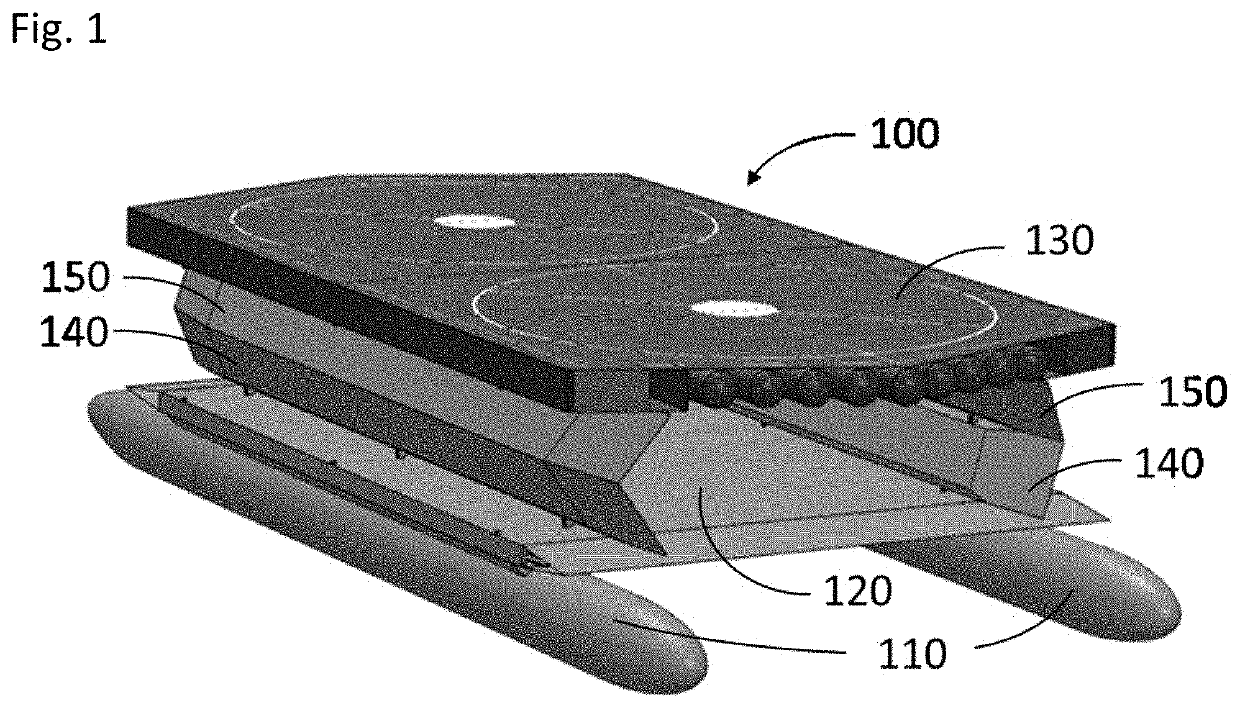
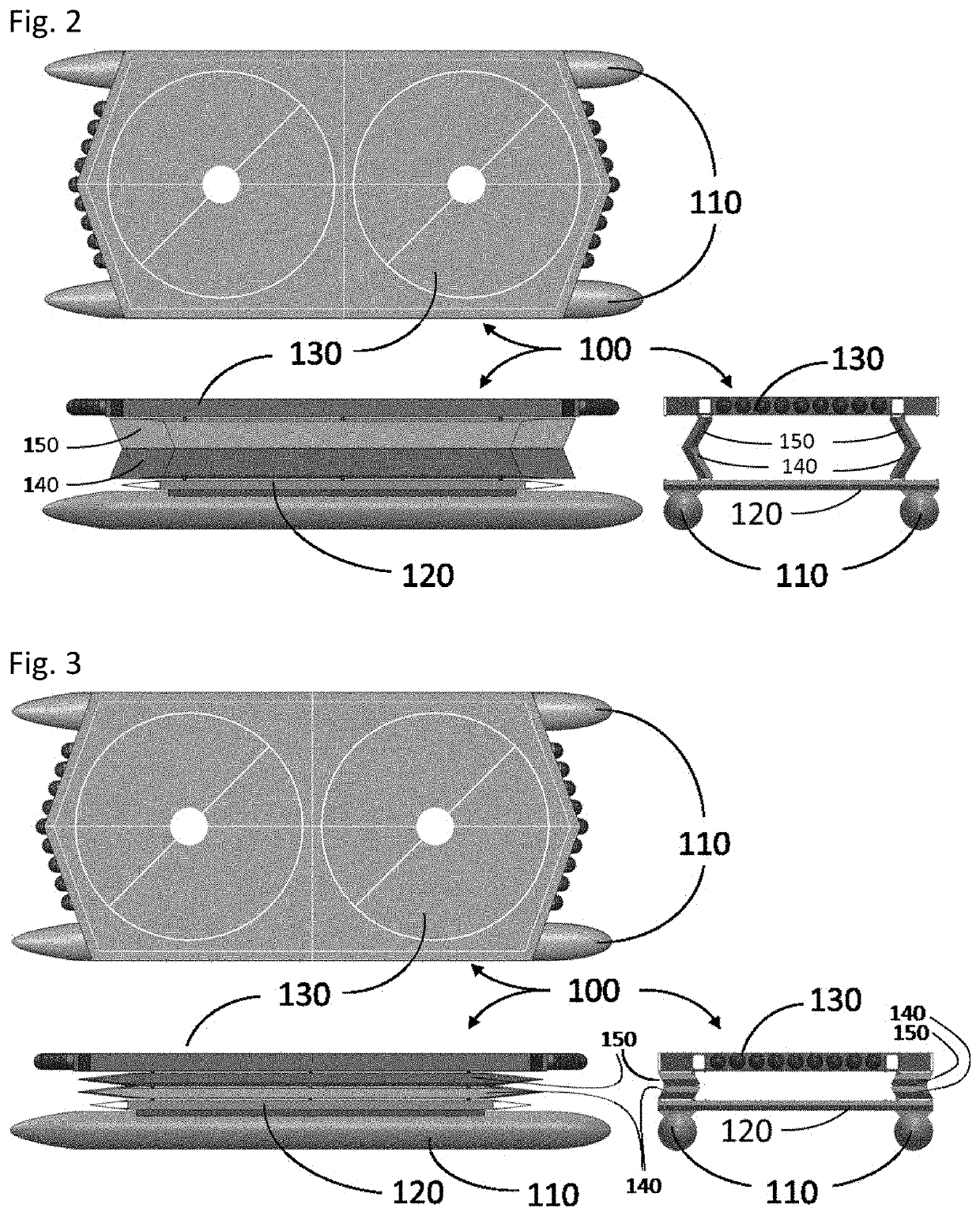
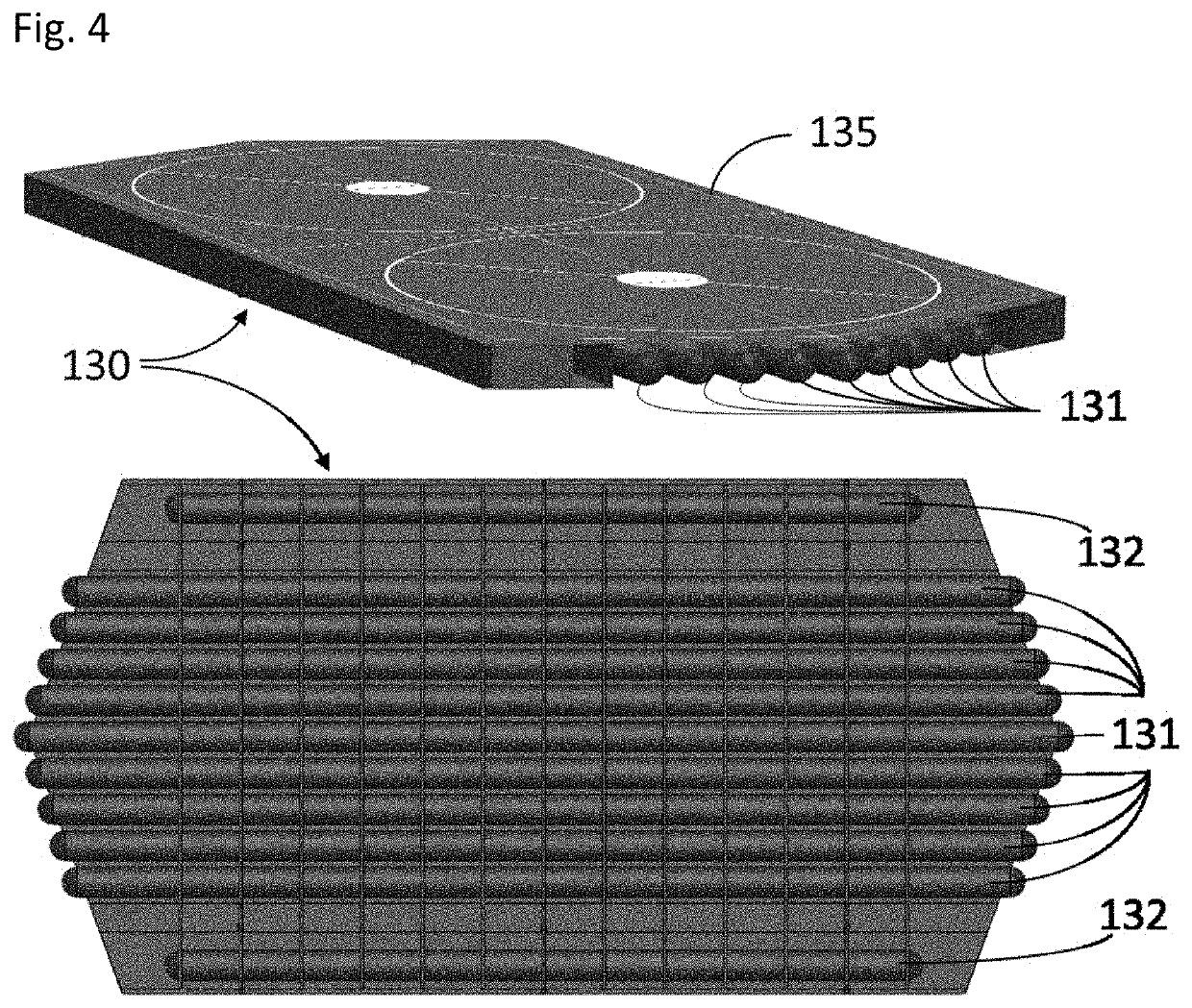
Autonomous Submersible Offshore Marine Platform
PatentActiveUS20200140047A1
Innovation
- An Autonomous fully-Submersible Offshore Marine Platform (ASOMP) that can transition between surface operations as a Barge or SWATH for aviation and logistics, and fully submerged operations to avoid threats, featuring modular mission capabilities, autonomous control, and the ability to hibernate and reposition underwater, reducing vulnerability and extending the range of manned and unmanned vehicles.

Maritime Defense Regulations and Export Control Policies
The regulatory landscape governing Air-Independent Propulsion (AIP) systems in next-generation submersible platforms is characterized by complex multilateral frameworks that significantly impact technology development, transfer, and deployment. International maritime defense regulations primarily operate under the Wassenaar Arrangement, which classifies AIP technologies as dual-use items subject to stringent export controls due to their potential military applications.
Export control policies for AIP systems fall under Category 8 of the Wassenaar Arrangement's Dual-Use List, specifically addressing marine equipment. These regulations encompass fuel cell technologies, Stirling engines, and closed-cycle propulsion systems when designed for underwater applications exceeding specific performance thresholds. The International Traffic in Arms Regulations (ITAR) and Export Administration Regulations (EAR) further restrict technology transfer between nations, particularly affecting collaborative development programs.
Regional regulatory variations create additional complexity for AIP system deployment. European Union regulations under the Dual-Use Regulation (EU) 2021/821 impose licensing requirements for intra-EU transfers of AIP technologies. NATO standardization agreements (STANAGs) establish interoperability requirements that influence design specifications for allied nations' submersible platforms, while non-aligned countries face more restrictive access to advanced AIP technologies.
Compliance frameworks require comprehensive documentation of technology specifications, end-user certifications, and ongoing monitoring of deployed systems. The Australia Group guidelines additionally restrict certain chemical precursors and materials used in AIP fuel cell systems, creating supply chain challenges for manufacturers. These regulatory constraints necessitate careful consideration of technology architecture decisions, often favoring domestically developed solutions over international partnerships.
Emerging regulatory trends indicate increasing scrutiny of autonomous underwater vehicle applications incorporating AIP systems, with proposed amendments to existing frameworks addressing unmanned platform capabilities. The evolving regulatory environment suggests future restrictions may extend to artificial intelligence integration and advanced sensor fusion technologies within AIP-powered submersible platforms.
Export control policies for AIP systems fall under Category 8 of the Wassenaar Arrangement's Dual-Use List, specifically addressing marine equipment. These regulations encompass fuel cell technologies, Stirling engines, and closed-cycle propulsion systems when designed for underwater applications exceeding specific performance thresholds. The International Traffic in Arms Regulations (ITAR) and Export Administration Regulations (EAR) further restrict technology transfer between nations, particularly affecting collaborative development programs.
Regional regulatory variations create additional complexity for AIP system deployment. European Union regulations under the Dual-Use Regulation (EU) 2021/821 impose licensing requirements for intra-EU transfers of AIP technologies. NATO standardization agreements (STANAGs) establish interoperability requirements that influence design specifications for allied nations' submersible platforms, while non-aligned countries face more restrictive access to advanced AIP technologies.
Compliance frameworks require comprehensive documentation of technology specifications, end-user certifications, and ongoing monitoring of deployed systems. The Australia Group guidelines additionally restrict certain chemical precursors and materials used in AIP fuel cell systems, creating supply chain challenges for manufacturers. These regulatory constraints necessitate careful consideration of technology architecture decisions, often favoring domestically developed solutions over international partnerships.
Emerging regulatory trends indicate increasing scrutiny of autonomous underwater vehicle applications incorporating AIP systems, with proposed amendments to existing frameworks addressing unmanned platform capabilities. The evolving regulatory environment suggests future restrictions may extend to artificial intelligence integration and advanced sensor fusion technologies within AIP-powered submersible platforms.
Environmental Impact Assessment of AIP Systems
Air-Independent Propulsion systems represent a significant advancement in submarine technology, yet their environmental implications require comprehensive evaluation as next-generation submersible platforms integrate these technologies. The environmental impact assessment of AIP systems encompasses multiple dimensions, including atmospheric emissions, marine ecosystem effects, and lifecycle environmental considerations that directly influence the sustainability profile of modern submarine operations.
Atmospheric emissions constitute a primary environmental concern for AIP systems, particularly those utilizing fuel cell technologies and Stirling engines. Fuel cell-based AIP systems, while producing minimal direct emissions during operation, require hydrogen storage and management systems that may involve methanol reforming processes. These reforming operations can generate carbon dioxide and trace amounts of other compounds, though at significantly lower levels compared to conventional diesel engines. Stirling engine configurations typically demonstrate higher emission profiles due to their combustion-based operation, requiring careful evaluation of exhaust gas composition and treatment systems.
Marine environmental impact assessment reveals that AIP systems generally exhibit reduced acoustic signatures compared to conventional propulsion methods, potentially minimizing disruption to marine life sensitive to underwater noise pollution. The elimination of snorkeling requirements during submerged operations reduces surface disturbance and associated environmental interactions. However, the thermal signatures of certain AIP configurations, particularly those involving combustion processes, require evaluation for their potential effects on local marine thermal environments during extended underwater operations.
Lifecycle environmental assessment of AIP systems encompasses manufacturing, operational, and disposal phases. The production of specialized components such as fuel cells, hydrogen storage systems, and advanced battery technologies involves rare earth elements and specialized manufacturing processes with distinct environmental footprints. Operational environmental benefits include reduced fuel consumption and extended submerged endurance, contributing to overall emission reductions per operational hour. End-of-life considerations involve the recycling and disposal of advanced materials, particularly lithium-ion batteries and fuel cell components, requiring specialized handling protocols.
The integration of renewable energy sources with AIP systems presents opportunities for further environmental impact reduction. Solar charging capabilities for battery systems and potential integration with hydrogen production from renewable sources could significantly enhance the environmental profile of next-generation submersible platforms, establishing AIP technology as a cornerstone of sustainable underwater vehicle development.
Atmospheric emissions constitute a primary environmental concern for AIP systems, particularly those utilizing fuel cell technologies and Stirling engines. Fuel cell-based AIP systems, while producing minimal direct emissions during operation, require hydrogen storage and management systems that may involve methanol reforming processes. These reforming operations can generate carbon dioxide and trace amounts of other compounds, though at significantly lower levels compared to conventional diesel engines. Stirling engine configurations typically demonstrate higher emission profiles due to their combustion-based operation, requiring careful evaluation of exhaust gas composition and treatment systems.
Marine environmental impact assessment reveals that AIP systems generally exhibit reduced acoustic signatures compared to conventional propulsion methods, potentially minimizing disruption to marine life sensitive to underwater noise pollution. The elimination of snorkeling requirements during submerged operations reduces surface disturbance and associated environmental interactions. However, the thermal signatures of certain AIP configurations, particularly those involving combustion processes, require evaluation for their potential effects on local marine thermal environments during extended underwater operations.
Lifecycle environmental assessment of AIP systems encompasses manufacturing, operational, and disposal phases. The production of specialized components such as fuel cells, hydrogen storage systems, and advanced battery technologies involves rare earth elements and specialized manufacturing processes with distinct environmental footprints. Operational environmental benefits include reduced fuel consumption and extended submerged endurance, contributing to overall emission reductions per operational hour. End-of-life considerations involve the recycling and disposal of advanced materials, particularly lithium-ion batteries and fuel cell components, requiring specialized handling protocols.
The integration of renewable energy sources with AIP systems presents opportunities for further environmental impact reduction. Solar charging capabilities for battery systems and potential integration with hydrogen production from renewable sources could significantly enhance the environmental profile of next-generation submersible platforms, establishing AIP technology as a cornerstone of sustainable underwater vehicle development.
Unlock deeper insights with Patsnap Eureka Quick Research — get a full tech report to explore trends and direct your research. Try now!
Generate Your Research Report Instantly with AI Agent
Supercharge your innovation with Patsnap Eureka AI Agent Platform!