

Assessing Cross Layer Optimization for Inter Carrier Interference Reduction
MAR 17, 20269 MIN READ
Generate Your Research Report Instantly with AI Agent
PatSnap Eureka helps you evaluate technical feasibility & market potential.
Cross Layer Optimization ICI Background and Objectives
Cross-layer optimization for Inter-Carrier Interference (ICI) reduction has emerged as a critical research domain in modern wireless communication systems, particularly with the proliferation of Orthogonal Frequency Division Multiplexing (OFDM) and multi-carrier technologies. The fundamental challenge stems from the loss of orthogonality between subcarriers due to various impairments including frequency offset, phase noise, Doppler spread, and timing synchronization errors.
The evolution of wireless communication systems from single-carrier to multi-carrier architectures has introduced unprecedented spectral efficiency gains, yet simultaneously created new interference challenges. ICI manifests when the orthogonality condition among subcarriers is violated, causing energy leakage between adjacent and non-adjacent subcarriers. This phenomenon significantly degrades system performance, particularly in high-mobility scenarios and dense deployment environments.
Traditional approaches to ICI mitigation have primarily focused on single-layer solutions, addressing the problem at either the physical layer through signal processing techniques or at higher layers through resource allocation strategies. However, these isolated approaches often fail to capture the complex interdependencies between different protocol layers and their collective impact on interference patterns.
The cross-layer optimization paradigm represents a paradigm shift from conventional layered architectures toward integrated design methodologies. This approach recognizes that optimal ICI reduction requires coordinated decision-making across multiple protocol layers, including physical layer signal processing, medium access control, network layer routing, and application layer adaptation mechanisms.
Primary objectives of cross-layer optimization for ICI reduction encompass several key dimensions. Performance enhancement targets include maximizing spectral efficiency while maintaining acceptable bit error rates and throughput levels. Adaptive resource management aims to dynamically allocate frequency, time, and power resources based on real-time channel conditions and interference measurements.
System robustness objectives focus on developing resilient communication frameworks capable of maintaining service quality under varying interference conditions. This includes designing adaptive modulation and coding schemes, implementing intelligent handover mechanisms, and developing predictive interference mitigation strategies.
Energy efficiency considerations have become increasingly important, particularly for battery-powered devices and green communication initiatives. Cross-layer optimization seeks to minimize power consumption while achieving desired performance targets through coordinated power control, sleep scheduling, and computational resource management.
The integration challenge involves developing unified optimization frameworks that can simultaneously address multiple objectives while respecting the constraints and requirements of individual protocol layers. This requires sophisticated mathematical modeling, advanced optimization algorithms, and practical implementation strategies that balance complexity with performance gains.
The evolution of wireless communication systems from single-carrier to multi-carrier architectures has introduced unprecedented spectral efficiency gains, yet simultaneously created new interference challenges. ICI manifests when the orthogonality condition among subcarriers is violated, causing energy leakage between adjacent and non-adjacent subcarriers. This phenomenon significantly degrades system performance, particularly in high-mobility scenarios and dense deployment environments.
Traditional approaches to ICI mitigation have primarily focused on single-layer solutions, addressing the problem at either the physical layer through signal processing techniques or at higher layers through resource allocation strategies. However, these isolated approaches often fail to capture the complex interdependencies between different protocol layers and their collective impact on interference patterns.
The cross-layer optimization paradigm represents a paradigm shift from conventional layered architectures toward integrated design methodologies. This approach recognizes that optimal ICI reduction requires coordinated decision-making across multiple protocol layers, including physical layer signal processing, medium access control, network layer routing, and application layer adaptation mechanisms.
Primary objectives of cross-layer optimization for ICI reduction encompass several key dimensions. Performance enhancement targets include maximizing spectral efficiency while maintaining acceptable bit error rates and throughput levels. Adaptive resource management aims to dynamically allocate frequency, time, and power resources based on real-time channel conditions and interference measurements.
System robustness objectives focus on developing resilient communication frameworks capable of maintaining service quality under varying interference conditions. This includes designing adaptive modulation and coding schemes, implementing intelligent handover mechanisms, and developing predictive interference mitigation strategies.
Energy efficiency considerations have become increasingly important, particularly for battery-powered devices and green communication initiatives. Cross-layer optimization seeks to minimize power consumption while achieving desired performance targets through coordinated power control, sleep scheduling, and computational resource management.
The integration challenge involves developing unified optimization frameworks that can simultaneously address multiple objectives while respecting the constraints and requirements of individual protocol layers. This requires sophisticated mathematical modeling, advanced optimization algorithms, and practical implementation strategies that balance complexity with performance gains.
Market Demand for ICI Mitigation Solutions
The telecommunications industry faces mounting pressure to address Inter Carrier Interference (ICI) as network densification and spectrum efficiency demands continue to escalate. Mobile network operators worldwide are experiencing significant revenue losses due to ICI-related service degradation, particularly in dense urban environments where multiple carriers operate in close proximity. The proliferation of 5G networks has intensified this challenge, as higher frequency bands and advanced modulation schemes are more susceptible to interference effects.
Enterprise customers represent a substantial market segment driving demand for ICI mitigation solutions. Large corporations operating private networks or requiring guaranteed service quality are increasingly willing to invest in advanced interference management technologies. These organizations prioritize network reliability over cost considerations, creating opportunities for premium ICI mitigation solutions that can ensure consistent performance across mission-critical applications.
The Internet of Things (IoT) ecosystem presents another significant demand driver for ICI reduction technologies. As billions of connected devices compete for limited spectrum resources, effective interference management becomes essential for maintaining network scalability. Industrial IoT applications, smart city infrastructure, and autonomous vehicle communications all require robust ICI mitigation to function reliably in congested spectrum environments.
Network infrastructure vendors are responding to operator demands by integrating sophisticated ICI mitigation capabilities into their equipment portfolios. The market shows strong preference for solutions that can be deployed through software updates rather than hardware replacements, reflecting operators' desire to maximize return on existing infrastructure investments. Cross-layer optimization approaches are particularly attractive because they can leverage existing network intelligence without requiring complete system overhauls.
Regulatory pressures are also shaping market demand patterns. Government agencies worldwide are implementing stricter interference standards and encouraging spectrum sharing initiatives, creating compliance-driven demand for advanced ICI mitigation technologies. These regulatory frameworks are pushing operators toward proactive interference management rather than reactive troubleshooting approaches.
The competitive landscape reveals strong market appetite for solutions that can demonstrate measurable improvements in network capacity and user experience metrics. Operators are increasingly evaluating ICI mitigation technologies based on their ability to deliver quantifiable business outcomes rather than purely technical specifications.
Enterprise customers represent a substantial market segment driving demand for ICI mitigation solutions. Large corporations operating private networks or requiring guaranteed service quality are increasingly willing to invest in advanced interference management technologies. These organizations prioritize network reliability over cost considerations, creating opportunities for premium ICI mitigation solutions that can ensure consistent performance across mission-critical applications.
The Internet of Things (IoT) ecosystem presents another significant demand driver for ICI reduction technologies. As billions of connected devices compete for limited spectrum resources, effective interference management becomes essential for maintaining network scalability. Industrial IoT applications, smart city infrastructure, and autonomous vehicle communications all require robust ICI mitigation to function reliably in congested spectrum environments.
Network infrastructure vendors are responding to operator demands by integrating sophisticated ICI mitigation capabilities into their equipment portfolios. The market shows strong preference for solutions that can be deployed through software updates rather than hardware replacements, reflecting operators' desire to maximize return on existing infrastructure investments. Cross-layer optimization approaches are particularly attractive because they can leverage existing network intelligence without requiring complete system overhauls.
Regulatory pressures are also shaping market demand patterns. Government agencies worldwide are implementing stricter interference standards and encouraging spectrum sharing initiatives, creating compliance-driven demand for advanced ICI mitigation technologies. These regulatory frameworks are pushing operators toward proactive interference management rather than reactive troubleshooting approaches.
The competitive landscape reveals strong market appetite for solutions that can demonstrate measurable improvements in network capacity and user experience metrics. Operators are increasingly evaluating ICI mitigation technologies based on their ability to deliver quantifiable business outcomes rather than purely technical specifications.
Current ICI Challenges in Multi-Carrier Systems
Inter-carrier interference represents one of the most significant technical barriers limiting the performance and scalability of modern multi-carrier communication systems. In orthogonal frequency division multiplexing (OFDM) and orthogonal frequency division multiple access (OFDMA) systems, ICI primarily emerges from the loss of orthogonality between subcarriers, fundamentally compromising the theoretical foundation upon which these systems operate.
Frequency offset errors constitute a primary source of ICI in multi-carrier environments. These offsets arise from oscillator instabilities, Doppler shifts in mobile scenarios, and imperfect frequency synchronization between transmitter and receiver chains. Even minimal frequency deviations can cause substantial spectral leakage, where energy from one subcarrier contaminates adjacent channels, creating a cascading interference effect across the entire frequency spectrum.
Phase noise presents another critical challenge, particularly in high-frequency applications and systems employing cost-effective oscillators. The random phase fluctuations introduce time-varying interference patterns that are difficult to predict and compensate. This becomes especially problematic in dense subcarrier configurations where the guard bands are minimized to maximize spectral efficiency.
Timing synchronization errors further exacerbate ICI issues by disrupting the precise temporal alignment required for maintaining subcarrier orthogonality. In multi-user scenarios, different propagation delays and processing latencies create asynchronous transmission conditions, leading to inter-symbol interference that manifests as additional ICI components.
Channel selectivity in frequency domain poses significant challenges for wideband multi-carrier systems. When the coherence bandwidth becomes comparable to or smaller than the subcarrier spacing, the flat fading assumption breaks down, resulting in frequency-selective distortion that destroys orthogonality relationships between adjacent subcarriers.
Hardware impairments including amplifier nonlinearities, I/Q imbalances, and analog-to-digital converter quantization errors contribute to ICI generation through spectral regrowth and signal distortion mechanisms. These effects become more pronounced as systems push toward higher data rates and increased spectral efficiency targets.
The cumulative impact of these ICI sources creates a complex interference environment that significantly degrades system performance through reduced signal-to-interference ratios, increased bit error rates, and diminished overall throughput capacity, necessitating sophisticated mitigation strategies.
Frequency offset errors constitute a primary source of ICI in multi-carrier environments. These offsets arise from oscillator instabilities, Doppler shifts in mobile scenarios, and imperfect frequency synchronization between transmitter and receiver chains. Even minimal frequency deviations can cause substantial spectral leakage, where energy from one subcarrier contaminates adjacent channels, creating a cascading interference effect across the entire frequency spectrum.
Phase noise presents another critical challenge, particularly in high-frequency applications and systems employing cost-effective oscillators. The random phase fluctuations introduce time-varying interference patterns that are difficult to predict and compensate. This becomes especially problematic in dense subcarrier configurations where the guard bands are minimized to maximize spectral efficiency.
Timing synchronization errors further exacerbate ICI issues by disrupting the precise temporal alignment required for maintaining subcarrier orthogonality. In multi-user scenarios, different propagation delays and processing latencies create asynchronous transmission conditions, leading to inter-symbol interference that manifests as additional ICI components.
Channel selectivity in frequency domain poses significant challenges for wideband multi-carrier systems. When the coherence bandwidth becomes comparable to or smaller than the subcarrier spacing, the flat fading assumption breaks down, resulting in frequency-selective distortion that destroys orthogonality relationships between adjacent subcarriers.
Hardware impairments including amplifier nonlinearities, I/Q imbalances, and analog-to-digital converter quantization errors contribute to ICI generation through spectral regrowth and signal distortion mechanisms. These effects become more pronounced as systems push toward higher data rates and increased spectral efficiency targets.
The cumulative impact of these ICI sources creates a complex interference environment that significantly degrades system performance through reduced signal-to-interference ratios, increased bit error rates, and diminished overall throughput capacity, necessitating sophisticated mitigation strategies.
Existing Cross Layer ICI Mitigation Approaches
01 OFDM-based inter-carrier interference mitigation techniques
Orthogonal Frequency Division Multiplexing (OFDM) systems are susceptible to inter-carrier interference (ICI) caused by frequency offsets, Doppler shifts, and timing errors. Various signal processing techniques can be employed to mitigate ICI in OFDM systems, including frequency domain equalization, time domain windowing, and carrier frequency offset compensation. These methods help maintain orthogonality between subcarriers and reduce interference, thereby improving system performance and spectral efficiency.- OFDM-based inter-carrier interference mitigation techniques: Orthogonal Frequency Division Multiplexing (OFDM) systems are susceptible to inter-carrier interference (ICI) caused by frequency offsets, Doppler shifts, and timing errors. Various signal processing techniques can be employed to mitigate ICI in OFDM systems, including frequency domain equalization, time domain windowing, and carrier frequency offset compensation. These methods help maintain orthogonality between subcarriers and reduce interference, thereby improving system performance and spectral efficiency.
- Cross-layer optimization for resource allocation: Cross-layer optimization involves coordinating multiple protocol layers to improve overall system performance. In wireless communication systems, this approach can optimize resource allocation by considering physical layer characteristics, MAC layer scheduling, and network layer routing simultaneously. By sharing information across layers, the system can adaptively allocate bandwidth, power, and modulation schemes to minimize interference and maximize throughput while meeting quality of service requirements.
- Advanced receiver design for interference cancellation: Sophisticated receiver architectures can be designed to detect and cancel inter-carrier interference through various techniques. These include successive interference cancellation, parallel interference cancellation, and minimum mean square error receivers. Advanced signal processing algorithms at the receiver can estimate interference patterns and subtract them from the received signal, improving signal-to-interference-plus-noise ratio and enhancing overall system capacity.
- Adaptive modulation and coding schemes: Dynamic adjustment of modulation and coding schemes based on channel conditions and interference levels can significantly reduce the impact of inter-carrier interference. By monitoring channel quality indicators and interference measurements, the system can select appropriate modulation orders and coding rates that balance data rate and robustness. This adaptive approach allows the system to maintain reliable communication even in the presence of varying interference conditions, optimizing spectral efficiency across different channel states.
- Multi-antenna techniques for interference management: Multiple-input multiple-output (MIMO) and beamforming technologies provide spatial diversity and directional transmission capabilities that can effectively manage inter-carrier interference. By utilizing multiple antennas at transmitter and receiver, the system can exploit spatial dimensions to separate desired signals from interference. Precoding techniques and spatial filtering can be optimized across protocol layers to steer beams toward intended users while nulling interference, enhancing system capacity and coverage.
02 Cross-layer optimization for resource allocation
Cross-layer optimization approaches integrate information from multiple protocol layers to jointly optimize resource allocation and interference management. By considering physical layer characteristics, MAC layer scheduling, and network layer routing simultaneously, these techniques can adaptively allocate bandwidth, power, and modulation schemes to minimize inter-carrier interference while maximizing throughput and quality of service. This holistic approach enables more efficient utilization of wireless resources compared to traditional layered architectures.Expand Specific Solutions03 Advanced channel estimation and equalization
Accurate channel estimation is critical for mitigating inter-carrier interference in multi-carrier systems. Advanced algorithms employ pilot symbols, training sequences, and adaptive filtering techniques to estimate channel characteristics and compensate for frequency-selective fading and interference. Equalization methods in both frequency and time domains can be optimized across layers to reduce ICI effects, improve signal detection accuracy, and enhance overall system robustness in dynamic wireless environments.Expand Specific Solutions04 Interference coordination in multi-user MIMO systems
In multi-user multiple-input multiple-output (MIMO) systems, inter-carrier interference can be managed through coordinated transmission strategies and precoding techniques. Cross-layer optimization enables joint design of beamforming, user scheduling, and power control to minimize interference between users while maximizing spatial multiplexing gains. These coordination mechanisms can be implemented at base stations or through distributed algorithms, allowing for improved spectral efficiency and user fairness in dense network deployments.Expand Specific Solutions05 Cognitive radio and dynamic spectrum access
Cognitive radio technologies enable dynamic spectrum access and interference avoidance through cross-layer optimization. By sensing spectrum availability and adapting transmission parameters across physical, MAC, and network layers, cognitive systems can opportunistically utilize spectrum while minimizing inter-carrier interference to primary and secondary users. Spectrum sensing algorithms, dynamic frequency selection, and adaptive modulation schemes work together to optimize spectrum utilization and coexistence in heterogeneous wireless networks.Expand Specific Solutions
Key Players in ICI Reduction Technology
Cross-layer optimization for inter-carrier interference reduction represents a rapidly evolving telecommunications technology addressing critical 5G and beyond-5G network challenges. The industry is in a mature development phase with substantial market potential driven by increasing spectrum efficiency demands. Major telecommunications equipment manufacturers like Ericsson, Huawei, ZTE, and Nokia lead the competitive landscape, leveraging extensive R&D capabilities and patent portfolios. Semiconductor giants including Qualcomm, NXP, and Texas Instruments contribute essential chipset solutions, while carriers like NTT Docomo and Verizon drive practical implementation requirements. The technology demonstrates high maturity levels among established players, with companies like Mitsubishi Electric and research institutions such as ETRI advancing algorithmic innovations. Market consolidation is evident as traditional telecom vendors collaborate with semiconductor specialists to deliver integrated solutions, positioning this technology as commercially viable for next-generation wireless networks.
Telefonaktiebolaget LM Ericsson
Technical Solution: Ericsson has implemented cross-layer optimization solutions that address ICI through coordinated beamforming and advanced receiver design. Their approach combines physical layer techniques such as successive interference cancellation with network layer optimization for resource allocation. The solution includes adaptive modulation and coding schemes that adjust based on interference levels, integrated with scheduling algorithms that minimize ICI across multiple users. Their technology particularly focuses on massive MIMO systems where cross-layer coordination between antenna selection, precoding, and scheduling provides significant ICI reduction benefits.
Strengths: Extensive 5G infrastructure experience, proven network optimization capabilities, strong R&D investment. Weaknesses: Solutions may be optimized primarily for their own equipment ecosystem.
ZTE Corp.
Technical Solution: ZTE has implemented cross-layer optimization frameworks specifically targeting ICI reduction in dense network deployments. Their solution combines advanced interference alignment techniques at the physical layer with intelligent scheduling algorithms at the MAC layer. The approach includes dynamic spectrum management, coordinated beamforming, and adaptive power control mechanisms that work together to minimize inter-carrier interference. Their technology particularly focuses on small cell networks and heterogeneous network scenarios where ICI is a significant challenge, utilizing cloud-based optimization engines for real-time parameter adjustment.
Strengths: Cost-effective solutions, strong focus on dense network scenarios, good integration with existing infrastructure. Weaknesses: Limited global market presence compared to top-tier competitors, less extensive patent portfolio.
Core Patents in Cross Layer ICI Optimization
Apparatus and method for managing wireless resources
PatentWO2008035844A1
Innovation
- An apparatus and method that separates multimedia data into bit stream layers using a layered video compression codec, detects the information amounts of each layer, and allocates these layers to frequency bands based on their information content, thereby reducing ICI and optimizing channel capacity.


Amelioration in inter-carrier interference in OFDM
PatentInactiveUS7130355B1
Innovation
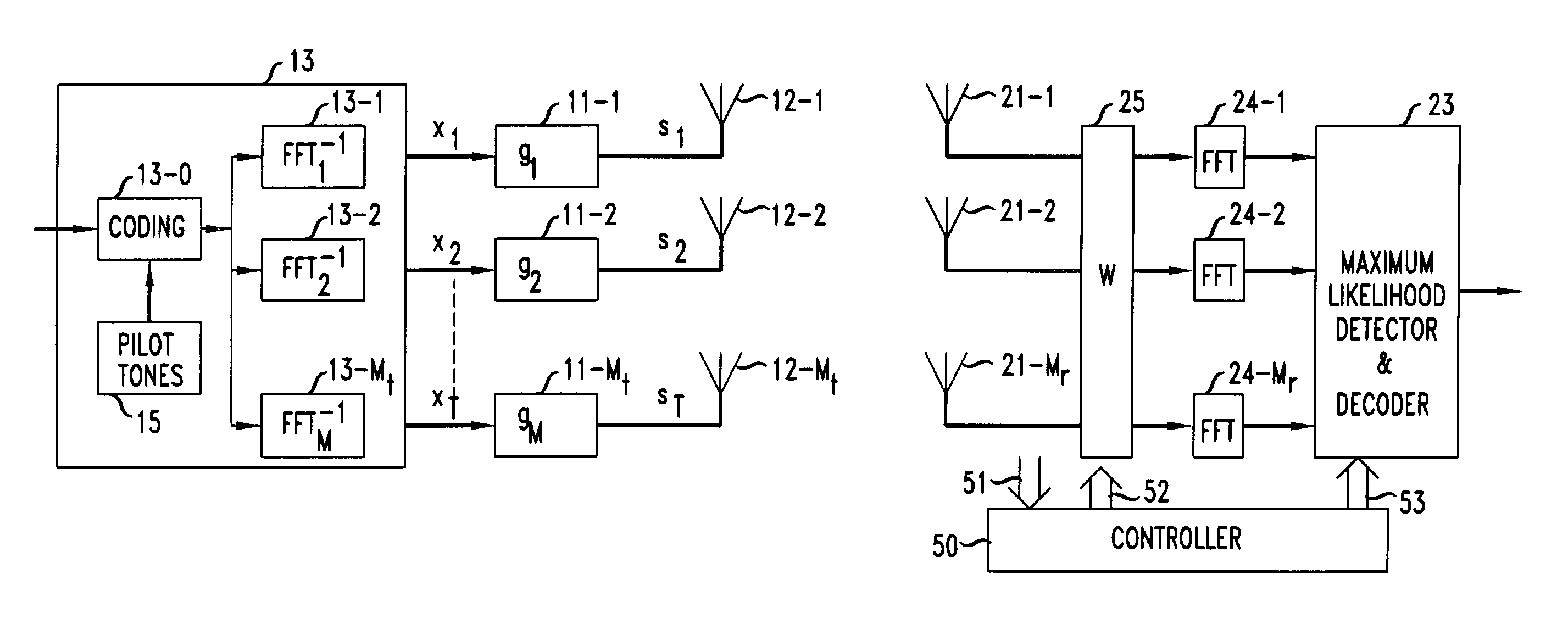
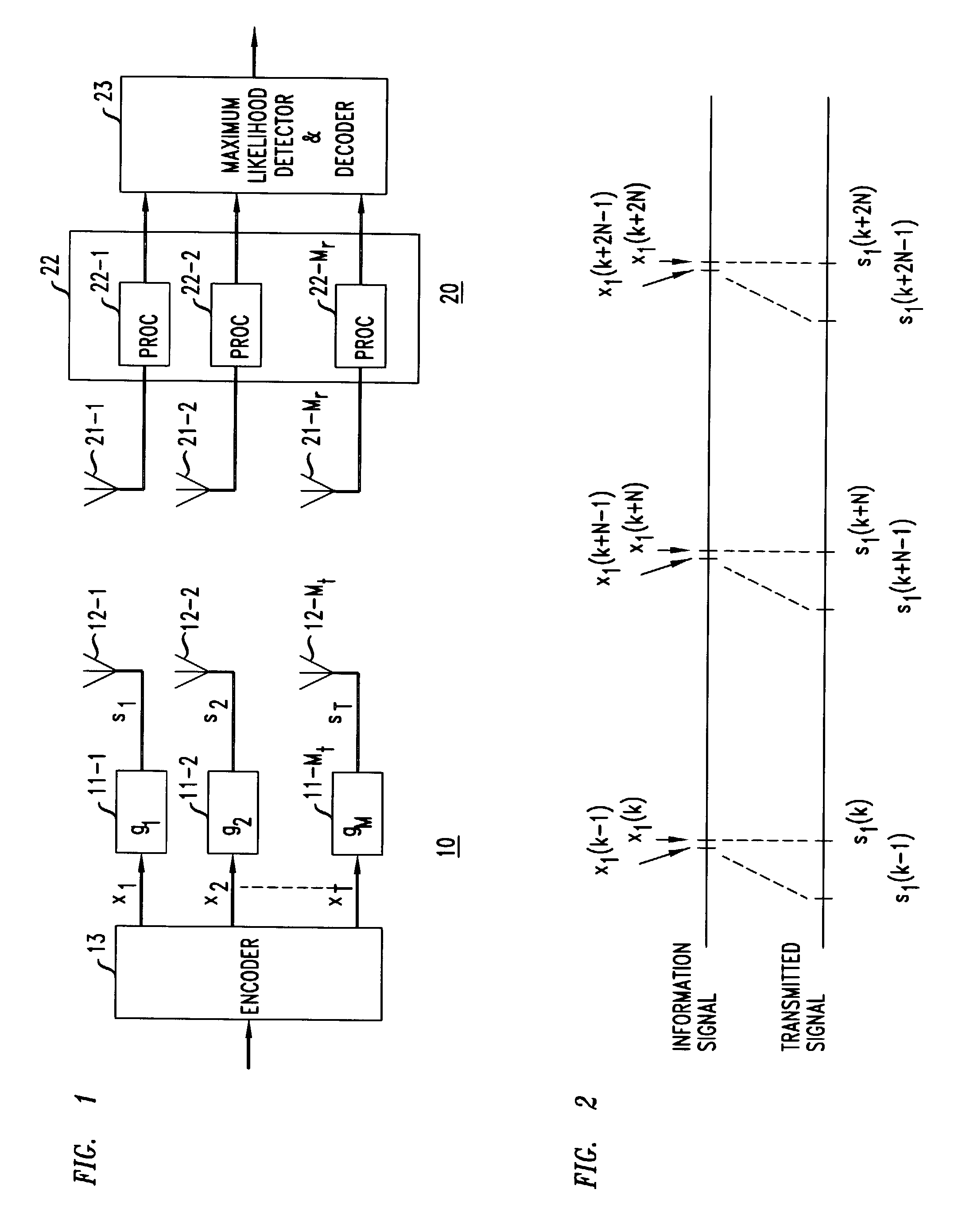
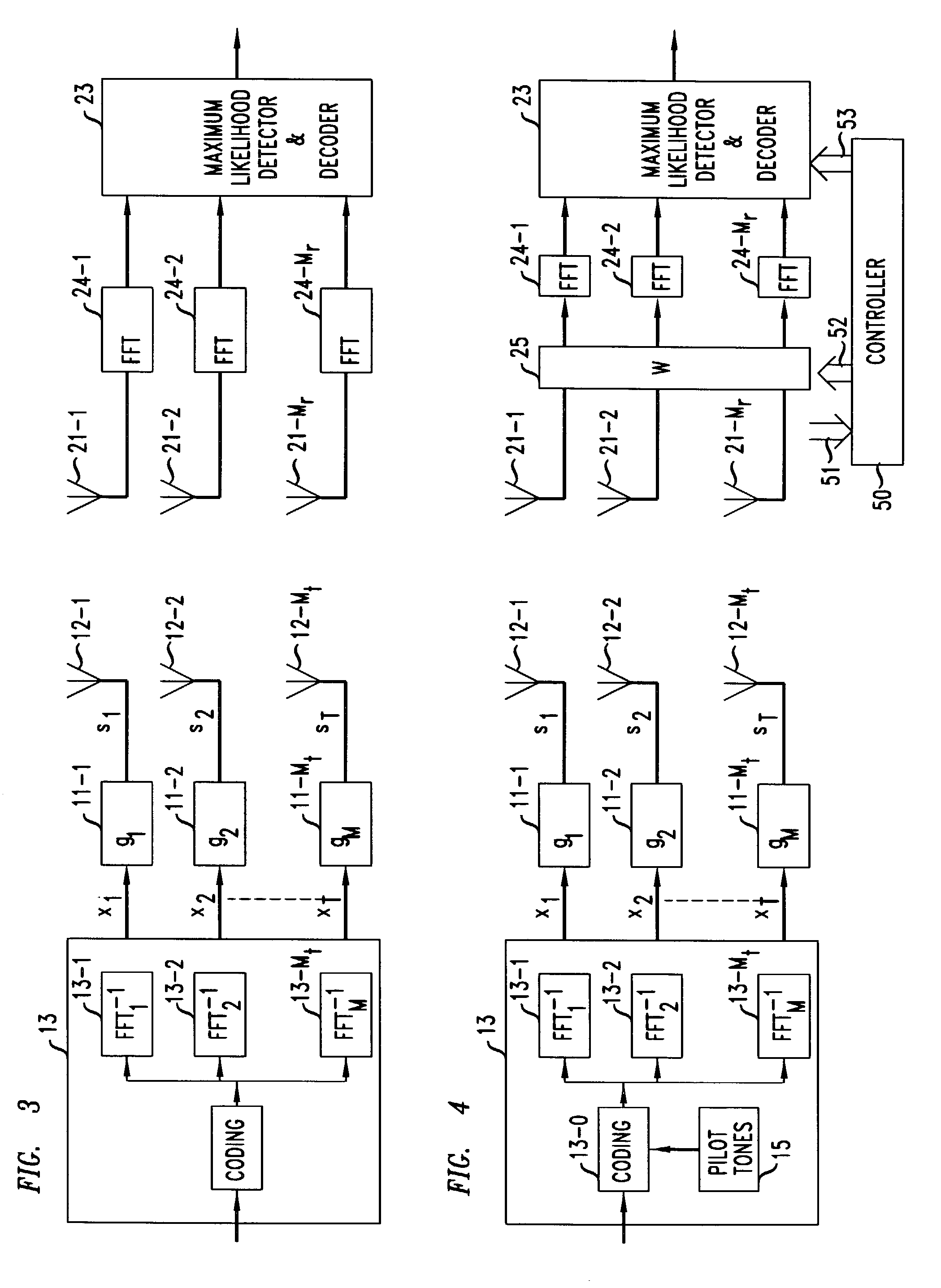
- A receiver arrangement with a filter that uses pilot tones to determine and interpolate channel coefficients, minimizing ICI by employing estimates from previous blocks, and applying these coefficients to a filter to reduce interference in OFDM systems, both with and without multiple antennas and space-time coding.

Spectrum Regulatory Framework for ICI Management
The spectrum regulatory framework for Inter-Carrier Interference (ICI) management represents a critical governance structure that establishes the legal and technical boundaries within which cross-layer optimization techniques can be implemented. Current regulatory approaches primarily focus on static spectrum allocation methods, where frequency bands are assigned to specific operators with fixed guard bands to minimize interference. However, these traditional frameworks often lack the flexibility required to accommodate dynamic cross-layer optimization strategies that could significantly enhance spectrum efficiency.
International regulatory bodies, including the International Telecommunication Union (ITU) and regional authorities such as the Federal Communications Commission (FCC) and European Telecommunications Standards Institute (ETSI), have begun recognizing the limitations of rigid spectrum management policies. These organizations are gradually developing adaptive regulatory mechanisms that can support intelligent interference mitigation techniques while maintaining service quality standards and preventing harmful interference between operators.
The emergence of cognitive radio technologies and software-defined networking has prompted regulators to consider more flexible spectrum sharing arrangements. Dynamic spectrum access policies are being explored to enable real-time coordination between carriers, allowing for optimized resource allocation based on instantaneous traffic demands and interference conditions. These regulatory adaptations are essential for implementing cross-layer optimization algorithms that require rapid spectrum reallocation and power control adjustments.
Compliance requirements for ICI management typically mandate that operators maintain interference levels below specified thresholds, measured through standardized metrics such as Signal-to-Interference-plus-Noise Ratio (SINR) and Adjacent Channel Leakage Ratio (ACLR). Modern regulatory frameworks are evolving to incorporate performance-based standards rather than purely prescriptive technical requirements, enabling operators to employ innovative cross-layer optimization techniques provided they meet interference protection criteria.
Cross-border coordination mechanisms represent another crucial aspect of spectrum regulatory frameworks, particularly for managing ICI in border regions where multiple national regulatory jurisdictions overlap. Harmonized technical standards and coordination procedures are being developed to facilitate seamless implementation of interference reduction techniques across different regulatory domains, ensuring that cross-layer optimization strategies remain effective in international deployment scenarios.
International regulatory bodies, including the International Telecommunication Union (ITU) and regional authorities such as the Federal Communications Commission (FCC) and European Telecommunications Standards Institute (ETSI), have begun recognizing the limitations of rigid spectrum management policies. These organizations are gradually developing adaptive regulatory mechanisms that can support intelligent interference mitigation techniques while maintaining service quality standards and preventing harmful interference between operators.
The emergence of cognitive radio technologies and software-defined networking has prompted regulators to consider more flexible spectrum sharing arrangements. Dynamic spectrum access policies are being explored to enable real-time coordination between carriers, allowing for optimized resource allocation based on instantaneous traffic demands and interference conditions. These regulatory adaptations are essential for implementing cross-layer optimization algorithms that require rapid spectrum reallocation and power control adjustments.
Compliance requirements for ICI management typically mandate that operators maintain interference levels below specified thresholds, measured through standardized metrics such as Signal-to-Interference-plus-Noise Ratio (SINR) and Adjacent Channel Leakage Ratio (ACLR). Modern regulatory frameworks are evolving to incorporate performance-based standards rather than purely prescriptive technical requirements, enabling operators to employ innovative cross-layer optimization techniques provided they meet interference protection criteria.
Cross-border coordination mechanisms represent another crucial aspect of spectrum regulatory frameworks, particularly for managing ICI in border regions where multiple national regulatory jurisdictions overlap. Harmonized technical standards and coordination procedures are being developed to facilitate seamless implementation of interference reduction techniques across different regulatory domains, ensuring that cross-layer optimization strategies remain effective in international deployment scenarios.
Performance Metrics for Cross Layer ICI Assessment
The evaluation of cross-layer optimization effectiveness for Inter Carrier Interference (ICI) reduction requires a comprehensive set of performance metrics that span multiple network layers and operational dimensions. These metrics serve as quantitative indicators to assess the success of optimization strategies and provide benchmarks for comparing different approaches.
Signal quality metrics form the foundation of ICI assessment, with Signal-to-Interference-plus-Noise Ratio (SINR) being the primary indicator. SINR measurements at the receiver end directly reflect the impact of interference mitigation techniques. Bit Error Rate (BER) and Block Error Rate (BLER) provide complementary insights into the actual data transmission quality, translating interference levels into practical communication performance indicators.
Throughput-related metrics capture the system's capacity improvements resulting from ICI reduction. Peak data rates, average throughput per user, and cell-edge throughput specifically highlight how cross-layer optimization enhances network performance in interference-limited scenarios. Spectral efficiency measurements quantify the effective utilization of available frequency resources after implementing optimization techniques.
Latency metrics assess the temporal impact of cross-layer optimization mechanisms. End-to-end delay, processing delay introduced by optimization algorithms, and handover delay variations provide insights into the trade-offs between interference reduction and system responsiveness. These measurements are particularly critical for real-time applications where delay sensitivity is paramount.
Resource utilization metrics evaluate the efficiency of optimization strategies across different network layers. Power consumption measurements at both device and base station levels indicate the energy efficiency of ICI mitigation techniques. Computational complexity metrics assess the processing overhead introduced by cross-layer optimization algorithms, including CPU utilization and memory requirements.
Network-level performance indicators encompass coverage area improvements, user satisfaction indices, and quality of service metrics. These holistic measurements demonstrate how localized interference reduction translates into broader network performance enhancements and user experience improvements across diverse service categories.
Signal quality metrics form the foundation of ICI assessment, with Signal-to-Interference-plus-Noise Ratio (SINR) being the primary indicator. SINR measurements at the receiver end directly reflect the impact of interference mitigation techniques. Bit Error Rate (BER) and Block Error Rate (BLER) provide complementary insights into the actual data transmission quality, translating interference levels into practical communication performance indicators.
Throughput-related metrics capture the system's capacity improvements resulting from ICI reduction. Peak data rates, average throughput per user, and cell-edge throughput specifically highlight how cross-layer optimization enhances network performance in interference-limited scenarios. Spectral efficiency measurements quantify the effective utilization of available frequency resources after implementing optimization techniques.
Latency metrics assess the temporal impact of cross-layer optimization mechanisms. End-to-end delay, processing delay introduced by optimization algorithms, and handover delay variations provide insights into the trade-offs between interference reduction and system responsiveness. These measurements are particularly critical for real-time applications where delay sensitivity is paramount.
Resource utilization metrics evaluate the efficiency of optimization strategies across different network layers. Power consumption measurements at both device and base station levels indicate the energy efficiency of ICI mitigation techniques. Computational complexity metrics assess the processing overhead introduced by cross-layer optimization algorithms, including CPU utilization and memory requirements.
Network-level performance indicators encompass coverage area improvements, user satisfaction indices, and quality of service metrics. These holistic measurements demonstrate how localized interference reduction translates into broader network performance enhancements and user experience improvements across diverse service categories.
Unlock deeper insights with PatSnap Eureka Quick Research — get a full tech report to explore trends and direct your research. Try now!
Generate Your Research Report Instantly with AI Agent
Supercharge your innovation with PatSnap Eureka AI Agent Platform!