

Inter Carrier Interference in Smart Home Networks: Minimization Techniques
MAR 17, 20269 MIN READ
Generate Your Research Report Instantly with AI Agent
PatSnap Eureka helps you evaluate technical feasibility & market potential.
ICI Challenges in Smart Home Network Evolution
Smart home networks face unprecedented challenges as they evolve from simple device connectivity to complex, multi-protocol ecosystems. The proliferation of wireless communication standards including Wi-Fi 6/6E, Zigbee 3.0, Thread, and emerging Matter protocol creates a dense electromagnetic environment where Inter Carrier Interference (ICI) becomes a critical limiting factor for network performance and reliability.
The fundamental challenge stems from the coexistence of multiple wireless technologies operating in overlapping frequency bands, particularly the congested 2.4 GHz ISM band. As smart home deployments scale beyond traditional single-protocol implementations, the interference patterns become increasingly complex and unpredictable. Legacy interference mitigation techniques, originally designed for homogeneous networks, prove inadequate when addressing the heterogeneous nature of modern smart home environments.
Spectral efficiency degradation represents a primary concern as the number of connected devices continues to grow exponentially. Current projections indicate that average smart homes will contain over 50 connected devices by 2025, creating unprecedented density challenges. The interference manifests not only between different protocols but also within protocol families, as multiple devices compete for limited channel resources while maintaining quality of service requirements for latency-sensitive applications.
Power management complexity adds another layer of difficulty to ICI mitigation efforts. Smart home devices operate under diverse power constraints, from battery-powered sensors requiring ultra-low power consumption to high-throughput streaming devices demanding consistent performance. Traditional interference cancellation techniques often require significant computational resources and power consumption, making them unsuitable for resource-constrained IoT devices that form the backbone of smart home networks.
The dynamic nature of smart home environments presents unique temporal challenges for ICI management. Unlike enterprise networks with predictable traffic patterns, smart home networks experience highly variable interference conditions based on user behavior, device mobility, and environmental factors. Adaptive interference mitigation systems must respond rapidly to changing conditions while maintaining network stability and avoiding oscillatory behavior that could degrade overall performance.
Interoperability requirements further complicate ICI mitigation strategies. Smart home networks must support seamless communication between devices from different manufacturers using various protocols and standards. This necessitates interference management solutions that can operate across protocol boundaries while maintaining backward compatibility with existing deployed devices, creating significant technical and implementation challenges for next-generation smart home network architectures.
The fundamental challenge stems from the coexistence of multiple wireless technologies operating in overlapping frequency bands, particularly the congested 2.4 GHz ISM band. As smart home deployments scale beyond traditional single-protocol implementations, the interference patterns become increasingly complex and unpredictable. Legacy interference mitigation techniques, originally designed for homogeneous networks, prove inadequate when addressing the heterogeneous nature of modern smart home environments.
Spectral efficiency degradation represents a primary concern as the number of connected devices continues to grow exponentially. Current projections indicate that average smart homes will contain over 50 connected devices by 2025, creating unprecedented density challenges. The interference manifests not only between different protocols but also within protocol families, as multiple devices compete for limited channel resources while maintaining quality of service requirements for latency-sensitive applications.
Power management complexity adds another layer of difficulty to ICI mitigation efforts. Smart home devices operate under diverse power constraints, from battery-powered sensors requiring ultra-low power consumption to high-throughput streaming devices demanding consistent performance. Traditional interference cancellation techniques often require significant computational resources and power consumption, making them unsuitable for resource-constrained IoT devices that form the backbone of smart home networks.
The dynamic nature of smart home environments presents unique temporal challenges for ICI management. Unlike enterprise networks with predictable traffic patterns, smart home networks experience highly variable interference conditions based on user behavior, device mobility, and environmental factors. Adaptive interference mitigation systems must respond rapidly to changing conditions while maintaining network stability and avoiding oscillatory behavior that could degrade overall performance.
Interoperability requirements further complicate ICI mitigation strategies. Smart home networks must support seamless communication between devices from different manufacturers using various protocols and standards. This necessitates interference management solutions that can operate across protocol boundaries while maintaining backward compatibility with existing deployed devices, creating significant technical and implementation challenges for next-generation smart home network architectures.
Market Demand for Reliable Smart Home Connectivity
The global smart home market has experienced unprecedented growth, driven by increasing consumer demand for seamless connectivity and automated living experiences. This expansion has created substantial market pressure for reliable, interference-free communication systems that can support multiple connected devices simultaneously without performance degradation.
Consumer expectations have evolved significantly, with households now requiring robust connectivity solutions that can handle diverse device ecosystems including IoT sensors, smart appliances, security systems, and entertainment platforms. The proliferation of wireless devices operating in overlapping frequency bands has intensified the need for advanced interference mitigation technologies, making inter-carrier interference minimization a critical market requirement rather than merely a technical consideration.
Market research indicates that connectivity reliability ranks among the top three purchasing factors for smart home consumers, directly influencing adoption rates and brand loyalty. Service providers and equipment manufacturers face increasing pressure to deliver solutions that maintain consistent performance across dense device environments, particularly in urban areas where spectrum congestion is most severe.
The residential broadband and telecommunications sectors have identified interference management as a key differentiator in competitive markets. Network operators are actively seeking technologies that can optimize spectrum utilization while maintaining quality of service standards, creating substantial demand for sophisticated interference minimization techniques.
Enterprise and commercial smart building applications represent another significant demand driver, where connectivity failures can result in operational disruptions and financial losses. These sectors require enterprise-grade reliability standards that exceed typical residential requirements, pushing the development of more advanced interference mitigation solutions.
The emergence of bandwidth-intensive applications such as augmented reality, high-definition streaming, and real-time monitoring systems has further amplified the market need for interference-free connectivity. These applications cannot tolerate the latency and throughput variations typically associated with inter-carrier interference, creating urgent demand for effective minimization techniques.
Regional market dynamics also influence demand patterns, with densely populated areas experiencing higher interference levels and consequently greater demand for mitigation solutions. This geographic variation has created targeted market opportunities for specialized interference management technologies tailored to specific deployment environments and regulatory frameworks.
Consumer expectations have evolved significantly, with households now requiring robust connectivity solutions that can handle diverse device ecosystems including IoT sensors, smart appliances, security systems, and entertainment platforms. The proliferation of wireless devices operating in overlapping frequency bands has intensified the need for advanced interference mitigation technologies, making inter-carrier interference minimization a critical market requirement rather than merely a technical consideration.
Market research indicates that connectivity reliability ranks among the top three purchasing factors for smart home consumers, directly influencing adoption rates and brand loyalty. Service providers and equipment manufacturers face increasing pressure to deliver solutions that maintain consistent performance across dense device environments, particularly in urban areas where spectrum congestion is most severe.
The residential broadband and telecommunications sectors have identified interference management as a key differentiator in competitive markets. Network operators are actively seeking technologies that can optimize spectrum utilization while maintaining quality of service standards, creating substantial demand for sophisticated interference minimization techniques.
Enterprise and commercial smart building applications represent another significant demand driver, where connectivity failures can result in operational disruptions and financial losses. These sectors require enterprise-grade reliability standards that exceed typical residential requirements, pushing the development of more advanced interference mitigation solutions.
The emergence of bandwidth-intensive applications such as augmented reality, high-definition streaming, and real-time monitoring systems has further amplified the market need for interference-free connectivity. These applications cannot tolerate the latency and throughput variations typically associated with inter-carrier interference, creating urgent demand for effective minimization techniques.
Regional market dynamics also influence demand patterns, with densely populated areas experiencing higher interference levels and consequently greater demand for mitigation solutions. This geographic variation has created targeted market opportunities for specialized interference management technologies tailored to specific deployment environments and regulatory frameworks.
Current ICI Issues and Mitigation Limitations
Inter-carrier interference represents a fundamental challenge in contemporary smart home networks, where multiple wireless devices operating across overlapping frequency bands create significant signal degradation. The proliferation of IoT devices, smart appliances, and wireless sensors within confined residential spaces has intensified this problem, leading to reduced data throughput, increased latency, and compromised network reliability. Current smart home ecosystems typically employ various wireless standards including Wi-Fi, Zigbee, Z-Wave, and Bluetooth, each operating within similar frequency ranges, particularly the crowded 2.4 GHz ISM band.
Existing mitigation approaches demonstrate notable limitations in addressing the complexity of modern smart home interference scenarios. Traditional frequency planning techniques, while effective in controlled environments, struggle with the dynamic nature of residential wireless networks where device mobility and varying traffic patterns create unpredictable interference patterns. Adaptive channel allocation algorithms often fail to account for the heterogeneous nature of smart home devices, which exhibit diverse transmission power levels, duty cycles, and communication protocols.
Power control mechanisms, another conventional approach, face constraints in smart home applications due to the battery-powered nature of many IoT devices and the need to maintain adequate coverage throughout residential spaces. These methods frequently result in suboptimal performance trade-offs between interference reduction and network connectivity, particularly affecting edge devices located at the periphery of the home network coverage area.
Advanced beamforming and spatial diversity techniques, while promising in theory, encounter practical implementation challenges in smart home environments. The limited antenna configurations of consumer-grade devices, combined with the complex multipath propagation characteristics of indoor environments, significantly reduce the effectiveness of these sophisticated interference mitigation strategies.
Machine learning-based interference prediction and mitigation systems, despite showing potential in research environments, face deployment barriers including computational complexity constraints of edge devices, training data requirements, and the need for continuous adaptation to changing network conditions. These approaches often require centralized processing capabilities that may not align with the distributed architecture preferences of many smart home implementations.
Current standardization efforts have attempted to address ICI through improved coexistence protocols and spectrum etiquette mechanisms. However, these solutions primarily focus on same-technology interference scenarios and provide limited effectiveness when dealing with cross-technology interference between different wireless standards operating simultaneously within smart home networks.
Existing mitigation approaches demonstrate notable limitations in addressing the complexity of modern smart home interference scenarios. Traditional frequency planning techniques, while effective in controlled environments, struggle with the dynamic nature of residential wireless networks where device mobility and varying traffic patterns create unpredictable interference patterns. Adaptive channel allocation algorithms often fail to account for the heterogeneous nature of smart home devices, which exhibit diverse transmission power levels, duty cycles, and communication protocols.
Power control mechanisms, another conventional approach, face constraints in smart home applications due to the battery-powered nature of many IoT devices and the need to maintain adequate coverage throughout residential spaces. These methods frequently result in suboptimal performance trade-offs between interference reduction and network connectivity, particularly affecting edge devices located at the periphery of the home network coverage area.
Advanced beamforming and spatial diversity techniques, while promising in theory, encounter practical implementation challenges in smart home environments. The limited antenna configurations of consumer-grade devices, combined with the complex multipath propagation characteristics of indoor environments, significantly reduce the effectiveness of these sophisticated interference mitigation strategies.
Machine learning-based interference prediction and mitigation systems, despite showing potential in research environments, face deployment barriers including computational complexity constraints of edge devices, training data requirements, and the need for continuous adaptation to changing network conditions. These approaches often require centralized processing capabilities that may not align with the distributed architecture preferences of many smart home implementations.
Current standardization efforts have attempted to address ICI through improved coexistence protocols and spectrum etiquette mechanisms. However, these solutions primarily focus on same-technology interference scenarios and provide limited effectiveness when dealing with cross-technology interference between different wireless standards operating simultaneously within smart home networks.
Existing ICI Reduction Techniques and Methods
01 OFDM carrier frequency offset compensation techniques
Methods and systems for compensating carrier frequency offset in Orthogonal Frequency Division Multiplexing (OFDM) systems to reduce inter-carrier interference. These techniques involve estimating and correcting frequency offset errors that occur due to oscillator mismatches between transmitter and receiver. Various algorithms including pilot-based estimation, blind estimation, and iterative correction methods are employed to minimize the impact of frequency offset on system performance.- OFDM carrier frequency offset estimation and compensation: Techniques for estimating and compensating carrier frequency offset (CFO) in orthogonal frequency division multiplexing (OFDM) systems to mitigate inter-carrier interference. Methods include using pilot symbols, training sequences, and correlation-based algorithms to detect and correct frequency misalignment between transmitter and receiver oscillators. These approaches help maintain orthogonality between subcarriers and reduce ICI degradation.
- ICI cancellation through equalization techniques: Implementation of equalization methods specifically designed to cancel or suppress inter-carrier interference in multi-carrier communication systems. These techniques employ adaptive filters, decision feedback equalizers, and iterative cancellation schemes that estimate and subtract ICI components from received signals. The methods improve signal-to-interference ratio and overall system performance in time-varying channels.
- Windowing and filtering methods for ICI reduction: Application of time-domain windowing functions and frequency-domain filtering to reduce spectral leakage and inter-carrier interference. These methods shape transmitted and received signals to minimize sidelobe levels and improve subcarrier isolation. Techniques include raised cosine windows, Gaussian filters, and optimized pulse shaping that maintain spectral efficiency while reducing interference between adjacent carriers.
- Multiple antenna and MIMO techniques for ICI mitigation: Utilization of multiple-input multiple-output (MIMO) antenna configurations and spatial processing to combat inter-carrier interference. These approaches exploit spatial diversity and beamforming to separate desired signals from interference components. Techniques include spatial filtering, interference alignment, and coordinated transmission schemes that reduce ICI through antenna array processing and advanced signal processing algorithms.
- Doppler spread compensation and channel tracking: Methods for tracking and compensating time-varying channel effects and Doppler spread that cause inter-carrier interference in mobile communication scenarios. These techniques employ channel estimation algorithms, predictive filtering, and adaptive modulation schemes to follow rapid channel variations. Approaches include Kalman filtering, basis expansion models, and pilot-aided tracking that maintain subcarrier orthogonality under high mobility conditions.
02 Time domain windowing and filtering for ICI mitigation
Application of windowing functions and filtering techniques in the time domain to suppress inter-carrier interference in multi-carrier communication systems. These methods shape the transmitted signal to reduce spectral leakage and minimize interference between adjacent subcarriers. Techniques include raised cosine windowing, pulse shaping filters, and guard interval optimization to improve orthogonality between carriers.Expand Specific Solutions03 Channel estimation and equalization for interference cancellation
Advanced channel estimation and equalization methods designed to cancel or reduce inter-carrier interference in wireless communication systems. These approaches utilize training sequences, pilot symbols, or decision-directed techniques to estimate channel characteristics and apply appropriate equalization to compensate for channel-induced interference. Adaptive equalization algorithms continuously update coefficients to track time-varying channel conditions.Expand Specific Solutions04 Multiple antenna and MIMO techniques for ICI suppression
Utilization of multiple antenna systems and Multiple-Input Multiple-Output (MIMO) technologies to mitigate inter-carrier interference through spatial diversity and interference cancellation. These methods exploit spatial dimensions to separate interfering signals and enhance desired signal reception. Techniques include beamforming, spatial filtering, interference alignment, and coordinated multi-point transmission to reduce the effects of inter-carrier interference.Expand Specific Solutions05 Subcarrier spacing and numerology optimization
Methods for optimizing subcarrier spacing, symbol duration, and other numerology parameters to minimize inter-carrier interference in multi-carrier systems. These techniques involve adaptive selection of transmission parameters based on channel conditions, mobility scenarios, and service requirements. Dynamic adjustment of cyclic prefix length, subcarrier bandwidth, and frame structure helps maintain orthogonality and reduce interference in various operating environments.Expand Specific Solutions
Key Players in Smart Home Network Solutions
The inter-carrier interference minimization in smart home networks represents a rapidly evolving technological landscape driven by the proliferation of connected devices and diverse wireless protocols. The market is experiencing significant growth as smart home adoption accelerates globally, creating substantial demand for robust interference mitigation solutions. Technology maturity varies considerably across market participants, with established telecommunications giants like Ericsson, Huawei, and Qualcomm leading advanced research in sophisticated interference cancellation algorithms and adaptive frequency management. Consumer electronics leaders including Apple, Xiaomi, and Philips focus on device-level optimization and seamless connectivity solutions. Semiconductor specialists such as Realtek and NXP develop hardware-based interference reduction capabilities, while networking equipment providers like Nokia Technologies and ZTE concentrate on infrastructure-level solutions. The competitive landscape reflects a multi-tiered approach where traditional telecom infrastructure providers, consumer device manufacturers, and specialized semiconductor companies collaborate and compete to address interference challenges across different network layers and deployment scenarios.
Telefonaktiebolaget LM Ericsson
Technical Solution: Ericsson's ICI mitigation strategy centers on network-level coordination and advanced scheduling algorithms. Their solution implements coordinated scheduling techniques that synchronize transmission timing across multiple smart home devices to minimize interference windows. The technology utilizes sophisticated power control mechanisms combined with adaptive modulation schemes that adjust transmission parameters based on real-time interference measurements. Ericsson's approach includes network slicing capabilities that can isolate different smart home applications into separate virtual networks, reducing the potential for inter-carrier interference between different service types.
Strengths: Strong network infrastructure expertise, proven carrier-grade solutions, excellent coordination algorithms. Weaknesses: Solutions may be over-engineered for simple smart home applications, higher cost for residential deployments.
ZTE Corp.
Technical Solution: ZTE implements a comprehensive ICI reduction framework based on advanced filter design and signal processing techniques. Their solution employs windowing functions and pulse shaping filters specifically optimized for smart home communication scenarios. The technology incorporates adaptive filtering algorithms that can dynamically adjust filter parameters based on detected interference levels. ZTE's approach includes cross-layer optimization techniques that coordinate between physical layer interference mitigation and higher-layer resource allocation to achieve optimal performance in multi-device smart home environments.
Strengths: Cost-effective solutions, strong focus on residential applications, good integration with existing infrastructure. Weaknesses: Limited advanced AI capabilities compared to competitors, smaller ecosystem of compatible devices.
Core Patents in ICI Cancellation Algorithms
Amelioration in inter-carrier interference in OFDM
PatentInactiveUS7130355B1
Innovation
- A receiver arrangement with a filter that uses pilot tones to determine and interpolate channel coefficients, minimizing ICI by employing estimates from previous blocks, and applying these coefficients to a filter to reduce interference in OFDM systems, both with and without multiple antennas and space-time coding.
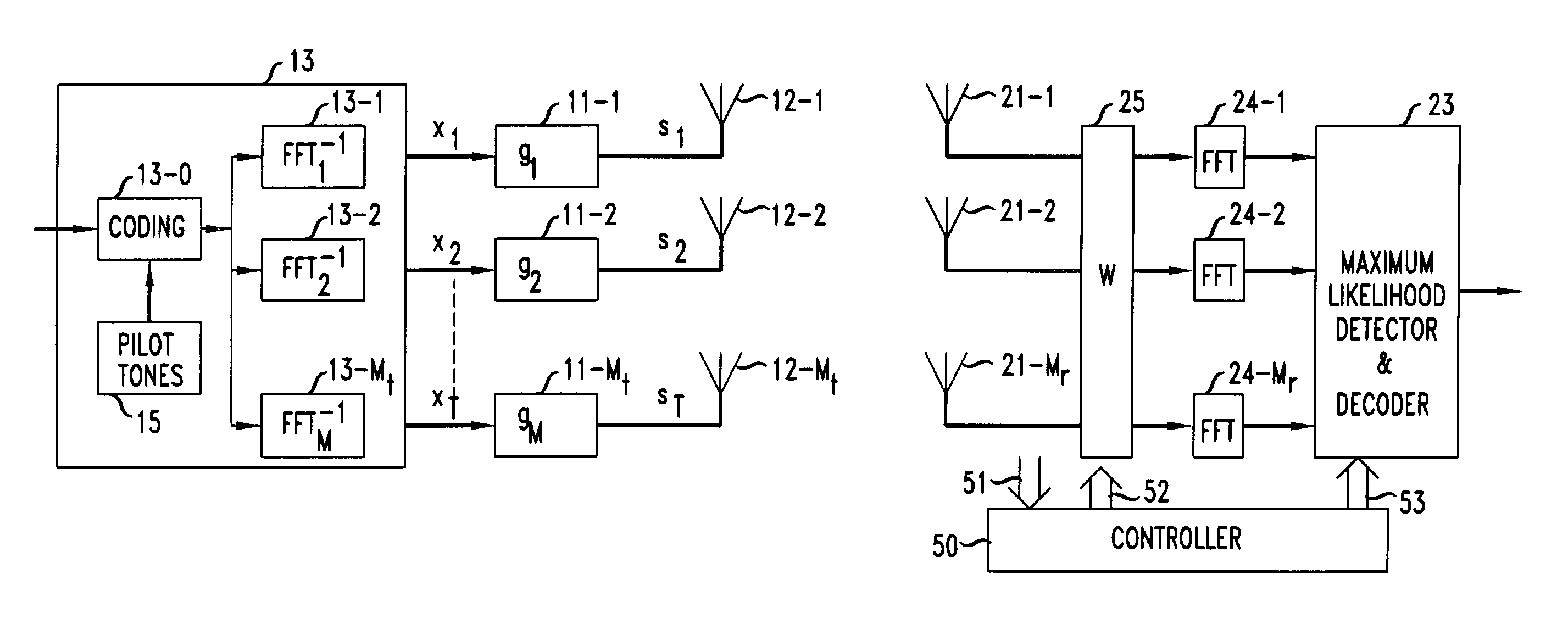
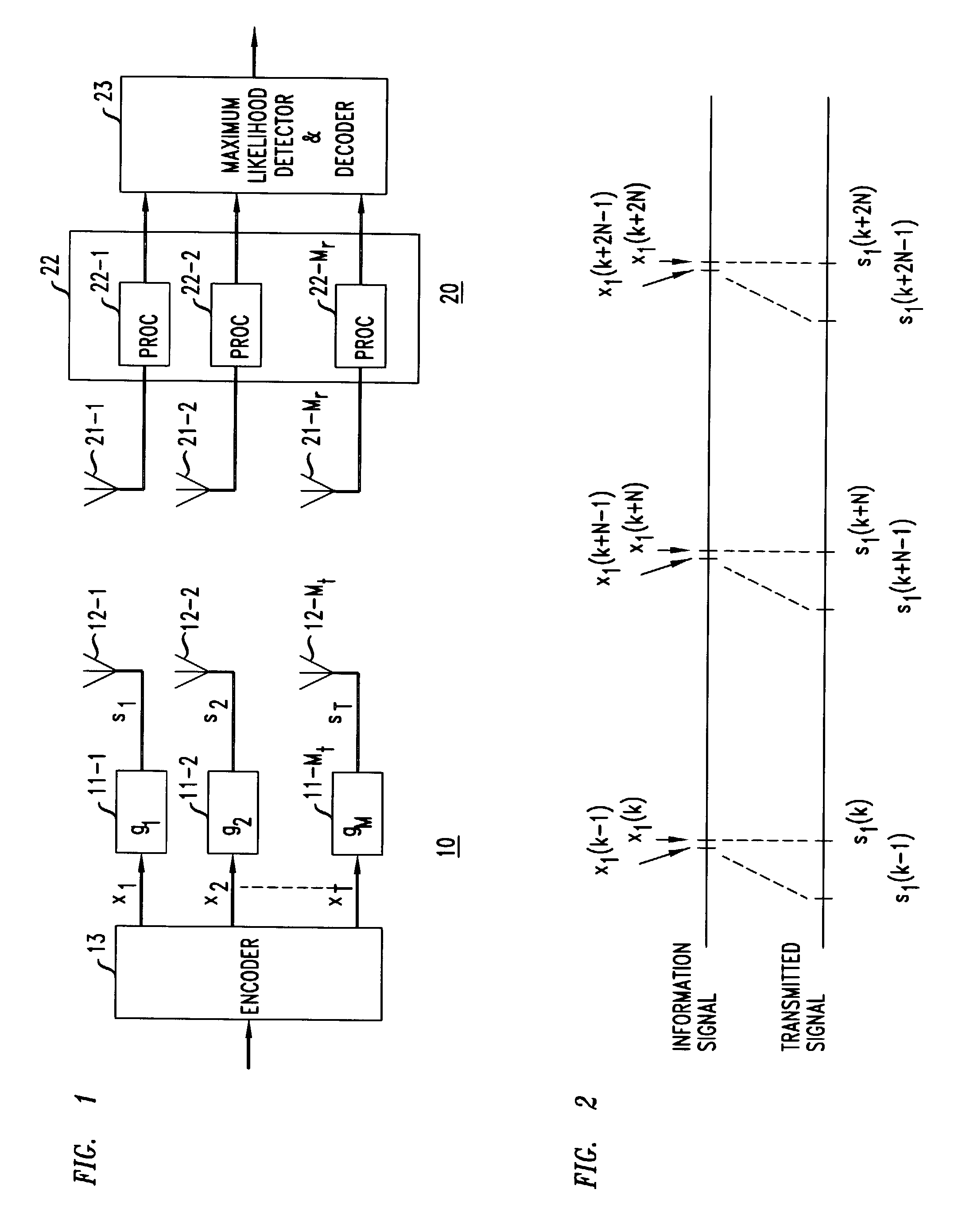
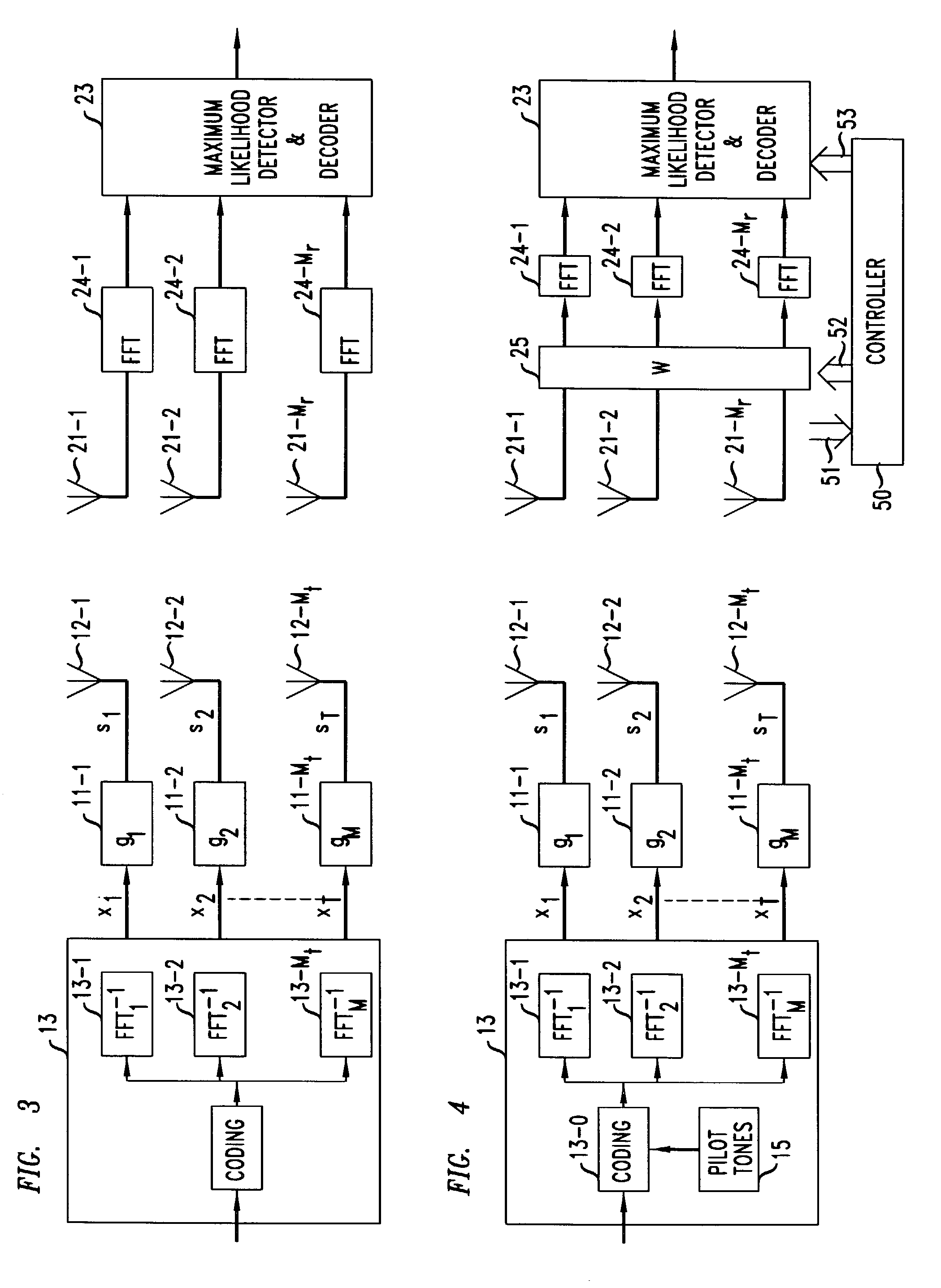

Configurations corresponding to inter-carrier interference
PatentPendingUS20240187288A1
Innovation
- The implementation of adaptive phase-tracking reference-signal (PT-RS) configurations and ICI reporting mechanisms, where user equipment (UE) receives and transmits configuration information for ICI estimation and reporting, allowing for ICI pre-distortion and PT-RS adaptation based on phase noise levels, enhancing spectral efficiency by adjusting PT-RS density and reporting granularity.


Spectrum Regulation Impact on Smart Home Networks
Spectrum regulation frameworks significantly influence the deployment and performance of smart home networks, particularly in addressing inter-carrier interference challenges. Regulatory bodies worldwide have established distinct approaches to spectrum allocation for unlicensed bands commonly utilized by smart home devices, including the 2.4 GHz ISM band, 5 GHz UNII bands, and emerging 6 GHz allocations. These regulatory decisions directly impact interference mitigation strategies and network optimization techniques.
The Federal Communications Commission (FCC) in the United States has pioneered dynamic spectrum access policies, enabling more flexible spectrum utilization through technologies like Automated Frequency Coordination (AFC) systems. This regulatory approach facilitates advanced interference minimization techniques by allowing smart home networks to dynamically select optimal frequency channels based on real-time spectrum occupancy data. European regulatory frameworks under ETSI standards emphasize power control mechanisms and duty cycle limitations, which inherently reduce inter-carrier interference but may constrain network performance optimization strategies.
Regional variations in spectrum regulations create significant implications for global smart home device manufacturers. While North American markets benefit from higher power limits and broader frequency allocations, European markets impose stricter emission masks and coexistence requirements. Asian markets, particularly Japan and South Korea, have implemented unique spectrum sharing mechanisms that enable more sophisticated interference coordination protocols between different wireless technologies operating in smart home environments.
Emerging regulatory trends toward spectrum harmonization and cognitive radio technologies are reshaping interference minimization approaches. The introduction of 6 GHz spectrum for unlicensed use has created new opportunities for implementing advanced interference avoidance techniques, including machine learning-based spectrum sensing and predictive channel allocation algorithms. However, these opportunities come with stringent protection requirements for incumbent services, necessitating more sophisticated interference detection and mitigation capabilities.
The regulatory emphasis on coexistence standards, such as IEEE 802.19 and ETSI EN 303 687, is driving the development of standardized interference coordination mechanisms. These standards mandate specific protocols for inter-system communication and interference reporting, directly influencing the technical approaches available for minimizing inter-carrier interference in dense smart home deployments.
The Federal Communications Commission (FCC) in the United States has pioneered dynamic spectrum access policies, enabling more flexible spectrum utilization through technologies like Automated Frequency Coordination (AFC) systems. This regulatory approach facilitates advanced interference minimization techniques by allowing smart home networks to dynamically select optimal frequency channels based on real-time spectrum occupancy data. European regulatory frameworks under ETSI standards emphasize power control mechanisms and duty cycle limitations, which inherently reduce inter-carrier interference but may constrain network performance optimization strategies.
Regional variations in spectrum regulations create significant implications for global smart home device manufacturers. While North American markets benefit from higher power limits and broader frequency allocations, European markets impose stricter emission masks and coexistence requirements. Asian markets, particularly Japan and South Korea, have implemented unique spectrum sharing mechanisms that enable more sophisticated interference coordination protocols between different wireless technologies operating in smart home environments.
Emerging regulatory trends toward spectrum harmonization and cognitive radio technologies are reshaping interference minimization approaches. The introduction of 6 GHz spectrum for unlicensed use has created new opportunities for implementing advanced interference avoidance techniques, including machine learning-based spectrum sensing and predictive channel allocation algorithms. However, these opportunities come with stringent protection requirements for incumbent services, necessitating more sophisticated interference detection and mitigation capabilities.
The regulatory emphasis on coexistence standards, such as IEEE 802.19 and ETSI EN 303 687, is driving the development of standardized interference coordination mechanisms. These standards mandate specific protocols for inter-system communication and interference reporting, directly influencing the technical approaches available for minimizing inter-carrier interference in dense smart home deployments.
Energy Efficiency in ICI Mitigation Systems
Energy efficiency has emerged as a critical design consideration in Inter Carrier Interference (ICI) mitigation systems for smart home networks, driven by the proliferation of battery-powered IoT devices and growing environmental consciousness. Traditional ICI mitigation approaches often prioritize performance optimization without adequately addressing power consumption, leading to reduced device lifespans and increased operational costs in residential deployments.
The energy consumption profile of ICI mitigation systems encompasses multiple components, including signal processing algorithms, hardware implementations, and communication protocols. Digital signal processing operations such as channel estimation, equalization, and interference cancellation typically account for 40-60% of total system power consumption. Advanced techniques like successive interference cancellation and maximum likelihood detection, while effective in reducing ICI, impose significant computational overhead that translates to higher energy demands.
Modern energy-efficient ICI mitigation strategies employ adaptive algorithms that dynamically adjust processing complexity based on channel conditions and interference levels. These systems implement power-aware scheduling mechanisms that activate intensive mitigation techniques only when interference exceeds predetermined thresholds. Sleep mode optimization and duty cycling further reduce energy consumption by selectively powering down unused components during low-activity periods.
Hardware-level optimizations play a crucial role in achieving energy efficiency. Low-power digital signal processors, optimized for specific ICI mitigation algorithms, can reduce energy consumption by 30-50% compared to general-purpose processors. Application-specific integrated circuits (ASICs) and field-programmable gate arrays (FPGAs) offer additional power savings through parallel processing architectures and dedicated computational units.
Cross-layer optimization approaches integrate energy considerations across physical, medium access control, and network layers. These systems balance interference mitigation effectiveness with power consumption by implementing intelligent resource allocation algorithms that consider both signal quality requirements and energy constraints. Machine learning techniques increasingly enable predictive power management, allowing systems to anticipate interference patterns and pre-emptively adjust energy allocation strategies.
The trade-off between ICI mitigation performance and energy efficiency remains a fundamental challenge, requiring careful optimization of system parameters to achieve acceptable interference suppression while maintaining sustainable power consumption levels for long-term smart home network operation.
The energy consumption profile of ICI mitigation systems encompasses multiple components, including signal processing algorithms, hardware implementations, and communication protocols. Digital signal processing operations such as channel estimation, equalization, and interference cancellation typically account for 40-60% of total system power consumption. Advanced techniques like successive interference cancellation and maximum likelihood detection, while effective in reducing ICI, impose significant computational overhead that translates to higher energy demands.
Modern energy-efficient ICI mitigation strategies employ adaptive algorithms that dynamically adjust processing complexity based on channel conditions and interference levels. These systems implement power-aware scheduling mechanisms that activate intensive mitigation techniques only when interference exceeds predetermined thresholds. Sleep mode optimization and duty cycling further reduce energy consumption by selectively powering down unused components during low-activity periods.
Hardware-level optimizations play a crucial role in achieving energy efficiency. Low-power digital signal processors, optimized for specific ICI mitigation algorithms, can reduce energy consumption by 30-50% compared to general-purpose processors. Application-specific integrated circuits (ASICs) and field-programmable gate arrays (FPGAs) offer additional power savings through parallel processing architectures and dedicated computational units.
Cross-layer optimization approaches integrate energy considerations across physical, medium access control, and network layers. These systems balance interference mitigation effectiveness with power consumption by implementing intelligent resource allocation algorithms that consider both signal quality requirements and energy constraints. Machine learning techniques increasingly enable predictive power management, allowing systems to anticipate interference patterns and pre-emptively adjust energy allocation strategies.
The trade-off between ICI mitigation performance and energy efficiency remains a fundamental challenge, requiring careful optimization of system parameters to achieve acceptable interference suppression while maintaining sustainable power consumption levels for long-term smart home network operation.
Unlock deeper insights with PatSnap Eureka Quick Research — get a full tech report to explore trends and direct your research. Try now!
Generate Your Research Report Instantly with AI Agent
Supercharge your innovation with PatSnap Eureka AI Agent Platform!