

How to Develop Algorithms to Predict Inter Carrier Interference Occurrences
MAR 17, 20269 MIN READ
Generate Your Research Report Instantly with AI Agent
PatSnap Eureka helps you evaluate technical feasibility & market potential.
ICI Prediction Algorithm Background and Objectives
Inter Carrier Interference (ICI) represents a fundamental challenge in modern wireless communication systems, particularly in Orthogonal Frequency Division Multiplexing (OFDM) networks. This interference phenomenon occurs when the orthogonality between subcarriers is disrupted, leading to signal degradation and reduced system performance. The increasing complexity of wireless environments, coupled with the proliferation of high-speed mobile communications and dense network deployments, has intensified the need for sophisticated ICI prediction mechanisms.
The evolution of wireless communication standards from 4G LTE to 5G and beyond has introduced new technical complexities that exacerbate ICI occurrences. Factors such as Doppler shifts caused by high-mobility scenarios, frequency offset errors, phase noise from oscillators, and multipath propagation effects contribute significantly to ICI generation. Traditional reactive approaches to interference management have proven insufficient for next-generation networks that demand ultra-low latency and high reliability.
The development of predictive algorithms for ICI occurrences has emerged as a critical research frontier, driven by the need to transition from reactive to proactive interference management strategies. Machine learning and artificial intelligence techniques have opened new possibilities for analyzing complex interference patterns and predicting their occurrence with unprecedented accuracy. These algorithmic approaches leverage historical data, real-time channel conditions, and environmental parameters to forecast interference events before they significantly impact system performance.
The primary objective of developing ICI prediction algorithms centers on enabling preemptive interference mitigation strategies that can maintain optimal communication quality in dynamic wireless environments. By accurately forecasting when and where ICI events are likely to occur, network operators can implement adaptive resource allocation, dynamic spectrum management, and intelligent beamforming techniques to minimize interference impact.
Furthermore, these prediction capabilities aim to enhance overall network efficiency by optimizing power consumption, reducing retransmission rates, and improving spectral efficiency. The ultimate goal extends beyond mere interference detection to creating intelligent, self-optimizing networks capable of maintaining robust communication links under varying operational conditions while supporting the stringent requirements of emerging applications such as autonomous vehicles, industrial IoT, and augmented reality systems.
The evolution of wireless communication standards from 4G LTE to 5G and beyond has introduced new technical complexities that exacerbate ICI occurrences. Factors such as Doppler shifts caused by high-mobility scenarios, frequency offset errors, phase noise from oscillators, and multipath propagation effects contribute significantly to ICI generation. Traditional reactive approaches to interference management have proven insufficient for next-generation networks that demand ultra-low latency and high reliability.
The development of predictive algorithms for ICI occurrences has emerged as a critical research frontier, driven by the need to transition from reactive to proactive interference management strategies. Machine learning and artificial intelligence techniques have opened new possibilities for analyzing complex interference patterns and predicting their occurrence with unprecedented accuracy. These algorithmic approaches leverage historical data, real-time channel conditions, and environmental parameters to forecast interference events before they significantly impact system performance.
The primary objective of developing ICI prediction algorithms centers on enabling preemptive interference mitigation strategies that can maintain optimal communication quality in dynamic wireless environments. By accurately forecasting when and where ICI events are likely to occur, network operators can implement adaptive resource allocation, dynamic spectrum management, and intelligent beamforming techniques to minimize interference impact.
Furthermore, these prediction capabilities aim to enhance overall network efficiency by optimizing power consumption, reducing retransmission rates, and improving spectral efficiency. The ultimate goal extends beyond mere interference detection to creating intelligent, self-optimizing networks capable of maintaining robust communication links under varying operational conditions while supporting the stringent requirements of emerging applications such as autonomous vehicles, industrial IoT, and augmented reality systems.
Market Demand for ICI Mitigation Solutions
The telecommunications industry faces mounting pressure to address Inter Carrier Interference (ICI) as network densification and spectrum efficiency demands continue to escalate. Mobile network operators worldwide are experiencing significant revenue losses due to ICI-related service degradation, dropped calls, and reduced data throughput. The proliferation of 5G networks, with their complex multi-carrier architectures and dense small cell deployments, has amplified the urgency for sophisticated ICI mitigation solutions.
Enterprise customers represent a particularly lucrative segment driving demand for ICI prediction and mitigation technologies. Large corporations operating private networks, industrial IoT deployments, and mission-critical communication systems require guaranteed service quality levels. These organizations are increasingly willing to invest in advanced interference management solutions to ensure network reliability and performance consistency.
The automotive sector presents another high-growth market opportunity, particularly with the emergence of connected and autonomous vehicles. Vehicle-to-everything (V2X) communications demand ultra-reliable low-latency connections, making ICI prediction algorithms essential for maintaining safety-critical communications. Automotive manufacturers and tier-one suppliers are actively seeking partnerships with technology providers offering robust interference prediction capabilities.
Network equipment manufacturers constitute the primary customer base for ICI prediction algorithms, integrating these solutions into base stations, small cells, and network management systems. The competitive landscape among equipment vendors has intensified focus on differentiated interference management capabilities, creating substantial market opportunities for innovative algorithmic solutions.
Cloud service providers and edge computing operators represent an emerging market segment requiring ICI mitigation solutions. As these providers deploy distributed antenna systems and private cellular networks to support edge applications, they encounter complex interference scenarios requiring predictive management approaches.
The market demand is further amplified by regulatory requirements in various regions mandating interference monitoring and mitigation capabilities. Spectrum regulators are increasingly requiring operators to demonstrate proactive interference management, creating compliance-driven demand for predictive algorithms.
Geographic markets show varying demand patterns, with Asia-Pacific regions leading in deployment scale due to high network density, while North American and European markets emphasize advanced algorithmic sophistication and integration capabilities. The overall market trajectory indicates sustained growth driven by network complexity increases and performance requirement escalation.
Enterprise customers represent a particularly lucrative segment driving demand for ICI prediction and mitigation technologies. Large corporations operating private networks, industrial IoT deployments, and mission-critical communication systems require guaranteed service quality levels. These organizations are increasingly willing to invest in advanced interference management solutions to ensure network reliability and performance consistency.
The automotive sector presents another high-growth market opportunity, particularly with the emergence of connected and autonomous vehicles. Vehicle-to-everything (V2X) communications demand ultra-reliable low-latency connections, making ICI prediction algorithms essential for maintaining safety-critical communications. Automotive manufacturers and tier-one suppliers are actively seeking partnerships with technology providers offering robust interference prediction capabilities.
Network equipment manufacturers constitute the primary customer base for ICI prediction algorithms, integrating these solutions into base stations, small cells, and network management systems. The competitive landscape among equipment vendors has intensified focus on differentiated interference management capabilities, creating substantial market opportunities for innovative algorithmic solutions.
Cloud service providers and edge computing operators represent an emerging market segment requiring ICI mitigation solutions. As these providers deploy distributed antenna systems and private cellular networks to support edge applications, they encounter complex interference scenarios requiring predictive management approaches.
The market demand is further amplified by regulatory requirements in various regions mandating interference monitoring and mitigation capabilities. Spectrum regulators are increasingly requiring operators to demonstrate proactive interference management, creating compliance-driven demand for predictive algorithms.
Geographic markets show varying demand patterns, with Asia-Pacific regions leading in deployment scale due to high network density, while North American and European markets emphasize advanced algorithmic sophistication and integration capabilities. The overall market trajectory indicates sustained growth driven by network complexity increases and performance requirement escalation.
Current ICI Challenges in OFDM Systems
Inter Carrier Interference represents one of the most significant technical barriers limiting the performance and reliability of OFDM systems in modern wireless communications. The fundamental challenge stems from the loss of orthogonality between subcarriers, which occurs when the system deviates from ideal operating conditions. This orthogonality breakdown directly translates to signal degradation, reduced spectral efficiency, and compromised system capacity.
Frequency offset errors constitute a primary source of ICI in practical OFDM implementations. These offsets arise from oscillator instabilities, Doppler shifts in mobile environments, and imperfect frequency synchronization between transmitter and receiver. Even minimal frequency deviations can cause substantial interference, as the sinc-shaped spectrum of each subcarrier begins to overlap with adjacent channels, creating unwanted cross-talk that degrades the entire system performance.
Phase noise presents another critical challenge, particularly in high-frequency applications and cost-sensitive implementations where precise oscillators are economically unfeasible. The random phase fluctuations introduce time-varying interference patterns that are difficult to predict and compensate. This becomes especially problematic in systems requiring high-order modulation schemes, where phase accuracy is paramount for reliable symbol detection.
Timing synchronization errors compound the ICI problem by introducing inter-symbol interference alongside inter-carrier interference. Imperfect symbol timing causes the FFT window to capture portions of adjacent OFDM symbols, leading to both temporal and spectral contamination. The cyclic prefix, while providing some protection, cannot fully mitigate severe timing misalignments, particularly in multipath environments where delayed signal components arrive outside the guard interval.
Channel time-variation poses significant challenges in mobile and dynamic environments. When the wireless channel changes during an OFDM symbol period, the assumption of static channel conditions breaks down, causing energy leakage between subcarriers. High-mobility scenarios, such as vehicular communications or satellite systems, experience rapid channel fluctuations that traditional ICI mitigation techniques struggle to address effectively.
Hardware impairments in practical implementations introduce additional complexity to ICI prediction and mitigation. Non-linear amplifier characteristics, I/Q imbalance, and analog filter imperfections create deterministic and stochastic interference components that vary across different hardware platforms and operating conditions. These impairments often exhibit temperature dependencies and aging effects, making long-term ICI prediction particularly challenging.
The computational complexity of real-time ICI detection and prediction algorithms presents implementation constraints, especially in power-limited devices. Existing solutions often require trade-offs between accuracy and computational efficiency, limiting their effectiveness in resource-constrained environments where optimal performance is most needed.
Frequency offset errors constitute a primary source of ICI in practical OFDM implementations. These offsets arise from oscillator instabilities, Doppler shifts in mobile environments, and imperfect frequency synchronization between transmitter and receiver. Even minimal frequency deviations can cause substantial interference, as the sinc-shaped spectrum of each subcarrier begins to overlap with adjacent channels, creating unwanted cross-talk that degrades the entire system performance.
Phase noise presents another critical challenge, particularly in high-frequency applications and cost-sensitive implementations where precise oscillators are economically unfeasible. The random phase fluctuations introduce time-varying interference patterns that are difficult to predict and compensate. This becomes especially problematic in systems requiring high-order modulation schemes, where phase accuracy is paramount for reliable symbol detection.
Timing synchronization errors compound the ICI problem by introducing inter-symbol interference alongside inter-carrier interference. Imperfect symbol timing causes the FFT window to capture portions of adjacent OFDM symbols, leading to both temporal and spectral contamination. The cyclic prefix, while providing some protection, cannot fully mitigate severe timing misalignments, particularly in multipath environments where delayed signal components arrive outside the guard interval.
Channel time-variation poses significant challenges in mobile and dynamic environments. When the wireless channel changes during an OFDM symbol period, the assumption of static channel conditions breaks down, causing energy leakage between subcarriers. High-mobility scenarios, such as vehicular communications or satellite systems, experience rapid channel fluctuations that traditional ICI mitigation techniques struggle to address effectively.
Hardware impairments in practical implementations introduce additional complexity to ICI prediction and mitigation. Non-linear amplifier characteristics, I/Q imbalance, and analog filter imperfections create deterministic and stochastic interference components that vary across different hardware platforms and operating conditions. These impairments often exhibit temperature dependencies and aging effects, making long-term ICI prediction particularly challenging.
The computational complexity of real-time ICI detection and prediction algorithms presents implementation constraints, especially in power-limited devices. Existing solutions often require trade-offs between accuracy and computational efficiency, limiting their effectiveness in resource-constrained environments where optimal performance is most needed.
Existing ICI Prediction and Mitigation Methods
01 Frequency domain equalization techniques for ICI mitigation
Frequency domain equalization methods are employed to compensate for inter-carrier interference in OFDM systems. These techniques utilize frequency domain processing to estimate and cancel interference components caused by channel variations and Doppler effects. The equalization algorithms adjust the received signal in the frequency domain to restore orthogonality between subcarriers and improve signal quality.- Frequency domain equalization techniques for ICI mitigation: Frequency domain equalization methods are employed to compensate for inter-carrier interference in OFDM systems. These techniques utilize frequency domain processing to estimate and cancel interference components caused by channel variations and Doppler effects. The equalization algorithms adjust the received signal in the frequency domain to restore orthogonality between subcarriers and reduce interference effects.
- Time domain ICI cancellation methods: Time domain approaches focus on canceling inter-carrier interference by processing signals before or after FFT operations. These methods involve estimating interference patterns in the time domain and applying cancellation algorithms to suppress ICI components. The techniques may include windowing, filtering, and iterative cancellation schemes that operate on time domain samples to improve signal quality.
- Channel estimation and compensation for ICI reduction: Advanced channel estimation algorithms are utilized to characterize time-varying channels and compensate for the resulting inter-carrier interference. These methods estimate channel parameters including delay spread and Doppler shift, then apply compensation techniques to mitigate ICI effects. The approaches may involve pilot-based estimation, blind estimation, or hybrid methods to track channel variations accurately.
- Iterative detection and decoding schemes for ICI suppression: Iterative algorithms combine detection and decoding processes to progressively reduce inter-carrier interference. These schemes exchange information between detector and decoder components through multiple iterations, refining interference estimates and improving signal recovery. The methods leverage soft information and feedback mechanisms to enhance performance in the presence of ICI.
- Subcarrier spacing and numerology optimization: Optimization of subcarrier spacing and OFDM numerology parameters helps minimize inter-carrier interference in various channel conditions. These techniques adapt transmission parameters such as subcarrier spacing, symbol duration, and cyclic prefix length based on channel characteristics. The optimization algorithms balance spectral efficiency and ICI robustness by selecting appropriate numerology configurations for different deployment scenarios.
02 Time domain ICI cancellation algorithms
Time domain approaches focus on canceling inter-carrier interference by processing signals before or after FFT operations. These methods involve estimating interference patterns in the time domain and applying cancellation techniques to reduce the impact of non-orthogonality between carriers. The algorithms may use iterative processing or predictive filtering to suppress interference components.Expand Specific Solutions03 Channel estimation and compensation for ICI reduction
Advanced channel estimation techniques are utilized to characterize the wireless channel and predict inter-carrier interference patterns. These methods employ pilot symbols, training sequences, or blind estimation algorithms to determine channel characteristics. The estimated channel information is then used to apply appropriate compensation mechanisms that minimize interference between adjacent carriers.Expand Specific Solutions04 Windowing and filtering methods for ICI suppression
Windowing functions and specialized filtering techniques are applied to reduce spectral leakage and inter-carrier interference. These approaches shape the transmitted or received signals to minimize out-of-band emissions and interference between subcarriers. The methods include applying time-domain windows, pulse shaping filters, or frequency-domain filtering to improve carrier isolation.Expand Specific Solutions05 Adaptive and iterative ICI mitigation schemes
Adaptive algorithms dynamically adjust interference cancellation parameters based on channel conditions and system performance. These schemes employ iterative processing techniques that progressively refine interference estimates and cancellation operations. The methods may incorporate machine learning, feedback mechanisms, or successive interference cancellation to optimize performance under varying channel conditions.Expand Specific Solutions
Key Players in ICI Algorithm Development
The inter-carrier interference prediction algorithm development field represents a mature telecommunications technology sector experiencing steady growth driven by 5G deployment and network densification demands. The market demonstrates significant scale with established infrastructure providers like Huawei Technologies, ZTE Corp., Ericsson, and Nokia Technologies leading algorithm development alongside semiconductor specialists including Samsung Electronics, NXP Semiconductors, and Realtek Semiconductor. Technology maturity varies across segments, with traditional carriers like Orange SA implementing proven solutions while automotive players such as Ford Global Technologies and GM Global Technology Operations drive emerging connected vehicle applications. Research institutions including South China University of Technology, Beihang University, and Xi'an Jiaotong University contribute foundational algorithm research, while companies like Sanechips Technology and Beijing Samsung Telecom R&D Center focus on specialized chip-level implementations, indicating a competitive landscape spanning from theoretical research to commercial deployment across multiple industry verticals.
ZTE Corp.
Technical Solution: ZTE's ICI prediction algorithms leverage artificial intelligence and big data analytics to forecast interference patterns in multi-carrier wireless systems. Their approach combines support vector machines with ensemble learning methods to predict ICI occurrences based on network topology, traffic patterns, and environmental factors. The algorithm incorporates real-time spectrum sensing and cognitive radio techniques to adapt prediction models dynamically. Their solution includes interference avoidance mechanisms that proactively adjust carrier allocation and power control parameters. The system demonstrates robust performance in heterogeneous network environments with multiple overlapping coverage areas and varying interference sources.
Strengths: Cost-effective solutions, strong presence in emerging markets with diverse network conditions. Weaknesses: Limited advanced research resources compared to larger competitors, algorithm validation in complex scenarios may be insufficient.
Telefonaktiebolaget LM Ericsson
Technical Solution: Ericsson's ICI prediction algorithms focus on statistical modeling approaches combined with signal processing techniques. Their solution employs Kalman filtering and autoregressive models to predict interference patterns based on channel dynamics and mobility patterns. The algorithm incorporates multi-antenna diversity and beamforming optimization to enhance prediction accuracy. Their approach includes real-time adaptation mechanisms that adjust prediction parameters based on network load and environmental conditions. The system integrates with their radio access network infrastructure to provide seamless interference management across multiple carrier frequencies and cell boundaries.
Strengths: Extensive network infrastructure experience, proven deployment capabilities in commercial networks. Weaknesses: Algorithm complexity may require significant computational resources in dense network scenarios.
Core Innovations in ICI Prediction Algorithms
Channel estimation method and system for inter-carrier interference-limited wireless communication network
PatentActiveUS20100278288A1
Innovation
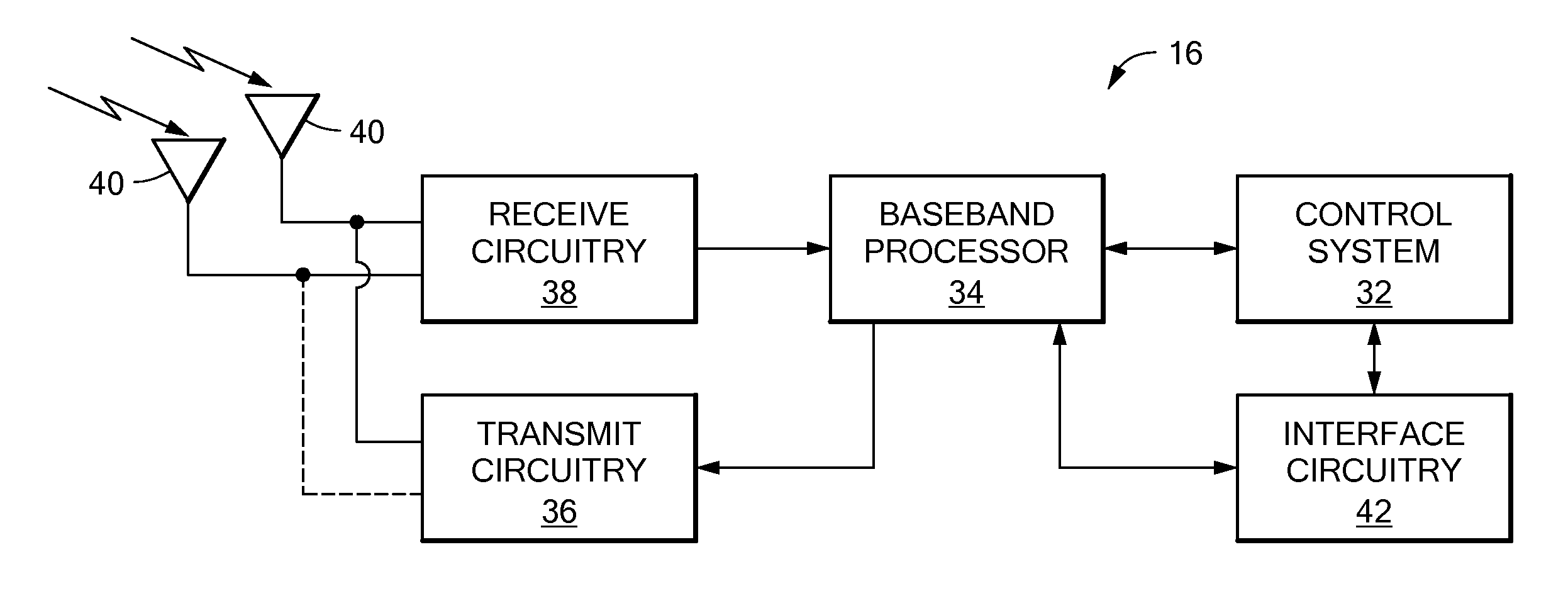
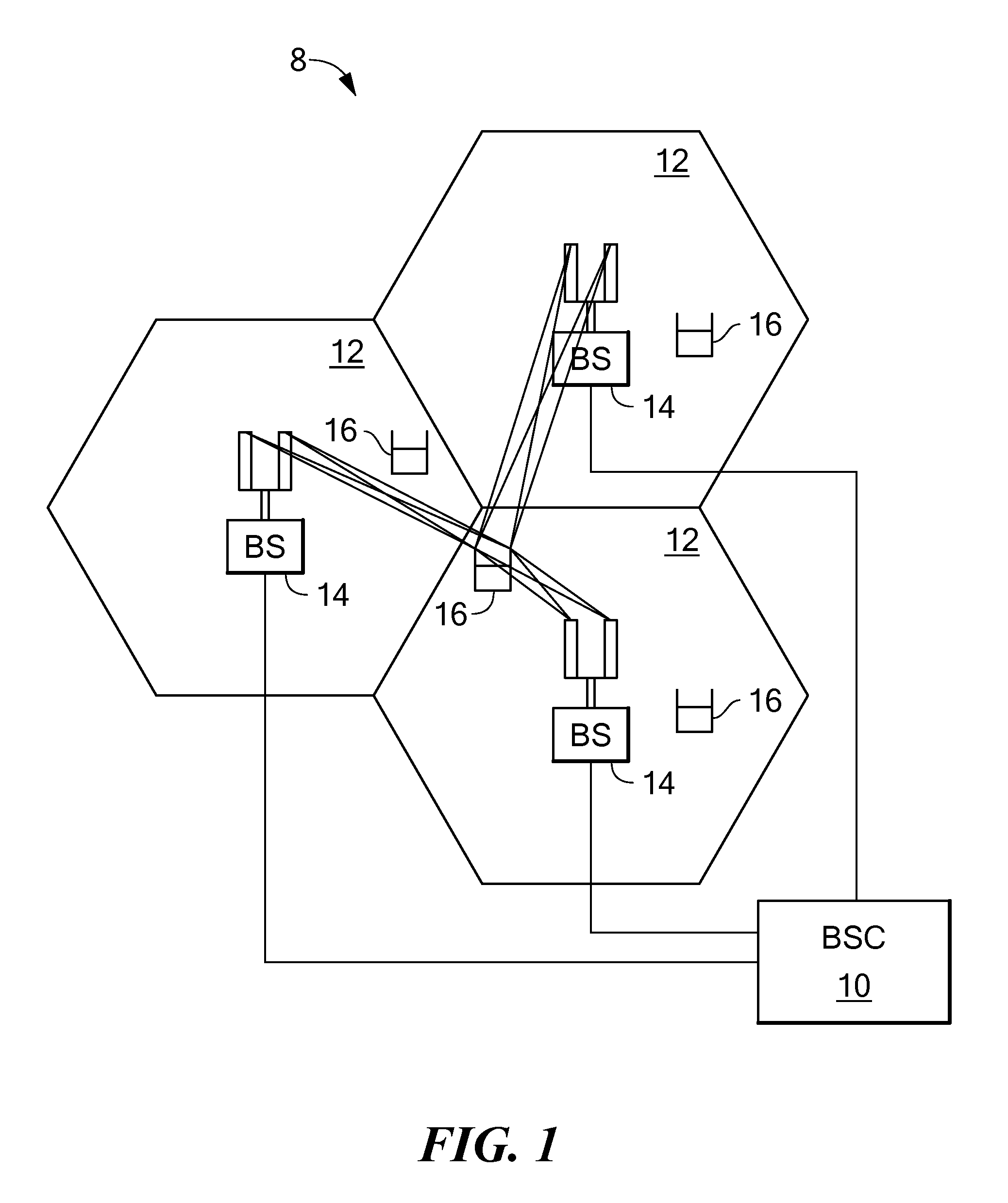
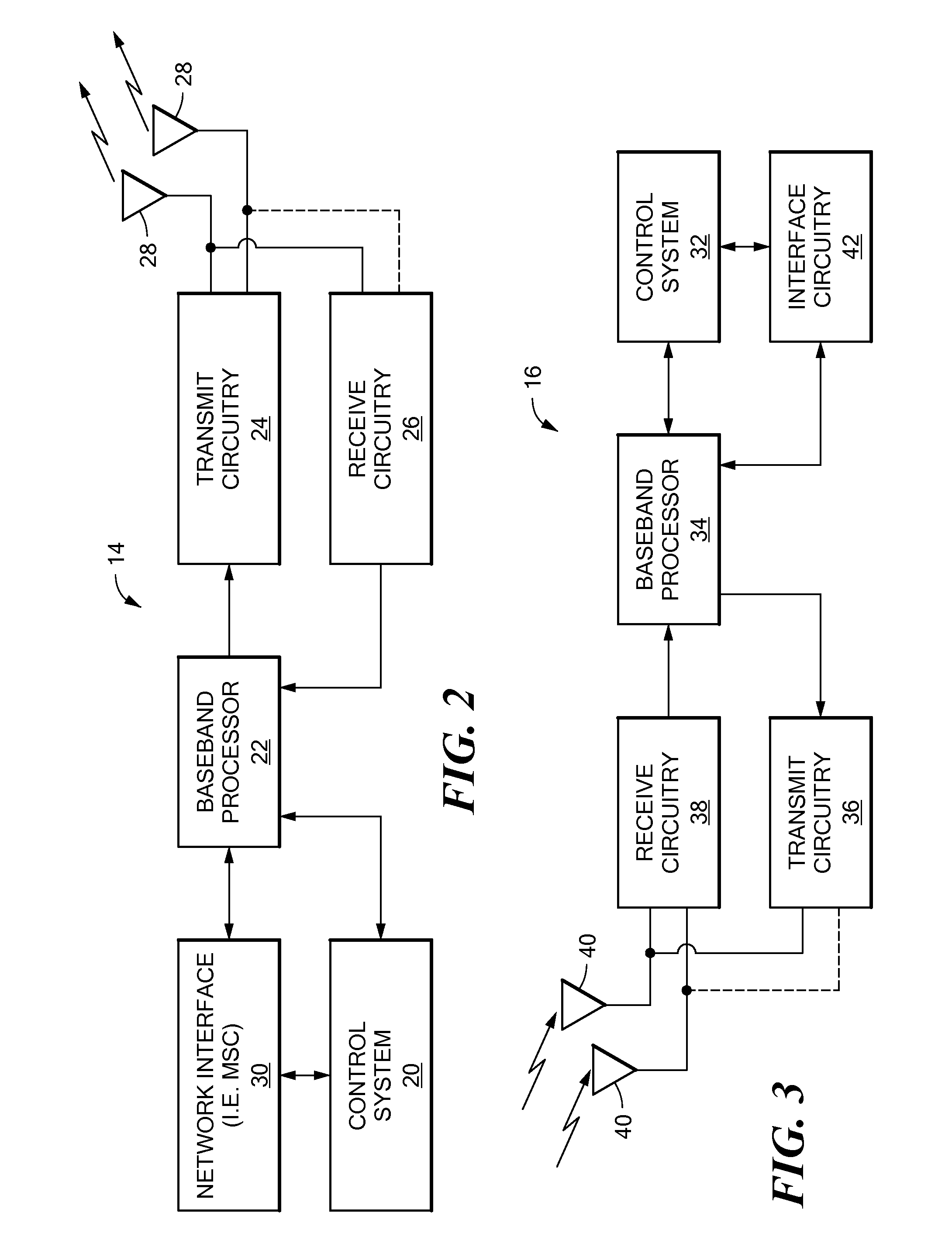
- A method and system that iteratively determine a frequency offset hypothesis, generate an interchannel interference matrix, calculate correlation errors, and update the hypothesis until the correlation error meets a predetermined value, allowing for improved pilot channel estimation and subsequent estimation of the wireless communication channel.

Iterative channel estimation method and apparatus for ici cancellation in multi-carrier
PatentInactiveUS20120014465A1
Innovation
- A new channel model is introduced, comprising multiple fixed matrices and unfixed variables, which are estimated using an iterative linear algorithm, allowing for accurate channel estimation and ICI cancellation by segmenting the Doppler spectrum and using distributed pilot allocation to reduce noise power levels.


Spectrum Regulatory Framework for ICI Management
The spectrum regulatory framework for Inter Carrier Interference (ICI) management represents a critical governance structure that establishes the legal and technical boundaries within which predictive algorithms must operate. This framework encompasses international, national, and regional regulatory bodies that define spectrum allocation policies, interference thresholds, and coordination mechanisms essential for effective ICI prediction and mitigation.
International regulatory foundations are primarily established through the International Telecommunication Union (ITU), which provides global spectrum management guidelines and interference protection criteria. The ITU Radio Regulations define fundamental principles for spectrum sharing, coordination procedures between different services, and technical standards that directly impact ICI occurrence patterns. These regulations establish baseline parameters that predictive algorithms must incorporate to ensure compliance with international spectrum management practices.
National regulatory authorities implement country-specific frameworks that translate international guidelines into enforceable domestic policies. These frameworks typically include spectrum licensing conditions, interference reporting mechanisms, and coordination requirements between operators. The regulatory approach varies significantly across jurisdictions, with some countries adopting more flexible spectrum sharing policies while others maintain strict separation requirements that influence ICI prediction model parameters.
Regional spectrum coordination agreements play a crucial role in cross-border interference management, particularly in densely populated areas where multiple national networks operate in proximity. These agreements establish specific coordination procedures, interference thresholds, and information sharing protocols that predictive algorithms must account for when modeling ICI scenarios across national boundaries.
The regulatory framework also encompasses technical standards and measurement methodologies that define how interference is quantified and reported. These standards establish the metrics and measurement procedures that validation processes for ICI prediction algorithms must follow, ensuring consistency between predicted and observed interference levels.
Emerging regulatory trends toward dynamic spectrum access and cognitive radio technologies are reshaping traditional ICI management approaches. New regulatory frameworks are being developed to accommodate more flexible spectrum sharing mechanisms, requiring predictive algorithms to adapt to evolving regulatory environments and incorporate real-time regulatory constraints into their prediction models.
International regulatory foundations are primarily established through the International Telecommunication Union (ITU), which provides global spectrum management guidelines and interference protection criteria. The ITU Radio Regulations define fundamental principles for spectrum sharing, coordination procedures between different services, and technical standards that directly impact ICI occurrence patterns. These regulations establish baseline parameters that predictive algorithms must incorporate to ensure compliance with international spectrum management practices.
National regulatory authorities implement country-specific frameworks that translate international guidelines into enforceable domestic policies. These frameworks typically include spectrum licensing conditions, interference reporting mechanisms, and coordination requirements between operators. The regulatory approach varies significantly across jurisdictions, with some countries adopting more flexible spectrum sharing policies while others maintain strict separation requirements that influence ICI prediction model parameters.
Regional spectrum coordination agreements play a crucial role in cross-border interference management, particularly in densely populated areas where multiple national networks operate in proximity. These agreements establish specific coordination procedures, interference thresholds, and information sharing protocols that predictive algorithms must account for when modeling ICI scenarios across national boundaries.
The regulatory framework also encompasses technical standards and measurement methodologies that define how interference is quantified and reported. These standards establish the metrics and measurement procedures that validation processes for ICI prediction algorithms must follow, ensuring consistency between predicted and observed interference levels.
Emerging regulatory trends toward dynamic spectrum access and cognitive radio technologies are reshaping traditional ICI management approaches. New regulatory frameworks are being developed to accommodate more flexible spectrum sharing mechanisms, requiring predictive algorithms to adapt to evolving regulatory environments and incorporate real-time regulatory constraints into their prediction models.
Performance Evaluation Standards for ICI Algorithms
Establishing comprehensive performance evaluation standards for Inter Carrier Interference (ICI) prediction algorithms is crucial for ensuring reliable and consistent assessment across different implementation approaches. These standards must encompass multiple dimensions of algorithm performance to provide a holistic view of effectiveness in real-world deployment scenarios.
Accuracy metrics form the foundation of ICI algorithm evaluation, with primary indicators including prediction precision, recall rates, and false positive ratios. The Mean Absolute Error (MAE) and Root Mean Square Error (RMSE) serve as quantitative measures for assessing prediction deviation from actual interference occurrences. Additionally, the F1-score provides a balanced evaluation of algorithm sensitivity and specificity in identifying interference events.
Temporal performance standards address the critical aspect of prediction timeliness in dynamic communication environments. Key metrics include prediction latency, defined as the time interval between data input and interference prediction output, and prediction horizon accuracy, measuring how far in advance algorithms can reliably forecast interference events. Real-time processing capability standards specify maximum acceptable delays for different application scenarios.
Computational efficiency evaluation encompasses resource utilization metrics such as CPU usage, memory consumption, and power efficiency. These standards are particularly important for mobile and edge computing implementations where computational resources are constrained. Throughput measurements, expressed in predictions per second, establish baseline performance requirements for high-traffic network environments.
Robustness and adaptability standards evaluate algorithm performance under varying network conditions and interference patterns. This includes assessment of performance degradation under different signal-to-noise ratios, multipath fading conditions, and varying carrier frequencies. Adaptation speed metrics measure how quickly algorithms adjust to changing interference characteristics.
Scalability evaluation standards define performance requirements across different network sizes and complexity levels. These metrics assess algorithm behavior when scaling from small cell networks to large-scale deployments with thousands of carriers. Load testing standards specify performance thresholds under peak traffic conditions and concurrent user scenarios.
Accuracy metrics form the foundation of ICI algorithm evaluation, with primary indicators including prediction precision, recall rates, and false positive ratios. The Mean Absolute Error (MAE) and Root Mean Square Error (RMSE) serve as quantitative measures for assessing prediction deviation from actual interference occurrences. Additionally, the F1-score provides a balanced evaluation of algorithm sensitivity and specificity in identifying interference events.
Temporal performance standards address the critical aspect of prediction timeliness in dynamic communication environments. Key metrics include prediction latency, defined as the time interval between data input and interference prediction output, and prediction horizon accuracy, measuring how far in advance algorithms can reliably forecast interference events. Real-time processing capability standards specify maximum acceptable delays for different application scenarios.
Computational efficiency evaluation encompasses resource utilization metrics such as CPU usage, memory consumption, and power efficiency. These standards are particularly important for mobile and edge computing implementations where computational resources are constrained. Throughput measurements, expressed in predictions per second, establish baseline performance requirements for high-traffic network environments.
Robustness and adaptability standards evaluate algorithm performance under varying network conditions and interference patterns. This includes assessment of performance degradation under different signal-to-noise ratios, multipath fading conditions, and varying carrier frequencies. Adaptation speed metrics measure how quickly algorithms adjust to changing interference characteristics.
Scalability evaluation standards define performance requirements across different network sizes and complexity levels. These metrics assess algorithm behavior when scaling from small cell networks to large-scale deployments with thousands of carriers. Load testing standards specify performance thresholds under peak traffic conditions and concurrent user scenarios.
Unlock deeper insights with PatSnap Eureka Quick Research — get a full tech report to explore trends and direct your research. Try now!
Generate Your Research Report Instantly with AI Agent
Supercharge your innovation with PatSnap Eureka AI Agent Platform!