
Benchmarking Fixed Wing Drone Flight Software: Reliability
FEB 25, 20269 MIN READ
Generate Your Research Report Instantly with AI Agent
Patsnap Eureka helps you evaluate technical feasibility & market potential.
Fixed Wing Drone Software Background and Reliability Goals
Fixed-wing drones have evolved from military reconnaissance platforms into versatile commercial and civilian tools over the past two decades. Initially dominated by defense applications requiring extended flight endurance and wide-area coverage, the technology has progressively expanded into precision agriculture, infrastructure inspection, environmental monitoring, and logistics delivery. This evolution has been driven by advances in miniaturization, sensor integration, and autonomous navigation capabilities, transforming fixed-wing unmanned aerial vehicles into cost-effective alternatives to traditional manned aircraft for numerous applications.
The flight software ecosystem represents the critical intelligence layer that orchestrates all operational aspects of fixed-wing drones, from pre-flight system checks through mission execution to safe landing procedures. Unlike rotary-wing counterparts, fixed-wing platforms present unique software challenges due to their continuous forward motion requirements, higher operational speeds, and more complex aerodynamic characteristics. The software must manage flight control algorithms, sensor fusion, communication protocols, mission planning execution, and fail-safe mechanisms while operating under strict computational and power constraints.
Reliability has emerged as the paramount concern as fixed-wing drones transition from controlled test environments to beyond-visual-line-of-sight operations over populated areas and critical infrastructure. Software failures can result in catastrophic outcomes including loss of aircraft, property damage, or threats to public safety. Current industry standards demand reliability metrics exceeding 99.9% for commercial operations, with military and critical applications requiring even higher thresholds. However, the complexity of modern flight software, often comprising hundreds of thousands of lines of code integrating multiple subsystems, makes achieving and validating such reliability levels exceptionally challenging.
The primary goal of benchmarking fixed-wing drone flight software reliability is to establish standardized methodologies for measuring, comparing, and improving software dependability across different platforms and operational scenarios. This involves developing quantifiable metrics for failure rates, mean time between failures, fault detection coverage, and recovery success rates. Additionally, the benchmarking framework aims to identify common failure modes, assess the effectiveness of redundancy mechanisms, and evaluate software resilience under adverse conditions including sensor degradation, communication loss, and environmental disturbances. Ultimately, these efforts seek to accelerate the maturation of flight software toward aviation-grade reliability standards necessary for widespread commercial adoption and regulatory approval.
The flight software ecosystem represents the critical intelligence layer that orchestrates all operational aspects of fixed-wing drones, from pre-flight system checks through mission execution to safe landing procedures. Unlike rotary-wing counterparts, fixed-wing platforms present unique software challenges due to their continuous forward motion requirements, higher operational speeds, and more complex aerodynamic characteristics. The software must manage flight control algorithms, sensor fusion, communication protocols, mission planning execution, and fail-safe mechanisms while operating under strict computational and power constraints.
Reliability has emerged as the paramount concern as fixed-wing drones transition from controlled test environments to beyond-visual-line-of-sight operations over populated areas and critical infrastructure. Software failures can result in catastrophic outcomes including loss of aircraft, property damage, or threats to public safety. Current industry standards demand reliability metrics exceeding 99.9% for commercial operations, with military and critical applications requiring even higher thresholds. However, the complexity of modern flight software, often comprising hundreds of thousands of lines of code integrating multiple subsystems, makes achieving and validating such reliability levels exceptionally challenging.
The primary goal of benchmarking fixed-wing drone flight software reliability is to establish standardized methodologies for measuring, comparing, and improving software dependability across different platforms and operational scenarios. This involves developing quantifiable metrics for failure rates, mean time between failures, fault detection coverage, and recovery success rates. Additionally, the benchmarking framework aims to identify common failure modes, assess the effectiveness of redundancy mechanisms, and evaluate software resilience under adverse conditions including sensor degradation, communication loss, and environmental disturbances. Ultimately, these efforts seek to accelerate the maturation of flight software toward aviation-grade reliability standards necessary for widespread commercial adoption and regulatory approval.
Market Demand for Reliable Drone Flight Systems
The global demand for reliable fixed-wing drone flight systems has experienced substantial growth across multiple sectors, driven by the increasing adoption of unmanned aerial vehicles in commercial, industrial, and governmental applications. Industries such as agriculture, logistics, infrastructure inspection, and defense are actively seeking drone solutions that can deliver consistent performance under diverse operational conditions. The emphasis on reliability stems from the critical nature of missions where system failures can result in significant financial losses, safety hazards, or mission-critical data loss.
Agricultural applications represent a particularly robust market segment, where fixed-wing drones are deployed for crop monitoring, precision spraying, and land surveying over extensive areas. Operators in this sector demand flight software that can maintain stable autonomous operations across varying weather conditions and terrain types, with minimal intervention requirements. The ability to complete pre-programmed flight paths reliably directly impacts operational efficiency and return on investment for agricultural enterprises.
The logistics and delivery sector has emerged as another significant driver of demand for reliable drone flight systems. Companies exploring last-mile delivery solutions require flight software capable of executing complex urban navigation tasks with high success rates. Regulatory compliance and public safety concerns make reliability a non-negotiable requirement, as any software malfunction in populated areas could have severe consequences. This has intensified the focus on benchmarking and validation methodologies for flight control systems.
Infrastructure inspection and monitoring applications, including power line surveys, pipeline monitoring, and telecommunications tower inspections, require drones to operate in challenging environments with limited margin for error. Organizations in these sectors prioritize flight software that demonstrates proven reliability metrics, including fault tolerance, redundancy mechanisms, and predictable behavior under edge-case scenarios. The cost of equipment loss or incomplete data collection in remote locations makes reliability assessment a critical procurement criterion.
Defense and security applications continue to represent a substantial portion of the market, where mission success often depends on absolute reliability of autonomous flight systems. Military and border patrol operations require flight software that can perform consistently across extended operational periods, often in contested or GPS-denied environments. This segment drives demand for rigorous benchmarking standards and comprehensive reliability testing protocols that can validate system performance under extreme conditions.
Agricultural applications represent a particularly robust market segment, where fixed-wing drones are deployed for crop monitoring, precision spraying, and land surveying over extensive areas. Operators in this sector demand flight software that can maintain stable autonomous operations across varying weather conditions and terrain types, with minimal intervention requirements. The ability to complete pre-programmed flight paths reliably directly impacts operational efficiency and return on investment for agricultural enterprises.
The logistics and delivery sector has emerged as another significant driver of demand for reliable drone flight systems. Companies exploring last-mile delivery solutions require flight software capable of executing complex urban navigation tasks with high success rates. Regulatory compliance and public safety concerns make reliability a non-negotiable requirement, as any software malfunction in populated areas could have severe consequences. This has intensified the focus on benchmarking and validation methodologies for flight control systems.
Infrastructure inspection and monitoring applications, including power line surveys, pipeline monitoring, and telecommunications tower inspections, require drones to operate in challenging environments with limited margin for error. Organizations in these sectors prioritize flight software that demonstrates proven reliability metrics, including fault tolerance, redundancy mechanisms, and predictable behavior under edge-case scenarios. The cost of equipment loss or incomplete data collection in remote locations makes reliability assessment a critical procurement criterion.
Defense and security applications continue to represent a substantial portion of the market, where mission success often depends on absolute reliability of autonomous flight systems. Military and border patrol operations require flight software that can perform consistently across extended operational periods, often in contested or GPS-denied environments. This segment drives demand for rigorous benchmarking standards and comprehensive reliability testing protocols that can validate system performance under extreme conditions.
Current State and Challenges in Flight Software Reliability
Fixed-wing drone flight software reliability represents a critical intersection of aerospace engineering, embedded systems, and autonomous control technologies. Current implementations predominantly rely on open-source autopilot systems such as ArduPilot and PX4, alongside proprietary solutions developed by major manufacturers. These systems must maintain operational integrity across diverse environmental conditions, hardware configurations, and mission profiles while managing complex sensor fusion, navigation algorithms, and fail-safe mechanisms.
The reliability landscape is characterized by significant heterogeneity in testing methodologies and performance metrics. Industry standards remain fragmented, with different organizations employing varied approaches to validate software robustness. Hardware-in-the-loop simulation environments have become standard practice, yet they often fail to replicate the full spectrum of real-world operational stresses including electromagnetic interference, extreme temperatures, and unpredictable atmospheric conditions.
A fundamental challenge lies in the inherent complexity of modern flight control architectures. Contemporary systems integrate multiple redundant sensors, sophisticated state estimation algorithms, and layered control loops that must operate harmoniously under all circumstances. Software defects can manifest as subtle timing issues, race conditions in multi-threaded environments, or unexpected interactions between nominally independent modules. These failure modes are particularly difficult to detect through conventional testing approaches.
The transition from manual to fully autonomous operations amplifies reliability requirements exponentially. While human-piloted systems can compensate for software anomalies through operator intervention, autonomous platforms must demonstrate provable reliability across their entire operational envelope. This necessitates comprehensive fault detection, isolation, and recovery capabilities that remain underdeveloped in many current implementations.
Certification and regulatory frameworks present additional complications. Aviation authorities worldwide are developing standards for unmanned systems, but consensus on software reliability benchmarks remains elusive. The absence of universally accepted metrics hampers comparative analysis between different flight software implementations and impedes systematic improvement efforts.
Geographic and organizational factors further fragment the technological landscape. North American and European developers dominate open-source communities, while Asian manufacturers increasingly deploy proprietary solutions with limited transparency. This distribution creates knowledge silos that prevent comprehensive industry-wide reliability assessments and slow the adoption of best practices across different market segments.
The reliability landscape is characterized by significant heterogeneity in testing methodologies and performance metrics. Industry standards remain fragmented, with different organizations employing varied approaches to validate software robustness. Hardware-in-the-loop simulation environments have become standard practice, yet they often fail to replicate the full spectrum of real-world operational stresses including electromagnetic interference, extreme temperatures, and unpredictable atmospheric conditions.
A fundamental challenge lies in the inherent complexity of modern flight control architectures. Contemporary systems integrate multiple redundant sensors, sophisticated state estimation algorithms, and layered control loops that must operate harmoniously under all circumstances. Software defects can manifest as subtle timing issues, race conditions in multi-threaded environments, or unexpected interactions between nominally independent modules. These failure modes are particularly difficult to detect through conventional testing approaches.
The transition from manual to fully autonomous operations amplifies reliability requirements exponentially. While human-piloted systems can compensate for software anomalies through operator intervention, autonomous platforms must demonstrate provable reliability across their entire operational envelope. This necessitates comprehensive fault detection, isolation, and recovery capabilities that remain underdeveloped in many current implementations.
Certification and regulatory frameworks present additional complications. Aviation authorities worldwide are developing standards for unmanned systems, but consensus on software reliability benchmarks remains elusive. The absence of universally accepted metrics hampers comparative analysis between different flight software implementations and impedes systematic improvement efforts.
Geographic and organizational factors further fragment the technological landscape. North American and European developers dominate open-source communities, while Asian manufacturers increasingly deploy proprietary solutions with limited transparency. This distribution creates knowledge silos that prevent comprehensive industry-wide reliability assessments and slow the adoption of best practices across different market segments.
Existing Flight Software Benchmarking Solutions
01 Redundant flight control systems and failover mechanisms
Implementation of redundant flight control systems ensures continuous operation even when primary systems fail. These systems include backup processors, sensors, and actuators that automatically take over when failures are detected. Failover mechanisms monitor system health in real-time and seamlessly switch to backup components, significantly improving software reliability and preventing catastrophic failures during flight operations.- Redundant flight control systems and failover mechanisms: Implementation of redundant flight control systems ensures continuous operation even when primary systems fail. These systems include backup processors, sensors, and actuators that automatically take over when failures are detected. Failover mechanisms monitor system health in real-time and seamlessly switch to backup components, significantly improving software reliability and preventing catastrophic failures during flight operations.
- Software verification and validation testing protocols: Comprehensive testing methodologies are employed to verify and validate flight software before deployment. These protocols include simulation-based testing, hardware-in-the-loop testing, and formal verification methods to ensure software meets safety and reliability standards. Testing covers various flight scenarios, edge cases, and failure conditions to identify and eliminate potential software defects that could compromise flight safety.
- Real-time monitoring and diagnostic systems: Advanced monitoring systems continuously track software performance, system health, and operational parameters during flight. These diagnostic tools detect anomalies, predict potential failures, and provide alerts to operators or trigger automatic corrective actions. The systems log critical data for post-flight analysis and enable proactive maintenance to prevent software-related failures.
- Modular software architecture and update mechanisms: Modular software design allows for isolated component updates and reduces the risk of system-wide failures. This architecture enables secure over-the-air updates, version control, and rollback capabilities. The modular approach facilitates easier debugging, maintenance, and incremental improvements while maintaining overall system stability and reliability throughout the drone's operational lifecycle.
- Safety-critical software certification and compliance: Flight software development follows rigorous certification standards and regulatory compliance requirements specific to unmanned aerial systems. This includes adherence to aviation software safety standards, documentation of development processes, and implementation of safety-critical coding practices. Certification processes ensure that software meets stringent reliability requirements and can operate safely in various environmental conditions and operational scenarios.
02 Software verification and validation testing protocols
Comprehensive testing methodologies are employed to verify and validate flight software before deployment. These protocols include simulation-based testing, hardware-in-the-loop testing, and formal verification methods to ensure software meets safety and reliability standards. Testing covers various flight scenarios, edge cases, and failure conditions to identify and eliminate potential software defects that could compromise flight safety.Expand Specific Solutions03 Real-time monitoring and diagnostic systems
Advanced monitoring systems continuously track software performance, system health, and operational parameters during flight. These diagnostic tools detect anomalies, predict potential failures, and provide alerts to operators. The systems collect and analyze flight data to identify software issues, enabling proactive maintenance and improving overall reliability through data-driven insights and predictive analytics.Expand Specific Solutions04 Modular software architecture and error handling
Modular software design separates critical flight functions into independent modules with well-defined interfaces, limiting the impact of individual component failures. Robust error handling mechanisms detect, isolate, and recover from software errors without affecting overall system operation. This architecture enables easier testing, maintenance, and updates while maintaining system stability and reliability throughout the flight envelope.Expand Specific Solutions05 Software update and version control management
Secure and reliable software update mechanisms allow for remote deployment of patches and improvements while maintaining system integrity. Version control systems track software changes, enable rollback capabilities, and ensure compatibility across different hardware configurations. These systems implement cryptographic verification to prevent unauthorized modifications and maintain audit trails for regulatory compliance and safety certification requirements.Expand Specific Solutions
Key Players in Fixed Wing Drone Software Development
The fixed-wing drone flight software reliability landscape represents a maturing technology sector experiencing rapid growth, driven by expanding applications across defense, commercial aviation, and autonomous systems. The competitive arena encompasses established aerospace giants like Boeing, Airbus Operations, Saab, Dassault Aviation, and Thales, alongside emerging Chinese manufacturers including COMAC, Chengdu Aircraft Industrial Group, and specialized firms like DELAIR and Shanghai Fenglei Information Technology. Leading Chinese research institutions such as Beihang University, Northwestern Polytechnical University, and Nanjing University of Aeronautics & Astronautics contribute fundamental research advancing software reliability methodologies. Technology maturity varies significantly, with traditional aerospace companies leveraging decades of certification experience while newer entrants focus on innovative formal verification approaches and AI-driven reliability solutions, creating a dynamic competitive environment balancing proven methodologies with cutting-edge technological advancement.
Saab AB
Technical Solution: Saab implements flight software reliability for fixed-wing platforms through their modular avionics architecture with emphasis on open standards and incremental certification approaches. Their system design incorporates safety kernels providing temporal and spatial isolation between software partitions, ensuring that faults in non-critical functions cannot compromise flight-critical operations. Saab utilizes extensive simulation-based testing including software-in-the-loop (SIL) and processor-in-the-loop (PIL) configurations to validate software behavior across the operational envelope. The company employs continuous monitoring and logging systems that capture detailed software execution traces for post-flight analysis and reliability improvement. Their approach includes modular certification strategies allowing independent verification of software components, reducing overall certification burden when making incremental updates. Saab integrates model-based safety analysis tools that automatically generate test cases from system requirements, ensuring comprehensive coverage of potential failure scenarios.
Strengths: Modular architecture enabling incremental updates and certification, open standards approach facilitating integration, comprehensive simulation testing reducing flight test requirements. Weaknesses: Smaller market presence compared to major competitors, limited resources for extensive redundancy implementations, less extensive operational data compared to commercial aviation leaders.
The Boeing Co.
Technical Solution: Boeing implements a comprehensive flight software reliability framework incorporating multiple redundancy layers and fault-tolerant architectures for fixed-wing aircraft. Their approach utilizes DO-178C certification standards with rigorous software verification and validation processes, including model-based development and formal methods for critical flight control systems. The company employs hardware-in-the-loop (HIL) simulation testing combined with extensive flight testing protocols to validate software reliability under various operational scenarios. Boeing's flight management systems integrate real-time health monitoring and prognostic capabilities, enabling predictive maintenance and fault detection before critical failures occur. Their software architecture includes multiple independent processing channels with voting mechanisms to ensure continuous operation even when individual components fail.
Strengths: Extensive industry experience with proven track record in commercial aviation safety, comprehensive certification processes meeting international standards, robust redundancy mechanisms. Weaknesses: High development costs and lengthy certification cycles, complex legacy system integration challenges, resource-intensive testing requirements.
Core Technologies in Software Reliability Testing
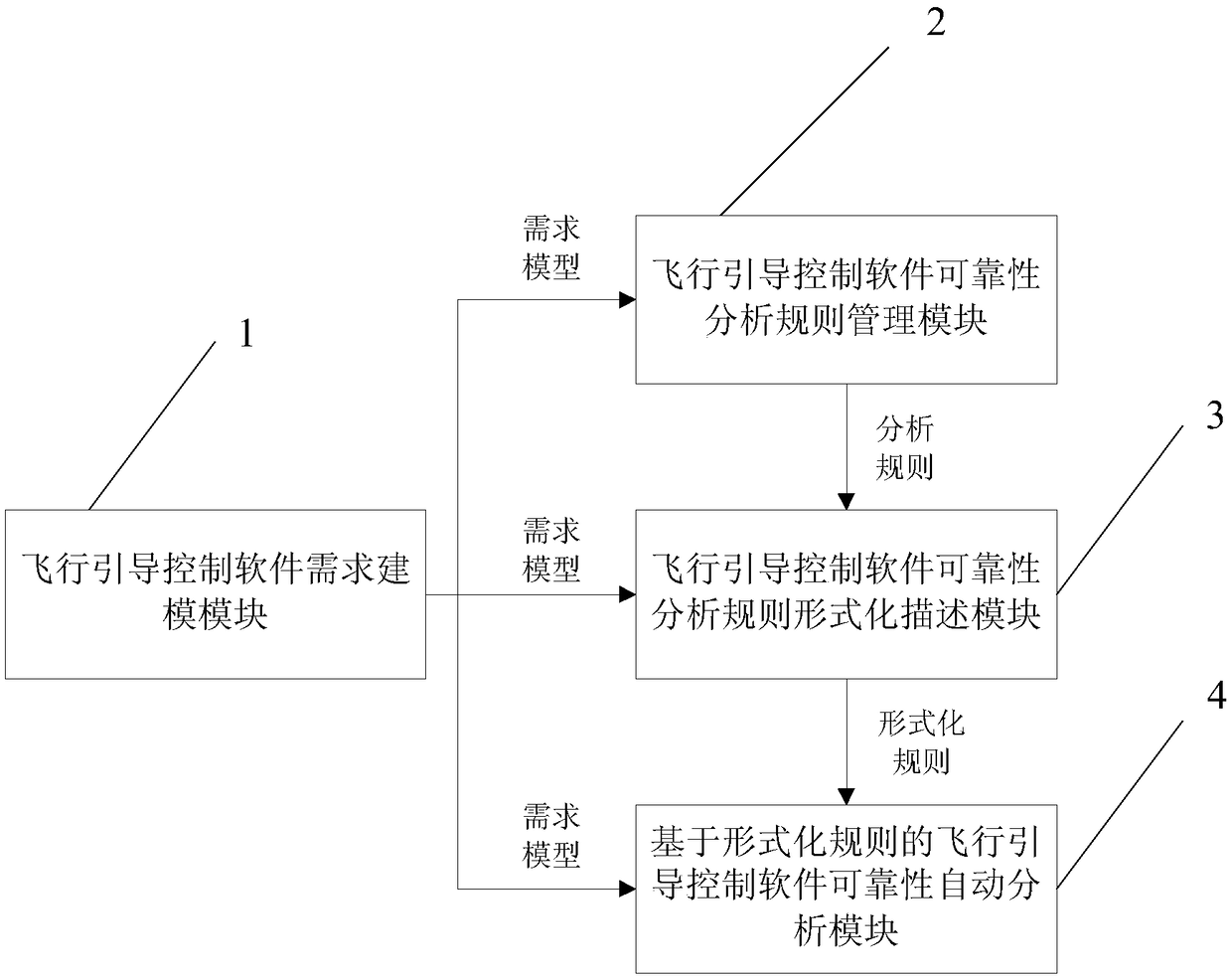
System and method for analyzing reliability of flight guidance control software based on formalized rule
PatentActiveCN108897676A
Innovation
- A flight guidance control software reliability analysis system based on formal rules is adopted. Through demand modeling, reliability analysis rule management and formal description, combined with set theory and predicate logic, it realizes automated failure mode analysis and identifies potential logic branches and safety hazards. .
Flight Software Testing Using Actual Flight Data
PatentPendingUS20250328449A1
Innovation
- Utilize actual flight data recorded by aerial vehicles during previous flights as input to a UAV test bed, optionally augmented with simulated conditions using machine learning models, to create realistic testing scenarios for flight software.


Aviation Safety Standards and Certification Requirements
The reliability benchmarking of fixed-wing drone flight software operates within a complex regulatory framework that encompasses multiple aviation safety standards and certification requirements. At the international level, the International Civil Aviation Organization (ICAO) provides foundational guidelines through its Standards and Recommended Practices (SARPs), particularly Annex 8 which addresses airworthiness of aircraft. These standards establish baseline safety expectations that member states adapt into their national regulations, creating a globally harmonized yet regionally specific certification landscape.
In the United States, the Federal Aviation Administration (FAA) enforces stringent requirements through Part 107 for small unmanned aircraft systems and the emerging Part 135 regulations for advanced operations. The FAA's airworthiness criteria demand comprehensive software verification and validation processes, including DO-178C compliance for airborne software development. This standard defines five Design Assurance Levels (DAL), with Level A representing the most critical software whose failure could result in catastrophic consequences. Fixed-wing drone flight software typically requires DAL C or D certification depending on operational scenarios and risk assessments.
The European Union Aviation Safety Agency (EASA) implements parallel frameworks through its Specific Category regulations and the recently introduced Means of Compliance with the Special Condition for Light UAS. EASA's approach emphasizes operational risk assessment through the Specific Operations Risk Assessment (SORA) methodology, which directly influences software reliability requirements. Higher risk operations demand more rigorous software testing protocols and fault tolerance mechanisms.
Beyond civil aviation authorities, military and defense applications must satisfy additional standards such as MIL-STD-882E for system safety and DO-278A for ground-based software supporting aviation operations. These requirements extend reliability benchmarking beyond flight software to encompass ground control stations and communication systems. Furthermore, emerging standards like ASTM F3269 for quality assurance of unmanned aircraft systems provide industry-specific guidance that bridges regulatory requirements with practical implementation strategies, establishing measurable reliability metrics and testing methodologies essential for comprehensive software benchmarking initiatives.
In the United States, the Federal Aviation Administration (FAA) enforces stringent requirements through Part 107 for small unmanned aircraft systems and the emerging Part 135 regulations for advanced operations. The FAA's airworthiness criteria demand comprehensive software verification and validation processes, including DO-178C compliance for airborne software development. This standard defines five Design Assurance Levels (DAL), with Level A representing the most critical software whose failure could result in catastrophic consequences. Fixed-wing drone flight software typically requires DAL C or D certification depending on operational scenarios and risk assessments.
The European Union Aviation Safety Agency (EASA) implements parallel frameworks through its Specific Category regulations and the recently introduced Means of Compliance with the Special Condition for Light UAS. EASA's approach emphasizes operational risk assessment through the Specific Operations Risk Assessment (SORA) methodology, which directly influences software reliability requirements. Higher risk operations demand more rigorous software testing protocols and fault tolerance mechanisms.
Beyond civil aviation authorities, military and defense applications must satisfy additional standards such as MIL-STD-882E for system safety and DO-278A for ground-based software supporting aviation operations. These requirements extend reliability benchmarking beyond flight software to encompass ground control stations and communication systems. Furthermore, emerging standards like ASTM F3269 for quality assurance of unmanned aircraft systems provide industry-specific guidance that bridges regulatory requirements with practical implementation strategies, establishing measurable reliability metrics and testing methodologies essential for comprehensive software benchmarking initiatives.
Risk Assessment Framework for Autonomous Flight Systems
Establishing a comprehensive risk assessment framework for autonomous fixed-wing drone flight systems requires systematic identification, evaluation, and mitigation of potential failure modes that could compromise operational reliability. This framework must address both technical and operational dimensions, incorporating quantitative metrics and qualitative assessments to provide actionable insights for system designers and operators.
The foundation of this framework begins with hazard identification across multiple system layers, including hardware components, software modules, communication links, and environmental interactions. Critical failure scenarios must be categorized by severity and likelihood, ranging from minor performance degradations to catastrophic system failures. Particular attention should be given to software-related risks such as algorithmic errors, sensor fusion failures, and decision-making anomalies in edge cases that may not be adequately covered during testing phases.
Probability assessment methodologies should integrate both historical failure data and predictive modeling techniques. Fault tree analysis and failure mode effects analysis serve as foundational tools, while Monte Carlo simulations can quantify the likelihood of cascading failures under various operational conditions. Software-specific risks require specialized assessment approaches, including code complexity metrics, test coverage analysis, and formal verification results where applicable.
Risk severity evaluation must consider multiple impact dimensions: safety implications for people and property, mission criticality, economic consequences, and regulatory compliance requirements. A multi-tiered severity classification system enables prioritization of mitigation efforts, ensuring that resources are allocated to address the most critical vulnerabilities first. This evaluation should account for both immediate failure impacts and potential long-term consequences on system trustworthiness.
Mitigation strategies form the actionable component of the framework, encompassing design improvements, redundancy implementations, operational constraints, and contingency procedures. Software reliability enhancement measures may include defensive programming practices, runtime monitoring systems, graceful degradation mechanisms, and fail-safe protocols. The framework should also define clear thresholds for acceptable risk levels and establish continuous monitoring processes to detect emerging risk patterns during operational deployment.
The foundation of this framework begins with hazard identification across multiple system layers, including hardware components, software modules, communication links, and environmental interactions. Critical failure scenarios must be categorized by severity and likelihood, ranging from minor performance degradations to catastrophic system failures. Particular attention should be given to software-related risks such as algorithmic errors, sensor fusion failures, and decision-making anomalies in edge cases that may not be adequately covered during testing phases.
Probability assessment methodologies should integrate both historical failure data and predictive modeling techniques. Fault tree analysis and failure mode effects analysis serve as foundational tools, while Monte Carlo simulations can quantify the likelihood of cascading failures under various operational conditions. Software-specific risks require specialized assessment approaches, including code complexity metrics, test coverage analysis, and formal verification results where applicable.
Risk severity evaluation must consider multiple impact dimensions: safety implications for people and property, mission criticality, economic consequences, and regulatory compliance requirements. A multi-tiered severity classification system enables prioritization of mitigation efforts, ensuring that resources are allocated to address the most critical vulnerabilities first. This evaluation should account for both immediate failure impacts and potential long-term consequences on system trustworthiness.
Mitigation strategies form the actionable component of the framework, encompassing design improvements, redundancy implementations, operational constraints, and contingency procedures. Software reliability enhancement measures may include defensive programming practices, runtime monitoring systems, graceful degradation mechanisms, and fail-safe protocols. The framework should also define clear thresholds for acceptable risk levels and establish continuous monitoring processes to detect emerging risk patterns during operational deployment.
Unlock deeper insights with Patsnap Eureka Quick Research — get a full tech report to explore trends and direct your research. Try now!
Generate Your Research Report Instantly with AI Agent
Supercharge your innovation with Patsnap Eureka AI Agent Platform!