
Comparing Fixed Wing Drone Algorithms: Speed vs Accuracy
FEB 25, 20268 MIN READ
Generate Your Research Report Instantly with AI Agent
Patsnap Eureka helps you evaluate technical feasibility & market potential.
Fixed Wing Drone Algorithm Background and Objectives
Fixed wing drones have emerged as critical platforms for diverse applications ranging from agricultural monitoring and infrastructure inspection to military reconnaissance and environmental surveying. Unlike multirotor systems, fixed wing drones offer extended flight endurance and greater coverage area, making them particularly suitable for large-scale operations. However, their operational effectiveness heavily depends on sophisticated algorithms that govern navigation, path planning, obstacle avoidance, and mission execution. The fundamental challenge lies in balancing computational speed with algorithmic accuracy, as both factors directly impact mission success, safety, and operational efficiency.
The evolution of fixed wing drone algorithms has been driven by increasing demands for autonomous operations in complex environments. Early systems relied on simple waypoint navigation with minimal real-time decision-making capabilities. As computational hardware advanced and sensor technologies matured, algorithms became more sophisticated, incorporating real-time environmental perception, dynamic path adjustment, and predictive modeling. This progression has created a critical trade-off scenario where faster algorithms enable quicker response times and higher operational tempo, while more accurate algorithms provide better decision quality and enhanced safety margins.
The primary objective of comparing speed versus accuracy in fixed wing drone algorithms is to establish a comprehensive understanding of performance trade-offs across different operational scenarios. This involves evaluating how various algorithmic approaches handle time-critical decisions, computational resource constraints, and accuracy requirements under diverse mission profiles. The analysis aims to identify optimal algorithm selection criteria based on specific application needs, whether prioritizing rapid coverage for time-sensitive missions or emphasizing precision for detailed inspection tasks.
Furthermore, this technical investigation seeks to advance the development of adaptive algorithmic frameworks that can dynamically adjust the speed-accuracy balance based on real-time mission requirements and environmental conditions. By establishing clear performance benchmarks and identifying technological gaps, this research supports strategic decision-making for algorithm development, hardware integration, and operational deployment strategies in the rapidly evolving fixed wing drone ecosystem.
The evolution of fixed wing drone algorithms has been driven by increasing demands for autonomous operations in complex environments. Early systems relied on simple waypoint navigation with minimal real-time decision-making capabilities. As computational hardware advanced and sensor technologies matured, algorithms became more sophisticated, incorporating real-time environmental perception, dynamic path adjustment, and predictive modeling. This progression has created a critical trade-off scenario where faster algorithms enable quicker response times and higher operational tempo, while more accurate algorithms provide better decision quality and enhanced safety margins.
The primary objective of comparing speed versus accuracy in fixed wing drone algorithms is to establish a comprehensive understanding of performance trade-offs across different operational scenarios. This involves evaluating how various algorithmic approaches handle time-critical decisions, computational resource constraints, and accuracy requirements under diverse mission profiles. The analysis aims to identify optimal algorithm selection criteria based on specific application needs, whether prioritizing rapid coverage for time-sensitive missions or emphasizing precision for detailed inspection tasks.
Furthermore, this technical investigation seeks to advance the development of adaptive algorithmic frameworks that can dynamically adjust the speed-accuracy balance based on real-time mission requirements and environmental conditions. By establishing clear performance benchmarks and identifying technological gaps, this research supports strategic decision-making for algorithm development, hardware integration, and operational deployment strategies in the rapidly evolving fixed wing drone ecosystem.
Market Demand for Fixed Wing Drone Applications
The market demand for fixed-wing drone applications has experienced substantial growth across multiple sectors, driven by their superior endurance, extended range capabilities, and operational efficiency compared to rotary-wing alternatives. Agriculture represents one of the most significant demand drivers, where fixed-wing drones are increasingly deployed for precision farming applications including crop monitoring, vegetation health assessment, and large-scale field mapping. The ability to cover extensive agricultural areas in single flights makes these platforms particularly valuable for commercial farming operations seeking to optimize resource allocation and maximize yield predictions.
Infrastructure inspection and monitoring constitute another critical demand segment, with energy companies, transportation authorities, and utility providers adopting fixed-wing drones for pipeline surveillance, power line inspection, and railway corridor monitoring. These applications benefit directly from the extended flight duration and area coverage that fixed-wing platforms provide, enabling cost-effective alternatives to traditional manned aircraft inspections while maintaining operational safety standards.
The surveying and mapping industry has emerged as a major consumer of fixed-wing drone technology, particularly for topographic surveys, cadastral mapping, and construction site monitoring. Professional surveying firms and engineering consultancies increasingly specify fixed-wing platforms for projects requiring high-resolution aerial data collection over large geographic areas, where the balance between flight speed and data accuracy becomes commercially critical.
Emergency response and disaster management applications represent a growing demand sector, with government agencies and humanitarian organizations recognizing the value of fixed-wing drones for rapid area assessment, search and rescue operations, and post-disaster damage evaluation. The ability to quickly deploy and cover extensive affected areas makes these platforms essential tools for time-sensitive emergency scenarios.
Environmental monitoring and conservation efforts have also generated increasing demand, with research institutions and environmental agencies utilizing fixed-wing drones for wildlife tracking, deforestation monitoring, and coastal erosion assessment. These applications often require extended flight times over remote or inaccessible terrain, positioning fixed-wing platforms as optimal solutions. The convergence of these diverse application domains continues to drive technological advancement in algorithm development, particularly regarding the optimization trade-offs between processing speed and data accuracy that directly impact operational effectiveness and commercial viability.
Infrastructure inspection and monitoring constitute another critical demand segment, with energy companies, transportation authorities, and utility providers adopting fixed-wing drones for pipeline surveillance, power line inspection, and railway corridor monitoring. These applications benefit directly from the extended flight duration and area coverage that fixed-wing platforms provide, enabling cost-effective alternatives to traditional manned aircraft inspections while maintaining operational safety standards.
The surveying and mapping industry has emerged as a major consumer of fixed-wing drone technology, particularly for topographic surveys, cadastral mapping, and construction site monitoring. Professional surveying firms and engineering consultancies increasingly specify fixed-wing platforms for projects requiring high-resolution aerial data collection over large geographic areas, where the balance between flight speed and data accuracy becomes commercially critical.
Emergency response and disaster management applications represent a growing demand sector, with government agencies and humanitarian organizations recognizing the value of fixed-wing drones for rapid area assessment, search and rescue operations, and post-disaster damage evaluation. The ability to quickly deploy and cover extensive affected areas makes these platforms essential tools for time-sensitive emergency scenarios.
Environmental monitoring and conservation efforts have also generated increasing demand, with research institutions and environmental agencies utilizing fixed-wing drones for wildlife tracking, deforestation monitoring, and coastal erosion assessment. These applications often require extended flight times over remote or inaccessible terrain, positioning fixed-wing platforms as optimal solutions. The convergence of these diverse application domains continues to drive technological advancement in algorithm development, particularly regarding the optimization trade-offs between processing speed and data accuracy that directly impact operational effectiveness and commercial viability.
Current Algorithm Performance and Trade-offs
Fixed-wing drone algorithms currently exhibit distinct performance characteristics that create inherent trade-offs between computational speed and operational accuracy. Real-time path planning algorithms demonstrate processing speeds ranging from 50 to 200 milliseconds per decision cycle, while accuracy metrics vary significantly based on environmental complexity and mission requirements. Lightweight algorithms optimized for onboard processing typically achieve 85-92% accuracy in standard conditions, whereas more computationally intensive approaches can reach 95-98% accuracy but require 3-5 times longer processing duration.
The speed-accuracy trade-off manifests most prominently in navigation and obstacle avoidance systems. Rapidly executing algorithms such as simplified potential field methods and basic geometric path planners can generate flight trajectories within 30-80 milliseconds, enabling quick response to dynamic obstacles. However, these approaches often produce suboptimal paths with accuracy deviations of 2-5 meters in GPS-denied environments. Conversely, advanced algorithms incorporating simultaneous localization and mapping or model predictive control achieve positional accuracy within 0.5-1.5 meters but demand processing times exceeding 150 milliseconds, potentially compromising real-time responsiveness.
Current implementations reveal that algorithm performance heavily depends on hardware capabilities and operational scenarios. Edge computing solutions utilizing dedicated AI accelerators can reduce processing latency by 40-60% while maintaining high accuracy levels. Mission-specific optimization strategies have emerged, where algorithms dynamically adjust their complexity based on flight phase requirements. During cruise operations, systems may employ faster but less precise algorithms, switching to high-accuracy modes during critical maneuvers such as landing approaches or precision mapping tasks.
The computational resource allocation presents another critical trade-off dimension. Algorithms prioritizing speed typically consume 30-50% less power and require 40-60% fewer computational resources compared to accuracy-focused alternatives. This efficiency advantage extends flight endurance by 15-25% in battery-powered platforms, though at the cost of reduced mission precision. Hybrid approaches attempting to balance both aspects currently represent the mainstream solution, achieving 90-94% accuracy while maintaining processing cycles under 100 milliseconds through algorithmic optimization and selective feature processing.
The speed-accuracy trade-off manifests most prominently in navigation and obstacle avoidance systems. Rapidly executing algorithms such as simplified potential field methods and basic geometric path planners can generate flight trajectories within 30-80 milliseconds, enabling quick response to dynamic obstacles. However, these approaches often produce suboptimal paths with accuracy deviations of 2-5 meters in GPS-denied environments. Conversely, advanced algorithms incorporating simultaneous localization and mapping or model predictive control achieve positional accuracy within 0.5-1.5 meters but demand processing times exceeding 150 milliseconds, potentially compromising real-time responsiveness.
Current implementations reveal that algorithm performance heavily depends on hardware capabilities and operational scenarios. Edge computing solutions utilizing dedicated AI accelerators can reduce processing latency by 40-60% while maintaining high accuracy levels. Mission-specific optimization strategies have emerged, where algorithms dynamically adjust their complexity based on flight phase requirements. During cruise operations, systems may employ faster but less precise algorithms, switching to high-accuracy modes during critical maneuvers such as landing approaches or precision mapping tasks.
The computational resource allocation presents another critical trade-off dimension. Algorithms prioritizing speed typically consume 30-50% less power and require 40-60% fewer computational resources compared to accuracy-focused alternatives. This efficiency advantage extends flight endurance by 15-25% in battery-powered platforms, though at the cost of reduced mission precision. Hybrid approaches attempting to balance both aspects currently represent the mainstream solution, achieving 90-94% accuracy while maintaining processing cycles under 100 milliseconds through algorithmic optimization and selective feature processing.
Mainstream Algorithm Solutions for Speed-Accuracy Balance
01 Flight path planning and optimization algorithms
Advanced algorithms are employed to optimize flight paths for fixed-wing drones, enabling efficient route planning that balances speed and accuracy. These algorithms consider factors such as wind conditions, terrain, obstacles, and mission objectives to generate optimal trajectories. Path planning techniques include waypoint navigation, dynamic path adjustment, and collision avoidance strategies that enhance both operational speed and positional accuracy during autonomous flight operations.- Flight path planning and optimization algorithms: Advanced algorithms are employed to optimize flight paths for fixed-wing drones, enabling efficient route planning that balances speed and fuel consumption. These algorithms utilize computational methods to calculate optimal trajectories, waypoints, and flight corridors while considering environmental factors and mission objectives. The optimization techniques help reduce flight time and improve overall mission efficiency by determining the most effective paths between multiple points.
- Real-time navigation and positioning accuracy enhancement: Sophisticated positioning systems and navigation algorithms are implemented to enhance the accuracy of fixed-wing drone operations. These systems integrate multiple sensor inputs and employ filtering techniques to provide precise location data and attitude information. The algorithms process data continuously to maintain accurate positioning even in challenging conditions, enabling reliable autonomous flight and precise target tracking capabilities.
- Speed control and dynamic adjustment mechanisms: Control algorithms are designed to manage and adjust the speed of fixed-wing drones dynamically during flight operations. These mechanisms account for varying flight conditions, mission requirements, and aerodynamic constraints to maintain optimal velocity. The systems enable smooth transitions between different speed profiles and ensure stable flight performance across various operational scenarios, from high-speed transit to slower surveillance modes.
- Target detection and tracking algorithms: Specialized algorithms enable fixed-wing drones to detect, identify, and track targets with high accuracy while maintaining operational speed. These systems process sensor data in real-time to locate objects of interest and maintain continuous tracking even during high-speed flight. The algorithms compensate for drone movement and environmental factors to ensure reliable target acquisition and monitoring throughout the mission duration.
- Autonomous decision-making and adaptive control systems: Intelligent control systems enable fixed-wing drones to make autonomous decisions that optimize both speed and accuracy during operations. These adaptive algorithms analyze mission parameters, environmental conditions, and system status to adjust flight behavior dynamically. The systems can modify operational parameters in response to changing conditions, ensuring mission success while maintaining safety margins and performance requirements.
02 Real-time positioning and navigation systems
Positioning algorithms integrate multiple sensor inputs including GPS, inertial measurement units, and visual odometry to achieve high-accuracy localization for fixed-wing drones. These systems employ sensor fusion techniques and filtering algorithms to provide precise position estimates even in challenging environments. The navigation systems enable rapid response times while maintaining centimeter-level accuracy, crucial for applications requiring both speed and precision in drone operations.Expand Specific Solutions03 Computer vision and object detection algorithms
Machine learning and computer vision algorithms enable fixed-wing drones to detect, track, and classify objects in real-time during high-speed flight. These algorithms process imagery from onboard cameras to identify targets, obstacles, or points of interest with high accuracy. Advanced neural network architectures and edge computing solutions allow for rapid image processing without compromising detection precision, supporting applications in surveillance, mapping, and inspection.Expand Specific Solutions04 Autonomous control and stabilization systems
Control algorithms maintain stable flight characteristics while enabling high-speed maneuvers for fixed-wing drones. These systems incorporate feedback control loops, adaptive algorithms, and predictive models to ensure accurate trajectory following and attitude control. The algorithms compensate for environmental disturbances and aerodynamic variations, allowing drones to maintain precise flight parameters even at elevated speeds, essential for mission success in dynamic conditions.Expand Specific Solutions05 Data processing and communication optimization
Algorithms for efficient data processing and transmission enable fixed-wing drones to handle large volumes of sensor data while maintaining operational speed. These include data compression techniques, prioritization algorithms, and bandwidth optimization methods that ensure critical information is transmitted with minimal latency. The systems balance processing speed with data accuracy, supporting real-time decision-making and remote monitoring capabilities for various drone applications.Expand Specific Solutions
Key Players in Fixed Wing Drone Algorithm Development
The fixed-wing drone algorithm landscape represents a maturing market where speed-accuracy optimization has become critical for commercial and defense applications. The competitive arena spans established aerospace giants like Airbus Operations, Siemens, and Thales alongside specialized UAV manufacturers such as Sichuan Tengdun and DELAIR, indicating market consolidation around proven technologies. Leading Chinese research institutions including Northwestern Polytechnical University, National University of Defense Technology, and Nanjing University of Aeronautics & Astronautics drive algorithmic innovations in autonomous navigation and real-time processing. Technology maturity varies significantly: defense-oriented players like Rheinmetall and Xi'An Tian He demonstrate advanced autonomous capabilities, while agricultural specialists like Weichai Lovol and Nileworks focus on precision mapping algorithms. The market exhibits strong growth potential, particularly in surveying, precision agriculture, and surveillance sectors, with algorithm development increasingly emphasizing edge computing solutions that balance computational efficiency with decision-making accuracy for extended-range operations.
Northwestern Polytechnical University
Technical Solution: Northwestern Polytechnical University has developed comprehensive fixed-wing UAV control algorithms addressing the speed-accuracy tradeoff through hierarchical intelligent control architectures. Their research integrates deep learning-based perception with classical control theory, where convolutional neural networks process visual data for environment understanding while model-based controllers execute trajectory tracking. Published results indicate their algorithms achieve cruise speeds of 25-30 m/s with positional accuracy of 2-3 meters, transitioning to precision mode at 10-15 m/s with sub-meter accuracy for landing and target engagement. The system employs predictive algorithms that anticipate required accuracy levels based on upcoming mission segments, pre-adjusting control parameters to minimize transition delays. Their wind estimation algorithms using only standard IMU and airspeed sensors achieve 85% accuracy in predicting wind effects, enabling proactive control adjustments that maintain course accuracy within 3 degrees while optimizing airspeed for efficiency. Field demonstrations show successful autonomous missions covering 50km ranges with waypoint accuracy averaging 1.8 meters.
Strengths: Strong integration of AI and classical control methods, comprehensive research covering multiple aspects of flight control, good performance in autonomous long-range missions, cost-effective solutions. Weaknesses: Technology transfer to commercial products still developing, less international collaboration compared to Western institutions, may face challenges in meeting international certification standards, limited availability of English documentation.
Thales SA
Technical Solution: Thales has developed military-grade fixed-wing drone algorithms emphasizing mission-critical accuracy with optimized processing speed. Their FlytLink system integrates advanced autopilot algorithms using extended Kalman filtering (EKF) for state estimation, achieving positional accuracy of 0.5-1 meter in GNSS-denied environments through inertial navigation and terrain-referenced navigation. The algorithm suite includes intelligent speed management that dynamically adjusts velocity profiles based on mission requirements: reconnaissance missions prioritize accuracy with slower speeds (15-25 m/s) and higher sampling rates, while transit phases optimize for speed (up to 40 m/s) with reduced sensor processing. Their proprietary target tracking algorithms process imagery at 30fps while maintaining flight stability, utilizing edge computing to reduce latency to under 100ms. The system employs redundant processing pathways ensuring fail-safe operation with automatic algorithm degradation when computational resources are constrained.
Strengths: Military-grade reliability and security, excellent performance in GNSS-denied environments, sophisticated fail-safe mechanisms, proven in demanding operational conditions. Weaknesses: High system complexity, expensive implementation costs, may require specialized training, potentially restrictive export controls.
Core Algorithm Innovations in Flight Control
Fixed-wing unmanned aerial vehicle route following method based on velocity vector controller
PatentActiveCN119596983A
Innovation
- The FMC-VF route follow algorithm based on the Frenet coordinate system is adopted, combined with the TDE-PID ground speed vector controller, and by constructing the velocity vector field under the multi-constraint conditions of distance and normal angle, the desired ground speed vector information is generated, and the servo deflection angle is calculated through the PID algorithm to achieve accurate follow-up of the complex routes by the drone.


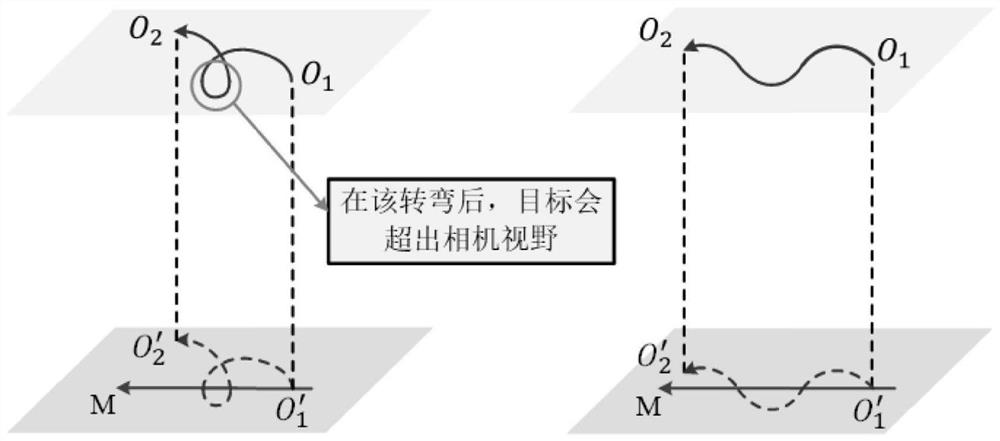
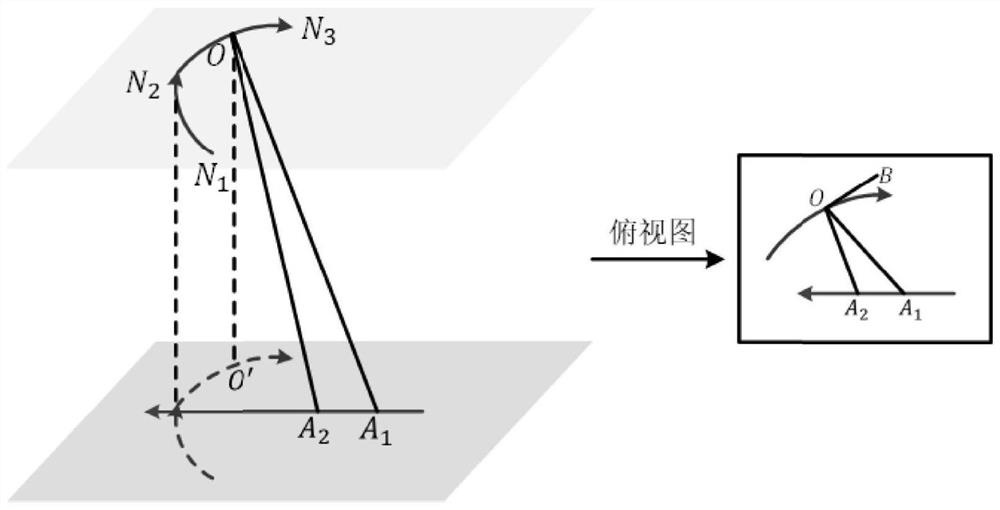
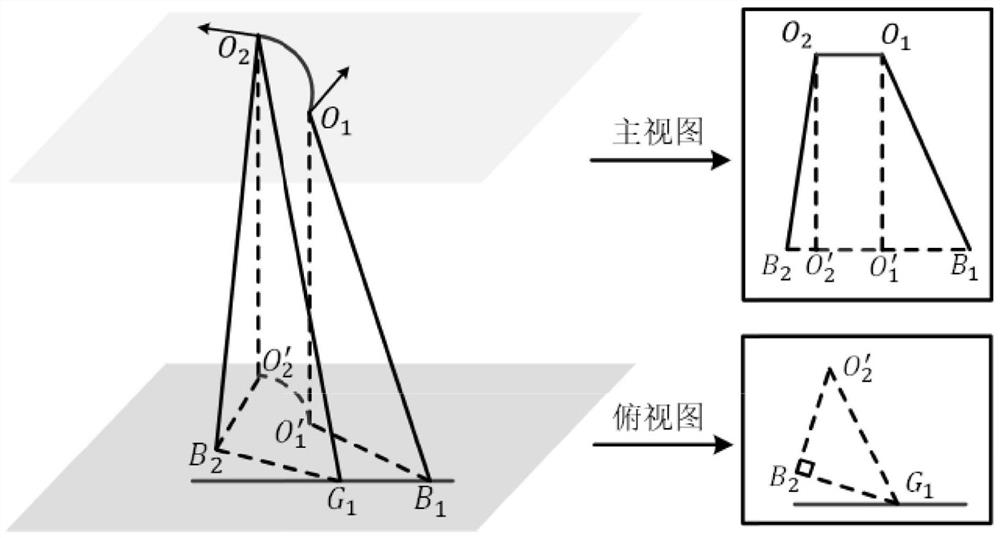
Method for tracking rapid moving target by fixed-wing unmanned aerial vehicle based on pan-tilt-zoom camera
PatentActiveCN111984036A
Innovation
- The image-based visual servo control method and deterministic finite automaton model are used to combine the motion characteristics of the drone and the gimbal, which are divided into three states: tracking state, adjustment state and transition state. The drone's hovering direction and gimbal are Rotation adjustment to avoid target loss and achieve continuous tracking of fast moving targets.

Airspace Regulations and Compliance Requirements
The deployment and operation of fixed-wing drones, regardless of their algorithmic sophistication in balancing speed and accuracy, must navigate a complex landscape of airspace regulations and compliance requirements that vary significantly across jurisdictions. In the United States, the Federal Aviation Administration (FAA) governs drone operations through Part 107 regulations for commercial use, which mandate operational altitude limits typically below 400 feet, visual line-of-sight requirements, and restrictions on flights over people and moving vehicles. These constraints directly impact algorithm design choices, as speed-optimized algorithms must incorporate real-time compliance checks to ensure operations remain within legal boundaries, while accuracy-focused systems must validate that their extended processing times do not compromise regulatory adherence during dynamic flight scenarios.
European airspace regulations under the European Union Aviation Safety Agency (EASA) introduce additional complexity through a risk-based categorization system that classifies drone operations into open, specific, and certified categories. Fixed-wing drones employing high-speed algorithms often fall into higher-risk categories due to their kinetic energy and operational range, triggering more stringent certification requirements including geo-fencing capabilities, remote identification systems, and enhanced fail-safe mechanisms. The algorithmic trade-off between speed and accuracy becomes particularly critical in meeting these technical standards, as faster processing may reduce system reliability margins required for certification approval.
International operations face further challenges with divergent national regulations in countries like China, where the Civil Aviation Administration of China (CAAC) imposes strict registration, flight plan approval, and real-time tracking requirements. Algorithm developers must integrate compliance modules that can adapt to multiple regulatory frameworks simultaneously, adding computational overhead that affects both speed and accuracy metrics. The emerging UTM (Unmanned Traffic Management) systems worldwide require drones to broadcast position data and respond to airspace constraints dynamically, necessitating algorithms that can process regulatory inputs alongside navigation and mission objectives without degrading performance.
Privacy regulations such as GDPR in Europe and various state-level laws in the US impose additional constraints on data collection and processing during drone operations, particularly affecting computer vision and sensor fusion algorithms that balance speed with accuracy in object detection and classification tasks.
European airspace regulations under the European Union Aviation Safety Agency (EASA) introduce additional complexity through a risk-based categorization system that classifies drone operations into open, specific, and certified categories. Fixed-wing drones employing high-speed algorithms often fall into higher-risk categories due to their kinetic energy and operational range, triggering more stringent certification requirements including geo-fencing capabilities, remote identification systems, and enhanced fail-safe mechanisms. The algorithmic trade-off between speed and accuracy becomes particularly critical in meeting these technical standards, as faster processing may reduce system reliability margins required for certification approval.
International operations face further challenges with divergent national regulations in countries like China, where the Civil Aviation Administration of China (CAAC) imposes strict registration, flight plan approval, and real-time tracking requirements. Algorithm developers must integrate compliance modules that can adapt to multiple regulatory frameworks simultaneously, adding computational overhead that affects both speed and accuracy metrics. The emerging UTM (Unmanned Traffic Management) systems worldwide require drones to broadcast position data and respond to airspace constraints dynamically, necessitating algorithms that can process regulatory inputs alongside navigation and mission objectives without degrading performance.
Privacy regulations such as GDPR in Europe and various state-level laws in the US impose additional constraints on data collection and processing during drone operations, particularly affecting computer vision and sensor fusion algorithms that balance speed with accuracy in object detection and classification tasks.
Algorithm Validation and Testing Standards
Establishing robust validation and testing standards is fundamental to ensuring reliable performance comparisons between fixed-wing drone algorithms. The validation framework must encompass both simulation-based testing and real-world flight trials, creating a comprehensive evaluation environment that captures the full spectrum of operational conditions. Standardized testing protocols should define specific metrics for speed assessment, including processing time per frame, decision-making latency, and end-to-end system response time, while accuracy metrics must cover positioning precision, trajectory tracking error, and object detection reliability under various environmental conditions.
The testing methodology requires carefully designed benchmark datasets that represent diverse operational scenarios, including different lighting conditions, weather patterns, terrain types, and mission profiles. These datasets should be publicly accessible when possible to enable reproducible research and fair comparisons across different algorithmic approaches. Simulation environments must accurately model aerodynamic characteristics, sensor noise, communication delays, and environmental disturbances to ensure that virtual testing results translate effectively to real-world performance.
Hardware-in-the-loop testing represents a critical intermediate validation stage, allowing algorithms to interface with actual sensor systems and flight controllers while operating in controlled conditions. This approach bridges the gap between pure simulation and field testing, revealing integration challenges and timing issues that may not surface in software-only environments. Field validation protocols must specify minimum flight hours, diverse geographic locations, and varying mission complexities to thoroughly stress-test algorithmic performance.
Statistical rigor in validation requires defining confidence intervals, establishing baseline performance thresholds, and conducting comparative analyses using standardized statistical methods. Documentation standards should mandate detailed reporting of computational resources, parameter configurations, and environmental conditions during testing. Independent third-party validation, where feasible, adds credibility to performance claims and helps establish industry-wide benchmarks that advance the entire field of autonomous fixed-wing drone technology.
The testing methodology requires carefully designed benchmark datasets that represent diverse operational scenarios, including different lighting conditions, weather patterns, terrain types, and mission profiles. These datasets should be publicly accessible when possible to enable reproducible research and fair comparisons across different algorithmic approaches. Simulation environments must accurately model aerodynamic characteristics, sensor noise, communication delays, and environmental disturbances to ensure that virtual testing results translate effectively to real-world performance.
Hardware-in-the-loop testing represents a critical intermediate validation stage, allowing algorithms to interface with actual sensor systems and flight controllers while operating in controlled conditions. This approach bridges the gap between pure simulation and field testing, revealing integration challenges and timing issues that may not surface in software-only environments. Field validation protocols must specify minimum flight hours, diverse geographic locations, and varying mission complexities to thoroughly stress-test algorithmic performance.
Statistical rigor in validation requires defining confidence intervals, establishing baseline performance thresholds, and conducting comparative analyses using standardized statistical methods. Documentation standards should mandate detailed reporting of computational resources, parameter configurations, and environmental conditions during testing. Independent third-party validation, where feasible, adds credibility to performance claims and helps establish industry-wide benchmarks that advance the entire field of autonomous fixed-wing drone technology.
Unlock deeper insights with Patsnap Eureka Quick Research — get a full tech report to explore trends and direct your research. Try now!
Generate Your Research Report Instantly with AI Agent
Supercharge your innovation with Patsnap Eureka AI Agent Platform!