
Reducing Noise Emissions in Fixed Wing Drones
FEB 25, 20269 MIN READ
Generate Your Research Report Instantly with AI Agent
Patsnap Eureka helps you evaluate technical feasibility & market potential.
Fixed Wing Drone Noise Reduction Background and Objectives
Fixed-wing drones have experienced remarkable growth across civilian and commercial sectors over the past decade, evolving from niche military applications to widespread use in agriculture, logistics, surveillance, and infrastructure inspection. This expansion has been driven by their superior endurance, extended range capabilities, and payload efficiency compared to rotary-wing counterparts. However, as operational volumes increase and deployment extends into urban and noise-sensitive environments, acoustic emissions have emerged as a critical constraint limiting broader adoption and regulatory acceptance.
The noise generated by fixed-wing drones originates from multiple sources, including propulsion systems, aerodynamic interactions between airframe components and airflow, and propeller tip vortices. These emissions typically manifest across a broad frequency spectrum, with tonal components at blade passage frequencies and broadband noise from turbulent boundary layers. Current noise levels often exceed 60-75 dBA at operational altitudes, creating disturbances that conflict with residential comfort standards, wildlife conservation requirements, and covert operational needs.
Regulatory frameworks worldwide are tightening acoustic emission standards for unmanned aerial systems. The European Union Aviation Safety Agency and Federal Aviation Administration have initiated discussions on noise certification procedures similar to those applied to manned aircraft. Several municipalities have already imposed operational restrictions based on noise complaints, threatening the viability of urban delivery services and emergency response applications that represent significant market opportunities.
The primary objective of noise reduction research in fixed-wing drones is to achieve acoustic signatures below 55 dBA at 50 meters altitude during cruise conditions, while maintaining or improving aerodynamic efficiency, structural integrity, and payload capacity. Secondary objectives include minimizing tonal noise components that are particularly annoying to human perception, reducing acoustic detectability for security applications, and developing scalable solutions applicable across various drone size categories from small tactical units to large cargo platforms.
Achieving these targets requires integrated approaches addressing propulsion system optimization, airframe aeroacoustic design, advanced materials implementation, and active noise control technologies. The challenge lies in balancing acoustic performance with the stringent weight, power consumption, and cost constraints inherent to drone platforms, while ensuring solutions remain practical for mass production and field deployment.
The noise generated by fixed-wing drones originates from multiple sources, including propulsion systems, aerodynamic interactions between airframe components and airflow, and propeller tip vortices. These emissions typically manifest across a broad frequency spectrum, with tonal components at blade passage frequencies and broadband noise from turbulent boundary layers. Current noise levels often exceed 60-75 dBA at operational altitudes, creating disturbances that conflict with residential comfort standards, wildlife conservation requirements, and covert operational needs.
Regulatory frameworks worldwide are tightening acoustic emission standards for unmanned aerial systems. The European Union Aviation Safety Agency and Federal Aviation Administration have initiated discussions on noise certification procedures similar to those applied to manned aircraft. Several municipalities have already imposed operational restrictions based on noise complaints, threatening the viability of urban delivery services and emergency response applications that represent significant market opportunities.
The primary objective of noise reduction research in fixed-wing drones is to achieve acoustic signatures below 55 dBA at 50 meters altitude during cruise conditions, while maintaining or improving aerodynamic efficiency, structural integrity, and payload capacity. Secondary objectives include minimizing tonal noise components that are particularly annoying to human perception, reducing acoustic detectability for security applications, and developing scalable solutions applicable across various drone size categories from small tactical units to large cargo platforms.
Achieving these targets requires integrated approaches addressing propulsion system optimization, airframe aeroacoustic design, advanced materials implementation, and active noise control technologies. The challenge lies in balancing acoustic performance with the stringent weight, power consumption, and cost constraints inherent to drone platforms, while ensuring solutions remain practical for mass production and field deployment.
Market Demand for Quieter Fixed Wing Drones
The market demand for quieter fixed wing drones has experienced substantial growth across multiple sectors, driven by evolving regulatory frameworks and increasing operational requirements in noise-sensitive environments. Commercial applications, particularly in urban logistics and delivery services, represent a significant demand driver as companies seek to expand operations into residential areas where noise restrictions are stringent. The ability to operate during extended hours without disturbing communities has become a critical competitive advantage for drone service providers.
Agricultural applications constitute another major demand segment, where farmers and agricultural service companies require drones capable of conducting early morning or late evening operations without disrupting livestock or neighboring properties. The precision agriculture market has shown particular interest in quieter platforms that enable frequent monitoring flights without causing stress to animals or generating complaints from rural communities.
Surveillance and monitoring sectors, including environmental research, wildlife conservation, and infrastructure inspection, demonstrate strong demand for reduced noise emissions. These applications often require prolonged observation periods in sensitive ecosystems where acoustic disturbance can affect wildlife behavior or compromise research integrity. Organizations conducting these operations increasingly specify noise reduction as a mandatory requirement in procurement specifications.
The defense and security sector presents a specialized but significant market segment, where tactical reconnaissance and covert operations necessitate minimal acoustic signatures. Military and law enforcement agencies prioritize stealth capabilities, creating demand for advanced noise reduction technologies that can provide operational advantages in sensitive missions.
Regulatory pressures across global markets are accelerating demand for quieter drone technologies. European Union member states and several North American jurisdictions have implemented or proposed noise certification standards for unmanned aerial vehicles, compelling manufacturers to prioritize acoustic performance. These regulatory developments are transforming noise reduction from a desirable feature into a market entry requirement, particularly for operations in densely populated regions where public acceptance remains a critical factor for industry growth.
Agricultural applications constitute another major demand segment, where farmers and agricultural service companies require drones capable of conducting early morning or late evening operations without disrupting livestock or neighboring properties. The precision agriculture market has shown particular interest in quieter platforms that enable frequent monitoring flights without causing stress to animals or generating complaints from rural communities.
Surveillance and monitoring sectors, including environmental research, wildlife conservation, and infrastructure inspection, demonstrate strong demand for reduced noise emissions. These applications often require prolonged observation periods in sensitive ecosystems where acoustic disturbance can affect wildlife behavior or compromise research integrity. Organizations conducting these operations increasingly specify noise reduction as a mandatory requirement in procurement specifications.
The defense and security sector presents a specialized but significant market segment, where tactical reconnaissance and covert operations necessitate minimal acoustic signatures. Military and law enforcement agencies prioritize stealth capabilities, creating demand for advanced noise reduction technologies that can provide operational advantages in sensitive missions.
Regulatory pressures across global markets are accelerating demand for quieter drone technologies. European Union member states and several North American jurisdictions have implemented or proposed noise certification standards for unmanned aerial vehicles, compelling manufacturers to prioritize acoustic performance. These regulatory developments are transforming noise reduction from a desirable feature into a market entry requirement, particularly for operations in densely populated regions where public acceptance remains a critical factor for industry growth.
Current Noise Emission Challenges in Fixed Wing Drones
Fixed wing drones have emerged as valuable platforms for various commercial and civilian applications, yet their operational noise remains a significant impediment to widespread adoption. The acoustic signature generated by these unmanned aerial vehicles presents multifaceted challenges that span technical, regulatory, and social dimensions. Understanding these challenges is essential for developing effective noise mitigation strategies.
The primary source of noise in fixed wing drones originates from the propulsion system, particularly the interaction between propellers and airflow. High-frequency tonal noise generated by propeller blade passage creates distinctive acoustic patterns that are particularly noticeable and often perceived as more annoying than broadband noise of equivalent intensity. The rotational speed of propellers, typically operating at several thousand revolutions per minute, produces harmonic frequencies that can propagate over considerable distances, especially in quiet rural or suburban environments.
Aerodynamic noise constitutes another critical challenge, arising from turbulent boundary layer interactions along the airframe and control surfaces. As flight speeds increase, the contribution of aerodynamic noise becomes more pronounced, with vortex shedding and flow separation creating additional acoustic disturbances. The compact design constraints of drone platforms often necessitate configurations that are not acoustically optimized, leading to increased noise generation compared to traditional manned aircraft.
Current measurement and characterization methodologies present their own set of difficulties. The relatively small size and high maneuverability of fixed wing drones complicate accurate noise assessment, as traditional aircraft noise measurement standards may not directly apply. Variability in flight profiles, operational altitudes, and environmental conditions further complicates the establishment of standardized noise metrics. Additionally, the psychoacoustic perception of drone noise differs from conventional aircraft, with studies indicating that the unique tonal characteristics of drone noise may be perceived as more intrusive at lower sound pressure levels.
Regulatory frameworks are still evolving to address drone-specific noise concerns. Existing aviation noise regulations were primarily designed for larger manned aircraft and may not adequately capture the unique acoustic characteristics of drone operations. The absence of universally accepted noise certification standards for fixed wing drones creates uncertainty for manufacturers and operators, potentially hindering innovation in noise reduction technologies.
The primary source of noise in fixed wing drones originates from the propulsion system, particularly the interaction between propellers and airflow. High-frequency tonal noise generated by propeller blade passage creates distinctive acoustic patterns that are particularly noticeable and often perceived as more annoying than broadband noise of equivalent intensity. The rotational speed of propellers, typically operating at several thousand revolutions per minute, produces harmonic frequencies that can propagate over considerable distances, especially in quiet rural or suburban environments.
Aerodynamic noise constitutes another critical challenge, arising from turbulent boundary layer interactions along the airframe and control surfaces. As flight speeds increase, the contribution of aerodynamic noise becomes more pronounced, with vortex shedding and flow separation creating additional acoustic disturbances. The compact design constraints of drone platforms often necessitate configurations that are not acoustically optimized, leading to increased noise generation compared to traditional manned aircraft.
Current measurement and characterization methodologies present their own set of difficulties. The relatively small size and high maneuverability of fixed wing drones complicate accurate noise assessment, as traditional aircraft noise measurement standards may not directly apply. Variability in flight profiles, operational altitudes, and environmental conditions further complicates the establishment of standardized noise metrics. Additionally, the psychoacoustic perception of drone noise differs from conventional aircraft, with studies indicating that the unique tonal characteristics of drone noise may be perceived as more intrusive at lower sound pressure levels.
Regulatory frameworks are still evolving to address drone-specific noise concerns. Existing aviation noise regulations were primarily designed for larger manned aircraft and may not adequately capture the unique acoustic characteristics of drone operations. The absence of universally accepted noise certification standards for fixed wing drones creates uncertainty for manufacturers and operators, potentially hindering innovation in noise reduction technologies.
Existing Noise Mitigation Solutions for Fixed Wing Drones
01 Propeller and rotor blade design for noise reduction
Fixed-wing drones can reduce noise emissions through optimized propeller and rotor blade designs. This includes modifications to blade geometry, pitch angles, tip shapes, and the number of blades to minimize aerodynamic noise generation. Advanced blade profiles and swept designs can reduce vortex formation and turbulence, resulting in quieter operation during flight.- Propeller and rotor blade design modifications for noise reduction: Fixed-wing drones can achieve noise reduction through optimized propeller and rotor blade designs. This includes modifications to blade geometry, pitch angles, tip shapes, and the number of blades. Advanced aerodynamic profiles and swept blade designs help minimize turbulence and vortex formation, which are primary sources of aerodynamic noise. These design improvements reduce both tonal and broadband noise emissions during flight operations.
- Active noise cancellation and acoustic dampening systems: Active noise control technologies can be integrated into fixed-wing drone systems to reduce noise emissions. These systems use sensors to detect noise patterns and generate counter-phase sound waves to cancel out unwanted noise. Additionally, acoustic dampening materials and sound-absorbing structures can be incorporated into the drone's airframe and engine compartments to reduce noise propagation. These technologies are particularly effective for reducing engine and mechanical noise.
- Electric propulsion systems and motor optimization: The use of electric propulsion systems in fixed-wing drones significantly reduces noise emissions compared to traditional combustion engines. Optimized electric motors with reduced electromagnetic interference and mechanical vibrations contribute to quieter operation. Motor control algorithms and variable speed drives can be tuned to minimize acoustic signatures during different flight phases. Brushless motor designs and improved bearing systems further reduce mechanical noise generation.
- Aerodynamic airframe design for reduced noise: The overall aerodynamic design of fixed-wing drone airframes plays a crucial role in noise reduction. Streamlined fuselage shapes, optimized wing profiles, and reduced drag configurations minimize airflow turbulence and associated noise. Careful attention to surface smoothness, joint sealing, and the elimination of protruding components reduces wind noise. Integration of noise-reducing features such as serrated trailing edges and boundary layer control devices further decreases acoustic emissions during flight.
- Flight path optimization and operational noise management: Noise emissions from fixed-wing drones can be managed through intelligent flight path planning and operational strategies. This includes altitude optimization, speed regulation during sensitive operations, and avoidance of populated areas during high-noise flight phases. Advanced flight control systems can adjust throttle settings and flight attitudes to minimize noise generation while maintaining mission effectiveness. Automated systems can calculate and execute flight profiles that balance operational requirements with noise reduction objectives.
02 Active noise cancellation and acoustic dampening systems
Implementation of active noise control systems that generate anti-phase sound waves to cancel out drone noise emissions. These systems use microphones to detect noise patterns and speakers to produce counteracting sound waves. Additionally, acoustic dampening materials and sound-absorbing structures can be integrated into the drone body to reduce noise propagation.Expand Specific Solutions03 Electric propulsion and motor optimization
Electric motor designs and propulsion systems specifically engineered to minimize operational noise. This includes brushless motor configurations, optimized motor mounting systems with vibration isolation, and electronic speed controllers that reduce electromagnetic interference and mechanical vibrations. Proper motor balancing and bearing selection also contribute to quieter operation.Expand Specific Solutions04 Aerodynamic airframe design and noise shielding
Airframe configurations that minimize turbulent airflow and incorporate noise shielding features. This includes streamlined fuselage designs, strategic placement of propulsion systems to shield noise from ground observers, and integration of fairings or shrouds around noisy components. Wing and tail surface designs that reduce flow separation and vortex shedding also contribute to lower noise emissions.Expand Specific Solutions05 Flight path optimization and operational noise management
Software-based approaches to reduce noise impact through intelligent flight path planning and operational strategies. This includes altitude optimization, speed management during different flight phases, and route planning that minimizes noise exposure to populated areas. Automated systems can adjust flight parameters in real-time to maintain quieter operation profiles while meeting mission objectives.Expand Specific Solutions
Key Players in Fixed Wing Drone Acoustic Innovation
The fixed-wing drone noise reduction sector represents an emerging yet rapidly evolving competitive landscape, currently in its early-to-mid development stage with significant growth potential driven by increasing urban air mobility demands and stricter noise regulations. The market encompasses diverse players ranging from established aerospace giants like Boeing, Airbus Operations, Lockheed Martin, and Rolls-Royce, who leverage decades of aeroacoustic expertise, to innovative startups like Whisper Aero specializing in ultra-quiet electric propulsion systems. Technology maturity varies considerably across participants: traditional manufacturers such as Pratt & Whitney Canada and Honeywell are adapting conventional noise suppression techniques, while companies like Wing Aviation and Beta Air are pioneering integrated electric propulsion solutions. Academic institutions including Zhejiang University, Nanjing University of Aeronautics & Astronautics, and research organizations like DLR and JAXA are advancing fundamental aeroacoustic research, bridging the gap between theoretical innovation and commercial application in this acoustically-sensitive aviation segment.
The Boeing Co.
Technical Solution: Boeing has developed comprehensive noise reduction solutions for fixed-wing unmanned aerial systems through its Phantom Works division. Their approach combines passive and active noise control technologies, including serrated trailing edges on propellers and wings to disrupt vortex formation, acoustic liners in nacelles and fuselage sections, and optimized propeller-airframe integration to minimize interaction noise. Boeing's research focuses on low-noise propeller designs featuring increased blade count with reduced individual blade loading, operating at lower tip speeds while maintaining thrust requirements. They have implemented advanced composite materials with inherent damping properties to reduce structural vibration transmission. Their systems also incorporate flight path optimization algorithms that adjust altitude and speed profiles to minimize ground-level noise impact during critical mission phases, achieving noise reductions of 10-15 decibels in operational testing.
Strengths: Extensive aerospace engineering resources and proven track record in noise reduction across multiple aircraft platforms; comprehensive system-level integration capabilities. Weaknesses: Solutions tend to be complex and costly; primarily focused on larger military and commercial applications rather than small drone platforms.
Airbus Operations GmbH
Technical Solution: Airbus has developed noise mitigation technologies for unmanned fixed-wing aircraft through its Defence and Space division, leveraging expertise from commercial aviation. Their technical approach emphasizes propeller noise reduction through advanced blade design featuring swept tips, non-uniform blade spacing to distribute tonal noise across broader frequency ranges, and composite construction with integrated damping layers. Airbus employs multi-disciplinary optimization combining aerodynamic performance with acoustic signatures, utilizing high-fidelity simulation tools validated through extensive wind tunnel testing. Their solutions include nacelle acoustic treatments with resonant absorbers tuned to specific frequency ranges, and airframe modifications such as landing gear fairings and smooth surface treatments to reduce turbulent boundary layer noise. The company has also developed operational noise abatement procedures including optimized climb profiles and reduced power settings during noise-sensitive flight phases, demonstrating 8-12 decibel reductions in community noise exposure.
Strengths: World-class aeroacoustic research capabilities with extensive validation infrastructure; strong integration of noise reduction with overall aircraft performance optimization. Weaknesses: Technology development primarily driven by manned aircraft requirements; solutions may require significant customization for smaller drone applications.
Core Patents in Propeller and Aerodynamic Noise Control
Propeller with noise reducing surface and edge serrations
PatentWO2024097669A9
Innovation
- The development of a three-dimensional (3D) serrated cicada surface (3D-SC) design for propellers, created by lofting two-dimensional airfoils with spatial splines and applying a sinusoidal wave function to the leading and trailing edges, resulting in serrations that extend across the entire propeller surface.


System and method for reducing the noise of pusher type aircraft propellers
PatentActiveUS8622334B2
Innovation
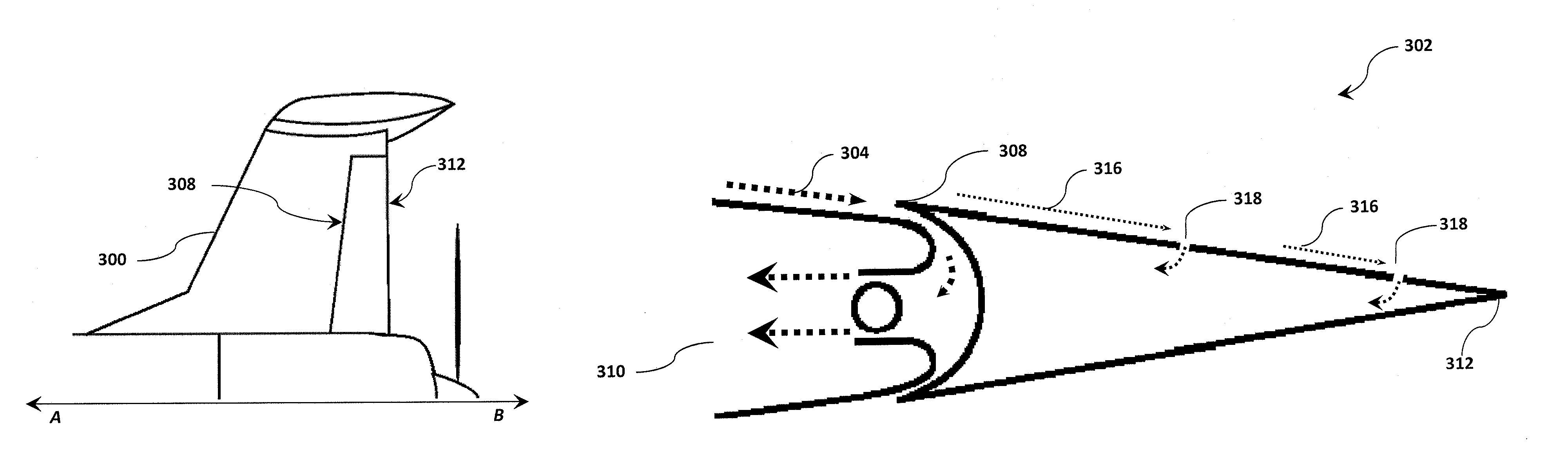
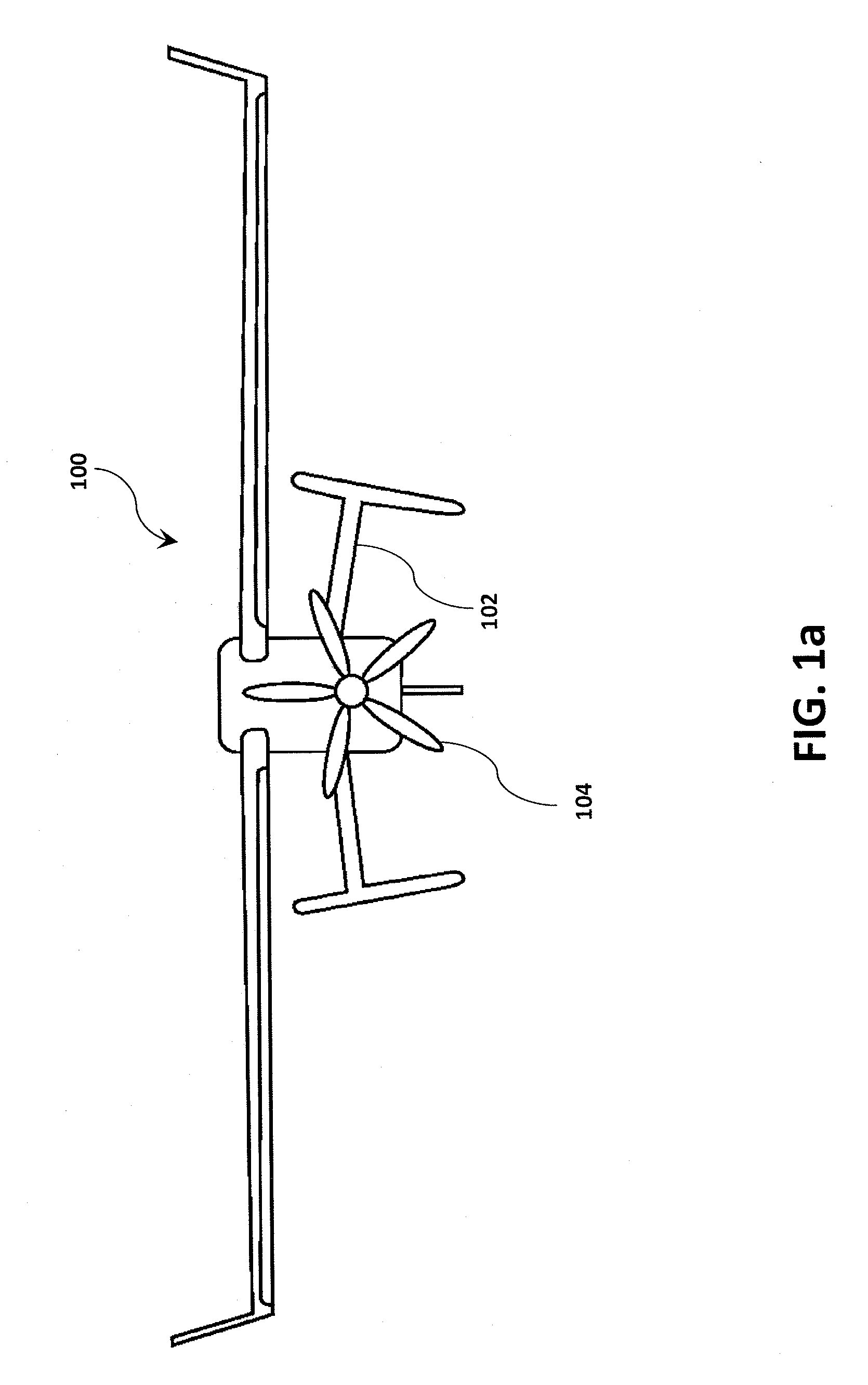
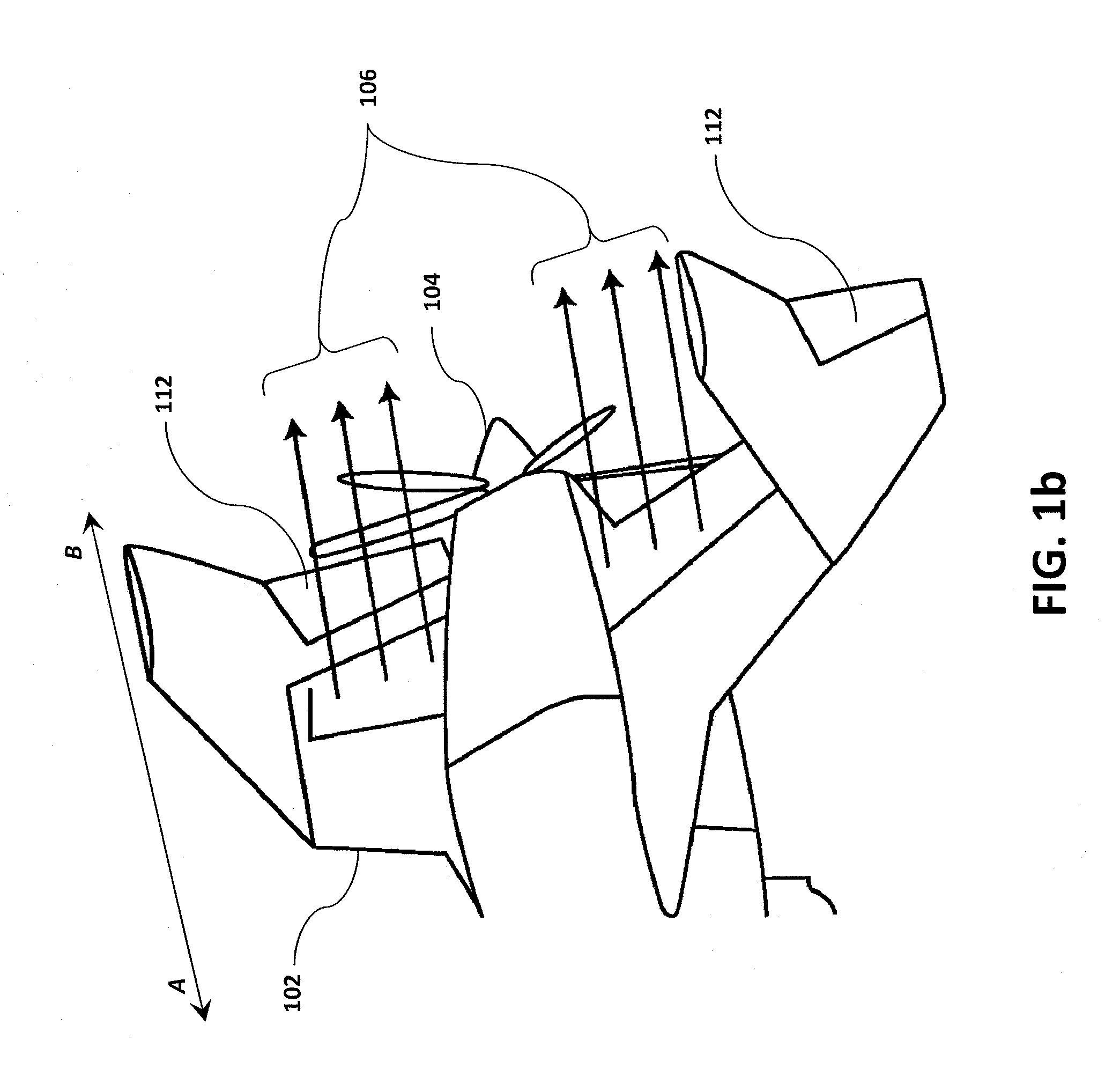
- The implementation of an airfoil-shaped flight surface with a scoop to route boundary layer air and a suction device to apply a suction force through a slot or opening, minimizing wake development and propeller noise, while allowing the aircraft to maintain the advantages of its pusher propeller configuration.

Regulatory Standards for Drone Noise Emissions
The regulatory landscape for drone noise emissions is evolving rapidly as unmanned aerial vehicles become increasingly prevalent in commercial and civilian airspace. Currently, noise standards for fixed-wing drones are primarily governed by aviation authorities such as the Federal Aviation Administration (FAA) in the United States and the European Union Aviation Safety Agency (EASA) in Europe. These organizations have begun establishing noise certification requirements that parallel those applied to manned aircraft, though specific thresholds and measurement protocols for drones remain under development.
International standards organizations, particularly the International Civil Aviation Organization (ICAO), are working to harmonize noise emission criteria across different jurisdictions. The ICAO Annex 16 framework, traditionally applied to conventional aircraft, is being adapted to address the unique acoustic characteristics of drones. Measurement methodologies typically specify maximum permissible sound pressure levels measured at designated distances under standardized flight conditions, with values often ranging between 55 to 70 decibels depending on drone weight class and operational context.
Regional variations in regulatory approaches reflect different priorities and environmental concerns. Urban areas with dense populations tend to impose stricter noise limits, particularly for delivery drones and surveillance applications. Some municipalities have established time-of-day restrictions and designated flight corridors to minimize community noise impact. The emerging regulatory framework also distinguishes between different operational scenarios, with more stringent requirements for residential areas compared to industrial or agricultural zones.
Compliance verification procedures are becoming increasingly sophisticated, requiring manufacturers to conduct certified acoustic testing during the design phase. Type certification processes now commonly include noise emission documentation, with some jurisdictions mandating continuous noise monitoring systems on commercial drone fleets. As the industry matures, regulatory bodies are expected to refine these standards based on accumulated operational data and advancing noise reduction technologies, creating both compliance challenges and innovation opportunities for manufacturers seeking to meet increasingly stringent environmental performance criteria.
International standards organizations, particularly the International Civil Aviation Organization (ICAO), are working to harmonize noise emission criteria across different jurisdictions. The ICAO Annex 16 framework, traditionally applied to conventional aircraft, is being adapted to address the unique acoustic characteristics of drones. Measurement methodologies typically specify maximum permissible sound pressure levels measured at designated distances under standardized flight conditions, with values often ranging between 55 to 70 decibels depending on drone weight class and operational context.
Regional variations in regulatory approaches reflect different priorities and environmental concerns. Urban areas with dense populations tend to impose stricter noise limits, particularly for delivery drones and surveillance applications. Some municipalities have established time-of-day restrictions and designated flight corridors to minimize community noise impact. The emerging regulatory framework also distinguishes between different operational scenarios, with more stringent requirements for residential areas compared to industrial or agricultural zones.
Compliance verification procedures are becoming increasingly sophisticated, requiring manufacturers to conduct certified acoustic testing during the design phase. Type certification processes now commonly include noise emission documentation, with some jurisdictions mandating continuous noise monitoring systems on commercial drone fleets. As the industry matures, regulatory bodies are expected to refine these standards based on accumulated operational data and advancing noise reduction technologies, creating both compliance challenges and innovation opportunities for manufacturers seeking to meet increasingly stringent environmental performance criteria.
Environmental Impact Assessment of Drone Noise Pollution
Noise pollution from fixed-wing drones represents a growing environmental concern as their deployment expands across urban, suburban, and rural landscapes. The acoustic emissions generated during drone operations can significantly affect wildlife behavior, disrupt natural habitats, and diminish quality of life for human populations in affected areas. Understanding the environmental ramifications of drone noise requires comprehensive assessment frameworks that consider both immediate and long-term ecological consequences.
The impact on wildlife constitutes a primary environmental concern, as numerous studies have documented behavioral changes in avian species exposed to drone-generated noise. Birds may exhibit altered nesting patterns, increased stress responses, and disrupted communication systems when subjected to persistent acoustic disturbances. Marine and terrestrial mammals similarly demonstrate sensitivity to drone noise, with documented cases of habitat abandonment and modified foraging behaviors. These disruptions can cascade through ecosystems, affecting predator-prey dynamics and biodiversity maintenance.
Human communities face distinct challenges from drone noise pollution, particularly in residential zones and protected natural areas. Chronic exposure to drone acoustic emissions has been linked to sleep disturbance, reduced cognitive performance, and elevated stress levels among affected populations. The intermittent and unpredictable nature of drone operations often exacerbates these effects compared to constant background noise sources.
Regulatory frameworks for assessing drone noise environmental impact remain underdeveloped in most jurisdictions. Current assessment methodologies typically adapt standards from traditional aviation or industrial noise evaluation, which may inadequately capture the unique acoustic characteristics of drone operations. The frequency spectrum, temporal patterns, and spatial distribution of drone noise differ substantially from conventional noise sources, necessitating specialized evaluation protocols.
Quantitative assessment tools increasingly incorporate psychoacoustic metrics beyond simple decibel measurements, recognizing that perceived annoyance and environmental impact correlate imperfectly with sound pressure levels alone. Factors such as tonality, impulsiveness, and temporal variability significantly influence both human perception and ecological consequences. Advanced assessment frameworks now integrate spatial modeling, temporal exposure analysis, and species-specific sensitivity data to provide comprehensive environmental impact evaluations that inform both regulatory decisions and technological development priorities.
The impact on wildlife constitutes a primary environmental concern, as numerous studies have documented behavioral changes in avian species exposed to drone-generated noise. Birds may exhibit altered nesting patterns, increased stress responses, and disrupted communication systems when subjected to persistent acoustic disturbances. Marine and terrestrial mammals similarly demonstrate sensitivity to drone noise, with documented cases of habitat abandonment and modified foraging behaviors. These disruptions can cascade through ecosystems, affecting predator-prey dynamics and biodiversity maintenance.
Human communities face distinct challenges from drone noise pollution, particularly in residential zones and protected natural areas. Chronic exposure to drone acoustic emissions has been linked to sleep disturbance, reduced cognitive performance, and elevated stress levels among affected populations. The intermittent and unpredictable nature of drone operations often exacerbates these effects compared to constant background noise sources.
Regulatory frameworks for assessing drone noise environmental impact remain underdeveloped in most jurisdictions. Current assessment methodologies typically adapt standards from traditional aviation or industrial noise evaluation, which may inadequately capture the unique acoustic characteristics of drone operations. The frequency spectrum, temporal patterns, and spatial distribution of drone noise differ substantially from conventional noise sources, necessitating specialized evaluation protocols.
Quantitative assessment tools increasingly incorporate psychoacoustic metrics beyond simple decibel measurements, recognizing that perceived annoyance and environmental impact correlate imperfectly with sound pressure levels alone. Factors such as tonality, impulsiveness, and temporal variability significantly influence both human perception and ecological consequences. Advanced assessment frameworks now integrate spatial modeling, temporal exposure analysis, and species-specific sensitivity data to provide comprehensive environmental impact evaluations that inform both regulatory decisions and technological development priorities.
Unlock deeper insights with Patsnap Eureka Quick Research — get a full tech report to explore trends and direct your research. Try now!
Generate Your Research Report Instantly with AI Agent
Supercharge your innovation with Patsnap Eureka AI Agent Platform!