

Bridge Rectifier vs Voltage Detector: Deflection Insights
MAR 24, 20269 MIN READ
Generate Your Research Report Instantly with AI Agent
Patsnap Eureka helps you evaluate technical feasibility & market potential.
Bridge Rectifier and Voltage Detector Technology Background
Bridge rectifiers and voltage detectors represent two fundamental yet distinct categories of electronic components that have evolved through decades of technological advancement. Bridge rectifiers emerged in the early 20th century as a solution for efficient AC-to-DC conversion, utilizing four diodes arranged in a diamond configuration to achieve full-wave rectification. This topology became the industry standard due to its ability to utilize both halves of the AC waveform while maintaining electrical isolation from the center-tap transformer requirement.
Voltage detectors, conversely, developed as precision measurement and monitoring devices designed to sense and respond to specific voltage thresholds. These components evolved from simple voltage divider circuits to sophisticated integrated circuits capable of detecting minute voltage variations with high accuracy and fast response times. The fundamental distinction lies in their operational objectives: bridge rectifiers focus on power conversion efficiency, while voltage detectors prioritize measurement precision and threshold detection.
The technological evolution of bridge rectifiers has been driven by the demand for higher efficiency, reduced power losses, and improved thermal management. Silicon diodes replaced germanium variants, followed by Schottky diodes for low-voltage applications, and eventually silicon carbide devices for high-power implementations. Modern bridge rectifiers incorporate advanced packaging techniques and heat dissipation mechanisms to handle increasing power densities.
Voltage detector technology has progressed toward miniaturization and enhanced sensitivity. Early implementations relied on discrete components and mechanical relays, but contemporary solutions integrate sophisticated analog-to-digital conversion, programmable thresholds, and digital communication interfaces. The integration of CMOS technology has enabled ultra-low power consumption and precise voltage reference generation.
The convergence of these technologies occurs in applications requiring both power conversion and voltage monitoring capabilities. Modern power management systems increasingly demand real-time voltage sensing during rectification processes, leading to hybrid solutions that combine rectification efficiency with monitoring precision. This technological intersection has spawned innovative approaches to power system design, where deflection characteristics and voltage sensing capabilities are optimized simultaneously.
Current research focuses on addressing the inherent trade-offs between rectification efficiency and voltage detection accuracy, particularly in applications where both functions must coexist within constrained physical and thermal environments. The challenge lies in minimizing interference between power conversion operations and sensitive voltage measurement circuits while maintaining optimal performance in both domains.
Voltage detectors, conversely, developed as precision measurement and monitoring devices designed to sense and respond to specific voltage thresholds. These components evolved from simple voltage divider circuits to sophisticated integrated circuits capable of detecting minute voltage variations with high accuracy and fast response times. The fundamental distinction lies in their operational objectives: bridge rectifiers focus on power conversion efficiency, while voltage detectors prioritize measurement precision and threshold detection.
The technological evolution of bridge rectifiers has been driven by the demand for higher efficiency, reduced power losses, and improved thermal management. Silicon diodes replaced germanium variants, followed by Schottky diodes for low-voltage applications, and eventually silicon carbide devices for high-power implementations. Modern bridge rectifiers incorporate advanced packaging techniques and heat dissipation mechanisms to handle increasing power densities.
Voltage detector technology has progressed toward miniaturization and enhanced sensitivity. Early implementations relied on discrete components and mechanical relays, but contemporary solutions integrate sophisticated analog-to-digital conversion, programmable thresholds, and digital communication interfaces. The integration of CMOS technology has enabled ultra-low power consumption and precise voltage reference generation.
The convergence of these technologies occurs in applications requiring both power conversion and voltage monitoring capabilities. Modern power management systems increasingly demand real-time voltage sensing during rectification processes, leading to hybrid solutions that combine rectification efficiency with monitoring precision. This technological intersection has spawned innovative approaches to power system design, where deflection characteristics and voltage sensing capabilities are optimized simultaneously.
Current research focuses on addressing the inherent trade-offs between rectification efficiency and voltage detection accuracy, particularly in applications where both functions must coexist within constrained physical and thermal environments. The challenge lies in minimizing interference between power conversion operations and sensitive voltage measurement circuits while maintaining optimal performance in both domains.
Market Demand for Power Management and Detection Solutions
The global power management and detection solutions market continues to experience robust growth driven by the proliferation of electronic devices across consumer, industrial, and automotive sectors. Bridge rectifiers and voltage detectors represent fundamental components within this ecosystem, serving critical functions in power conversion and system protection respectively. The increasing complexity of modern electronic systems has created substantial demand for reliable power management solutions that can handle varying input conditions while maintaining system stability.
Consumer electronics remain the largest demand driver, with smartphones, tablets, laptops, and wearable devices requiring sophisticated power management architectures. These applications demand compact, efficient solutions where bridge rectifiers enable AC-to-DC conversion in charging circuits, while voltage detectors provide essential system monitoring and protection functions. The miniaturization trend in consumer devices has intensified requirements for integrated solutions that combine multiple power management functions within single packages.
Industrial automation and Internet of Things applications represent rapidly expanding market segments. Manufacturing equipment, sensor networks, and industrial control systems require robust power management solutions capable of operating in harsh environments with wide temperature ranges and electrical noise. Bridge rectifiers in these applications must handle higher power levels and provide reliable performance over extended operational periods, while voltage detectors ensure system integrity through continuous monitoring of supply rails and critical voltage thresholds.
The automotive sector presents significant growth opportunities as vehicle electrification accelerates. Electric and hybrid vehicles demand sophisticated power management systems for battery charging, motor control, and auxiliary systems. Advanced driver assistance systems and infotainment platforms require precise voltage regulation and monitoring, creating demand for high-performance detection solutions. Automotive applications impose stringent reliability requirements and extended temperature operating ranges that challenge traditional component designs.
Renewable energy systems and energy storage applications constitute emerging demand drivers. Solar inverters, wind power systems, and battery management systems require efficient rectification and precise voltage monitoring capabilities. These applications often involve high-voltage, high-current conditions that push the performance boundaries of conventional solutions, driving innovation in power semiconductor technologies and detection circuit architectures.
The market increasingly favors integrated solutions that combine rectification and detection functions within unified platforms. This integration trend reduces component count, improves system reliability, and enables more sophisticated power management algorithms. Manufacturers are responding with system-on-chip solutions that incorporate multiple power management functions while providing enhanced diagnostic and protection capabilities.
Consumer electronics remain the largest demand driver, with smartphones, tablets, laptops, and wearable devices requiring sophisticated power management architectures. These applications demand compact, efficient solutions where bridge rectifiers enable AC-to-DC conversion in charging circuits, while voltage detectors provide essential system monitoring and protection functions. The miniaturization trend in consumer devices has intensified requirements for integrated solutions that combine multiple power management functions within single packages.
Industrial automation and Internet of Things applications represent rapidly expanding market segments. Manufacturing equipment, sensor networks, and industrial control systems require robust power management solutions capable of operating in harsh environments with wide temperature ranges and electrical noise. Bridge rectifiers in these applications must handle higher power levels and provide reliable performance over extended operational periods, while voltage detectors ensure system integrity through continuous monitoring of supply rails and critical voltage thresholds.
The automotive sector presents significant growth opportunities as vehicle electrification accelerates. Electric and hybrid vehicles demand sophisticated power management systems for battery charging, motor control, and auxiliary systems. Advanced driver assistance systems and infotainment platforms require precise voltage regulation and monitoring, creating demand for high-performance detection solutions. Automotive applications impose stringent reliability requirements and extended temperature operating ranges that challenge traditional component designs.
Renewable energy systems and energy storage applications constitute emerging demand drivers. Solar inverters, wind power systems, and battery management systems require efficient rectification and precise voltage monitoring capabilities. These applications often involve high-voltage, high-current conditions that push the performance boundaries of conventional solutions, driving innovation in power semiconductor technologies and detection circuit architectures.
The market increasingly favors integrated solutions that combine rectification and detection functions within unified platforms. This integration trend reduces component count, improves system reliability, and enables more sophisticated power management algorithms. Manufacturers are responding with system-on-chip solutions that incorporate multiple power management functions while providing enhanced diagnostic and protection capabilities.
Current State of Rectification and Voltage Detection Technologies
The current landscape of rectification and voltage detection technologies represents a mature yet continuously evolving field, driven by increasing demands for power efficiency, miniaturization, and precision in electronic systems. Bridge rectifiers have established themselves as the dominant solution for AC-to-DC conversion applications, while voltage detection circuits have become increasingly sophisticated to meet stringent monitoring requirements across diverse industries.
Bridge rectifier technology has reached a high level of maturity, with silicon-based diode implementations dominating commercial applications for decades. Modern bridge rectifiers achieve efficiency levels exceeding 95% in optimal conditions, with voltage drops typically ranging from 1.4V to 2.8V depending on the diode technology employed. The integration of Schottky diodes has significantly reduced forward voltage drops to as low as 0.3V per diode, making them particularly attractive for low-voltage applications where power efficiency is critical.
Contemporary voltage detection technologies encompass a broad spectrum of approaches, from simple threshold-based comparators to sophisticated analog-to-digital conversion systems with programmable detection windows. Precision voltage detectors now achieve accuracy levels within ±0.5% across temperature ranges, while consuming microampere-level quiescent currents. Advanced implementations incorporate hysteresis mechanisms to prevent oscillation and provide clean digital outputs for microcontroller interfaces.
The deflection characteristics of both technologies have become increasingly important as system designers seek to optimize performance under varying load conditions. Bridge rectifiers exhibit predictable voltage regulation curves, with deflection typically following exponential relationships based on load current and thermal conditions. Modern voltage detectors demonstrate exceptional stability with deflection coefficients often maintained below 50ppm/°C through advanced temperature compensation techniques.
Recent technological advances have introduced synchronous rectification methods that virtually eliminate the voltage drop limitations of traditional diode-based bridge rectifiers, achieving efficiency improvements of 5-10% in switching power supply applications. Simultaneously, voltage detection has evolved toward integrated solutions combining multiple threshold levels, built-in delays, and communication interfaces, enabling more sophisticated power management strategies in complex electronic systems.
Bridge rectifier technology has reached a high level of maturity, with silicon-based diode implementations dominating commercial applications for decades. Modern bridge rectifiers achieve efficiency levels exceeding 95% in optimal conditions, with voltage drops typically ranging from 1.4V to 2.8V depending on the diode technology employed. The integration of Schottky diodes has significantly reduced forward voltage drops to as low as 0.3V per diode, making them particularly attractive for low-voltage applications where power efficiency is critical.
Contemporary voltage detection technologies encompass a broad spectrum of approaches, from simple threshold-based comparators to sophisticated analog-to-digital conversion systems with programmable detection windows. Precision voltage detectors now achieve accuracy levels within ±0.5% across temperature ranges, while consuming microampere-level quiescent currents. Advanced implementations incorporate hysteresis mechanisms to prevent oscillation and provide clean digital outputs for microcontroller interfaces.
The deflection characteristics of both technologies have become increasingly important as system designers seek to optimize performance under varying load conditions. Bridge rectifiers exhibit predictable voltage regulation curves, with deflection typically following exponential relationships based on load current and thermal conditions. Modern voltage detectors demonstrate exceptional stability with deflection coefficients often maintained below 50ppm/°C through advanced temperature compensation techniques.
Recent technological advances have introduced synchronous rectification methods that virtually eliminate the voltage drop limitations of traditional diode-based bridge rectifiers, achieving efficiency improvements of 5-10% in switching power supply applications. Simultaneously, voltage detection has evolved toward integrated solutions combining multiple threshold levels, built-in delays, and communication interfaces, enabling more sophisticated power management strategies in complex electronic systems.
Existing Bridge Rectifier and Voltage Detection Solutions
01 Bridge rectifier circuits with voltage detection capabilities
Bridge rectifier circuits can be integrated with voltage detection mechanisms to monitor and control the rectified output voltage. These circuits typically employ diode bridges for AC to DC conversion while incorporating voltage sensing elements that can detect voltage levels and trigger appropriate responses. The voltage detection function enables the system to maintain stable output and protect against overvoltage conditions.- Bridge rectifier circuits with voltage detection capabilities: Bridge rectifier circuits can be integrated with voltage detection mechanisms to monitor and control the rectified output voltage. These circuits typically employ diode bridges for AC to DC conversion while incorporating voltage sensing elements that can detect voltage levels and trigger appropriate responses. The detection circuitry can be used to provide feedback for regulation or protection purposes in power supply applications.
- Deflection circuits with rectification and voltage monitoring: Deflection systems, particularly in display applications, can incorporate bridge rectifiers combined with voltage detection to ensure proper operation. These systems use rectification to provide stable DC voltages for deflection coils while monitoring voltage levels to maintain accurate beam positioning. The voltage detection helps compensate for variations and ensures consistent deflection performance across different operating conditions.
- Power supply circuits with integrated rectification and voltage sensing: Power supply designs can combine bridge rectifier topologies with voltage detection circuits to create self-regulating systems. These configurations allow for real-time monitoring of output voltage levels and can trigger corrective actions when voltage deviates from desired ranges. The integration enables efficient power conversion with built-in protection against overvoltage or undervoltage conditions.
- Voltage detection circuits for rectifier fault diagnosis: Voltage detection mechanisms can be employed to identify faults or degradation in bridge rectifier circuits. By monitoring voltage patterns and comparing them against expected values, these detection systems can identify issues such as diode failures, imbalanced rectification, or circuit anomalies. This diagnostic capability enables predictive maintenance and improves system reliability in critical applications.
- Rectifier circuits with voltage-dependent deflection compensation: Advanced rectifier systems can incorporate voltage detection to provide dynamic compensation for deflection errors caused by voltage variations. These circuits measure the rectified voltage and adjust deflection parameters accordingly to maintain accuracy. The compensation mechanism can account for load changes, input voltage fluctuations, and component tolerances to ensure stable operation across varying conditions.
02 Deflection circuits with rectification and voltage monitoring
Deflection circuits, commonly used in display systems and electron beam applications, can incorporate bridge rectifiers and voltage detectors to ensure proper operation. These circuits combine rectification of AC power sources with voltage monitoring to control deflection coil currents and maintain beam positioning accuracy. The integration allows for precise control of deflection parameters while protecting the circuit from voltage fluctuations.Expand Specific Solutions03 Power supply circuits with integrated rectification and voltage sensing
Power supply designs can incorporate bridge rectifiers along with voltage detection circuits to provide regulated DC output. These systems use rectification to convert AC input to DC while employing voltage sensing to monitor output levels and provide feedback for regulation. The combination enables efficient power conversion with built-in protection and monitoring capabilities.Expand Specific Solutions04 Voltage detection circuits for rectifier fault diagnosis
Voltage detection mechanisms can be employed to diagnose faults and abnormal conditions in bridge rectifier circuits. These detection systems monitor voltage patterns across rectifier components to identify issues such as diode failures, imbalanced loads, or circuit malfunctions. The diagnostic capability enables early detection of problems and prevents system damage through timely intervention.Expand Specific Solutions05 Rectifier circuits with voltage-controlled deflection compensation
Advanced rectifier systems can incorporate voltage detection to provide deflection compensation in applications requiring precise beam or signal control. These circuits use detected voltage information to adjust deflection parameters dynamically, compensating for variations in input voltage or load conditions. The compensation mechanism ensures consistent performance across varying operating conditions.Expand Specific Solutions
Key Players in Power Electronics and Detection IC Industry
The bridge rectifier versus voltage detector technology landscape represents a mature market segment within the broader power electronics and automotive electronics industries, currently experiencing steady growth driven by electric vehicle adoption and IoT device proliferation. Major established players including Robert Bosch GmbH, Siemens AG, Texas Instruments, STMicroelectronics, and Mitsubishi Electric dominate through extensive patent portfolios and manufacturing capabilities. The technology has reached high maturity levels, with companies like Delta Electronics, Panasonic Holdings, and MAHLE International focusing on optimization and integration rather than fundamental breakthroughs. Asian manufacturers such as Socionext, LAPIS Semiconductor, and ABLIC are driving cost-effective solutions, while automotive specialists like SEG Automotive and Hitachi Automotive Systems concentrate on application-specific implementations for next-generation vehicle architectures.
STMicroelectronics Asia Pacific Pte Ltd.
Technical Solution: STMicroelectronics provides advanced bridge rectifier solutions with integrated smart voltage detection systems. Their STPSC series features Schottky diodes with ultra-low forward voltage drop (0.25V typical) for high-efficiency rectification. The integrated voltage detectors offer programmable thresholds from 1.8V to 5.5V with hysteresis control to prevent oscillation. ST's solutions incorporate temperature compensation and provide digital output signals for system monitoring. Their automotive-qualified parts meet AEC-Q101 standards and operate across -40°C to +175°C temperature range. The company's deflection analysis shows minimal voltage ripple and fast transient response.
Strengths: Ultra-low voltage drop, wide temperature operation, automotive qualification. Weaknesses: Limited availability in some package types, higher complexity for simple applications.
Mitsubishi Electric Corp.
Technical Solution: Mitsubishi Electric develops high-power bridge rectifier modules with advanced voltage detection and monitoring capabilities. Their solutions feature intelligent power modules (IPMs) that combine bridge rectification with voltage sensing circuits capable of handling up to 1200V applications. The voltage detectors provide real-time monitoring with fast response times under 10μs and multiple threshold settings. Their technology incorporates deflection compensation algorithms that adjust for temperature variations and aging effects. The modules include built-in protection features such as overvoltage detection, undervoltage lockout, and thermal monitoring. Mitsubishi's solutions are widely used in industrial motor drives and power conversion systems.
Strengths: High voltage capability, fast response time, comprehensive protection features. Weaknesses: Primarily focused on high-power applications, higher cost for low-power uses.
Core Innovations in Deflection Analysis Technologies
Bridge rectifier circuit
PatentInactiveUS20100301791A1
Innovation
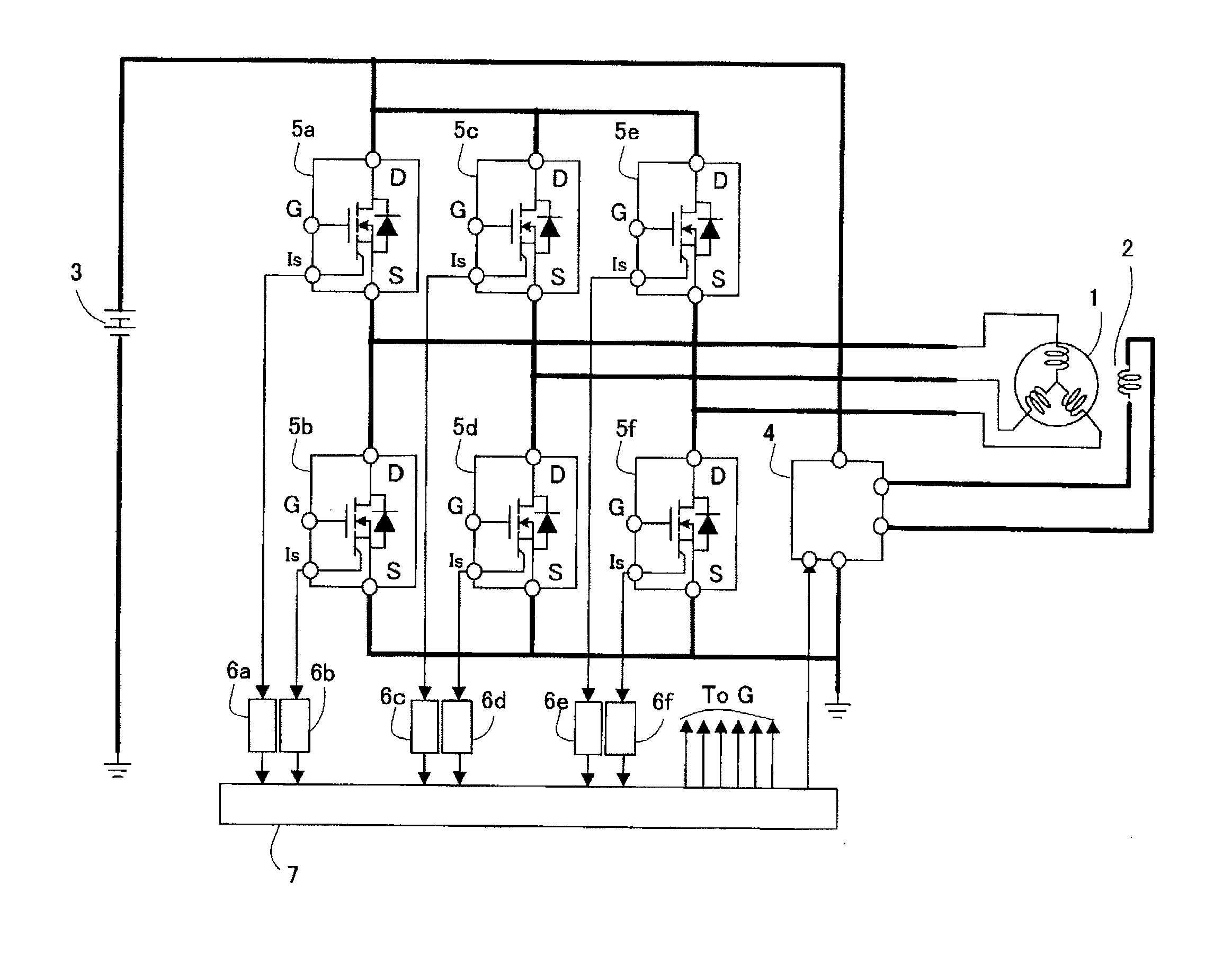
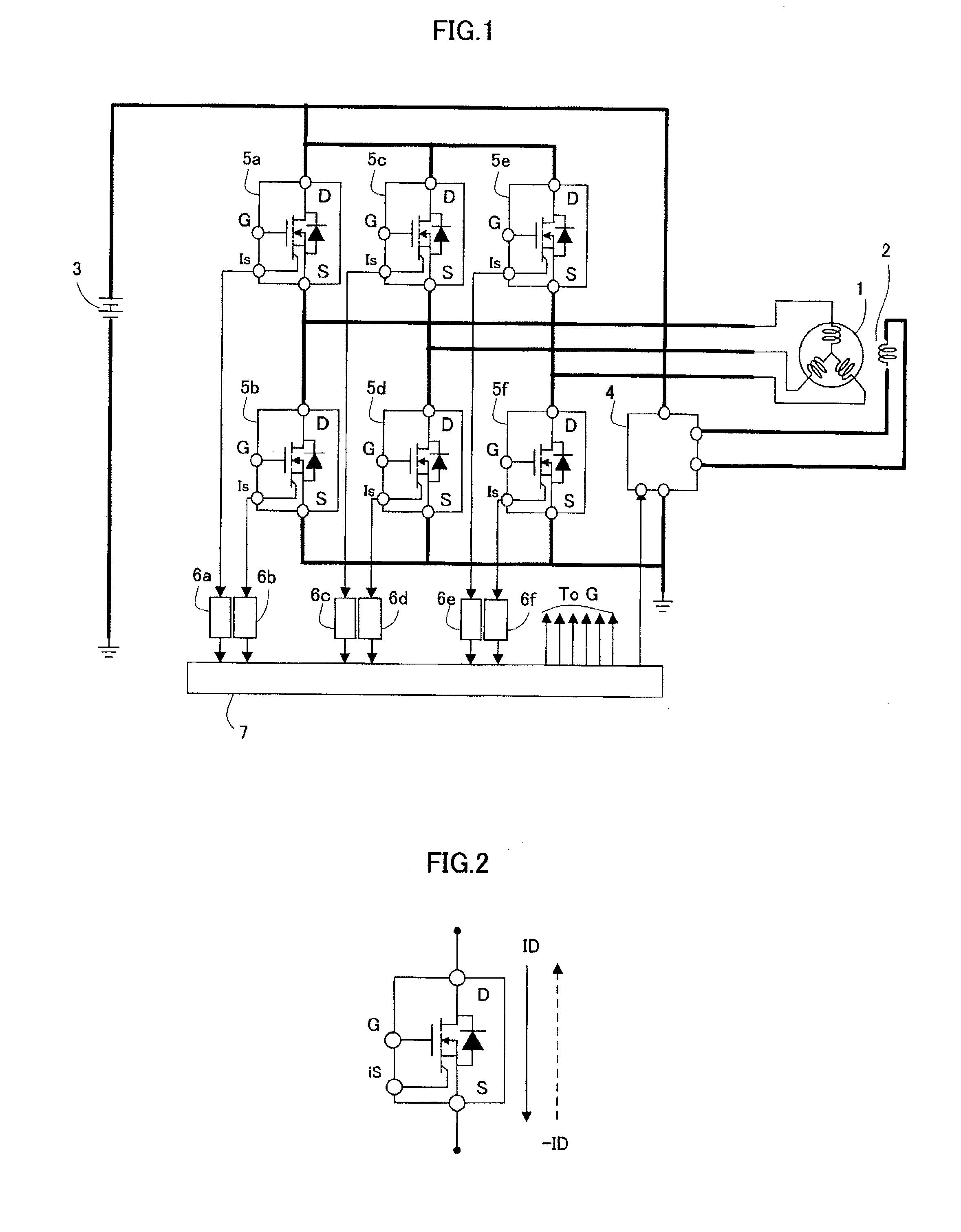
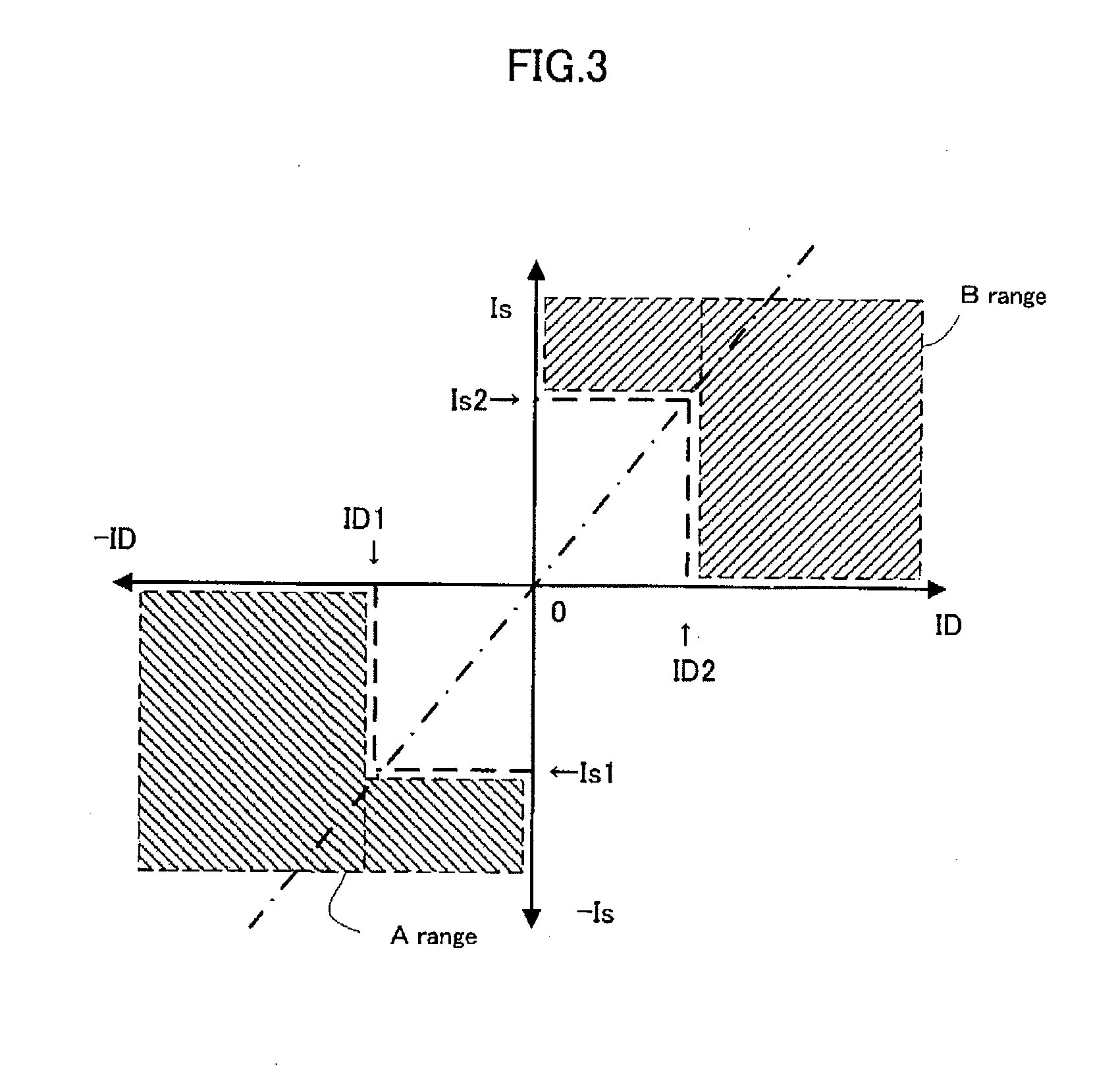
- A bridge rectifier circuit using MOSFETs with phase current detection means to control the on/off state of the FETs based on current direction and magnitude, applying control voltage between the gate and source to reduce power loss and prevent overcurrents by turning the FET on for reverse currents exceeding a predetermined value and turning it off for forward currents exceeding another predetermined value.
Power supply voltage detector
PatentInactiveUS5572147A
Innovation
- A voltage detector circuit with a front-end detector and inverting amplifier using active load elements composed of PMOS and NMOS transistors, where the gate and drain terminals are connected, and the source terminals form active load elements, reducing dependency on fabrication conditions and temperature variations, allowing for precise adjustment of logical transition points.


EMC Standards and Safety Regulations for Power Circuits
Electromagnetic compatibility (EMC) standards for power circuits incorporating bridge rectifiers and voltage detectors are governed by multiple international and regional regulatory frameworks. The primary standards include IEC 61000 series for EMC requirements, FCC Part 15 for conducted and radiated emissions in the United States, and EN 55022/EN 55032 for information technology equipment in Europe. These standards specifically address conducted emissions on AC mains ports, which are critical considerations for bridge rectifier circuits that interface directly with power lines.
Bridge rectifier circuits present unique EMC challenges due to their nonlinear switching characteristics and high-frequency harmonic generation. The rectification process inherently creates current spikes and voltage transients that can exceed Class A and Class B emission limits defined in CISPR 22 and CISPR 32 standards. Voltage detector circuits, while typically lower power, must comply with immunity requirements outlined in IEC 61000-4 series, particularly regarding electrostatic discharge (ESD), electrical fast transients, and surge immunity.
Safety regulations for these power circuit topologies are primarily governed by IEC 60950-1 for information technology equipment and IEC 62368-1 for audio/video and communication technology equipment. These standards mandate specific creepage and clearance distances for bridge rectifier components operating at different voltage levels. Primary-side rectifiers handling AC mains voltages require reinforced insulation with minimum 8mm creepage distances for 250V applications, while secondary-side voltage detectors may operate under basic insulation requirements.
The integration of both circuit types within a single system requires careful consideration of functional safety standards, particularly IEC 61508 for safety-related systems. Voltage detector circuits used for monitoring bridge rectifier output must demonstrate appropriate Safety Integrity Level (SIL) ratings when employed in critical applications. This includes requirements for systematic capability, hardware fault tolerance, and diagnostic coverage ratios.
Recent regulatory updates have introduced stricter requirements for power factor correction and harmonic distortion limits under IEC 61000-3-2, directly impacting bridge rectifier design methodologies. Additionally, cybersecurity considerations are increasingly integrated into safety standards, requiring secure communication protocols for smart voltage detection systems that interface with network-connected power management circuits.
Bridge rectifier circuits present unique EMC challenges due to their nonlinear switching characteristics and high-frequency harmonic generation. The rectification process inherently creates current spikes and voltage transients that can exceed Class A and Class B emission limits defined in CISPR 22 and CISPR 32 standards. Voltage detector circuits, while typically lower power, must comply with immunity requirements outlined in IEC 61000-4 series, particularly regarding electrostatic discharge (ESD), electrical fast transients, and surge immunity.
Safety regulations for these power circuit topologies are primarily governed by IEC 60950-1 for information technology equipment and IEC 62368-1 for audio/video and communication technology equipment. These standards mandate specific creepage and clearance distances for bridge rectifier components operating at different voltage levels. Primary-side rectifiers handling AC mains voltages require reinforced insulation with minimum 8mm creepage distances for 250V applications, while secondary-side voltage detectors may operate under basic insulation requirements.
The integration of both circuit types within a single system requires careful consideration of functional safety standards, particularly IEC 61508 for safety-related systems. Voltage detector circuits used for monitoring bridge rectifier output must demonstrate appropriate Safety Integrity Level (SIL) ratings when employed in critical applications. This includes requirements for systematic capability, hardware fault tolerance, and diagnostic coverage ratios.
Recent regulatory updates have introduced stricter requirements for power factor correction and harmonic distortion limits under IEC 61000-3-2, directly impacting bridge rectifier design methodologies. Additionally, cybersecurity considerations are increasingly integrated into safety standards, requiring secure communication protocols for smart voltage detection systems that interface with network-connected power management circuits.
Thermal Management Considerations in Power Electronics
Thermal management represents a critical design consideration in power electronics systems, particularly when comparing bridge rectifiers and voltage detectors in terms of their deflection characteristics and overall system performance. The heat generation patterns in these components directly influence their operational reliability and long-term stability.
Bridge rectifiers, due to their higher current handling capabilities and continuous power processing, generate significantly more heat than voltage detectors. The forward voltage drop across rectifier diodes, typically ranging from 0.7V to 1.2V per diode, creates substantial power dissipation that must be effectively managed. This thermal stress can cause junction temperature variations leading to thermal expansion and mechanical deflection in semiconductor packages and PCB substrates.
Voltage detectors, operating at much lower power levels, present different thermal challenges. While their absolute heat generation is minimal, these precision components are highly sensitive to temperature variations that can affect their reference voltage accuracy and switching thresholds. Even small thermal gradients can introduce measurement errors and impact the deflection sensing capabilities in monitoring applications.
The thermal coupling between bridge rectifiers and adjacent voltage detection circuits creates complex heat transfer scenarios. Conductive heat flow through PCB copper layers, convective cooling effectiveness, and radiative heat dissipation all influence the temperature distribution across the circuit board. This thermal interaction can cause differential thermal expansion, resulting in mechanical stress and potential deflection of sensitive components.
Advanced thermal management strategies include strategic component placement to minimize thermal coupling, implementation of thermal vias and heat spreaders, and utilization of temperature-compensated voltage references. Thermal interface materials and heat sinks become essential for high-power bridge rectifier applications, while precision voltage detectors may require thermal isolation techniques.
Modern power electronics designs increasingly employ thermal simulation tools to predict temperature distributions and mechanical deflections during the design phase. These analyses help optimize component placement, thermal path design, and cooling system requirements to ensure reliable operation across specified temperature ranges while maintaining measurement accuracy in voltage detection circuits.
Bridge rectifiers, due to their higher current handling capabilities and continuous power processing, generate significantly more heat than voltage detectors. The forward voltage drop across rectifier diodes, typically ranging from 0.7V to 1.2V per diode, creates substantial power dissipation that must be effectively managed. This thermal stress can cause junction temperature variations leading to thermal expansion and mechanical deflection in semiconductor packages and PCB substrates.
Voltage detectors, operating at much lower power levels, present different thermal challenges. While their absolute heat generation is minimal, these precision components are highly sensitive to temperature variations that can affect their reference voltage accuracy and switching thresholds. Even small thermal gradients can introduce measurement errors and impact the deflection sensing capabilities in monitoring applications.
The thermal coupling between bridge rectifiers and adjacent voltage detection circuits creates complex heat transfer scenarios. Conductive heat flow through PCB copper layers, convective cooling effectiveness, and radiative heat dissipation all influence the temperature distribution across the circuit board. This thermal interaction can cause differential thermal expansion, resulting in mechanical stress and potential deflection of sensitive components.
Advanced thermal management strategies include strategic component placement to minimize thermal coupling, implementation of thermal vias and heat spreaders, and utilization of temperature-compensated voltage references. Thermal interface materials and heat sinks become essential for high-power bridge rectifier applications, while precision voltage detectors may require thermal isolation techniques.
Modern power electronics designs increasingly employ thermal simulation tools to predict temperature distributions and mechanical deflections during the design phase. These analyses help optimize component placement, thermal path design, and cooling system requirements to ensure reliable operation across specified temperature ranges while maintaining measurement accuracy in voltage detection circuits.
Unlock deeper insights with Patsnap Eureka Quick Research — get a full tech report to explore trends and direct your research. Try now!
Generate Your Research Report Instantly with AI Agent
Supercharge your innovation with Patsnap Eureka AI Agent Platform!