

Catalysts for Progress: Accelerating Carbon Capture Development
MAR 23, 20269 MIN READ
Generate Your Research Report Instantly with AI Agent
PatSnap Eureka helps you evaluate technical feasibility & market potential.
Carbon Capture Catalyst Technology Background and Objectives
Carbon capture technology has emerged as a critical component in global climate mitigation strategies, representing one of the most promising pathways to achieve net-zero emissions by 2050. The technology encompasses various approaches including direct air capture, point-source capture from industrial facilities, and post-combustion capture from power plants. Each method relies heavily on catalytic processes to enhance efficiency and reduce energy consumption.
The historical development of carbon capture can be traced back to the 1930s when amine-based absorption processes were first developed for natural gas purification. However, the modern focus on atmospheric CO2 reduction began gaining momentum in the 1990s as climate change concerns intensified. Early implementations primarily targeted large-scale industrial sources, with limited attention to catalyst optimization.
Current technological evolution demonstrates a clear shift toward advanced catalytic systems that can operate under milder conditions while maintaining high selectivity and conversion rates. Metal-organic frameworks, solid amine sorbents, and novel enzyme-based catalysts represent the forefront of this development. These innovations address fundamental limitations of traditional approaches, including high regeneration temperatures and limited cycling stability.
The primary technical objectives center on developing catalysts that can achieve CO2 capture rates exceeding 90% while operating at temperatures below 100°C. Energy efficiency remains paramount, with targets of reducing regeneration energy requirements to less than 2.5 GJ per ton of CO2 captured. Additionally, catalyst longevity must extend beyond 10,000 cycles to ensure economic viability.
Emerging trends indicate convergence toward hybrid catalytic systems that combine multiple capture mechanisms within single platforms. Integration of artificial intelligence for catalyst design optimization and the development of self-regenerating catalytic materials represent key technological frontiers. These advances aim to transform carbon capture from an energy-intensive process into a sustainable, economically viable solution for large-scale deployment across diverse industrial applications.
The historical development of carbon capture can be traced back to the 1930s when amine-based absorption processes were first developed for natural gas purification. However, the modern focus on atmospheric CO2 reduction began gaining momentum in the 1990s as climate change concerns intensified. Early implementations primarily targeted large-scale industrial sources, with limited attention to catalyst optimization.
Current technological evolution demonstrates a clear shift toward advanced catalytic systems that can operate under milder conditions while maintaining high selectivity and conversion rates. Metal-organic frameworks, solid amine sorbents, and novel enzyme-based catalysts represent the forefront of this development. These innovations address fundamental limitations of traditional approaches, including high regeneration temperatures and limited cycling stability.
The primary technical objectives center on developing catalysts that can achieve CO2 capture rates exceeding 90% while operating at temperatures below 100°C. Energy efficiency remains paramount, with targets of reducing regeneration energy requirements to less than 2.5 GJ per ton of CO2 captured. Additionally, catalyst longevity must extend beyond 10,000 cycles to ensure economic viability.
Emerging trends indicate convergence toward hybrid catalytic systems that combine multiple capture mechanisms within single platforms. Integration of artificial intelligence for catalyst design optimization and the development of self-regenerating catalytic materials represent key technological frontiers. These advances aim to transform carbon capture from an energy-intensive process into a sustainable, economically viable solution for large-scale deployment across diverse industrial applications.
Market Demand Analysis for Carbon Capture Solutions
The global carbon capture market is experiencing unprecedented growth driven by mounting climate pressures and regulatory mandates. Industrial sectors including power generation, cement production, steel manufacturing, and petrochemicals face increasing pressure to reduce emissions, creating substantial demand for effective carbon capture solutions. These industries collectively account for significant portions of global CO2 emissions, making them primary targets for carbon capture implementation.
Government policies worldwide are accelerating market demand through carbon pricing mechanisms, emissions trading systems, and direct regulatory requirements. The European Union's Green Deal, various national net-zero commitments, and emerging carbon border adjustment mechanisms are creating compelling economic incentives for carbon capture adoption. These policy frameworks are transforming carbon capture from an optional environmental initiative into a business necessity.
The power generation sector represents the largest addressable market segment, particularly for coal and natural gas facilities seeking to extend operational lifespans while meeting emissions targets. Industrial applications in cement and steel production offer substantial opportunities due to process-related emissions that cannot be eliminated through fuel switching alone. The emerging direct air capture market, while currently smaller, shows significant long-term potential as costs decline and permanent carbon removal demand increases.
Market capacity assessments indicate substantial growth potential across multiple deployment scenarios. Point-source capture applications at large industrial facilities offer near-term scalability, while distributed capture systems present opportunities for smaller emission sources. The integration of carbon capture with utilization pathways, including enhanced oil recovery, chemical production, and building materials, is expanding market applications beyond pure storage solutions.
Regional market dynamics vary significantly, with North America and Europe leading in policy support and early deployment, while Asia-Pacific markets show growing interest driven by industrial concentration and air quality concerns. The availability of suitable geological storage sites, transportation infrastructure, and supportive regulatory frameworks significantly influences regional market development patterns.
Investment trends reflect growing confidence in carbon capture viability, with increasing private sector participation alongside government funding. Corporate sustainability commitments and investor pressure for emissions reduction are driving demand from companies seeking credible decarbonization pathways. The development of carbon removal credit markets is creating additional revenue streams that enhance project economics and market attractiveness.
Government policies worldwide are accelerating market demand through carbon pricing mechanisms, emissions trading systems, and direct regulatory requirements. The European Union's Green Deal, various national net-zero commitments, and emerging carbon border adjustment mechanisms are creating compelling economic incentives for carbon capture adoption. These policy frameworks are transforming carbon capture from an optional environmental initiative into a business necessity.
The power generation sector represents the largest addressable market segment, particularly for coal and natural gas facilities seeking to extend operational lifespans while meeting emissions targets. Industrial applications in cement and steel production offer substantial opportunities due to process-related emissions that cannot be eliminated through fuel switching alone. The emerging direct air capture market, while currently smaller, shows significant long-term potential as costs decline and permanent carbon removal demand increases.
Market capacity assessments indicate substantial growth potential across multiple deployment scenarios. Point-source capture applications at large industrial facilities offer near-term scalability, while distributed capture systems present opportunities for smaller emission sources. The integration of carbon capture with utilization pathways, including enhanced oil recovery, chemical production, and building materials, is expanding market applications beyond pure storage solutions.
Regional market dynamics vary significantly, with North America and Europe leading in policy support and early deployment, while Asia-Pacific markets show growing interest driven by industrial concentration and air quality concerns. The availability of suitable geological storage sites, transportation infrastructure, and supportive regulatory frameworks significantly influences regional market development patterns.
Investment trends reflect growing confidence in carbon capture viability, with increasing private sector participation alongside government funding. Corporate sustainability commitments and investor pressure for emissions reduction are driving demand from companies seeking credible decarbonization pathways. The development of carbon removal credit markets is creating additional revenue streams that enhance project economics and market attractiveness.
Current Status and Challenges in Catalyst Development
Carbon capture catalyst development currently faces significant technological and economic barriers that limit widespread deployment. The field has made substantial progress in recent decades, yet several fundamental challenges persist in achieving the efficiency, durability, and cost-effectiveness required for commercial viability.
Existing catalyst systems demonstrate varying degrees of effectiveness across different carbon capture approaches. Solid amine-based sorbents show promise for direct air capture applications but suffer from thermal degradation during regeneration cycles, limiting their operational lifespan. Metal-organic frameworks (MOFs) exhibit excellent CO2 selectivity and capacity under laboratory conditions, yet their stability in real-world environments with moisture and impurities remains problematic.
The energy penalty associated with catalyst regeneration represents a critical bottleneck. Current systems typically require temperatures between 80-120°C for CO2 desorption, consuming substantial energy that reduces overall process efficiency. This thermal cycling also accelerates catalyst degradation, necessitating frequent replacement and increasing operational costs.
Selectivity challenges plague many catalyst formulations, particularly in industrial flue gas applications where CO2 concentrations are relatively low and competing gases like water vapor, sulfur compounds, and nitrogen oxides interfere with capture efficiency. Developing catalysts that maintain high CO2 affinity while resisting poisoning from these contaminants remains an ongoing struggle.
Scale-up manufacturing presents additional obstacles. Many promising laboratory-scale catalysts utilize expensive materials or complex synthesis procedures that become economically prohibitive at industrial scales. The transition from gram-scale research samples to ton-scale production often reveals unforeseen stability issues and performance degradation.
Geographically, catalyst development efforts concentrate primarily in North America, Europe, and East Asia, with leading research institutions and companies investing heavily in next-generation materials. However, the distributed nature of potential deployment sites creates logistical challenges for catalyst distribution and maintenance.
Cost considerations dominate commercial feasibility assessments. Current catalyst systems contribute significantly to the overall capital and operational expenses of carbon capture facilities, with replacement costs and energy requirements often exceeding economic thresholds for widespread adoption. Achieving cost parity with alternative carbon mitigation strategies requires breakthrough improvements in catalyst longevity and regeneration efficiency.
Existing catalyst systems demonstrate varying degrees of effectiveness across different carbon capture approaches. Solid amine-based sorbents show promise for direct air capture applications but suffer from thermal degradation during regeneration cycles, limiting their operational lifespan. Metal-organic frameworks (MOFs) exhibit excellent CO2 selectivity and capacity under laboratory conditions, yet their stability in real-world environments with moisture and impurities remains problematic.
The energy penalty associated with catalyst regeneration represents a critical bottleneck. Current systems typically require temperatures between 80-120°C for CO2 desorption, consuming substantial energy that reduces overall process efficiency. This thermal cycling also accelerates catalyst degradation, necessitating frequent replacement and increasing operational costs.
Selectivity challenges plague many catalyst formulations, particularly in industrial flue gas applications where CO2 concentrations are relatively low and competing gases like water vapor, sulfur compounds, and nitrogen oxides interfere with capture efficiency. Developing catalysts that maintain high CO2 affinity while resisting poisoning from these contaminants remains an ongoing struggle.
Scale-up manufacturing presents additional obstacles. Many promising laboratory-scale catalysts utilize expensive materials or complex synthesis procedures that become economically prohibitive at industrial scales. The transition from gram-scale research samples to ton-scale production often reveals unforeseen stability issues and performance degradation.
Geographically, catalyst development efforts concentrate primarily in North America, Europe, and East Asia, with leading research institutions and companies investing heavily in next-generation materials. However, the distributed nature of potential deployment sites creates logistical challenges for catalyst distribution and maintenance.
Cost considerations dominate commercial feasibility assessments. Current catalyst systems contribute significantly to the overall capital and operational expenses of carbon capture facilities, with replacement costs and energy requirements often exceeding economic thresholds for widespread adoption. Achieving cost parity with alternative carbon mitigation strategies requires breakthrough improvements in catalyst longevity and regeneration efficiency.
Existing Catalyst Solutions for CO2 Capture
01 Metal-based catalysts for chemical reactions
Metal-based catalysts, including transition metals and their compounds, are widely used to facilitate various chemical reactions. These catalysts can enhance reaction rates, improve selectivity, and enable reactions under milder conditions. The metal catalysts may be used in homogeneous or heterogeneous forms, and can include noble metals, base metals, or metal complexes that provide active sites for catalytic processes.- Metal-based catalysts for chemical reactions: Metal-based catalysts, including transition metals and their compounds, are widely used to facilitate various chemical reactions. These catalysts can enhance reaction rates, improve selectivity, and enable reactions under milder conditions. The metal catalysts may be used in homogeneous or heterogeneous forms, and can include noble metals, base metals, or metal complexes that provide active sites for catalytic processes.
- Supported catalyst systems: Supported catalysts involve active catalytic materials dispersed on or incorporated into solid support structures. The support materials can include various substrates such as silica, alumina, carbon, or zeolites that provide high surface area and stability. These systems offer advantages in terms of catalyst recovery, regeneration, and improved mass transfer properties in industrial applications.
- Catalyst preparation and activation methods: Various methods are employed for preparing and activating catalysts to optimize their performance. These methods include precipitation, impregnation, calcination, reduction, and other treatment processes that affect the catalyst's physical and chemical properties. The preparation techniques influence factors such as particle size, surface area, pore structure, and active site distribution, which are critical for catalytic activity.
- Catalyst compositions for polymerization reactions: Specialized catalyst compositions are designed for polymerization processes, including the production of various polymers and copolymers. These catalysts can control molecular weight, polymer structure, and reaction kinetics. The compositions may include single-site catalysts, Ziegler-Natta catalysts, or metallocene catalysts that enable precise control over polymer properties and production efficiency.
- Catalyst regeneration and deactivation prevention: Methods and compositions for regenerating spent catalysts and preventing catalyst deactivation are essential for maintaining catalytic performance over extended periods. These approaches address issues such as poisoning, fouling, sintering, and coking that can reduce catalyst activity. Regeneration techniques may involve thermal treatment, chemical washing, or oxidative processes to restore catalytic function and extend catalyst lifetime.
02 Supported catalyst systems
Supported catalysts involve active catalytic materials dispersed on or incorporated into solid support structures. The support materials can include various substrates such as silica, alumina, carbon, or zeolites that provide high surface area and stability. These systems offer advantages in terms of catalyst recovery, regeneration, and improved mass transfer properties in industrial applications.Expand Specific Solutions03 Polymerization catalysts
Specialized catalysts designed for polymerization reactions enable the production of polymers with controlled molecular weight, structure, and properties. These catalysts can include Ziegler-Natta catalysts, metallocene catalysts, or other coordination complexes that facilitate the polymerization of olefins and other monomers. The catalyst composition and structure significantly influence the polymer characteristics and process efficiency.Expand Specific Solutions04 Oxidation and reduction catalysts
Catalysts specifically designed for oxidation and reduction reactions play crucial roles in various industrial processes. These catalysts facilitate electron transfer processes and can be used in applications such as exhaust gas treatment, chemical synthesis, and fuel processing. The catalytic systems may incorporate metal oxides, mixed metal compounds, or other materials that promote redox reactions under specific conditions.Expand Specific Solutions05 Catalyst preparation and activation methods
Various methods for preparing and activating catalysts are employed to optimize catalytic performance. These methods include precipitation, impregnation, sol-gel processes, and thermal treatments that affect the catalyst structure, surface properties, and active site distribution. Proper preparation and activation procedures are essential for achieving desired catalytic activity, selectivity, and stability in target applications.Expand Specific Solutions
Major Players in Carbon Capture Catalyst Industry
The carbon capture technology sector is experiencing rapid growth as a critical component of global decarbonization efforts, with the market expanding significantly driven by regulatory pressures and climate commitments. The competitive landscape spans diverse players from established energy giants like China Petroleum & Chemical Corp. and Sinopec Guangzhou Engineering to specialized research institutions including MIT, Caltech, and Tsinghua University. Technology maturity varies considerably across applications, with companies like Ardent Process Technologies advancing membrane-based solutions while traditional energy firms integrate capture systems into existing infrastructure. Research institutions such as Korea Institute of Energy Research and Huaneng Clean Energy Research Institute are developing next-generation catalysts and processes. The sector demonstrates strong collaboration between academia and industry, with organizations like Purdue Research Foundation and Georgia Tech Research Corp. bridging fundamental research and commercial applications, indicating a maturing ecosystem poised for accelerated deployment.
China Petroleum & Chemical Corp.
Technical Solution: Sinopec has developed comprehensive carbon capture technologies including post-combustion CO2 capture using advanced amine-based solvents and solid adsorbents. Their approach focuses on integrating CCUS (Carbon Capture, Utilization and Storage) into existing refinery operations, with pilot projects demonstrating capture rates exceeding 90% efficiency. The company has invested heavily in developing proprietary catalysts for CO2 conversion processes, including methanol synthesis and Fischer-Tropsch reactions, enabling the transformation of captured carbon into valuable chemicals and fuels.
Strengths: Large-scale industrial implementation experience, integrated refinery infrastructure, strong financial resources. Weaknesses: High energy consumption in capture processes, limited breakthrough in novel catalyst materials.
International Business Machines Corp.
Technical Solution: IBM has developed AI-driven catalyst discovery platforms using quantum computing and machine learning algorithms to accelerate the identification of novel materials for carbon capture applications. Their approach combines computational modeling with experimental validation to design metal-organic frameworks (MOFs) and other porous materials with enhanced CO2 selectivity and capacity. The company's hybrid cloud-quantum computing infrastructure enables rapid screening of millions of potential catalyst configurations, reducing development time from years to months while optimizing for specific operating conditions and cost parameters.
Strengths: Advanced computational capabilities, quantum computing advantage, rapid material screening. Weaknesses: Limited physical manufacturing capabilities, high technology complexity requiring specialized expertise.
Core Catalyst Innovation Patents and Research
Catalyst for sorption enhanced water gas shift and preparation method thereof
PatentWO2012043905A1
Innovation
- A catalyst composition comprising copper oxide, zinc oxide, or cerium oxide as active ingredients, supported by alumina or hydrotalcite, with an inorganic binder and promoters like calcium oxide, barium oxide, or strontium oxide, is developed for the fluidized bed-promoted water gas shift reaction, using a spray drying method to produce catalysts with enhanced physical properties and high production yield.


Catalyst for capturing and converting carbon dioxide
PatentWO2023043005A1
Innovation
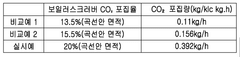
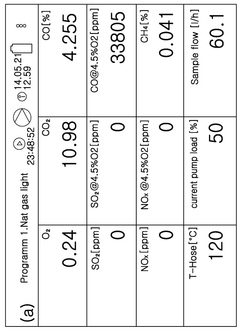
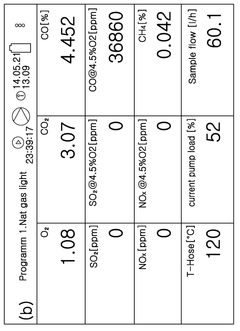
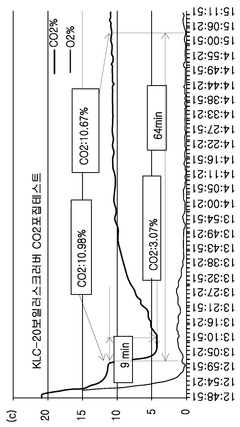
- A carbon dioxide capture and conversion catalyst is developed by pulverizing oxide and metal powders, preparing crystallized synthetic zeolite, and mixing them with alkaline solutions to create a stable catalyst that captures and converts CO2 into sodium carbonate or bicarbonate, reducing energy consumption and impurity interference.
Policy Framework for Carbon Capture Technologies
The policy framework for carbon capture technologies represents a critical foundation for accelerating deployment and innovation in this essential climate mitigation sector. Governments worldwide are increasingly recognizing that comprehensive policy support is necessary to bridge the gap between technological feasibility and commercial viability of carbon capture, utilization, and storage solutions.
Current regulatory landscapes vary significantly across jurisdictions, with some regions establishing comprehensive frameworks while others remain in early development stages. The United States has implemented substantial tax incentives through the 45Q tax credit, providing up to $85 per ton of CO2 permanently stored, while the European Union has integrated carbon capture into its Green Deal and established the Innovation Fund to support large-scale demonstration projects. These policy mechanisms create essential economic drivers for private sector investment and technological advancement.
Financial incentives constitute the cornerstone of effective carbon capture policy frameworks. Beyond direct subsidies and tax credits, governments are exploring carbon pricing mechanisms, emissions trading systems, and green bonds specifically targeted at carbon capture projects. The establishment of minimum carbon prices and long-term price certainty helps reduce investment risks and enables project developers to secure financing for capital-intensive carbon capture infrastructure.
Regulatory standards and certification processes are equally crucial for creating market confidence and ensuring environmental integrity. Clear guidelines for CO2 storage site selection, monitoring protocols, and liability frameworks provide the regulatory certainty necessary for large-scale deployment. International standards organizations are working to harmonize technical specifications and measurement protocols, facilitating cross-border technology transfer and project development.
Public procurement policies and government-led demonstration projects serve as important market creation mechanisms. By committing to purchase carbon removal services or requiring carbon capture integration in public infrastructure projects, governments can provide early market demand that helps technologies achieve commercial scale. Strategic research funding and public-private partnerships further accelerate innovation by supporting high-risk, high-reward research initiatives that private markets might otherwise avoid.
The integration of carbon capture policies with broader climate and industrial strategies ensures coherent policy signals and maximizes synergies across different sectors. Coordination between energy, industrial, and environmental policies creates comprehensive frameworks that address the full carbon capture value chain from research and development through deployment and operation.
Current regulatory landscapes vary significantly across jurisdictions, with some regions establishing comprehensive frameworks while others remain in early development stages. The United States has implemented substantial tax incentives through the 45Q tax credit, providing up to $85 per ton of CO2 permanently stored, while the European Union has integrated carbon capture into its Green Deal and established the Innovation Fund to support large-scale demonstration projects. These policy mechanisms create essential economic drivers for private sector investment and technological advancement.
Financial incentives constitute the cornerstone of effective carbon capture policy frameworks. Beyond direct subsidies and tax credits, governments are exploring carbon pricing mechanisms, emissions trading systems, and green bonds specifically targeted at carbon capture projects. The establishment of minimum carbon prices and long-term price certainty helps reduce investment risks and enables project developers to secure financing for capital-intensive carbon capture infrastructure.
Regulatory standards and certification processes are equally crucial for creating market confidence and ensuring environmental integrity. Clear guidelines for CO2 storage site selection, monitoring protocols, and liability frameworks provide the regulatory certainty necessary for large-scale deployment. International standards organizations are working to harmonize technical specifications and measurement protocols, facilitating cross-border technology transfer and project development.
Public procurement policies and government-led demonstration projects serve as important market creation mechanisms. By committing to purchase carbon removal services or requiring carbon capture integration in public infrastructure projects, governments can provide early market demand that helps technologies achieve commercial scale. Strategic research funding and public-private partnerships further accelerate innovation by supporting high-risk, high-reward research initiatives that private markets might otherwise avoid.
The integration of carbon capture policies with broader climate and industrial strategies ensures coherent policy signals and maximizes synergies across different sectors. Coordination between energy, industrial, and environmental policies creates comprehensive frameworks that address the full carbon capture value chain from research and development through deployment and operation.
Environmental Impact Assessment of Catalyst Solutions
The environmental impact assessment of catalyst solutions for carbon capture technologies represents a critical evaluation framework that extends beyond traditional performance metrics to encompass comprehensive ecological considerations. This assessment methodology examines the entire lifecycle of catalyst materials, from raw material extraction and synthesis to deployment, operation, and eventual disposal or recycling.
Life cycle analysis forms the cornerstone of environmental impact evaluation, quantifying energy consumption, greenhouse gas emissions, water usage, and waste generation throughout the catalyst production chain. Advanced catalyst materials often require rare earth elements or precious metals, necessitating careful evaluation of mining impacts, supply chain sustainability, and geopolitical considerations. The synthesis processes themselves may involve high-temperature reactions, organic solvents, or energy-intensive purification steps that contribute to the overall environmental footprint.
Operational environmental considerations focus on catalyst stability, regeneration requirements, and potential leaching or degradation products. Long-term deployment scenarios must account for catalyst replacement frequencies, maintenance procedures, and the environmental fate of spent materials. Particular attention is given to potential toxic byproducts, air emissions during regeneration cycles, and the compatibility of catalyst systems with existing environmental regulations.
Comparative assessment frameworks evaluate different catalyst technologies against standardized environmental metrics, including carbon intensity, resource depletion potential, ecotoxicity, and land use impacts. These evaluations often reveal trade-offs between catalyst performance and environmental sustainability, highlighting the need for optimization strategies that balance capture efficiency with ecological responsibility.
Emerging assessment methodologies incorporate circular economy principles, emphasizing catalyst recyclability, material recovery potential, and integration with waste-to-resource conversion processes. Advanced modeling approaches utilize machine learning algorithms to predict long-term environmental impacts and identify optimization pathways for sustainable catalyst development.
The integration of environmental impact assessments into catalyst design processes enables the development of next-generation materials that achieve superior carbon capture performance while minimizing ecological footprints, supporting the broader goals of climate change mitigation through environmentally responsible technological advancement.
Life cycle analysis forms the cornerstone of environmental impact evaluation, quantifying energy consumption, greenhouse gas emissions, water usage, and waste generation throughout the catalyst production chain. Advanced catalyst materials often require rare earth elements or precious metals, necessitating careful evaluation of mining impacts, supply chain sustainability, and geopolitical considerations. The synthesis processes themselves may involve high-temperature reactions, organic solvents, or energy-intensive purification steps that contribute to the overall environmental footprint.
Operational environmental considerations focus on catalyst stability, regeneration requirements, and potential leaching or degradation products. Long-term deployment scenarios must account for catalyst replacement frequencies, maintenance procedures, and the environmental fate of spent materials. Particular attention is given to potential toxic byproducts, air emissions during regeneration cycles, and the compatibility of catalyst systems with existing environmental regulations.
Comparative assessment frameworks evaluate different catalyst technologies against standardized environmental metrics, including carbon intensity, resource depletion potential, ecotoxicity, and land use impacts. These evaluations often reveal trade-offs between catalyst performance and environmental sustainability, highlighting the need for optimization strategies that balance capture efficiency with ecological responsibility.
Emerging assessment methodologies incorporate circular economy principles, emphasizing catalyst recyclability, material recovery potential, and integration with waste-to-resource conversion processes. Advanced modeling approaches utilize machine learning algorithms to predict long-term environmental impacts and identify optimization pathways for sustainable catalyst development.
The integration of environmental impact assessments into catalyst design processes enables the development of next-generation materials that achieve superior carbon capture performance while minimizing ecological footprints, supporting the broader goals of climate change mitigation through environmentally responsible technological advancement.
Unlock deeper insights with PatSnap Eureka Quick Research — get a full tech report to explore trends and direct your research. Try now!
Generate Your Research Report Instantly with AI Agent
Supercharge your innovation with PatSnap Eureka AI Agent Platform!