Commutator Data Insights: Using Machine Learning for Predictive Maintenance
MAR 16, 20269 MIN READ
Generate Your Research Report Instantly with AI Agent
Patsnap Eureka helps you evaluate technical feasibility & market potential.
Commutator ML Predictive Maintenance Background and Objectives
Commutators represent critical components in rotating electrical machinery, serving as the interface between stationary brushes and rotating windings in DC motors and generators. These copper segments, arranged in a cylindrical configuration, facilitate current transfer while maintaining electrical continuity during rotation. The mechanical and electrical stresses imposed on commutators during operation make them susceptible to various failure modes, including segment lifting, mica undercutting, surface roughening, and brush wear patterns.
Traditional maintenance approaches for commutator systems have relied heavily on scheduled inspections and reactive maintenance strategies. These conventional methods often result in unexpected failures, costly downtime, and suboptimal resource allocation. The complexity of commutator degradation mechanisms, influenced by factors such as current density, environmental conditions, brush material properties, and operational load profiles, necessitates more sophisticated monitoring and prediction capabilities.
The integration of machine learning technologies into commutator maintenance represents a paradigm shift toward data-driven predictive maintenance strategies. This technological evolution leverages the increasing availability of sensor data, computational power, and advanced algorithms to transform raw operational data into actionable maintenance insights. The convergence of Internet of Things sensors, edge computing capabilities, and cloud-based analytics platforms has created unprecedented opportunities for real-time condition monitoring and failure prediction.
The primary objective of implementing machine learning for commutator predictive maintenance encompasses several key goals. First, the development of accurate failure prediction models that can identify potential issues before they manifest as operational problems. Second, the optimization of maintenance scheduling to minimize both planned and unplanned downtime while extending equipment lifespan. Third, the reduction of maintenance costs through targeted interventions and improved resource allocation.
Advanced machine learning algorithms aim to process multi-dimensional data streams including vibration signatures, thermal patterns, electrical parameters, and acoustic emissions to establish comprehensive health indicators. These systems seek to identify subtle patterns and correlations that human operators might overlook, enabling earlier detection of degradation trends and more precise remaining useful life estimations.
The ultimate technological goal involves creating autonomous maintenance decision-making systems that can adapt to varying operational conditions, learn from historical failure patterns, and continuously improve prediction accuracy through feedback mechanisms and model refinement processes.
Traditional maintenance approaches for commutator systems have relied heavily on scheduled inspections and reactive maintenance strategies. These conventional methods often result in unexpected failures, costly downtime, and suboptimal resource allocation. The complexity of commutator degradation mechanisms, influenced by factors such as current density, environmental conditions, brush material properties, and operational load profiles, necessitates more sophisticated monitoring and prediction capabilities.
The integration of machine learning technologies into commutator maintenance represents a paradigm shift toward data-driven predictive maintenance strategies. This technological evolution leverages the increasing availability of sensor data, computational power, and advanced algorithms to transform raw operational data into actionable maintenance insights. The convergence of Internet of Things sensors, edge computing capabilities, and cloud-based analytics platforms has created unprecedented opportunities for real-time condition monitoring and failure prediction.
The primary objective of implementing machine learning for commutator predictive maintenance encompasses several key goals. First, the development of accurate failure prediction models that can identify potential issues before they manifest as operational problems. Second, the optimization of maintenance scheduling to minimize both planned and unplanned downtime while extending equipment lifespan. Third, the reduction of maintenance costs through targeted interventions and improved resource allocation.
Advanced machine learning algorithms aim to process multi-dimensional data streams including vibration signatures, thermal patterns, electrical parameters, and acoustic emissions to establish comprehensive health indicators. These systems seek to identify subtle patterns and correlations that human operators might overlook, enabling earlier detection of degradation trends and more precise remaining useful life estimations.
The ultimate technological goal involves creating autonomous maintenance decision-making systems that can adapt to varying operational conditions, learn from historical failure patterns, and continuously improve prediction accuracy through feedback mechanisms and model refinement processes.
Market Demand for Commutator Predictive Maintenance Solutions
The global industrial maintenance market is experiencing a significant transformation driven by the increasing adoption of predictive maintenance technologies. Traditional reactive and preventive maintenance approaches are proving inadequate for modern industrial operations that demand higher efficiency, reduced downtime, and optimized operational costs. This shift has created substantial demand for intelligent maintenance solutions, particularly in sectors heavily reliant on rotating machinery and electrical equipment.
Commutator-based equipment represents a critical component across multiple industries, including manufacturing, transportation, energy generation, and heavy machinery operations. The failure of commutator systems can result in catastrophic equipment breakdowns, leading to substantial production losses and safety concerns. Industries are increasingly recognizing that traditional maintenance schedules based on time intervals or basic condition monitoring are insufficient for managing the complex failure modes associated with commutator systems.
The demand for machine learning-enabled predictive maintenance solutions is being driven by several key factors. Rising operational costs and competitive pressures are forcing organizations to maximize equipment utilization while minimizing unplanned downtime. Regulatory requirements in sectors such as aerospace, automotive, and energy are mandating higher reliability standards, creating additional pressure for advanced monitoring capabilities.
Manufacturing industries, particularly those involved in continuous production processes, represent the largest market segment for commutator predictive maintenance solutions. These facilities cannot afford unexpected equipment failures that disrupt production lines and compromise product quality. The automotive sector, with its extensive use of DC motors and generators, has emerged as an early adopter of these technologies.
The energy sector, including both traditional power generation and renewable energy installations, presents another significant market opportunity. Wind turbines, hydroelectric generators, and backup power systems all rely on commutator-based equipment that requires sophisticated monitoring to ensure grid stability and operational reliability.
Transportation industries, encompassing rail systems, marine applications, and industrial vehicles, are increasingly demanding predictive maintenance solutions to ensure safety and operational continuity. The high cost of transportation equipment failures, combined with safety implications, drives strong demand for advanced monitoring technologies.
Market adoption is being accelerated by the increasing availability of industrial IoT sensors, edge computing capabilities, and cloud-based analytics platforms. Organizations are recognizing that the integration of machine learning algorithms with real-time data collection can provide unprecedented insights into equipment health and performance trends.
The demand is further intensified by the growing shortage of skilled maintenance technicians and the need to optimize maintenance workforce productivity. Predictive maintenance solutions enable organizations to focus their limited human resources on the most critical maintenance activities while reducing unnecessary interventions.
Commutator-based equipment represents a critical component across multiple industries, including manufacturing, transportation, energy generation, and heavy machinery operations. The failure of commutator systems can result in catastrophic equipment breakdowns, leading to substantial production losses and safety concerns. Industries are increasingly recognizing that traditional maintenance schedules based on time intervals or basic condition monitoring are insufficient for managing the complex failure modes associated with commutator systems.
The demand for machine learning-enabled predictive maintenance solutions is being driven by several key factors. Rising operational costs and competitive pressures are forcing organizations to maximize equipment utilization while minimizing unplanned downtime. Regulatory requirements in sectors such as aerospace, automotive, and energy are mandating higher reliability standards, creating additional pressure for advanced monitoring capabilities.
Manufacturing industries, particularly those involved in continuous production processes, represent the largest market segment for commutator predictive maintenance solutions. These facilities cannot afford unexpected equipment failures that disrupt production lines and compromise product quality. The automotive sector, with its extensive use of DC motors and generators, has emerged as an early adopter of these technologies.
The energy sector, including both traditional power generation and renewable energy installations, presents another significant market opportunity. Wind turbines, hydroelectric generators, and backup power systems all rely on commutator-based equipment that requires sophisticated monitoring to ensure grid stability and operational reliability.
Transportation industries, encompassing rail systems, marine applications, and industrial vehicles, are increasingly demanding predictive maintenance solutions to ensure safety and operational continuity. The high cost of transportation equipment failures, combined with safety implications, drives strong demand for advanced monitoring technologies.
Market adoption is being accelerated by the increasing availability of industrial IoT sensors, edge computing capabilities, and cloud-based analytics platforms. Organizations are recognizing that the integration of machine learning algorithms with real-time data collection can provide unprecedented insights into equipment health and performance trends.
The demand is further intensified by the growing shortage of skilled maintenance technicians and the need to optimize maintenance workforce productivity. Predictive maintenance solutions enable organizations to focus their limited human resources on the most critical maintenance activities while reducing unnecessary interventions.
Current State and Challenges of Commutator Condition Monitoring
The current landscape of commutator condition monitoring presents a complex array of technological capabilities alongside significant operational challenges. Traditional monitoring approaches primarily rely on periodic visual inspections, vibration analysis, and thermal imaging techniques. These conventional methods, while established, often suffer from limitations in detection sensitivity and predictive accuracy, frequently identifying issues only after degradation has progressed to critical stages.
Modern commutator monitoring systems have evolved to incorporate multiple sensor technologies, including accelerometers, temperature sensors, current signature analysis, and acoustic emission detectors. However, the integration of these diverse data streams remains fragmented across many industrial applications. Most existing systems operate in reactive or scheduled maintenance modes rather than truly predictive frameworks, resulting in either unexpected failures or unnecessary maintenance interventions.
Data acquisition infrastructure represents another significant challenge in the current state. Many industrial facilities lack the comprehensive sensor networks required for continuous monitoring, while others struggle with data quality issues including signal noise, sensor drift, and inconsistent sampling rates. The heterogeneous nature of commutator applications across different industries further complicates standardization efforts for monitoring protocols.
Processing and interpretation of commutator condition data currently relies heavily on threshold-based alarm systems and basic statistical analysis. These approaches often generate high false positive rates and fail to capture the subtle patterns indicative of early-stage degradation. The lack of sophisticated analytical capabilities limits the ability to distinguish between normal operational variations and genuine fault conditions.
Integration challenges persist between monitoring systems and existing maintenance management platforms. Data silos prevent holistic analysis, while incompatible communication protocols hinder real-time decision-making processes. Many organizations struggle with the transition from traditional time-based maintenance schedules to condition-based approaches due to these technological barriers.
The shortage of specialized expertise in both commutator technology and advanced analytics creates additional obstacles. Maintenance teams often lack the training necessary to interpret complex monitoring data effectively, while data scientists may not possess sufficient domain knowledge about commutator failure mechanisms and operational contexts.
Modern commutator monitoring systems have evolved to incorporate multiple sensor technologies, including accelerometers, temperature sensors, current signature analysis, and acoustic emission detectors. However, the integration of these diverse data streams remains fragmented across many industrial applications. Most existing systems operate in reactive or scheduled maintenance modes rather than truly predictive frameworks, resulting in either unexpected failures or unnecessary maintenance interventions.
Data acquisition infrastructure represents another significant challenge in the current state. Many industrial facilities lack the comprehensive sensor networks required for continuous monitoring, while others struggle with data quality issues including signal noise, sensor drift, and inconsistent sampling rates. The heterogeneous nature of commutator applications across different industries further complicates standardization efforts for monitoring protocols.
Processing and interpretation of commutator condition data currently relies heavily on threshold-based alarm systems and basic statistical analysis. These approaches often generate high false positive rates and fail to capture the subtle patterns indicative of early-stage degradation. The lack of sophisticated analytical capabilities limits the ability to distinguish between normal operational variations and genuine fault conditions.
Integration challenges persist between monitoring systems and existing maintenance management platforms. Data silos prevent holistic analysis, while incompatible communication protocols hinder real-time decision-making processes. Many organizations struggle with the transition from traditional time-based maintenance schedules to condition-based approaches due to these technological barriers.
The shortage of specialized expertise in both commutator technology and advanced analytics creates additional obstacles. Maintenance teams often lack the training necessary to interpret complex monitoring data effectively, while data scientists may not possess sufficient domain knowledge about commutator failure mechanisms and operational contexts.
Existing ML Solutions for Commutator Health Assessment
01 Machine learning algorithms for anomaly detection in equipment
Machine learning techniques are employed to detect anomalies and abnormal patterns in equipment operation data. These algorithms analyze sensor data, operational parameters, and historical performance metrics to identify deviations from normal behavior that may indicate potential failures. By training models on historical data, the system can recognize early warning signs of equipment degradation and trigger maintenance alerts before critical failures occur.- Machine learning algorithms for equipment failure prediction: Advanced machine learning algorithms are employed to analyze historical equipment data and identify patterns that precede failures. These algorithms process various operational parameters, sensor readings, and maintenance records to build predictive models. The models can forecast potential equipment failures before they occur, enabling proactive maintenance scheduling. Neural networks, decision trees, and ensemble methods are commonly used to improve prediction accuracy and reduce false alarms.
- Real-time sensor data monitoring and analysis: Systems integrate multiple sensors to continuously monitor equipment conditions in real-time. The collected data includes temperature, vibration, pressure, and other critical parameters that indicate equipment health. Machine learning models process this streaming data to detect anomalies and deviations from normal operating conditions. This approach enables immediate identification of potential issues and supports dynamic maintenance decision-making.
- Predictive maintenance scheduling optimization: Machine learning techniques optimize maintenance schedules by balancing equipment reliability with operational efficiency. The systems analyze failure probability, maintenance costs, and production schedules to determine optimal intervention timing. This approach minimizes unnecessary maintenance while preventing unexpected breakdowns. The optimization considers multiple constraints including resource availability, spare parts inventory, and production demands.
- Remaining useful life estimation: Advanced models estimate the remaining operational lifespan of equipment components based on current condition and usage patterns. These predictions incorporate degradation models, historical failure data, and real-time monitoring information. The estimation helps organizations plan replacement strategies and budget allocation more effectively. Machine learning approaches continuously update predictions as new data becomes available, improving accuracy over time.
- Automated fault diagnosis and classification: Machine learning systems automatically identify and classify different types of equipment faults based on symptom patterns. The classification models are trained on extensive datasets of known failure modes and their characteristics. This capability enables rapid diagnosis without requiring expert intervention for every incident. The systems can distinguish between multiple simultaneous faults and recommend appropriate corrective actions for each identified issue.
02 Predictive modeling using sensor data and IoT integration
Integration of Internet of Things sensors with machine learning models enables real-time monitoring and predictive analysis of equipment health. Multiple sensor types collect data on temperature, vibration, pressure, and other operational parameters, which are then processed through predictive models to forecast remaining useful life and optimal maintenance schedules. This approach allows for continuous monitoring and data-driven decision making in maintenance planning.Expand Specific Solutions03 Deep learning neural networks for failure prediction
Advanced deep learning architectures, including convolutional and recurrent neural networks, are utilized to predict equipment failures with high accuracy. These sophisticated models can process complex, multi-dimensional data streams and identify subtle patterns that traditional methods might miss. The neural networks learn temporal dependencies and spatial features from historical maintenance records and operational data to provide precise failure predictions and maintenance recommendations.Expand Specific Solutions04 Condition-based maintenance scheduling optimization
Machine learning systems optimize maintenance schedules based on actual equipment condition rather than fixed time intervals. These systems analyze real-time performance data, degradation trends, and operational context to determine the most cost-effective timing for maintenance activities. The optimization algorithms balance factors such as maintenance costs, downtime impact, and failure risk to create dynamic maintenance plans that maximize equipment availability while minimizing operational expenses.Expand Specific Solutions05 Ensemble learning methods for maintenance decision support
Multiple machine learning models are combined through ensemble techniques to improve prediction reliability and provide robust maintenance recommendations. These systems integrate various algorithms such as random forests, gradient boosting, and support vector machines to leverage the strengths of different approaches. The ensemble methods aggregate predictions from multiple models to reduce uncertainty, improve accuracy, and provide confidence intervals for maintenance decisions, enabling more informed and reliable predictive maintenance strategies.Expand Specific Solutions
Key Players in Commutator ML Predictive Maintenance Industry
The commutator data insights market for predictive maintenance using machine learning is in a growth stage, driven by increasing industrial digitalization and IoT adoption. The market demonstrates significant potential with expanding applications across manufacturing, automotive, and heavy machinery sectors. Technology maturity varies considerably among key players, with established industrial giants like Siemens AG, ABB Ltd., and Caterpillar SARL leading through comprehensive automation and digitalization portfolios. Technology specialists such as Sentient Science Corp. offer advanced physics-based digital twin solutions, while IBM provides robust AI and machine learning platforms. Emerging players like Averroes.ai focus on no-code AI visual inspection solutions. The competitive landscape spans from mature multinational corporations with decades of industrial experience to innovative startups developing specialized predictive maintenance technologies, indicating a dynamic market with diverse technological approaches and varying levels of commercial readiness across different industry verticals.
Siemens AG
Technical Solution: Siemens has developed a comprehensive predictive maintenance platform that leverages machine learning algorithms to analyze commutator data from rotating electrical machines. Their solution integrates IoT sensors to continuously monitor vibration patterns, temperature fluctuations, and electrical signatures of commutators. The system employs advanced signal processing techniques combined with deep learning models to detect early signs of brush wear, commutator surface irregularities, and contact resistance variations. Their MindSphere industrial IoT platform processes real-time data streams and applies predictive analytics to forecast maintenance needs, typically providing 2-4 weeks advance warning before critical failures occur.
Strengths: Comprehensive industrial IoT ecosystem, proven track record in electrical machinery, strong data analytics capabilities. Weaknesses: High implementation costs, complex system integration requirements.
ABB Ltd.
Technical Solution: ABB's Ability™ platform incorporates machine learning algorithms specifically designed for rotating machinery predictive maintenance, including commutator-based systems. Their solution utilizes multi-sensor data fusion, combining vibration analysis, thermal imaging, and electrical parameter monitoring to create comprehensive health profiles of commutators. The system employs ensemble learning methods including random forests and gradient boosting to predict brush life, commutator wear patterns, and optimal maintenance intervals. ABB's approach focuses on condition-based maintenance strategies that can reduce unplanned downtime by up to 70% while extending equipment lifespan through optimized maintenance scheduling.
Strengths: Strong expertise in power and automation technologies, robust industrial-grade solutions, global service network. Weaknesses: Limited customization options for specialized applications, requires significant initial investment.
Core ML Algorithms for Commutator Data Analysis
Data processing for industrial machine learning
PatentWO2021197782A1
Innovation
- A computer-implemented method for automating industrial machine learning applications, including data cleaning, feature engineering through process mining, and automated hyperparameter tuning, which enables domain experts to develop machine learning models for predictive maintenance and other industrial applications without requiring extensive manual intervention.


Method for predictive maintenance using machine learning
PatentUndeterminedIN202331048830A
Innovation
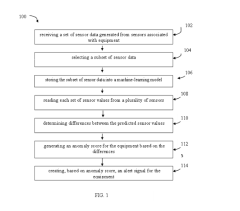
- A method using machine learning that receives sensor data, selects a subset of data, generates predicted values, determines differences, and creates an anomaly score to trigger alerts, optimizing maintenance timing and resource utilization by analyzing real-time sensor readings and historical data.
Industrial IoT Integration for Commutator Monitoring
The integration of Industrial Internet of Things (IoT) technologies into commutator monitoring systems represents a fundamental shift from traditional maintenance approaches to intelligent, data-driven predictive maintenance strategies. This integration enables continuous real-time monitoring of commutator performance parameters, creating comprehensive data ecosystems that support advanced machine learning applications for predictive maintenance.
Modern Industrial IoT architectures for commutator monitoring typically employ multi-layered sensor networks that capture critical operational parameters including temperature variations, vibration patterns, electrical resistance measurements, and wear indicators. These sensor arrays utilize advanced communication protocols such as MQTT, OPC-UA, and industrial Ethernet standards to ensure reliable data transmission in harsh industrial environments. Edge computing devices positioned near commutator assemblies perform initial data preprocessing and filtering, reducing bandwidth requirements while enabling real-time anomaly detection capabilities.
Cloud-based IoT platforms serve as central data repositories, aggregating information from multiple commutator units across different operational sites. These platforms implement robust data management frameworks that handle high-velocity data streams while maintaining data integrity and security standards required for industrial applications. The integration supports both batch processing for historical trend analysis and stream processing for immediate response to critical operational conditions.
The IoT infrastructure enables seamless integration with existing enterprise systems including Manufacturing Execution Systems (MES) and Enterprise Resource Planning (ERP) platforms. This connectivity facilitates automated work order generation, inventory management for replacement components, and scheduling optimization for maintenance activities. Advanced IoT gateways provide protocol translation capabilities, ensuring compatibility with legacy industrial equipment while supporting modern communication standards.
Security considerations play a crucial role in Industrial IoT implementations for commutator monitoring. Multi-layered security architectures incorporate device authentication, encrypted communication channels, and network segmentation to protect against cyber threats. These security measures ensure data confidentiality while maintaining system availability for critical monitoring functions.
The scalability of IoT-based monitoring systems allows for flexible deployment across various industrial applications, from small-scale manufacturing operations to large industrial complexes. Standardized APIs and microservices architectures enable rapid system expansion and integration with third-party analytics platforms, supporting the evolution toward comprehensive predictive maintenance ecosystems.
Modern Industrial IoT architectures for commutator monitoring typically employ multi-layered sensor networks that capture critical operational parameters including temperature variations, vibration patterns, electrical resistance measurements, and wear indicators. These sensor arrays utilize advanced communication protocols such as MQTT, OPC-UA, and industrial Ethernet standards to ensure reliable data transmission in harsh industrial environments. Edge computing devices positioned near commutator assemblies perform initial data preprocessing and filtering, reducing bandwidth requirements while enabling real-time anomaly detection capabilities.
Cloud-based IoT platforms serve as central data repositories, aggregating information from multiple commutator units across different operational sites. These platforms implement robust data management frameworks that handle high-velocity data streams while maintaining data integrity and security standards required for industrial applications. The integration supports both batch processing for historical trend analysis and stream processing for immediate response to critical operational conditions.
The IoT infrastructure enables seamless integration with existing enterprise systems including Manufacturing Execution Systems (MES) and Enterprise Resource Planning (ERP) platforms. This connectivity facilitates automated work order generation, inventory management for replacement components, and scheduling optimization for maintenance activities. Advanced IoT gateways provide protocol translation capabilities, ensuring compatibility with legacy industrial equipment while supporting modern communication standards.
Security considerations play a crucial role in Industrial IoT implementations for commutator monitoring. Multi-layered security architectures incorporate device authentication, encrypted communication channels, and network segmentation to protect against cyber threats. These security measures ensure data confidentiality while maintaining system availability for critical monitoring functions.
The scalability of IoT-based monitoring systems allows for flexible deployment across various industrial applications, from small-scale manufacturing operations to large industrial complexes. Standardized APIs and microservices architectures enable rapid system expansion and integration with third-party analytics platforms, supporting the evolution toward comprehensive predictive maintenance ecosystems.
Data Privacy and Security in Industrial ML Applications
Data privacy and security represent critical considerations in the deployment of machine learning systems for commutator predictive maintenance, particularly as industrial organizations increasingly adopt cloud-based analytics platforms and edge computing solutions. The sensitive nature of operational data, including equipment performance metrics, maintenance schedules, and production parameters, necessitates robust protection mechanisms to prevent unauthorized access and potential industrial espionage.
Industrial ML applications for commutator maintenance face unique privacy challenges due to the multi-stakeholder ecosystem involving equipment manufacturers, maintenance service providers, and end-users. Data sharing agreements must carefully delineate access permissions while ensuring that proprietary operational insights remain protected. The implementation of differential privacy techniques becomes essential when aggregating commutator performance data across multiple installations to improve predictive models without exposing individual facility characteristics.
Federated learning emerges as a promising approach for commutator predictive maintenance, enabling collaborative model training across distributed industrial sites without centralizing sensitive operational data. This methodology allows organizations to benefit from collective insights while maintaining data sovereignty and reducing transmission of confidential information across network boundaries.
Security frameworks for industrial ML systems must address both traditional cybersecurity threats and ML-specific vulnerabilities such as adversarial attacks and model poisoning. Commutator maintenance systems require real-time data processing capabilities, making them susceptible to injection attacks that could compromise predictive accuracy and lead to catastrophic equipment failures.
Encryption protocols for data-in-transit and data-at-rest become paramount when implementing cloud-based ML platforms for commutator analysis. Advanced encryption standards must be balanced against computational efficiency requirements, particularly for edge devices with limited processing capabilities that perform local feature extraction and preliminary anomaly detection.
Regulatory compliance frameworks, including GDPR and industry-specific standards, impose additional constraints on data handling practices in industrial ML applications. Organizations must implement comprehensive audit trails and data lineage tracking to demonstrate compliance while maintaining the flexibility required for effective predictive maintenance operations across diverse geographical jurisdictions.
Industrial ML applications for commutator maintenance face unique privacy challenges due to the multi-stakeholder ecosystem involving equipment manufacturers, maintenance service providers, and end-users. Data sharing agreements must carefully delineate access permissions while ensuring that proprietary operational insights remain protected. The implementation of differential privacy techniques becomes essential when aggregating commutator performance data across multiple installations to improve predictive models without exposing individual facility characteristics.
Federated learning emerges as a promising approach for commutator predictive maintenance, enabling collaborative model training across distributed industrial sites without centralizing sensitive operational data. This methodology allows organizations to benefit from collective insights while maintaining data sovereignty and reducing transmission of confidential information across network boundaries.
Security frameworks for industrial ML systems must address both traditional cybersecurity threats and ML-specific vulnerabilities such as adversarial attacks and model poisoning. Commutator maintenance systems require real-time data processing capabilities, making them susceptible to injection attacks that could compromise predictive accuracy and lead to catastrophic equipment failures.
Encryption protocols for data-in-transit and data-at-rest become paramount when implementing cloud-based ML platforms for commutator analysis. Advanced encryption standards must be balanced against computational efficiency requirements, particularly for edge devices with limited processing capabilities that perform local feature extraction and preliminary anomaly detection.
Regulatory compliance frameworks, including GDPR and industry-specific standards, impose additional constraints on data handling practices in industrial ML applications. Organizations must implement comprehensive audit trails and data lineage tracking to demonstrate compliance while maintaining the flexibility required for effective predictive maintenance operations across diverse geographical jurisdictions.
Unlock deeper insights with Patsnap Eureka Quick Research — get a full tech report to explore trends and direct your research. Try now!
Generate Your Research Report Instantly with AI Agent
Supercharge your innovation with Patsnap Eureka AI Agent Platform!