

Compare Harmonic Drives and Gearboxes: Precision Levels
APR 27, 20269 MIN READ
Generate Your Research Report Instantly with AI Agent
PatSnap Eureka helps you evaluate technical feasibility & market potential.
Harmonic Drive vs Gearbox Precision Background and Goals
The evolution of precision motion control systems has been fundamentally shaped by the ongoing quest for higher accuracy, reduced backlash, and enhanced repeatability in mechanical transmission mechanisms. Traditional gearbox systems, which have dominated industrial applications for decades, are increasingly being challenged by harmonic drive technology in applications where precision is paramount. This technological shift reflects the growing demands of modern automation, robotics, and aerospace applications that require sub-arcminute positioning accuracy.
Harmonic drives, also known as strain wave gears, represent a revolutionary approach to mechanical power transmission that emerged in the 1950s. Unlike conventional gear systems that rely on multiple meshing teeth, harmonic drives utilize the elastic deformation of a flexible spline to achieve speed reduction and torque multiplication. This fundamental difference in operating principles has positioned harmonic drives as a superior solution for precision-critical applications, offering typical backlash values of less than 1 arcminute compared to traditional gearboxes that may exhibit 5-15 arcminutes of backlash.
The precision requirements in contemporary industrial applications have intensified significantly with the advancement of Industry 4.0 and the proliferation of high-precision manufacturing processes. Semiconductor manufacturing equipment, medical robotics, satellite positioning systems, and advanced manufacturing machinery now demand positioning accuracies that push the boundaries of conventional transmission technologies. These applications require not only exceptional angular precision but also consistent performance across varying load conditions and operational environments.
The primary objective of comparing harmonic drives and gearboxes in terms of precision levels is to establish a comprehensive understanding of their respective capabilities and limitations in high-accuracy applications. This analysis aims to quantify the precision advantages of harmonic drives while identifying specific application scenarios where traditional gearboxes may still provide adequate performance at potentially lower costs. The evaluation encompasses multiple precision metrics including backlash, repeatability, angular accuracy, and long-term stability under operational stress.
Furthermore, this comparative analysis seeks to provide engineering teams with data-driven insights for optimal transmission system selection based on specific precision requirements, operational conditions, and cost constraints. The goal extends beyond simple performance comparison to include practical considerations such as maintenance requirements, operational lifespan, and integration complexity that ultimately influence the total cost of ownership and system reliability in precision motion control applications.
Harmonic drives, also known as strain wave gears, represent a revolutionary approach to mechanical power transmission that emerged in the 1950s. Unlike conventional gear systems that rely on multiple meshing teeth, harmonic drives utilize the elastic deformation of a flexible spline to achieve speed reduction and torque multiplication. This fundamental difference in operating principles has positioned harmonic drives as a superior solution for precision-critical applications, offering typical backlash values of less than 1 arcminute compared to traditional gearboxes that may exhibit 5-15 arcminutes of backlash.
The precision requirements in contemporary industrial applications have intensified significantly with the advancement of Industry 4.0 and the proliferation of high-precision manufacturing processes. Semiconductor manufacturing equipment, medical robotics, satellite positioning systems, and advanced manufacturing machinery now demand positioning accuracies that push the boundaries of conventional transmission technologies. These applications require not only exceptional angular precision but also consistent performance across varying load conditions and operational environments.
The primary objective of comparing harmonic drives and gearboxes in terms of precision levels is to establish a comprehensive understanding of their respective capabilities and limitations in high-accuracy applications. This analysis aims to quantify the precision advantages of harmonic drives while identifying specific application scenarios where traditional gearboxes may still provide adequate performance at potentially lower costs. The evaluation encompasses multiple precision metrics including backlash, repeatability, angular accuracy, and long-term stability under operational stress.
Furthermore, this comparative analysis seeks to provide engineering teams with data-driven insights for optimal transmission system selection based on specific precision requirements, operational conditions, and cost constraints. The goal extends beyond simple performance comparison to include practical considerations such as maintenance requirements, operational lifespan, and integration complexity that ultimately influence the total cost of ownership and system reliability in precision motion control applications.
Market Demand for High-Precision Transmission Systems
The global market for high-precision transmission systems has experienced substantial growth driven by increasing automation demands across multiple industries. Manufacturing sectors, particularly automotive, aerospace, and semiconductor production, require transmission systems capable of delivering exceptional positional accuracy and repeatability. These applications demand precision levels often measured in arc-seconds, where traditional gearboxes may fall short of requirements.
Robotics applications represent a significant market segment driving demand for precision transmission systems. Industrial robots performing assembly operations, welding, and material handling require precise motion control to maintain quality standards and operational efficiency. Collaborative robots entering manufacturing environments further amplify this demand, as they must operate with enhanced precision to ensure safe human-robot interaction.
The semiconductor manufacturing industry presents particularly stringent precision requirements. Wafer handling equipment, lithography systems, and inspection machinery demand transmission systems with minimal backlash and exceptional repeatability. Market growth in this sector correlates directly with global semiconductor production expansion and the transition toward smaller process nodes requiring increasingly precise positioning.
Medical device manufacturing and surgical robotics constitute emerging high-growth segments. Surgical robots require transmission systems delivering smooth, precise motion with zero backlash to ensure patient safety and surgical accuracy. Diagnostic equipment and laboratory automation systems similarly demand high-precision transmission solutions to maintain measurement accuracy and operational reliability.
Aerospace and defense applications continue driving demand for precision transmission systems in satellite positioning mechanisms, radar systems, and unmanned vehicle control systems. These applications often require operation in extreme environments while maintaining precision specifications, creating specialized market segments with premium pricing structures.
Market trends indicate growing preference for compact, lightweight transmission solutions that maintain high precision levels. This trend particularly benefits harmonic drive technologies, which offer superior precision-to-size ratios compared to traditional planetary gearboxes. The market increasingly values transmission systems providing both high precision and compact form factors to enable more sophisticated machine designs.
Regional market analysis reveals strong demand concentration in developed manufacturing economies, with Asia-Pacific regions showing accelerated growth due to industrial automation adoption and semiconductor manufacturing expansion.
Robotics applications represent a significant market segment driving demand for precision transmission systems. Industrial robots performing assembly operations, welding, and material handling require precise motion control to maintain quality standards and operational efficiency. Collaborative robots entering manufacturing environments further amplify this demand, as they must operate with enhanced precision to ensure safe human-robot interaction.
The semiconductor manufacturing industry presents particularly stringent precision requirements. Wafer handling equipment, lithography systems, and inspection machinery demand transmission systems with minimal backlash and exceptional repeatability. Market growth in this sector correlates directly with global semiconductor production expansion and the transition toward smaller process nodes requiring increasingly precise positioning.
Medical device manufacturing and surgical robotics constitute emerging high-growth segments. Surgical robots require transmission systems delivering smooth, precise motion with zero backlash to ensure patient safety and surgical accuracy. Diagnostic equipment and laboratory automation systems similarly demand high-precision transmission solutions to maintain measurement accuracy and operational reliability.
Aerospace and defense applications continue driving demand for precision transmission systems in satellite positioning mechanisms, radar systems, and unmanned vehicle control systems. These applications often require operation in extreme environments while maintaining precision specifications, creating specialized market segments with premium pricing structures.
Market trends indicate growing preference for compact, lightweight transmission solutions that maintain high precision levels. This trend particularly benefits harmonic drive technologies, which offer superior precision-to-size ratios compared to traditional planetary gearboxes. The market increasingly values transmission systems providing both high precision and compact form factors to enable more sophisticated machine designs.
Regional market analysis reveals strong demand concentration in developed manufacturing economies, with Asia-Pacific regions showing accelerated growth due to industrial automation adoption and semiconductor manufacturing expansion.
Current Precision Limitations in Drive Technologies
Current precision limitations in drive technologies represent a critical bottleneck across multiple industrial applications, with harmonic drives and traditional gearboxes each facing distinct challenges that constrain their performance capabilities. These limitations directly impact the achievable accuracy in robotics, aerospace systems, and precision manufacturing equipment.
Harmonic drives, while renowned for their exceptional precision potential, encounter several fundamental constraints that limit their practical accuracy. Backlash remains a persistent issue, typically ranging from 1 to 3 arcminutes even in high-quality units. This backlash primarily stems from manufacturing tolerances in the flexspline and circular spline components, as well as wear-induced clearances that develop over operational cycles. Temperature variations significantly affect precision performance, causing thermal expansion and contraction that can introduce positioning errors of up to 10 arcminutes in extreme conditions.
The inherent flexibility of the flexspline, while enabling the harmonic drive's unique operating principle, also introduces compliance-related positioning errors. Under varying load conditions, this compliance can result in angular deflections that compromise repeatability. Additionally, the complex stress patterns within the flexspline lead to hysteresis effects, where the drive's response differs depending on the direction of approach to a target position.
Traditional gearboxes face different but equally challenging precision limitations. Cumulative backlash across multiple gear stages represents the most significant constraint, often exceeding 15 arcminutes in standard planetary configurations. Each gear mesh contributes individual backlash components that compound throughout the gear train, making high-precision positioning extremely difficult without sophisticated compensation algorithms.
Manufacturing tolerances in gear tooth profiles create additional precision barriers. Even precision-ground gears exhibit tooth-to-tooth variations that generate periodic positioning errors. These errors manifest as cyclic deviations that repeat with each gear revolution, creating predictable but problematic accuracy limitations. Gear wear accelerates these issues, progressively degrading precision performance over the system's operational lifetime.
Thermal effects pose substantial challenges for both drive technologies. In gearboxes, differential thermal expansion between housing materials and gear components can alter mesh characteristics and introduce systematic positioning errors. The situation becomes particularly problematic in applications with significant temperature fluctuations or high-duty cycles that generate substantial internal heat.
Load-dependent deflections represent another critical limitation affecting both technologies. Harmonic drives experience torsional compliance that varies with applied torque, while gearboxes suffer from housing deflections and gear tooth deformation under load. These effects create non-linear positioning errors that are difficult to compensate through simple calibration procedures.
Dynamic limitations further constrain precision performance in both drive types. Harmonic drives exhibit resonant frequencies that can excite oscillatory behavior, while gearboxes generate transmission errors that vary with rotational speed. These dynamic effects become increasingly problematic in high-speed or high-acceleration applications where precision requirements remain stringent.
Harmonic drives, while renowned for their exceptional precision potential, encounter several fundamental constraints that limit their practical accuracy. Backlash remains a persistent issue, typically ranging from 1 to 3 arcminutes even in high-quality units. This backlash primarily stems from manufacturing tolerances in the flexspline and circular spline components, as well as wear-induced clearances that develop over operational cycles. Temperature variations significantly affect precision performance, causing thermal expansion and contraction that can introduce positioning errors of up to 10 arcminutes in extreme conditions.
The inherent flexibility of the flexspline, while enabling the harmonic drive's unique operating principle, also introduces compliance-related positioning errors. Under varying load conditions, this compliance can result in angular deflections that compromise repeatability. Additionally, the complex stress patterns within the flexspline lead to hysteresis effects, where the drive's response differs depending on the direction of approach to a target position.
Traditional gearboxes face different but equally challenging precision limitations. Cumulative backlash across multiple gear stages represents the most significant constraint, often exceeding 15 arcminutes in standard planetary configurations. Each gear mesh contributes individual backlash components that compound throughout the gear train, making high-precision positioning extremely difficult without sophisticated compensation algorithms.
Manufacturing tolerances in gear tooth profiles create additional precision barriers. Even precision-ground gears exhibit tooth-to-tooth variations that generate periodic positioning errors. These errors manifest as cyclic deviations that repeat with each gear revolution, creating predictable but problematic accuracy limitations. Gear wear accelerates these issues, progressively degrading precision performance over the system's operational lifetime.
Thermal effects pose substantial challenges for both drive technologies. In gearboxes, differential thermal expansion between housing materials and gear components can alter mesh characteristics and introduce systematic positioning errors. The situation becomes particularly problematic in applications with significant temperature fluctuations or high-duty cycles that generate substantial internal heat.
Load-dependent deflections represent another critical limitation affecting both technologies. Harmonic drives experience torsional compliance that varies with applied torque, while gearboxes suffer from housing deflections and gear tooth deformation under load. These effects create non-linear positioning errors that are difficult to compensate through simple calibration procedures.
Dynamic limitations further constrain precision performance in both drive types. Harmonic drives exhibit resonant frequencies that can excite oscillatory behavior, while gearboxes generate transmission errors that vary with rotational speed. These dynamic effects become increasingly problematic in high-speed or high-acceleration applications where precision requirements remain stringent.
Existing Precision Enhancement Solutions
01 Harmonic drive gear tooth profile optimization for precision enhancement
Advanced tooth profile designs and geometries are employed to minimize backlash and improve positioning accuracy in harmonic drives. These optimizations focus on the flexspline and circular spline tooth engagement patterns to reduce transmission errors and enhance repeatability. The tooth profile modifications include specific curvature adjustments and contact optimization techniques that significantly improve the precision levels of the gear system.- Harmonic drive gear tooth profile optimization for precision enhancement: Advanced tooth profile designs and geometries are employed to minimize backlash and improve positional accuracy in harmonic drives. These optimizations focus on the flexspline and circular spline tooth engagement patterns to reduce transmission errors and enhance repeatability. The tooth profile modifications include specific curvature adjustments and contact optimization techniques that significantly improve the precision levels of the gearbox system.
- Bearing and support structure improvements for reduced backlash: Enhanced bearing configurations and support structures are implemented to minimize mechanical play and improve rotational accuracy. These improvements include specialized bearing arrangements, preload mechanisms, and rigid support systems that reduce deflection under load. The structural enhancements contribute to higher precision by maintaining consistent positioning and reducing cumulative errors in the transmission system.
- Wave generator design modifications for improved motion transmission: Innovative wave generator configurations are developed to enhance the precision of motion transmission in harmonic drives. These modifications include optimized elliptical profiles, improved flexspline deformation control, and enhanced wave generator bearing systems. The design improvements result in more consistent and accurate motion transfer with reduced harmonic distortion and improved positioning accuracy.
- Material selection and manufacturing processes for precision components: Advanced materials and precision manufacturing techniques are utilized to produce high-accuracy harmonic drive components. These approaches include specialized steel alloys, heat treatment processes, and precision machining methods that ensure dimensional stability and wear resistance. The manufacturing improvements contribute to consistent performance and long-term precision maintenance in gearbox applications.
- Control and feedback systems integration for enhanced positioning accuracy: Sophisticated control algorithms and feedback mechanisms are integrated with harmonic drive systems to achieve superior positioning precision. These systems include high-resolution encoders, adaptive control strategies, and real-time error compensation techniques. The integration of advanced control systems enables precise motion control and significantly improves the overall accuracy and repeatability of the gearbox performance.
02 Strain wave gearing precision control mechanisms
Specialized control systems and feedback mechanisms are integrated into strain wave gearing to achieve high precision levels. These systems monitor and compensate for various factors that affect accuracy, including temperature variations, load changes, and wear patterns. The control mechanisms utilize advanced sensing technologies and real-time adjustment capabilities to maintain consistent precision performance throughout the operational life of the gearbox.Expand Specific Solutions03 Manufacturing tolerances and assembly techniques for high-precision gearboxes
Precise manufacturing processes and assembly methodologies are critical for achieving superior precision levels in harmonic drives and gearboxes. These techniques involve stringent dimensional tolerances, surface finish requirements, and specialized assembly procedures that minimize cumulative errors. The manufacturing approaches include advanced machining processes, quality control measures, and calibration procedures that ensure consistent precision across production batches.Expand Specific Solutions04 Bearing systems and support structures for precision applications
Specialized bearing configurations and support structures are designed to minimize radial and axial runout in high-precision harmonic drives. These systems incorporate advanced bearing technologies, preload mechanisms, and structural designs that maintain precise shaft positioning under various operating conditions. The bearing systems are optimized to reduce friction, eliminate play, and provide stable rotational characteristics essential for precision applications.Expand Specific Solutions05 Error compensation and calibration methods for precision gearboxes
Sophisticated error compensation algorithms and calibration procedures are implemented to achieve and maintain high precision levels in harmonic drives and gearboxes. These methods identify and correct systematic errors, including kinematic errors, thermal effects, and compliance-related deviations. The compensation techniques utilize mathematical models, lookup tables, and adaptive algorithms to continuously improve positioning accuracy and repeatability performance.Expand Specific Solutions
Key Players in Harmonic Drive and Precision Gearbox Industry
The harmonic drives and gearboxes precision comparison market represents a mature industrial sector experiencing significant technological evolution. The industry is in a growth phase driven by increasing automation demands across robotics, automotive, and aerospace applications. Market size continues expanding as precision requirements intensify in manufacturing and robotic systems. Technology maturity varies significantly among key players, with specialized companies like Zhejiang Laifu Harmonic Drive and Wuxi JuXie Intelligent Drive Technology leading harmonic reducer innovation, while established automotive giants including BMW, Audi, Mazda, and Volvo integrate advanced transmission systems. Industrial technology leaders such as ZF Friedrichshafen, Schaeffler Technologies, and HIWIN Technologies demonstrate high technical maturity in precision gearing solutions. Research institutions like California Institute of Technology and Chongqing University contribute to fundamental advancement, while companies like Applied Materials and Illinois Tool Works provide manufacturing infrastructure, creating a comprehensive ecosystem spanning from basic research to commercial implementation across multiple precision-critical industries.
Zhejiang Laifu Harmonic Drive Co. Ltd.
Technical Solution: Specializes in manufacturing harmonic drives with precision levels achieving angular positioning accuracy of ±10 arcseconds and repeatability within ±5 arcseconds. Their harmonic drive systems utilize flexible spline technology with wave generators that provide zero backlash operation and high torque density ratios up to 320:1. The company's precision manufacturing processes ensure consistent gear tooth profiles and minimal elastic deformation, resulting in superior motion control accuracy compared to conventional planetary gearboxes which typically achieve ±1-3 arcminutes precision.
Strengths: Exceptional precision and zero backlash design, compact form factor. Weaknesses: Higher cost and limited speed capabilities compared to traditional gearboxes.
HIWIN Technologies Corp.
Technical Solution: Manufactures precision harmonic drive reducers with positioning accuracy reaching ±20 arcseconds and repeatability within ±10 arcseconds for robotic and automation applications. Their harmonic drive technology features proprietary wave generator designs and flexible spline materials that provide smooth motion transmission with minimal vibration. HIWIN's systems achieve reduction ratios from 50:1 to 160:1 while maintaining compact dimensions and zero backlash operation, making them suitable for high-precision servo applications requiring accurate positioning control.
Strengths: Reliable servo integration and consistent quality control, competitive pricing. Weaknesses: Limited customization options and moderate torque capacity.
Core Precision Technologies in Harmonic vs Traditional Drives
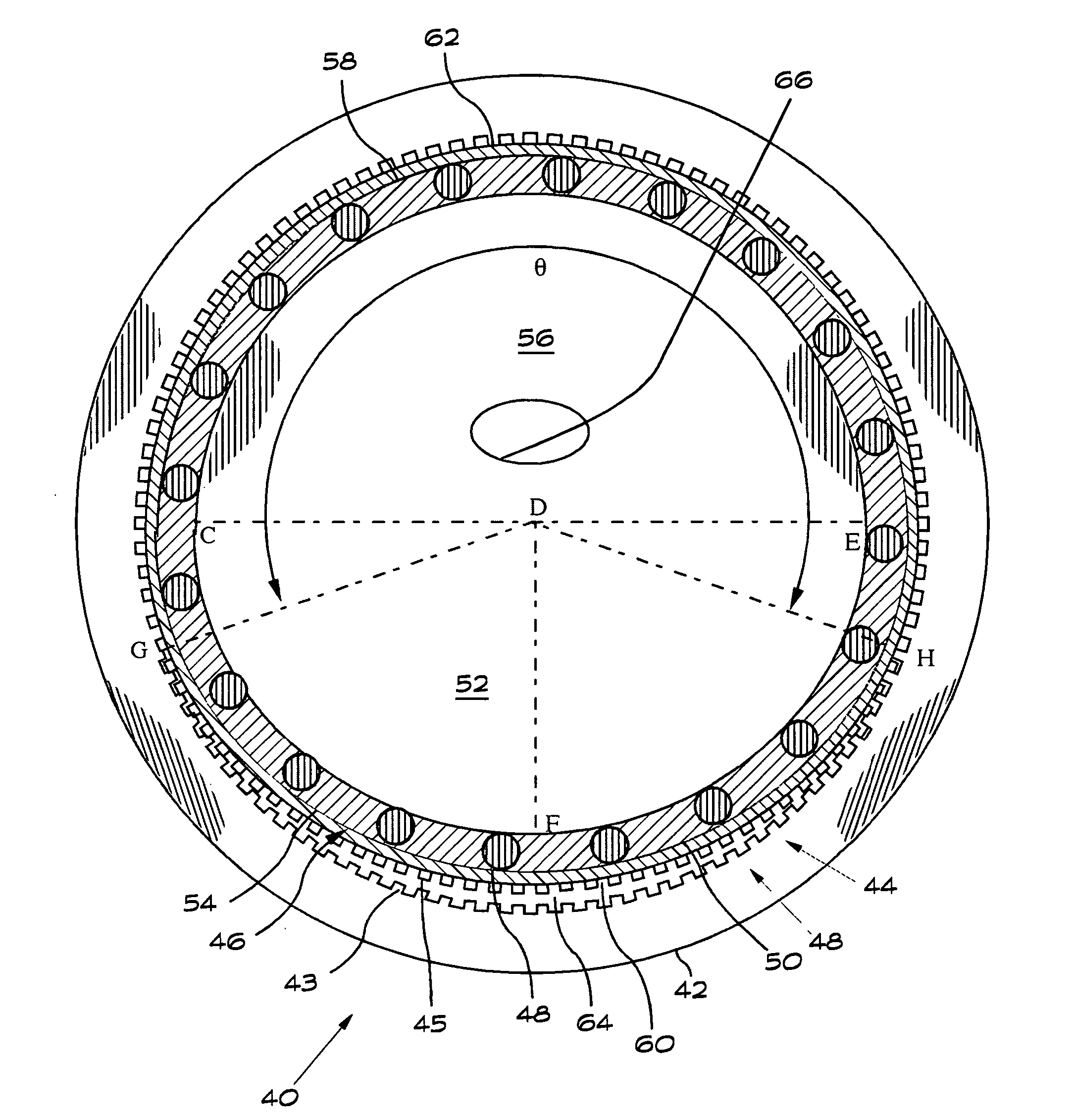
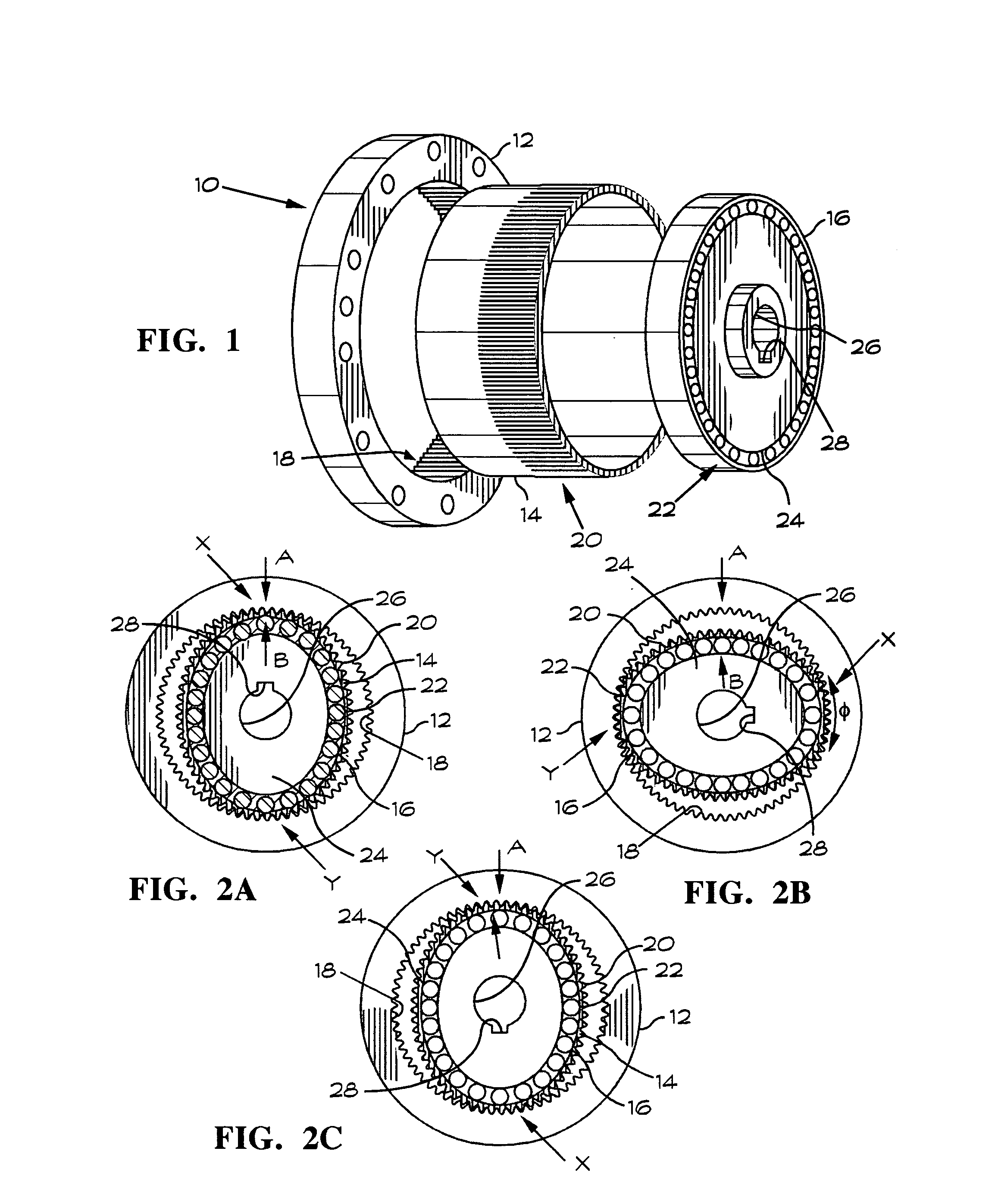
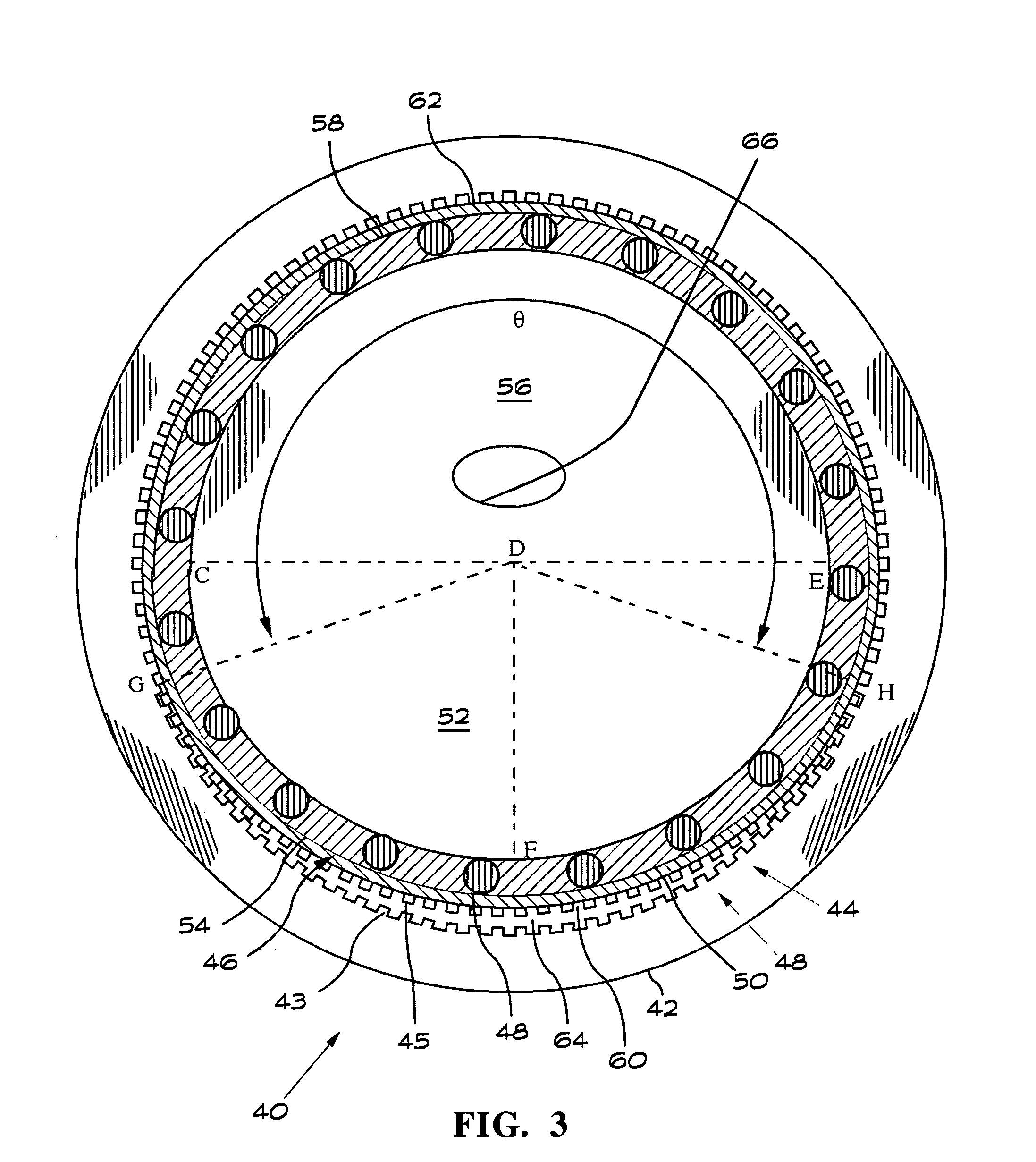
Harmonic drive gear assembly with asymmetrical wave generator and associated flexspline
PatentInactiveUS20070101820A1
Innovation
- A modified wave generator with a semi-ellipsoidal and semi-cylindrical design and a flexspline with one tooth fewer than the circular spline, featuring an asymmetrical cutout to maintain the center of gravity aligned with the circular spline's axis, reducing unwanted vibrations and enhancing torque capacity.

Compact belted strain wave gear apparatus and a vehicle lifting system including the compact belted strain wave gear apparatus
PatentActiveUS12000470B2
Innovation
- A wave gear apparatus with a spline, wave generator, and belt assembly, featuring an eccentric core and a ring-shaped substrate with fewer belt teeth than spline teeth, along with a bearing assembly and output member, to reduce rotational speed and generate shear force, thereby minimizing NVH and allowing for compact, lightweight, and adaptable designs.


Industrial Standards for Precision Drive Systems
Industrial standards for precision drive systems establish critical benchmarks that differentiate harmonic drives from conventional gearboxes in terms of accuracy and repeatability requirements. The International Organization for Standardization (ISO) and American National Standards Institute (ANSI) have developed comprehensive frameworks that define precision classifications for mechanical transmission systems, with particular emphasis on backlash tolerance, positioning accuracy, and rotational precision.
ISO 9409 and DIN 3962 standards specifically address gear accuracy grades, ranging from Grade 3 (highest precision) to Grade 12 (standard industrial applications). Harmonic drives typically achieve Grade 3-5 precision levels, demonstrating backlash values below 1 arcminute and positioning accuracies within ±30 arcseconds. Conventional planetary and spur gearboxes generally fall within Grade 6-9 classifications, with backlash ranging from 3-15 arcminutes depending on manufacturing tolerances and gear tooth geometry.
The AGMA (American Gear Manufacturers Association) Quality Class system provides additional precision metrics, where harmonic drives consistently meet Quality Class 10-12 standards. These classifications mandate specific requirements for tooth spacing errors, profile deviations, and lead variations that directly impact precision performance in robotic and automation applications.
European standard EN ISO 14253 establishes measurement uncertainty protocols for precision drive systems, requiring verification procedures that account for thermal effects, load-dependent deflections, and long-term stability. Harmonic drives demonstrate superior compliance with these stringent measurement requirements due to their inherent design characteristics and reduced component count.
Industry-specific standards such as IEC 61800 for variable speed drives and IEEE 519 for power quality further define precision requirements in servo applications. These standards emphasize the importance of smooth torque transmission and minimal speed ripple, areas where harmonic drives excel compared to multi-stage gearbox configurations.
Certification processes under these standards require extensive testing protocols including accelerated life testing, thermal cycling, and precision degradation analysis over operational lifecycles, providing quantitative frameworks for comparing drive system performance across different precision-critical applications.
ISO 9409 and DIN 3962 standards specifically address gear accuracy grades, ranging from Grade 3 (highest precision) to Grade 12 (standard industrial applications). Harmonic drives typically achieve Grade 3-5 precision levels, demonstrating backlash values below 1 arcminute and positioning accuracies within ±30 arcseconds. Conventional planetary and spur gearboxes generally fall within Grade 6-9 classifications, with backlash ranging from 3-15 arcminutes depending on manufacturing tolerances and gear tooth geometry.
The AGMA (American Gear Manufacturers Association) Quality Class system provides additional precision metrics, where harmonic drives consistently meet Quality Class 10-12 standards. These classifications mandate specific requirements for tooth spacing errors, profile deviations, and lead variations that directly impact precision performance in robotic and automation applications.
European standard EN ISO 14253 establishes measurement uncertainty protocols for precision drive systems, requiring verification procedures that account for thermal effects, load-dependent deflections, and long-term stability. Harmonic drives demonstrate superior compliance with these stringent measurement requirements due to their inherent design characteristics and reduced component count.
Industry-specific standards such as IEC 61800 for variable speed drives and IEEE 519 for power quality further define precision requirements in servo applications. These standards emphasize the importance of smooth torque transmission and minimal speed ripple, areas where harmonic drives excel compared to multi-stage gearbox configurations.
Certification processes under these standards require extensive testing protocols including accelerated life testing, thermal cycling, and precision degradation analysis over operational lifecycles, providing quantitative frameworks for comparing drive system performance across different precision-critical applications.
Cost-Precision Trade-offs in Drive Selection
The selection of drive systems involves a fundamental trade-off between cost and precision requirements, where harmonic drives and traditional gearboxes occupy distinct positions on this spectrum. Understanding these trade-offs is crucial for making informed engineering decisions that balance performance requirements with budget constraints.
Harmonic drives command a significant price premium over conventional gearboxes, typically costing 3-5 times more for equivalent torque ratings. This premium reflects their sophisticated manufacturing processes, specialized materials, and precision assembly requirements. The flexspline component requires precise heat treatment and machining tolerances measured in micrometers, while the wave generator demands high-quality bearings and exact geometric profiles.
Traditional gearboxes offer substantial cost advantages through established manufacturing processes and economies of scale. Planetary and spur gear configurations utilize standardized components and well-understood production techniques, enabling competitive pricing across various torque and speed ranges. However, achieving high precision levels in conventional gearboxes requires additional manufacturing investments in gear grinding, housing machining, and assembly procedures.
The precision-to-cost ratio varies significantly between applications. For positioning systems requiring sub-arcminute accuracy, harmonic drives often provide superior value despite higher initial costs. Their inherent precision eliminates the need for additional feedback systems or compensation mechanisms that would be necessary with conventional gearboxes to achieve similar accuracy levels.
Lifecycle cost considerations further complicate the trade-off analysis. Harmonic drives typically require less maintenance due to fewer wearing surfaces and reduced backlash degradation over time. Conventional gearboxes may require periodic backlash adjustment, gear replacement, or lubrication system maintenance, adding operational costs that can offset initial savings.
Application-specific factors heavily influence the optimal cost-precision balance. High-volume manufacturing applications may justify harmonic drive premiums through improved product quality and reduced scrap rates. Conversely, applications with moderate precision requirements and cost sensitivity often favor optimized conventional gearbox solutions that provide adequate performance at lower investment levels.
Harmonic drives command a significant price premium over conventional gearboxes, typically costing 3-5 times more for equivalent torque ratings. This premium reflects their sophisticated manufacturing processes, specialized materials, and precision assembly requirements. The flexspline component requires precise heat treatment and machining tolerances measured in micrometers, while the wave generator demands high-quality bearings and exact geometric profiles.
Traditional gearboxes offer substantial cost advantages through established manufacturing processes and economies of scale. Planetary and spur gear configurations utilize standardized components and well-understood production techniques, enabling competitive pricing across various torque and speed ranges. However, achieving high precision levels in conventional gearboxes requires additional manufacturing investments in gear grinding, housing machining, and assembly procedures.
The precision-to-cost ratio varies significantly between applications. For positioning systems requiring sub-arcminute accuracy, harmonic drives often provide superior value despite higher initial costs. Their inherent precision eliminates the need for additional feedback systems or compensation mechanisms that would be necessary with conventional gearboxes to achieve similar accuracy levels.
Lifecycle cost considerations further complicate the trade-off analysis. Harmonic drives typically require less maintenance due to fewer wearing surfaces and reduced backlash degradation over time. Conventional gearboxes may require periodic backlash adjustment, gear replacement, or lubrication system maintenance, adding operational costs that can offset initial savings.
Application-specific factors heavily influence the optimal cost-precision balance. High-volume manufacturing applications may justify harmonic drive premiums through improved product quality and reduced scrap rates. Conversely, applications with moderate precision requirements and cost sensitivity often favor optimized conventional gearbox solutions that provide adequate performance at lower investment levels.
Unlock deeper insights with PatSnap Eureka Quick Research — get a full tech report to explore trends and direct your research. Try now!
Generate Your Research Report Instantly with AI Agent
Supercharge your innovation with PatSnap Eureka AI Agent Platform!