
How to Troubleshoot Harmonic Drive Alignment Issues
APR 27, 20268 MIN READ
Generate Your Research Report Instantly with AI Agent
Patsnap Eureka helps you evaluate technical feasibility & market potential.
Harmonic Drive Technology Background and Precision Goals
Harmonic drives represent a revolutionary advancement in precision motion control technology, fundamentally transforming how engineers approach high-precision positioning applications. Originally developed in the 1950s by C.W. Musser, this technology emerged from the need to achieve exceptional gear reduction ratios while maintaining minimal backlash and superior positioning accuracy. The core innovation lies in the elastic deformation principle, where a flexible spline gear meshes with a rigid circular spline through controlled elliptical motion.
The technology has evolved significantly since its inception, progressing from basic mechanical implementations to sophisticated systems incorporating advanced materials and manufacturing techniques. Modern harmonic drives utilize specialized steel alloys and precision machining processes that enable tolerances measured in arc-seconds rather than traditional mechanical degrees. This evolution has been driven by increasingly demanding applications in robotics, aerospace, and precision manufacturing sectors.
Contemporary harmonic drive systems target positioning accuracies within ±10 arc-seconds, with premium variants achieving sub-arc-second precision levels. These precision goals stem from critical applications such as satellite antenna positioning, robotic surgical systems, and semiconductor manufacturing equipment, where even microscopic misalignments can result in system failure or performance degradation. The technology's ability to achieve gear ratios exceeding 300:1 in a single stage while maintaining zero backlash makes it indispensable for applications requiring both high torque multiplication and precise positioning.
The fundamental challenge in harmonic drive technology centers on maintaining optimal alignment between the wave generator, flexspline, and circular spline components. Misalignment issues directly impact the system's ability to meet these stringent precision targets, as even minor deviations can introduce positioning errors, increased wear, and reduced operational lifespan. Understanding this technological foundation becomes crucial when addressing alignment troubleshooting, as the precision goals define the acceptable tolerance ranges for diagnostic and corrective procedures.
Modern harmonic drives must also accommodate dynamic loading conditions while preserving their precision characteristics, requiring sophisticated design approaches that balance mechanical flexibility with structural integrity. This technological complexity necessitates comprehensive alignment verification methodologies to ensure systems consistently meet their intended precision objectives throughout their operational lifecycle.
The technology has evolved significantly since its inception, progressing from basic mechanical implementations to sophisticated systems incorporating advanced materials and manufacturing techniques. Modern harmonic drives utilize specialized steel alloys and precision machining processes that enable tolerances measured in arc-seconds rather than traditional mechanical degrees. This evolution has been driven by increasingly demanding applications in robotics, aerospace, and precision manufacturing sectors.
Contemporary harmonic drive systems target positioning accuracies within ±10 arc-seconds, with premium variants achieving sub-arc-second precision levels. These precision goals stem from critical applications such as satellite antenna positioning, robotic surgical systems, and semiconductor manufacturing equipment, where even microscopic misalignments can result in system failure or performance degradation. The technology's ability to achieve gear ratios exceeding 300:1 in a single stage while maintaining zero backlash makes it indispensable for applications requiring both high torque multiplication and precise positioning.
The fundamental challenge in harmonic drive technology centers on maintaining optimal alignment between the wave generator, flexspline, and circular spline components. Misalignment issues directly impact the system's ability to meet these stringent precision targets, as even minor deviations can introduce positioning errors, increased wear, and reduced operational lifespan. Understanding this technological foundation becomes crucial when addressing alignment troubleshooting, as the precision goals define the acceptable tolerance ranges for diagnostic and corrective procedures.
Modern harmonic drives must also accommodate dynamic loading conditions while preserving their precision characteristics, requiring sophisticated design approaches that balance mechanical flexibility with structural integrity. This technological complexity necessitates comprehensive alignment verification methodologies to ensure systems consistently meet their intended precision objectives throughout their operational lifecycle.
Market Demand for High-Precision Harmonic Drive Systems
The global market for high-precision harmonic drive systems is experiencing robust growth driven by increasing automation demands across multiple industrial sectors. Manufacturing industries, particularly automotive, aerospace, and electronics, are driving significant demand for precision motion control solutions that can deliver exceptional accuracy and repeatability. The proliferation of collaborative robots and advanced manufacturing systems has created substantial market opportunities for harmonic drive technologies that can meet stringent positioning requirements.
Robotics applications represent the largest market segment for high-precision harmonic drives, with industrial robots requiring zero-backlash transmission systems for precise end-effector positioning. The expanding adoption of six-axis articulated robots in assembly, welding, and material handling operations has created sustained demand for compact, high-ratio gear systems. Medical robotics, including surgical robots and rehabilitation devices, represents a rapidly growing niche market where precision and reliability are paramount.
Aerospace and defense applications constitute another significant market driver, with satellite positioning systems, radar assemblies, and precision instrumentation requiring ultra-precise angular positioning capabilities. The increasing deployment of small satellites and space exploration missions has expanded demand for lightweight, high-precision drive systems that can operate reliably in harsh environments.
The semiconductor manufacturing sector presents substantial growth opportunities, as wafer handling equipment, lithography systems, and inspection tools require sub-micron positioning accuracy. Advanced packaging technologies and the transition to larger wafer sizes have intensified precision requirements, driving demand for harmonic drives with enhanced accuracy specifications.
Market growth is further supported by the renewable energy sector, particularly in solar tracking systems and wind turbine pitch control mechanisms. These applications require reliable, maintenance-free operation over extended periods while maintaining precise positioning accuracy under varying environmental conditions.
Regional demand patterns show strong growth in Asia-Pacific markets, driven by expanding manufacturing capabilities and increasing automation adoption. North American and European markets demonstrate steady demand growth, particularly in high-value applications requiring superior precision and reliability. The market trajectory indicates continued expansion as industries increasingly prioritize automation efficiency and precision manufacturing capabilities.
Robotics applications represent the largest market segment for high-precision harmonic drives, with industrial robots requiring zero-backlash transmission systems for precise end-effector positioning. The expanding adoption of six-axis articulated robots in assembly, welding, and material handling operations has created sustained demand for compact, high-ratio gear systems. Medical robotics, including surgical robots and rehabilitation devices, represents a rapidly growing niche market where precision and reliability are paramount.
Aerospace and defense applications constitute another significant market driver, with satellite positioning systems, radar assemblies, and precision instrumentation requiring ultra-precise angular positioning capabilities. The increasing deployment of small satellites and space exploration missions has expanded demand for lightweight, high-precision drive systems that can operate reliably in harsh environments.
The semiconductor manufacturing sector presents substantial growth opportunities, as wafer handling equipment, lithography systems, and inspection tools require sub-micron positioning accuracy. Advanced packaging technologies and the transition to larger wafer sizes have intensified precision requirements, driving demand for harmonic drives with enhanced accuracy specifications.
Market growth is further supported by the renewable energy sector, particularly in solar tracking systems and wind turbine pitch control mechanisms. These applications require reliable, maintenance-free operation over extended periods while maintaining precise positioning accuracy under varying environmental conditions.
Regional demand patterns show strong growth in Asia-Pacific markets, driven by expanding manufacturing capabilities and increasing automation adoption. North American and European markets demonstrate steady demand growth, particularly in high-value applications requiring superior precision and reliability. The market trajectory indicates continued expansion as industries increasingly prioritize automation efficiency and precision manufacturing capabilities.
Current Alignment Challenges in Harmonic Drive Applications
Harmonic drives face significant alignment challenges that directly impact their operational efficiency and longevity. Angular misalignment represents one of the most critical issues, occurring when the input and output shafts are not perfectly parallel or coaxial. This misalignment creates uneven stress distribution across the flexspline, leading to premature wear and reduced accuracy in positioning applications.
Radial misalignment poses another substantial challenge, particularly in high-precision applications such as robotics and aerospace systems. When the centerlines of connected components are offset, it generates radial forces that the harmonic drive was not designed to handle optimally. These forces can cause irregular tooth engagement patterns and accelerate bearing degradation.
Axial misalignment issues emerge when there is improper spacing or positioning along the shaft axis. This condition often results from thermal expansion, manufacturing tolerances, or inadequate mounting procedures. The consequences include increased friction, irregular load distribution, and potential binding of the wave generator within the flexspline.
Installation-related alignment challenges frequently stem from inadequate mounting surface preparation and insufficient precision in coupling connections. Many applications require alignment tolerances within micrometers, yet field installation conditions often lack the necessary precision measurement tools and controlled environments to achieve such accuracy.
Dynamic alignment drift represents an ongoing challenge where initially proper alignment degrades over time due to thermal cycling, mechanical settling, or structural deformation under load. This phenomenon is particularly problematic in continuous operation environments where regular maintenance windows are limited.
Temperature-induced alignment variations create additional complexity, as different materials in the drive system expand at varying rates. The steel wave generator, flexspline, and circular spline each respond differently to temperature changes, potentially creating misalignment conditions that vary with operating temperature.
Measurement and detection of alignment issues present their own challenges, as traditional alignment tools may not provide sufficient resolution for harmonic drive applications. The compact design and integrated nature of many harmonic drive installations limit access for conventional measurement equipment, requiring specialized diagnostic approaches and tools specifically designed for these precision mechanisms.
Radial misalignment poses another substantial challenge, particularly in high-precision applications such as robotics and aerospace systems. When the centerlines of connected components are offset, it generates radial forces that the harmonic drive was not designed to handle optimally. These forces can cause irregular tooth engagement patterns and accelerate bearing degradation.
Axial misalignment issues emerge when there is improper spacing or positioning along the shaft axis. This condition often results from thermal expansion, manufacturing tolerances, or inadequate mounting procedures. The consequences include increased friction, irregular load distribution, and potential binding of the wave generator within the flexspline.
Installation-related alignment challenges frequently stem from inadequate mounting surface preparation and insufficient precision in coupling connections. Many applications require alignment tolerances within micrometers, yet field installation conditions often lack the necessary precision measurement tools and controlled environments to achieve such accuracy.
Dynamic alignment drift represents an ongoing challenge where initially proper alignment degrades over time due to thermal cycling, mechanical settling, or structural deformation under load. This phenomenon is particularly problematic in continuous operation environments where regular maintenance windows are limited.
Temperature-induced alignment variations create additional complexity, as different materials in the drive system expand at varying rates. The steel wave generator, flexspline, and circular spline each respond differently to temperature changes, potentially creating misalignment conditions that vary with operating temperature.
Measurement and detection of alignment issues present their own challenges, as traditional alignment tools may not provide sufficient resolution for harmonic drive applications. The compact design and integrated nature of many harmonic drive installations limit access for conventional measurement equipment, requiring specialized diagnostic approaches and tools specifically designed for these precision mechanisms.
Existing Alignment Troubleshooting Methods
01 Precision positioning and calibration methods for harmonic drives
Advanced calibration techniques and precision positioning methods are employed to achieve accurate alignment in harmonic drive systems. These methods involve sophisticated measurement systems and feedback mechanisms to ensure optimal positioning accuracy and reduce positioning errors inherent in harmonic drive mechanisms.- Precision positioning and calibration methods for harmonic drives: Advanced calibration techniques and precision positioning systems are employed to achieve accurate alignment in harmonic drive mechanisms. These methods involve sophisticated measurement systems and feedback control algorithms to ensure optimal positioning accuracy and reduce alignment errors during operation.
- Mechanical alignment structures and assembly techniques: Specialized mechanical structures and assembly methodologies are designed to facilitate proper alignment of harmonic drive components. These include precision mounting fixtures, alignment guides, and mechanical interfaces that ensure correct positioning of the flexspline, wave generator, and circular spline during assembly and operation.
- Sensor-based alignment monitoring and control systems: Integrated sensor systems and real-time monitoring technologies are utilized to continuously track and maintain proper alignment in harmonic drives. These systems employ various sensing technologies to detect misalignment conditions and provide feedback for automatic correction mechanisms.
- Compensation mechanisms for alignment errors: Innovative compensation techniques and error correction methods are implemented to counteract alignment deviations in harmonic drive systems. These approaches include software-based correction algorithms, mechanical compensation devices, and adaptive control strategies that minimize the impact of alignment errors on system performance.
- Manufacturing and quality control processes for alignment accuracy: Specialized manufacturing processes and quality control procedures are established to ensure consistent alignment accuracy in harmonic drive production. These include precision machining techniques, assembly line quality checks, and standardized testing protocols that verify alignment specifications before product delivery.
02 Compensation algorithms for backlash and hysteresis
Specialized compensation algorithms are developed to address backlash and hysteresis issues in harmonic drive systems. These algorithms utilize mathematical models and control strategies to predict and compensate for mechanical imperfections, thereby improving alignment accuracy and system performance.Expand Specific Solutions03 Sensor integration and feedback control systems
Integration of high-precision sensors and advanced feedback control systems enables real-time monitoring and adjustment of harmonic drive alignment. These systems incorporate encoders, resolvers, and other sensing technologies to provide continuous position feedback and enable closed-loop control for maintaining precise alignment.Expand Specific Solutions04 Mechanical design optimization for alignment stability
Optimized mechanical designs focus on improving the structural integrity and alignment stability of harmonic drive components. These designs incorporate enhanced bearing systems, improved flexspline configurations, and optimized gear tooth profiles to minimize alignment drift and maintain consistent performance over extended operation periods.Expand Specific Solutions05 Assembly and manufacturing techniques for alignment precision
Specialized assembly procedures and manufacturing techniques are employed to achieve precise initial alignment during harmonic drive production. These methods include precision machining processes, controlled assembly environments, and quality control measures that ensure consistent alignment characteristics across manufactured units.Expand Specific Solutions
Key Players in Harmonic Drive Manufacturing Industry
The harmonic drive alignment troubleshooting market represents a mature yet evolving sector within precision motion control technology. The industry has reached a stable growth phase, driven by increasing automation demands across robotics, aerospace, and industrial applications. Market size continues expanding as manufacturers like Zhejiang Laifu Harmonic Drive Co. Ltd. specialize in high-precision harmonic reducers, while established players including Robert Bosch GmbH, ZF Friedrichshafen AG, and Schaeffler Technologies AG leverage their extensive mechanical engineering expertise. Technology maturity varies significantly - traditional automotive suppliers like Continental Automotive GmbH and Renault SA apply proven alignment methodologies, whereas emerging players such as GAC Ai'an focus on electric vehicle applications. Research institutions like Beihang University and Taiyuan University of Technology contribute advanced diagnostic algorithms, while industrial giants including Hitachi Industrial Equipment Systems and ABB Research Ltd. integrate smart monitoring solutions, creating a competitive landscape spanning from specialized harmonic drive manufacturers to diversified automation technology providers.
Schaeffler Technologies AG & Co. KG
Technical Solution: Implements advanced diagnostic systems for harmonic drive alignment using integrated sensor networks and predictive analytics. Their troubleshooting approach combines real-time monitoring of bearing performance within harmonic drives, vibration analysis through accelerometers, and thermal imaging to detect alignment-related heat generation. The company utilizes machine learning algorithms to predict alignment drift and provides automated correction recommendations. Their diagnostic tools include portable alignment measurement devices, laser-based positioning systems, and software platforms that correlate multiple sensor inputs to identify root causes of misalignment in robotic and industrial automation applications.
Strengths: Strong integration of digital technologies and sensors for comprehensive diagnostics. Weaknesses: Higher cost solutions that may not be suitable for all market segments.
Zhejiang Laifu Harmonic Drive Co. Ltd.
Technical Solution: Specializes in comprehensive harmonic drive alignment troubleshooting through precision measurement systems and calibration protocols. Their approach involves multi-point laser interferometry for detecting angular positioning errors, backlash measurement techniques using dial indicators, and thermal compensation algorithms to account for temperature-induced misalignments. The company has developed proprietary software tools that analyze vibration patterns and torque ripple characteristics to identify specific alignment issues. Their troubleshooting methodology includes systematic checking of wave generator eccentricity, flexspline deformation patterns, and circular spline concentricity using coordinate measuring machines and specialized fixtures.
Strengths: Deep expertise in harmonic drive manufacturing with comprehensive understanding of failure modes and alignment issues. Weaknesses: Limited global service network compared to international competitors.
Core Innovations in Harmonic Drive Alignment Solutions
Coupling for compensating axle misalignment
PatentInactiveUS20070129153A1
Innovation
- A compact and lightweight coupling with a monolithic mount comprising an outer ring, an inner ring, and arcuate connecting webs that provide quasi-isotropic stiffness for elastic compensation of axle misalignment, allowing for modifications with points of force application on the inner ring to suit specific drive systems.


Harmonic motor, drive assembly, industrial robot, robot boom and robot joint
PatentInactiveUS20120204674A1
Innovation
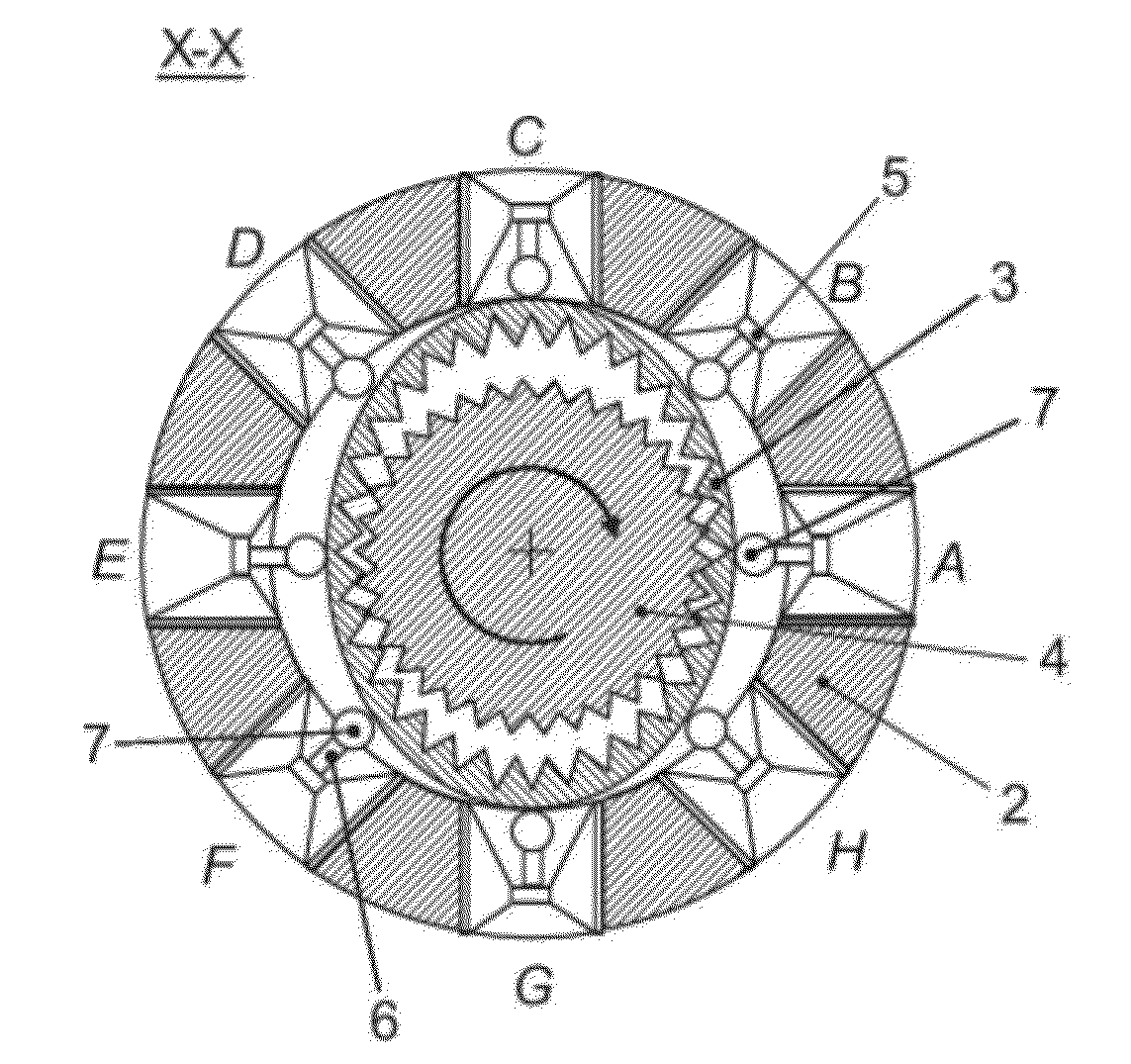
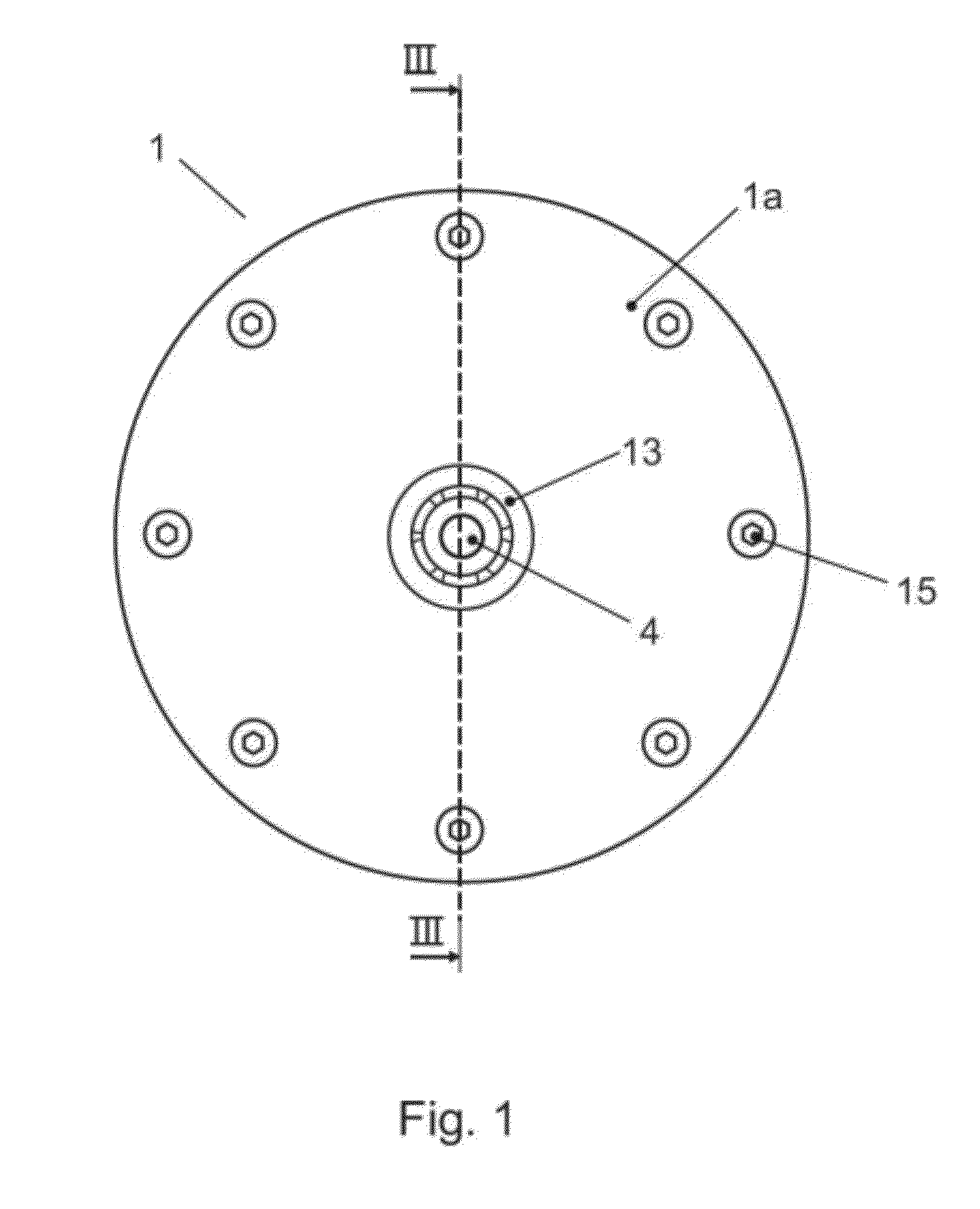
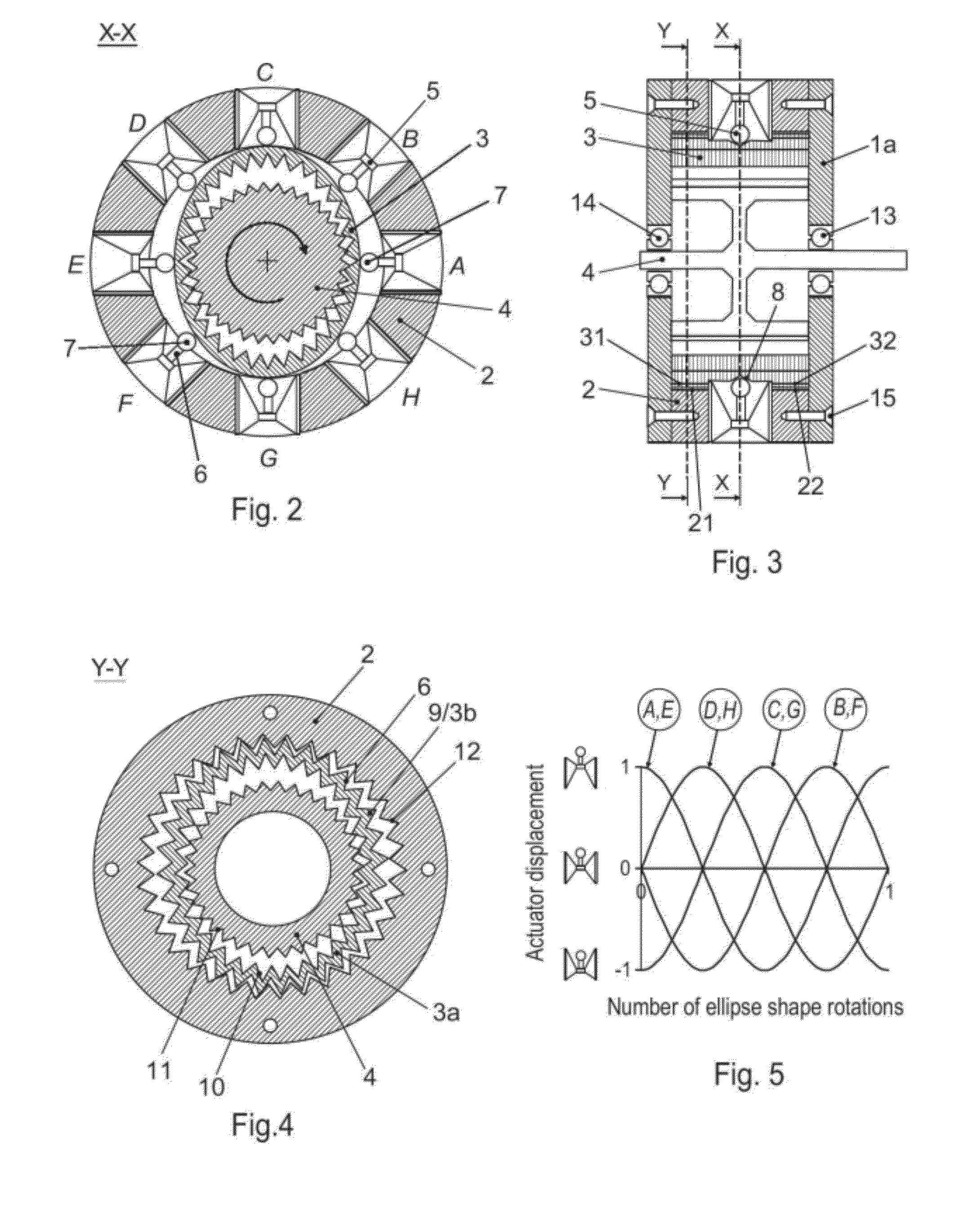
- The design incorporates a fixed circular stator with a flex spline and a geared output shaft, using external linear actuators to deform the flex spline into an elliptical shape, and a wave generator bearing that serves as a motor bearing, reducing the need for additional bearings and improving torque efficiency and controllability.

Quality Standards for Harmonic Drive Systems
Quality standards for harmonic drive systems represent a critical framework that directly impacts alignment troubleshooting effectiveness and system reliability. These standards encompass multiple dimensions including manufacturing tolerances, assembly specifications, performance benchmarks, and operational parameters that collectively determine the precision and longevity of harmonic drive applications.
Manufacturing quality standards establish fundamental baseline requirements for component precision. The flexspline, wave generator, and circular spline must meet stringent dimensional tolerances typically within micrometers to ensure proper meshing and minimize alignment-related issues. Surface finish specifications, material hardness requirements, and geometric accuracy standards directly influence the system's susceptibility to misalignment problems during operation.
Assembly quality standards define critical installation parameters that prevent alignment issues from occurring. These include torque specifications for mounting bolts, concentricity requirements between input and output shafts, and perpendicularity tolerances for mounting surfaces. Proper adherence to these standards during installation significantly reduces the likelihood of premature wear, backlash variations, and performance degradation that often manifest as alignment problems.
Performance quality standards establish measurable criteria for evaluating harmonic drive system health and detecting early signs of alignment deterioration. Key metrics include positioning accuracy, repeatability, backlash limits, and torque transmission efficiency. These standards provide quantitative benchmarks against which system performance can be assessed during troubleshooting procedures.
Environmental and operational quality standards address factors that influence long-term alignment stability. Temperature cycling limits, vibration resistance specifications, and contamination protection requirements ensure that harmonic drives maintain their alignment characteristics under varying operating conditions. These standards are particularly crucial in applications where environmental factors could exacerbate alignment issues.
Compliance with established quality standards such as ISO, AGMA, and manufacturer-specific requirements provides a systematic approach to preventing and diagnosing alignment problems. Regular quality audits and performance monitoring against these standards enable proactive identification of potential alignment issues before they result in system failure or significant performance degradation.
Manufacturing quality standards establish fundamental baseline requirements for component precision. The flexspline, wave generator, and circular spline must meet stringent dimensional tolerances typically within micrometers to ensure proper meshing and minimize alignment-related issues. Surface finish specifications, material hardness requirements, and geometric accuracy standards directly influence the system's susceptibility to misalignment problems during operation.
Assembly quality standards define critical installation parameters that prevent alignment issues from occurring. These include torque specifications for mounting bolts, concentricity requirements between input and output shafts, and perpendicularity tolerances for mounting surfaces. Proper adherence to these standards during installation significantly reduces the likelihood of premature wear, backlash variations, and performance degradation that often manifest as alignment problems.
Performance quality standards establish measurable criteria for evaluating harmonic drive system health and detecting early signs of alignment deterioration. Key metrics include positioning accuracy, repeatability, backlash limits, and torque transmission efficiency. These standards provide quantitative benchmarks against which system performance can be assessed during troubleshooting procedures.
Environmental and operational quality standards address factors that influence long-term alignment stability. Temperature cycling limits, vibration resistance specifications, and contamination protection requirements ensure that harmonic drives maintain their alignment characteristics under varying operating conditions. These standards are particularly crucial in applications where environmental factors could exacerbate alignment issues.
Compliance with established quality standards such as ISO, AGMA, and manufacturer-specific requirements provides a systematic approach to preventing and diagnosing alignment problems. Regular quality audits and performance monitoring against these standards enable proactive identification of potential alignment issues before they result in system failure or significant performance degradation.
Maintenance Strategies for Harmonic Drive Longevity
Effective maintenance strategies are fundamental to maximizing harmonic drive longevity and preventing alignment-related failures. A comprehensive maintenance approach encompasses preventive, predictive, and corrective measures specifically tailored to address the unique characteristics of harmonic drive systems.
Preventive maintenance forms the cornerstone of longevity strategies, involving scheduled inspections and routine servicing at predetermined intervals. Regular lubrication management is critical, as proper lubricant selection and application directly impacts bearing performance and gear mesh quality. The maintenance schedule should account for operating conditions, load cycles, and environmental factors that accelerate wear patterns.
Predictive maintenance leverages advanced monitoring technologies to assess harmonic drive health in real-time. Vibration analysis systems can detect early signs of misalignment, bearing degradation, and flexspline fatigue before catastrophic failure occurs. Temperature monitoring provides insights into lubrication effectiveness and thermal stress conditions that may compromise alignment stability over time.
Condition-based maintenance protocols focus on specific harmonic drive components prone to alignment issues. The flexspline requires particular attention due to its cyclic deformation characteristics, which can lead to stress concentration and eventual failure. Regular inspection of the wave generator bearing assembly helps identify wear patterns that contribute to radial runout and alignment drift.
Environmental protection strategies significantly extend harmonic drive service life by minimizing contamination and moisture ingress. Proper sealing systems and controlled operating environments reduce the likelihood of debris accumulation that can cause binding and misalignment. Temperature control measures prevent thermal expansion effects that compromise precision alignment tolerances.
Documentation and tracking systems enable data-driven maintenance decisions by recording performance trends, failure modes, and maintenance interventions. This historical data supports optimization of maintenance intervals and identification of recurring alignment issues that may indicate design or application problems requiring systematic correction.
Preventive maintenance forms the cornerstone of longevity strategies, involving scheduled inspections and routine servicing at predetermined intervals. Regular lubrication management is critical, as proper lubricant selection and application directly impacts bearing performance and gear mesh quality. The maintenance schedule should account for operating conditions, load cycles, and environmental factors that accelerate wear patterns.
Predictive maintenance leverages advanced monitoring technologies to assess harmonic drive health in real-time. Vibration analysis systems can detect early signs of misalignment, bearing degradation, and flexspline fatigue before catastrophic failure occurs. Temperature monitoring provides insights into lubrication effectiveness and thermal stress conditions that may compromise alignment stability over time.
Condition-based maintenance protocols focus on specific harmonic drive components prone to alignment issues. The flexspline requires particular attention due to its cyclic deformation characteristics, which can lead to stress concentration and eventual failure. Regular inspection of the wave generator bearing assembly helps identify wear patterns that contribute to radial runout and alignment drift.
Environmental protection strategies significantly extend harmonic drive service life by minimizing contamination and moisture ingress. Proper sealing systems and controlled operating environments reduce the likelihood of debris accumulation that can cause binding and misalignment. Temperature control measures prevent thermal expansion effects that compromise precision alignment tolerances.
Documentation and tracking systems enable data-driven maintenance decisions by recording performance trends, failure modes, and maintenance interventions. This historical data supports optimization of maintenance intervals and identification of recurring alignment issues that may indicate design or application problems requiring systematic correction.
Unlock deeper insights with Patsnap Eureka Quick Research — get a full tech report to explore trends and direct your research. Try now!
Generate Your Research Report Instantly with AI Agent
Supercharge your innovation with Patsnap Eureka AI Agent Platform!